

Quick Answer
The most important dog clipper safety tips are to use clean, properly maintained clippers, choose a suitable blade and guard, check blade temperature frequently, clip gently in the direction of hair growth, and stop when your dog becomes distressed. Never force clippers through mats or use them over injured skin. Leave sensitive or severely matted areas to an experienced groomer or veterinarian.
Dog clippers can make home grooming easier, but poor technique can cause cuts, skin irritation, painful pulling, and burns from overheated blades. Even a small trimming mistake can hurt a dog that suddenly moves.
Safe clipping involves more than choosing the right equipment. You also need to prepare the coat, support your dog’s body, recognize stress signals, and understand which areas require professional handling.
What Are the Biggest Safety Risks When Clipping a Dog?

The main risks are accidental skin cuts, irritation from excessive friction, heat-related burns, coat pulling, and injuries caused by sudden movement.
According to the RSPCA’s dog grooming guidance, clipper blades can cause irritation and cuts when they are not used properly.
Several situations increase the likelihood of injury:
- Hot blades: Continued use can cause a metal cutting surface to become uncomfortably hot.
- Skin folds: Loose skin can become caught near moving blades.
- Tangled hair: Clippers may pull or snag when a blade cannot pass smoothly through the coat.
- Incorrect blade selection: An unnecessarily close cut can increase skin contact and irritation.
- Sudden movement: A frightened dog may jerk away while the cutting head is close to sensitive skin.
- Damaged equipment: Poor blade alignment or worn cutting components may contribute to pulling or cuts.
The practical goal is to reduce each risk before starting, rather than trying to correct an injury afterward.
15 Essential Dog Clipper Safety Tips
1. Inspect Your Clippers Before Every Session
Check that the blade is clean, securely attached, and free from visible damage. Examine the power cord, plug, or battery housing for problems.
Switch the clipper on away from your dog. Listen for unusual rattling and check for excessive vibration. If the blade is loose, damaged, or behaving unexpectedly, stop and resolve the issue before grooming.
2. Choose a Blade and Guard Suitable for the Coat
Blade size affects how closely the hair is cut. Guard combs can help maintain additional coat length, but they must fit the specific blade and clipper model.
For inexperienced home groomers, an appropriate longer cutting length may provide more margin than attempting a very close shave.
Never assume that a guard fits simply because it attaches. Confirm compatibility and follow the clipper manufacturer’s instructions. A guard may also struggle to move through a tangled or dense coat.
3. Prepare a Safe, Non-Slip Grooming Area
Choose a stable working surface with adequate lighting. Your dog should have secure footing and enough room to stand comfortably.
Keep cords away from paws and water. Position towels, brushes, treats, and other supplies within reach so you do not need to leave your dog unattended.
For larger dogs, working at floor level on a non-slip mat may be safer than lifting them onto an unsuitable table.
4. Brush and Inspect the Coat Before Clipping
Brush away loose hair and gently remove manageable tangles. Check beneath the coat for redness, sores, lumps, parasites, or sensitive patches.
A clean, dry coat without heavy knots usually allows smoother clipping. Moisture, debris, and tangled hair can interfere with blade movement.
If bathing is needed, follow a careful dog bathing and drying routine before using electric clippers. Do not begin trimming while the coat remains wet unless the equipment and procedure are specifically designed for that use.
5. Introduce Clipper Noise Gradually
A dog unfamiliar with clippers may react to their sound, vibration, or proximity. Introduce the tool without immediately cutting hair.
Let your dog observe the switched-off clipper. Reward relaxed behavior, then briefly turn it on at a comfortable distance. Gradually reduce that distance only while the dog remains calm.
The American Kennel Club’s professional grooming standards emphasize introducing clippers slowly and recognizing clipper sensitivity.
6. Check Blade Temperature Frequently
Metal cutting blades can heat up during operation. A blade that feels comfortable at the beginning may become too warm during a long grooming session.
Switch off the clipper periodically and carefully check the metal blade temperature before resuming. Never test a moving cutting edge directly against your skin.
If the blade feels hot or uncomfortable, allow it to cool or replace it with a compatible, cool blade. Follow manufacturer instructions for blade cooling and maintenance.
Warning: Clipper Burns
A hot cutting surface can injure skin even when no obvious wound appears immediately. Stop clipping if your dog reacts painfully or the blade becomes hot. Never rely on lubricating oil alone to make an overheated blade safe.
7. Begin With a Less Sensitive Body Area
Start on a reasonably flat, accessible section of the body, such as the shoulder or upper back, provided the coat and skin are healthy.
This allows you to assess how the clipper moves and how your dog responds before approaching complicated areas.
Avoid beginning around the ears, groin, armpits, tail, or skin folds. Those regions require extra control and may be better handled by a trained groomer.
8. Clip With the Direction of Hair Growth
For routine home grooming, begin by moving the clipper in the direction the coat naturally grows.
Use smooth, controlled strokes with the cutting head positioned as directed by its manufacturer. Avoid digging the blade into the skin or repeatedly scraping the same patch.
Clipping against hair growth can produce a closer result, but it may also increase skin exposure and irritation. Beginners should not pursue an extremely short finish at the expense of comfort.
9. Use Light Pressure and Never Force the Blade
Let the clipper perform the cutting. Pushing harder is not a safe solution when hair resists the blade.
If the clipper snags, stop. Turn it off and inspect the coat, cutting head, and blade condition.
Repeatedly forcing a struggling clipper can pull hair, irritate skin, and create sudden movements. A different grooming approach or professional assistance may be necessary.
10. Keep Skin Folds Clear of the Cutting Head
Loose or wrinkled skin deserves particular attention because it can move toward the blade unexpectedly.
Where safe and comfortable, gently support the skin on accessible, flat areas without pulling or stretching excessively. Never attempt to clip directly into a crease that you cannot clearly see.
Dogs with pronounced skin folds, delicate skin, or unusual body contours may require an experienced groomer for close trimming.
11. Be Especially Cautious Around Sensitive Areas
The ears, paws, armpits, genital region, and skin around the tail are more difficult to trim safely.
Thin skin, folds, restricted visibility, and unexpected movement can increase injury risk. Do not place a moving blade into tight spaces or near an edge of skin you cannot fully identify.
For paw pads, facial trimming, or hygiene clipping, ask a groomer or veterinary professional to demonstrate an appropriate technique before attempting it yourself.
12. Never Force Clippers Through Severe Matting
Tightly matted hair can hold skin close to the coat and make the skin’s position difficult to judge.
Do not insert scissors beneath a tight mat or push a blade between the mat and skin without the necessary skill and visibility.
The ASPCA’s guidance on preventing coat matting recommends professional help for difficult mats. Severely matted dogs may need veterinary involvement.
13. Take Breaks Before Your Dog Becomes Overwhelmed
Short, comfortable sessions are generally better than completing an entire haircut while a dog is struggling.
Watch for repeated attempts to escape, trembling, growling, snapping, freezing, or escalating restlessness. Panting can also signal stress, although it has several possible causes.
Stop when your dog becomes significantly uncomfortable. Reward calm behavior and resume another time only if handling can be done safely.
14. Clean and Maintain the Blade Properly
Remove trapped hair after the grooming session and maintain the blade according to the manufacturer’s directions.
Use compatible cleaning and lubricating products in the recommended amounts. Disconnect power before cleaning or adjusting components, unless the manufacturer specifically instructs otherwise.
Allow cleaned or disinfected components to dry as directed before reuse. Replace damaged blades rather than attempting to compensate with additional pressure.
15. Inspect Your Dog’s Skin After Grooming
Once clipping is finished, check for unexpected redness, scratches, swelling, cuts, or signs of pain.
Pay particular attention to areas with thin skin and locations where you noticed pulling or repeated blade contact.
Remove loose clippings gently and let your dog rest. If discomfort persists, irritation worsens, or you discover a skin injury, contact your veterinarian rather than continuing to groom over the area.
What Is the Safest Order for Clipping a Dog at Home?
For a dog that tolerates grooming and has a manageable coat, the following sequence helps keep the process organized.
- Prepare the space: Set up secure footing, good lighting, and supplies.
- Inspect the skin: Identify mats, sores, folds, and sensitive areas.
- Prepare the coat: Brush out loose hair and easy tangles.
- Check the equipment: Fit a suitable cutting head and guard.
- Introduce the clipper: Confirm your dog remains relaxed.
- Begin on the body: Use gentle strokes following hair growth.
- Pause regularly: Check blade temperature and your dog’s comfort.
- Finish safely: Avoid difficult areas, inspect the skin, and clean the equipment.
There is no requirement to finish a full haircut in one session. Stopping early is preferable to creating a negative or painful grooming experience.
When Should You Stop Clipping Immediately?
Stop using the clippers if you see blood, notice a painful reaction, discover damaged skin, or cannot control the cutting head safely.
These situations call for different responses:
| Warning Sign | Safer Next Step |
|---|---|
| Blade feels too hot | Switch off and cool or replace the blade. |
| Hair repeatedly snags | Stop and check for tangles or equipment problems. |
| Dog growls or struggles | End the session and seek handling guidance. |
| Skin becomes red or painful | Avoid further clipping and contact a veterinarian if irritation is significant or persists. |
| Cut or bleeding occurs | Stop grooming, control bleeding gently, and obtain veterinary advice promptly. |
For a minor bleeding cut, gentle pressure with clean gauze may help while arranging advice. Heavy bleeding, deep cuts, significant burns, or severe pain require urgent veterinary assessment. Do not apply harsh disinfectants, ice, or human skin medication without veterinary direction.
Which Dogs Need Extra Grooming Precautions?
Some dogs are more difficult to clip safely because of their health, skin condition, coat, or behavior.
- Puppies: Introduce the equipment gradually and prioritize calm, brief training experiences.
- Senior dogs: Allow comfortable positioning and additional breaks, particularly when movement is restricted.
- Dogs with skin disease: Seek veterinary guidance before clipping irritated or damaged areas.
- Severely matted dogs: Arrange professional removal rather than attempting a close home shave.
- Fearful or reactive dogs: Work with a qualified groomer, veterinarian, or appropriate behavior professional.
- Double-coated dogs: Confirm whether clipping is actually appropriate, because coat management needs vary.
Removing large amounts of coat is not automatically the safest way to keep a dog cool. Coat type, skin protection, and the reason for clipping all matter.
Key Insight
Safe clipping is not about getting the shortest possible haircut. It is about keeping the blade, skin, coat, and dog’s movement under control throughout the session.
Related Grooming Tool: Dog Clipper Guard Combs
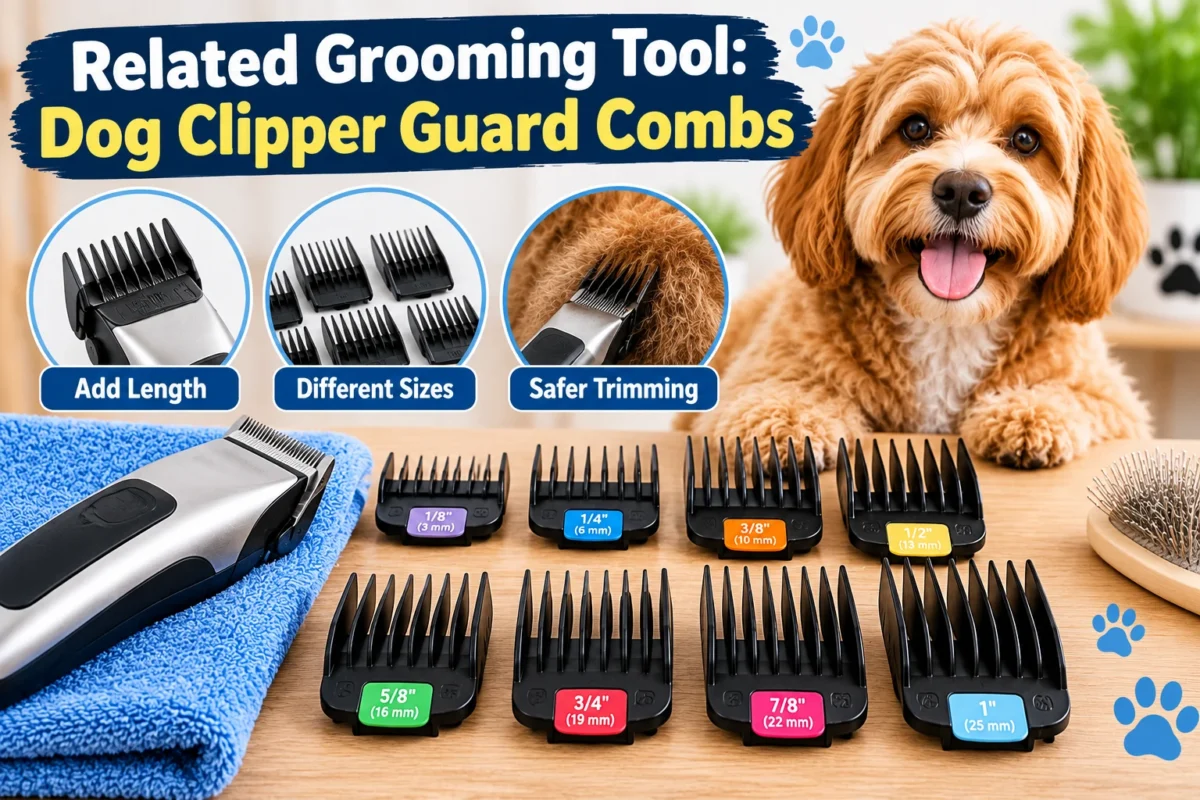
A compatible guard comb set may help home groomers maintain a longer, more consistent cutting length when the coat is clean and free of tangles.
Choose guards that the clipper manufacturer confirms will fit your specific blade or model. Guards cannot make unsafe handling, heavy matting, or damaged cutting equipment safe.
Dog Clipper Guard Comb Sets
Useful for maintaining coat length during suitable home trims. Verify your clipper model and guard compatibility before purchasing.
As an Amazon Associate, we earn from qualifying purchases.
Frequently Asked Questions
Can I use dog clippers on a puppy?
Yes, when the puppy is comfortable with handling and the procedure is appropriate. Begin with brief, positive introductions to clipper noise and vibration. Ask a groomer to demonstrate safe technique before attempting a full puppy haircut.
Can I put clipper oil directly on my dog’s skin?
No. Apply blade lubricant only as the manufacturer instructs. Keep excess product away from your dog’s skin, eyes, and mouth. Clipper oil is intended for equipment maintenance, not as a treatment for skin irritation.
Should I shave my dog completely in summer?
Not automatically. Whether clipping is appropriate depends on coat type, skin condition, and grooming needs. Shaving some double-coated dogs may reduce natural skin protection. Ask a veterinarian or experienced groomer before making a major coat change.
Can I use the same clipper blade on multiple dogs?
Yes, if the blade is appropriate for each coat and is properly cleaned and disinfected between animals according to manufacturer instructions. Do not share contaminated equipment, especially when a dog has a suspected infectious skin condition.
Should I clip a dog with a wound or skin infection?
Avoid home clipping over wounds, inflamed skin, or suspected infections. A veterinarian can determine whether hair removal is needed for examination or treatment and how to perform it without worsening the injury.
What if my dog refuses to stand during clipping?
Stop rather than forcing your dog into position. Check for pain, fatigue, fear, or slippery footing. Short handling exercises may help, but persistent resistance or unsafe movement calls for professional guidance.
Final Thoughts: Make Safety More Important Than Speed
Following these dog clipper safety tips can help reduce common grooming mistakes. Prepare the coat, inspect the equipment, check blade temperature, and use light, controlled movements.
Above all, respect your dog’s comfort. A shorter haircut is never worth a cut, burn, or frightening experience. When the coat, skin, or behavior makes home clipping difficult, professional grooming is the safer choice.


