
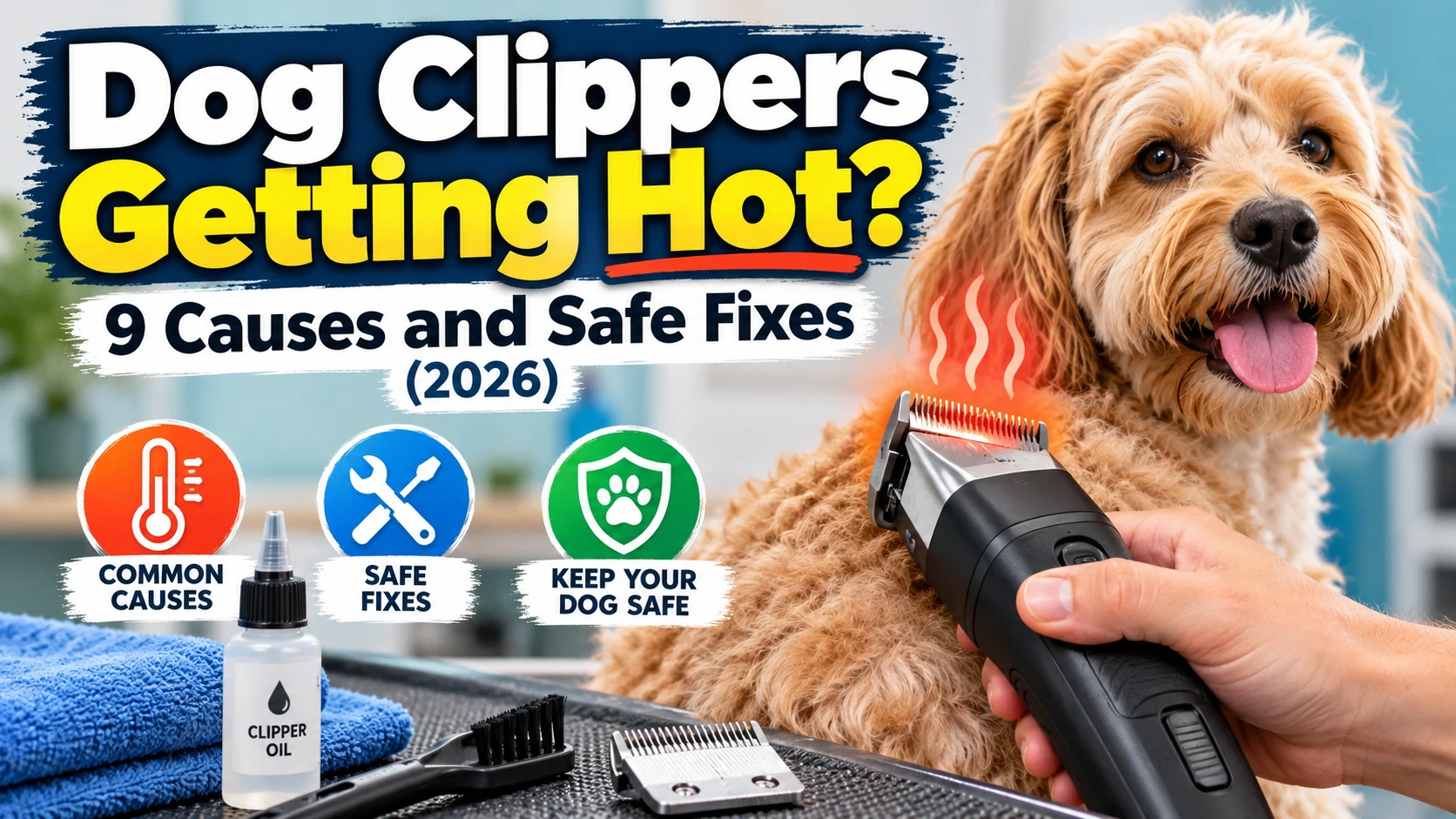
Quick Answer
Dog clippers get hot because moving blades create friction, especially during long grooming sessions. Dirty blades, insufficient oil, and excessive motor load can make overheating worse. Stop clipping when the blade becomes uncomfortably warm, and allow it to cool before continuing. Proper clipper blade cleaning and lubrication help prevent unnecessary heat.
What to do immediately
- Stop grooming: Switch off the clippers before the blade irritates your dog’s skin.
- Check blade heat: Carefully test the stationary blade against your inner wrist before touching your dog.
- Remove trapped hair: Unplug the device and brush debris from the blade assembly.
- Apply clipper oil: Follow the manufacturer’s instructions for proper lubrication.
- Allow cooling: Resume only when the blade feels comfortably cool and the clippers operate normally.
Important: If the housing becomes unusually hot, smells burnt, or makes abnormal noises, stop using the clippers until the problem is resolved.
When dog clippers start getting hot halfway through a haircut, it can make grooming stressful. More importantly, a hot metal blade can hurt your dog’s sensitive skin.
The encouraging news is that many overheating problems have straightforward fixes. This guide explains why clippers heat up, how to cool them safely, and when replacement or professional servicing makes more sense.
Why Are My Dog Clippers Getting Hot?
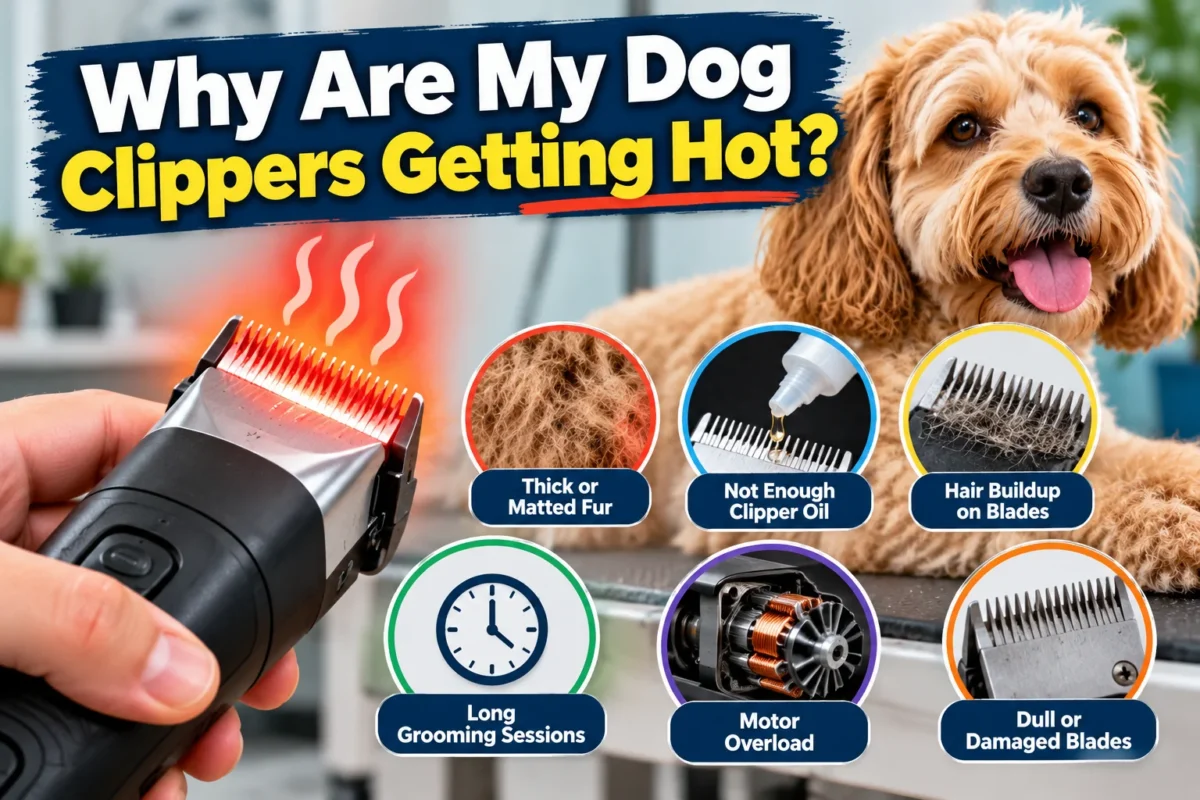
Dog clippers usually heat up because their moving cutting surfaces create friction. Heat also develops inside the motor as it powers the blades through the coat.
A small amount of warmth can be normal during operation. However, excessive blade temperature or an unusually hot housing signals that you should stop and investigate.
How Clipper Blades Generate Heat
Most dog clippers use a fixed blade and a moving cutter. The motor moves the cutter rapidly across the fixed blade to trim hair.
That sliding movement generates friction, which converts some mechanical energy into heat. Poor lubrication increases friction and can make the blade heat faster.
Several conditions contribute to the problem:
- Extended operation: Continuous running gives heat more time to accumulate.
- Insufficient lubrication: Dry cutting surfaces develop greater friction.
- Hair buildup: Trapped hair interferes with smooth blade movement.
- Dense coats: Thick or tangled hair increases cutting resistance.
- Worn components: Damaged blades or drive parts may create extra resistance.
Heat buildup varies by blade design, speed, maintenance, and workload. A high-speed motor alone does not prove a clipper will overheat.
What Are the 9 Most Common Causes of Hot Dog Clippers?
The most useful troubleshooting approach is to identify where the heat originates. Hot blades and an overheating motor can require different solutions.
1. Running Clippers for Too Long
Continuous clipping can gradually raise blade temperature. Longer sessions are especially demanding when grooming large dogs or full-body coats.
Fix: Pause regularly to check the cutting blade. Let the clippers cool whenever the blade feels uncomfortable against your inner wrist.
2. Not Using Enough Clipper Oil
Proper blade oil reduces friction between moving metal surfaces. Without adequate lubrication, blades can generate more heat and wear faster.
Fix: Use manufacturer-approved clipper oil before and during grooming as directed. Wipe away excess oil so it does not transfer unnecessarily onto the coat.
3. Hair and Dirt Trapped Between Blades
Loose fur, dust, and grooming residue can accumulate around the cutter. This buildup may restrict blade movement and reduce cutting efficiency.
Fix: Turn off and unplug the clippers before brushing out trapped debris. Clean removable blades according to the product manual.
4. Dull or Damaged Cutting Blades
Dull blades can tug at hair instead of cutting smoothly. This creates extra resistance and may lead to uneven results or discomfort.
Fix: Replace damaged blades and have suitable dull blades professionally sharpened. Never continue grooming with chipped or missing teeth.
5. Cutting Thick, Dirty, or Matted Fur
Dense coats demand more cutting effort than clean, prepared hair. Heavy matting can also prevent the blade from moving freely.
Fix: Prepare the coat through appropriate brushing, bathing, and thorough drying before clipping. Severe tight mats should be handled by an experienced groomer.
6. Using an Unsuitable Blade
A blade designed for close cutting may become uncomfortably warm during extended use. Incompatible or improperly fitted blades can also operate poorly.
Fix: Confirm that the blade matches your clipper model and grooming task. Check temperature frequently, particularly with close-cutting blades.
7. Overloaded or Worn Motor Components
The motor may work harder when blades encounter substantial resistance. Internal wear can also contribute to abnormal heating, noise, or vibration.
Fix: Inspect and maintain only the user-serviceable parts identified in the manual. Contact an authorized technician if the body overheats repeatedly.
8. Blocked Ventilation
Some clipper motors rely on ventilation to release heat. Hair or debris around the air openings may interfere with that process.
Fix: Keep ventilation openings clear and avoid covering them while operating the device. Never insert tools into the motor housing.
9. Battery, Charger, or Electrical Problems
Cordless clippers can develop excessive heat from faulty batteries or electrical components. Damaged cables and unsuitable chargers may create additional safety risks.
Fix: Stop using equipment that smells burnt, smokes, swells, or becomes abnormally hot. Use only compatible charging equipment and seek qualified servicing.
How Do You Cool Down Hot Dog Clippers Safely?
The safest way to cool hot dog clippers is to stop grooming and allow the blade to lose heat. Cleaning, oiling, and approved cooling products can help address the underlying cause.
Step 1: Stop Clipping Immediately
Switch off the clippers as soon as the blade feels excessively warm. Move them away from your dog’s body before examining the problem.
Step 2: Check the Blade Temperature
Carefully touch the stationary blade to the inside of your wrist. If it feels uncomfortable, do not place it against your dog’s skin.
Test frequently during the session, particularly around sensitive areas. A blade that feels acceptable at the beginning can become hotter later.
Step 3: Allow the Blade to Cool
Place the switched-off clippers on a safe, dry, heat-resistant surface. Let the blade cool naturally before handling or removing it.
Some professional detachable-blade clippers support switching between compatible blades. This can help maintain comfortable cutting temperatures during lengthy sessions.
Step 4: Remove Hair and Debris
Disconnect the clippers from power before cleaning. Use a suitable blade brush to remove trapped hair and dirt.
Do not immerse the clipper housing in water. Only clean or immerse detachable blades using methods expressly permitted by the manufacturer.
Step 5: Lubricate the Cutting Blade
Apply the recommended clipper oil according to your model’s instructions. Correct lubrication helps the moving blade slide more smoothly.
Manufacturer guidance differs between blade systems. Follow the manual rather than assuming every model requires the same number of drops.
Step 6: Use Approved Blade Coolant If Appropriate
Some manufacturers offer clipper blade cooling sprays. These products can help manage blade heat when used according to label directions.
Do not treat coolant spray as a replacement for blade oil. Allow the product to dry or dissipate as directed before the blade touches your dog.
Step 7: Check Performance Before Restarting
Confirm that the blade is cool, clean, and correctly attached. Listen for abnormal noise and check whether the clippers cut smoothly.
If unusual heating quickly returns, stop the session. Repeated overheating may require blade replacement or professional servicing.
How Hot Is Too Hot for Dog Clippers?
A dog clipper blade is too hot when it feels uncomfortable against your inner wrist. There is no single safe temperature that applies to every dog, blade, and grooming situation.
Dogs have different coat densities, skin conditions, and sensitivity levels. Areas with thinner hair coverage require additional caution.
| Observation | Possible Meaning | Recommended Action |
|---|---|---|
| Blade feels comfortably cool | Suitable temperature for cautious use | Continue and recheck frequently |
| Blade feels noticeably warm | Heat is accumulating | Pause and allow cooling |
| Blade feels uncomfortable or hot | Potential skin injury risk | Stop immediately |
| Housing overheats or smells burnt | Possible electrical or motor fault | Disconnect safely and arrange servicing |
Safety note: This table describes practical warning signs, not laboratory temperature limits. Never test a blade that is visibly smoking or otherwise appears dangerously hot.
Hot Clipper Blades vs. an Overheating Motor: What’s the Difference?
Hot blades usually indicate friction or prolonged cutting activity. An unusually hot clipper housing may indicate excessive motor load, ventilation problems, or an internal fault.
| Feature | Hot Blades | Overheating Motor |
|---|---|---|
| Heat location | Cutting head | Main housing |
| Possible causes | Friction, dirt, insufficient oil | Excessive load, blocked vents, faulty components |
| First response | Stop, cool, clean, lubricate | Stop, disconnect power, inspect safely |
| When to seek service | Persistent heat despite maintenance | Repeated overheating or electrical warning signs |
One useful diagnostic check is to compare blade heat with housing heat. This can help narrow down the problem without opening the device.
However, it cannot confirm an internal motor fault. Professional inspection remains the safer option when electrical problems are suspected.
Can Hot Dog Clippers Burn Your Dog’s Skin?
Yes. An overheated clipper blade can cause skin irritation or thermal injury, sometimes called clipper burn.
The term can also describe irritation from excessive clipping pressure, friction, or overly close cutting. Not every red patch is necessarily a heat burn.
Signs of Possible Clipper Burn
- Redness appearing after clipping
- Sudden discomfort or pulling away from the blade
- Excessive licking or scratching of a trimmed area
- New tenderness or sensitivity when touched
- Swelling, blistering, or broken skin in more serious cases
What Should You Do If Your Dog’s Skin Gets Burned?
Stop grooming the affected area immediately. For a suspected thermal burn, gently cool the area with cool running water if your dog tolerates it.
Avoid ice, harsh disinfectants, essential oils, and human burn creams unless a veterinarian recommends them. Contact a veterinarian promptly if you suspect a burn, especially if the skin is painful, blistered, or damaged.
For further animal-care guidance, consult the American Veterinary Medical Association or your regular veterinarian.
How Can You Prevent Dog Clippers From Overheating?
The best prevention combines regular maintenance with sensible grooming habits. Clean blades, correct lubrication, and frequent temperature checks can greatly reduce avoidable problems.
Before Grooming
- Inspect the blade for chipped or missing teeth.
- Brush out loose fur and manageable tangles.
- Ensure the coat is properly prepared and dry.
- Remove old hair buildup from the clipper head.
- Oil the blade according to the manufacturer’s guidance.
- Check that ventilation openings are clear.
During Grooming
- Check blade temperature frequently against your wrist.
- Pause whenever the blade becomes noticeably warm.
- Avoid forcing clippers through resistant hair.
- Clean and lubricate the blade as required.
- Use compatible spare blades when appropriate.
- Stop if the clippers pull hair or operate abnormally.
After Grooming
- Switch off and disconnect the clippers.
- Remove loose hair with a suitable cleaning brush.
- Clean and disinfect components as directed.
- Dry removable components thoroughly.
- Apply blade oil as recommended.
- Store everything in a clean, dry location.
Maintenance requirements differ between models. Consult the official Andis or Wahl instructions when using their equipment.
Do Ceramic Dog Clipper Blades Stay Cooler Than Steel Blades?

Some ceramic cutting systems are designed to reduce heat buildup compared with conventional steel cutters. However, performance depends on the blade assembly, operating conditions, and manufacturer design.
Ceramic cutters still create friction and can become too warm for your dog. Never assume a blade is safe simply because it contains ceramic components.
- Steel blades: Common, durable, and available in many cutting lengths.
- Ceramic cutters: May offer cooler operation in certain designs but can be brittle.
- Detachable blades: Allow compatible blades to be exchanged during grooming.
- Adjustable blades: Offer several cutting settings, but require model-specific maintenance.
Compatibility matters more than marketing claims. Choose the correct blade system first, then consider cooling performance and maintenance requirements.
When Should You Replace Your Dog Clipper Blade?
Replace a clipper blade when damage makes it unsafe or when cutting performance remains poor after proper maintenance. Persistent pulling, uneven cutting, and abnormal noise can indicate a worn blade.
Some blades can be professionally sharpened, while others require replacement. Follow the manufacturer’s advice for your particular blade system.
Warning Signs That Replacement May Be Necessary
- Chipped, bent, or missing teeth
- Visible corrosion or significant wear
- Repeated hair pulling after cleaning and oiling
- Poor cutting despite correct alignment
- Abnormal friction or overheating
Do not repeatedly push a poorly performing blade through the coat. A clean, correctly fitted replacement may be safer and more comfortable.
What Products Help Prevent Hot Dog Clipper Blades?
For a clipper that otherwise works normally, maintenance accessories may be more useful than buying an entirely new grooming machine. These three options address common sources of unnecessary blade friction and heat.
Affiliate disclosure: As an Amazon Associate, qualifying purchases may earn a commission at no additional cost to you.
🏆 Essential Maintenance
Andis Clipper Oil
★★★★☆
A dedicated clipper lubricant designed to reduce friction between cutting surfaces. This is my first recommendation for maintaining compatible, otherwise functional blades because proper lubrication addresses a common source of overheating.
❄️ Cooling Support
Andis Cool Care Plus
★★★★☆
A clipper blade maintenance spray marketed for cooling, cleaning, and disinfecting. I would consider it a supplementary maintenance product, not a replacement for proper blade oil or cooling breaks.
🔧 Replacement Option
Andis UltraEdge Size 10 Blade
★★★★☆
A detachable steel blade designed for compatible professional-style clippers. For owners with a matching clipper, I would prioritize a properly fitted replacement over continuing with a chipped or worn blade.
Buying tip: Confirm blade-system compatibility before ordering accessories or replacement blades. These editorial ratings are general suitability judgments, not customer-review averages or laboratory test results.
Frequently Asked Questions About Dog Clippers Getting Hot
Is It Normal for Dog Clippers to Get Hot?
Some warmth is normal because clipper blades move rapidly and create friction. However, a blade that becomes uncomfortable against your inner wrist should not touch your dog’s skin. Stop grooming, let it cool, and check cleaning and lubrication before continuing.
How Often Should I Oil Dog Clipper Blades?
Follow your manufacturer’s instructions because lubrication requirements vary between models. Many professional detachable blades require oil before, during, and after grooming. Apply the correct product, distribute it according to the manual, and wipe away excess oil before resuming.
Can I Use Water to Cool Hot Dog Clippers?
Do not pour water over powered clippers or immerse the housing. Water can damage electrical components and create safety risks. Switch the clippers off and allow them to cool, or use a manufacturer-approved blade cooling method when appropriate.
Do Cordless Dog Clippers Overheat More Than Corded Clippers?
Neither design automatically overheats more than the other. Temperature depends on the motor, battery system, blade friction, maintenance, and grooming workload. Both cordless and corded models need regular blade-temperature checks, especially during long sessions or heavy cutting.
Why Do My Dog Clippers Get Hot Even After Oiling?
Oiling reduces friction but cannot correct every overheating problem. Dirty, misaligned, damaged, or unsuitable blades may still run hot. A struggling motor can also create heat. If cleaning, proper lubrication, and cooling breaks do not help, seek professional servicing.
Final Takeaway: Keep Your Dog Clippers Cool and Safe
Dog clippers getting hot is a common grooming problem, but it should never be ignored. Blade friction, poor lubrication, trapped hair, and heavy cutting resistance are useful starting points when diagnosing the issue.
Start by stopping the clippers, checking blade temperature, and completing the recommended maintenance. Never continue clipping with a blade that feels uncomfortably warm.
Remember: Your dog’s comfort matters more than finishing the haircut quickly. When repeated overheating persists, replacing a faulty blade or obtaining qualified servicing is safer than forcing the clippers to keep working.


