

Quick Answer
You can gently brush many dogs every day, but you generally should not use an undercoat deshedding tool every day. For example, FURminator recommends its undercoat tool once or twice weekly on suitable coats. Choose frequency by coat type, tool instructions, skin condition, and how comfortably your dog tolerates grooming.
Finding another pile of fur the morning after grooming can make daily deshedding sound logical. But removing loose hair with a soft brush is different from repeatedly working an undercoat tool through the same coat. More sessions do not necessarily mean a healthier dog or less shedding over time.
The better question is what kind of grooming your dog needs today: a gentle surface brush, a careful undercoat session, or a break. Here is how to decide without irritating the skin or unnecessarily pulling at healthy hair.
Why Is Daily Brushing Different From Daily Deshedding?
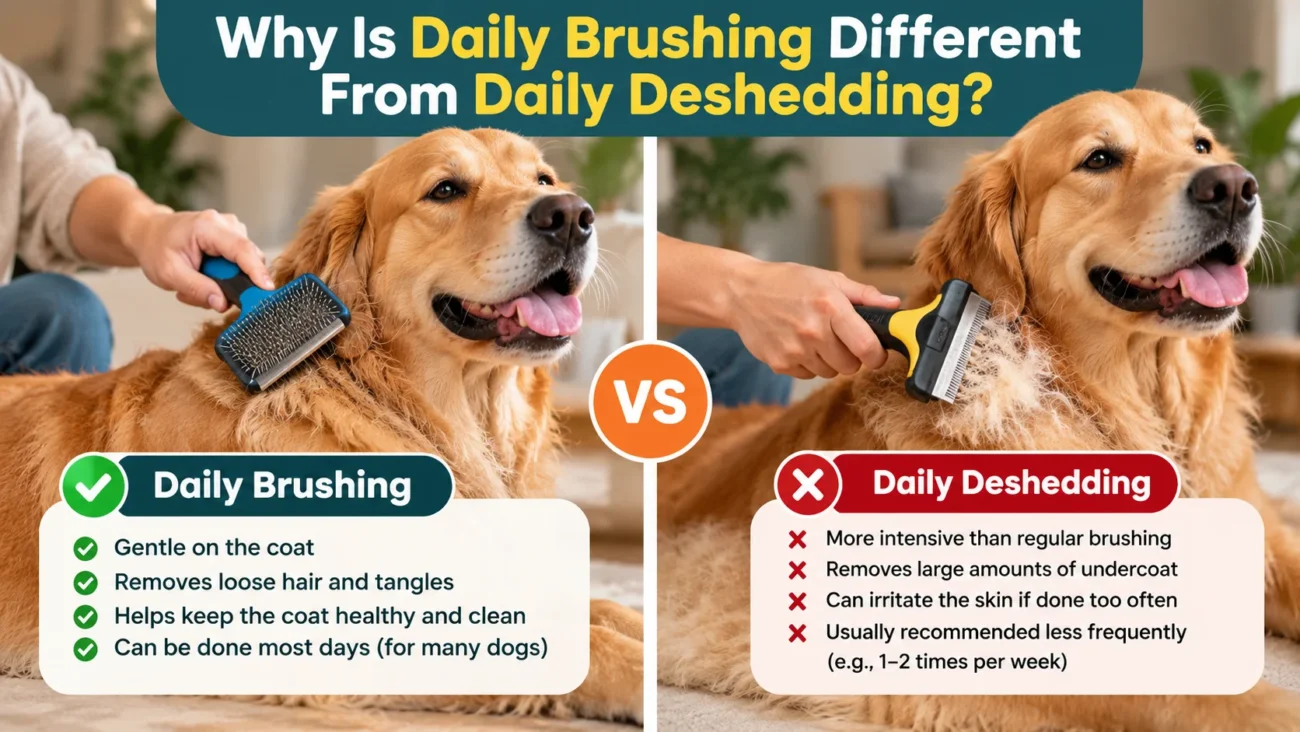
Brushing can mean using a soft bristle brush, rubber mitt, pin brush, or suitable comb to lift loose surface hair, check for debris, and prevent tangles. Undercoat deshedding usually means using a specialized tool to reach deeper into a shedding coat and collect loose undercoat.
Both remove some fur, so their names are sometimes used interchangeably. Their contact with the coat and skin, however, can be quite different. A gentle brush can be appropriate for daily maintenance, while repeated use of a metal-edged undercoat tool may be excessive even when the tool continues collecting hair.
According to VCA Animal Hospitals’ dog coat-care guidance, long, silky, or curly coats may need daily brushing to control tangles, whereas shorter coats often need less frequent brushing. That advice does not mean every dog needs daily intensive undercoat removal.
The FURminator undercoat tool instructions recommend use once or twice a week for approximately 10–20 minutes per session, adjusted to the dog’s coat and condition. This is guidance for that particular tool, not a universal schedule for every brand or breed.
How Often Should You Deshed Your Dog?
Start with the least intensive grooming that keeps your dog’s coat comfortable, then adjust based on the amount of loose hair and the response of the skin. The schedule below is a practical starting framework, not a veterinary prescription or a rule that fits every dog.
| Coat and situation | Gentle maintenance | Undercoat tool |
|---|---|---|
| Dense, shedding double coat | Brush regularly; daily may help during a coat blow | Follow tool directions; often once or twice weekly |
| Smooth, short coat | Use a rubber mitt or soft brush as needed | Often unnecessary without a substantial undercoat |
| Curly or continuously growing coat | Frequent brushing and combing to prevent mats | Usually not the appropriate tool type |
| Irritated skin, sores, or painful mats | Avoid affected areas; seek appropriate care | Do not use until the problem is assessed and resolved |
Notice that the recommendation changes with the tool, not just the breed. A Labrador, for example, may benefit from routine brushing without needing a metal deshedder every time loose fur appears.
During normal shedding
When shedding is moderate, stick to a manageable routine rather than chasing each loose hair. A few thorough, gentle brushing sessions may be enough. Use a deeper deshedding tool only when your dog’s coat actually has loose undercoat and the specific tool is appropriate.
During a seasonal coat blow
Double-coated dogs such as Huskies and some retrievers may release large amounts of undercoat during seasonal changes. Daily gentle brushing can be useful while that hair is coming free. It still does not justify scraping the same areas with an undercoat edge every day.
If your dog is actively shedding in clumps, separate the coat with your fingers, remove what comes free easily, and use the tool that fits the coat. For additional seasonal advice, see the separate guide on how to use a deshedding tool on a dog.
What Can Happen If You Deshed a Dog Too Often?
Excessive deshedding can irritate the skin or leave the coat looking thinner and uneven, particularly if the tool is sharp-edged, used with force, or repeatedly dragged across the same small area. A dog may also learn to fear grooming if sessions are uncomfortable.
The concern is not that removing naturally loose hair is inherently harmful. The concern is unnecessary friction, pressure, and repeated passes after the easily removable hair has been collected.
- Redness or sensitivity: Skin may look pink or feel sore after excessive brushing.
- Coat breakage or uneven appearance: Rough technique may pull or damage hairs that were not ready to shed.
- Resistance to grooming: Flinching, turning away, hiding, or trying to escape can be signs the session is unpleasant.
- Missed skin problems: Persistent scratching or unusual hair loss may need veterinary attention instead of additional brushing.
Warning
Stop using the deshedding tool if you notice redness, broken skin, pain, or unusual bald patches. Do not brush over wounds, inflamed skin, or tight mats. Contact your veterinarian if changes persist or the hair loss appears abnormal.
Also remember that a full brush can keep producing fur even after a reasonable session. The amount of hair on the tool is not a reliable instruction to continue. Your dog’s comfort and coat condition matter more than filling another handful.
How Can You Tell Whether Your Dog Needs Deshedding Today?
Make a short coat check before you pick up the undercoat tool. A few observations can prevent an unnecessary session.
- Look at the skin. Part the fur in several places. Redness, scabs, irritation, or visible thinning mean you should avoid intensive grooming and investigate the cause.
- Check how much hair is actually loose. Gently run your hand or a suitable soft brush across the coat. Some loose hair is normal and does not automatically call for deep deshedding.
- Look for tangles. Untangle manageable knots with a coat-appropriate comb. A deshedder should not be forced through mats.
- Consider your last session. If you already used an undercoat tool recently, choose gentle brushing instead of automatically repeating the same treatment.
- Watch your dog’s response. Relaxed posture is reassuring; persistent avoidance, flinching, or obvious discomfort means stop.
When those checks suggest the coat only needs light maintenance, use a brush that suits its texture. If you’re unsure about combing direction or handling tangles, the guide to combing a dog properly explains a gentler approach.
What Is a Safer Daily Grooming Routine?
A daily routine should be brief, comfortable, and adapted to the coat. It is not a daily project to remove as much fur as possible.
- Inspect first. Check the ears, armpits, belly, and hindquarters for tangles, debris, or sensitive spots.
- Choose the mildest suitable tool. Use a rubber grooming mitt on many smooth coats, a soft bristle or pin brush where appropriate, or a slicker and comb for a coat needing detangling.
- Brush with the hair growth. Use gentle strokes, taking extra care near thin skin, bony areas, and delicate body parts.
- Keep the session positive. Work in manageable sections, allow breaks, and reward calm cooperation.
- Stop when the coat is tidy. You do not need to make the brush come away completely hair-free.
Tip
Make deep deshedding a separate, occasional task. On other days, use gentle brushing mainly to prevent tangles, remove surface fur, and check the skin.
When you do use an undercoat tool, follow its manufacturer’s instructions and begin conservatively. For a dog that has just been washed, finish drying the coat as appropriate before using a tool intended for dry fur. The article on deshedding a dog after a bath explains how washing and drying fit into the routine.
Does the Answer Change for Puppies, Seniors, and Sensitive Dogs?
Yes. Age, coat maturity, mobility, and skin health can all affect whether regular deshedding is comfortable or worthwhile.
Puppies: The first goal is positive handling practice. Use a gentle puppy-appropriate brush rather than assuming an adult undercoat tool is suitable. Young dogs vary widely in coat development, and grooming should never become a struggle.
Senior dogs: Arthritis, limited mobility, or tender areas can make prolonged handling uncomfortable. Short sessions and supportive positioning may help, but any new pain or coat change deserves attention.
Sensitive dogs: Dogs with allergies, recurrent irritation, or fragile skin may need a modified routine. FURminator specifically cautions against using its undercoat tool on particularly sensitive skin. A veterinarian or qualified groomer can help identify a safer tool.
Curly-coated dogs: Poodles and many similar coats often need consistent detangling rather than conventional undercoat stripping. Daily brushing may be helpful, but a bladed deshedder is generally the wrong substitute for a slicker and comb.
When Is Shedding a Health Concern Rather Than a Grooming Problem?
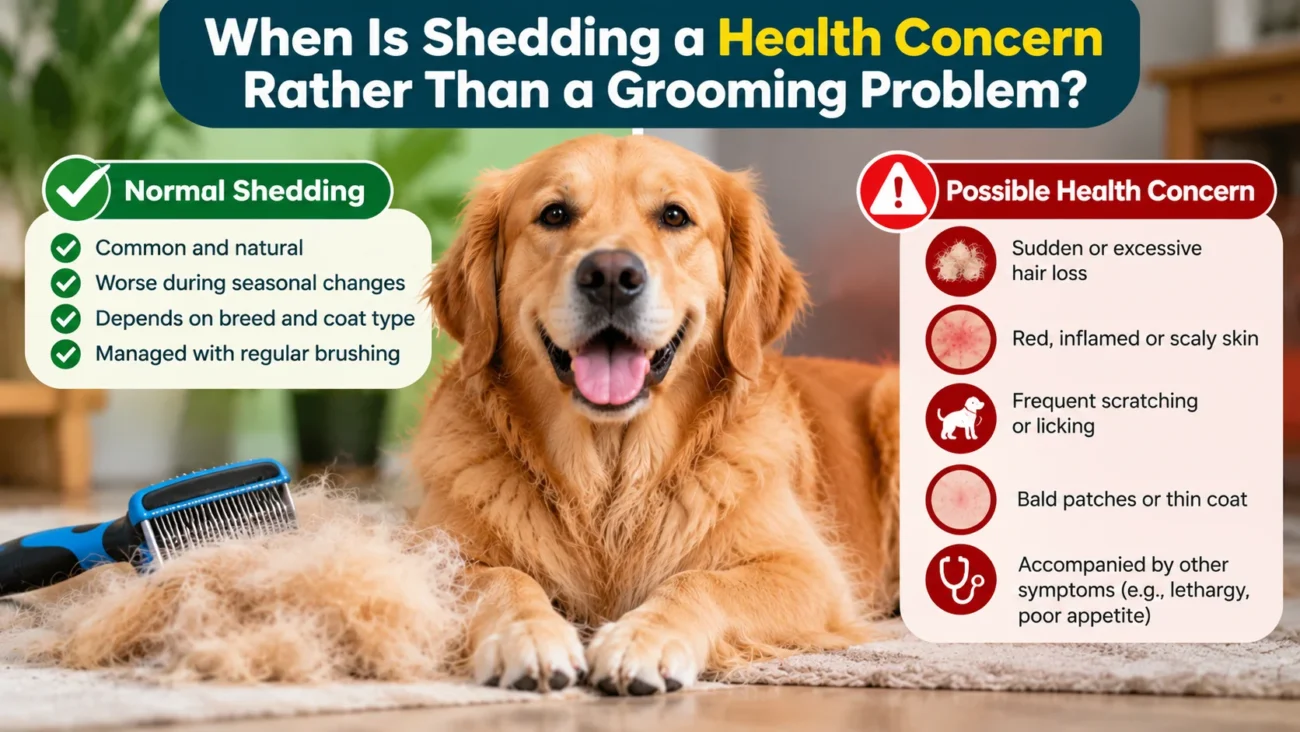
Seasonal shedding and gradual release of loose hair are normal for many breeds. A sudden change in the pattern, however, should not simply trigger more deshedding.
Contact your veterinarian if you notice bald spots, marked thinning, persistent itching, inflamed skin, scabs, an unpleasant odor, or a coat that has become unusually greasy or flaky. Health conditions, parasites, and allergies can contribute to coat problems, and additional brushing will not treat the underlying cause.
It also helps to distinguish visible loose fur from true hair loss. Finding fur on furniture is not, by itself, proof of disease. A patch of exposed skin, especially when accompanied by itching or soreness, is a different finding and deserves closer attention.
The best grooming schedule is therefore one you can adjust. Increase gentle maintenance when the coat is actively shedding, decrease intensive tool use if sensitivity appears, and seek veterinary advice when coat loss no longer looks normal.
Related Product
Gentle Dog Grooming Brush
A coat-appropriate soft brush or rubber grooming mitt can help you remove surface fur between occasional deeper deshedding sessions.
As an Amazon Associate, we earn from qualifying purchases.
Frequently Asked Questions
Can I brush my dog every day during shedding season?
Often, yes, provided the brush is suitable for the coat and your dog’s skin stays comfortable. Gentle daily brushing is not the same as using a metal undercoat deshedder every day.
Is using a FURminator every day too much?
For its undercoat deshedding tool, the manufacturer’s normal guidance is once or twice weekly, not daily. Follow the specific product instructions and stop if irritation develops.
Can I deshed my Husky every day?
Daily gentle brushing may help during a heavy coat blow. Reserve deeper undercoat-tool work for appropriate sessions rather than automatically using it each day.
How do I know when to stop deshedding?
Stop when you have removed a reasonable amount of loose hair, the coat feels manageable, or your dog becomes uncomfortable. Do not keep scraping one area until absolutely no hair comes out.
Will daily deshedding stop my dog from shedding?
No. Shedding is a natural hair-replacement process. Grooming catches some loose hair before it falls around your home, but it cannot stop normal hair turnover.
What should I do if my dog’s skin turns red after brushing?
Stop the tool immediately and let the skin recover. Seek veterinary advice if redness persists, the skin is broken, your dog seems painful, or irritation keeps returning.
Final Thoughts
You do not need to deshed your dog every day to keep loose fur under control. Choose gentle brushing for frequent maintenance, use intensive undercoat tools only as appropriate for the coat and their directions, and let your dog’s skin and comfort tell you when to stop. Consistency matters more than intensity.


