Quick Answer
The most common dog bathing mistakes include using human shampoo, making the water too hot, skipping pre-bath brushing, leaving shampoo in the coat, and failing to dry the dog properly. A safe bath starts with the basics in this dog bathing guide, then adapts to your dog’s coat, skin, and comfort level.
Dog Bathing Mistakes to Avoid
- Wrong shampoo: Human shampoo can be too harsh for canine skin.
- Hot water: Use comfortably lukewarm water rather than your normal shower temperature.
- No traction: A slippery tub can make a dog frightened and unstable.
- Poor rinsing: Shampoo left near the skin may cause irritation and itching.
- Too many baths: Bathing more often than your dog needs can contribute to dry skin.
- Incomplete drying: Dense coats can remain damp near the skin long after the surface feels dry.
One rule to remember
- Watch your dog: Stop and reassess if you see pain, panic, worsening redness, swelling, or unusual skin irritation.
Bathing a dog looks simple until wet paws start sliding, shampoo disappears into a thick coat, and your dog decides the tub is the worst place on earth. Most bath problems come from small mistakes made before, during, or immediately after washing.
In this 2026 guide, I’ll walk through the mistakes I try hardest to avoid. The goal is a clean dog without turning bath day into a skin problem or stressful wrestling match.
What Are the Most Common Dog Bathing Mistakes?

Common dog bathing mistakes are choices that make washing less comfortable, less effective, or harder on the dog’s skin and coat. They include using unsuitable products, poor water control, incomplete rinsing, rough handling, and improper drying.
Most are easy to prevent once you know where baths tend to go wrong.
- Using shampoo made for people
- Using water that is too hot or cold
- Skipping brushing before the bath
- Letting the dog slip in the tub
- Spraying the face or ears directly
- Using more shampoo than necessary
- Rushing the rinse
- Bathing more often than needed
- Scrubbing tangled or sensitive skin aggressively
- Leaving thick coats damp
- Forcing a frightened dog through the bath
- Ignoring persistent skin symptoms
1. Using Human Shampoo on Your Dog
One of the easiest mistakes is reaching for whatever shampoo is already in the bathroom. Human shampoo, including many baby shampoos, isn’t formulated specifically for canine skin.
VCA Animal Hospitals recommends using shampoo formulated for dogs because canine and human skin differ.
- Choose a shampoo labeled for dogs.
- Choose a mild formula for routine washing.
- Ask your veterinarian before choosing medicated products for ongoing skin problems.
- Avoid strongly scented products if your dog has sensitive skin.
I don’t judge a shampoo by how much foam it makes. I care more about whether it rinses cleanly and leaves the dog’s skin comfortable afterward.
2. Making the Bath Water Too Hot
Dogs generally need comfortably lukewarm bath water, not the temperature a person might enjoy in a hot shower. Excessively hot water can make an already sensitive bath uncomfortable.
If you’re unsure, review this guide to choosing a safe dog bath water temperature before turning on the sprayer.
- Test the running water on your inner forearm.
- Keep the temperature comfortably lukewarm.
- Recheck after adjusting the faucet.
- Watch for shivering, avoidance, or discomfort.
I test the stream before it reaches the dog every time. That two-second check prevents an avoidable surprise.
3. Skipping Brushing Before the Bath
Brushing before bathing removes loose fur, surface debris, and manageable tangles. Once tangled fur becomes soaked, it can become harder to work through safely.
The American Kennel Club’s dog bathing guidance also recommends brushing before washing.
- Brush loose fur from short coats.
- Check long coats for knots behind the ears and legs.
- Inspect the belly, tail, and armpit areas.
- Don’t aggressively pull apart tight mats.
Severe matting may require professional grooming rather than extra brushing. Wetting a tightly matted coat doesn’t solve the underlying problem.
4. Letting Your Dog Stand on a Slippery Surface
A bare wet bathtub can feel unstable under a dog’s paws. Slipping can increase fear and make the dog constantly shift, scramble, or try to escape.
A secure non-slip bath mat is one of the simplest changes I make before adding water.
- Use a rubber-backed non-slip mat.
- Check that it doesn’t slide under pressure.
- Keep the floor outside the tub dry.
- Place towels where you’ll need them before starting.
Better footing helps the dog feel more secure. It also gives me better control without relying on force.
5. Spraying Water Directly Into the Face or Ears
Direct spray around the eyes, nose, and ears can frighten a dog and make the bath harder. It also gives you less control over where water goes.
I normally wash the head and face separately with a damp cloth rather than aiming the sprayer forward.
- Keep direct spray away from the eyes.
- Don’t intentionally spray water into the ear canals.
- Use a damp washcloth around the face.
- Move calmly around sensitive areas.
6. Using Too Much Shampoo
More shampoo doesn’t automatically produce a cleaner dog. It can simply create more product that must be removed from the coat.
This matters especially with long, curly, thick, or double coats where soap can hide close to the skin.
- Read the shampoo label first.
- Follow dilution instructions when supplied.
- Use enough to clean the coat without overloading it.
- Spend more effort distributing and rinsing than creating foam.
My rule is simple: don’t measure cleaning quality by the size of the bubbles.
7. Not Rinsing the Coat Thoroughly Enough
Incomplete rinsing is one of the bath mistakes I take most seriously. Residual shampoo can contribute to irritation, especially when it stays trapped against the skin.
If scratching appears after washing, this guide explains several reasons a dog may become itchy after a bath.
- Rinse the neck and chest carefully.
- Check underneath the front legs.
- Rinse the belly and groin thoroughly.
- Work water through dense undercoat.
- Check paws, legs, and tail.
I often keep rinsing after the obvious suds disappear. Clear-looking water doesn’t always mean a dense coat is completely product-free.
Good Dog Bath vs Common Bath Mistakes
| Bath Step | Better Approach | Common Mistake | Possible Problem |
|---|---|---|---|
| Shampoo | Dog-specific formula | Human shampoo | Dryness or irritation |
| Water | Comfortably lukewarm | Very hot or cold | Discomfort or stress |
| Tub surface | Secure non-slip mat | Bare slippery tub | Fear and poor footing |
| Rinsing | Rinse to the skin | Stop when surface suds vanish | Product residue |
| Drying | Blot and check roots | Leave dense fur damp | Trapped moisture |
8. Bathing Your Dog Too Often
There isn’t one perfect bathing schedule for every dog. Coat type, outdoor activity, swimming, odor, health, and skin condition all affect how often washing makes sense.
VCA notes that many healthy dogs need bathing when dirty or smelly, while medical conditions may require a veterinarian-directed schedule.
- Healthy indoor dogs: Often need only occasional bathing.
- Outdoor dogs: May need cleaning sooner after mud or contamination.
- Swimming dogs: Often benefit from a fresh-water rinse after swimming.
- Dogs with skin disease: May need a specific medicated-bath schedule.
Bathing more frequently isn’t automatically better grooming. Look at the dog in front of you rather than bathing simply because a date arrived on the calendar.
9. Scrubbing the Coat Too Aggressively
Hard scrubbing can tangle long fur and make tender skin uncomfortable. Gentle massage usually distributes shampoo more effectively than frantic rubbing.
Work with the direction of longer hair when practical, then use your fingertips to reach the coat near the skin.
- Massage rather than scratch with your nails.
- Don’t pull wet tangles apart forcefully.
- Be gentle around irritated skin.
- Stop if touching an area causes pain.
10. Drying the Dog Incorrectly
A dog isn’t necessarily dry because the top of the coat feels dry. Long, curly, thick, and double coats can hold substantial moisture closer to the skin.
My preferred approach is covered in this guide to drying a dog safely after a bath.
- Remove excess water: Gently squeeze water from longer areas without twisting the hair.
- Blot with towels: Press absorbent towels against the coat instead of rough rubbing.
- Add airflow when needed: Dense coats often need controlled, cool moving air.
- Check the roots: Feel beneath the surface coat before deciding you’re finished.
Avoid concentrating hot dryer air on one area of skin. Comfortable airflow matters more than finishing a few minutes faster.
11. Forcing a Frightened Dog Through the Bath
Holding a panicking dog more tightly can turn bathing into an escalating fight. Fear may come from slippery footing, loud water, restraint, unfamiliar surroundings, or previous experiences.
For a fearful dog, use the gradual approach in this guide for a dog scared of bath time.
- Introduce the empty tub first.
- Reward calm standing near the bathing area.
- Add water gradually.
- Use a quiet, predictable stream.
- Keep sessions manageable.
A dog doesn’t need to love every bath. I want the dog to remain safe enough to cooperate without steadily becoming more frightened.
12. Treating Every Skin Problem With Another Bath
Repeated bathing isn’t a cure for unexplained itching, odor, redness, sores, or hair loss. Those signs may have causes that shampoo alone cannot fix.
Persistent or worsening symptoms deserve veterinary advice rather than endless experimentation with new products.
- Repeated intense scratching
- Red, swollen, or painful skin
- Open sores or crusting
- Unusual or persistent odor
- Hair loss
- Ear discharge or obvious ear pain
Medicated shampoo is also different from routine shampoo. VCA’s medicated shampoo guidance explains that frequency and treatment instructions depend on the dog’s condition.
What Is the Safest Order for Bathing a Dog?
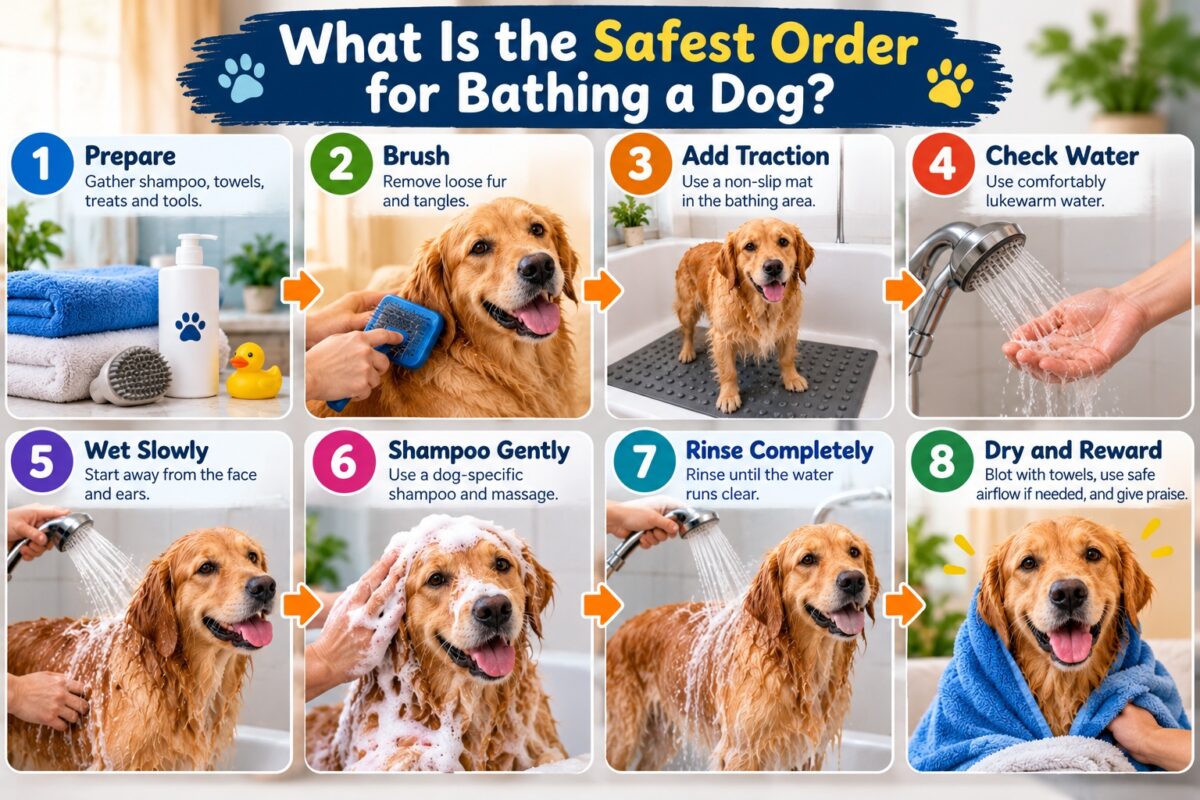
A safe home bath follows a predictable order: prepare, brush, secure the footing, wet, shampoo, rinse, dry, and reward. Preparation prevents many of the mistakes that happen once your hands are already wet.
- Prepare: Put shampoo, towels, treats, and rinsing tools within reach.
- Brush: Remove loose fur and manageable tangles.
- Add traction: Secure a non-slip mat in the bathing area.
- Check water: Use comfortably lukewarm water.
- Wet slowly: Start away from the face and ears.
- Shampoo gently: Use a dog-specific product.
- Rinse completely: Check hidden areas and dense fur.
- Dry properly: Blot first and add safe airflow if the coat requires it.
- Reward: Finish with praise or a small treat.
The biggest improvement I’ve found isn’t a special technique. It’s having everything ready before the dog enters the bathing area.
Dog Bath Products I Would Consider
If you’re improving your home bath setup, these are the types of products I’d prioritize before buying unnecessary grooming gadgets.
🏆 Best for Routine Baths
Earthbath Oatmeal & Aloe Pet Shampoo
★★★★☆
This is a dog-formulated shampoo designed for routine coat cleaning. I prefer starting with a mild dog-specific formula rather than using whatever human shampoo happens to be nearby.
🪮 Best for Pre-Bath Brushing
Hertzko Self-Cleaning Slicker Brush
★★★★☆
A slicker brush can help remove loose coat and manageable tangles before water makes grooming harder. I would choose the brush size and pressure according to the dog’s coat and sensitivity.
💧 Best for Towel Drying
Soggy Doggy Super Shammy
★★★★☆
An absorbent dog towel helps pull moisture from the coat without aggressive rubbing. I like having two towels ready for medium, long, or dense coats rather than trying to finish with one soaked towel.
Frequently Asked Questions
Can I use human shampoo on my dog just once?
It’s better to use shampoo formulated specifically for dogs. Human and baby shampoos aren’t designed around canine skin, and some dogs may develop dryness or irritation after unsuitable products.
What temperature should dog bath water be?
Use comfortably lukewarm water rather than hot or noticeably cold water for a routine bath. Test the running stream on your inner forearm before it touches your dog and recheck after changing the faucet.
How do I know if I rinsed all the shampoo out?
Keep rinsing until the coat feels clean rather than slick or soapy, and check dense areas near the skin. Spend extra time around the chest, belly, legs, armpits, tail, and undercoat where residue can hide.
Can bathing a dog too often cause itching?
Frequent bathing can contribute to dryness or irritation in some dogs, especially with unsuitable shampoo. However, itching also has many other causes, so persistent scratching, redness, odor, sores, or hair loss should be discussed with a veterinarian.
Should I let my dog air dry after a bath?
Thorough towel drying followed by indoor air drying may work for some short-coated dogs. Long, curly, thick, and double coats often need controlled airflow because moisture can remain trapped near the skin after the surface looks dry.
Final Takeaway
Most common dog bathing mistakes are preventable. Use dog-specific shampoo, lukewarm water, secure footing, gentle handling, thorough rinsing, and a drying method that matches your dog’s coat.
Don’t aim for the fastest or sudsiest bath. Aim for clean skin, a fully rinsed coat, safe handling, and a dog that can finish the routine without unnecessary discomfort.