

Can Dog Clippers Be Used on Horses? The Complete Honest Guide

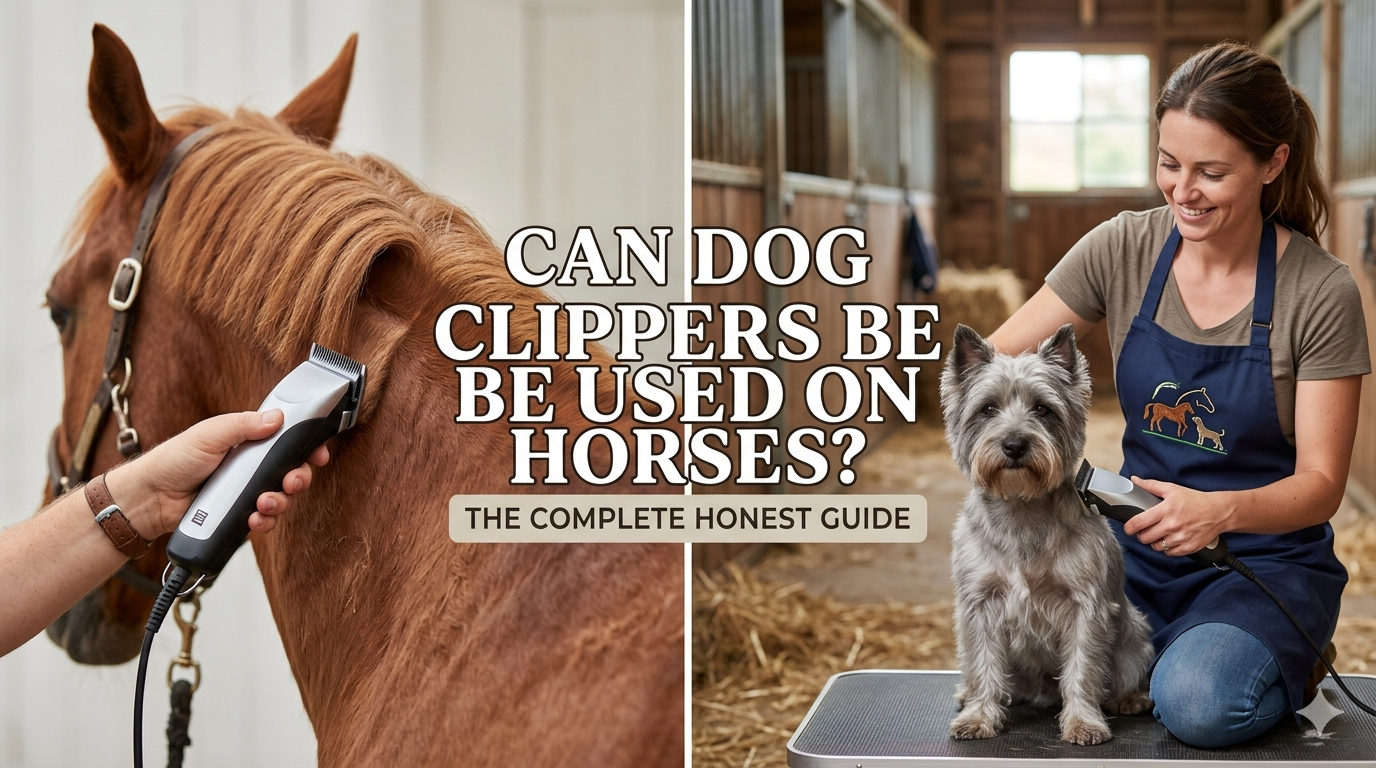
Yes, dog clippers can be used on horses — but with important limits. Professional-grade, high-power dog clippers work well for touch-ups, face trimming, and light trace clips. They’re not ideal for full-body clips on large horses. The key factors are motor power, blade quality, and heat management. The wrong clippers will overheat, burn the horse’s skin, and burn out fast.
You’ve got a pair of dog clippers sitting in the tack room. Your horse needs a trace clip before winter. You’re wondering — can I just use what I have?
It’s a fair question. I’m Ashraful, and I’ve spent years working with horse owners on grooming decisions just like this one. The answer isn’t a flat yes or no. It depends on your clippers, your horse’s coat, and how much area you need to clip.
Let me walk you through exactly what works, what doesn’t, and what you need to know before you fire up those clippers.
- Professional-grade dog clippers with brushless motors can handle horses for light to medium clipping tasks.
- Most consumer-grade dog clippers are underpowered for horse coats — expect overheating and blade wear.
- Dog clippers excel on horses for face trimming, bridle paths, leg feathers, and ears.
- Full-body clips on horses require at least 90W of motor power — most dog clippers fall well short.
- Keep blades oiled every few minutes and stop the moment you feel heat building up.
What’s the Real Difference Between Dog Clippers and Horse Clippers?
Here’s the thing — clippers look similar on the outside. The real difference lives inside the motor.
Horse clippers typically run at 120 watts or more. Most standard dog clippers run between 5 and 15 watts. That’s a massive gap in power. A horse’s coat is denser, coarser, and much thicker than a dog’s coat. Pushing a weak motor through that kind of coat is a recipe for burnout — both for the clippers and for the horse’s patience.
The blade design is different too. Horse clipper blades are wider and engineered to move through large surface areas quickly. Dog clipper blades are narrower and built for precision work on smaller animals. Using them on a horse means more passes, more time, and more heat.
Look for clippers rated “Super Duty” or “Heavy Duty” if you plan to use dog clippers on horses. These are designed to power through thick, matted, coarse coats — which is exactly what a horse’s winter coat is.
When Can You Actually Use Dog Clippers on a Horse?
Dog clippers shine in specific situations. They’re not a full replacement for horse clippers, but for certain jobs, they work beautifully.
Here are the tasks where dog clippers genuinely help:
- Face trimming — Around the eyes, muzzle, and jaw where precision matters
- Bridle path — The narrow strip behind the ears where a mane is cleared
- Ear trimming — Removing excess hair inside and around the ears
- Leg feathers — Trimming feathering on lower legs, especially on cobs or draft breeds
- Touch-ups — Fixing missed patches after a main clip
- Noise-sensitive horses — Dog clippers run quieter, which calms horses that react badly to louder horse clippers
The quieter vibration of dog clippers is actually one of their biggest advantages. Many experienced horse people use them specifically to desensitize young or nervous horses to clippers for the first time.
When Should You NOT Use Dog Clippers on a Horse?
Full-body clipping is where most dog clippers fail. A standard body clip on a 16-hand horse covers a huge surface area. Standard dog clippers aren’t built for that workload. They’ll slow down, heat up, and eventually stop cutting cleanly.
Here’s a quick comparison to help you decide:
| Task | Dog Clippers (Pro Grade) | Horse Clippers |
|---|---|---|
| Face & Muzzle Trim | Excellent | Good |
| Bridle Path | Excellent | Good |
| Ear Trim | Excellent | Adequate |
| Trace Clip | Good (takes longer) | Excellent |
| Full Body Clip | Poor (risk of overheating) | Excellent |
| Leg Feathers | Very Good | Good |
What Type of Dog Clippers Can Handle Horses?
Not all dog clippers are equal. This is the point that most articles miss.
Budget dog clippers — the kind you buy for $20 to $40 — will not cope with a horse’s coat. They’ll cut out after a few minutes, or worse, they’ll overheat and risk burning the horse’s skin.
Professional-grade clippers are a completely different story. Brands like Andis (an American grooming tool manufacturer founded in 1922) and Wahl (a grooming equipment brand founded in 1919 in Sterling, Illinois) make high-duty clippers that are explicitly rated for dogs, cats, and horses.
The Andis AGC Super 2-Speed and the Wahl KM10 are both popular examples. These use brushless motors, run cooler, and generate enough torque to work through coarse coats. Many professional show grooms use Andis AGC clippers on horse legs and heads daily.
Never let clippers get hot against a horse’s skin. There are documented cases of horses suffering burns around sensitive areas like the eyes when clippers overheated. Always check blade temperature every few minutes. If it’s too hot for your wrist, it’s too hot for your horse.
How to Use Dog Clippers on Horses Safely
If you’ve decided to go ahead, follow these steps. They’ll protect your horse and extend the life of your clippers.
- Wash and fully dry the horse’s coat before you start. Dirt and natural oils attract dust that clogs blades and dulls them faster.
- Oil the blades before you begin. Use proper clipper oil — not WD-40 or cooking oil.
- Clip against the direction of hair growth for a cleaner cut.
- Oil the blades again every 5 minutes while you’re working.
- Stop every 10 minutes and check blade temperature against your wrist. If it feels warm, it’s already getting close to unsafe.
- If the blades feel hot, spray with clipper coolant and wait before continuing.
- Keep the horse calm. Speak quietly, move slowly, and reward cooperation with a treat.
- Clean the blades and oil them thoroughly when you’re done.
The Overheating Problem — Why It’s Your Biggest Risk
Heat is the number one reason dog clippers fail on horses. The horse’s thick coat works like a blanket around the blade. There’s no airflow. The motor is working harder than it’s used to. Heat builds up fast.
Overheating causes two problems. First, the blades stop cutting cleanly and start dragging and pulling. That’s uncomfortable and stressful for the horse. Second, if you keep going, the blade surface can reach temperatures that burn skin — and horse skin is more sensitive than you might expect.
The fix is simple: stop often, check the blade, oil constantly, and work in shorter sessions. This is more critical with dog clippers than with dedicated horse clippers, which are engineered to dissipate heat more efficiently during long sessions.
Keep a small dish of paraffin or clipper cleaning fluid nearby. Every few passes, run the spinning blades through it, then wipe dry. This cools the blades and removes packed hair at the same time.
Do Horse Coat Texture and Thickness Change the Equation?
Yes — a lot. Not all horse coats are the same.
A fine-coated Thoroughbred in late spring is a very different job from a heavily feathered Clydesdale in November. Dog clippers handle fine summer coats much better than dense winter coats. If your horse has a thin, sleek coat, professional-grade dog clippers may handle a light trace clip without any problem.
But if your horse grows a thick, heavy winter coat — especially a native pony, cob, or draft breed — you’re pushing dog clippers well outside their comfort zone for body work. Stick to face and leg detail work in those cases, and invest in proper horse clippers for the big jobs.
Fine or summer coats: professional dog clippers work well for light clips and detail work. Dense or winter coats: use dog clippers only for face, ears, and legs. Invest in horse clippers for full-body work on heavy coats. Always prioritize motor power, blade quality, and heat management over saving money.
Best Dog Clippers That Work on Horses — What to Look For
If you want dog clippers that genuinely handle horses, here’s what matters:
- Brushless motor — Runs cooler, lasts longer, and provides more consistent torque through thick coats
- At least 90 watts of power — Below that, you’re working against the coat
- Detachable A5-style blades — These fit a wider range of blade sizes and are easy to swap out when they heat up
- Two-speed settings — High speed for thick body areas, low speed for sensitive spots
- Quiet operation — Especially important for head-shy or clipper-nervous horses
The Wahl KM10+ ticks every one of these boxes. It’s explicitly marketed for dogs, cats, and horses. Its brushless motor runs at two speeds — 3,000 and 3,700 RPM — with constant speed control that maintains cutting power through even the most stubborn coats. It’s also one of the quietest professional clippers on the market, which matters enormously when you’re working near a horse’s face and ears.
Wahl Pro Animal KM10+ Corded Clipper – Cats, Dogs & Horses, 2-Speed, Brushless Motor, #10 Prime Series Blade
This is the clipper I’d recommend for anyone who wants one tool that genuinely works for both dog grooming and horse detail work. Its brushless motor runs cooler and lasts over 10,000 hours, and it’s officially rated for horses — not just dogs.
Dog Clippers vs. Horse Clippers — Which Should You Buy?
Here’s the honest breakdown to help you decide.
Buy professional-grade dog clippers (like the Wahl KM10 or Andis AGC Super 2-Speed) if you:
- Mainly need to trim faces, ears, bridle paths, and legs
- Already groom dogs and want one tool for both
- Have a horse with a fine or moderate coat
- Work with noise-sensitive horses that react badly to louder horse clippers
Buy dedicated horse clippers if you:
- Need to do regular full-body or trace clips
- Have a heavy-coated breed (native pony, cob, draft horse)
- Clip multiple horses or clip frequently through winter
- Want the fastest, most efficient result with less risk
The sweet spot is this: a good set of professional dog clippers handles the detail work — face, ears, legs, bridle path — better than most horse clippers because they’re smaller, quieter, and more precise. Use horse clippers for the body and dog clippers for the finish work. That’s how many professional show grooms already work.
Can Cheap Dog Clippers Work on Horses at All?
The short answer: maybe, briefly, for small areas. Don’t count on it.
Cheap consumer clippers — anything under $50 — are not built for animal grooming at a professional level. The motors are single-speed, low power, and not designed to run continuously. They’ll cut through soft hair fine. But horse hair will dull the blades quickly and push the motor to its limit.
There are stories of people clipping an entire horse with a $30 set of Wahls out of desperation. It’s possible. It took hours, the result wasn’t clean, and the clippers didn’t last long after. That’s not a plan — that’s an emergency measure.
If budget is the issue, look for used professional clippers. A second-hand set of Liveryman or Heiniger horse clippers in good condition will outperform new cheap dog clippers every single time. You can find them through tack sales and equine Facebook groups for a fraction of the new price.
What About Using Horse Clippers on Dogs?
This question comes up a lot too. Horse clippers are bulky, heavy, and loud. They’re not practical for most dog breeds. You’d struggle to reach tight areas like armpits and groin. The wide blades aren’t suited for the finish work a dog’s coat needs.
That said, some large-breed dog owners do use horse clippers successfully on dogs with very thick coats. But it’s the exception, not the rule. For most dogs, purpose-built dog clippers are the right tool.
For more on general equine coat care, The Spruce Pets has a solid guide on horse clipping techniques. And the Horse and Hound clipping guide covers safety and technique in good detail.
Conclusion
Dog clippers can absolutely be used on horses — the right ones, for the right jobs. A professional-grade set with a brushless motor handles face work, ear trims, bridle paths, and leg feathers without any problem. For full-body clips on heavy coats, dedicated horse clippers are still the better tool.
Keep your blades oiled, watch for heat, and choose power over price. If you take one thing from this guide, let it be this: the motor is everything. I’m Ashraful, and I hope this helps you make the right call for your horse.
Frequently Asked Questions
Can I use regular dog clippers to clip my horse?
You can use regular dog clippers for small trimming tasks like the face, ears, and bridle path. For full-body clipping, regular dog clippers lack the motor power to handle a horse’s thick, dense coat efficiently and will likely overheat.
What happens if dog clippers overheat on a horse?
Overheated clippers stop cutting cleanly and begin dragging through the coat, which is uncomfortable for the horse. In serious cases, hot blades can burn the horse’s skin, particularly around sensitive areas like the eyes and ears. Always check blade temperature regularly and oil blades every few minutes.
Are Wahl or Andis dog clippers good enough for horses?
Professional models from both brands — specifically the Wahl KM10 and the Andis AGC Super 2-Speed — are rated for horse use. They feature brushless motors and enough torque to handle coarse coats. Many equestrian professionals use these for detail work on horses daily.
How do I stop dog clippers from overheating on a horse?
Oil the blades before you start and every 5 minutes while clipping. Take breaks every 10 minutes and check blade temperature against your wrist. Use clipper coolant spray if the blades feel warm. Running blades through a small dish of paraffin fluid also cools them and removes packed hair.
Can I do a full trace clip on my horse with dog clippers?
Yes, with a powerful professional-grade set, a trace clip is achievable. It will take longer than horse clippers, and you’ll need to manage heat carefully. Horses with finer coats are easier to clip this way than those with thick winter coats.
Why do some horse owners prefer dog clippers for faces and ears?
Dog clippers are smaller, quieter, and produce less vibration than large horse clippers. This makes them much less intimidating for horses, especially around the head and face. Many professional show grooms use dog clippers for all finish work because they give more control and precision.
Do I need different blades for using dog clippers on horses?
You can use standard A5-compatible blades for most horse grooming tasks. Wider blades (like the A5 wide series) cover more surface area per pass and speed up the job significantly. Keep spare blades on hand so you can swap to a cool blade when one gets warm.
