

Can You Use Dog Clippers Without a Guard? Safe or Not?

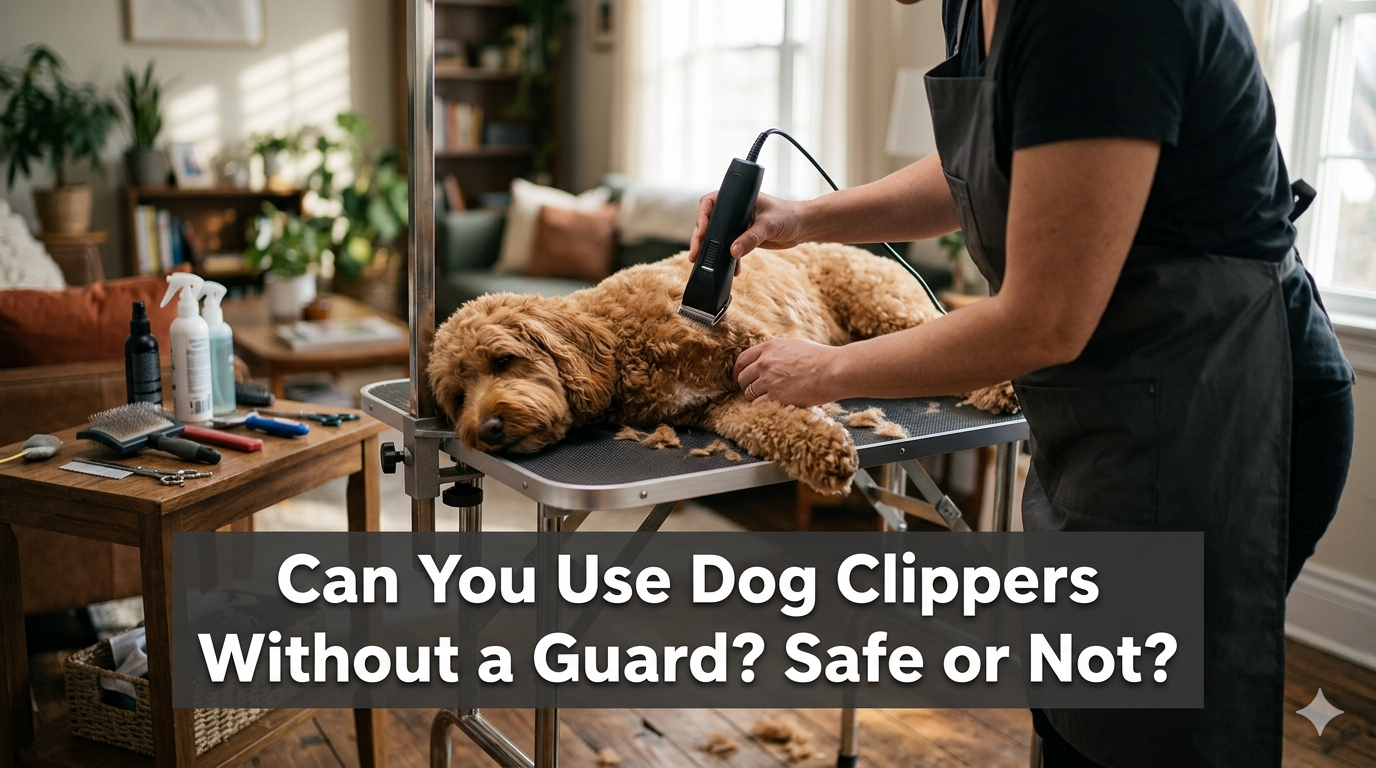
Can you use dog clippers without a guard? Yes, you can — but the blades will cut right down to the skin. That means a very short shave, a higher risk of nicking your dog, and faster blade wear. Guards exist to control the cut length and protect your dog’s skin. If you skip them, you need experience, steady hands, and the right blade type.
The Short Answer — Yes, But Here’s What You Need to Know
You can absolutely run dog clippers without a guard attached. It happens all the time in professional grooming salons. Groomers use a bare blade to trim sanitary areas, paw pads, and belly fur every single day.
But here’s the thing — professionals do it intentionally. They choose a specific blade for a specific job. Running clippers without a guard by accident, or without knowing your blade size, is where things go wrong.
I’m Ashraful, and I’ve spent years researching pet grooming tools and techniques. In this guide, I’ll walk you through exactly when it’s safe to skip the guard, which blade numbers to use, and where you must never go guardless on your dog.
- Dog clippers can be used without a guard, but they’ll cut hair very close to the skin.
- Pros regularly clip sanitary areas and paw pads without a guard — it’s standard practice.
- The higher the blade number, the shorter the cut. A #10 blade leaves just 1/16 inch of hair.
- Skin folds, armpits, and the groin area are danger zones. Always use a guard or scissors there.
- Beginners should always start with a guard comb attached — you can always go shorter later.
What Does a Clipper Guard Actually Do?
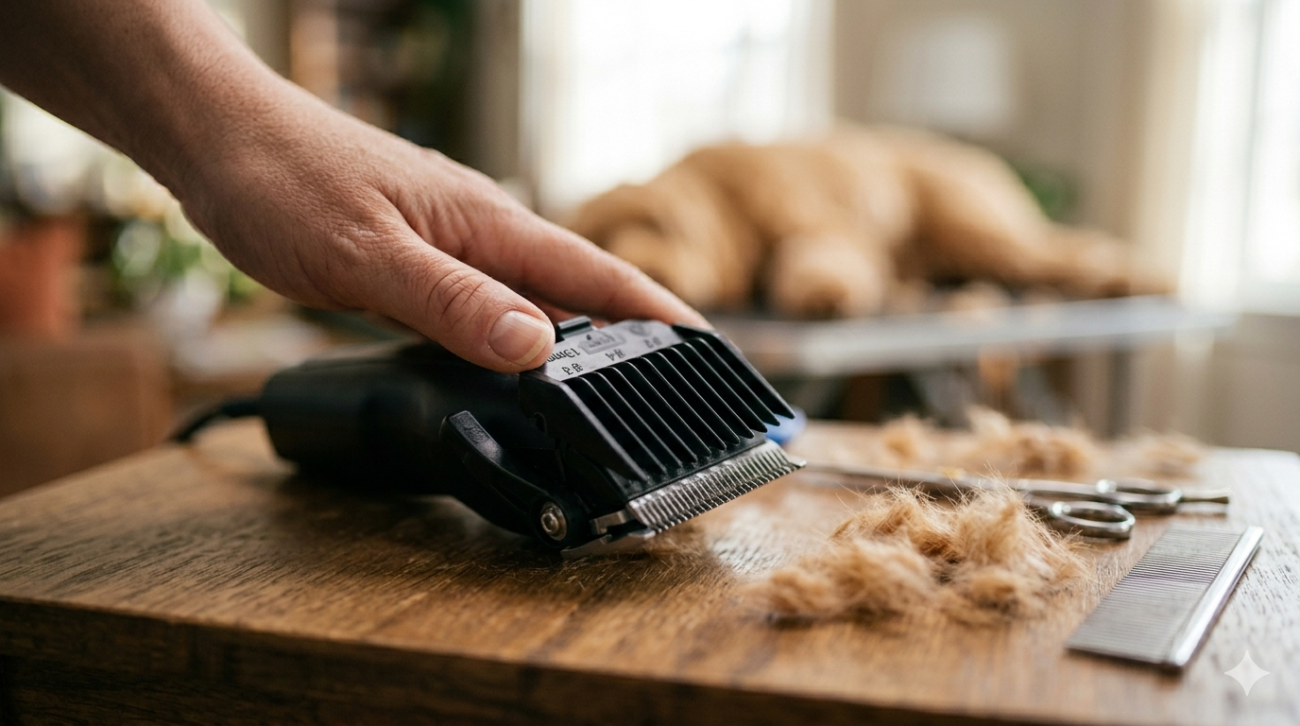
A clipper guard — also called a guard comb or attachment comb — is a plastic comb that snaps over the clipper blade. It creates a physical gap between the blade and your dog’s skin.
That gap determines how much hair gets left behind after each pass. Different guard sizes leave different lengths, typically ranging from 1/8 inch (3mm) up to 1 inch (25mm) or more.
Guards Control Length
This is the main job of a guard. By attaching a size 4 guard (roughly 1/2 inch), for example, you make sure no area gets cut shorter than that length. It’s an automatic safety net for inconsistent technique.
Guards Protect the Skin
Your dog’s skin sits very close to the surface in some spots. Think about the loose skin in the armpit area or the thin skin behind the ears. A guard acts as a buffer that keeps the blade from dragging directly over sensitive skin.
Skin folds are the number one place where guardless clipping causes cuts. The blade catches a pinch of loose skin in less than a second. Never clip armpits, the groin, or wrinkled areas without a guard — unless you’re an experienced groomer.
Guards Protect the Blades
Here’s something most people don’t think about. Clipping directly on bare skin wears out your blades faster. Skin oils and direct contact dull the cutting edge much quicker than clipping through a coat with a guard in place.
Good clipper blades aren’t cheap. Protecting them means more consistent cuts and less money spent on replacements.
What Happens When You Clip Without a Guard?
Without a guard, the bare blade cuts right to its own native length. That length depends entirely on the blade number you’re using.
A #10 blade without a guard leaves roughly 1/16 of an inch — that’s almost like a shave. A #7 blade leaves about 1/8 of an inch. Neither of those looks or feels like a typical groomed coat on most breeds.
Beyond the length, here’s what else can happen:
- Uneven patches — Without a guide, slight angle changes leave tracks in the coat.
- Clipper burn — A hot, guardless blade running on bare skin can irritate the skin surface, leaving a red rash called clipper burn.
- Nicks and cuts — Especially in areas with thin or loose skin, the blade can catch and nick.
- Coat shock in double-coat breeds — Clipping too short can damage the undercoat structure in breeds like Huskies and Golden Retrievers, sometimes permanently affecting regrowth.
Some double-coated breeds — like Huskies, Samoyeds, and Collies — should rarely be clipped at all, with or without a guard. Clipping their coat disrupts the natural insulation system. Always research your breed before putting any blade to their coat.
Dog Clipper Blade Numbers Explained (No Guard Needed for These)
Here’s where it gets interesting. When professional groomers say they’re “clipping without a guard,” they usually mean they’re relying on the blade number itself to control the cut length.
This is different from using a plastic guard comb. It’s a more advanced approach — and it requires understanding how blade numbers work.
The numbering system is backward from what you’d expect. Higher blade numbers = shorter cuts. A #3 blade leaves a longer coat. A #40 blade cuts down to nearly nothing.
Revival Animal Health’s blade chart is a reliable free reference for matching blade numbers to specific breeds.
Blade Number Chart: Cut Lengths at a Glance
| Blade Number | Hair Left Behind | Best Used For |
|---|---|---|
| #3 or #3F | 1/2 inch (13mm) | Full body, longer finish cut |
| #4 or #4F | 3/8 inch (10mm) | Body work, popular with groomers |
| #5 or #5F | 1/4 inch (6mm) | Short body clip, low maintenance |
| #7 or #7F | 1/8 inch (3mm) | Summer cuts, short body trim |
| #10 | 1/16 inch (1.5mm) | Paw pads, sanitary areas, belly |
| #15 | 1/32 inch (1.2mm) | Face detail, close trim finishing |
| #30 or #40 | Near skin level | Surgical prep, paw pad shaving |
The letter “F” after a blade number stands for Finish (also called Full-Cut). Finish blades have closer-set teeth that produce a smooth, even result. Skip-tooth blades — which have alternating long and short teeth — are better for thick or matted coats, but they’re more aggressive without a guard.
Always choose an “F” or “FC” finish blade if you’re clipping without a guard. The tightly packed teeth cut more evenly and are far less likely to catch loose skin compared to skip-tooth blades. Wahl and Andis both offer excellent finish blade options.
Also important: clipping against the direction of hair growth leaves the coat shorter than clipping with it. A #7 blade going with the grain leaves 1/8 inch. The same blade going against the grain leaves closer to 1/16 inch — nearly the same result as a #10. Keep this in mind if you’re working without a guard.
When Is It Safe to Use Dog Clippers Without a Guard?
The honest answer? It depends on your skill level, the area of the body, and the blade you’re using. Let’s break it down clearly.
Safe Areas to Clip Without a Guard
These are the areas where experienced groomers routinely use a bare blade. Most of them are small, targeted zones:
- Paw pads — Groomers use a #10 or #30 blade to shave between the pads. The surface is tight and defined, which makes control easier.
- Sanitary areas — The belly, groin, and area under the tail. A #10 blade keeps these areas clean and hygienic.
- Face (with experience) — A #10 or #15 blade on the muzzle, cheeks, and forehead. Requires a calm dog and steady hands.
- Ear edges — Some breeds need ear canal hair removed or trimmed. A fine blade without a guard works here with care.
Danger Zones — Never Skip the Guard Here
Some parts of the dog’s body are genuinely risky to clip without a guard. The skin here is thin, loose, or folded — making nicks almost inevitable if you’re not highly experienced.
- Armpits and inner leg folds — Loose, moving skin. The blade catches it instantly.
- Around the ears — Ear leather is thin. A slight angle change can nick the edge.
- Elbow and hock areas — Bony joints with stretched skin. High nick risk.
- Neck and throat area — Loose skin especially on older dogs or loose-skinned breeds like Basset Hounds or Shar Peis.
Hot blades are a separate danger when clipping without a guard. The blade sits closer to skin, so even mild overheating causes discomfort. Touch the blade flat against your own wrist every few minutes. If it feels hot to you, it’s definitely hot for your dog.
How to Use Dog Clippers Without a Guard Safely
If you’ve decided to clip without a guard — or you’re doing a sanitary trim on your dog at home — follow these steps to keep things safe.
- Bathe and dry the dog completely first. Dirty or damp coats dull blades faster and cause drag that pulls the skin.
- Choose a finish blade (#10 or #10F) for sanitary and paw areas. Skip-tooth blades are too aggressive for skin-level work.
- Oil the blade before starting. A single drop of clipper oil on the teeth prevents friction and keeps the blade running cool.
- Clip in the direction of hair growth — going with the grain leaves a longer result and reduces the chance of clipper burn.
- Use your free hand to stretch the skin flat. Pull loose skin taut just ahead of where you’re clipping. This removes folds that the blade can catch.
- Take short passes. Don’t drag the clipper in one long sweep. Short overlapping strokes give you more control.
- Check blade temperature every 2–3 minutes. Touch the flat side of the blade to your wrist. If it’s hot, stop and let it cool or swap to a second blade.
- Stop if your dog shows stress. Whining, trembling, or sudden movement increases the risk of accidents significantly.
That’s the core routine. It sounds like a lot at first, but after a few sessions it becomes second nature.
Wahl USA Pro-Grip Pet Grooming Corded Clipper Kit — Model 9164
This kit is one of the best starting points for home groomers — it includes four guard combs (3mm, 6mm, 10mm, and 13mm), self-sharpening high-carbon steel blades, blade oil, scissors, and a storage case, so you can practice both with and without a guard safely at home.
Should Beginners Use Clippers Without a Guard?
Short answer: no, not for full body grooming. But a qualified yes for small sanitary areas.
If you’re just getting started with home grooming, attach a guard comb for every body pass. It gives you a built-in safety margin. You can always remove the guard and go shorter once you understand how your clippers move through your dog’s particular coat.
The only exception for beginners is paw pad trimming. A #10 blade on the pads (not the top of the foot — just the flat pad surface) is manageable even without experience. The surface is firm and the area is small enough to control easily.
The golden rule in grooming is: start longer, go shorter. You can always take more hair off. You can’t put it back. Start with your longest guard comb and work down only if you’re sure you want a shorter result.
Guard Comb vs. Blade Number — What’s the Difference?
This confuses a lot of home groomers. Both guard combs and blade numbers control cut length — but they work differently.
| Feature | Guard Comb | Blade Number |
|---|---|---|
| How it works | Plastic comb clips over the blade | Metal blade cuts at a fixed depth |
| Cut lengths available | 1/8 inch up to 1 inch or more | 1/16 inch (#10) to 1/2 inch (#3) |
| Works on matted coats? | No — guard combs snag in mats | Yes — bare blades cut through better |
| Best for beginners? | Yes — forgiving and adjustable | Better for experienced groomers |
| Skin protection | High — comb keeps blade off skin | Lower — blade works at skin level |
Most professional groomers use both systems together. They snap a guard comb over a #10 blade to get longer lengths with more control. The #10 acts as the foundation, and the guard sets the final length.
Brands like Wahl (an American clipper company with roots dating back to 1919) and Andis make guard combs specifically designed to fit over their #10 and #30 blades. Check compatibility before buying combs separately.
For a deeper look at blade sharpness and maintenance, Clipit Grooming’s blade care guide covers exactly when to resharpen and how to keep blades running cool.
You can use dog clippers without a guard — but it cuts hair close to the skin and requires more skill. Professionals do it regularly for paw pads and sanitary areas using a #10 or finish blade. Beginners should always use guard combs for full body grooming. Danger zones like armpits, ear edges, and skin folds should never be clipped guardless without experience. Start long, go short only when you’re confident — and always check your blade temperature.
Conclusion
Using dog clippers without a guard is possible, but it’s not the right move for every situation or every person. If you’re new to grooming, keep the guard on for body work — it’s your best protection against mistakes that can’t be undone.
Save the bare-blade technique for small, controlled areas like paw pads and sanitary trims. And always choose a finish blade over a skip-tooth when clipping close to skin. Your dog will thank you.
Start with a complete kit that includes guard combs, and you’ll have everything you need to go both with and without a guard — safely and on your terms. I’m Ashraful, and I hope this guide gives you the confidence to groom your dog at home without the guesswork.
Frequently Asked Questions
Can you use dog clippers without a guard on the whole body?
You can, but it’s not recommended for most home groomers. Without a guard, the blade cuts very close to the skin — typically leaving 1/16 to 1/8 inch depending on the blade number. For full body grooming, use a guard comb to avoid cutting too short or nicking sensitive areas.
What happens if you use dog clippers without a guard?
The blades cut hair right down to their native blade length, which is usually very short. This increases the risk of skin nicks, clipper burn, and uneven patches — especially over bony areas and skin folds. It also wears out the blade faster due to direct contact with skin and oils.
Which blade should I use without a guard for sanitary trims?
A #10 finish blade (marked #10F) is the standard choice for sanitary and hygiene areas. It leaves about 1/16 inch of hair and has closely spaced teeth that reduce the risk of catching loose skin. Most professional groomers use a #10 for belly, groin, and paw pad trims.
Is it safe for beginners to clip dogs without a guard?
For full body grooming, no — beginners should always use a guard comb. The only exception is paw pad trimming, where a #10 blade on the flat pad surface is manageable with a calm dog. Always start with the longest guard and work shorter only as your confidence grows.
How do I stop my dog clippers from cutting too short without a guard?
Always clip in the direction of hair growth — going with the grain leaves hair longer than going against it. Use a finish blade with a higher number (like #5 or #7) rather than a #10 to leave more coat behind. For precise length control, attach a guard comb instead of relying on the bare blade.
What’s the difference between a guard comb and a clipper blade number?
A guard comb is a plastic attachment that clips over the blade and physically lifts the cutting edge away from the skin to control length. A blade number refers to the metal blade itself and how short it cuts on its own. Professionals often use both together — a guard comb over a #10 blade gives longer, more controlled lengths.
Can hot clippers hurt a dog when used without a guard?
Yes. Without a guard, the blade sits directly against the skin. If the blade overheats — which can happen within 10–20 minutes of continuous use — it causes clipper burn, a painful skin irritation that looks like a rash. Touch the flat blade to your wrist every few minutes and stop if it feels hot.
