Quick Answer
Replace dog clipper blades when they pull hair, leave uneven cuts, have damaged teeth, or stop cutting after proper cleaning and oiling. There’s no universal replacement schedule. Blade lifespan depends on grooming frequency, coat condition, maintenance, and blade quality. Check the Andis blade maintenance guidance before replacing a blade that may only need cleaning or servicing.
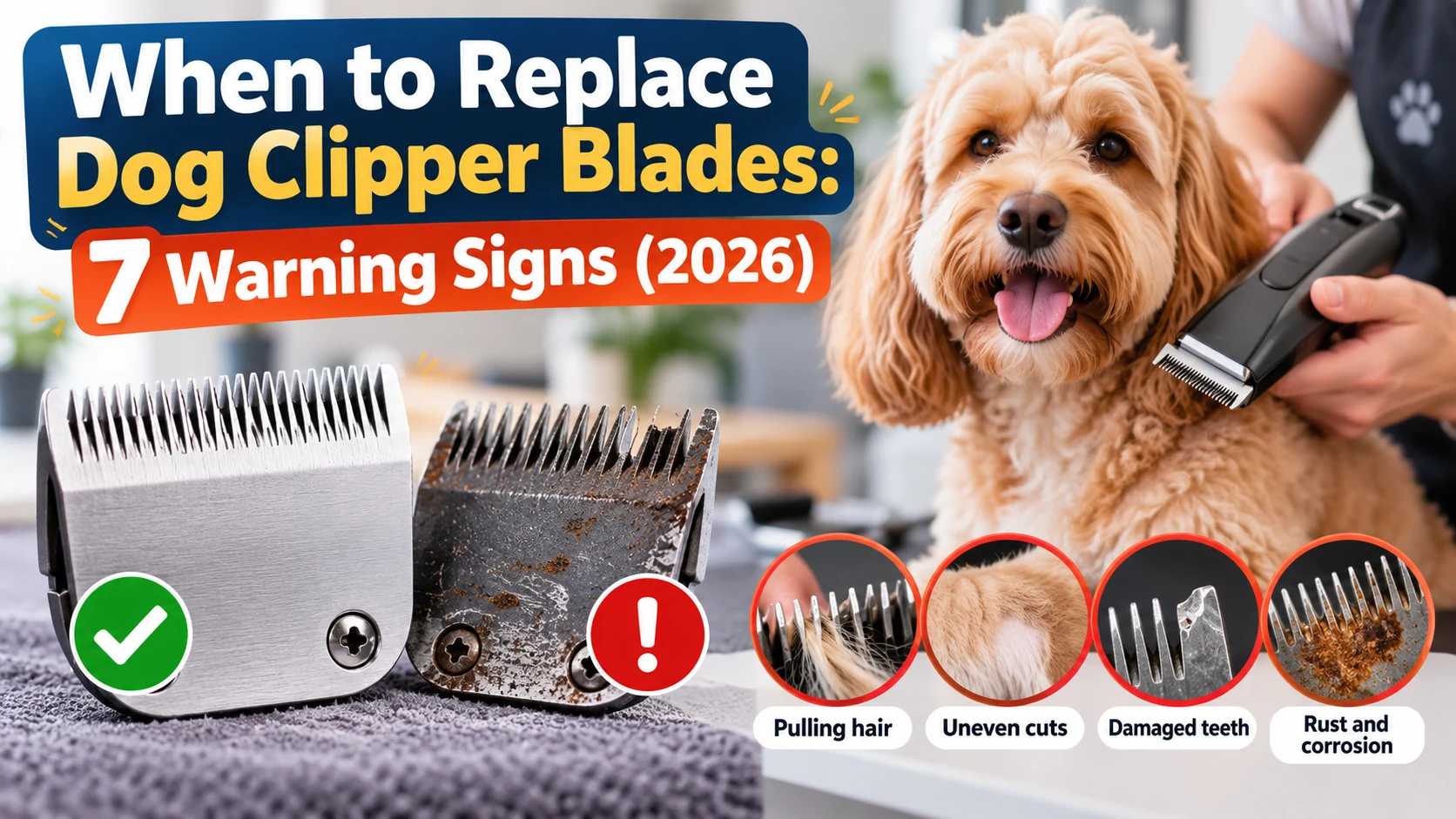
7 signs your dog clipper blade needs attention
- Pulling hair: The blade drags or snags instead of cutting smoothly.
- Uneven cutting: Repeated passes leave streaks or missed patches.
- Damaged teeth: Visible chips, bent teeth, or cracks make the blade unsafe.
- Excessive heat: The blade becomes unusually hot despite correct maintenance.
- Visible corrosion: Rust or pitting affects the cutting surfaces.
- Strange vibrations: The blade rattles, wobbles, or doesn’t sit securely.
- Poor performance: Cleaning, lubrication, and troubleshooting don’t restore cutting.
Quick check: Clean and oil an undamaged blade, then test it carefully on a clean, dry coat. Stop immediately if it continues pulling or snagging.
Wondering when to replace dog clipper blades? A worn blade can turn a routine grooming session into an uncomfortable experience for your dog.
The tricky part is knowing whether the blade is truly worn or simply dirty. I’ll walk through the warning signs, practical checks, replacement timing, and ways to avoid buying unnecessary parts.
What Does It Mean When a Dog Clipper Blade Needs Replacing?

A dog clipper blade needs replacing when its cutting surfaces are damaged, excessively worn, or unable to cut safely after appropriate servicing. Some dull detachable blades can be professionally sharpened instead.
Most conventional clipper blades contain two cutting parts: a stationary comb blade and a moving cutter. The moving cutter slides rapidly across the stationary blade to cut hair.
How do clipper blades become dull?
Repeated cutting gradually wears the edges. Dirt, grit, dried coat products, and inadequate lubrication can accelerate that process.
The following conditions often shorten useful blade life:
- Dirty coats: Sand and debris increase friction and wear.
- Thick coats: Dense, curly, or coarse hair creates more cutting resistance.
- Poor lubrication: Dry cutting surfaces develop unnecessary friction.
- Improper storage: Moisture encourages corrosion.
- Impact damage: Dropping a blade can bend teeth or affect alignment.
- Heavy grooming: Frequent use increases cumulative blade wear.
A blade that struggles isn’t automatically dull. Hair trapped between the cutting surfaces can create similar symptoms.
What Are the 7 Signs You Need to Replace Dog Clipper Blades?
The most reliable signs involve cutting performance, visible damage, and behavior after maintenance. Always stop grooming before inspecting a suspicious blade.
1. The blade pulls or snags your dog’s hair
Hair pulling is one of the clearest signs of poor cutting performance. Instead of slicing through the coat, the blade catches strands and drags them.
Your dog might flinch, move away, or become reluctant to continue. Don’t force the clipper through resistant hair.
First, check for tangled fur, embedded debris, and inadequate lubrication. If a clean, properly oiled blade keeps pulling, consider sharpening or replacement.
2. The blade leaves uneven patches and cutting lines
A functioning blade should produce a reasonably consistent cut when used correctly on a suitable coat. Dull or poorly maintained blades may leave visible tracks.
Look for these symptoms:
- Repeated missed strips of hair.
- Uneven cutting despite consistent technique.
- Areas requiring unnecessary repeated passes.
- Hair bending rather than entering the cutting teeth.
Remember that coat preparation matters. Matted fur, incorrect cutting direction, and unsuitable attachment combs can also produce patchy results.
3. The blade has broken, bent, or chipped teeth
Visible tooth damage calls for immediate attention. Broken or nicked teeth can scratch, catch, or cut your dog’s skin.
Turn the clipper off, disconnect its power source, and inspect the blade carefully without sliding your fingers across the teeth.
If a tooth is broken or bent, replace the blade. Don’t try to straighten damaged teeth with pliers or continue using the blade.
4. The blade becomes unusually hot
Dog clipper blades naturally warm during operation because their cutting surfaces move against each other. Excessive heat creates a risk of discomfort or burns.
A dull or poorly lubricated blade may generate additional friction. However, heat alone doesn’t prove the cutting edges are worn.
If the blade feels hot, stop grooming and allow it to cool. Check lubrication, cleaning, and the manufacturer’s instructions before resuming.
Safety tip: Test blade temperature frequently against your own skin, using the flat blade surface rather than its teeth. Never place an uncomfortably hot blade against your dog.
5. You notice rust or corrosion
Rust suggests moisture has reached the blade’s metal surfaces. Corrosion can interfere with smooth cutting and proper blade movement.
Light surface discoloration may be removable during appropriate servicing. Deep rust, pitting, and damaged cutting surfaces are stronger reasons for replacement.
Store blades completely dry with the recommended protective oil. Avoid leaving them in damp bathrooms or sealed containers while wet.
6. The blade makes unusual noises or vibrates
A blade that rattles, wobbles, or vibrates excessively may have a seating or alignment problem. Wear in the clipper’s drive mechanism can cause similar symptoms.
Switch off the clipper and inspect its blade connection. Follow your model’s instructions for removing and reinstalling the blade.
If the blade doesn’t attach securely, stop using it. A loose or damaged blade assembly should be inspected or replaced as appropriate.
7. Cleaning and oiling no longer restore performance
This is one of the strongest practical indicators of a worn cutting edge. Maintenance often restores cutting when trapped hair or dryness caused the problem.
If performance remains poor, compare the blade with another known-good, compatible blade when possible. This helps identify whether the fault belongs to the blade or the clipper.
A failing blade drive or weak motor can imitate a dull blade. Avoid replacing several blades before checking the clipper itself.
How Often Should You Replace Dog Clipper Blades?
Dog clipper blade replacement depends on workload rather than a fixed expiration date. Home grooming and professional grooming place very different demands on cutting equipment.
Wahl’s animal clipper guidance suggests sharpening or changing blades approximately every six months for fine coats and every three months for thick, coarse, or curly coats. These are maintenance reference points, not universal deadlines.
| Grooming situation | Suggested approach | When to replace |
|---|---|---|
| Occasional home grooming | Inspect and maintain after use | Damage or persistent cutting problems |
| Fine-coat clipping | Review sharpness around six months under Wahl’s guidance | When servicing cannot restore safe cutting |
| Thick, curly, or coarse coats | Review sharpness around three months under Wahl’s guidance | When worn or damaged |
| Professional daily grooming | Inspect frequently and rotate maintained blades | Based on actual wear and service results |
Source: Wahl Animal’s sharpening and replacement guidance.
For home grooming, I favor a condition-based approach over replacing blades on a calendar. An undamaged blade that cuts smoothly after maintenance may still have useful life remaining.
How Can You Tell Whether a Dog Clipper Blade Is Dull or Dirty?
A dirty blade may cut poorly because hair and residue interfere with movement. A dull blade has worn cutting edges that cleaning alone cannot restore.
Use this comparison to identify the likely problem.
| Symptom | Possible cause | First action |
|---|---|---|
| Hair trapped between teeth | Buildup | Clean blade |
| Streaking after dry operation | Poor lubrication | Apply clipper oil |
| Pulling after full maintenance | Dullness or drive fault | Test another compatible blade |
| Visible broken tooth | Physical damage | Replace immediately |
| Several blades fail on one clipper | Clipper or blade drive issue | Inspect and service clipper |
One useful diagnostic is changing only one variable at a time. Start with cleaning, then lubrication, followed by a known-good blade comparison.
This approach reduces unnecessary purchases. It also helps prevent continued grooming with defective equipment.
How Do You Test a Dog Clipper Blade Before Replacing It?
You can perform a basic inspection and maintenance check at home. The goal is to identify obvious damage or restore performance without risking your dog’s skin.
Step 1: Turn off and disconnect the clipper
Unplug corded clippers or switch off cordless models before handling their blades. Follow the manufacturer’s instructions for blade removal.
Step 2: Inspect the teeth and cutting surfaces
Look for chips, bent teeth, corrosion, trapped hair, and unusual wear. Don’t run your fingertips along sharp edges.
Stop immediately if you notice structural damage.
Step 3: Remove trapped hair and debris
Use a suitable soft cleaning brush. Clean accessible blade surfaces and the clipper’s blade cavity as directed by the manufacturer.
Don’t dismantle spring-loaded blade assemblies unless your model’s instructions specifically permit it.
Step 4: Apply the recommended clipper oil
Lubricate the correct points according to the blade manufacturer’s instructions. Use oil intended for clipper blades rather than household cooking oil.
Andis recommends oiling its applicable blades before, during, and after use. Wipe excess oil away with a soft cloth.
Step 5: Check the blade’s movement
Reassemble the clipper correctly and operate it away from your dog. Listen for unusual noise and check whether the blade moves normally.
Turn it off if you notice binding, excessive vibration, or unstable movement.
Step 6: Test cutting performance carefully
Only test an undamaged, securely attached blade on clean, dry, unmatted hair. Choose an accessible area and use the correct cutting technique.
If it still pulls, stop grooming. Consider professional sharpening, blade replacement, or clipper servicing rather than forcing another pass.
Should You Sharpen Dog Clipper Blades or Buy New Ones?
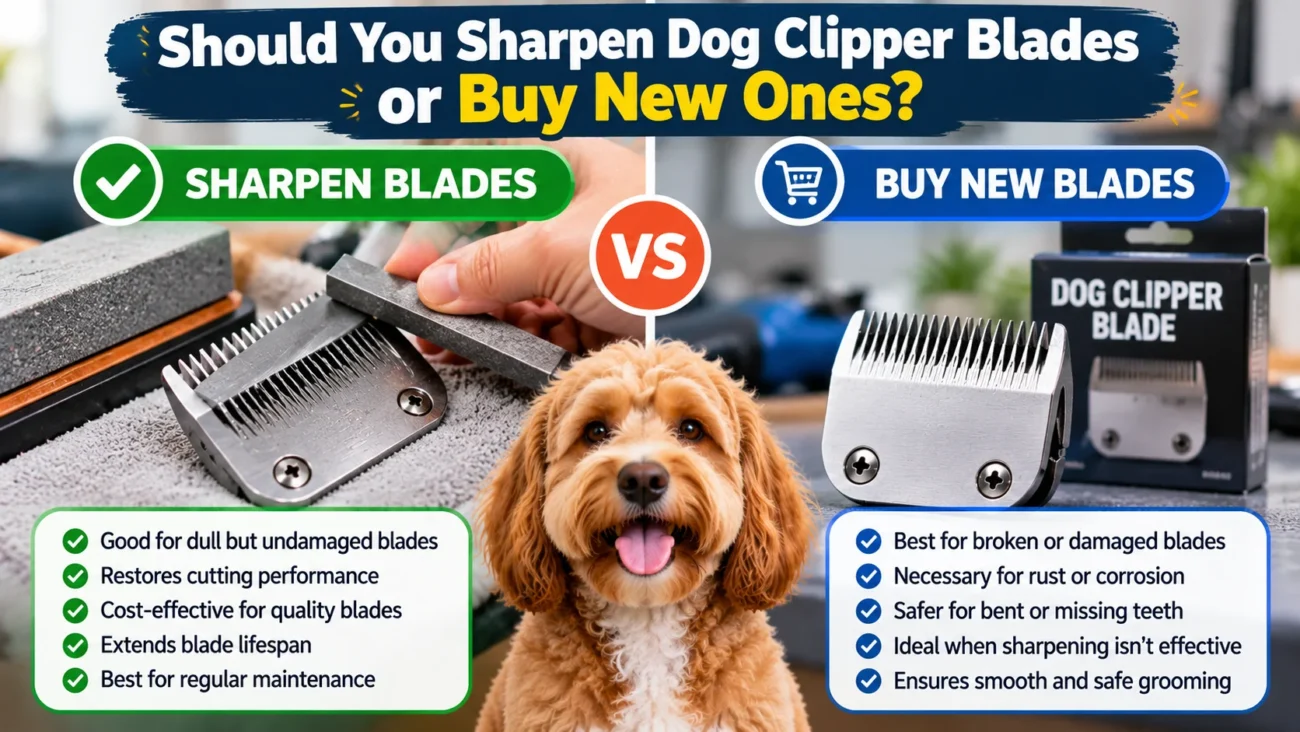
Sharpening may restore some dull metal blades, while replacement is safer for broken or structurally damaged blades. Your blade’s construction and replacement cost matter too.
When sharpening makes sense
- The blade has dull cutting edges but no broken teeth.
- A professional confirms the blade is suitable for sharpening.
- The blade’s remaining condition justifies the service cost.
- Correct sharpening can preserve tooth geometry and blade alignment.
When replacement is the better option
- The blade contains broken or bent teeth.
- Corrosion has damaged important cutting surfaces.
- The blade cannot maintain correct tension or alignment.
- Professional sharpening is unavailable or uneconomical.
- The blade manufacturer recommends replacing that blade assembly.
Ceramic cutters and specialized blade sets require particular care. Don’t assume every ceramic or adjustable blade can be sharpened using ordinary metal-blade equipment.
For replacement decisions, compare the cost of authorized sharpening against a compatible new blade. Professional servicing also helps uncover faults that simple cleaning misses.
Can Using a Dull Dog Clipper Blade Hurt Your Dog?
Yes. A dull or malfunctioning blade may pull hair, increase grooming time, and contribute to skin irritation or discomfort.
Broken teeth create a more immediate injury hazard. Excessively hot blades can also burn sensitive skin.
Watch for these warning signs during grooming
- Your dog repeatedly flinches when the blade touches the coat.
- Hair catches instead of cutting cleanly.
- Redness or irritation develops in the clipped area.
- The blade feels uncomfortably warm.
- Your dog shows sudden distress or pain.
Stop grooming when these problems appear. Allow the skin to settle and inspect your equipment before continuing.
If your dog has persistent redness, broken skin, swelling, or signs of significant pain, consult a veterinarian.
How Can You Make Dog Clipper Blades Last Longer?
Clean coats, correct lubrication, and dry storage can extend useful blade life. Preventive maintenance also helps maintain consistent cutting performance.
Clean the coat before clipping
Dirt and grit increase wear on cutting edges. Bathe or brush your dog as appropriate, and let the coat dry thoroughly before ordinary clipping.
Don’t force a blade through tight mats. Severe matting may require a professional groomer’s help.
Clean the blades after grooming
Remove accumulated hair and residue with the recommended brush and cleaning products. Follow the instructions for any blade disinfectant or cleaner.
Never immerse an entire clipper in water. Some blades also have cleaning restrictions based on their construction.
Use proper lubrication
Blade oil reduces friction between moving metal surfaces. Cooling spray is not always a substitute for regular oiling.
Check your clipper manual for the correct quantity and application points. Excess oil should be removed before storage.
Store blades safely
Let cleaned blades dry completely. Apply protective oil when recommended, then store them in a clean, dry location.
Use blade guards or protective cases to prevent teeth from striking other tools. Avoid stacking loose blades together.
Maintain the clipper itself
A working blade also depends on the clipper’s drive assembly, hinge, and motor. Worn mechanical parts may cause poor cutting even with new blades.
Andis explains this in its clipper servicing and blade drive guidance.
What Should You Check Before Buying Replacement Dog Clipper Blades?
Compatibility matters more than the blade’s appearance. Two similarly sized blades may use different attachment systems or fit different clipper families.
Before ordering, confirm these details:
- Clipper model: Check the exact brand and model number.
- Blade system: Identify detachable, adjustable, screw-mounted, or proprietary construction.
- Blade number: Match the intended coat length and grooming application.
- Material: Consider compatible stainless-steel, carbon-steel, or ceramic-cutter options.
- Manufacturer guidance: Verify fit using the official compatibility information.
- Replacement parts: Determine whether you need a complete blade set or an approved individual component.
Blade numbers describe cutting length, but they don’t establish compatibility. For example, a #10 blade from one attachment system won’t necessarily fit another.
For further model-specific instructions, consult the Wahl support center or your clipper manufacturer’s official documentation.
Which Replacement Dog Clipper Blades and Maintenance Products Are Worth Considering?
A replacement should match your equipment and grooming needs. These established Andis options provide starting points for compatible systems.
Affiliate disclosure: This section contains Amazon affiliate search links. Qualifying purchases may earn a commission at no additional cost to you.
🏆 Metal detachable blade
Andis UltraEdge #10 Blade
★★★★☆ 4/5
A carbon-steel detachable blade designed for compatible professional-style clippers. It’s a practical replacement candidate when an existing #10 blade is worn. Confirm your clipper’s attachment system before purchasing.
🌡️ Ceramic cutter option
Andis CeramicEdge #10 Blade
★★★★☆ 4/5
A detachable blade with a ceramic moving cutter, intended for compatible clippers. The ceramic design can offer different heat and wear characteristics from all-metal blades. Check the exact model and replacement instructions.
🛠️ Maintenance essential
Andis Clipper Oil
★★★★☆ 4/5
Dedicated clipper blade lubricant helps reduce friction during operation. It’s worth considering before replacing an otherwise undamaged blade that cuts poorly due to dryness.
Ratings above are editorial suitability assessments, not verified customer review averages or hands-on test scores.
Frequently Asked Questions About Dog Clipper Blade Replacement
How long do dog clipper blades usually last?
Dog clipper blades have no fixed lifespan. Their useful life depends on coat type, grooming frequency, preparation, and maintenance. Some blades may serve occasional home grooming for years, while heavily used blades need much more frequent sharpening or replacement. Judge their condition rather than relying on age alone.
Can you sharpen dog clipper blades instead of replacing them?
Some metal dog clipper blades can be professionally sharpened when their teeth and cutting surfaces remain structurally sound. Sharpening may restore their performance, but it cannot safely repair broken teeth or severe corrosion. Check with a qualified sharpening service and the blade manufacturer before proceeding.
Why are my new dog clipper blades not cutting?
New blades may cut poorly because of incorrect installation, trapped hair, missing lubrication, an unsuitable blade system, or a worn clipper drive. Confirm compatibility, inspect the blade connection, and follow the manufacturer’s setup instructions. If several compatible blades fail, the clipper itself may need servicing.
Do ceramic dog clipper blades last longer than steel blades?
Ceramic cutters may offer useful wear and heat-management characteristics, but longevity depends on their design and use. They can also be vulnerable to chipping after impact. Steel and ceramic options both need correct cleaning, handling, and maintenance, so don’t assume either material will always last longer.
Should you replace both parts of a dog clipper blade?
It depends on the blade assembly. Some manufacturers provide complete replacement sets, while certain systems allow approved individual cutter replacement. Matched cutting surfaces, correct alignment, and proper tension are essential. Follow the manufacturer’s instructions rather than mixing incompatible parts to save money.
Final Takeaway: When Is It Time to Replace Your Dog Clipper Blade?
Replace a blade immediately if it has broken teeth, unsafe damage, or a serious attachment fault. For ordinary cutting problems, clean, oil, and inspect the blade before deciding it’s worn out.
If a properly maintained blade still pulls hair or leaves persistent uneven cuts, professional sharpening or replacement is the next reasonable step. Always verify compatibility before buying.
Above all, prioritize your dog’s comfort. A sharp, correctly maintained blade makes grooming safer, smoother, and easier for everyone.