⚡ Quick Answer
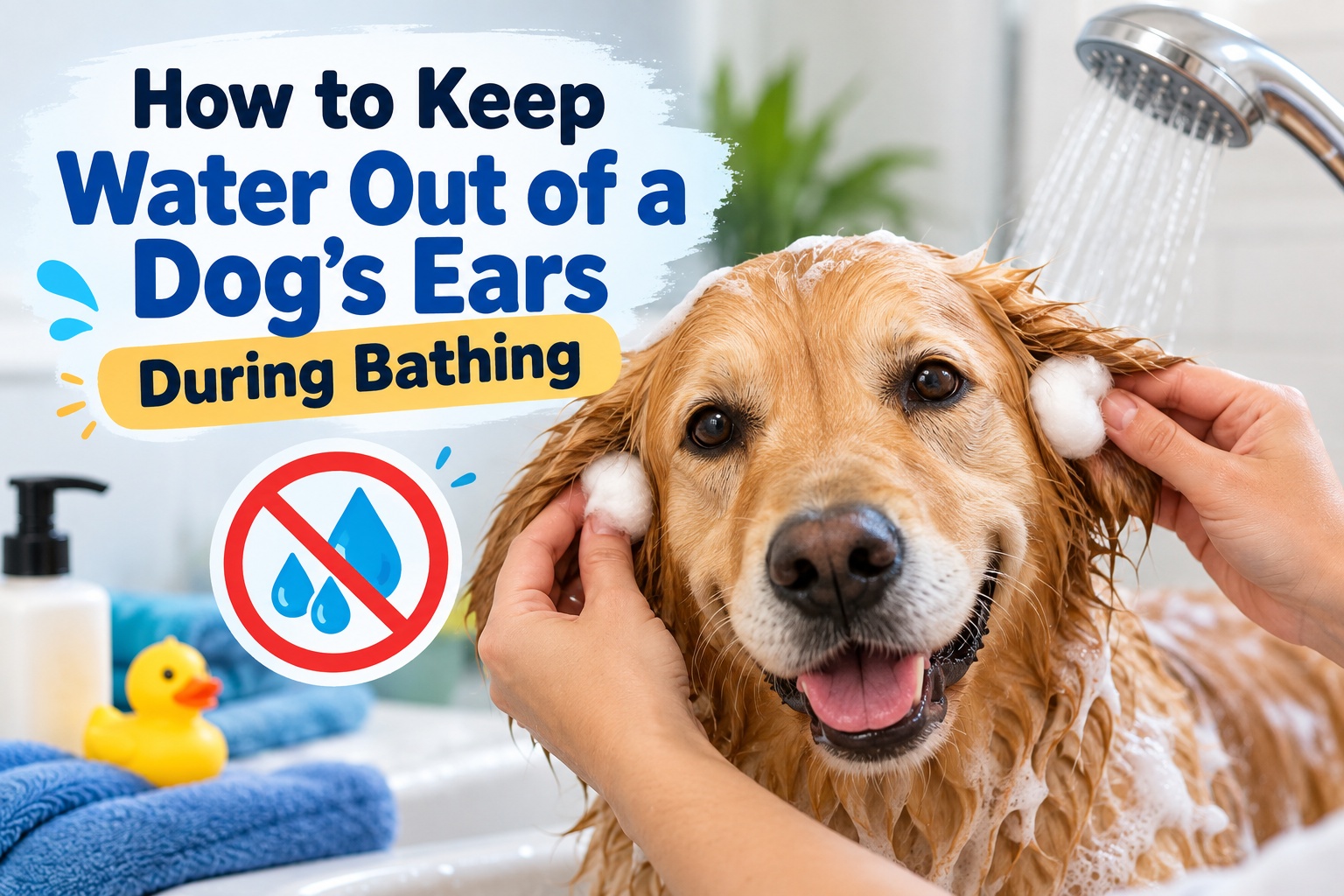
Keep water out of your dog’s ears with large dry cotton balls. Place them gently at each ear opening before bathing. Never push cotton deep inside. Keep direct spray away from the head. Use a damp cloth for the face. Remove the cotton after bathing, then dry each outer ear well.
Dog ear protection during bath time
-
1
Check both ears for redness, odor, pain, or discharge. -
2
Place one large cotton ball at each ear opening. -
3
Rinse from the neck downward with controlled water flow. -
4
Clean the face with a damp cloth. -
5
Remove the cotton and dry the outer ears.
Avoid these ear-protection mistakes
-
✓
Never push cotton deep into the ear canal. -
✓
Never aim a sprayer directly toward either ear. -
✓
Never forget to remove cotton after bathing.
Water splashes, your dog shakes, and droplets fly across the bathroom.
One bad rinse can also leave moisture inside a dog’s ear canal.
Ashraful recommends preventing that moisture before it becomes an ear problem. Large cotton balls and controlled rinsing make the biggest difference.
These steps also fit a safe dog bathing routine at home. The goal stays simple: clean the coat while keeping ear canals dry.
📌 Key Takeaways
-
→
Use large cotton at the ear opening, never deep inside. -
→
Control water flow by rinsing below the neck and away from ears. -
→
Dry outer ears after every bath to reduce trapped surface moisture. -
→
Watch warning signs like odor, redness, discharge, pain, or repeated shaking.
Why Should You Keep Water Out of a Dog’s Ears?
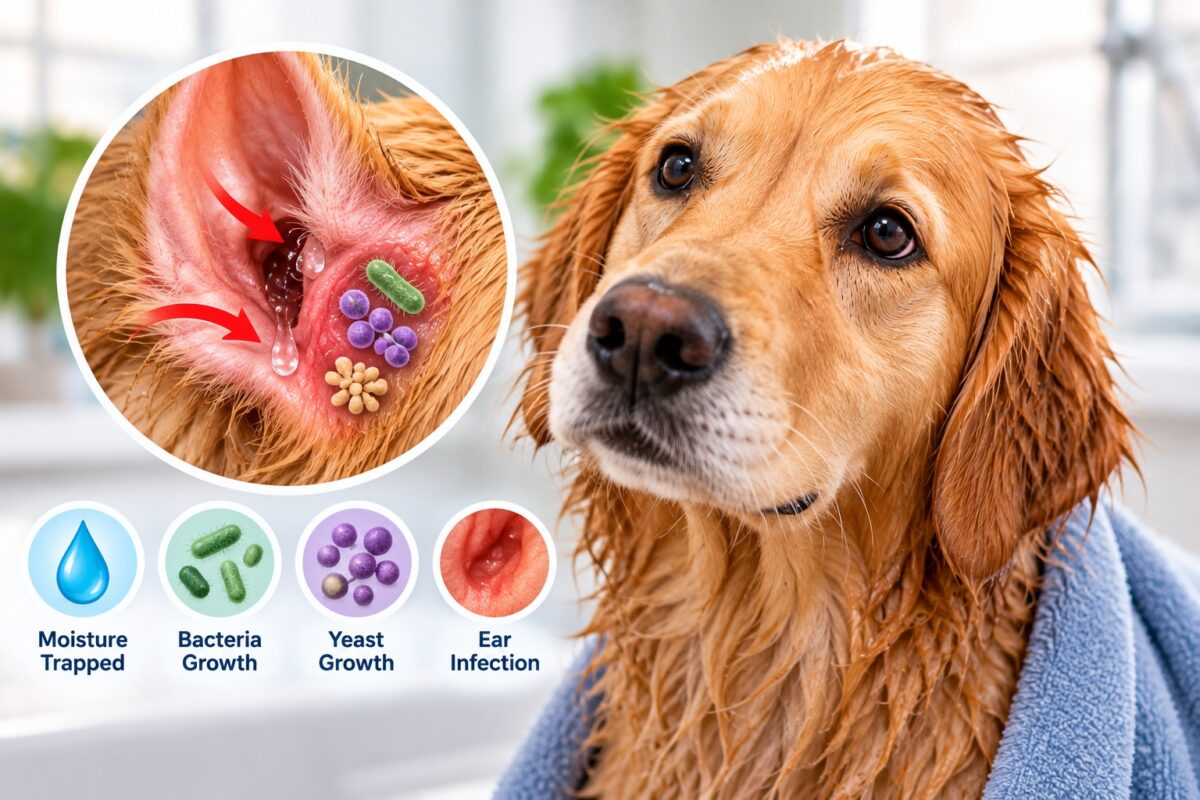
Extra moisture can raise the risk of outer ear inflammation in dogs. Moist ear canals give yeast and bacteria better conditions for growth. Merck lists excess ear moisture among factors linked with otitis externa. Keeping the canal dry therefore supports normal ear health.
Water alone doesn’t mean an infection will develop. The bigger concern is moisture that stays trapped after bathing. Floppy ears, narrow canals, and dense ear hair can reduce ventilation. Dogs with repeated ear trouble need even closer care.
The Merck Veterinary Manual’s ear guidance recommends preventing bath water from entering ear canals. It also stresses keeping those canals dry and ventilated.
You might think one quick splash cannot matter. Here’s why prevention still helps. Bath water can carry shampoo, skin debris, and moisture toward the canal. Avoiding that exposure is easier than managing irritated ears later.
💡 Key Insight
The goal isn’t making ears waterproof. The goal is stopping direct water and drying stray moisture fast.
Next, the right setup makes that goal much easier.
How Do You Protect a Dog’s Ears Before a Bath?
Start by checking both ears before the water runs. Healthy ears shouldn’t show strong odor, marked redness, swelling, or unusual discharge. If an ear already looks painful, skip home ear handling. Ask your veterinarian about the safest next step.
For routine bathing, use one large dry cotton ball per ear. Place it gently across the ear opening. Keep enough cotton visible for easy removal. Never pack cotton deep into the canal.
The American Kennel Club includes cotton balls among normal dog bathing supplies. Its dog bathing guidance recommends them for keeping water from the ears.
You might think tighter cotton gives better protection. Here’s why that’s risky. Deep packing can become hard to remove. It can also irritate sensitive tissue.
🔢 Step-by-Step: Prepare the Ears Safely
-
1
Inspect each ear
Look for odor, redness, swelling, pain, or discharge.
-
2
Choose large cotton balls
Use pieces too large to disappear inside the canal.
-
3
Place them gently
Cover each opening without forcing cotton inward.
-
✓
Confirm easy removal
Keep part of every cotton ball clearly visible.
If your dog has long fur, brush around the ears first. This long-haired dog bathing guide explains safe pre-bath brushing.
Now you can control where the bath water goes.
How Do You Rinse a Dog Without Getting Water in the Ears?
Keep the strongest water flow below your dog’s neck. Use a cup or handheld sprayer for better control. Point water down the body instead of toward the head. Clean the face with a damp cloth rather than direct spray.
When rinsing near the neck, keep the nozzle close to the coat. Low, controlled flow creates less splash. Hold floppy ear flaps down when working nearby. Never force an ear closed or cause discomfort.
The ASPCA advises against spraying or pouring water directly into canine ears. Its dog grooming guidance also suggests large cotton balls during baths.
You might think high water pressure rinses faster. Here’s why control matters more. Strong spray creates more bounce and splash near the head. A slower rinse gives you better aim.
Water temperature matters too. Use comfortable lukewarm water throughout the bath. See this dog bath temperature guide before setting the faucet.
✅ Tip
Finish the head area with a damp washcloth. It gives far better water control.
But prevention isn’t perfect. You also need a plan for stray water.
What Should You Do If Water Gets in Your Dog’s Ear?
Stay calm if a small amount of water enters the ear. Let your dog shake naturally after the bath. Then wipe the visible outer ear with a clean, dry towel. Don’t insert cotton swabs or other objects into the canal.
Remove every protective cotton ball once bathing ends. Check whether each one became wet. Dry around the ear flap and opening. Keep watching your dog during the next day.
Repeated head shaking, scratching, redness, odor, discharge, swelling, or pain need attention. Those signs can point to ear irritation or infection. Contact your veterinarian when symptoms appear or continue.
You might think an ear cleaner should always follow every bath. Here’s why that’s not ideal. Dogs have different ear needs. VCA notes that ear-cleaning products should suit the dog’s condition.
Never pour alcohol or hydrogen peroxide into an irritated ear without veterinary direction. VCA notes these ingredients can irritate inflamed ear canals.
⚠️ Warning
Don’t put cotton swabs deep inside your dog’s ear. They can push debris farther inward.
The next question is which dogs need stricter protection.
Which Dogs Need Extra Ear Protection During Baths?
Any dog can develop ear trouble, but some need closer moisture control. Dogs with floppy ears often have less airflow around the canal. Narrow canals and heavy ear hair can also hold humidity longer.
Dogs with past ear infections need special care too. Frequent swimmers face repeated moisture exposure between baths. Dogs with skin allergies can also develop recurring ear inflammation. Your veterinarian can tailor cleaning and drying routines for these dogs.
Merck identifies hanging ear flaps, narrow canals, excess hair, and moisture as risk factors. These factors don’t guarantee an infection. They simply make dry ear care more important.
You might think upright ears stay safe automatically. That’s not true. Direct spray can still enter an open canal. Every ear shape benefits from careful rinsing.
Puppies also need calm, controlled bathing. This safe puppy bathing guide explains their extra warmth and handling needs.
Now let’s correct several bath-time ear myths.
What Most People Get Wrong About Dog Ear Protection During Baths
Three bath-time beliefs cause avoidable ear problems. First, cotton balls don’t create a waterproof seal. They mainly block splashes and absorb small amounts of moisture. Water direction still matters.
Second, deeper cotton isn’t safer. Cotton should stay near the opening and remain easy to remove. Third, routine deep ear cleaning isn’t needed after every bath. Healthy ears often need less cleaning than owners expect.
You might think every head shake means an infection. Dogs often shake after bathing to clear surface moisture. Persistent shaking with odor, redness, pain, or discharge needs veterinary attention.
- Myth: Cotton balls make ears completely waterproof. Fact: They mainly reduce splash entry.
- Myth: Pack cotton tightly for better protection. Fact: Keep it shallow and removable.
- Myth: Clean every ear deeply after every bath. Fact: Cleaning needs vary by dog.
If itching follows bathing, don’t assume the ears caused everything. Shampoo residue and skin irritation can also trigger scratching. See why dogs become itchy after a bath for those causes.
One simple routine now ties everything together.
What Is the Safest Dog Bath Ear-Protection Routine?
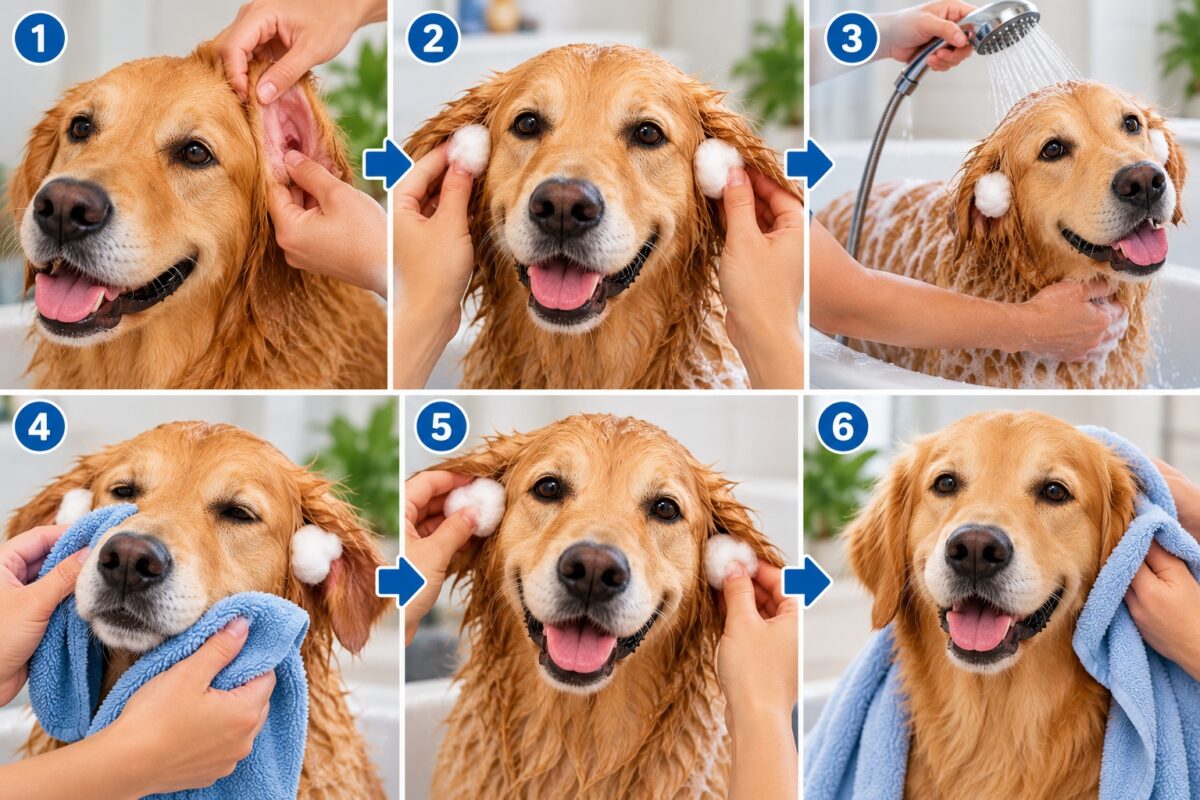
Check the ears before bathing, then place large cotton balls gently. Wash below the neck with controlled water flow. Use a damp cloth around the face and head. Remove the cotton as soon as the bath ends.
Next, let your dog shake naturally. Dry each ear flap and visible opening with a towel. Watch for ongoing scratching, odor, redness, discharge, swelling, or pain.
This routine works because it combines prevention with fast drying. Neither step needs complicated tools. Good water control matters more than gadgets.
You might be thinking bath time already feels difficult. Here’s the good news. Once your supplies stay together, ear protection takes less than one minute.
📋 Quick Summary
Cover the openings gently, control the rinse, remove cotton promptly, and dry visible moisture. Call your veterinarian when ear symptoms persist.
Keep one final idea in mind. Dry ears start with where you aim the water.
How Can You Keep Your Dog’s Ears Safer at Every Bath?
Make ear protection part of your bath setup, not an afterthought. Keep large cotton balls beside your towels and dog shampoo. Use a controlled sprayer or cup from the neck downward.
Don’t chase perfect waterproofing. Focus on preventing direct spray and removing surface moisture fast. Your dog’s normal ear health also matters. Repeated ear trouble deserves veterinary guidance.
One thing to do right now: place large cotton balls with your bath supplies.
Frequently Asked Questions
Can I put cotton balls in my dog’s ears during a bath?
Yes. Place large, dry cotton balls gently at each ear opening. Don’t push them deep into the canal. Keep part of each cotton ball visible. Remove both as soon as bathing ends. Cotton reduces splashes, but controlled rinsing remains important.
What happens if water gets in a dog’s ear?
A small splash doesn’t always cause a problem. Let your dog shake, then dry the visible outer ear. Trapped moisture can raise ear irritation risk. Watch for repeated shaking, scratching, redness, odor, discharge, swelling, or pain after the bath.
Can bath water cause an ear infection in dogs?
Excess moisture can raise the risk of otitis externa in some dogs. Moisture can support conditions that favor yeast or bacterial growth. Floppy ears, narrow canals, repeated infections, and frequent swimming raise concern. Prevention and thorough outer-ear drying help reduce exposure.
Should I clean my dog’s ears after every bath?
Not every healthy dog needs deep ear cleaning after each bath. Remove protective cotton and dry the visible outer ear instead. Some dogs need scheduled cleaning because of recurring problems. Ask your veterinarian which cleaner and schedule fit your dog’s ears.
Can I use cotton swabs inside my dog’s ears?
Don’t push cotton swabs into a dog’s ear canal. They can move debris deeper and irritate sensitive tissue. For routine drying, wipe only the visible outer ear with soft cotton or a towel. Ask your veterinarian before cleaning deeper areas.
How do I wash my dog’s face without getting the ears wet?
Use a soft, damp washcloth around the face and head. Avoid pouring or spraying water over the skull. Wipe carefully around the muzzle, cheeks, and outside ear flaps. This method gives more control and keeps water away from ear openings.
When should I call a vet about my dog’s ears after bathing?
Call your veterinarian when head shaking or scratching continues after bathing. Also watch for redness, swelling, strong odor, discharge, obvious pain, or balance changes. Dogs with repeated ear infections deserve earlier advice because moisture can worsen an existing ear problem.