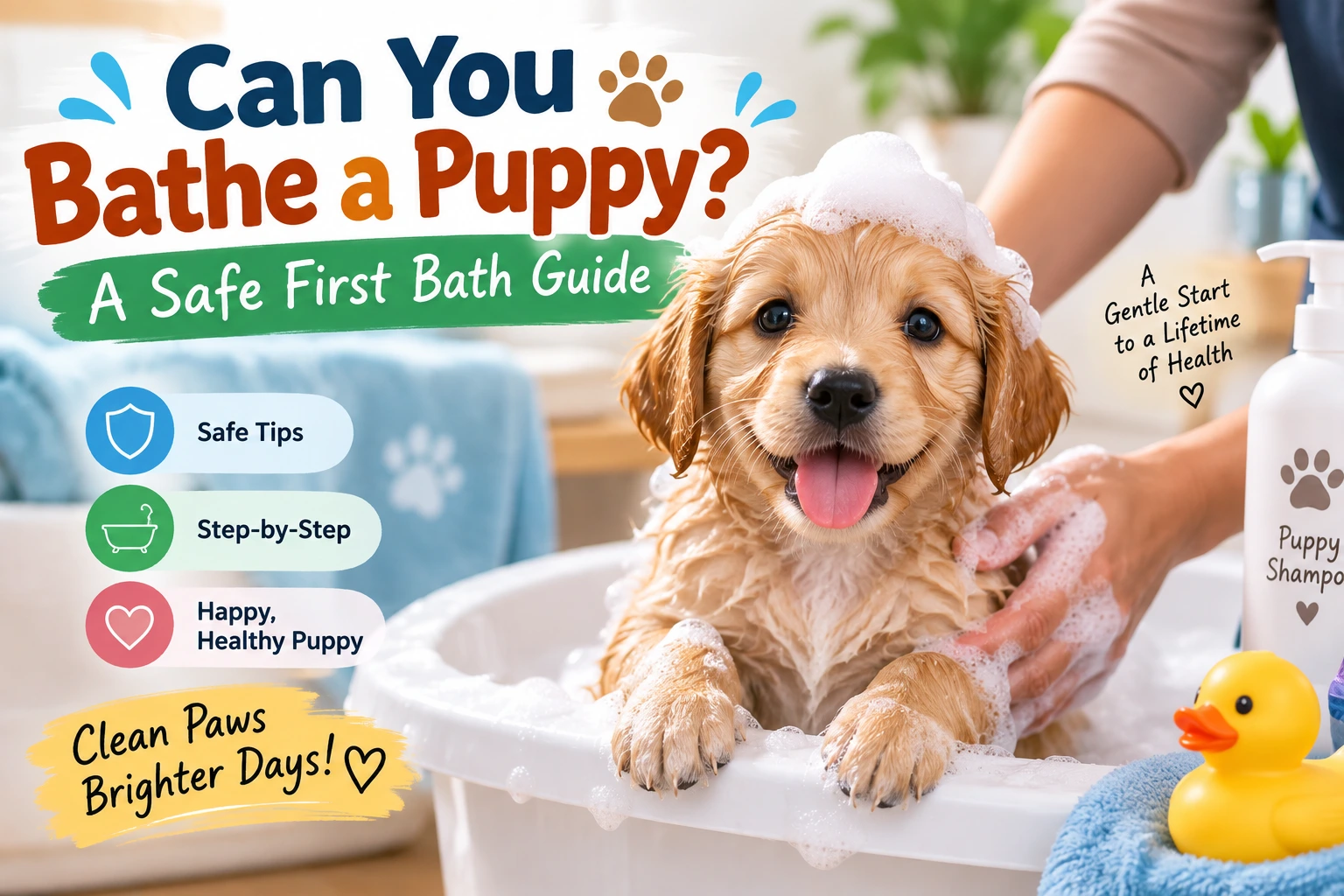
⚡ Quick Answer
Yes, you can bathe a puppy, but age and warmth matter. Most puppies can have a full bath around eight weeks old. Younger puppies lose body heat faster, so spot-clean them with a warm, damp cloth. Use lukewarm water, puppy-safe shampoo, and dry your puppy fully after bathing.
What to know before your puppy’s first bath
- Usual starting age: Around eight weeks works for most healthy puppies.
- Water: Use lukewarm water in a warm, draft-free room.
- Shampoo: Choose a gentle product made for puppies or dogs.
Make your puppy’s first bath safer
- ✓Keep water away from the eyes and ears.
- ✓Rinse every trace of shampoo from the coat.
- ✓Towel-dry your puppy before leaving the warm room.
A tiny muddy puppy can look ready for a bath right away. Then you notice the shivering, squirming, and worried little face.
The bath itself is simple, but young puppies need extra care. I’m Ashraful, and this guide focuses on safe, calm puppy bathing.
The main issues are age, warmth, shampoo choice, rinsing, and drying. Get those right, and bath time becomes much easier.
📌 Key Takeaways
- →Eight weeks is a common starting point for a puppy’s first full bath.
- →Lukewarm water keeps bath time comfortable and reduces chilling risk.
- →Dog-safe shampoo protects a puppy’s skin better than human shampoo.
- →Full drying matters most for young, small, or thick-coated puppies.
When Can You Bathe a Puppy for the First Time?

Most healthy puppies can start full baths at around eight weeks old. At that age, they handle temperature changes better than newborn puppies. The American Kennel Club also describes bathing routines starting around two months. Purina gives about eight weeks as its usual first-bath point.
Younger puppies need more care because they can become cold faster. For routine dirt, use a warm, damp cloth instead. Clean only the dirty areas, then dry the puppy at once. A full bath becomes more sensible once the puppy grows stronger.
What If a Puppy Is Younger Than Eight Weeks?
A younger puppy sometimes becomes badly soiled with urine, stool, or mud. In that case, cleaning still matters for comfort and skin care.
Start with spot-cleaning whenever that will solve the problem. Ask your vet before repeated full baths for a very young puppy.
⚠️ Keep Young Puppies Warm
Never leave a young puppy wet in a cold room. Prepare dry towels before starting the bath.
Age tells you when bathing can start. Technique decides whether that bath feels safe.
How Do You Bathe a Puppy Safely?
A safe puppy bath should stay short, warm, gentle, and predictable. Gather towels, shampoo, treats, and a non-slip mat before adding water. Use warm water that feels comfortable against your wrist or elbow. VCA recommends warm water and positive rewards during puppy bath training.
Keep the water stream soft and controlled throughout the bath. Avoid spraying the face, eyes, nose, mouth, or ear openings. Gently work shampoo through the coat, then rinse until no suds remain. Finish by wrapping your puppy in a dry towel.
🔢 Puppy Bath Steps
- Brush loose dirt and tangles from the coat.
- Place your puppy on a non-slip bath surface.
- Wet the body slowly with lukewarm water.
- Massage puppy-safe shampoo gently through the coat.
- Rinse until the water runs completely free of suds.
- Wrap your puppy in a dry, absorbent towel.
How Should You Dry a Puppy After a Bath?
Press the towel gently against the coat instead of harsh rubbing. Replace a soaked towel with a dry one when needed.
A dryer can help with thick coats when your puppy accepts it. Use a low setting and keep warm air away from the skin.
Regular grooming also becomes easier when your puppy accepts touch calmly. A dog grooming glove can help with gentle coat care.
Once the puppy is warm and dry, the next question is what cleanser belongs in the tub.
What Shampoo Should You Use on a Puppy?
Choose a mild shampoo made for puppies or dogs. VCA recommends pet-formulated products because canine skin differs from human skin. Human and baby shampoos can irritate a dog’s skin with repeated use. A soap-free product also helps protect the skin barrier.
Check the product label before each first use. Some flea, tick, or medicated products have strict age limits. Ask your veterinarian before treating itching, infection, severe dandruff, or hair loss. A normal bath should not replace care for a skin problem.
For more choices, compare these puppy shampoos for bath time. Sensitive dogs can also benefit from learning about Earthbath shampoo for sensitive pets.
Recommended Product
Burt’s Bees for Pets Tear Free Puppy Shampoo and Conditioner, 16 Fl Oz
★★★★☆ 4.5/5 average rating
This gentle two-in-one formula reduces extra steps during a wiggly puppy bath.
As an Amazon Associate, we earn from qualifying purchases.
Your shampoo matters, but using it too often can still dry the coat.
How Often Should You Bathe a Puppy?
There is no single bath schedule that suits every puppy. Coat type, activity, skin health, and daily mess all affect frequency. VCA advises bathing dogs when their coat becomes dirty or develops an odor. Frequent bathing can need special products when skin problems exist.
For many puppies, an occasional bath works better than constant washing. Clean muddy paws or small spots without doing a full bath. Brush the coat between baths to remove dirt and loose hair. Ask your vet about frequency when your puppy has ongoing skin trouble.
You might be thinking that a clean puppy needs weekly shampoo. Cleanliness does not always require a full bath.
✅ Simple Bath Rule
Bathe for real dirt or odor. Use spot-cleaning when only one small area needs attention.
Frequency causes confusion because puppy bath advice often gets reduced to rigid rules.
What Most People Get Wrong About Bathing a Puppy
The first mistake is thinking every puppy needs frequent shampoo baths. Puppies need cleaning, but full baths are only one cleaning method. Spot-cleaning handles many small messes without soaking the entire coat.
The second mistake is treating human shampoo as a normal substitute. VCA recommends shampoo made for pets because skin needs differ.
The third mistake is focusing only on water temperature. Drying matters just as much after the water stops. A damp puppy can lose warmth, especially when young or small.
- Wrong: A puppy needs a bath whenever the coat looks slightly dirty.
- Better: Spot-clean small messes and save baths for larger cleaning jobs.
- Wrong: Tearless shampoo means shampoo can safely enter the eyes.
- Better: Keep all shampoo away from the eyes and rinse carefully.
- Wrong: Bathing ends when the puppy leaves the tub.
- Better: Dry the coat fully and keep the puppy warm afterward.
Correct those three mistakes, and the entire routine becomes calmer and safer.
Conclusion
Yes, you can bathe a puppy when age, warmth, and health allow it. Around eight weeks is a common starting point for full baths.
Use lukewarm water, pet-safe shampoo, gentle handling, and complete drying. Start right now by placing two clean towels beside your puppy’s future bathing spot.
Frequently Asked Questions About Bathing a Puppy
Can You Bathe an Eight-Week-Old Puppy?
Yes. Eight weeks is a common age for a puppy’s first full bath. Keep the room warm and use lukewarm water. Choose a puppy-safe shampoo and rinse it completely. Dry the puppy well before leaving the bathing area.
Can You Bathe a Six-Week-Old Puppy?
A six-week-old puppy needs extra care because chilling remains a concern. Spot-cleaning is often enough for routine dirt. A full bath can be used when needed with careful warming. Ask your veterinarian when the puppy is sick, weak, or unusually small.
Can You Bathe a Puppy Before Vaccinations Are Finished?
A clean home bath does not replace or cancel puppy vaccinations. The bigger concern involves exposure to shared dog areas. Avoid dirty, high-traffic pet spaces while vaccine protection develops. Ask your veterinarian about local disease risks and your puppy’s vaccine schedule.
Can You Use Human Shampoo on a Puppy?
Pet-formulated shampoo is the safer routine choice for puppies. VCA advises against human and baby shampoo for normal dog bathing. Dogs have different skin thickness and acidity. Choose a gentle puppy or dog shampoo instead.
Can You Give a Puppy a Bath Without Shampoo?
Yes. Lukewarm water can remove light surface dirt without shampoo. A warm, damp cloth often works even better for small messes. Use puppy-safe shampoo when the coat needs a deeper clean. Always dry the puppy well afterward.
What Water Temperature Is Best for a Puppy Bath?
Use lukewarm water that feels comfortable against your hand or elbow. Avoid hot water because puppy skin can be sensitive. Cold water can make a young puppy uncomfortable. Keep the bathing room warm and free from cold drafts.
How Do You Make a Puppy Enjoy Bath Time?
Start slowly and reward calm behavior with small treats. Let your puppy explore the empty tub first. Add water only after the puppy stays relaxed. Keep sessions gentle and short. Positive bath experiences make future grooming less stressful.