Quick Answer
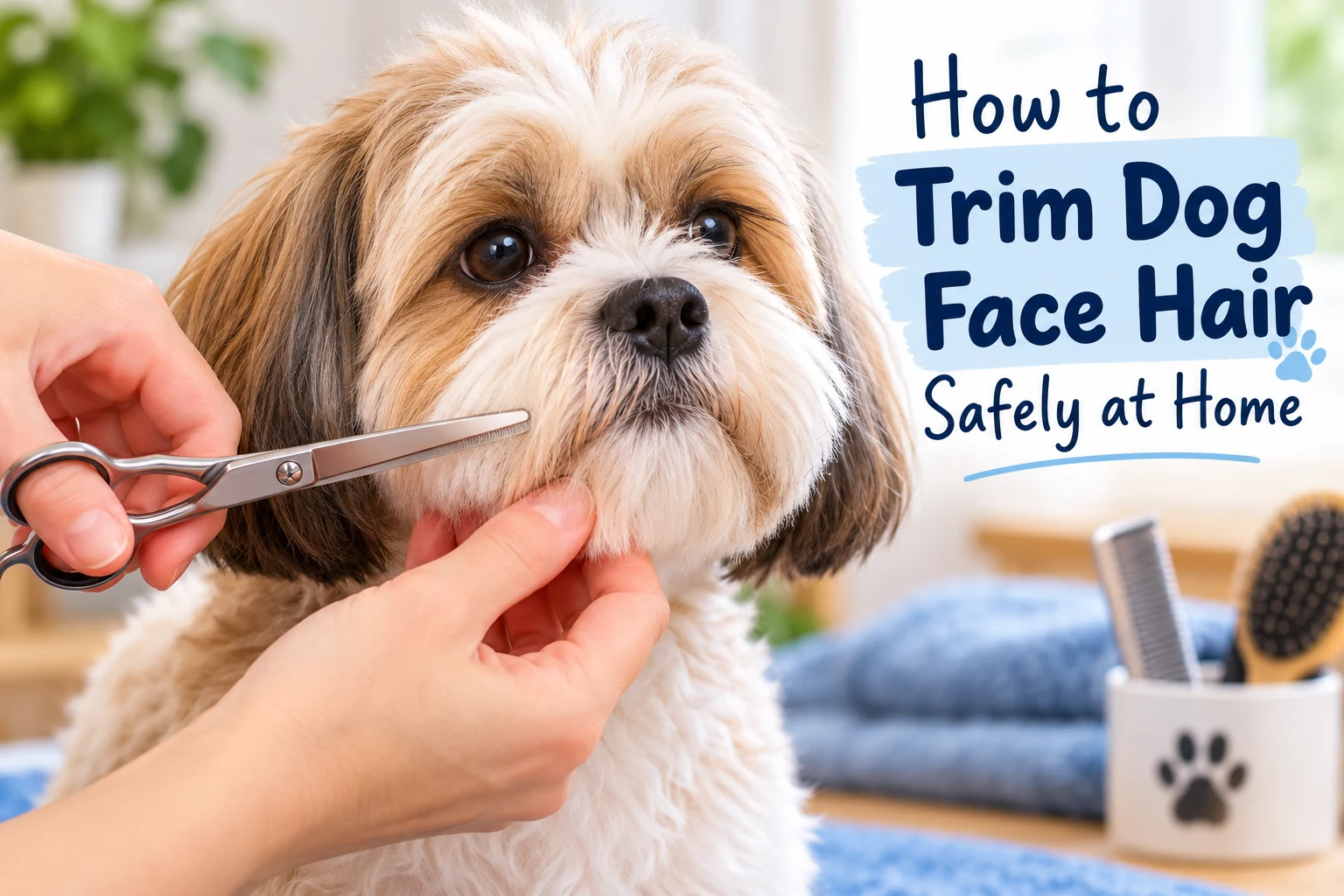
To trim dog face hair safely, start with a clean, dry, detangled coat and a calm dog. Comb the facial hair outward, then make small, controlled trims using suitable rounded-tip grooming scissors or a pet trimmer only in areas you can handle safely. Never point scissors toward the eyes, cut close to the lips, or force a moving dog to remain still. Leave difficult eye and mouth areas to a professional groomer.
Overgrown facial hair can hide your dog’s eyes, collect food around the mouth, and become tangled beneath the chin. A careful trim can improve comfort while keeping the face neat.
However, grooming a dog’s face requires more caution than trimming the body. The eyes, lips, ears, and facial folds are vulnerable to accidental cuts. The goal is not to achieve a perfect haircut immediately. It is to remove only the hair that can be trimmed safely.
What Does It Mean to Trim a Dog’s Face?

Trimming a dog’s face means shortening or shaping hair around the forehead, cheeks, muzzle, beard, and chin. Some grooming styles also involve tidying the hair between the eyes and around the ears.
Facial trimming is different from completely shaving the face. A simple maintenance trim removes stray or overgrown hair without significantly changing the dog’s natural appearance.
The amount of trimming needed depends on coat type. Poodles and many long-haired companion dogs may need regular facial maintenance. Short-haired dogs usually require little or no facial cutting.
Dogs with wiry coats, distinctive eyebrows, or long beards may also need breed-specific grooming techniques. Avoid removing natural whiskers simply to create a cleaner outline.
What Tools Do You Need to Trim Dog Face Hair?
Choose tools that allow controlled movements rather than fast cutting. Good lighting and a stable grooming surface matter as much as the equipment itself.
- Rounded-tip grooming scissors: Suitable for carefully shortening loose facial hair when the dog stays still and the handler has been shown safe technique.
- Small grooming comb: Helps separate hair, reveal tangles, and check the finished length.
- Soft slicker brush: Useful for appropriate longer coat types before trimming.
- Pet facial trimmer: May help with suitable cheek or outer facial areas after proper handling instruction.
- Non-slip mat: Reduces slipping during grooming.
- Soft cloth: Removes loose debris from the face before cutting.
- Small treats: Reinforce calm behavior and cooperation.
Avoid household scissors, damaged clipper blades, and unfamiliar sharp tools. A grooming tool marketed as safe does not eliminate injury risk.
The American Kennel Club’s home grooming guidance recommends professional instruction before owners attempt sensitive clipping procedures.
How Should You Prepare Your Dog Before Trimming Its Face?
Prepare your dog before picking up scissors or switching on a trimmer. A clean, untangled coat makes individual hairs easier to identify.
- Choose a familiar, quiet location. Avoid distractions, sudden noises, and unstable surfaces.
- Check facial skin and eyes. Look for redness, swelling, discharge, sores, or painful areas.
- Clean visible dirt gently. Use a slightly damp cloth without rubbing the eyes.
- Dry the facial coat. Damp hair can clump together and make length harder to judge.
- Comb the coat carefully. Separate loose tangles without pulling the skin.
- Introduce the equipment. Let the dog investigate the inactive tools from a safe distance, and reward relaxed behavior.
Do not cut through tight mats around the eyes, mouth, or ears. A mat can conceal skin, making accidental injury more likely.
For routine coat preparation, our dog bathing guide explains gentle washing and drying, including how to clean the face without directing water into the eyes.
Safety Warning
Never trim facial hair while your dog is struggling, snapping, or repeatedly turning its head. Stop the session rather than restraining the dog more forcefully. An experienced groomer or veterinarian can advise on safer handling.
How Do You Trim a Dog’s Face Safely? 8 Steps
For beginners, the safest goal is a limited maintenance trim of clearly visible, accessible hair. Close work around the eyes and lips should be demonstrated by a qualified groomer or veterinarian before attempting it yourself.
Step 1: Position Your Dog Comfortably
Place your dog on a secure, non-slip surface at a comfortable working height. Keep its body supported and allow a natural standing or sitting posture.
Check that the dog can remain relaxed without someone forcibly holding its head. If it cannot, postpone the haircut and practice calm handling without sharp tools.
Step 2: Comb the Facial Hair Outward
Use a small comb to lift loose hair away from the cheeks and outer muzzle. Work in short sections so you can see where the hair ends and the skin begins.
Never pull a comb through tightly tangled hair. If brushing causes discomfort, stop and have the area assessed.
Step 3: Tidy Loose Hair on the Outer Cheeks
Start with the easiest visible area: longer hair extending beyond the natural cheek outline. Comb it outward and remove only a small amount with controlled trimming movements.
Keep scissors away from folded skin and the ear base. Recomb after each small adjustment rather than trying to cut the final shape in one movement.
Step 4: Assess Hair Around the Eyes
Check whether forehead or eyebrow hair is interfering with vision or rubbing against the eye. This area needs particular caution because dogs can suddenly blink, shake, or turn their heads.
Do not aim scissors toward the eyeball or try to cut hair directly against an eyelid. Ask a professional to demonstrate the appropriate approach for your dog’s face shape before doing close eye-area trimming.
The veterinary ophthalmology grooming advice emphasizes controlled handling, blunt-tipped scissors, and keeping cutting tools parallel to the face rather than directed toward the eyes.
Step 5: Shorten Accessible Muzzle Hair
Gently comb the outer muzzle hair and identify loose ends that extend beyond the desired outline. Only trim sections clearly separated from the lips and facial skin.
Do not cut against the mouth corners or attempt to remove hair from inside the lips. Keep tools clear of the tongue and nose.
For dogs with a long beard, preserve enough length for the coat to fall naturally without pulling.
Step 6: Shape the Outer Chin and Beard
Comb downward beneath the muzzle and check whether food or loose debris is trapped in the beard. Remove dirt before adjusting the length.
If the dog remains calm, shorten a few accessible ends without working close to the throat or lower lip. Keep the shape natural and avoid cutting toward the skin.
Step 7: Check the Ear and Side-Face Outline
Comb hair along the outer sides of the face. Check where the ear flap begins before trimming anything nearby.
Ear leather can hide beneath long hair, making its edges difficult to identify. Leave close ear-edge trimming to a professional unless you have been taught the correct technique.
Step 8: Recomb and Inspect the Finished Trim
Comb the facial hair once more to reveal loose ends or uneven areas. Only make another adjustment if the dog remains relaxed and the cutting area is clearly visible.
Inspect for redness, irritation, or accidental nicks. Reward your dog, remove loose hair gently, and finish the session before patience runs out.
Practical Tip
Use several short, calm grooming sessions rather than trying to finish the entire face at once. A slightly uneven but safe trim is better than risking injury for a perfectly symmetrical result.
Should You Use Clippers or Scissors on a Dog’s Face?
Neither tool is automatically safe for every facial area. The correct choice depends on the dog’s coat, the location being trimmed, its tolerance of handling, and the operator’s experience.
| Tool | Potential Use | Important Limitation |
|---|---|---|
| Rounded-tip scissors | Small amounts of accessible loose hair | Can still injure eyes or skin if the dog moves |
| Pet facial trimmer | Suitable areas of longer facial coat | Blade contact, vibration, and skin folds require training |
| Comb | Separating hair and checking the outline | Cannot safely remove tight mats by force |
Use the least invasive method that achieves the necessary maintenance. If trimming requires cutting directly beside an eye, lip, or ear edge, a trained groomer is the more appropriate choice.
What Dog Face Trimming Mistakes Should You Avoid?
Most avoidable problems begin when the handler tries to cut too much, works too close to skin, or continues after the dog becomes uncomfortable.
- Cutting toward the eyes: Scissors should never point at the eyeball.
- Removing tight mats with scissors: Skin may be hidden inside the tangled hair.
- Trimming while the dog moves: Sudden movements make sharp tools dangerous.
- Shaving too closely: Sensitive facial skin can become irritated or cut.
- Forcing symmetry: Repeated adjustments increase handling and injury risk.
- Ignoring facial folds: Loose skin can become caught in cutting equipment.
- Using an unfamiliar trimmer: Always understand the blade and guard before grooming.
- Ignoring stress signals: Pulling away, freezing, growling, and repeated head turning mean the session needs reassessment.
Do not assume a quiet dog is necessarily comfortable. Stiff posture or attempts to escape can also signal distress.
When Should You Stop Trimming and Contact a Professional?
Stop immediately if your dog becomes frightened, painful, or difficult to handle safely. Do not continue just because only a little hair remains.
Contact a veterinarian promptly if you notice an eye injury, persistent squinting, marked redness, swelling, bleeding near the eye, or unusual discharge. These are not cosmetic grooming problems.
The ASPCA dog grooming guidance identifies eye redness, cloudiness, persistent discharge, and squinting as signs that warrant veterinary attention.
Seek professional grooming help for severely matted facial hair, close trimming beside delicate facial structures, or dogs that cannot tolerate the procedure calmly.
If a minor skin nick occurs, stop cutting and gently apply light pressure with clean gauze. Seek veterinary help for persistent bleeding, deep wounds, or injuries near the eye. Do not apply human medications or antiseptics near the eye without veterinary guidance.
How Can You Keep Your Dog’s Face Neat Between Haircuts?
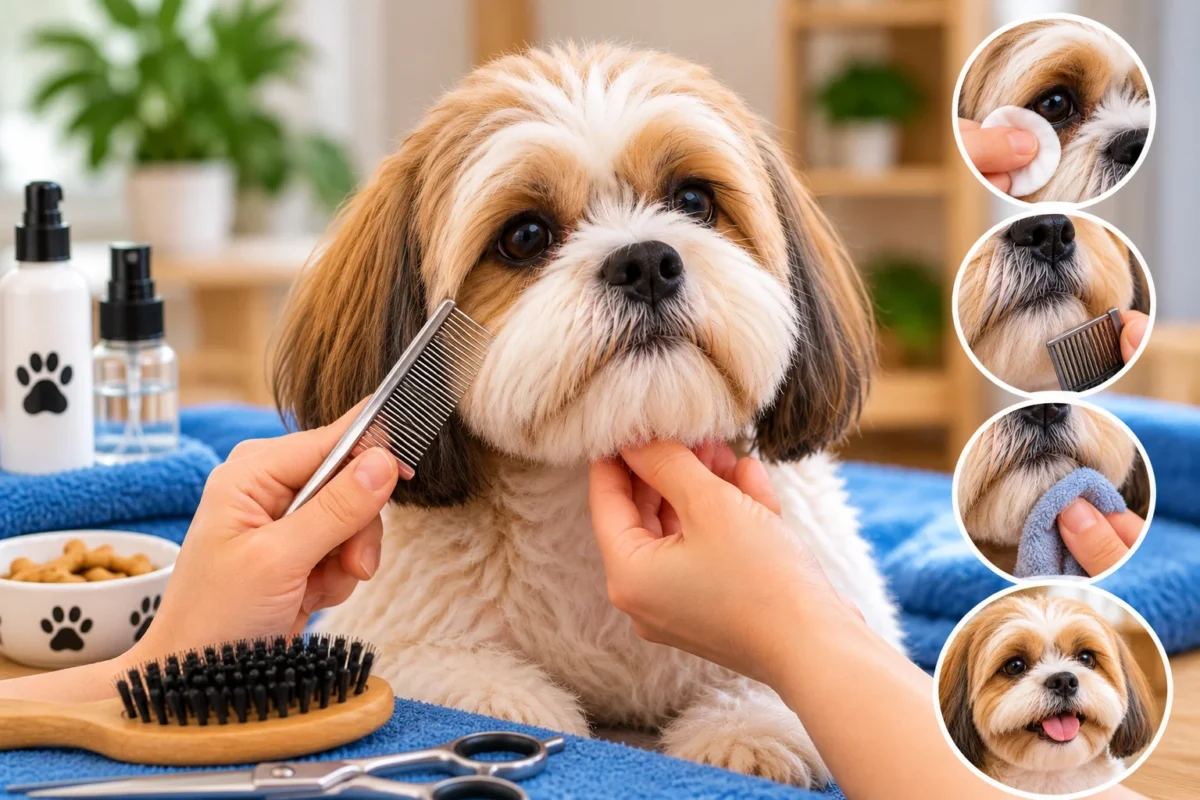
Regular, gentle maintenance often reduces the amount of cutting needed. Focus on preventing tangles and cleaning food or debris before the facial coat becomes difficult to manage.
- Comb suitable facial hair gently to prevent loose tangles.
- Wipe food residue from the beard with a soft damp cloth.
- Keep facial folds clean and thoroughly dry when appropriate.
- Inspect hair near the eyes for contact or irritation.
- Reward calm handling without introducing scissors every time.
- Arrange professional maintenance when facial hair starts obstructing vision or becomes difficult to comb.
The best trimming interval is determined by coat growth, grooming style, and individual comfort. A fixed schedule is less useful than checking whether the hair is becoming tangled, dirty, or obstructive.
Related Grooming Tool
Rounded-Tip Dog Grooming Scissors
A small pair of purpose-made rounded-tip grooming scissors can be useful for maintaining accessible loose facial hair after proper technique has been demonstrated. Rounded tips reduce one specific hazard but do not make cutting near the eyes risk-free.
Affiliate disclosure: As an Amazon Associate, we earn from qualifying purchases. This link opens search results; verify the actual product before ordering.
Frequently Asked Questions
Can I trim my dog’s face at home?
Yes, limited maintenance trimming may be possible if your dog stays calm, the hair is accessible, and you have been taught suitable techniques. Close work near the eyes, lips, and ears is better handled by a professional.
Can I trim the hair blocking my dog’s eyes?
Hair interfering with vision should be addressed, but the eye area is high risk. Ask a professional groomer or veterinarian to demonstrate a safe method for your dog’s face shape rather than attempting close cutting without instruction.
Can I use human hair clippers on my dog’s face?
Human clippers are not the preferred choice. Their blades, guards, and handling characteristics may not suit canine coats or sensitive facial areas. Use appropriate pet grooming equipment with professional instruction.
Should I trim my dog’s facial whiskers?
Do not intentionally remove whiskers for appearance alone. Whiskers are specialized sensory hairs that help dogs gather information about nearby objects and their surroundings.
What if my dog keeps moving during a facial trim?
Stop trimming and remove sharp tools. Practice brief, reward-based handling sessions without cutting. If your dog remains frightened or restless, arrange professional grooming rather than forcing restraint.
How short should I trim my dog’s face hair?
There is no universal length. Remove only the hair necessary for comfort, hygiene, or the intended coat style. Avoid cutting close to delicate skin, lips, eyelids, or facial folds.
Final Thoughts
Learning how to trim dog face hair starts with recognizing which areas are safe to maintain and which require professional skill. Prepare the coat, work patiently, and stop whenever your dog becomes uncomfortable.
A neat face is useful, but healthy eyes, uninjured skin, and a calm grooming experience matter more than a perfect haircut. Choose gradual maintenance and professional help whenever safety is uncertain.