Quick Answer
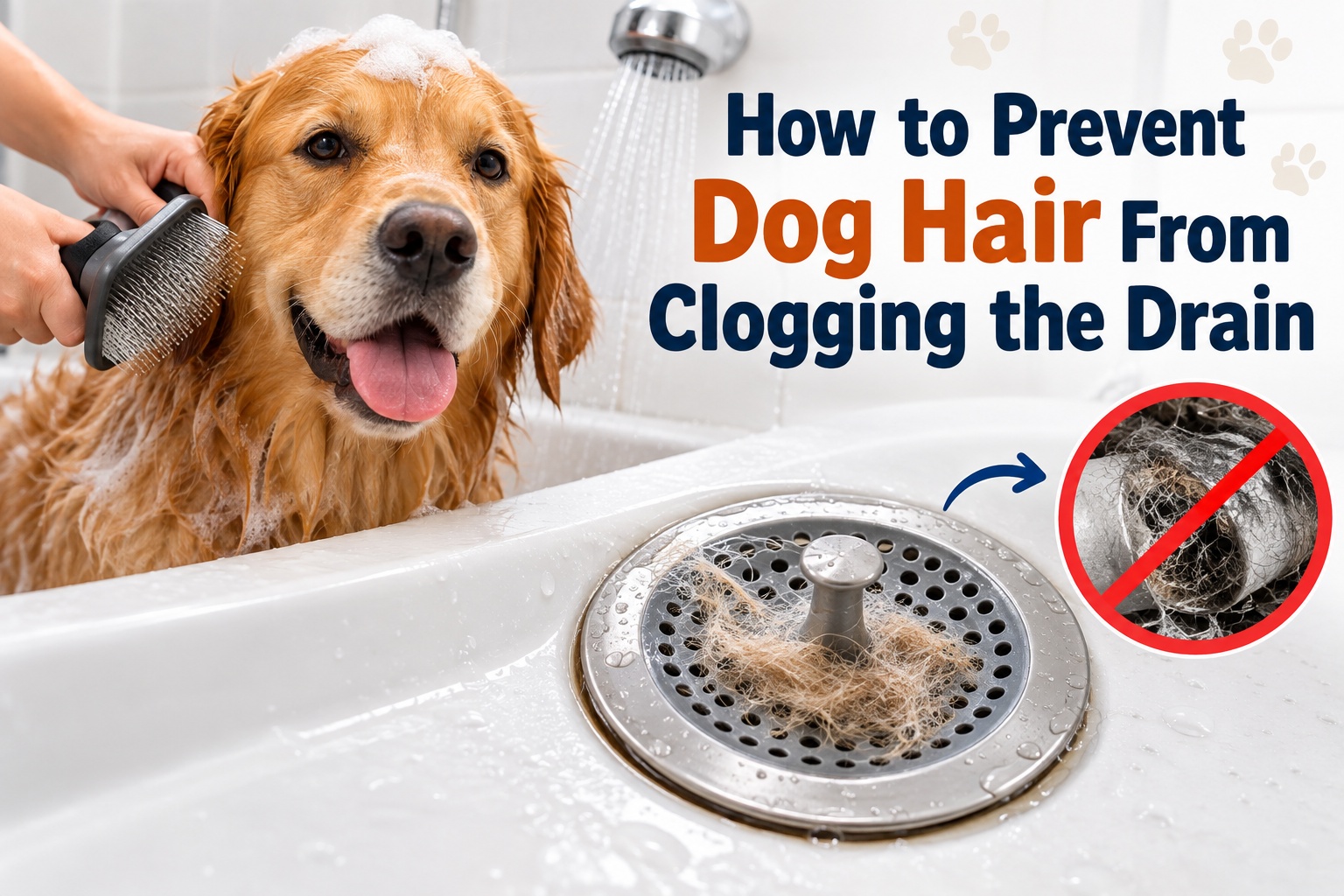
To prevent dog hair from clogging the drain, brush your dog thoroughly before bathing, place a hair catcher over the drain, and remove collected fur during the bath. Finish by picking loose hair from the tub before rinsing it away. A good safe dog bathing routine makes these steps much easier.
Quick Steps to Keep Dog Hair Out of the Drain
- Brush first: Remove loose coat before your dog enters the tub.
- Cover the drain: Use a fine hair catcher that fits securely over your drain.
- Use gentle water: Avoid blasting loose fur directly toward the drain.
- Empty midway: Remove accumulated fur if the catcher starts restricting water flow.
- Collect leftovers: Wipe loose hair from the tub before removing the drain catcher.
- Clean the catcher: Rinse and dry it after every bath so it stays effective.
One Rule That Matters Most
- The less loose hair that enters the bath, the less hair your drain catcher needs to stop.
Dog bath day can leave what looks like a second dog sitting around the bathtub drain. That loose coat may disappear with the water at first, but repeated baths can send more hair into the plumbing than you realize.
I prefer stopping the hair before it reaches the drain. A few minutes of preparation is easier than dealing with slow-draining bathwater later.
In this 2026 guide, I’ll show you the routine I use to control loose dog hair before, during, and after a bath.
Why Does Dog Hair Clog a Bathtub Drain?
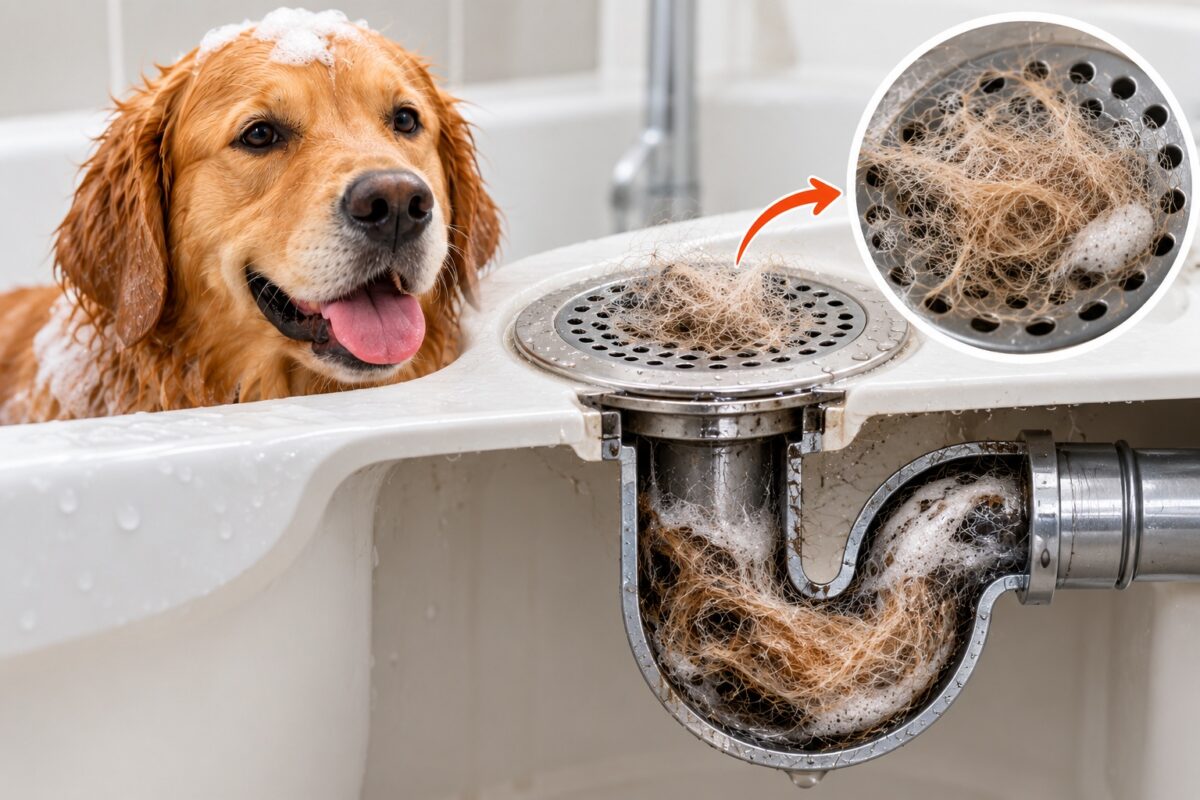
Dog hair can collect inside a drain instead of washing cleanly through the plumbing. It may combine with soap residue, debris, and other material passing through the tub.
A few stray hairs usually aren’t the main problem. Repeatedly washing large amounts of shed coat down the drain is what I try to avoid.
- Loose undercoat: Heavy-shedding dogs can release large amounts of dead coat once water and massage loosen it.
- Long hair: Longer strands can catch around drain openings and existing debris.
- Bath agitation: Shampooing and rinsing loosen fur that brushing missed.
- Small drain openings: Hair can bunch near strainers or drain components instead of moving freely.
- Repeated baths: Small amounts of escaped fur can add up over time.
The exact amount depends heavily on coat type. A Labrador during a shedding period creates a different cleanup job than a low-shedding dog.
How Do You Prevent Dog Hair From Clogging the Drain?
The best approach is to capture loose fur in stages rather than relying on one drain screen. Brush first, catch what escapes, and manually remove the final loose hair afterward.
I think of this as a three-barrier system. Each barrier catches what the previous one missed.
- Remove loose hair before bathing. Brush or comb the dry coat appropriately for your dog’s coat type.
- Install a drain hair catcher. Position it before your dog enters the tub.
- Collect visible hair during and after bathing. Don’t intentionally rinse piles of fur toward the drain.
This approach is simple. It also works without changing the basic bathing routine your dog already knows.
Should You Brush Your Dog Before the Bath?
Yes, brushing before bathing is one of the easiest ways to reduce the amount of loose fur reaching your drain. It also helps remove surface debris and manageable tangles while the coat is dry.
The American Kennel Club recommends brushing as part of routine coat care, while the ASPCA places brushing before wetting the dog in its bathing steps.
You can see the full grooming order in my guide on brushing a dog before or after a bath.
How much should you brush?
Don’t brush until every possible strand stops coming out. Your goal is removing the loose coat that comes away comfortably.
- Short smooth coat: A rubber grooming tool or suitable bristle brush may collect surface shedding.
- Long coat: Work through the coat gently and address light tangles before soaking it.
- Thick undercoat: A suitable rake or de-shedding tool may help when used correctly.
- Matted coat: Avoid yanking through tight mats or blindly cutting close to the skin.
The American Kennel Club’s grooming guidance explains that different coat types need different brushes and tools.
I’ve found the biggest difference comes with thick-coated dogs. Ten minutes of coat preparation can keep an impressive amount of fur out of the bathtub.
What Is the Best Way to Catch Dog Hair in the Tub?
A removable hair catcher placed directly over or around the tub drain is the simplest physical barrier. The best design depends on the shape of your existing drain.
Look for a catcher that traps hair without stopping normal water flow too quickly.
| Method | Best Use | Main Advantage | Watch For |
|---|---|---|---|
| Drain protector | Flat or compatible tub drains | Simple to lift and clean | May shift if the fit is poor |
| In-drain hair catcher | Compatible open drain designs | Hair collects below the opening | Must match drain dimensions |
| Fine mesh strainer | Large amounts of loose fur | Catches small hair and debris | Can restrict flow as it fills |
| Pre-bath brushing only | Light-shedding dogs | Reduces hair before water starts | Doesn’t catch fur released during washing |
I prefer combining brushing with a drain catcher rather than choosing between them. One removes fur early, while the other catches the inevitable leftovers.
How Do You Control Loose Dog Hair During the Bath?
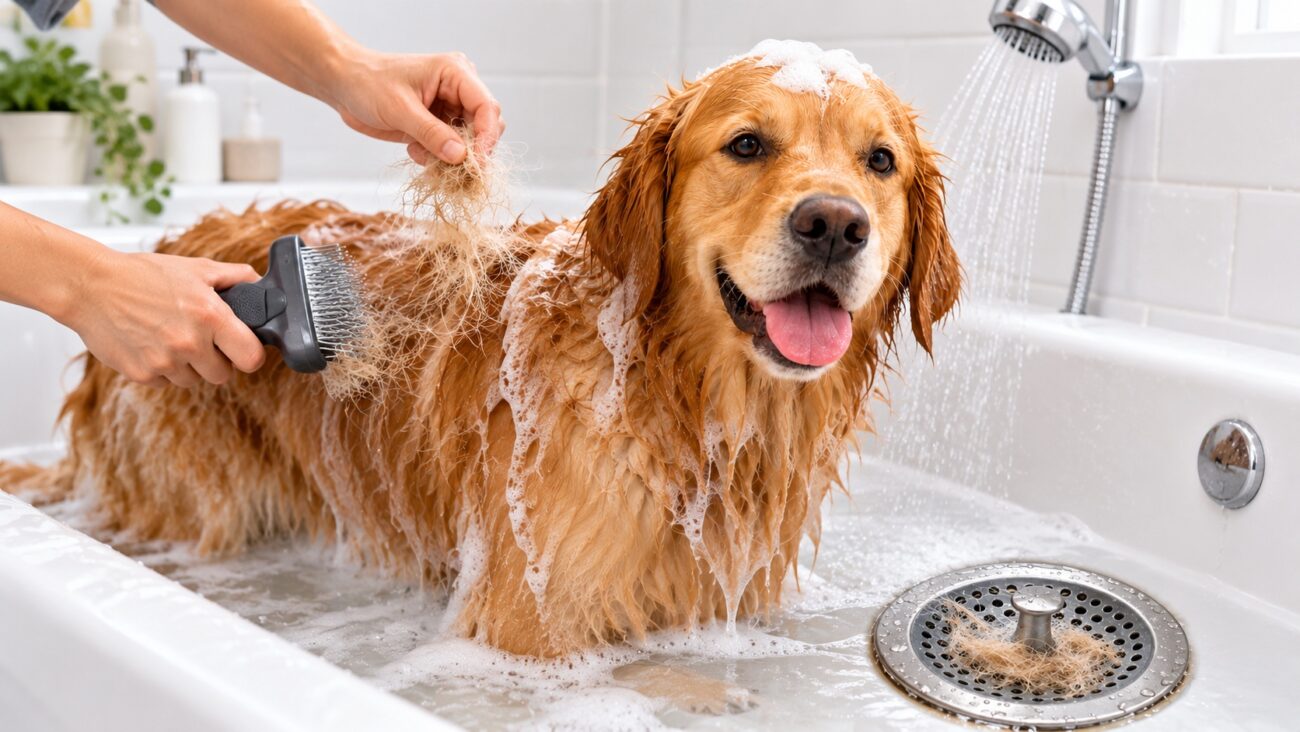
Keep loose clumps away from the drain and remove them as soon as you can pick them up safely. Don’t wait until the final rinse turns the tub into a funnel.
Use a moderate water flow that gives you control. Powerful spraying can push loose hair around the tub before you have time to collect it.
- Wet slowly. Start from the shoulders and work along the body.
- Massage gently. Shampoo in the direction of the coat instead of aggressively scrubbing in circles.
- Watch the drain. Check the catcher as shedding builds.
- Remove clumps. Pick up obvious fur with your hand or disposable tissue and place it in the trash.
- Empty the catcher when needed. Stop briefly if water starts pooling because the screen is full.
- Continue rinsing. Rinse the dog completely after the catcher is flowing normally again.
Complete rinsing still matters for your dog’s skin. The ASPCA dog grooming guidance recommends thorough rinsing after shampooing.
VCA Animal Hospitals also advises removing all shampoo from the coat, especially when using medicated products. You can review its dog coat and bathing guidance.
What Should You Do After the Dog Bath?
Remove visible fur before you pull the drain catcher away. This final cleanup prevents hair sitting around the tub from being washed down afterward.
I usually treat cleanup as part of the bath rather than something I’ll handle later.
- Let most clean rinse water drain through the catcher.
- Move your dog safely out of the tub.
- Collect visible hair from the tub walls and floor.
- Lift the drain catcher carefully.
- Put captured fur in the trash rather than the toilet or drain.
- Rinse the catcher separately and let it dry.
- Wipe the bathtub once the loose fur is gone.
Then focus on your dog. Proper drying is especially important for long, thick, or double coats.
My guide on drying a dog safely after a bath covers towel drying and airflow in more detail.
Do Thick-Coated Dogs Need Extra Drain Protection?
Usually, yes. A thick or double coat can hold a large amount of loose undercoat that becomes obvious once bathing begins.
These dogs benefit most from strong pre-bath preparation. Work in sections rather than rushing through the surface coat.
- Brush the dry coat: Remove loose outer hair and manageable tangles.
- Address undercoat: Use a suitable tool for the individual coat.
- Use a larger catcher: Choose one with enough surface area to maintain water flow.
- Check it repeatedly: Heavy shedding may fill a small screen before the bath is finished.
- Dry thoroughly: Dense undercoat can remain damp after the outer coat feels dry.
For dense coats, follow my thick-coat bathing routine so washing, rinsing, and drying stay manageable.
Double-coated dogs also need careful attention around the undercoat. This double-coated dog bathing guide explains that process separately.
What Drain-Clog Prevention Mistakes Should You Avoid?
The biggest mistake is assuming running water will carry every strand safely away. Hair that disappears from view hasn’t necessarily disappeared from the plumbing system.
A few other habits make cleanup harder than it needs to be.
- Skipping the pre-bath brush: You’ll loosen much more coat inside the tub.
- Using an unsecured screen: Hair can slip underneath a catcher that constantly moves.
- Letting the catcher overflow: Water may push hair around or past an overloaded screen.
- Rinsing fur piles away: Pick visible clumps up instead.
- Removing the catcher too early: Loose hair left in the tub may enter the uncovered drain.
- Using the wrong grooming tool: Not every de-shedding tool suits every coat.
If your dog has skin irritation, sores, unusual hair loss, or significant sensitivity, don’t aggressively de-shed the area. Ask your veterinarian about an appropriate grooming routine.
The ASPCA’s general dog-care guidance also stresses proper coat care and complete rinsing during baths.
My Simple Two-Stage Hair-Capture Routine
My favorite setup uses one grooming barrier and one plumbing barrier. I remove what I can from the dry dog first, then catch what bathing releases.
This keeps the process simple enough to repeat every time.
- Stage one — dog: Brush the dry coat over an easy-to-clean floor and throw collected fur away.
- Stage two — drain: Fit a hair catcher securely before turning on the bath water.
- During washing: Remove any large fur clumps before they reach the catcher.
- Before uncovering the drain: Wipe the tub and dispose of the remaining fur.
That routine matters more than buying complicated equipment. Consistency is what prevents each bath from sending another load of hair toward the plumbing.
Useful Tools for Keeping Dog Hair Out of the Drain
If you’re building a simple bath setup, these are the types of products I’d consider first. Always confirm that a drain protector fits your actual bathtub and that a grooming tool suits your dog’s coat.
🏆 Best Simple Drain Barrier
OXO Good Grips Bathtub Drain Protector
★★★★☆
This stainless-steel protector uses a silicone rim and is designed to catch hair while allowing water around debris. I like this style when I want something simple that can be lifted and cleaned after the bath.
🐕 Best for Heavy Undercoat
FURminator Undercoat deShedding Tool
★★★★☆
The stainless-steel de-shedding edge is designed to reach loose undercoat without cutting the topcoat when used as directed. I would only choose the correct size and coat-length version for a suitable shedding dog.
🧥 Best for Thick Fur
FURminator Grooming Rake
★★★★☆
Its rotating metal teeth are designed for loose undercoat and thicker fur. For the right coat, I like the idea of collecting that loose hair over an easy-to-clean floor before filling the bathtub.
Frequently Asked Questions
Can dog hair really clog a bathtub drain?
Yes. Repeatedly sending shed dog hair into a bathtub drain can contribute to buildup, especially when hair collects with other debris. I prefer preventing it at the source by brushing before bathing and placing a removable hair catcher over the drain.
What can I put over the drain when bathing my dog?
Use a bathtub drain protector, mesh strainer, or compatible hair-catching insert. Choose a design that sits securely on your specific drain and still lets water flow. Check it during the bath because heavy shedding can fill a small catcher quickly.
Should I brush my dog before every bath?
For most dogs, a gentle pre-bath brush is useful for removing loose coat, debris, and manageable tangles. The exact brush and amount of grooming depend on coat type. Tight mats, sore skin, or unusual hair loss may require professional or veterinary guidance.
How do I dispose of dog hair after a bath?
Collect hair from your brush, drain catcher, and bathtub and place it with household trash according to local waste rules. I avoid deliberately washing clumps down another sink or flushing them elsewhere because that simply moves the hair to another plumbing line.
What should I do if the bathtub already drains slowly?
Stop intentionally sending more pet hair into the drain and start using a catcher immediately. If normal drain cleaning allowed for your plumbing doesn’t restore flow, consider having the drain inspected rather than repeatedly forcing large amounts of water through a persistent blockage.
Final Takeaway
Preventing dog hair from clogging the drain starts before your dog gets wet. Remove loose coat first, cover the drain, collect fur as you see it, and clean the tub before uncovering the drain.
You don’t need an elaborate setup. A suitable brush, a well-fitting hair catcher, and a consistent cleanup routine can make home dog baths much easier on both your bathroom and your dog.