
Quick Answer
To clip thick dog hair safely, first confirm that your dog’s coat is suitable for clipping. Remove loose hair and tangles, bathe and dry the coat completely, and use sharp, properly maintained dog clippers designed for dense fur. Start with a longer compatible guard comb and make slow passes in the direction of hair growth. Never force clippers through mats or shave a double coat without professional guidance.
Clipping thick dog hair can be challenging because dense fur creates resistance, traps loose undercoat, and may hide tangles close to the skin. Clippers that work on fine hair can snag, overheat, or leave uneven patches when used on a heavy coat.
The solution is not simply to use a shorter blade. Proper coat preparation, suitable equipment, and careful clipping technique make a greater difference. This guide explains how to handle thick hair without unnecessary pulling or skin irritation.
Can You Safely Clip a Dog With Thick Hair?
Yes, many thick-haired dogs can be clipped safely, but thickness alone does not determine whether clipping is appropriate. The dog’s coat structure matters more than how heavy or fluffy it looks.
Dogs with continuously growing coats, such as many Poodles and Poodle mixes, commonly benefit from regular clipping. Their hair can become long, tangled, and difficult to maintain without trimming.
Double-coated breeds, including Huskies, German Shepherds, and many Golden Retrievers, are different. Their protective outer coat and insulating undercoat normally require brushing and undercoat maintenance rather than a close shave.
The American Kennel Club’s double-coat grooming guidance explains why shaving these coats is generally discouraged unless there is a specific welfare or medical reason.
Important Safety Warning
Do not shave a double-coated dog simply because its fur feels thick or the weather is hot. If the coat is severely matted, a professional groomer or veterinarian should determine the safest approach.
What Equipment Do You Need to Clip Thick Dog Hair?
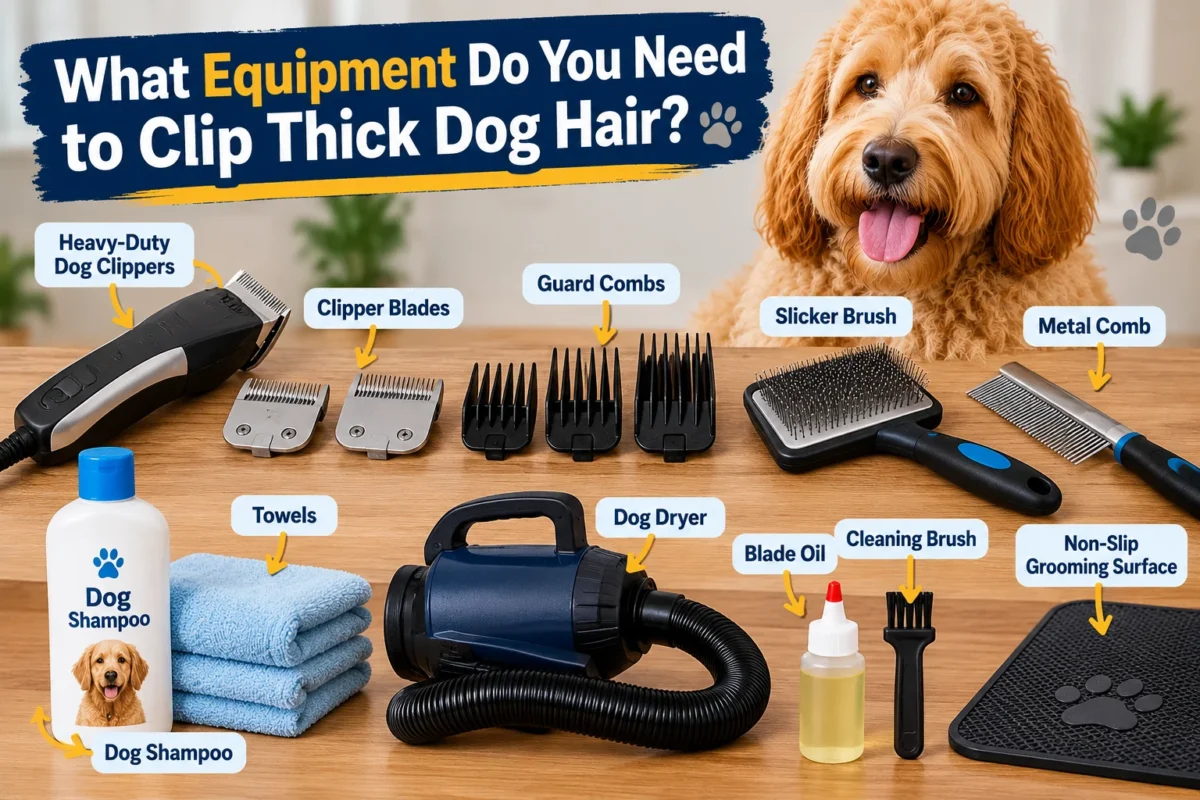
Thick coats require clippers that can cut consistently without repeatedly catching the hair. Equipment should match both the coat type and the haircut you intend to create.
- Heavy-duty dog clippers: Choose a pet-specific model rated by its manufacturer for thick or dense coats.
- Compatible blades: Use sharp blades designed for your clipper model and intended coat length.
- Guard combs: These help maintain a longer, more even finish on clean, fully detangled hair.
- Slicker brush: Useful for removing loose hair and working through appropriate coat types.
- Metal grooming comb: Helps identify hidden tangles that brushes may miss.
- Dog shampoo and drying equipment: Clean, completely dry hair is generally easier to clip.
- Blade oil and cleaning brush: Necessary for maintaining cutting performance.
- Non-slip grooming surface: Helps the dog stand securely during trimming.
A powerful clipper cannot compensate for a dull blade or tangled coat. Also, not every attachment comb fits every blade, so check the manufacturer’s compatibility instructions before use.
How Should You Prepare Thick Dog Hair Before Clipping?
Prepare the coat by checking for mats, removing loose hair, washing when appropriate, and drying thoroughly. Skipping preparation increases the likelihood of uneven cutting and hair pulling.
Check the Skin and Coat
Run your fingers gently through the fur, paying attention to the collar area, armpits, belly, groin, behind the ears, and under the tail. These locations can develop tangles through friction and movement.
Watch for tight mats, skin redness, sores, unusual lumps, or painful areas. If you cannot separate a mat safely from the skin, do not attempt to cut underneath it yourself.
Brush and Detangle
Work through manageable sections using a brush suited to the coat. Follow with a metal comb to check whether the hair is actually free of tangles from the outer layer toward the skin.
Do not repeatedly pull at stubborn knots. Tightly matted hair may require professional removal rather than more aggressive brushing.
Bathe and Dry Completely
If the coat is free of problematic mats, wash it with dog-appropriate shampoo and rinse thoroughly. Dry the hair completely, including dense areas near the skin.
Wet fur can clump inside clipper blades, while accumulated dirt increases friction and blade wear. Never assume that a thick coat is dry simply because the surface feels dry.
How to Clip Thick Dog Hair at Home: 8 Safe Steps
Once the coat is clean, dry, and free from problematic tangles, follow this sequence. It applies to coats that are suitable for clipping, not to routine shaving of double-coated breeds.
- Prepare a calm grooming area. Choose a quiet, well-lit room with a stable, non-slip surface. Keep all tools within reach and prevent the dog from jumping or slipping.
- Introduce the clipper gradually. Let your dog inspect the switched-off tool. Turn it on at a comfortable distance, reward calm behavior, and stop if the dog becomes frightened.
- Choose a longer cutting length first. Select a manufacturer-approved blade and guard combination. Starting longer reduces the chance of accidentally creating an excessively short haircut.
- Start on the back or shoulders. Place the clipper gently against a manageable area. Move in the natural direction of hair growth using controlled, overlapping passes.
- Work through the body in sections. Continue across the back and sides. Keep the blade appropriately aligned with the coat and avoid forcing it into dense patches.
- Use extra care around sensitive areas. Slow down near the armpits, belly, skin folds, groin, and legs. Keep loose skin away from the cutting path. Leave unfamiliar delicate areas to a professional.
- Pause frequently to inspect the blade. Switch the clipper off and check for heat, hair buildup, unusual noise, or dragging. Clean and lubricate according to the manufacturer’s instructions.
- Check the finished coat. Brush away loose clippings and examine the skin for redness or accidental cuts. Correct minor uneven areas only if your dog remains calm and the equipment is operating properly.
Grooming Tip
For a first home haircut, prioritize a comfortable dog and a safe, manageable coat rather than a perfect salon finish. Several short, positive sessions may be better than one exhausting session.
Which Blade Length Works Best for Thick Dog Hair?
There is no universal blade size for every thick coat. The appropriate length depends on coat texture, matting, desired appearance, and the clipper manufacturer’s specifications.
Guard combs can help create a longer finish on coats that are thoroughly brushed and free of tangles. However, they may snag when the undercoat is packed or the hair is matted.
Professional groomers sometimes use shorter blades for specific areas or mat removal. These techniques require additional skill because a shorter cutting length leaves less protection between the blade and the skin.
For beginners, a conservative longer setting is generally a better starting point when compatible with the dog’s coat. Do not attempt to force a guard comb through hair it cannot enter smoothly.
Why Do Clippers Pull or Get Stuck in Thick Dog Hair?
Clippers commonly struggle because of tangled hair, trapped undercoat, dirty blades, dull cutting edges, insufficient power, or an unsuitable attachment. Identify the cause before continuing.
| Problem | Likely Cause | What to Do |
|---|---|---|
| Clippers pull hair | Dull blade or tangles | Stop, inspect the coat, and service the blade |
| Blade clogs repeatedly | Loose hair or debris | Clean the blade and brush the coat thoroughly |
| Cut looks uneven | Inconsistent pressure or coat preparation | Recomb and make controlled passes |
| Clippers slow down | Power limitation or blade resistance | Check battery, maintenance, and equipment suitability |
| Blade becomes hot | Friction or prolonged operation | Stop and allow safe cooling before resuming |
Repeated pulling is not something your dog should have to tolerate. If cleaning, detangling, and proper maintenance do not resolve the problem, stop the haircut and obtain professional assistance.
What Should You Do if Thick Dog Hair Is Severely Matted?
Leave severe or skin-tight matting to a professional groomer or veterinarian. Mats can pull painfully on the skin and conceal irritation, wounds, or fragile skin folds.
Do not push clippers underneath a tight mat when you cannot see the skin. Never try to remove a close mat using household scissors.
According to VCA Animal Hospitals’ coat-care guidance, severe tangles warrant professional attention, and existing skin irritation should be evaluated by a veterinarian.
If your dog has extensive matting, the priority is pain relief and safe coat management—not preserving a particular haircut length.
What Mistakes Should You Avoid When Clipping Thick Dog Hair?
- Shaving every thick coat: Determine whether the dog has a clip-appropriate coat or a protective double coat.
- Clipping through mats: Dense tangles may trap skin and create a cutting hazard.
- Working on wet hair: Moisture can cause clumping, clogging, and uneven results.
- Forcing the clipper: Increased pressure may cause snagging, discomfort, or injury.
- Ignoring hot blades: Heated metal can irritate or burn sensitive skin.
- Using incompatible guards: Attachments must match the blade and clipper system.
- Continuing when the dog struggles: Stress and sudden movement increase grooming risks.
These mistakes often compound each other. For example, a dirty coat may cause blade resistance, which can lead someone to push harder and create greater irritation.
How Should You Care for Your Dog After Clipping?

After clipping, gently remove loose cut hair and inspect the skin, particularly around sensitive areas. Look for irritation, scratches, redness, or discomfort.
Clean and oil the equipment as instructed by its manufacturer. Store blades dry and protected from damage.
Continue brushing on a schedule suited to your dog’s coat. Haircuts do not prevent matting permanently, and thick coats may need frequent maintenance between grooming appointments.
If your dog develops persistent redness, swelling, bleeding, unusual tenderness, or repeated licking of a newly clipped area, stop grooming and contact your veterinarian.
RELATED GROOMING TOOL
Heavy-Duty Dog Grooming Clippers
Clippers designed for dense, clip-appropriate coats may help produce a smoother cut with less snagging. Compare coat suitability, blade compatibility, maintenance requirements, and manufacturer instructions before choosing.
As an Amazon Associate, we earn from qualifying purchases.
Frequently Asked Questions
1. Can you use regular human hair clippers on thick dog hair?
Human clippers are generally unsuitable for dense dog coats. Pet grooming clippers are designed for animal coat requirements, although their capabilities vary by model.
2. Should you clip thick dog hair against the grain?
Beginners should generally follow the natural direction of hair growth. Clipping against the grain produces a closer result and may increase irritation risk if performed incorrectly.
3. Can you clip thick dog hair without bathing first?
It may be possible when the coat is already clean, dry, and thoroughly detangled. Dirty or greasy hair can interfere with clipper performance and increase blade wear.
4. How long does it take to clip a thick-haired dog?
The time varies with dog size, coat density, tangles, temperament, equipment, and groomer experience. Plan for breaks rather than trying to finish within a fixed time.
5. Can you clip a dog with a thick undercoat?
Not every thick undercoat should be clipped. Many double-coated dogs need brushing and undercoat removal rather than shaving. Ask a professional if you are unsure about the coat type.
6. How often should thick dog hair be clipped?
Clip frequency depends on the breed, coat growth, lifestyle, and haircut. Continuously growing coats may need regular trimming, while many double coats should not receive routine full-body clipping.
Final Thoughts
Clipping thick dog hair safely starts with understanding the coat. For dogs whose coats are suitable for clipping, careful preparation, sharp equipment, a conservative cutting length, and slow movements can make home grooming more comfortable.
Never force clippers through resistance or ignore signs of pain. When a coat is severely matted, a dog becomes distressed, or the correct grooming method is uncertain, professional assistance is the safer choice.


