Quick Answer
The best dog trimmer depends on your dog’s coat, size, and grooming needs. Choose a narrow, lightweight trimmer for small touch-ups and a more powerful clipper for full-body grooming. Always brush the coat, check the blade temperature, and trim carefully with the correct attachments. For additional safety advice, review the AKC home grooming recommendations.
What to look for in a dog trimmer:
- Coat compatibility: Match the cutting power and blade design to your dog’s hair.
- Blade quality: Look for replaceable blades that are easy to clean.
- Comfort: Choose a tool with manageable noise, vibration, and weight.
- Cutting length: Use compatible guide combs for longer, more consistent trims.
- Power source: Select cordless convenience or reliable corded operation.
Before trimming:
- Brush first: Remove loose hair and identify tangles.
- Prepare the coat: Work with clean, completely dry hair.
- Inspect the skin: Avoid clipping over injuries or irritation.
- Start slowly: Introduce the sound before cutting any hair.
Choosing a dog trimmer can feel confusing when every product promises smooth cutting and professional results. I prefer to evaluate grooming tools by the jobs they’re designed to handle rather than marketing claims.
This dog trimmer guide explains the different tool types, important features, grooming techniques, and common mistakes. You’ll also learn when professional help is the safer choice.
What Is a Dog Trimmer?
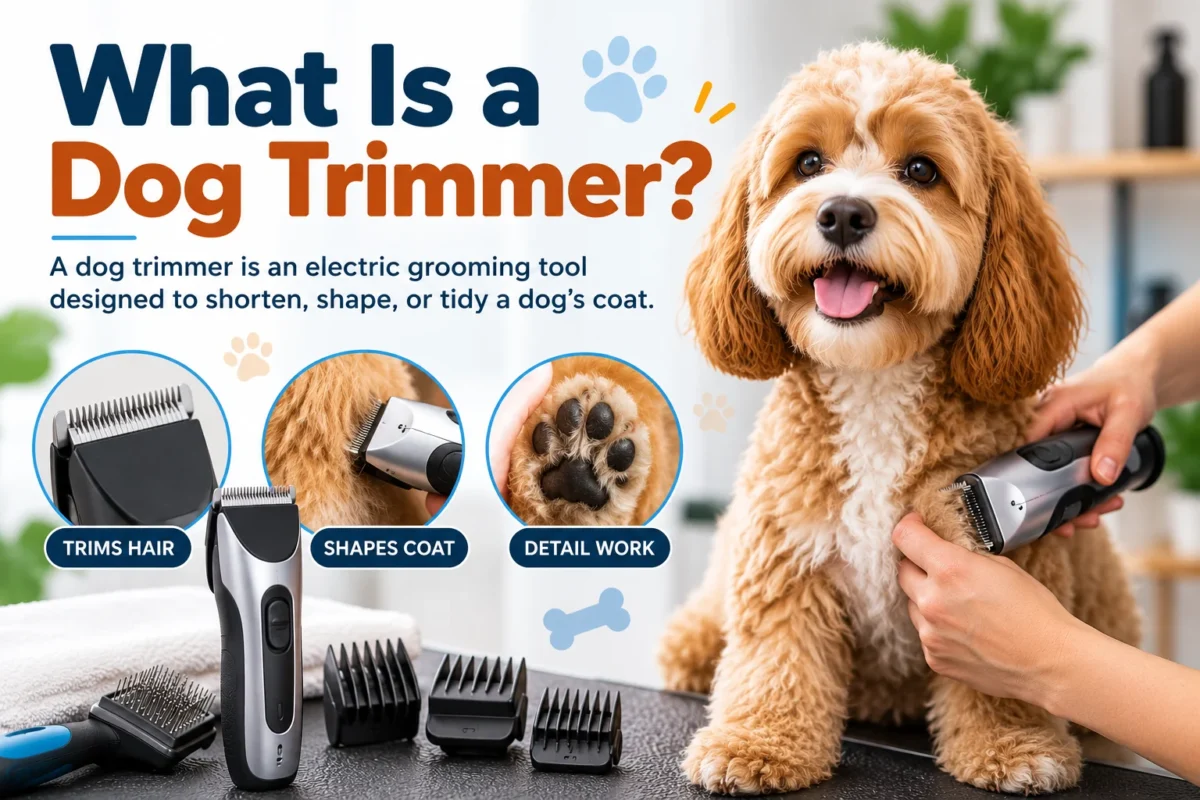
A dog trimmer is an electric grooming tool designed to shorten or shape a dog’s coat. It uses moving blades to cut hair, often with adjustable cutting lengths or attachment combs.
Manufacturers sometimes use the words trimmer and clipper interchangeably. However, smaller trimmers generally work best for detail work, while larger clippers handle broader areas.
What Are the Main Types of Dog Trimmers?
- Detail trimmers: Small tools for controlled touch-ups around accessible areas.
- Full-size clippers: Larger tools designed for trimming substantial sections of coat.
- Cordless clippers: Rechargeable tools that offer freedom from power cables.
- Corded clippers: Plug-in models suited to longer sessions without battery interruptions.
- Adjustable-blade clippers: Models that offer several blade settings without changing the entire blade.
The right tool depends on the grooming task. A compact paw trimmer shouldn’t be expected to perform like a full-size clipper on dense curls.
How Do You Choose the Right Dog Trimmer?
Choose a dog trimmer by evaluating coat type, cutting power, blade options, ergonomics, and maintenance. A comfortable, compatible clipper matters more than the longest feature list.
1. Identify Your Dog’s Coat Type
Different coats create different grooming challenges. Curly hair may tangle easily, while thick coats can resist weaker cutting systems.
- Fine or silky coats: Look for smooth cutting and adjustable length control.
- Curly coats: Prioritize reliable cutting power and careful coat preparation.
- Dense coats: Consider a professional-grade clipper suited to heavier workloads.
- Short, smooth coats: Brushing may be more appropriate than clipping.
- Double coats: Seek breed-specific guidance before removing coat length.
For example, a Poodle may benefit from regular clipping as part of its grooming routine. A healthy Labrador generally needs brushing rather than a full-body haircut.
2. Match Motor Power to the Job
Motor performance affects how consistently a clipper cuts. Thick or curly hair can challenge tools designed only for minor touch-ups.
Manufacturers may list cutting speed in strokes per minute (SPM). This describes blade movement, but it doesn’t measure overall cutting power by itself.
Blade design, motor torque, and coat preparation also matter. Don’t choose a clipper solely because it advertises the highest speed.
3. Choose the Correct Blade System
Blades determine how closely a clipper cuts. Many grooming tools support adjustable blades, replaceable blades, or attachment combs.
- Adjustable blades: Allow you to switch between supported cutting settings.
- Detachable blades: Make blade changes and some maintenance tasks easier.
- Guide combs: Help maintain longer, more consistent coat lengths.
- Fine-tooth blades: Suit certain finishing tasks and prepared coat types.
- Coarse-tooth blades: May work better on compatible dense or coarse coats.
A shorter blade setting isn’t automatically safer or better. For inexperienced owners, an unsuitable close cut can increase injury risk.
4. Consider Noise and Vibration
Some dogs dislike the sound or vibration of grooming equipment. A quieter tool may make early training easier.
However, the dog’s reaction matters more than any advertised noise level. Introduce the switched-off tool first, then its sound at a comfortable distance.
5. Check Weight and Grip
A lightweight clipper can be easier to control during longer grooming sessions. Grip design also affects how confidently you handle the tool.
Compare the weight of each model and consider your hand size. Heavy professional clippers aren’t necessarily the best fit for occasional maintenance.
6. Choose Corded or Cordless Operation
Cordless tools offer flexibility when working around a dog. Corded tools avoid the need to recharge during grooming.
Some models support both options. That versatility can be useful when an unexpectedly long session drains the battery.
Dog Trimmer vs. Dog Clipper: What’s the Difference?
Dog trimmers generally emphasize precise, smaller-area work, while clippers focus on cutting larger amounts of hair. The distinction isn’t universal because brands use these product names differently.
| Feature | Detail Trimmer | Full-Size Clipper |
|---|---|---|
| Primary purpose | Small touch-ups | Larger coat sections |
| Typical blade width | Narrower | Wider |
| Coat coverage | Limited areas | Larger areas |
| Handling | Often compact | Often larger and heavier |
| Best buyer | Occasional detail grooming | Owners managing clipper-dependent coats |
The practical lesson is simple: choose based on the actual cutting task. Many owners benefit from a full-size clipper for general grooming and professional help for delicate areas.
How Do You Use a Dog Trimmer Safely at Home?
Safe dog trimming begins with coat preparation, gradual tool introduction, and controlled handling. Never rush through tangles, sensitive areas, or a dog’s signs of discomfort.
Step 1: Prepare Your Grooming Area
Select a stable, well-lit location with a nonslip surface. Keep equipment close enough to reach without leaving your dog unattended.
- A dog-specific clipper and compatible attachments
- A suitable brush and metal grooming comb
- Blade cleaning tools and manufacturer-approved oil
- A clean towel
- Small training treats
- A secure, comfortable surface
A calm environment helps both the dog and handler. Avoid elevated tables unless you have the training and equipment to prevent falls.
Step 2: Brush and Inspect the Coat
Brush your dog thoroughly before clipping. Work through manageable tangles without pulling painfully against the skin.
Check behind the ears, around the legs, and other areas where mats often form. If you discover tight mats, stop and consult a qualified groomer.
Never cut tight mats with household scissors. Skin can become trapped inside the tangled hair.
Step 3: Wash and Dry When Appropriate
A clean coat helps protect grooming blades from excessive dirt and debris. Use shampoo formulated for dogs and rinse completely.
Dry the coat fully before using ordinary dry-coat clippers. Always follow the clipper manufacturer’s instructions for coat preparation.
Step 4: Introduce the Trimmer Gradually
Let your dog investigate the switched-off trimmer. Reward calm behavior without forcing contact.
Next, turn it on briefly at a comfortable distance. Move closer over multiple short sessions if your dog remains relaxed.
Step 5: Select the Correct Cutting Length
Read the blade and guide-comb instructions before grooming. Use only compatible attachments that fit securely.
For beginners, maintaining more coat length generally offers more room for error than attempting an extremely close finish. A qualified groomer can recommend an appropriate length.
Step 6: Trim Slowly and Gently
Begin with a small, accessible body area when your dog is calm. Follow your tool’s instructions for blade direction, handling, and pressure.
- Keep the clipper properly positioned against the coat.
- Use gentle, controlled passes.
- Avoid forcing blades through resistance.
- Check frequently for skin folds and irritation.
- Stop if your dog becomes frightened or uncomfortable.
Don’t attempt intricate face, ear, groin, or paw-pad trimming without proper training. These areas require extra skill and precision.
Step 7: Check Blade Temperature
Clipper blades can become hot during use. Pause regularly and check whether the blade is comfortable before continuing.
Follow the manufacturer’s blade-care and cooling instructions. Never place an overheated blade against your dog’s skin.
Step 8: Clean and Store the Trimmer
Switch off and unplug the trimmer before cleaning or servicing it. Remove trapped hair using the supplied brush or recommended method.
Oil the blades according to the manufacturer’s instructions. Store everything dry and protected from damage.
What Dog Trimmer Features Matter Most in 2026?
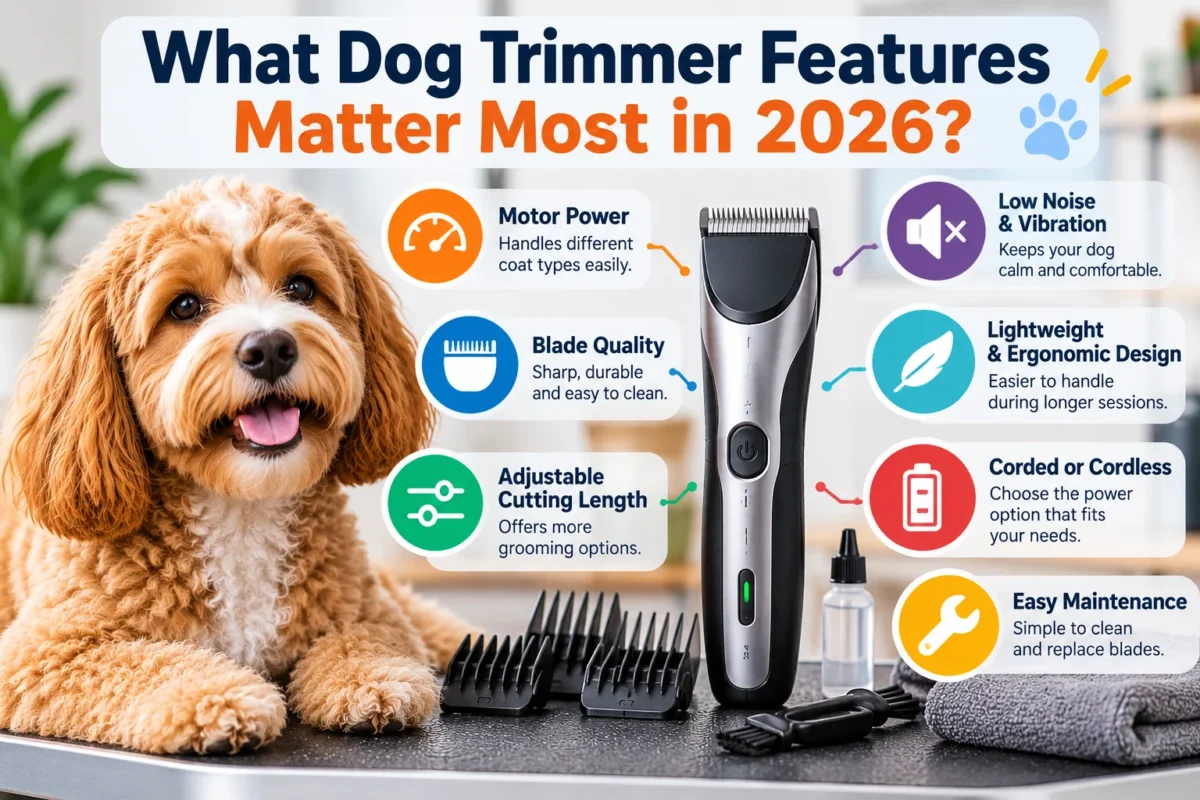
In 2026, adjustable blades, cordless operation, and easy maintenance remain useful buying considerations. The best feature combination depends on how often you groom and how much hair you need to remove.
Real Product Specifications Compared
The following manufacturer-reported figures show how two established grooming clippers differ. They aren’t independent performance-test results.
| Specification | Wahl Bravura Lithium | Andis AGC2 |
|---|---|---|
| Power | Corded/cordless | Corded |
| Motor speed | 5,500 SPM | 3,400–4,400 SPM |
| Blade system | 5-in-1 adjustable | Detachable |
| Weight | 8.8 oz | 17.6 oz |
| Battery runtime | Up to 90 minutes | Not applicable |
| Main advantage | Lightweight versatility | Corded, detachable-blade design |
These specifications come from the Wahl Professional and Andis product information.
Notice that the faster blade speed doesn’t necessarily make one tool better for every coat. Cutting performance depends on several factors working together.
What Are the Most Common Dog Trimming Mistakes?
The biggest dog trimming mistakes involve poor coat preparation, excessive pressure, incorrect tools, and ignoring discomfort. Avoiding these problems can make grooming safer and less stressful.
- Clipping through mats: Tight tangles can pull skin into the blade. Seek professional help for severe matting.
- Using an unsuitable blade: Incorrect cutting lengths can create unwanted results or increase injury risk.
- Ignoring blade heat: Hot blades can irritate or burn skin.
- Forcing a nervous dog: Rushing can create negative grooming associations.
- Skipping cleaning: Hair buildup and poor blade maintenance can affect cutting performance.
- Clipping inappropriate coats: Some coats should not be shaved without a specific grooming or medical reason.
- Using human clippers: Human hair tools aren’t necessarily suitable for animal coat density or grooming requirements.
One useful buying principle is to consider your dog’s behavior alongside its coat. A technically capable clipper won’t help much if your dog cannot comfortably tolerate it.
How Often Should You Trim Your Dog’s Hair?
Dog trimming frequency depends on breed, coat growth, haircut preference, and skin health. There’s no single schedule that works for every dog.
- Curly, continuously growing coats: Often need regular professional grooming and frequent brushing.
- Long, flowing coats: Need consistent brushing and occasional trimming based on their style.
- Short, smooth coats: Usually require brushing and basic hygiene rather than routine clipping.
- Double coats: Often benefit more from appropriate brushing and undercoat care than shaving.
- Small maintenance areas: May need attention between complete grooming appointments.
For some haircut-dependent breeds, appointments about every four to eight weeks provide a useful planning starting point. Individual needs vary considerably.
See the AKC dog grooming guide for broader coat, brushing, and hygiene recommendations.
How Can You Make Dog Trimming Less Stressful?
Positive, gradual training helps dogs become more comfortable with electric grooming tools. Begin with short introductions rather than attempting a complete haircut immediately.
Practice Without Cutting Hair
Allow your dog to see and investigate the tool while it’s switched off. Give treats for calm, voluntary interaction.
Introduce the noise separately. Keep the tool far enough away that your dog can remain comfortable.
Keep Sessions Short
Work in manageable stages and provide frequent breaks. End before your dog becomes overwhelmed whenever possible.
Watch for trembling, repeated escape attempts, freezing, or increased distress. Stop and reassess instead of restraining the dog more forcefully.
Know When to Call a Professional
Professional grooming is especially valuable for severe matting, difficult coats, delicate trimming, and dogs with significant grooming anxiety.
The AKC’s professional grooming guidance explains why training and experience matter.
Which Dog Trimmers Are Worth Considering?
For most buyers, I would narrow the decision to the dog’s grooming requirements rather than chase one universal winner. The following models represent different priorities and are supported by published manufacturer specifications.
Disclosure: As an Amazon Associate, we may earn from qualifying purchases through eligible links, at no additional cost to you.
🏆 Best for versatile home grooming
Wahl Bravura Lithium
★★★★☆ 4.5/5 editorial fit rating
This clipper features a 5-in-1 adjustable blade, a 5,500 SPM motor, and up to 90 minutes of cordless runtime. At 8.8 ounces, it’s my specification-based preference for buyers who value a lighter, versatile grooming tool.
💪 Best for regular heavy-duty clipping
Andis AGC2 Super 2-Speed
★★★★☆ 4.5/5 editorial fit rating
The AGC2 uses a two-speed rotary motor, detachable blades, and a 14-foot power cord. I’d prioritize this model for buyers who prefer uninterrupted corded operation and a professional-style blade system.
⚡ Best for advanced cordless features
Wahl Bravura 2
★★★★☆ 4.3/5 editorial fit rating
The Bravura 2 offers two motor speeds, a 5-in-1 Diamond Pro blade, and up to four hours of cordless runtime. I’d shortlist it for experienced users who want extended battery life and a digital display.
Editor’s note: Ratings above represent feature-based suitability assessments, not customer-review averages or hands-on laboratory test scores. Check the current manufacturer’s specifications before purchasing.
Frequently Asked Questions About Dog Trimmers
Can You Use Human Hair Trimmers on Dogs?
Human hair trimmers aren’t generally the best choice for dogs because pet coats can be denser, curlier, or more difficult to cut. Human tools may snag hair or struggle with the workload. A dog-specific clipper with compatible blades is usually a more appropriate option for routine pet grooming.
Should You Trim Dog Hair When It’s Wet or Dry?
Most ordinary home grooming clippers are intended for clean, dry, prepared coats unless the manufacturer specifically allows wet clipping. Wet hair can behave differently and affect cutting performance. Follow your model’s instructions, brush before grooming, and ensure the coat is suitable for your chosen tool.
Are Cordless Dog Trimmers Powerful Enough for Thick Hair?
Some cordless dog clippers can handle dense coats, but performance depends on motor design, blade selection, and coat condition. Battery operation alone doesn’t determine cutting ability. Look for manufacturer guidance confirming compatibility with thick or curly coats, and don’t force the clipper through tangles or mats.
How Do You Stop a Dog Trimmer From Pulling Hair?
Check for tangled hair, clogged blades, incorrect attachments, dull cutting edges, and insufficient lubrication. Clean and maintain the clipper according to its instructions. If pulling continues, stop grooming and inspect the equipment rather than pressing harder against the dog’s coat.
Can Beginners Groom Their Dogs at Home?
Beginners can learn basic brushing and some simple maintenance tasks, but full-body clipping and sensitive-area grooming require more skill. Start with gradual training and seek instruction from a qualified groomer. Professional help is particularly important for severe matting, skin problems, or dogs that resist handling.
Final Verdict: What Is the Best Dog Trimmer for Your Needs?
The best dog trimmer is one that matches your dog’s coat, your grooming experience, and the areas you need to maintain. A lightweight cordless model offers convenience, while a corded professional clipper may better suit demanding grooming sessions.
For many home users, the Wahl Bravura Lithium is a sensible starting point because of its adjustable blade and lightweight design. The Andis AGC2 deserves consideration when corded operation and detachable-blade flexibility matter more.
Most importantly, prioritize your dog’s safety over haircut speed. With proper preparation, patient handling, and regular equipment maintenance, home trimming can support a comfortable grooming routine.
Ready to choose? Compare the recommended models, confirm their compatibility with your dog’s coat, and select a tool that fits your grooming needs and experience.