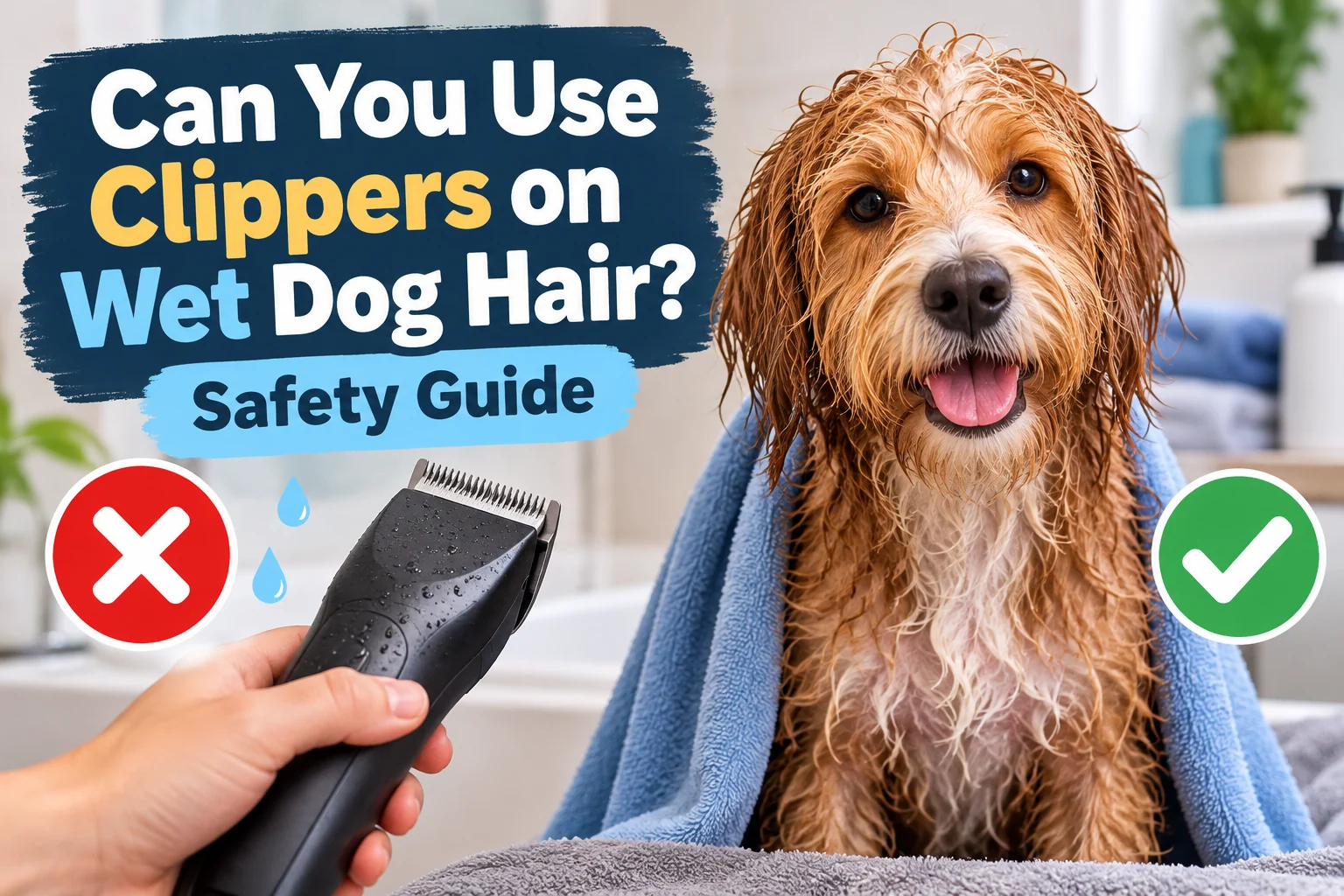
Quick Answer
No, you should generally not use regular dog grooming clippers on wet hair. Damp fur can bunch together, clog the cutting blades, cause pulling, and produce an uneven haircut. For routine home grooming, wash your dog if necessary, dry the coat completely, remove tangles, and then clip. Only use specialized wet-use equipment if its manufacturer explicitly permits that application.
Your dog has just had a bath, and the fur looks soft enough to trim. It may seem convenient to reach for the clippers before the coat dries.
However, moisture changes how fur passes through a clipper blade. The difference matters for your dog’s comfort, the quality of the haircut, and the condition of your grooming equipment.
The safest choice depends on how wet the coat is, what equipment you have, and whether the hair contains tangles or mats.
Why Shouldn’t You Use Clippers on Wet Dog Hair?
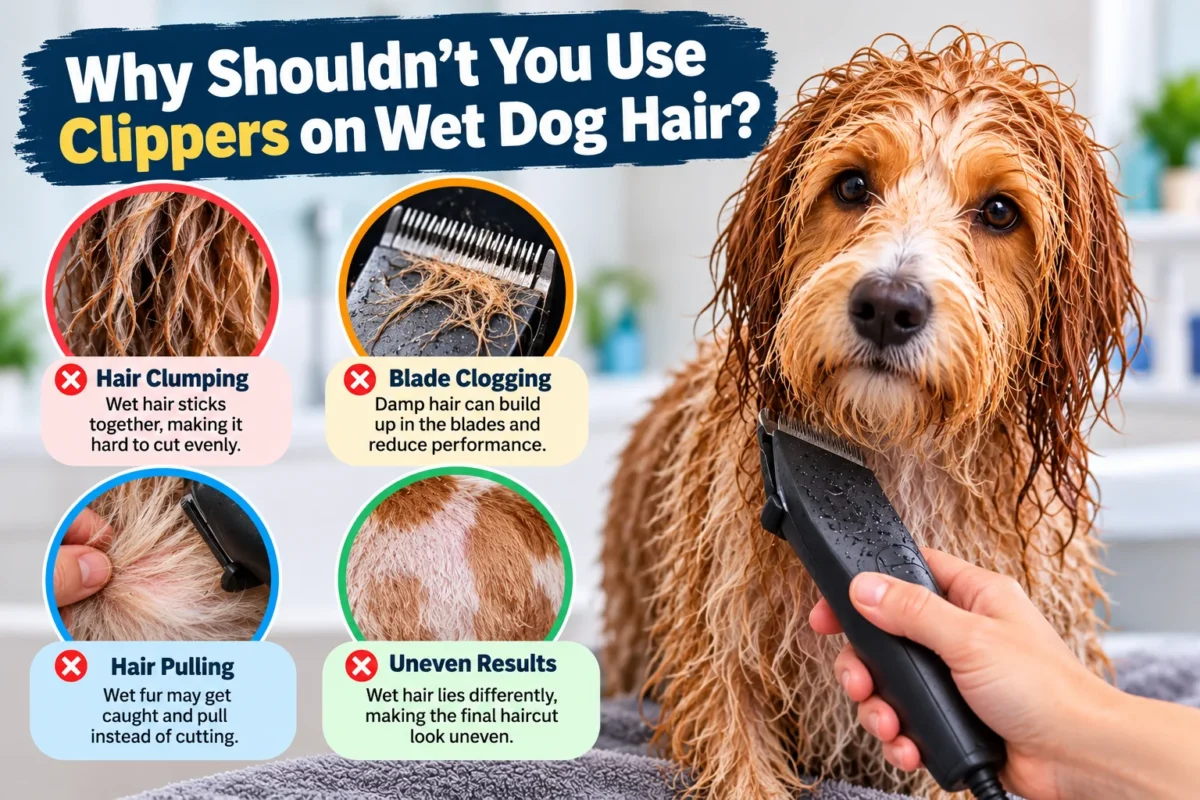
Wet dog hair is generally more difficult to clip evenly than clean, dry, properly brushed hair. Moisture causes strands to gather together instead of feeding consistently through the cutting blade.
Four practical problems can follow:
- Hair pulling: Damp clumps may catch or drag rather than cutting smoothly.
- Uneven trimming: Wet hair lies differently from dry hair, making the finished length harder to judge.
- Blade clogging: Damp hair can accumulate between blade teeth and interfere with cutting.
- Equipment problems: Excess moisture may affect equipment not designed for wet use and can contribute to corrosion if blades are improperly maintained.
According to Petco’s dog grooming guidance, preparing a clean, completely dry, brushed coat helps protect clipper performance and achieve a more even cut.
One important distinction is that a clipper might still cut some damp hair. That does not mean the technique is appropriate, comfortable, or recommended for routine home grooming.
What Happens If You Clip a Dog While Its Coat Is Damp?
The result depends on the amount of moisture, coat thickness, blade condition, and grooming technique.
A slightly damp, short coat may appear manageable initially. However, thicker, curly, or long-haired coats can hide considerable moisture beneath the surface.
| Coat condition | Possible problem | Best action |
|---|---|---|
| Soaking wet | Clumping and poor blade feeding | Dry completely |
| Slightly damp | Dragging or uneven cutting | Finish drying first |
| Dry but tangled | Snagging or pulling | Gently detangle or get help |
| Clean, dry, brushed | Better conditions for routine clipping | Proceed carefully |
The important point is that dryness alone does not make a coat ready for grooming. The hair must also be sufficiently free of tangles, and the dog’s skin must be suitable for clipping.
Is It Safe to Use Electric Clippers Near a Wet Dog?
Do not assume an electric clipper is safe around moisture. Electrical safety depends on the equipment’s design, condition, instructions, and intended use.
A cordless clipper is not automatically waterproof. Likewise, a washable or detachable blade does not necessarily mean the entire clipper can operate on a wet animal.
Safety Warning
Keep ordinary corded grooming equipment away from bathwater, wet floors, and standing water. Do not use a clipper on a wet dog unless the manufacturer explicitly specifies that it is suitable for that use. Never operate equipment with a damaged cord, plug, or housing.
Even where equipment is designed to tolerate moisture, there may be no practical grooming advantage to clipping wet fur. A dry, properly prepared coat remains the better starting point for most home haircuts.
How Should You Prepare Your Dog’s Coat Before Clipping?
For normal grooming, prepare the coat in the following order. Each step reduces a different source of difficulty.
Step 1: Inspect the Coat and Skin
Check for tight mats, painful areas, wounds, redness, and unusual lumps before bathing or clipping.
Do not force a blade beneath tight mats. Matting can pull skin into folds and make it difficult to judge where the skin begins. A professional groomer may need to handle this safely.
Step 2: Brush Out Loose Hair and Easy Tangles
Use a brush suited to the dog’s coat type. Gently work through manageable tangles without pulling against the skin.
A comb can help identify remaining knots. If it catches repeatedly, the coat is not ready for a routine clipper pass.
Step 3: Bathe the Dog if Necessary
A clean coat generally allows blades to work more effectively than hair containing dirt, sand, or grooming-product buildup.
Use lukewarm water, dog-formulated shampoo, and thorough rinsing. Our guide to bathing a dog safely at home explains the washing and rinsing process in greater detail.
Bathing should not be forced when severe matting or painful skin makes handling unsafe.
Step 4: Dry the Coat Completely
Gently press towels against the fur to absorb moisture. Avoid vigorous rubbing that creates additional knots.
When necessary, use a dog-appropriate dryer on a comfortable setting, keeping airflow moving and monitoring your dog’s reaction.
Check the hair near the roots, particularly behind the ears, around the chest, and along dense areas of the coat.
Step 5: Comb and Begin Clipping Carefully
Once dry, check again for tangles. Follow the clipper manufacturer’s blade and attachment instructions, and begin with a conservative cutting length.
Keep the blade flat against the coat, avoid pressing into the skin, and check blade temperature frequently. Stop if the dog becomes distressed or the hair begins pulling.
How Can You Tell Whether Your Dog Is Dry Enough to Clip?
Check the coat close to the skin, not just its visible surface. This is especially important for curly, woolly, and thick coats.
Use your fingers to part the fur in several areas. Feel for cool, damp sections beneath the outer layer. Then gently pass a suitable comb through the coat to check for remaining tangles.
A coat that feels dry over the back may still be damp beneath the collar area, around the armpits, or behind the ears.
Practical Tip
Do not rely on a fixed waiting period after bathing. A short, fine coat and a dense curly coat may dry at very different rates. Check dryness at the roots before turning on the clippers.
The American Kennel Club’s dog drying guide also explains why thorough drying matters for coat care and comfort.
Do Professional Groomers Ever Clip Dogs Before Bathing?

Yes. Professional groomers sometimes perform a preliminary clip before bathing, especially when substantial matting must be removed safely.
However, pre-bath clipping is not the same thing as clipping a soaking-wet coat.
A trained groomer may shorten a dry, dirty, or matted coat before washing, then complete the finishing haircut after the coat has been cleaned and dried.
This approach involves professional judgment about skin condition, blade length, coat tension, and handling. It should not be treated as permission to shave through tight mats at home.
For most beginners, the ordinary sequence remains simpler: assess, brush, wash when appropriate, dry fully, and clip.
What Should You Do If You Already Started Clipping Wet Hair?
Stop the clipper and assess your dog’s skin and coat before continuing.
- Turn off the equipment. Disconnect corded equipment safely if moisture has reached it, without touching wet electrical components.
- Examine the skin. Look for redness, cuts, or obvious discomfort.
- Dry the coat. Use towels and suitable drying methods without overheating the skin.
- Check the blade. Remove trapped hair and maintain it according to the manufacturer’s instructions.
- Reassess the haircut. Once dry, determine whether a gentle finishing trim is needed.
If the dog has cuts, persistent irritation, or painful skin, stop grooming and seek veterinary advice. An uneven haircut alone is not a reason to rush through additional clipping.
When Should You Avoid Clipping Your Dog at Home?
Some situations require more than drying the coat. Home clipping may be unsuitable when the dog’s coat, skin, or behavior creates additional risk.
- Severe matting: Tight mats can conceal delicate skin and make clipping hazardous.
- Open wounds or inflamed skin: Grooming friction may worsen discomfort.
- Strong fear or struggling: Sudden movements increase the risk of accidental cuts.
- Uncertain coat requirements: Many double-coated breeds should not be routinely shaved short without a specific reason.
- Unfamiliar equipment: Incorrect blades or attachments can produce an unexpectedly close cut.
According to the American Kennel Club’s home grooming safety advice, inexperienced owners should be particularly cautious about clipping, shaving, and attempting to remove difficult mats.
When the dog needs significant mat removal or has painful skin, professional grooming or veterinary assessment is more appropriate than experimenting with wet clipping.
Frequently Asked Questions
Can you use cordless dog clippers on damp fur?
Cordless operation does not automatically make clippers suitable for wet use. Follow the manufacturer’s moisture restrictions and dry the dog’s coat before routine clipping.
Is towel-drying enough before using dog clippers?
Sometimes, particularly for a short, fine coat. Dense or curly coats may retain moisture beneath the surface and require additional drying. Check the roots before clipping.
Can you use scissors on wet dog hair instead?
Scissors are not automatically safer. Wet hair may be difficult to judge, while moving skin and hidden folds increase cutting risks. Avoid trimming sensitive or matted areas without appropriate skill.
Can wet clipping cause clipper burn?
Wet clipping may contribute to pulling and repeated passes that irritate skin. However, clipper burn can also result from hot blades, excessive pressure, or cutting too closely on dry hair.
Should you shave a severely matted dog before bathing?
A professional groomer may remove severe matting before bathing when necessary. Tight mats can trap skin, making at-home shaving risky. Seek professional help rather than forcing clippers beneath them.
Can you clip a dog immediately after using a damp grooming spray?
Check the product and clipper instructions first. If the spray leaves the coat noticeably damp or causes hair to clump, allow it to dry before clipping.
Conclusion
Using clippers on wet dog hair is generally not recommended for routine home grooming. Damp hair can interfere with blade movement, create uneven results, and make the process uncomfortable for your dog.
The better approach is to prepare the coat carefully, bathe when appropriate, dry thoroughly, and remove manageable tangles before clipping. Follow your equipment manufacturer’s instructions and check the dog’s skin throughout the session.
For severely matted coats, painful skin, or dogs that cannot remain safely still, professional assistance is the safer choice. A smooth haircut begins with proper coat preparation rather than rushing to use the clippers.