
Quick Answer
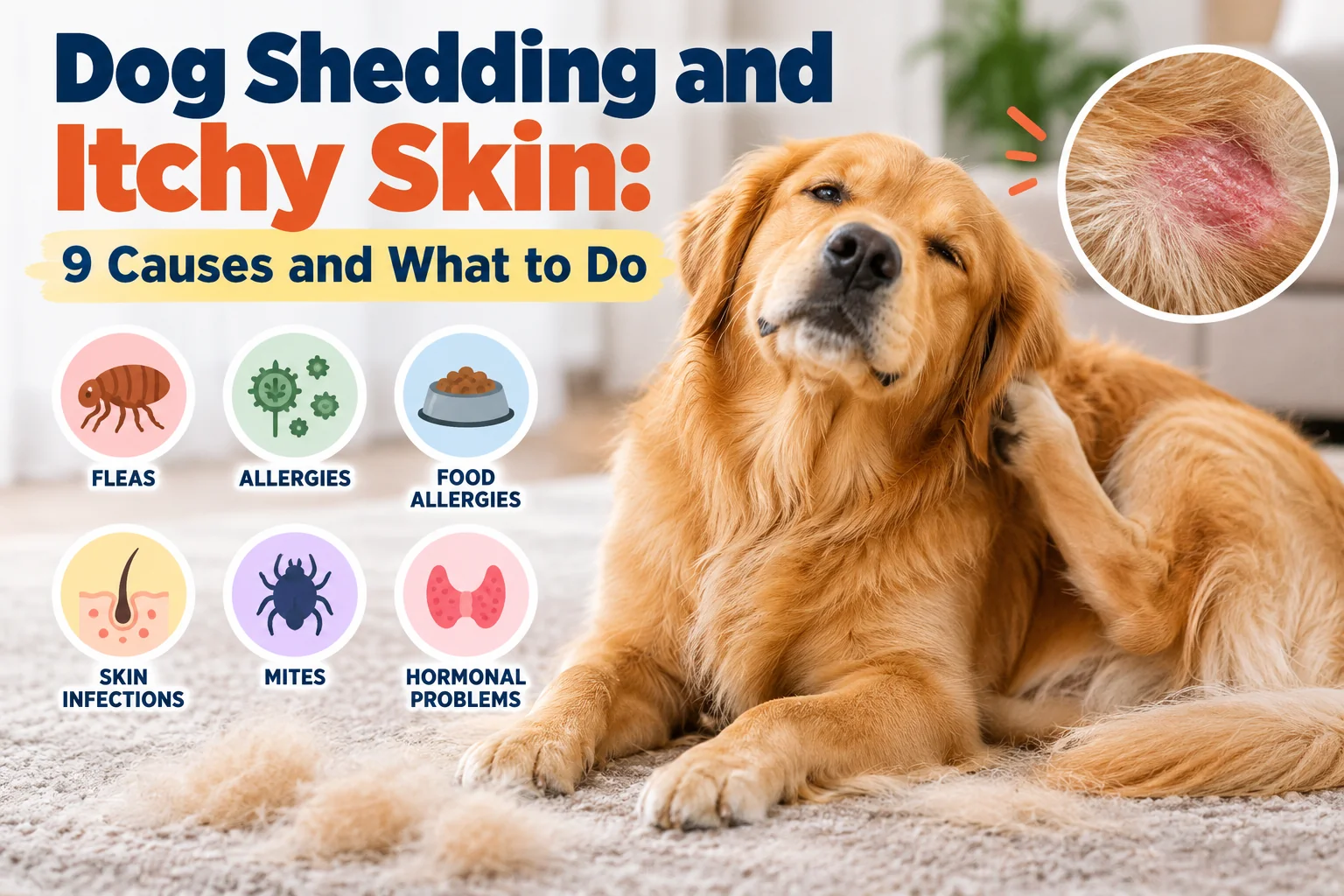
Dog shedding and itchy skin can result from fleas, environmental allergies, food allergies, dry skin, infections, mites, or grooming irritation. Seasonal shedding is often normal, but intense scratching, bald patches, redness, or sores suggest an underlying skin problem. Start by checking your dog’s skin and reviewing flea prevention, then contact your veterinarian if symptoms persist. Learn more about normal seasonal dog shedding to understand the difference.
Common Signs to Check
- Excessive scratching: Frequent itching, rubbing, chewing, or licking may indicate skin irritation.
- Patchy hair loss: Thin or bald areas can develop from inflammation or repeated scratching.
- Red, irritated skin: Redness, bumps, scabs, or sores deserve attention.
- Flaky or greasy skin: Dandruff, unusual oiliness, or odor can accompany skin disease.
- Repeated paw licking: Persistent chewing around the paws may be associated with allergies or infections.
What Should You Do First?
- Inspect the skin: Part the fur and check for fleas, redness, bald spots, or moisture.
- Get veterinary help: Seek prompt care for painful sores, severe itching, spreading hair loss, or signs of infection.
Finding clumps of fur around your home is frustrating enough. When your dog starts scratching constantly, the situation becomes more concerning.
I’m Ashraful, and I believe the most useful starting point is separating ordinary shedding from skin-related hair loss. This guide explains nine possible causes, what to check, and how to protect your dog’s coat without making irritated skin worse.
What Does Dog Shedding and Itchy Skin Mean?
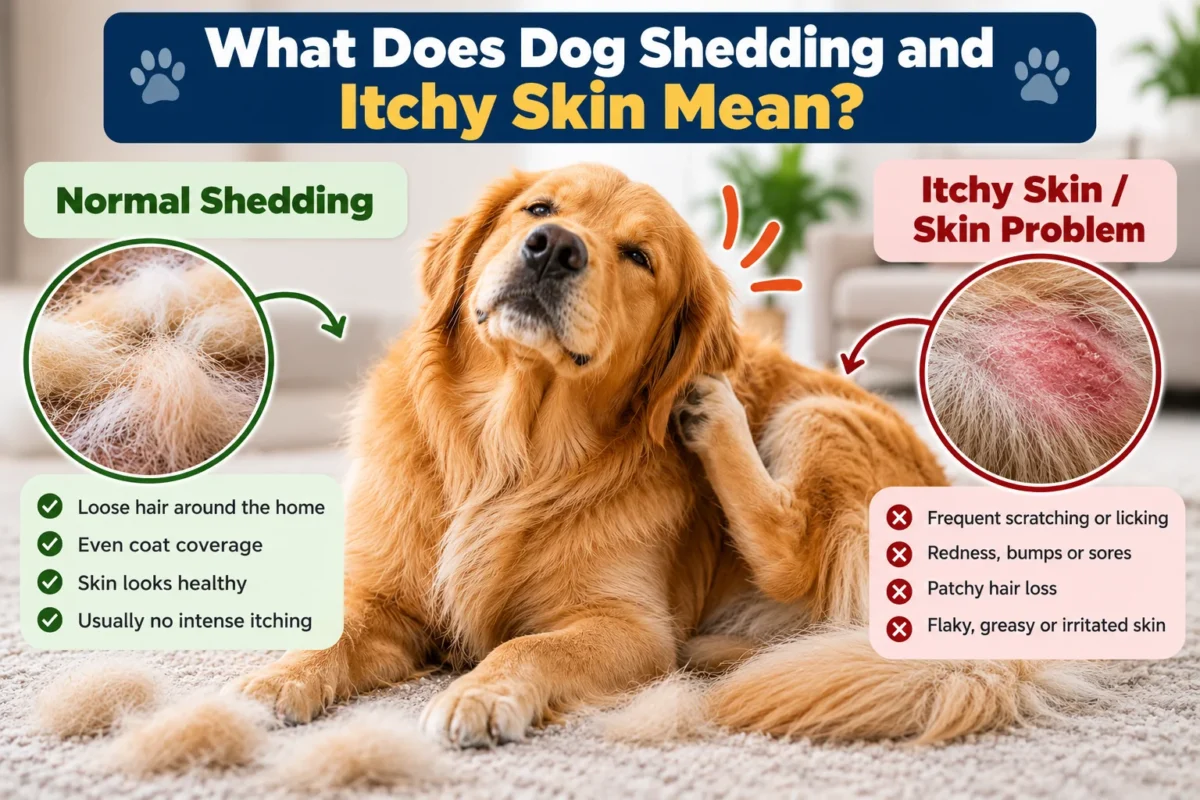
Dog shedding is the natural process of losing older hair as new hair grows. Itchy skin, medically called pruritus, creates an urge to scratch, lick, rub, or chew.
These processes can occur together without sharing the same cause. However, repeated scratching can damage hair and create noticeable thinning.
The key difference is the condition of the skin underneath the fur.
- Normal shedding: Loose hair comes out while the skin stays comfortable and the coat remains reasonably even.
- Inflammatory hair loss: Scratching, licking, or skin disease causes broken hairs, bald spots, or thinning.
- Coat changes from illness: Some internal conditions affect hair growth without causing intense itching.
The Merck Veterinary Manual’s guidance on canine hair loss explains why itching should be investigated when it accompanies abnormal hair loss.
What Are the 9 Most Common Causes of Dog Shedding and Itchy Skin?
Fleas, allergies, infections, and other skin conditions are important possibilities when shedding occurs alongside itching. The pattern of symptoms often helps narrow the investigation.
1. Fleas and Flea Allergy Dermatitis
Fleas can cause intense itching, particularly in dogs allergic to flea saliva. A sensitive dog may develop significant irritation even when few fleas are visible.
Pay close attention to the lower back, tail base, and rear thighs. These areas commonly develop inflammation and hair loss with flea allergy dermatitis.
- Repeated biting around the tail base
- Small scabs or red bumps
- Hair thinning over the hindquarters
- Dark flea dirt within the coat
Use a flea comb to inspect the coat. If you find flea dirt, place it on damp white tissue; flea droppings may release a reddish-brown stain.
Veterinary-approved flea control is important. Treating only the itching without controlling fleas can allow the problem to continue.
2. Environmental Allergies
Environmental allergies can cause recurring itchiness and secondary hair loss. Common triggers include pollen, dust mites, molds, and other environmental substances.
Dogs with allergic skin disease may lick their paws, rub their faces, scratch their ears, or develop irritated bellies.
- Itching that returns during particular seasons
- Repeated paw chewing or licking
- Redness around the belly or armpits
- Recurring ear irritation or infections
The Cornell University guide to canine atopic dermatitis explains that allergic skin disease often requires ongoing management.
Don’t assume every seasonal flare is harmless. Repeated scratching can lead to infections that need separate treatment.
3. Food Allergies
Food allergies can contribute to persistent itching and skin inflammation. They may occur alongside ear problems, paw licking, or digestive symptoms.
Food allergy isn’t the most likely explanation for every itchy dog. Fleas, infections, and environmental allergies also need consideration.
- Itching that continues throughout the year
- Recurring skin or ear problems
- Excessive paw licking
- Possible vomiting or digestive changes
A veterinarian may recommend a controlled elimination diet using appropriate ingredients. Randomly switching commercial foods rarely provides a reliable diagnosis.
A true elimination trial requires strict control over treats, flavored medications, and other foods. Follow your veterinarian’s instructions throughout the trial.
4. Dry Skin and Excessive Bathing
Dry skin can produce flakes and discomfort, especially when bathing products irritate the skin. Some dogs become itchier after frequent shampooing.
Look for dry flakes, a dull coat, and scratching that increases after washing.
- Use shampoo formulated specifically for dogs.
- Choose gentle products appropriate for sensitive skin.
- Rinse thoroughly to remove shampoo residue.
- Avoid bathing more often than your dog’s skin requires.
My practical recommendation is to review the bathing routine before purchasing multiple new grooming products. A gentler routine sometimes makes the source of irritation easier to identify.
For more guidance, read can you bathe a dog too often?
5. Bacterial Skin Infections
Bacterial skin infections can cause itching, redness, bumps, crusts, and hair loss. They may develop after allergies or scratching damage the skin.
Some dogs also develop pustules or circular areas of scaling. These changes shouldn’t be diagnosed by appearance alone.
- Red bumps or pustules
- Crusts and scabs
- Patchy hair loss
- Persistent skin irritation
Your veterinarian may collect skin samples to identify infection. Treatment depends on the findings and may include prescribed topical or systemic medication.
6. Yeast Infections
Yeast overgrowth can produce itchy, inflamed skin, sometimes with greasy texture or an unusual odor. Skin folds, paws, and ears may be affected.
Dogs with underlying allergies can develop recurring yeast problems. Treating only the yeast may not prevent future flare-ups.
- Musty or unusual skin odor
- Greasy or reddish skin
- Frequent paw licking
- Recurring ear discomfort
Veterinarians can check skin samples for yeast and recommend suitable treatment. Ordinary grooming shampoo isn’t a substitute for targeted medication.
7. Mites and Mange
Mites can cause skin disease and abnormal hair loss. Sarcoptic mange is particularly associated with intense itching, while demodectic mange varies in presentation.
Some mite problems are difficult to recognize without veterinary testing.
- Patchy or expanding bald areas
- Redness and crusting
- Intense scratching in some cases
- Skin changes around ears, elbows, or other areas
Ask your veterinarian about appropriate testing and parasite treatment. Sarcoptic mange can also affect other animals and cause temporary skin irritation in people.
8. Contact Irritation From Grooming Products
Shampoos, fragrances, cleaners, and other products can irritate sensitive skin. Problems may appear after a product change or repeated exposure.
A helpful clue is itching that begins or worsens after grooming. However, the timing doesn’t prove the product caused the reaction.
- Stop using a suspected irritating product.
- Check for redness where the product touched the skin.
- Avoid combining several new products at once.
- Seek veterinary advice if irritation continues.
See the guide on why dogs become itchy after bathing for additional troubleshooting.
9. Hormonal Problems and Other Health Conditions
Hormonal disorders can affect coat growth and produce thinning or symmetrical hair loss. Hypothyroidism and Cushing’s syndrome are examples veterinarians may investigate.
These conditions often cause hair loss without major itching initially. Itching may develop when a secondary skin problem appears.
- Symmetrical thinning along the body
- Changes in energy or activity
- Weight or appetite changes
- Skin infections that keep returning
Your veterinarian may recommend blood tests and other diagnostic procedures. Shampoo and brushing cannot correct an underlying hormonal condition.
How Can You Tell Normal Shedding From a Skin Problem?
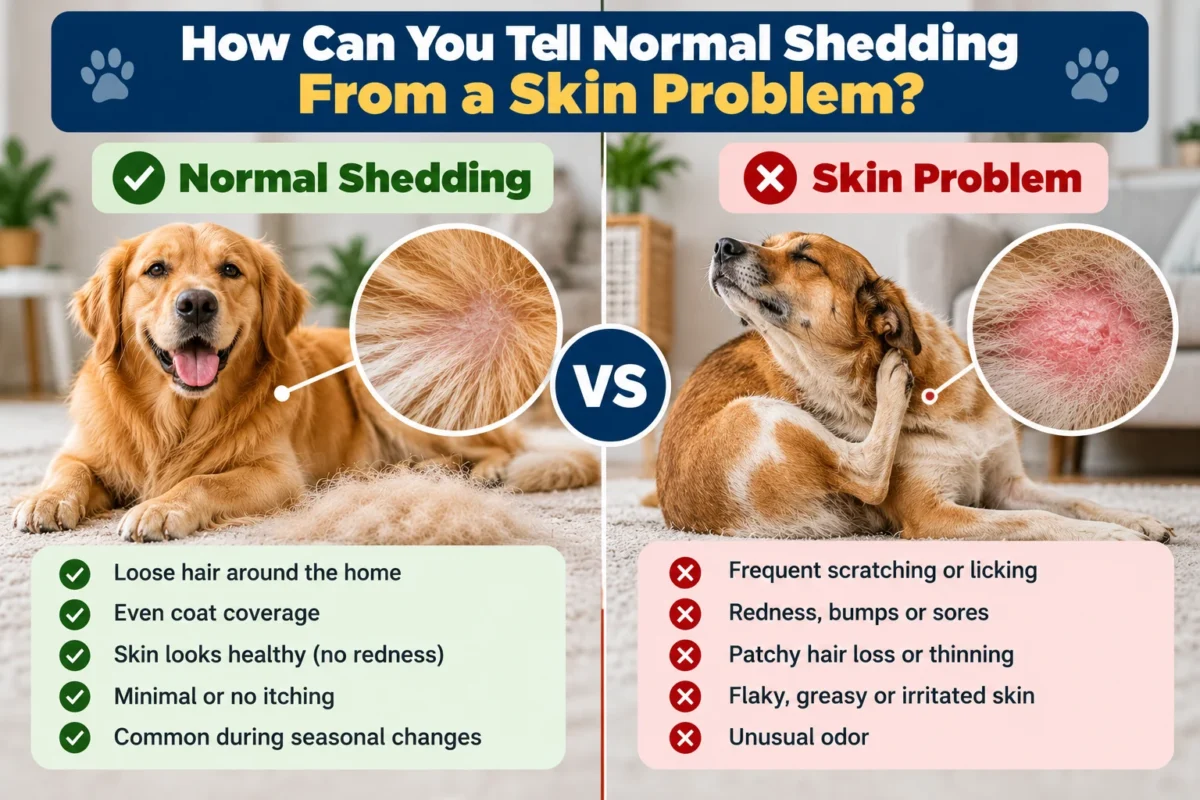
Normal shedding generally leaves the coat intact and the skin comfortable. Disease-related hair loss is more concerning when it comes with scratching, bald patches, inflammation, or sores.
Use this comparison as a starting point, not a diagnosis.
| Feature | Normal Shedding | Possible Skin Problem |
|---|---|---|
| Hair loss | Loose hair throughout coat | Patchy thinning or bald spots |
| Itching | Minimal or occasional | Frequent or intense |
| Skin appearance | Generally normal | Redness, crusts, sores |
| Odor | No unusual skin odor | Possible strong or musty odor |
| Coat pattern | Relatively even coverage | Uneven or expanding loss |
Important: A dog can experience normal seasonal shedding and a separate skin condition simultaneously. Heavy shedding alone doesn’t confirm an allergy or infection.
What Should You Check When Your Dog Is Shedding and Scratching?
Start with a careful skin inspection rather than immediately trying new treatments. Where your dog itches can provide useful information for your veterinarian.
- Check the tail base: Look for flea dirt, bumps, scabs, and thinning fur.
- Inspect the paws: Check between toes for redness, excessive moisture, or staining from licking.
- Look at the belly: Watch for rash-like changes, bumps, or inflamed areas.
- Examine the ears: Notice head shaking, redness, odor, or discharge without putting anything into the ear canal.
- Part the back fur: Look for flakes, broken hair, irritated skin, or bald patches.
- Review recent changes: Consider shampoo, flea prevention, food, bedding cleaners, and outdoor exposure.
Take clear photographs of affected areas. Record when symptoms began and whether they fluctuate.
This simple record helps distinguish a changing skin problem from routine coat shedding.
How Can You Help a Dog With Shedding and Itchy Skin at Home?
Safe home care focuses on reducing avoidable irritation while the underlying cause is investigated. It shouldn’t replace medical treatment for infection, parasites, or significant allergies.
Step 1: Keep Flea Prevention Up to Date
Check whether your dog’s parasite prevention is current and appropriate. Flea exposure may occur even when you cannot see adult fleas.
Ask your veterinarian to recommend a product suitable for your dog’s age, weight, health, and household.
Step 2: Brush Gently
Gentle brushing removes loose hair and makes skin changes easier to notice. Use a brush designed for your dog’s coat type.
Avoid aggressive deshedding over red, sore, inflamed, or broken skin. Repeated pressure can worsen discomfort.
- Use light strokes in the direction of hair growth.
- Stop if your dog pulls away or shows pain.
- Avoid brushing directly over open sores.
- Check the skin between grooming sessions.
For a more complete routine, see how to build a safe dog deshedding schedule.
Step 3: Review Your Bathing Routine
Choose a gentle dog-specific shampoo and rinse thoroughly. Avoid fragrances or harsh products when irritation is suspected.
Don’t repeatedly bathe inflamed skin in an attempt to remove itching. Dogs receiving prescribed medicated baths should follow their veterinarian’s schedule.
Step 4: Support Coat Health With Balanced Nutrition
Feed a complete and balanced diet appropriate for your dog’s life stage. Poor nutrition can affect skin and coat quality.
Avoid assuming that fish oil or another supplement will cure itching. Discuss supplements with your veterinarian, especially when your dog takes medication.
Step 5: Reduce Irritating Environmental Exposure
Wash bedding regularly using a suitable detergent and rinse it well. Keep sleeping areas clean and dry.
If your dog has diagnosed environmental allergies, your veterinarian may suggest specific allergen-reduction measures.
Step 6: Prevent Additional Skin Damage
Keep nails appropriately trimmed to reduce scratching injuries. A veterinarian may recommend a protective collar when a dog repeatedly damages an affected area.
Don’t apply essential oils, human creams, or human anti-itch medications without veterinary advice. Some products can harm dogs.
When Should You Take Your Dog to the Vet?
Contact your veterinarian when itching is persistent, severe, recurrent, or associated with abnormal hair loss. Prompt assessment can prevent worsening skin damage.
- Intense itching: Scratching repeatedly interrupts sleep or normal activity.
- Bald patches: Hair loss is expanding or revealing exposed skin.
- Open sores: The skin is bleeding, moist, painful, or crusted.
- Unusual odor: A strong smell accompanies redness or greasy skin.
- Recurring problems: Symptoms repeatedly return after grooming changes.
- Other illness: Skin symptoms accompany lethargy, appetite changes, or other concerning signs.
Seek emergency veterinary care if your dog develops breathing difficulty, collapses, or has sudden severe facial swelling.
For persistent skin problems, veterinarians may use flea combing, skin cytology, scrapings, fungal testing, elimination diets, or blood tests. The appropriate tests depend on the examination.
The VCA veterinary guide to itching in dogs explains why identifying the cause matters more than treating scratching alone.
What Grooming Tools Can Help With Shedding and Skin Checks?
A few simple tools can help you inspect the coat and manage loose fur. None replaces veterinary treatment for underlying skin disease.
These are product options to consider based on their intended uses, not independently tested performance rankings. Check current packaging and suitability before buying.
🔎 Best for flea checks
Safari Double-Sided Flea Comb for Dogs
★★★★★ 5/5 intended-use fit
The closely spaced teeth help collect flea dirt and inspect fur. I’d prioritize a flea comb when checking unexplained itching around the tail and back.
🛁 For routine sensitive-skin bathing
earthbath Hypo-Allergenic Fragrance Free Shampoo
★★★★☆ 4/5 intended-use fit
This dog shampoo is intended for gentle cleansing without added fragrance. I’d consider it for ordinary bathing when fragrance sensitivity is a concern, but not for treating infected or open skin.
🐕 For gentle loose-hair removal
KONG ZoomGroom Dog Brush
★★★★☆ 4/5 intended-use fit
The flexible rubber grooming surface helps collect loose coat hair during routine care. I’d consider this over aggressive deshedding tools for suitable coats with healthy skin.
Affiliate disclosure: As an Amazon Associate, we earn from qualifying purchases. These products help with routine grooming or inspection; they are not treatments for undiagnosed skin conditions.
Frequently Asked Questions About Dog Shedding and Itchy Skin
Why Is My Dog Shedding So Much and Scratching Constantly?
Excessive shedding with constant scratching may result from fleas, allergies, infections, mites, or irritated skin. Seasonal shedding alone usually doesn’t cause intense discomfort. Check for redness, flea dirt, scabs, and bald patches. Contact your veterinarian when itching persists or the skin looks abnormal.
Can Dog Allergies Cause Excessive Shedding?
Yes. Allergies can lead to skin inflammation, scratching, licking, and secondary hair loss. A dog may appear to shed excessively because it breaks or removes hair while scratching. Environmental allergens, food reactions, and flea allergies are possible triggers, but identifying the cause requires veterinary evaluation.
Does Dry Skin Cause Dogs to Shed More?
Dry skin can cause flaking and itching, sometimes making hair loss more noticeable. However, it doesn’t explain every case of excessive shedding. If your dog has bald spots, persistent redness, or severe scratching, consider an underlying skin condition rather than assuming dryness is responsible.
What Can I Put on My Dog to Stop Itching?
The safest treatment depends on the cause. A gentle dog-specific shampoo may help with routine skin care, but parasites, allergies, or infections need targeted treatment. Avoid human creams, essential oils, and medications without veterinary approval. Persistent or severe itching should be evaluated by a veterinarian.
How Long Does It Take for a Dog’s Hair to Grow Back After Skin Irritation?
Hair regrowth varies with the cause, severity, coat type, and treatment response. Some dogs improve over several weeks, while others need months for fuller regrowth. Hair may not return normally until inflammation or infection is controlled. Ask your veterinarian about persistent bald areas.
What Should You Remember About Dog Shedding and Itchy Skin?
Normal shedding is part of a healthy coat cycle, but ongoing itching changes the picture. Fleas, allergies, infections, and other skin conditions can all contribute to excessive scratching and hair loss.
Begin with a careful skin inspection, review flea prevention, and keep grooming gentle. Avoid using more force or more products when the skin is already irritated.
Your next step: Part your dog’s fur and check the skin around the tail, belly, paws, and ears today. If you find persistent redness, sores, bald patches, or significant discomfort, arrange a veterinary examination.


