Quick Answer
The main dog brushing benefits include removing loose hair, preventing tangles, controlling shedding, spreading natural coat oils, and giving you a regular chance to inspect your dog’s skin. The right routine depends on coat type, so start with a gentle dog brushing routine that matches your dog’s hair length and density.
The biggest benefits of brushing your dog
- Less loose hair: Brushing collects shedding hair before much of it reaches floors and furniture.
- Fewer tangles: Small knots can be removed before they develop into tight mats.
- Cleaner coat: Brushing lifts dirt, dried mud, plant material, and surface debris.
- Better skin checks: Parting the coat helps you notice redness, sores, parasites, lumps, or tender areas.
- Coat maintenance: Appropriate brushing helps distribute natural oils through the hair.
- Handling practice: Calm sessions can help dogs become more comfortable with routine grooming.
One important rule
- Brushing should not repeatedly pull, scrape, or hurt. Stop and investigate if your dog suddenly reacts with pain.
Brushing is one of the simplest parts of home dog grooming, but it does much more than make a coat look tidy. Done regularly, it can make shedding, bathing, coat maintenance, and skin checks much easier.
I think of brushing as preventive maintenance. A few calm minutes now can save you from dealing with a tight mat or a coat full of loose undercoat later.
What Are the Main Dog Brushing Benefits?
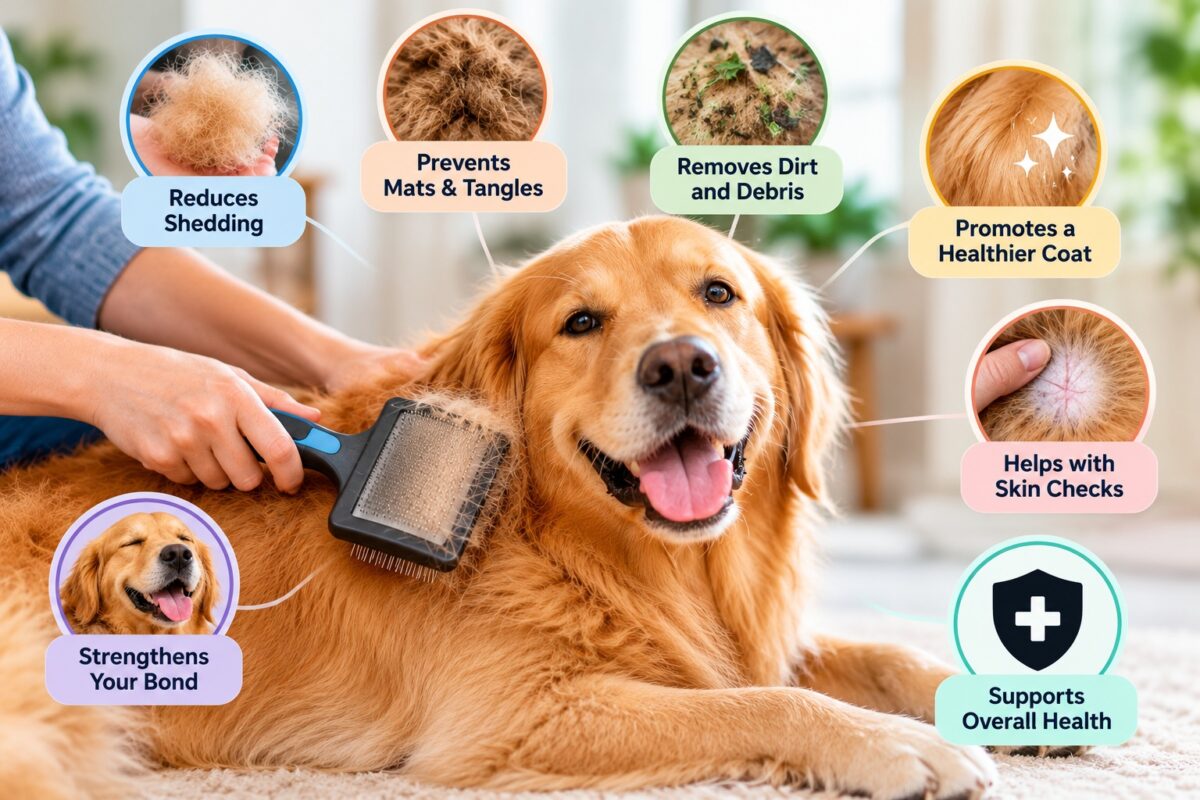
Dog brushing is routine coat care that removes loose hair, debris, and manageable tangles while giving you access to the skin beneath the coat. Its value comes from consistency rather than aggressive brushing.
The ASPCA’s dog grooming guidance also explains that regular brushing or combing can remove dirt, help prevent tangles, and spread natural oils through the coat.
- Controls loose hair: Hair collected in a brush does not end up on clothing, carpets, or furniture.
- Helps prevent matting: Small tangles are easier to manage before they tighten close to the skin.
- Removes everyday debris: Grass, dust, dried dirt, and loose material often come out without a bath.
- Supports coat condition: Gentle brushing helps distribute the coat’s natural oils.
- Creates regular skin-check opportunities: You can inspect areas hidden beneath thick or long hair.
- Improves grooming preparation: A brushed coat is usually easier to wash and dry.
- Builds handling familiarity: Short positive sessions teach many dogs to accept grooming tools and body handling.
The benefit that matters most will vary by dog. A Labrador owner may care most about shedding, while a Poodle owner may focus on preventing hidden tangles.
How Does Brushing Help Reduce Dog Shedding?
Brushing does not stop normal shedding, but it removes loose hair in a controlled place. That can reduce how much dead coat gradually drops around your home.
The American Animal Hospital Association recommends regular brushing as part of managing normal shedding and notes that coat type affects the best routine.
- Short smooth coats: Rubber or bristle tools can lift loose surface hair.
- Dense coats: A slicker or appropriate undercoat tool can reach hair below the outer coat.
- Long coats: Pin brushes and combs help capture loose hair while checking for tangles.
- Seasonal shedders: More frequent sessions may be useful when the undercoat is releasing heavily.
For heavy short-coated shedders, an undercoat tool may collect more loose hair than a finishing brush. Our FURminator Short Hair deShedding Tool review explains where that type of tool works best and where it can be too aggressive.
Can Regular Brushing Prevent Mats and Tangles?
Regular brushing can reduce matting by removing loose hairs and separating small tangles before they tighten. It works best when you brush all the way through the coat instead of smoothing only the visible surface.
VCA Animal Hospitals advises gentle brushing and warns against excessive pulling when dealing with tangles.
Pay extra attention to high-friction areas where hair rubs against itself or equipment.
- Behind the ears
- Under the front legs
- Around the collar or harness area
- Along feathering on the legs
- Around the tail
- Under the belly
Never force a brush through a tight mat. Severe matting may sit close enough to the skin that professional grooming is safer than trying to cut it out at home.
Does Brushing Help You Check Your Dog’s Skin?
Yes. Brushing naturally separates the hair, making it easier to notice changes that normal petting can hide.
This does not replace veterinary examinations. It simply gives you another regular opportunity to notice something unusual earlier.
- Red or irritated patches
- Scabs or sores
- Ticks or flea dirt
- New lumps or bumps
- Bald or thinning areas
- Unexpected dandruff
- Areas that suddenly feel painful
Cornell’s guidance on grooming and cooperative care also describes routine grooming as an opportunity to monitor a dog’s skin, comfort, and physical condition.
If you find persistent redness, open sores, sudden hair loss, or significant pain, stop brushing that area. A veterinarian can determine whether a skin or medical problem needs treatment.
Does Brushing Make a Dog’s Coat Healthier and Shinier?
Brushing can help maintain a cleaner, better-conditioned coat by removing dead hair and distributing naturally produced oils through the hair. It should be viewed as coat maintenance rather than a treatment for skin disease.
A healthy-looking coat still depends on genetics, nutrition, health, bathing, parasites, environment, and coat type. No brush can correct an underlying medical problem.
I also avoid the common mistake of chasing shine with excessive brushing. More strokes are not automatically better if the tool is scraping the skin.
Can Brushing Help a Dog Get Used to Being Handled?
Short positive brushing sessions can help many dogs become more comfortable with their body being touched. That familiarity may make routine grooming easier over time.
Start with an area your dog already accepts, such as the shoulders or back. Save sensitive areas like paws, belly, ears, and tail for later.
- Show the brush: Let your dog investigate it without forcing contact.
- Touch briefly: Place the brush against an easy area, then reward calm behavior.
- Add one stroke: Brush gently and stop before your dog becomes worried.
- Build slowly: Increase the number of strokes across several sessions.
- End positively: Finish while your dog is still comfortable.
If you need the full technique, follow our step-by-step guide to brushing a dog. It covers coat checks, brushing order, tangles, pressure, and finishing with a comb.
How Often Should You Brush a Dog?
There is no perfect schedule for every dog. Coat length, density, shedding level, activity, and tendency to mat all change how often brushing is useful.
The table below is a practical starting point rather than a strict medical schedule.
| Coat Type | Starting Frequency | Useful Tool | Main Benefit |
|---|---|---|---|
| Smooth, short coat | About weekly | Rubber or bristle brush | Loose surface hair |
| Short, dense coat | Weekly; more during heavy shedding | Slicker or suitable undercoat tool | Loose undercoat |
| Medium or long coat | Several times weekly | Pin brush plus comb | Tangle prevention |
| Curly or mat-prone coat | Frequent, often near-daily | Slicker plus metal comb | Hidden tangle control |
| Double coat | At least weekly; more in shedding season | Slicker, rake, or suitable de-shedding tool | Undercoat removal |
Use your dog’s coat as feedback. If you find new tangles at every session, the interval is probably too long for that coat.
Which Dog Brush Gives You Which Benefit?
The right brush matters because each design solves a different grooming problem. The American Kennel Club’s brush guide also recommends matching the grooming tool to coat type.
- Bristle brush: Useful for loose surface hair and finishing many short or smooth coats.
- Rubber curry brush: Helps lift loose hair from many smooth-coated dogs with gentle pressure.
- Pin brush: Useful for routine maintenance on many medium and long coats.
- Slicker brush: Fine wire pins collect loose hair and work through small tangles.
- Undercoat rake: Reaches loose hair beneath the topcoat on suitable double-coated dogs.
- Metal comb: Excellent for checking whether hidden tangles remain after brushing.
For a self-cleaning option, our Hertzko Self-Cleaning Slicker Brush review looks at coat penetration, cleanup, skin comfort, and where the shorter pins have limits.
Does Brushing Before a Bath Make Grooming Easier?

For most dogs, brushing before a bath helps remove loose hair, surface debris, and manageable tangles while the coat is still dry. It also lets you identify mats before water makes the coat more difficult to work through.
Our guide on brushing before or after a dog bath explains the full order. I normally treat brushing as the preparation stage, followed by washing, thorough drying, and a light finishing brush when the coat type needs it.
- Brush and inspect the dry coat.
- Deal with manageable tangles gently.
- Bathe with dog-appropriate products.
- Rinse thoroughly.
- Dry the coat completely.
- Finish with gentle brushing when appropriate.
When Can Brushing Hurt Instead of Help?
Brushing becomes counterproductive when the tool repeatedly scratches, pulls, or irritates the skin. Technique matters as much as frequency.
Stop or change your approach when you notice any of these problems:
- Tight mats: Do not repeatedly rip through them with a slicker.
- Open skin: Avoid brushing over wounds, sores, or infected areas.
- Sudden pain: A new painful reaction deserves investigation.
- Redness after brushing: Reduce pressure and check whether the tool suits the coat.
- Abnormal hair loss: Bald patches or sudden dramatic shedding can require veterinary attention.
- Severe fear: Shorten the session and rebuild tolerance gradually instead of forcing restraint.
For severe matting, persistent skin irritation, or unexplained coat changes, a veterinarian or experienced professional groomer is the safer next step.
If you’re ready to choose a brush, these are three practical tools for different grooming needs:
🏆 Best Everyday Slicker
Hertzko Self-Cleaning Slicker Brush
★★★★☆ 4.3/5
Retractable fine-wire pins make trapped fur much easier to clear from the brush head. I like this style for routine short-to-medium coat maintenance where convenience matters more than deep undercoat removal.
💰 Best Budget 2-in-1
Safari Pin & Bristle Combo Brush
★★★★☆ 4.3/5
The pin side handles light everyday detangling while the bristle side works as a finishing tool. I would consider it for medium or longer coats that need basic maintenance rather than serious mat removal.
🐕 Best for Heavy Shedding
FURminator Short Hair deShedding Tool
★★★★☆ 4.4/5
Its stainless-steel de-shedding edge targets loose undercoat on suitable short, dense coats. I would reserve this type of tool for genuine shedding control rather than using it as an everyday brush on every dog.
Frequently Asked Questions About Dog Brushing Benefits
Is brushing a dog every day good?
Daily brushing can be useful for long, curly, mat-prone, or heavily shedding coats, but not every dog needs it. Use a tool suited to the coat, keep pressure light, and reduce frequency if the skin becomes irritated.
Does brushing a dog reduce shedding?
Yes, brushing can reduce loose hair around your home by collecting dead or shedding coat before it falls naturally. It does not stop normal shedding, and sudden excessive hair loss should be discussed with a veterinarian.
Does brushing help prevent dog mats?
Regular brushing helps prevent many mats by separating tangles before they tighten. Long, curly, feathered, and dense coats need particular attention, especially behind the ears, under the legs, and around areas where collars or harnesses create friction.
Should I brush my dog before or after a bath?
Brushing before a bath is usually the best starting point because it removes loose fur and manageable tangles while the coat is dry. Once the coat is fully dried, some dogs also benefit from a gentle finishing brush.
How do I know if I am brushing too hard?
Watch for flinching, repeated turning toward the brush, skin redness, scratching after grooming, or attempts to escape. Keep the tool moving through the coat rather than pressing wire pins repeatedly against the skin.
Final Takeaway: Is Regular Dog Brushing Worth It?
Regular brushing is worth making part of your dog’s routine because one simple task supports shedding control, tangle prevention, coat maintenance, skin checks, and easier grooming. The biggest results come from matching the brush and frequency to the coat rather than brushing every dog the same way.
Keep sessions gentle and predictable. When brushing causes pain, reveals skin problems, or meets a mat you cannot safely work through, stop and get professional help instead of forcing the tool through.