Quick Answer
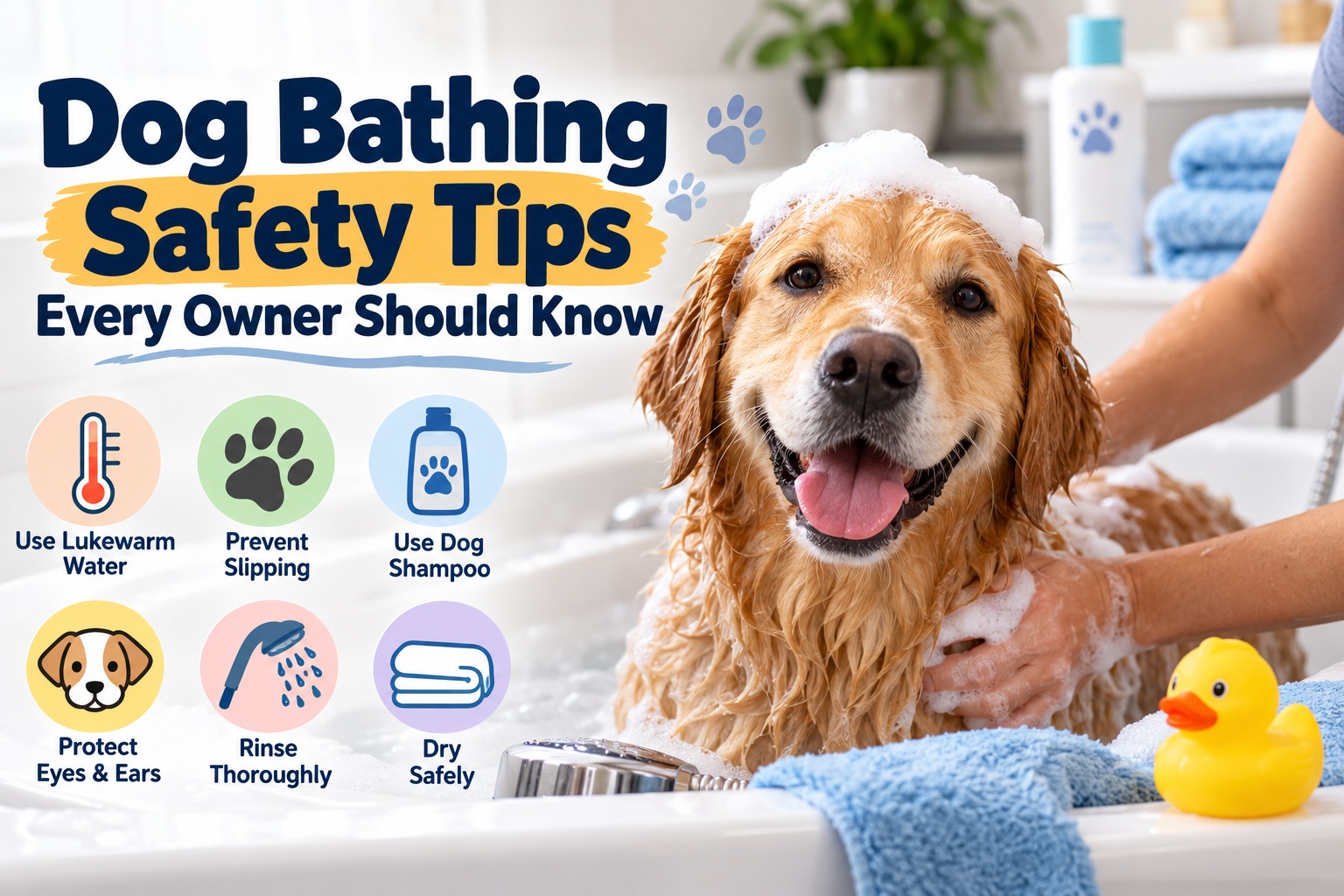
Safe dog bathing means using lukewarm water, secure footing, dog-specific shampoo, controlled rinsing, and gentle drying. Keep water and shampoo away from the eyes and ear canals, and prepare everything before your dog enters the tub. For the complete washing sequence, see this dog bathing guide.
Essential Dog Bathing Safety Rules
- Prevent slipping: Put a secure non-slip mat under your dog’s paws before adding water.
- Use lukewarm water: Avoid water that feels distinctly hot or cold.
- Choose dog shampoo: Use products specifically formulated for canine skin and coat.
- Protect the face: Use a damp washcloth instead of spraying the eyes, nose, or ears.
- Rinse completely: Check the belly, armpits, legs, paws, and dense coat for residue.
- Dry carefully: Blot with towels and keep your dog comfortable until the coat is dry.
Stop the Bath When Needed
- Pause if your dog panics, struggles dangerously, seems painful, or has irritated skin that needs veterinary attention.
A dog bath looks simple until wet paws start sliding and your dog tries to climb out. Most bath-time problems come from rushing the setup rather than the washing itself.
I prefer to prepare the entire bathing area before bringing the dog in. As of 2026, that remains one of the simplest ways to make home bathing safer and calmer.
What Does Safe Dog Bathing Actually Mean?
Safe dog bathing means cleaning your dog while reducing preventable risks such as slipping, overheating, skin irritation, water entering the ears, stressful restraint, and incomplete drying.
The goal isn’t just clean fur. Your dog should also leave the bath comfortable, secure, and free from shampoo residue.
- Stable footing: Your dog can stand without repeatedly sliding.
- Comfortable water: The water feels lukewarm rather than hot or cold.
- Controlled washing: Water and shampoo stay away from sensitive areas.
- Complete rinsing: No obvious product remains against the skin.
- Safe drying: The coat is dried without excessive heat or rough handling.
The ASPCA dog grooming guidance also recommends lukewarm water, pet-specific shampoo, careful rinsing, and keeping water away from the eyes, ears, and nose.
How Do You Prepare a Safe Dog Bath?
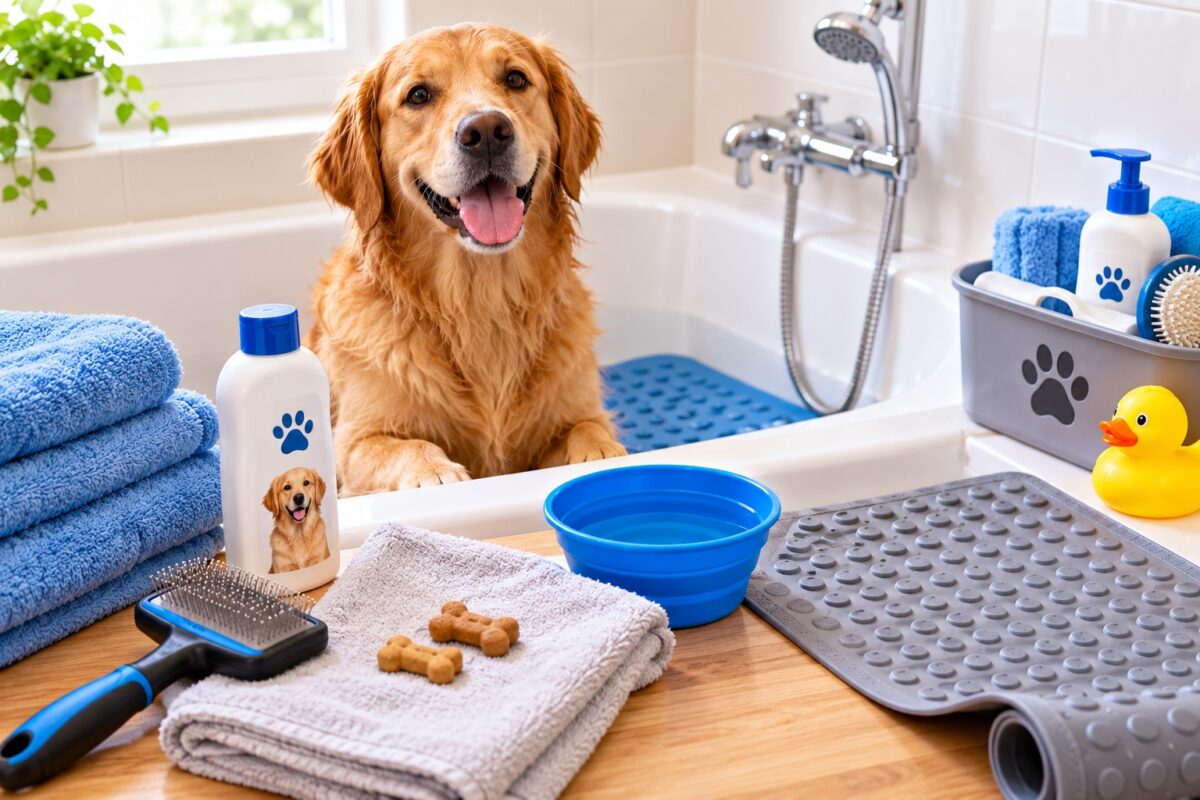
Prepare the room before turning on the water. Once your dog is wet, leaving the area to search for shampoo or towels creates unnecessary risk.
I keep supplies within one arm’s reach whenever possible. That lets me maintain control without constantly repositioning the dog.
- Dog-specific shampoo
- Two or more clean towels
- Secure non-slip bath mat
- Washcloth for the face
- Cup or gentle handheld sprayer
- Coat-appropriate brush or comb
- Small treats for calm behavior
Should You Brush Your Dog Before the Bath?
Yes. Brush the dry coat before bathing to remove loose fur, surface debris, and manageable tangles.
Water can make existing tangles harder to handle, especially on long, curly, or dense coats. Our guide on brushing before or after a dog bath explains the full grooming order.
- Short coats: Remove loose hair and surface dirt.
- Long coats: Check behind the ears, legs, chest, and tail for tangles.
- Double coats: Work through loose undercoat without aggressively pulling mats.
- Sensitive skin: Use gentle pressure and stop around sore areas.
What Water Temperature Is Safest for a Dog Bath?
Use comfortably lukewarm water. Avoid copying the temperature you prefer for a hot human shower.
I test the running water against my inner forearm before wetting the dog. I also recheck it after adjusting either faucet.
| Bath Choice | Safer Approach | What to Avoid | Main Concern |
|---|---|---|---|
| Water | Comfortably lukewarm | Very hot or noticeably cold water | Discomfort and stress |
| Footing | Secure non-slip surface | Smooth wet tub floor | Slipping and panic |
| Shampoo | Dog-specific formula | Routine use of human shampoo | Skin irritation |
| Face cleaning | Damp washcloth | Direct spray toward face | Eye, nose, and ear irritation |
| Drying | Towels and cool or low airflow when needed | High heat close to the skin | Heat discomfort and skin injury |
For a closer look at this step, see our guide to safe dog bath temperature.
How Do You Bathe a Dog Safely Step by Step?
Work in a predictable order and avoid sudden changes. Calm handling usually makes the next bath easier too.
- Prepare the area. Set out towels, shampoo, treats, and rinsing tools.
- Brush the dry coat. Remove loose hair, debris, and comfortable-to-remove tangles.
- Add secure footing. Place a non-slip mat where your dog will stand.
- Check the water. Make sure it feels comfortably lukewarm.
- Wet below the head. Start near the shoulders and work toward the tail.
- Apply dog shampoo. Follow the product label and massage gently with your fingertips.
- Clean the face separately. Use a damp cloth instead of direct spray.
- Rinse thoroughly. Check the chest, belly, legs, armpits, paws, and tail.
- Remove excess water. Let your dog shake safely, then blot with towels.
- Finish drying. Check the coat near the skin before ending the grooming session.
The American Kennel Club grooming guidance similarly recommends warm water, mild dog shampoo, complete rinsing, and appropriate drying.
How Do You Protect a Dog’s Eyes, Ears, and Face During a Bath?
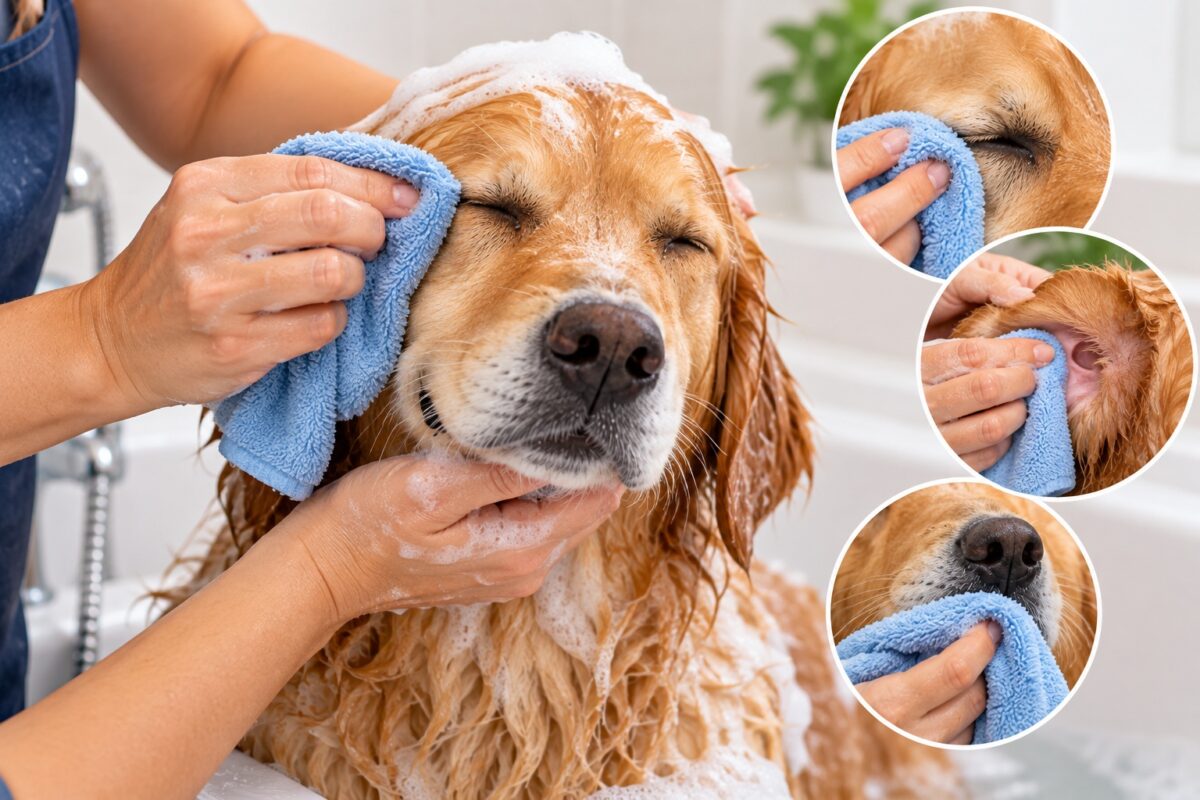
Don’t aim a sprayer directly at your dog’s face. Use a damp washcloth to wipe the muzzle, forehead, and outer facial areas with more control.
Keep shampoo away from the eyes and inside the ears. Never push cotton swabs or other objects deep into the ear canal.
- Eyes: Prevent shampoo and direct spray from reaching them.
- Ears: Keep water out of the ear canal and dry the visible outer ear afterward.
- Nose: Avoid spraying water directly toward the nostrils.
- Mouth: Don’t deliberately let your dog swallow shampoo or soapy bath water.
Repeated head shaking, strong ear odor, redness, discharge, swelling, or obvious pain deserves veterinary attention rather than another cleaning session.
What Shampoo Is Safe for Dogs?
Use a shampoo made specifically for dogs and appropriate for your dog’s skin needs. Human shampoos aren’t my choice for routine dog bathing.
Dogs with persistent itching, sores, infection, allergies, or recurring skin trouble may need veterinary guidance. Medicated shampoo should be used according to the veterinarian’s directions and product instructions.
- Normal skin: Choose a mild everyday dog shampoo.
- Dry or sensitive skin: Look for a gentle fragrance-free or sensitive-skin formula.
- Known skin disease: Ask your veterinarian which medicated product and bathing schedule to use.
- No shampoo available: Plain lukewarm water can handle some light surface dirt until you have the correct product.
VCA Animal Hospitals emphasizes thoroughly rinsing medicated shampoo and following the prescribed contact time. Their medicated dog bathing guidance is useful when a veterinarian has prescribed treatment.
What Dog Bathing Mistakes Should You Avoid?
The most common safety mistakes are usually preventable. Most come from rushing, using the wrong product, or losing control of the bathing environment.
- Skipping the non-slip mat: Sliding paws can make a nervous dog panic.
- Using hot water: A temperature comfortable for you may feel excessive to your dog.
- Using human shampoo: Choose a canine-specific formula for routine bathing.
- Spraying the face: Clean it separately with a damp cloth.
- Using too much shampoo: More product means more rinsing and greater chance of residue.
- Leaving soap behind: Check hidden areas such as armpits, belly, groin, and dense fur.
- Forcing a panicked dog: Stop before the struggle becomes dangerous.
- Using high dryer heat: Choose towels or gentle airflow instead.
- Leaving dense coats damp: Check the roots rather than judging only the surface.
When Should You Stop Bathing and Call a Veterinarian?
Stop when bathing causes significant pain or reveals a problem that shouldn’t be scrubbed. Cleaning harder isn’t the solution to every skin or ear issue.
- Open wounds or bleeding
- Severe redness or swelling
- Widespread sores or crusting
- Strong or unusual skin odor
- Persistent intense itching
- Ear discharge or strong ear odor
- Pain when the skin or ears are touched
- Sudden weakness or abnormal breathing
- Extreme distress that makes safe handling impossible
These signs deserve professional assessment rather than repeated home bathing. A veterinarian can also tell you whether a medicated bath is appropriate.
How Do You Dry a Dog Safely After a Bath?
Start drying before your dog leaves the tub. Gently remove excess water, then press clean towels into the coat instead of aggressively rubbing long hair.
Dense, curly, long, and double coats often need more attention near the roots. Our dog drying guide explains the process by coat type.
- Gently squeeze excess water from the coat.
- Blot the body with absorbent towels.
- Dry paws, skin folds, belly, and outer ear flaps.
- Use cool or low airflow when the coat needs deeper drying.
- Keep moving airflow instead of heating one spot.
- Check the hair near the skin before finishing.
A short smooth coat may need little beyond thorough towel drying in a warm room. Thick undercoats can hold moisture much longer.
Dog Bath Products I Would Consider

If you’re building a safer home bath setup, these are the types of products I’d consider first. The priority is comfort and control, not collecting unnecessary grooming gadgets.
🏆 BEST GENTLE SHAMPOO
earthbath Oatmeal & Aloe Dog Shampoo
★★★★★
This dog-specific oatmeal and aloe formula is designed for gentle coat cleaning. I’d consider it when I want a straightforward bath shampoo rather than a harsh degreasing product.
🌿 BEST FOR SENSITIVE SKIN
Vet’s Best Hypo-Allergenic Shampoo for Dogs
★★★★☆
This is positioned as a hypoallergenic dog shampoo for sensitive skin. I’d still ask a veterinarian about persistent itching rather than relying on shampoo alone.
🐾 BEST FOR SECURE FOOTING
Gorilla Grip Bathtub and Shower Mat
★★★★☆
A secure bath mat can give paws more traction on a smooth tub floor. I’d prioritize fit and stability so the mat itself doesn’t shift during the bath.
Frequently Asked Questions About Dog Bathing Safety
Can I use human shampoo on my dog?
Dog-specific shampoo is the safer routine choice because it is formulated for canine skin and coat. If your dog has sensitive, itchy, or diseased skin, ask your veterinarian which formula is appropriate instead of experimenting with household products.
How can I stop my dog from slipping in the bathtub?
Place a secure non-slip bath mat under your dog’s paws before adding water. Keep the surrounding floor dry when possible, and steady your dog calmly rather than letting them scramble against a smooth wet surface.
Is it dangerous to get water in a dog’s ears?
It’s best to keep bath water out of the ear canals. Clean the visible outer ear gently and dry it after bathing, while avoiding deep insertion of cotton swabs or other objects.
How do I know when all the shampoo is rinsed out?
Keep rinsing until the coat no longer feels slippery or soapy. Check hidden areas such as the armpits, chest, belly, groin, paws, tail, and dense undercoat because residue can remain there after the surface looks clean.
What should I do if my dog panics during a bath?
Reduce the water flow, give your dog secure footing, and pause the process if the struggle becomes unsafe. Don’t force a terrified dog through escalating restraint; gradual training or help from a professional groomer may be safer.
Final Takeaway: Make Safety Part of Every Dog Bath
The safest bath isn’t the fastest one. Prepare first, give your dog secure footing, use lukewarm water and dog shampoo, protect sensitive areas, rinse thoroughly, and dry the coat carefully.
Keep the routine calm and predictable each time. Those small safety habits can make home grooming easier for both you and your dog.