Quick Answer
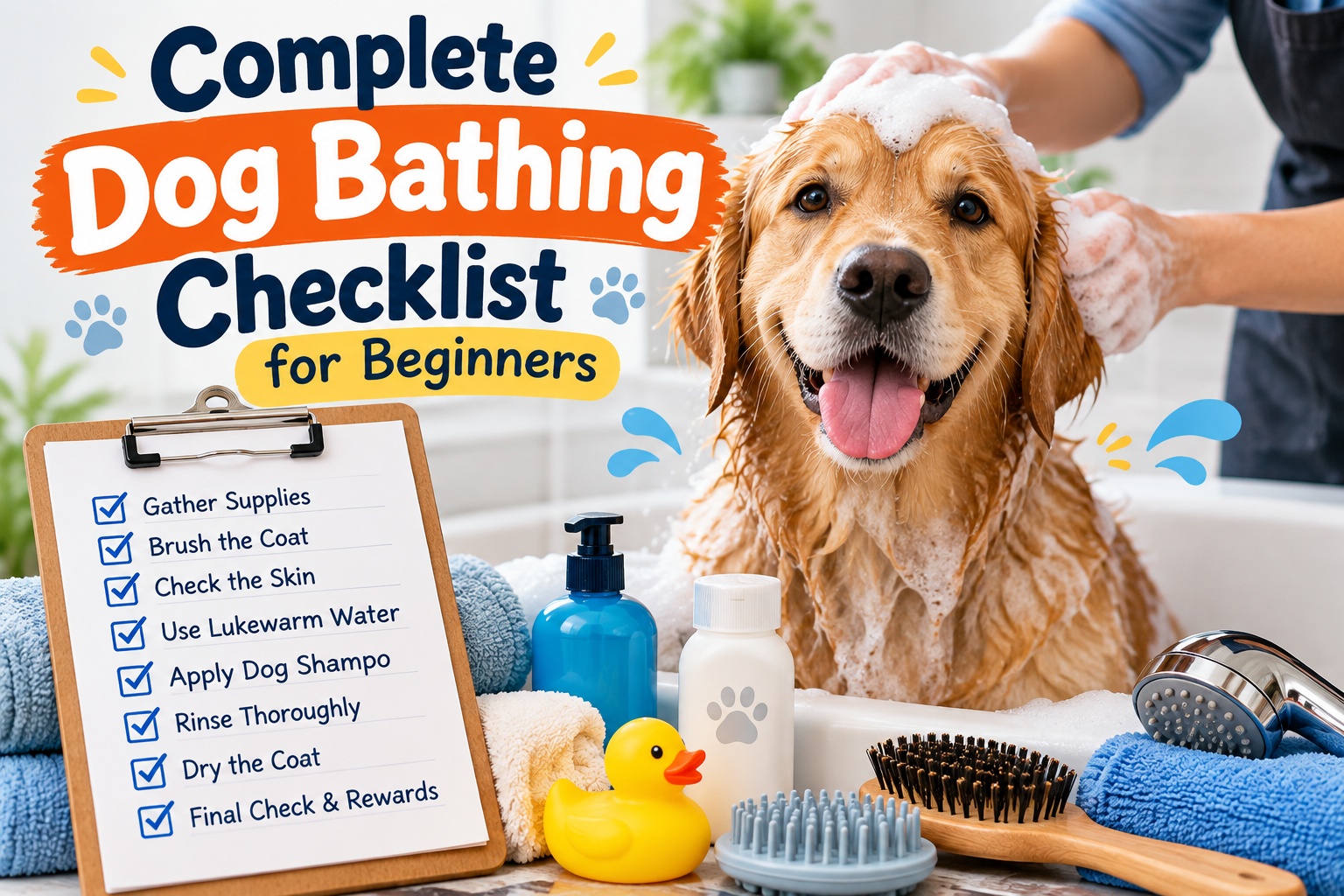
A beginner dog bathing checklist should cover preparation, brushing, secure footing, lukewarm water, dog-specific shampoo, thorough rinsing, careful drying, and a final skin-and-coat check. If this is your first home bath, start with the basic safe dog bathing guide before adjusting the routine for your dog’s coat or skin.
Beginner Dog Bath Checklist
- Gather supplies: Put shampoo, towels, treats, a brush, and rinsing tools within reach.
- Brush first: Remove loose fur, surface dirt, and manageable tangles before adding water.
- Add traction: Use a secure non-slip mat so wet paws do not slide.
- Use lukewarm water: Keep the water comfortably warm rather than hot or cold.
- Rinse completely: Keep rinsing until the coat no longer feels slippery or soapy.
- Dry carefully: Blot with towels and keep your dog warm until the coat is dry.
Before You Start
- Postpone the bath and contact your veterinarian if you find painful sores, severe redness, bleeding, or an unexplained skin problem.
The first few home baths can feel complicated because you have to manage water, shampoo, wet fur, and a moving dog at the same time. I find the process becomes much easier when every item has a place before the dog enters the tub.
This 2026 checklist walks through what I prepare, what I check, and what I do from brushing to final drying. You can use it as a repeatable routine rather than trying to remember each step while your dog is already wet.
What Is a Complete Dog Bathing Checklist?
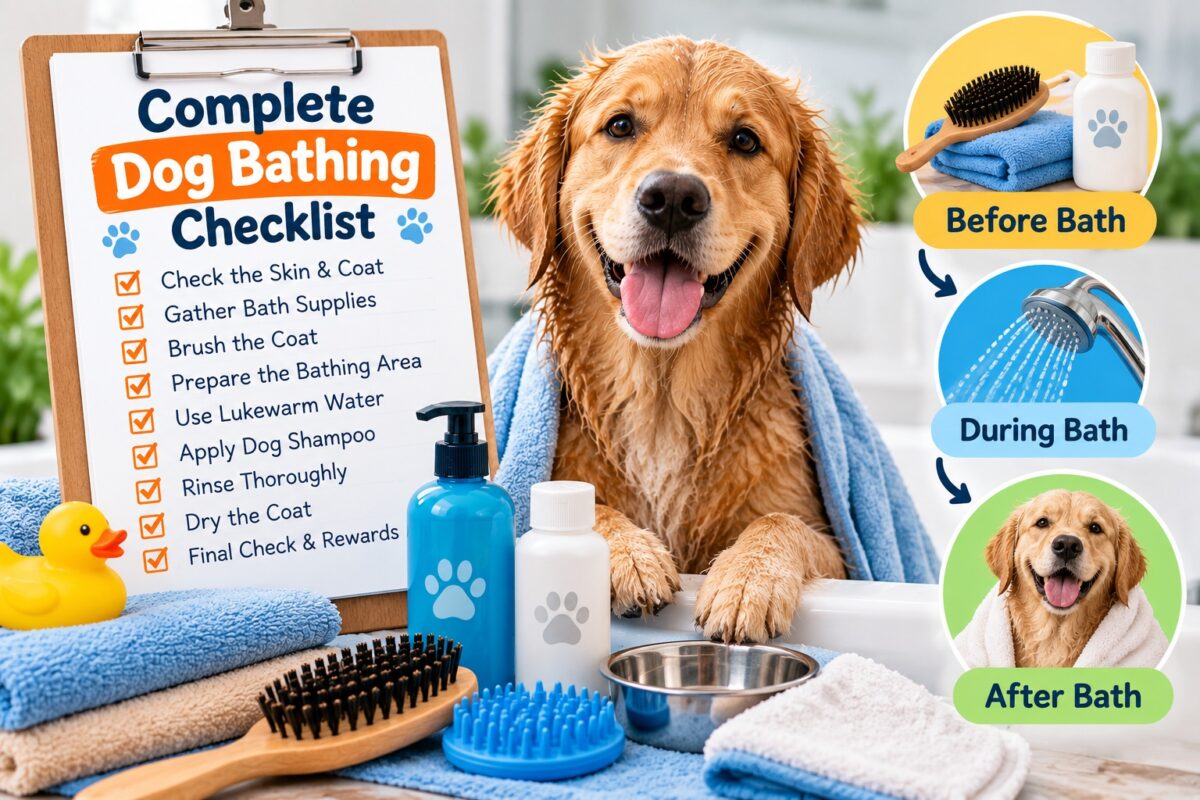
A dog bathing checklist is a simple preparation and washing plan that helps you clean your dog safely without forgetting important supplies or steps.
For beginners, the checklist should cover what happens before, during, and after the bath. That includes checking the skin, preparing secure footing, rinsing thoroughly, and drying more than just the surface of the coat.
- Before the bath: Check the coat, brush, gather supplies, and prepare the bathing area.
- During the bath: Control water temperature, wet carefully, shampoo, and rinse.
- After the bath: Remove excess water, dry the coat, inspect the skin, and reward your dog.
The goal is not to make your dog smell strongly perfumed. The goal is a clean coat, comfortable skin, and a calm routine you can repeat.
What Do You Need Before Bathing a Dog?
You do not need a professional grooming station for a routine home bath. A few well-chosen supplies are enough for most healthy dogs.
I prefer to place everything within arm’s reach before turning on the water. Leaving a wet dog alone while looking for a forgotten towel is one of the easiest beginner mistakes to avoid.
Essential Dog Bathing Supplies Checklist
- Dog-specific shampoo: Choose a formula appropriate for your dog’s skin and coat.
- Two or more absorbent towels: Keep at least one beside the bathing area.
- Non-slip bath mat: Secure footing can reduce scrambling and stress.
- Brush or comb: Match the grooming tool to your dog’s coat type.
- Handheld sprayer or cup: Use it to wet and rinse the coat with good control.
- Soft washcloth: This is useful for gently cleaning the face.
- Small treats: Reward calm standing and cooperation.
- Dog conditioner if needed: Follow the product label and your dog’s coat needs.
- Hair dryer if appropriate: Use a cool or low-comfortable setting rather than hot air.
Veterinary guidance recommends using shampoos formulated specifically for dogs rather than human or baby shampoo. Canine skin differs from human skin, so a human product may be unnecessarily harsh.
What Should You Check Before Giving Your Dog a Bath?
Run your hands through the coat before you add water. This quick check can reveal problems that are harder to see once the fur is soaked.
I separate the coat in several places and look at the skin rather than checking only the surface hair. Pay extra attention to the belly, paws, armpits, neck, tail base, and areas your dog has been licking.
- Look for redness, sores, swelling, scabs, or irritated skin.
- Check for ticks, burrs, grass seeds, or other debris.
- Feel for mats and tight tangles before they become wet.
- Notice unusual odor, greasy skin, flakes, or discharge.
- Check the paws for cuts, cracked pads, or trapped debris.
If your dog has recurring itching, redness, or another known skin problem, use a routine designed for bathing a dog with sensitive skin. A veterinarian may recommend a different shampoo or bathing schedule.
Should You Brush a Dog Before or After a Bath?
For most dogs, brush before the bath. Brushing removes loose fur, dirt, and manageable tangles before water makes coat problems harder to work through.
This is especially important for long, curly, or dense coats. Tight mats can hold moisture and shampoo close to the skin.
- Start with a dry coat.
- Brush gently in small sections.
- Do not pull hard against mats.
- Stop if brushing causes pain or reveals damaged skin.
- Recheck the coat before moving to the tub.
After the coat is fully dry, you can brush again if the coat type benefits from it. Never force a brush through wet tangles.
What Water Temperature Is Best for a Dog Bath?
Use comfortably lukewarm water. Avoid copying the hot shower temperature that feels comfortable to you.
I test the running water on my inner forearm before it reaches the dog. Recheck it whenever you adjust the faucet.
There is no useful reason for beginners to chase one exact temperature number. The practical target is mild, comfortable water that is neither hot nor noticeably cold.
For more detail, see the complete dog bath temperature guide.
Complete Dog Bathing Checklist: Step by Step
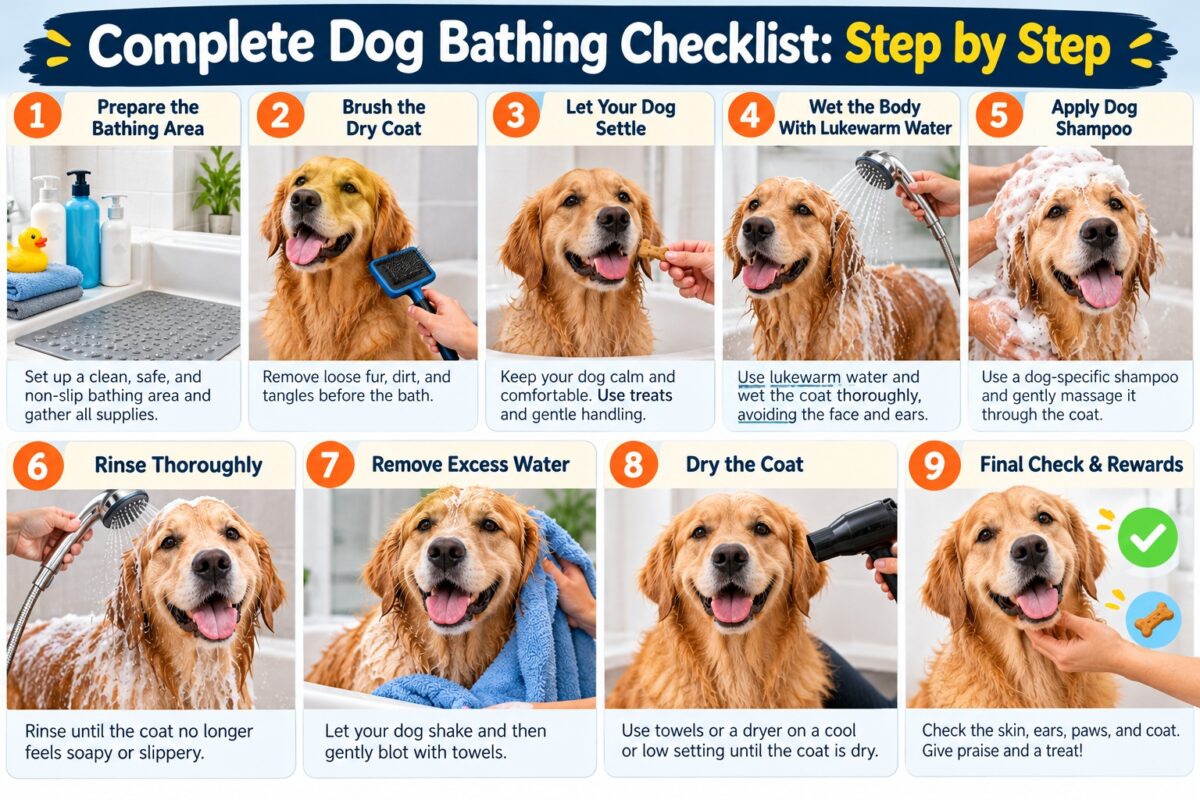
A beginner-friendly dog bath follows a predictable order: prepare, brush, secure, wet, shampoo, rinse, and dry. Keeping the same sequence can also make future baths feel more familiar to your dog.
1. Prepare the Bathing Area
Place a secure non-slip mat in the tub, shower, sink, or other bathing area. Put towels and supplies where you can reach them without stepping away.
Close doors if necessary so a wet dog cannot run through the house. Keep the room comfortably warm.
2. Brush the Dry Coat
Remove loose hair and easy tangles before the bath. Work gently around sensitive areas.
If you find a tight mat close to the skin, do not attack it with scissors. A professional groomer may be the safer option.
3. Let Your Dog Settle
Bring your dog into the bathing area calmly. Avoid dragging, shouting, or immediately turning on a loud spray beside a nervous dog.
Use small treats to reward standing, stepping onto the mat, and calm handling. If bath anxiety is already a problem, follow these tips for making bath time easier for your dog.
4. Wet the Body With Lukewarm Water
Start around the shoulders and work backward. Use gentle water pressure and give thick coats enough time to become wet down to the skin.
Avoid spraying directly into the eyes, nose, and ear canals. I prefer a damp washcloth for controlled cleaning around the face.
5. Apply Dog-Specific Shampoo
Follow the shampoo label for the correct amount and dilution instructions. More foam does not automatically mean a cleaner dog.
Massage the product through the coat using your fingertips rather than scratching with your nails.
- Work around the shoulders and back.
- Clean the chest and sides.
- Wash the belly carefully.
- Massage each leg and paw.
- Clean around the tail and rear without aggressive scrubbing.
If your veterinarian prescribed medicated shampoo, follow the prescribed contact time. Some medicated products need several minutes on the coat before rinsing.
6. Rinse More Thoroughly Than You Think
Rinsing is one of the most important parts of the bath. Shampoo residue left against the skin can contribute to irritation.
Keep rinsing until the coat no longer feels slippery or soapy. Part dense fur and check close to the skin.
- Check beneath the neck.
- Rinse the chest and armpits.
- Check the belly.
- Rinse every leg and paw.
- Check skin folds where applicable.
- Rinse thick fur near the tail base.
7. Remove Excess Water Safely
Let your dog shake if the area is secure. Then gently squeeze longer sections of coat with your hands without twisting the hair.
Press towels against the fur to absorb water. Vigorous rubbing can encourage tangles in longer coats.
8. Dry the Coat Thoroughly
Towel drying may be enough for a short coat in a warm room. Dense, long, or double coats often hold moisture closer to the skin.
If you use a dryer, keep the airflow at a comfortable temperature and distance. Never focus hot air on one area of skin.
9. Perform a Final Check
Once your dog is mostly dry, check the skin, paws, ears, and coat again. Make sure no hidden section remains heavily soapy or damp.
Finish with calm praise and a small reward. I want the last part of bath time to feel predictable rather than ending with a stressful chase.
Dog Bathing Checklist: Before vs During vs After
| Stage | Main Tasks | Beginner Mistake to Avoid |
|---|---|---|
| Before | Inspect skin, brush coat, gather supplies, add non-slip footing. | Starting before towels and shampoo are ready. |
| During | Use lukewarm water, dog shampoo, gentle handling, complete rinsing. | Using hot water or spraying the face directly. |
| After | Blot dry, check dense areas, keep dog warm, reward calm behavior. | Assuming the undercoat is dry because the surface feels dry. |
What Dog Bathing Mistakes Should Beginners Avoid?
The biggest beginner mistakes usually come from rushing rather than lacking special equipment. Slow preparation solves many of them.
- Using human shampoo: Choose a product formulated for dogs instead.
- Using hot water: Stick with comfortably lukewarm water.
- Skipping the pre-bath brush: Wet tangles can become harder to manage.
- Using a slippery tub: Add reliable traction before your dog steps in.
- Spraying the face: Use a damp cloth for better control.
- Rinsing too quickly: Check hidden areas for shampoo residue.
- Leaving dense fur damp: Feel near the roots rather than checking only the surface.
- Forcing a frightened dog: Reduce the challenge if fear keeps increasing.
- Bathing repeatedly for persistent itching: Repeated odor or irritation may need veterinary assessment.
How Often Should a Beginner Bathe a Dog?
There is no single bath schedule that fits every dog. Coat type, lifestyle, skin health, outdoor activity, and veterinary treatment can all change the answer.
A dog that regularly gets muddy may need washing more often than a mostly indoor dog with a low-maintenance coat. Dogs receiving medicated baths should follow the veterinarian’s schedule.
The American Kennel Club notes that bathing frequency varies with coat type and activity. VCA Animal Hospitals also advises choosing dog-specific products and discussing repeated bathing with a veterinarian when skin problems are involved.
When Should You Stop the Bath and Call a Veterinarian?
Routine dirt and mild dog odor are grooming issues. Painful, inflamed, infected-looking, or repeatedly itchy skin is different.
Stop and seek veterinary guidance if bathing reveals a concerning problem or seems to make an existing skin condition significantly worse.
- Open wounds or bleeding
- Marked swelling or painful skin
- Pus, discharge, or strong abnormal odor
- Severe or persistent redness
- Repeated intense scratching or biting
- Large areas of hair loss
- Signs of an allergic reaction
- Ongoing skin trouble despite routine grooming
VCA explains that medicated shampoos may be prescribed for bacterial infections, yeast infections, allergies, and other skin problems. Use those products according to veterinary directions rather than improvising a treatment schedule.
Dog Bath Products I Would Consider
If you’re building your first dog bathing kit, I would start with a mild dog shampoo and a grooming tool suited to the coat. Fancy equipment is less important than safe, easy-to-control basics.
🏆 Best Gentle Shampoo Pick
earthbath Oatmeal & Aloe Itch Relief Shampoo – Fragrance Free
★★★★☆ 4.6/5
This soap-free, pH-balanced formula contains colloidal oatmeal and aloe and is designed for dry or sensitive skin. I like a fragrance-free option when a beginner wants a straightforward shampoo without making scent the focus of the bath.
💰 Best Easy-Cleanup Brush
Hertzko Self-Cleaning Slicker Brush
★★★★☆ 4.3/5
The retractable-pin design makes collected fur easier to remove after brushing. I would consider it for routine pre-bath brushing on suitable short-to-medium coats, although heavily matted or dense double coats may need different tools.
Frequently Asked Questions
What do I need to bathe my dog at home?
You normally need dog-specific shampoo, absorbent towels, a non-slip mat, a suitable brush or comb, a washcloth, and a cup or gentle sprayer. Keep treats nearby for calm reinforcement. Gather everything before putting your dog in the bathing area.
Can I use human shampoo on my dog?
Human shampoo is not the best choice for routine dog bathing. Veterinary and canine-care guidance recommends shampoo formulated for dogs because canine skin differs from human skin. If your dog has a diagnosed skin condition, ask your veterinarian which shampoo to use.
Do I need to brush my dog before every bath?
Pre-bath brushing is useful for most dogs because it removes loose fur, debris, and manageable tangles. It matters most for long, curly, or dense coats. Stop if brushing is painful or if you discover severe matting close to the skin.
How do I keep water out of my dog’s ears and eyes?
Avoid directing the sprayer toward the face or ear canals. I use a damp washcloth for controlled cleaning around the face and keep the main water stream below the head. Never push cotton swabs or other objects into the ear canal.
How do I know when all the shampoo is rinsed out?
Keep rinsing until the water is clear and the coat no longer feels slippery or soapy. Check the chest, belly, armpits, paws, skin folds, and dense fur near the roots. Thick coats usually require more rinsing than they appear to need.
Final Takeaway: Keep Your First Dog Bath Simple
A successful first bath is not about buying the most grooming products. Preparation, secure footing, comfortable water, dog-safe shampoo, complete rinsing, and careful drying matter more.
Use this checklist in the same order each time. As you learn how your dog’s coat, skin, and behavior respond, you can adjust the routine while keeping the basic safety steps consistent.
If something looks painful, infected, or unusual, stop treating it as a normal grooming problem. A veterinarian can tell you whether your dog needs a medicated product or a different bathing schedule.