
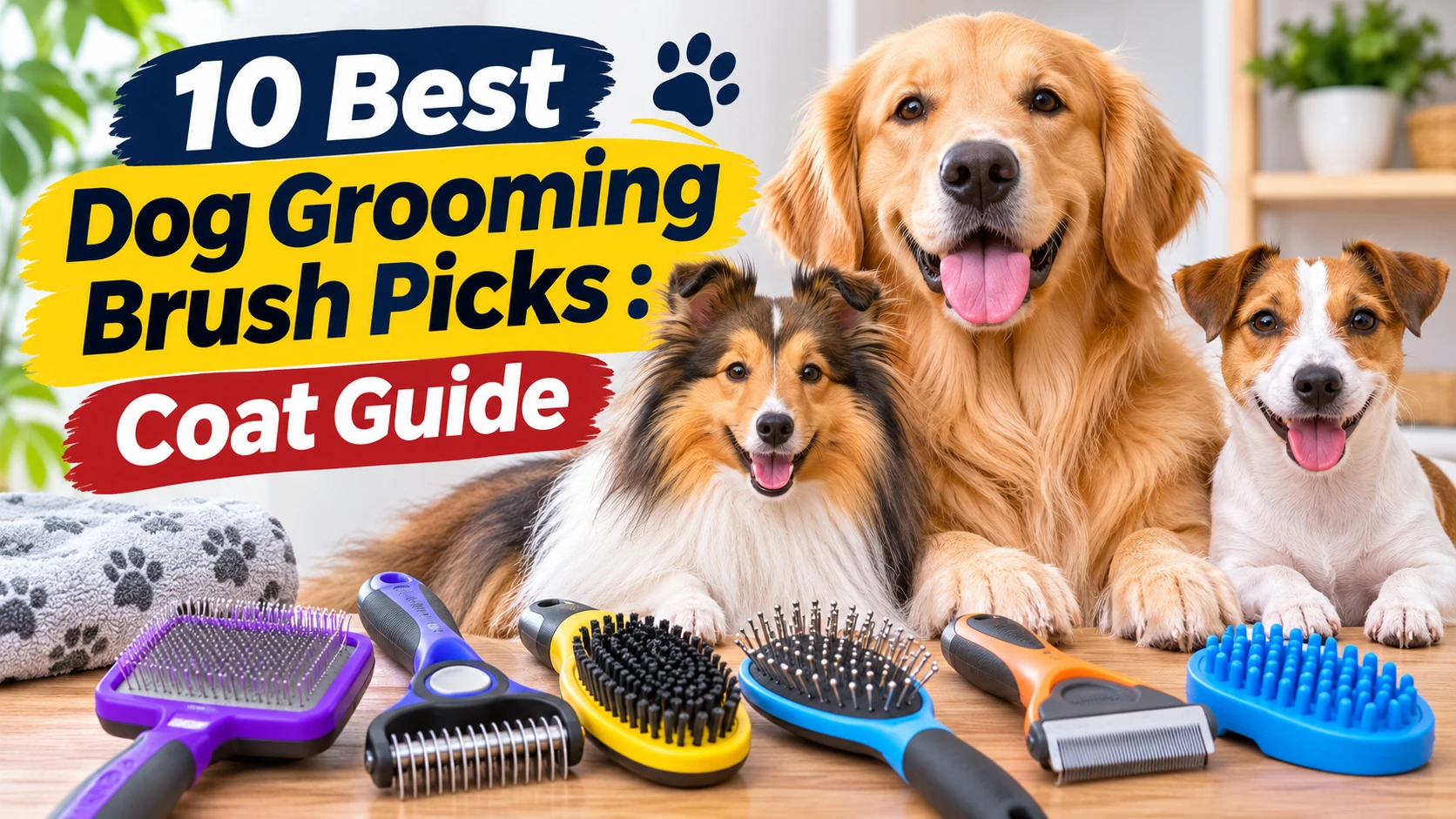
The 10 best dog grooming brush options start with the Hertzko Self-Cleaning Slicker Brush for easy upkeep of suitable medium-to-long coats. We evaluated 10 models using published specifications and guidance, scoring coat suitability, handling comfort, and maintenance ease. Many brushes look similar, but the wrong pin length or tooth type can pull hair or miss the undercoat. Whether you groom curls, short fur, or heavy shedding, this guide points you toward the appropriate tool.
Quick Comparison: All 10 Dog Grooming Brushes Ranked
| # | Product | Best For | Editorial Score | Badge | |
|---|---|---|---|---|---|
| 1 | Hertzko Self-Cleaning Slicker Brush (Original) | Everyday care for medium-to-long, lightly tangled coats | 4.4/5 | Best Overall | View on Amazon → |
| 2 | Hartz Groomer’s Best Combo Brush for Dogs | Simple two-sided brushing without specialty tools | 4.2/5 | Best Budget | View on Amazon → |
| 3 | Chris Christensen Big G Slicker Brush | Long, curly, cottony and dense coats | 4.6/5 | Best for Doodles | View on Amazon → |
| 4 | FURminator Undercoat deShedding Tool for Dogs | Dogs with a shedding double coat | 4.4/5 | Best for Shedding | View on Amazon → |
| 5 | KONG ZoomGroom Dog Brush | Short, smooth coats and bath-time grooming | 4.3/5 | Best for Short Hair | View on Amazon → |
| 6 | Maxpower Planet Original Pet Grooming Rake | Long, thick, shedding double coats | 4.2/5 | Best Undercoat Rake | View on Amazon → |
| 7 | Safari by Coastal Self-Cleaning Slicker Dog Brush | Routine grooming with a choice of head sizes | 4.2/5 | Best Easy-Clean Alternative | View on Amazon → |
| 8 | SleekEZ Original Grooming Tool (5-inch) | Removing surface shedding hair from compatible coats | 4.0/5 | Best for Smooth Shedders | View on Amazon → |
| 9 | GoPets 2-in-1 Dematting Comb for Dogs and Cats | Manageable tangles in longer coats | 4.0/5 | Best for Light Tangles | View on Amazon → |
| 10 | Burt’s Bees for Pets Double-Sided Pin & Bristle Brush | Gentle surface maintenance and coat finishing | 4.1/5 | Best Gentle Finisher | View on Amazon → |
Scores are comparative editorial assessments of documented features and intended coat fit, not lab-test results, customer review averages, or a promise of performance. Products are ranked for different grooming needs; no brush is right for every coat.
How We Chose These Dog Grooming Brushes
Research scope
We compared 10 named products using available maker specifications and published professional grooming guidance; we did not conduct hands-on or timed tests.
Three scoring criteria
We assigned editorial scores out of five for intended coat suitability, handling comfort and cleanup or maintenance ease.
Expert evidence
We checked public guidance from FURminator, professional grooming sources and named makers. No individual clinician or groomer was interviewed for this article.
What we excluded
We avoided anonymous no-name bundles, undocumented performance claims, invented customer ratings and products without a clear coat-specific use.
Reference specifications: Chris Christensen, FURminator, Hartz, Safari and Maxpower Planet.
What to Look for When Buying a Dog Grooming Brush
Choosing by coat structure is more reliable than choosing by popularity. Start with these four checks before buying a grooming brush.
1. Coat texture and undercoat
Smooth short coats usually benefit from a rubber curry or soft bristles, while long curly coats need an appropriate slicker plus a checking comb. Double-coated shedders may benefit from a rake or specialized undercoat tool, but skin sensitivity still matters.
2. Pin length, density and tooth design
A dense curly coat often needs deeper reach than a shallow slicker provides. Longer pins should still lift and separate hair gently, never scrape the skin. Tooth-edged rakes serve a different purpose from wire slickers or pin-and-bristle finishing brushes.
3. Comfort and a slow brushing technique
Choose a head you can control on your dog’s body and a handle that feels stable in your hand. Part longer coats into small sections, follow hair growth and inspect for knots. For step-by-step handling, follow this safe dog deshedding technique guide.
4. Cleaning and realistic maintenance
Push-button slickers reduce the time spent pulling fur from wire pins, but the mechanism can still collect dirt. Fixed-pin brushes and rakes need manual cleaning and inspection. Follow this deshedding tool cleaning guide to maintain suitable grooming equipment.
Hertzko Self-Cleaning Slicker Brush (Original) — Convenient daily slicker, not a mat remover
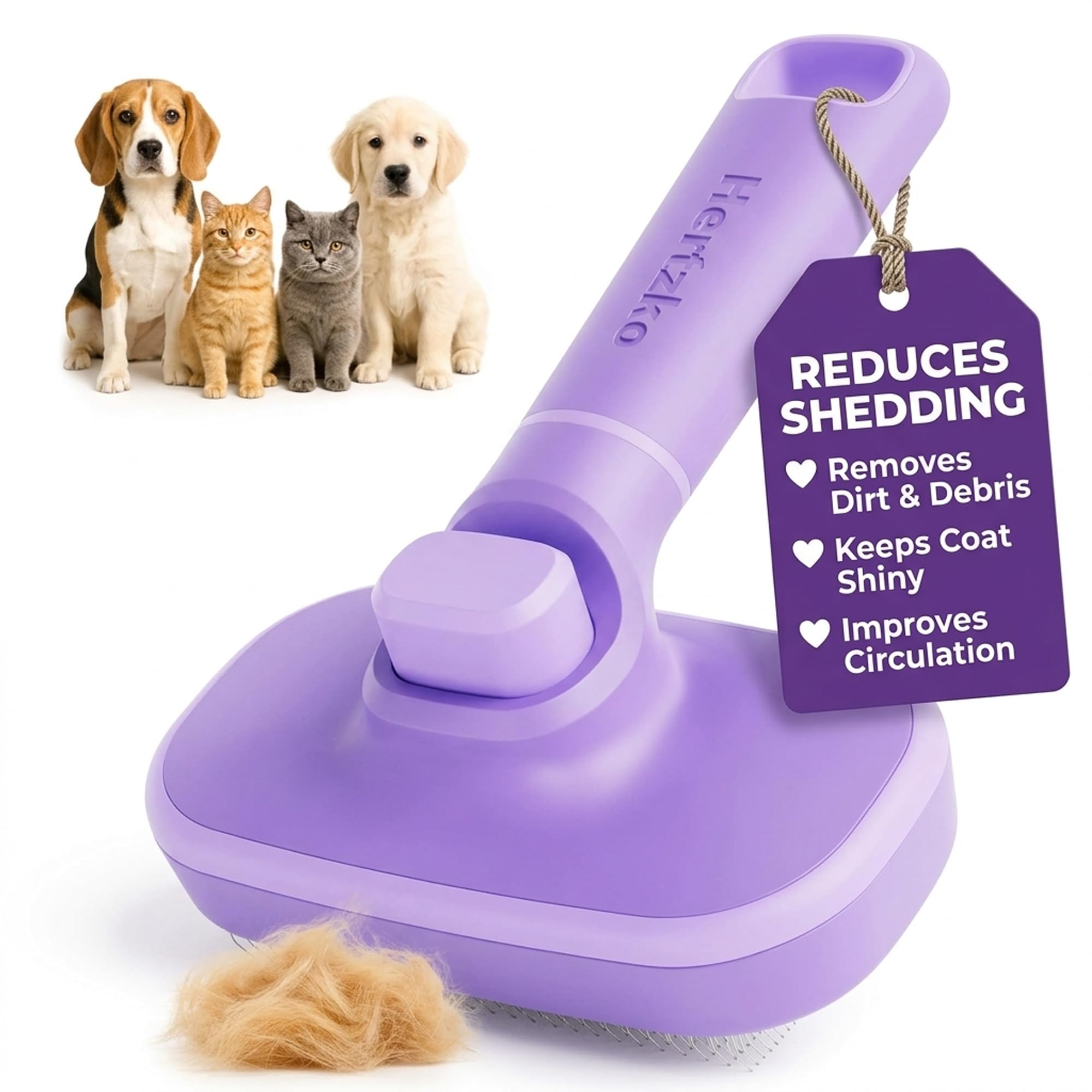
If you want one easy brush for routine coat maintenance, the original Hertzko slicker is a practical starting point. Its fine, angled metal pins collect loose fur and work through manageable surface tangles, while the push-button mechanism retracts the pins so collected hair can be removed without picking at each wire. The comfort-grip handle also helps during short, regular sessions. Compared with fixed-pin slickers, cleanup is its clearest advantage. It is less suitable for tightly matted curls or unusually dense undercoat, where a longer-pin brush and separate comb are more appropriate. Use very light pressure near sensitive skin.
- Retractable pins simplify fur removal
- Fine, angled slicker pins for light tangles
- Comfort-grip handle for daily upkeep
- Shorter pins may skim deep dense coats
- Not designed to tackle tight mats
4.5/5
4.1/5
4.7/5

Hartz Groomer’s Best Combo Brush for Dogs — Two practical brushing surfaces in one
When your dog needs both detangling and a tidy finishing pass, the Hartz Groomer’s Best Combo Brush is a straightforward two-sided option. One side has stainless-steel pin tips with a protective coating for loose hair and minor tangles. The opposite side uses dense nylon bristles to smooth the topcoat and spread existing coat oils. That pairing covers more routine tasks than a bristle-only brush, especially on moderately long coats. The limitation is depth: the finishing side will not reach a packed undercoat, and the pin side cannot safely undo severe mats. Choose it for accessible everyday grooming, not heavy seasonal deshedding.
- Pin and bristle sides tackle different tasks
- Coated pin tips for controlled detangling
- Ergonomic handle adds control
- Cannot penetrate very dense undercoat
- Bristle side will not remove mats
4.2/5
4.4/5
4.1/5

Chris Christensen Big G Slicker Brush — Deep-reaching long pins for dense curls
For a Poodle or doodle whose curls hide knots close to the skin, a shallow slicker may miss important sections. The Chris Christensen Big G uses densely spaced, bent stainless-steel pins measuring 27 millimeters, a flexible cushion pad and a curved brush head. The maker offers different head sizes for the body and smaller grooming areas, making it easier to match the brush to the dog. It is a strong choice for line brushing and fluffing longer coats. However, its dense pin pattern can be excessive for fine, short or sensitive coats; a metal comb should still follow each section.
- Documented 27 mm stainless-steel pins
- Flexible pad and curved head
- Multiple sizes for different body areas
- Dense pins overwhelm fine short coats
- Requires careful section-by-section brushing
4.9/5
4.4/5
3.9/5

FURminator Undercoat deShedding Tool for Dogs — Target loose undercoat, not surface mats
If loose undercoat is spreading across your furniture, a coat-matched FURminator tool can perform a different job from an ordinary slicker. Its stainless-steel deshedding edge reaches beneath the topcoat to catch detached undercoat; the curved skin guard and FURejector button support controlled grooming and quick hair release. The maker sells separate versions by dog size and coat length, so selecting the correct variant matters. This is not an everyday brush for every breed. Avoid it on non-shedding coats, sore skin or mats, and use gentle strokes rather than repeatedly scraping the same spot.
- Purpose-built stainless-steel undercoat edge
- Size and coat-length variants available
- FURejector button helps clear loose fur
- Unsuitable for many single-coated dogs
- Excess pressure can irritate skin
4.7/5
3.8/5
4.6/5
KONG ZoomGroom Dog Brush — Soft rubber curry brush for smooth coats
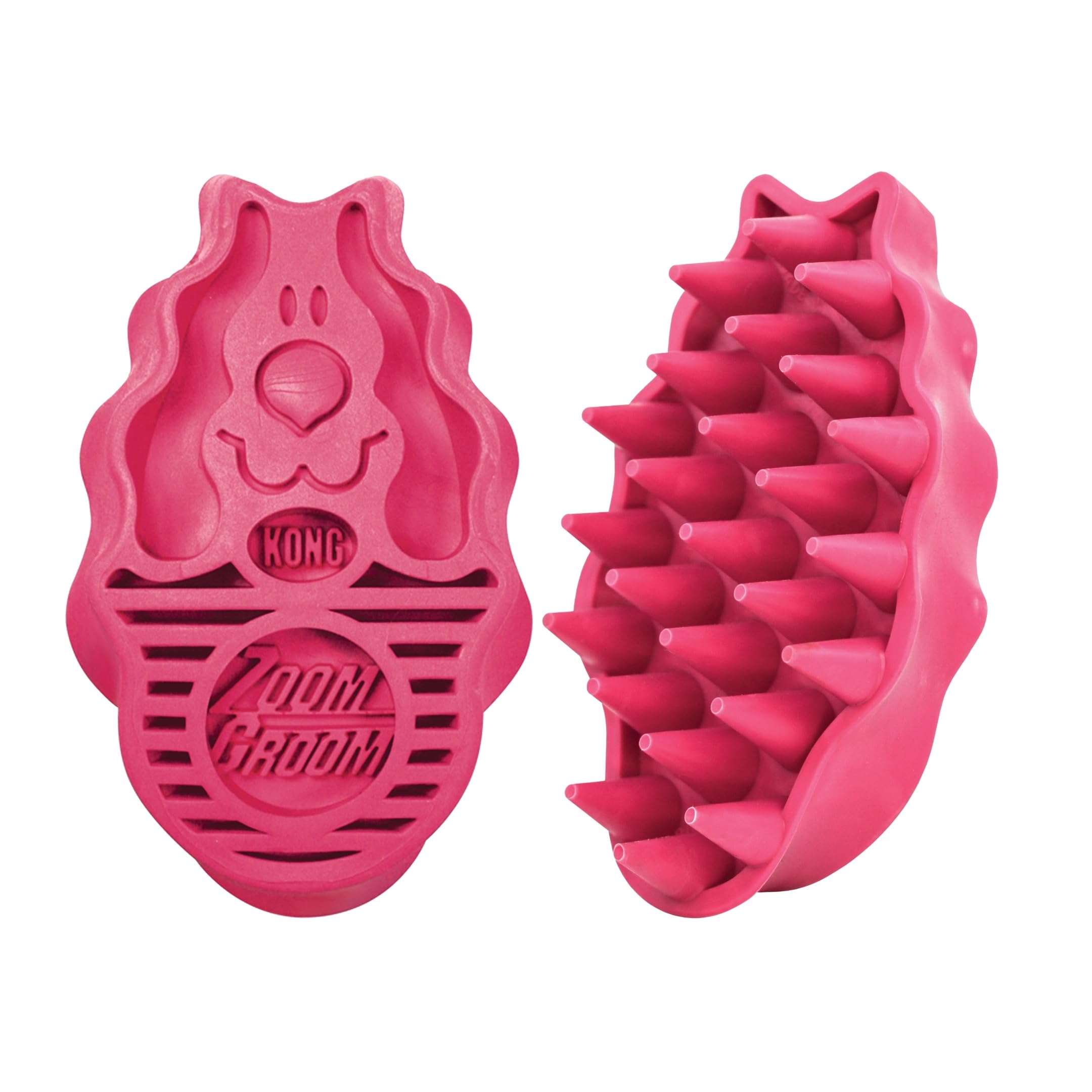
A short-haired dog often needs a softer tool than a dense metal slicker, especially during a bath. The KONG ZoomGroom uses broad, flexible rubber fingers to massage the coat and gather loose surface hair when moved gently. It can be used dry or during shampooing, making it especially useful for smooth-coated dogs that dislike sharp-feeling pins. Its simple molded design also avoids a moving cleaning mechanism. The trade-off is reach: flexible rubber cannot work through tight tangles, a long curly coat or a dense woolly undercoat. Pick it for surface grooming and bathing, not dematting.
- Flexible rubber fingers suit smooth coats
- Works during bathing or dry grooming
- Simple one-piece brushing surface
- Cannot detangle long matted fur
- Does not reach deep packed undercoat
4.5/5
4.8/5
4.5/5
Maxpower Planet Original Pet Grooming Rake — Dual tooth spacing for thick undercoats
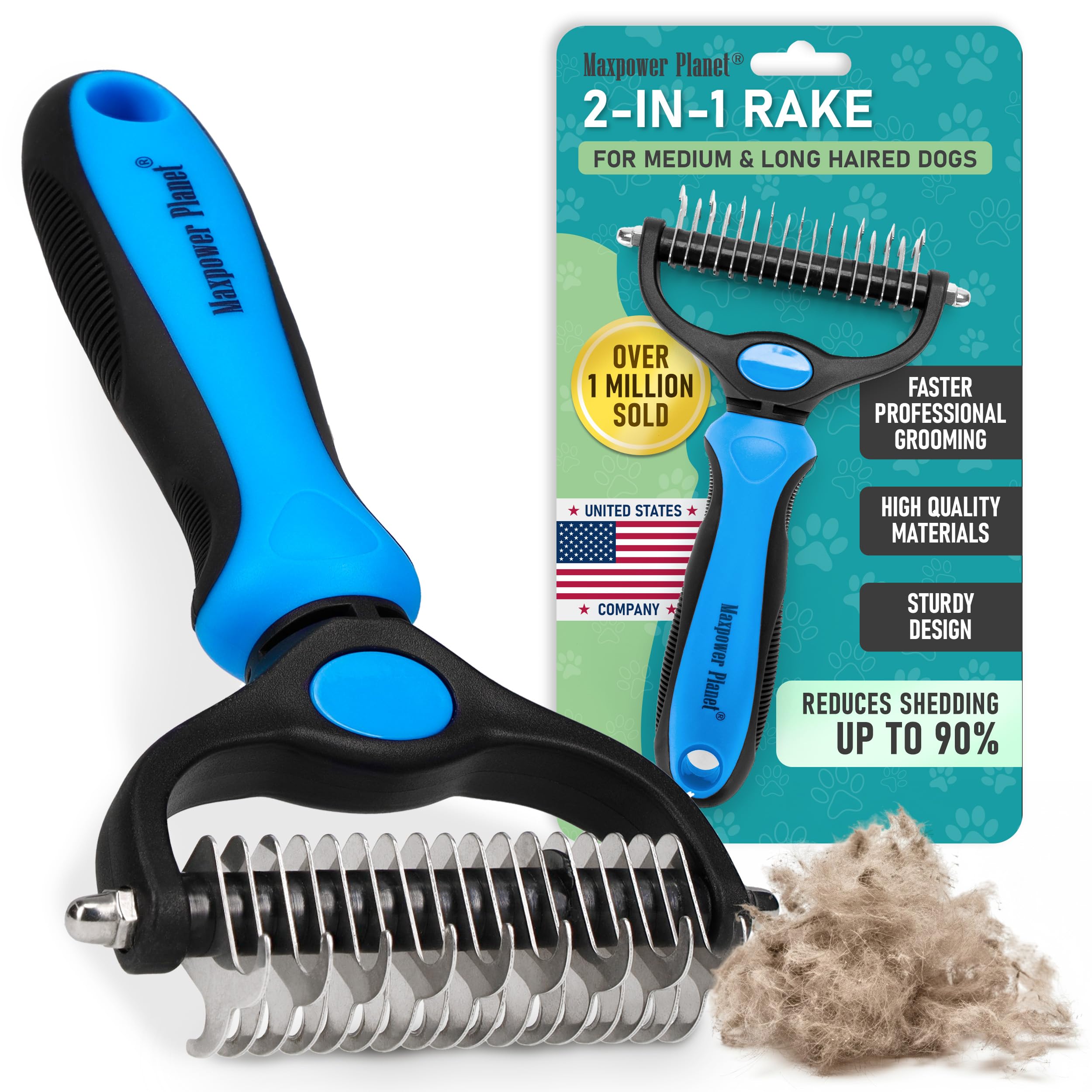
When a dog has a long, thick coat with loose wool trapped below the surface, the Maxpower Planet Original Rake offers two distinct tooth spacings. The nine-tooth side is intended for working through manageable tangles; the seventeen-tooth side removes loose undercoat after the path is clear. Its rounded-tip metal teeth and non-slip handle are designed for controlled strokes, but the tool still requires care near thin skin. This is a practical complement to a finishing slicker for heavily coated breeds. It is a poor match for smooth, short-haired dogs and should never be forced through skin-tight mats.
- Nine-tooth and seventeen-tooth sides
- Designed for long dense coats
- Non-slip rubber grip
- Metal teeth demand careful pressure
- Not intended for short coats
4.6/5
3.7/5
4.3/5

Safari by Coastal Self-Cleaning Slicker Dog Brush — Retracting slicker pins with size choices
If you like the idea of a push-button slicker but want more size choices, the Safari by Coastal Self-Cleaning Slicker deserves consideration. Its stainless-steel pins retract for hair removal, and the manufacturer lists small, medium and large versions. That makes it easier to avoid an oversized brush head on a smaller dog or to cover broad sections on a larger animal. A textured non-slip handle helps keep each stroke controlled. This remains a regular slicker rather than a deep undercoat rake. For a tightly curled coat with knots at skin level, check each area with a comb instead of assuming brushing alone is enough.
- Retracting stainless-steel pins
- Small, medium and large sizes
- Non-slip handle supports control
- Not a deep undercoat rake
- Tight mats require separate attention
4.2/5
4.2/5
4.7/5
SleekEZ Original Grooming Tool (5-inch) — Specialized toothed edge for shed hair
For dogs that shed visible hair but do not need detangling, the SleekEZ Original offers a different brushing action. Its patterned toothed metal edge is designed to gather loose hair, dirt and dander as the tool moves over the coat. The five-inch version provides a practical gripping width for many medium-size grooming areas, although the best choice still depends on your dog and your comfort with the handle. It is easy to mistake this for a dematting comb; the manufacturer explicitly says it is not for removing mats. Choose it for an appropriate shedding coat after checking skin sensitivity, not for curls.
- Purpose-built patterned shedding edge
- Available in multiple tool sizes
- No retracting pin assembly
- Manufacturer says not for mats
- Not ideal for skin-sensitive pets
4.1/5
3.9/5
4.3/5
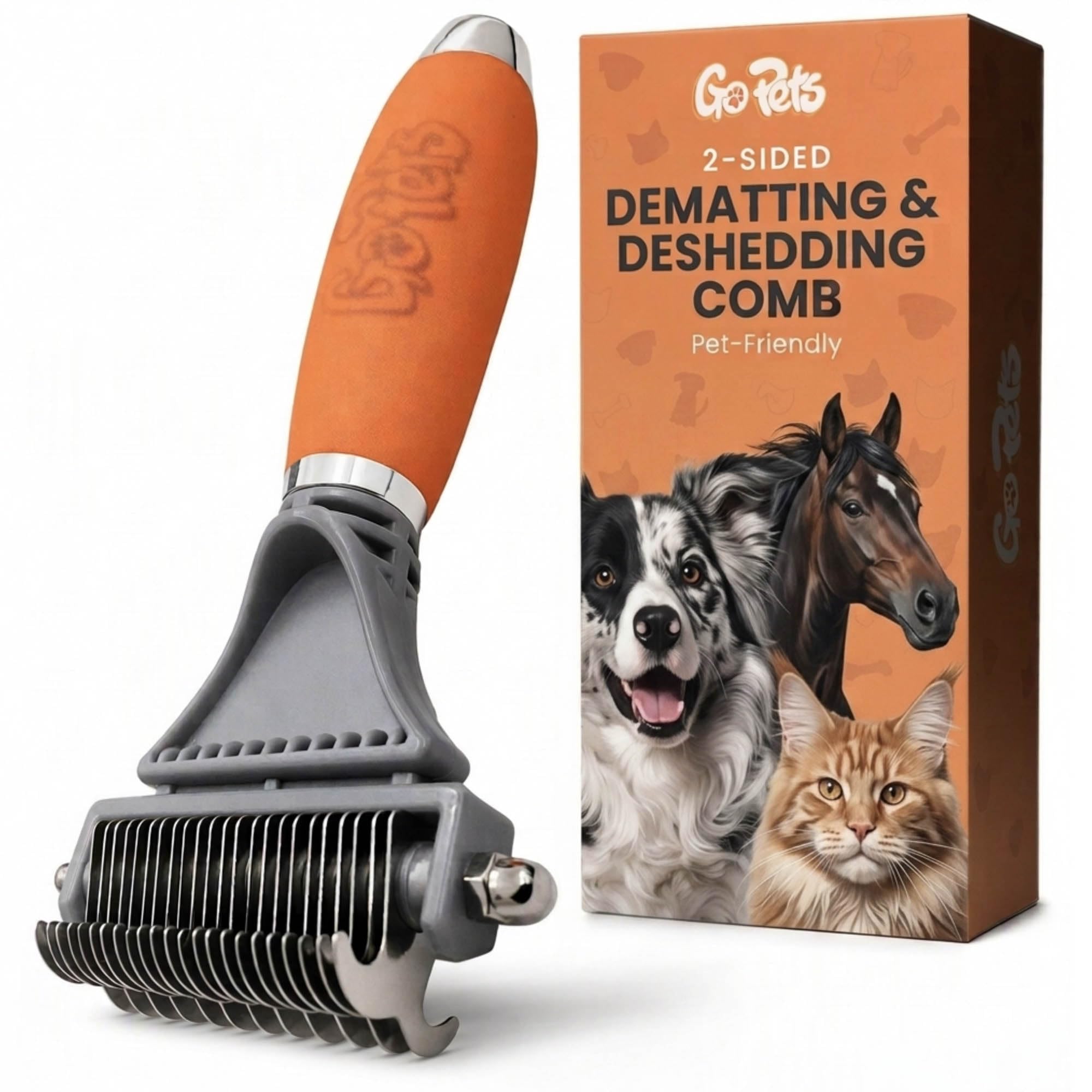
GoPets 2-in-1 Dematting Comb for Dogs and Cats — Two cutting-tooth densities; use cautiously
When a longer coat develops manageable knots that a plain finishing brush cannot separate, the GoPets two-sided dematting comb offers a more specialized option. Its twelve-blade side targets tangles, while the twenty-three-blade side is intended for removing loose undercoat. The stainless-steel teeth and cushioned non-slip grip allow deliberate, short passes through appropriate coat sections. Because these are bladed teeth, they can damage coat or skin if pulled forcefully; this is not an all-purpose daily slicker. For severe felted mats close to skin, stop and seek a professional groomer rather than trying to cut them out at home.
- Documented 12-blade and 23-blade sides
- Non-slip cushioned handle
- Separate detangling and deshedding functions
- Bladed teeth require substantial caution
- Unsafe solution for tight skin-level mats
4.2/5
3.5/5
4.1/5

Burt’s Bees for Pets Double-Sided Pin & Bristle Brush — Pin detangling plus soft finishing bristles
If your dog rarely forms heavy mats but needs a gentle brushing routine, Burt’s Bees for Pets offers a pin-and-bristle combination. One side uses pins to lift small tangles and debris, while the hemp-bristle side helps smooth the visible coat. The manufacturer also describes a bamboo and recycled-material construction, an appealing detail for buyers who prefer a simple handheld tool. It is best viewed as a maintenance and finishing brush rather than a specialist deshedder. Long dense undercoats may need a rake or deeper slicker in addition, and the bristle side will not untangle knotted hair beneath the surface.
- Pin side and hemp-bristle side
- Bamboo and recycled-material construction
- Useful for everyday finishing
- Limited reach into dense undercoat
- Bristles cannot resolve hidden tangles
4.0/5
4.4/5
4.2/5
Top 3 Head-to-Head: Hertzko vs Hartz vs Big G
These three appeal to different shoppers: simple slicker maintenance, a basic two-sided brush, and a deep-reaching professional-style slicker for curls. They are not interchangeable across all coat types.
| Feature | Hertzko | Hartz | Big G |
|---|---|---|---|
| Main tool type | Self-cleaning slicker | Pin and bristle | Long-pin slicker |
| Deep-coat reach | Moderate | Limited | 27 mm pins |
| Easy fur removal | Retracting pins | Manual | Manual |
| Best coat match | Medium to long | Routine surface coat | Curly, dense, long |
| Editorial score | 4.4/5 | 4.2/5 | 4.6/5 |
| Choose if… | Cleanup matters | You prefer dual sides | Your dog has dense curls |
Who These Grooming Brushes Are NOT For
No home brush should be used to force apart painful mats or scrape inflamed skin.
See this safe dog deshedding overview for a coat-specific routine; use appropriate gentle tools between deeper grooming sessions.
Common Dog Brushing Mistakes to Avoid
Comfort and coat fit matter more than how much loose hair you collect in one session.
Frequently Asked Questions About Dog Grooming Brushes
What type of brush is best for my dog?
Choose a brush based on coat structure, not just breed. Short smooth coats often suit rubber curries, while longer or curly coats need a suitable slicker followed by a comb. Dense double coats may need an undercoat rake or deshedding tool. If you are unsure about a sensitive or unusual coat, ask your groomer before trying a metal-edged tool. A brush that works for a Labrador may be unsuitable for a Poodle.
Is a slicker brush or a bristle brush better?
A slicker is generally better for removing loose fur and manageable tangles from compatible medium, long or curly coats. A bristle brush is usually better for smoothing the surface of a short or already detangled coat. Neither is automatically better for every dog. Many owners use a slicker to separate hair and a softer bristle or pin brush to finish. Watch your dog’s skin and avoid dragging sharp-feeling pins across it.
Can a dog grooming brush remove mats?
A regular grooming brush can sometimes loosen small, superficial tangles, but it should not be used to rip out tight mats. Severe felted knots can pull on skin and hide irritation or injury. A metal checking comb helps identify remaining problem areas after gentle brushing. If a mat sits close to the skin or your dog reacts painfully, stop brushing and arrange a professional grooming assessment instead of cutting blindly.
How often should I brush my dog?
Brushing frequency depends on coat type, seasonal shedding and how easily tangles form. Many smooth-coated dogs need comparatively brief sessions, whereas long or curly coats often require more frequent checks to prevent hidden mats. Metal-edged deshedding tools generally need less frequent use than gentle surface brushes. Follow your product instructions and watch for redness. Do not assume that collecting more hair means you should extend an already uncomfortable session.
Should I brush my dog before or after a bath?
Check for knots and remove manageable tangles before bathing, because water can make some mats harder to handle. After washing, dry the coat as directed and brush gently with a tool appropriate for that coat. A rubber curry such as the KONG ZoomGroom can also be used during shampooing on suitable short coats. Avoid using an undercoat deshedder on wet, tangled fur unless its maker explicitly permits that method.
Are deshedding brushes safe for all dog breeds?
No. Undercoat deshedding edges are meant for suitable shedding coats and should not automatically be used on single-coated, non-shedding or particularly sensitive dogs. Even on an appropriate double coat, heavy pressure or too many passes can irritate skin and damage hair. The FURminator manufacturer specifically cautions against use on non-shedding breeds and pets with especially sensitive skin. A rubber or soft finishing brush may be more appropriate for other dogs.
How do I clean a dog grooming brush?
Remove trapped fur after each session, inspect the pins or teeth and wipe away dirt. Some self-cleaning slickers release hair with a button, while fixed-pin brushes need manual removal. Wash only the surfaces permitted by the manufacturer and dry metal parts completely before storing. Inspect for bent pins, rust or damage before using the brush again. Cleaning is part of safe grooming, not just a way to keep the brush looking tidy.
Our Final Verdict
The Hertzko Self-Cleaning Slicker is a sensible everyday starting point for many medium-to-long coats because it combines light detangling with quick cleanup. But coat fit wins over any ranking: choose KONG for short smooth hair, Big G for dense curls, and a properly sized undercoat tool for shedding double coats. Never force a brush through painful mats.


