
Quick Answer
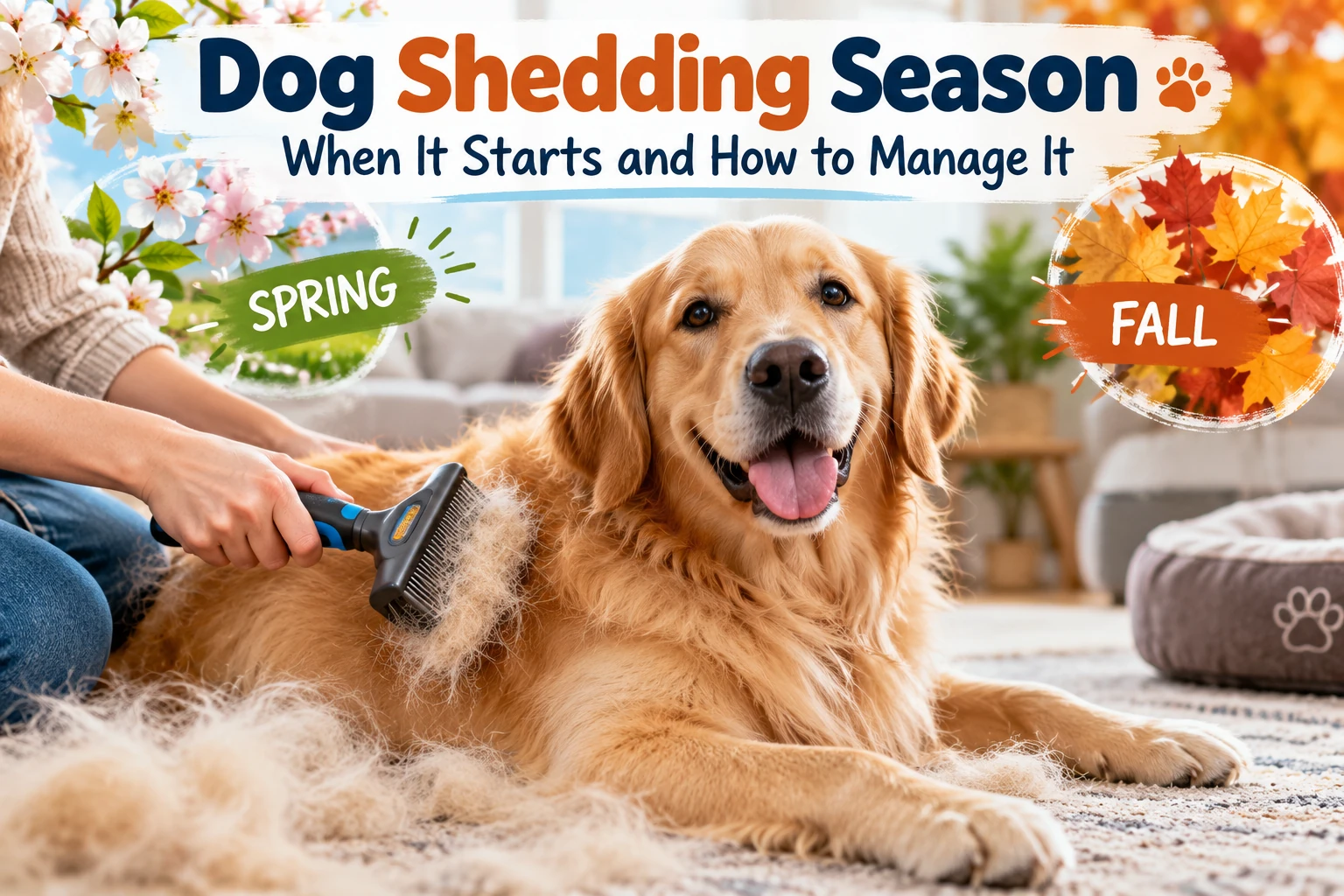
Dog shedding season usually peaks in spring and fall, especially for double-coated breeds such as Golden Retrievers, German Shepherds, and Siberian Huskies. Spring shedding removes much of the winter undercoat, while fall shedding accompanies the transition to a denser winter coat. Regular brushing, suitable grooming tools, and a consistent routine help control loose fur. For practical grooming frequency, see how often to brush your dog.
What to Expect During Shedding Season
- Spring shedding: Dogs release much of their thick winter undercoat as conditions become warmer.
- Fall shedding: Loose summer fur gives way as the coat prepares for colder weather.
- Heaviest shedders: Double-coated breeds often experience the most noticeable seasonal coat changes.
- Indoor dogs: Artificial lighting and controlled temperatures may make shedding less seasonal.
- Best management: Gentle brushing removes loose hair before it collects on furniture and flooring.
- Warning signs: Bald spots, redness, persistent itching, or sores require veterinary attention.
One Important Reminder
- Shedding is natural: The goal is to manage loose hair, not stop the normal coat-renewal process.
Finding dog hair on the couch, carpet, and clothing can feel overwhelming when shedding season arrives. Sometimes, it seems like brushing only creates another mountain of fur.
I recommend looking beyond the amount of hair you collect. In this 2026 guide, I’ll explain when dogs shed most, how to manage their coats, and when hair loss needs attention.
What Is Dog Shedding Season?
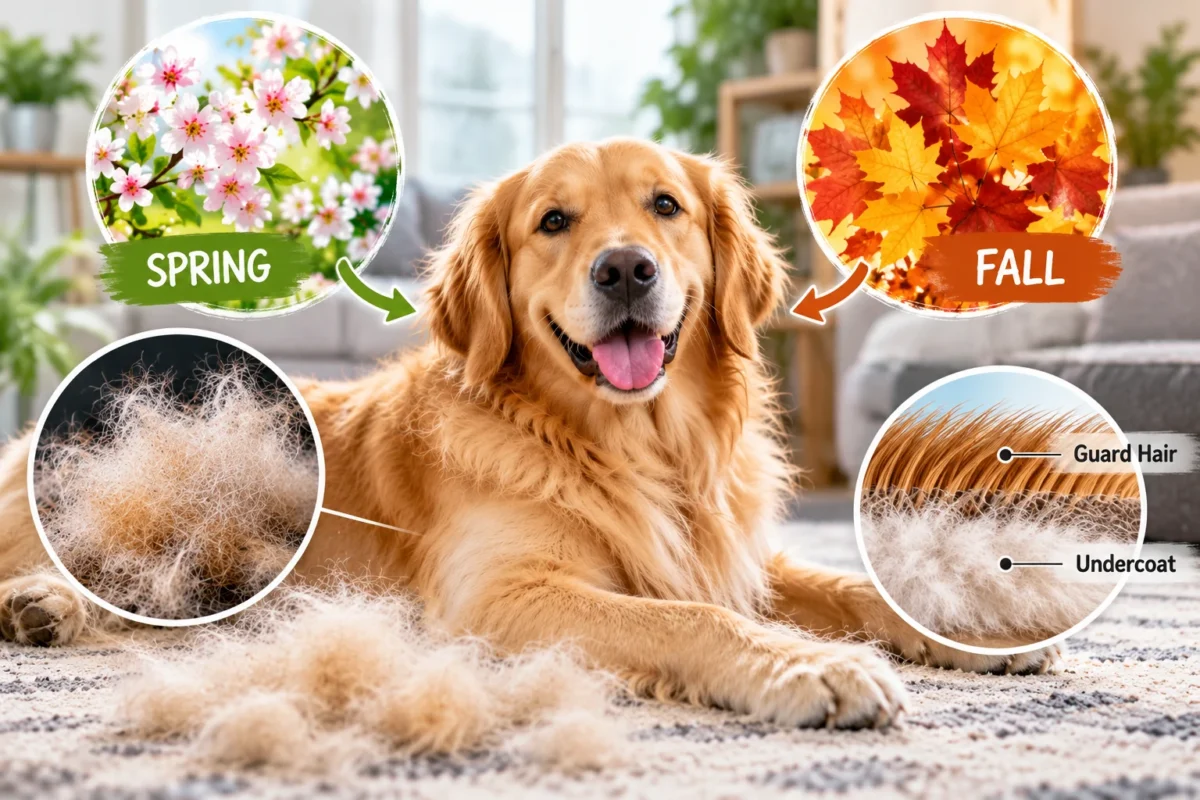
Dog shedding season is a period when a dog naturally loses more old or loose fur as its coat changes. Many double-coated dogs experience heavier shedding during spring and fall.
Hair follicles follow growth, transition, resting, and shedding phases. Not every hair follows the same cycle, which explains why many dogs lose some fur throughout the year.
Seasonal shedding becomes especially noticeable when large amounts of loose undercoat collect together.
- Normal coat renewal: Old or damaged hairs fall out and make way for new growth.
- Seasonal transitions: Changing daylight and environmental conditions influence coat cycles.
- Undercoat release: Thick-coated dogs may lose substantial amounts of soft insulating fur.
- Breed differences: Genetics determine much of a dog’s natural shedding pattern.
Some owners call heavy seasonal shedding “blowing the coat.” The term describes the dramatic release of loose undercoat common in certain breeds.
According to the American Kennel Club’s shedding guidance, coat type plays a major role in shedding frequency and intensity.
When Is Dog Shedding Season?
For many dogs in temperate climates, the main shedding seasons occur during spring and fall. The exact months vary with location, breed, daylight exposure, and individual coat cycles.
Spring Dog Shedding Season
Spring is often the most noticeable shedding period for thick-coated dogs. As conditions warm, they release much of the dense undercoat associated with winter.
In the Northern Hemisphere, increased shedding commonly appears around March through May. Some dogs start earlier or continue shedding into early summer.
- Typical timing: March to May in many Northern Hemisphere temperate climates.
- Main coat change: Loss of dense winter undercoat.
- Common signs: Loose fluffy fur, larger brushing piles, and hair collecting around the home.
- Grooming priority: Remove loose undercoat gently without irritating the skin.
Fall Dog Shedding Season
Fall shedding accompanies the coat’s transition toward colder conditions. Dogs shed older hair while developing or maintaining a denser seasonal coat.
In many Northern Hemisphere locations, this becomes noticeable around September through November. The intensity may differ from spring shedding.
- Typical timing: September to November in many temperate Northern Hemisphere locations.
- Main coat change: Replacement of older summer fur during winter-coat development.
- Common signs: More loose hair during brushing and grooming.
- Grooming priority: Prevent loose fur from accumulating beneath the outer coat.
Dog Shedding Season Calendar
This calendar illustrates common patterns rather than fixed biological deadlines. Southern Hemisphere seasons occur at opposite times of year.
| Period | Typical Shedding | Grooming Focus |
|---|---|---|
| December–February | Often lower seasonal shedding, with individual exceptions | Routine brushing and skin checks |
| March–May | Common spring shedding peak | Increase gentle undercoat grooming |
| June–August | Often moderate, with ongoing coat renewal | Maintain coat and monitor skin comfort |
| September–November | Common fall shedding peak | Remove loose fur and prevent tangles |
Important: These months describe a general Northern Hemisphere pattern. Tropical climates, indoor living, and individual genetics can produce less predictable shedding schedules.
Why Do Dogs Shed More During Certain Seasons?
Seasonal shedding happens because a dog’s hair-growth cycle responds to biological and environmental signals. Day length is particularly important, while temperature and individual genetics also influence coat changes.
Changing Daylight Hours
Changes in daylight help influence the timing of seasonal coat growth and shedding. This explains why shedding may start before a dramatic temperature change occurs.
Winter and Summer Coat Changes
Double-coated dogs have two distinct fur layers with different functions. Their softer undercoat provides insulation, while the outer guard hairs help protect their skin.
Seasonal changes alter how much undercoat the dog carries. This creates the familiar bursts of loose, fluffy fur.
Indoor Temperature and Artificial Lighting
Indoor dogs may experience less distinct shedding seasons. Climate-controlled rooms and consistent artificial lighting can affect environmental signals associated with coat cycles.
Some dogs therefore shed noticeably throughout the year. That pattern isn’t automatically a health problem.
Which Dog Breeds Shed the Most During Shedding Season?
Breeds with thick double coats generally experience some of the most dramatic seasonal shedding. However, individuals within the same breed can have different grooming needs.
Common heavy-shedding breeds include:
- Golden Retriever: A thick double coat often releases substantial undercoat during seasonal changes.
- German Shepherd: Regular year-round shedding may become particularly heavy in seasonal transitions.
- Siberian Husky: Dense undercoat can come out in large amounts during coat-blowing periods.
- Alaskan Malamute: A heavy insulating coat requires consistent undercoat maintenance.
- Labrador Retriever: Short fur can still shed heavily because of the dense double coat.
- Pembroke Welsh Corgi: A compact body can carry a surprisingly substantial amount of shedding undercoat.
How Does Shedding Differ by Coat Type?
Coat texture matters more than simply comparing hair length. A short-haired Labrador may leave more loose fur around a home than a long-haired dog with a low-shedding coat.
| Coat Type | Examples | Typical Pattern | Useful Tool |
|---|---|---|---|
| Short, smooth | Boxer, Dalmatian | Often year-round; seasonal increases possible | Rubber grooming mitt |
| Short double coat | Labrador, Corgi | Regular shedding with seasonal peaks | Suitable undercoat tool |
| Long double coat | Golden Retriever, Husky | Often heavy seasonal undercoat release | Slicker brush and undercoat rake |
| Curly or continuously growing | Poodle, Bichon Frise | Often less visible shedding; significant matting risk | Slicker brush and metal comb |
Low-shedding doesn’t mean maintenance-free. Curly coats can trap loose hair and form painful mats when brushing is neglected.
How Long Does Dog Shedding Season Last?
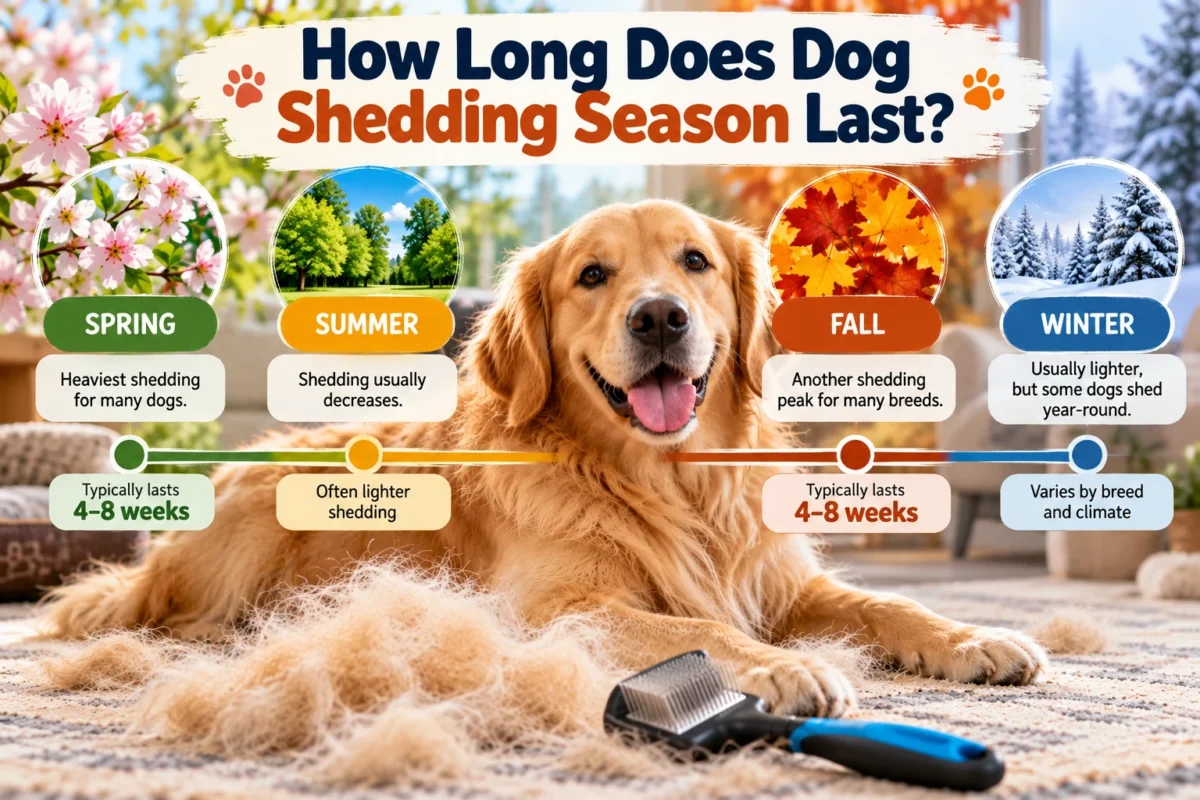
A noticeable seasonal shedding episode may last several weeks, but there is no fixed duration that applies to every dog. Coat density, climate, grooming habits, and individual biology affect how long loose fur remains noticeable.
Some dogs release their undercoat over a relatively concentrated period. Others shed more gradually, making the seasonal transition harder to recognize.
- Coat thickness: Dense undercoats can produce larger amounts of loose fur.
- Breed genetics: Different breeds follow different hair-growth patterns.
- Environment: Indoor conditions and regional climates influence seasonal changes.
- Grooming frequency: Frequent brushing removes loose fur sooner but doesn’t stop the natural cycle.
- Individual variation: Age, health, and reproductive status can also affect coat condition.
I wouldn’t judge shedding by counting days alone. I would watch whether the coat stays healthy and whether the amount of loose hair gradually returns toward its usual level.
How Can You Manage Dog Shedding Season at Home?
The most effective shedding routine combines coat-appropriate brushing, sensible bathing, skin checks, and regular home cleaning. Consistency matters more than forceful grooming.
1. Brush Your Dog More Frequently
Regular brushing collects loose hair before it spreads around the house. During a heavy shedding period, many double-coated dogs benefit from gentle daily brushing.
Start with short sessions. Increase grooming only when your dog’s coat and skin tolerate it comfortably.
- Choose a brush designed for your dog’s coat type.
- Start at the shoulders or another comfortable area.
- Brush gently in the direction of natural coat growth.
- Work through small sections without repeatedly scraping the same area.
- Check for redness, tangles, or sensitive skin.
- Stop when your dog becomes uncomfortable or the loose hair decreases.
For more detailed brushing techniques, follow my step-by-step dog brushing guide.
2. Use a Suitable Deshedding Tool
Undercoat rakes and coat-specific deshedding tools can help remove loose undercoat. However, aggressive use may irritate skin or damage healthy hair.
My preferred approach is to start gently and reassess after a few passes. More pressure doesn’t mean better grooming.
- Undercoat rake: Useful for many thick, loose double coats.
- Slicker brush: Helps remove loose hair and minor tangles from suitable coats.
- Rubber brush: Often comfortable for short, smooth-coated dogs.
- Metal comb: Helps check whether longer coats still contain tangles.
Intensive undercoat-removal sessions generally shouldn’t be treated like ordinary gentle daily brushing. See my guide on how often to deshed a dog safely.
3. Bathe Your Dog When Necessary
Bathing can loosen dirt and dead hair, making the coat easier to maintain. However, shedding alone doesn’t mean your dog needs frequent shampoo baths.
Use lukewarm water, a dog-specific shampoo, and complete rinsing. Dry the coat thoroughly before finishing the grooming routine.
- Brush loose fur before bathing when the coat allows.
- Use a gentle shampoo formulated for dogs.
- Rinse until shampoo residue is removed.
- Dry carefully, especially beneath dense undercoats.
- Brush again gently after the coat is appropriately dry.
Avoid excessive bathing just to control loose hair. Read whether bathing a dog too often can cause problems before increasing bath frequency.
4. Support Healthy Skin and Coat Nutrition
Healthy hair growth depends partly on balanced nutrition. Dogs need adequate protein, essential fatty acids, vitamins, and minerals to maintain normal skin and coat function.
Feed a complete diet appropriate for your dog’s life stage. Avoid adding oils or supplements without a veterinary reason, since unnecessary supplementation can create nutritional imbalances.
5. Keep Your Home Clean During Heavy Shedding
A simple cleaning routine makes seasonal shedding easier to manage. It also helps reduce the visible buildup of loose hair.
- Vacuum high-traffic areas regularly.
- Wash removable pet bedding according to its care instructions.
- Use a lint roller or reusable hair remover on furniture.
- Brush your dog in an easy-to-clean location.
- Clean grooming tools after each session.
Should You Shave Your Dog During Shedding Season?
Most double-coated dogs should not be shaved simply to reduce shedding or cope with summer heat. Their outer coat and undercoat work together to protect the skin and support temperature regulation.
Shaving can disrupt normal coat regrowth and leave skin more exposed. It also doesn’t stop hair follicles from shedding.
The AKC’s double-coat care guidance explains why routine shaving can cause problems for these dogs.
Instead of shaving, consider these safer options:
- Remove loose undercoat with gentle grooming.
- Maintain a clean, untangled coat.
- Provide fresh water, shade, and a cool resting area.
- Avoid strenuous exercise during extreme heat.
- Ask a professional groomer about severe matting or difficult coat maintenance.
Medical clipping and certain coat-care situations are exceptions. A veterinarian or qualified groomer can explain when clipping is appropriate.
How Can You Tell Normal Shedding From Excessive Hair Loss?
Normal seasonal shedding generally leaves a healthy-looking coat and comfortable skin. Abnormal hair loss may create thin patches, bald spots, inflammation, or persistent itching.
This distinction matters because skin problems can occur during any season. A dog shedding in spring can still develop allergies, parasites, or another medical condition.
Signs of Normal Seasonal Shedding
- Loose hair comes from multiple areas of the coat.
- The skin beneath the fur appears healthy.
- No obvious bald patches develop.
- Your dog isn’t persistently scratching or chewing the skin.
- Behavior, appetite, and overall comfort remain normal.
Signs That Need Veterinary Attention
- Sudden bald patches or clearly thinning areas.
- Persistent scratching, licking, or biting.
- Redness, crusts, sores, or an unpleasant skin odor.
- Hair loss accompanied by changes in weight or thirst.
- Unexpected heavy shedding outside your dog’s established pattern.
- Skin discomfort that worsens despite gentle grooming.
Potential causes include allergies, parasites, infections, hormonal disorders, and other health conditions. A veterinarian may need to examine the skin or perform tests to identify the problem.
PetMD’s veterinarian-reviewed guidance on excessive shedding describes important warning signs that help distinguish normal shedding from possible illness.
What Common Dog Shedding Mistakes Should You Avoid?
Many shedding problems become harder to manage when grooming is too aggressive or inconsistent. The aim is to remove loose hair while protecting healthy skin and coat.
- Brushing too aggressively: Excessive pressure can irritate the skin.
- Using the wrong tool: A deshedding blade may be unsuitable for certain delicate, curly, or continuously growing coats.
- Shaving a double coat: Routine shaving can interfere with its protective function.
- Overbathing: Unnecessary shampooing may dry or irritate sensitive skin.
- Ignoring bald spots: Patchy hair loss shouldn’t automatically be dismissed as seasonal shedding.
- Expecting zero shedding: Normal hair renewal cannot be eliminated completely.
One practical tip is to inspect the skin after grooming rather than focusing only on the brushful of hair. Comfortable skin is a better sign of a suitable routine than the size of the fur pile.
What Are the Best Grooming Tools for Dog Shedding Season?
The best shedding tool depends on your dog’s coat, sensitivity, and grooming needs. These three established products address different situations rather than offering one universal solution.
The suitability scores below are editorial assessments of intended use, not verified customer-review averages or hands-on test results.
🏆 Best for Loose Undercoat
FURminator Undercoat deShedding Tool for Dogs
★★★★☆ 4.5/5 suitability
Designed to remove loose undercoat from suitable shedding coats. I’d consider this for a heavy shedder with a compatible coat, while carefully limiting pressure and repeated strokes. Choose the correct version for the dog’s size and hair length.
✨ Best for Everyday Brushing
Hertzko Self-Cleaning Slicker Brush
★★★★☆ 4.3/5 suitability
A slicker-style brush with fine pins and a mechanism for releasing collected hair. I’d consider it for suitable medium or long coats that need regular loose-fur removal, while avoiding excessive pressure against sensitive skin.
🐾 Best for Short Coats
KONG ZoomGroom Dog Brush
★★★★☆ 4.4/5 suitability
A flexible rubber grooming brush designed to collect loose surface hair. I’d consider this for short, smooth coats or dogs that find firm metal-pin grooming tools uncomfortable.
Affiliate disclosure: As an Amazon Associate, we earn from qualifying purchases. This doesn’t change the price you pay.
Frequently Asked Questions About Dog Shedding Season
What months do dogs shed the most?
Many double-coated dogs shed most heavily during spring and fall. In temperate Northern Hemisphere climates, noticeable peaks commonly occur around March–May and September–November. Exact timing varies by breed, location, daylight exposure, and indoor living conditions. Dogs in warmer climates may shed throughout the year.
How many times a year do dogs have a shedding season?
Many seasonal shedders experience two noticeable coat changes each year, commonly in spring and fall. However, not every dog follows this pattern. Some shed steadily throughout the year, while low-shedding breeds may show little seasonal difference. Coat type and environment influence the frequency.
Is it normal for dogs to shed in winter?
Yes. Dogs can shed during winter because normal hair renewal continues throughout the year. Indoor lighting, heating, and individual coat cycles can also affect shedding patterns. However, sudden patchy hair loss, severe itching, or skin irritation shouldn’t be dismissed as ordinary winter shedding.
How often should I brush my dog during shedding season?
Many heavy-shedding double-coated dogs benefit from gentle daily brushing during peak shedding periods. Other dogs may need only several sessions each week. Adjust the schedule according to coat density, loose hair, tangles, and skin comfort. Avoid aggressive daily use of intensive undercoat-removal tools.
Can I stop my dog from shedding completely?
No. Shedding is part of the natural hair-growth cycle for most dogs, so completely preventing it isn’t realistic. Regular brushing and appropriate coat care can reduce loose fur around your home. Sudden, excessive, or patchy hair loss requires veterinary evaluation rather than stronger grooming products.
Final Takeaway: Make Dog Shedding Season Easier
Dog shedding season is a normal part of coat renewal, particularly for double-coated breeds. Spring and fall often bring the largest changes, but individual patterns vary.
My recommendation is simple: focus on gentle, consistent brushing and watch the skin beneath the fur. Choose tools for your dog’s actual coat instead of using aggressive deshedding methods.
Start with a manageable grooming routine, keep the coat clean, and adjust as shedding changes. If your dog develops bald patches, persistent itching, or irritated skin, contact your veterinarian.
The goal isn’t a completely hair-free home. It’s a comfortable dog with a healthy, well-maintained coat.


