
⚡ Quick Answer
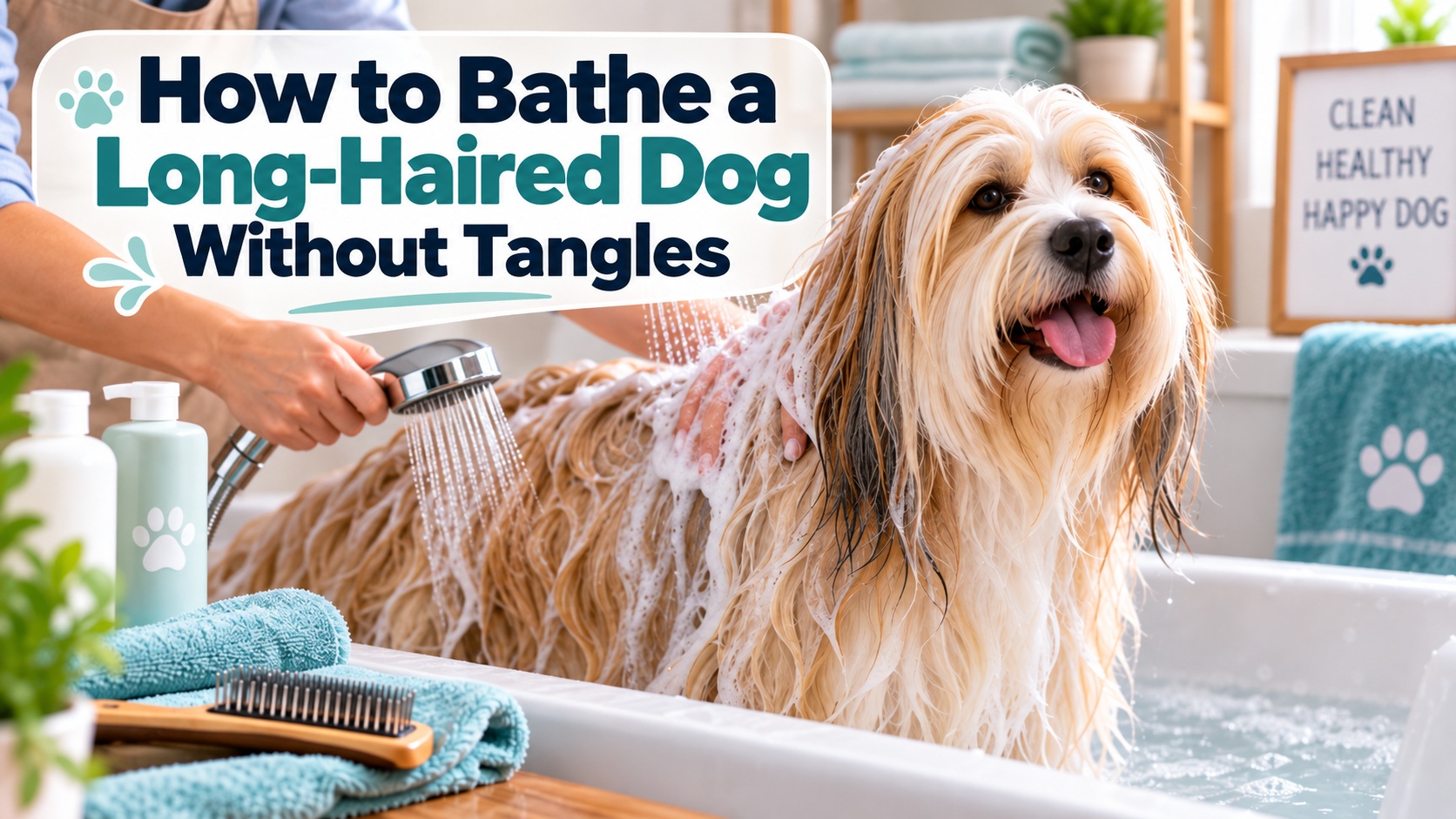
To bathe a long-haired dog, brush out tangles before wetting the coat. Use lukewarm water and dog shampoo, then work with the hair growth. Rinse until no product remains. Press water out gently, then towel-blot and dry the coat fully. Brush again only after the coat is nearly dry.
Your long-haired dog bath in six steps
- 1Brush out loose hair and light tangles.
- 2Wet the coat fully with lukewarm water.
- 3Massage dog shampoo along the coat growth.
- 4Rinse the coat down to the skin.
- 5Blot the wet coat without rough rubbing.
- 6Dry fully before the final gentle brush.
Avoid these long-coat bath mistakes
- ✓Never soak tight mats before handling them.
- ✓Don’t scrub long fur in circles.
- ✓Don’t leave the undercoat damp.
Water can turn a soft long coat into a heavy, tangled mess. Wet fur also hides knots that seemed small before bath time.
Ashraful favors a calm, coat-first routine for long-haired dogs. Good brushing, careful washing, and full drying make the biggest difference.
The key is preparation. Once you handle that step well, the whole bath becomes easier.
📌 Key Takeaways
- →Brush first. Water can tighten existing tangles and mats.
- →Wash downward. Follow the coat growth to reduce new tangles.
- →Rinse fully. Dense coats can hide shampoo close to the skin.
- →Dry completely. Long coats hold moisture longer than short coats.
How Do You Prepare a Long-Haired Dog Before a Bath?
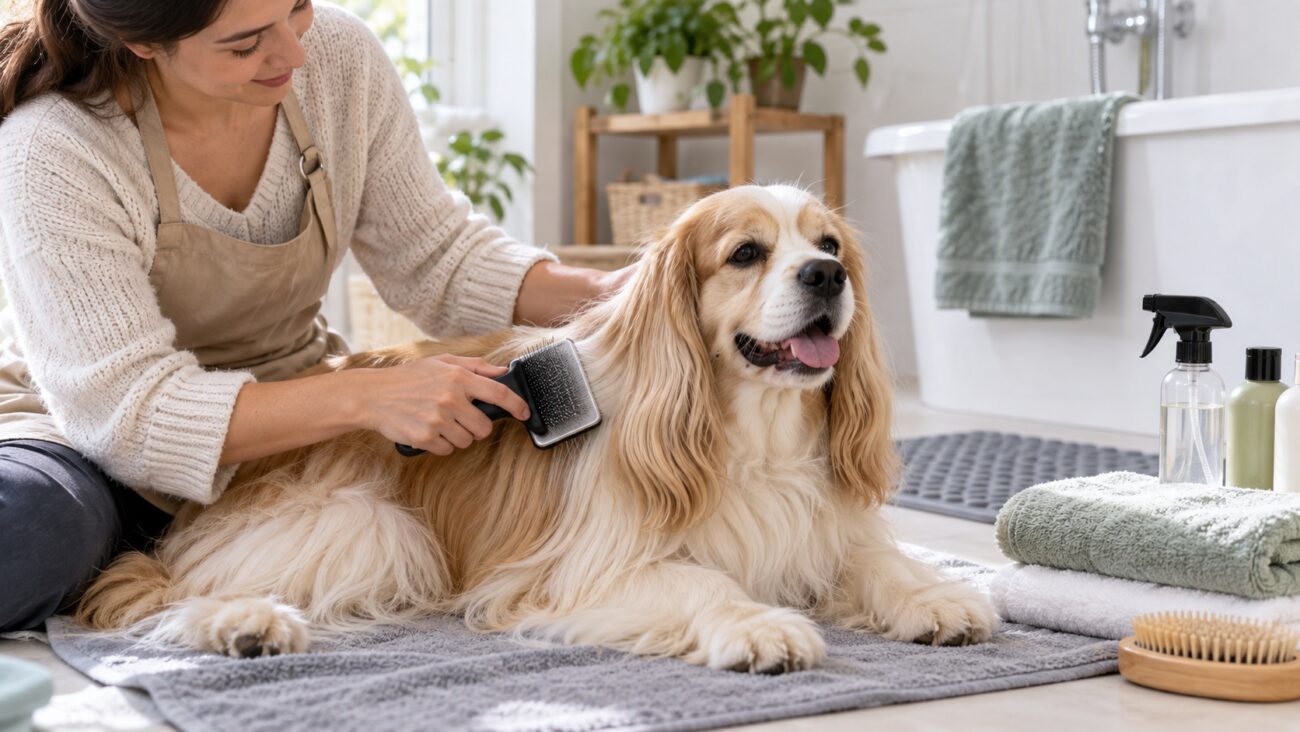
Brush your dog before adding water. Remove loose hair, debris, and every light tangle you can find. Pay close attention behind the ears and under the legs.
Water can tighten existing knots. VCA also advises removing tangles before bathing because wetting can worsen them. VCA’s dog coat care guide explains this risk.
Use a pin brush, slicker brush, or comb suited to your dog’s coat. Long-haired dogs need tools that reach through the coat without scraping skin.
If you want a two-sided maintenance tool, see this Safari Pin and Bristle Brush review. It focuses on medium and long coats.
⚠️ Severe Mats Need Extra Care
Don’t cut tight mats with household scissors near the skin. Ask a groomer or veterinarian for help with severe matting.
The ASPCA also recommends regular brushing for long coats. Some tangle-prone dogs need daily coat care. ASPCA dog grooming guidance covers brushing and bathing basics.
Once the coat is smooth enough to wet, you can start washing safely.
How Do You Bathe a Long-Haired Dog Step by Step?
Start with lukewarm water and wet the body slowly. Make sure water reaches the skin beneath the long coat. Keep direct spray away from the eyes and ear canals.
Next, apply shampoo made for dogs. Massage it along the direction of hair growth. Circular scrubbing can twist long strands and create new tangles.
The American Kennel Club also advises working lather with long hair’s growth. Its dog bathing guide also stresses complete rinsing.
🔢 Step-by-Step: Washing a Long Coat
- Secure the footing. Put a non-slip mat inside the tub.
- Wet the body. Soak the coat gently down to the skin.
- Add shampoo. Follow the label and avoid using too much.
- Massage downward. Work in the same direction as hair growth.
- Clean hidden areas. Wash the chest, belly, legs, paws, and tail.
- Clean the face gently. Use a damp cloth near sensitive areas.
- Rinse completely. Keep rinsing until no product remains.
You don’t need a thick layer of foam. More shampoo can create more rinsing work.
For a broader home routine, this step-by-step dog bathing guide covers the full process.
Now the coat is clean. The next job is removing every trace of shampoo.
How Should You Rinse and Condition a Long-Haired Coat?
Rinse long hair longer than the surface seems to need. Thick sections can hold diluted shampoo near the skin. Check the chest, belly, armpits, legs, and tail carefully.
Part the fur with your fingers during rinsing. Keep going if the coat still feels slippery from shampoo.
VCA advises thorough rinsing after shampooing. It also notes that conditioner can restore moisture after washing.
Use conditioner only when it suits your dog’s coat and skin. Follow the product label for dilution and rinse time.
You might think leaving some conditioner makes the coat softer. A leave-in product should stay only when its label says so.
Shampoo residue can also lead to post-bath skin trouble. See why dogs can become itchy after a bath for warning signs.
Once the rinse feels complete, squeeze excess water gently from long sections. Don’t twist the hair.
That simple move prepares the coat for the most important long-hair step: drying.
How Do You Dry a Long-Haired Dog Without Creating Mats?
Start drying while your dog is still in the tub. Gently squeeze water from the coat with your hands. Then press absorbent towels against the hair.
Avoid hard towel rubbing. Scrubbing long hair can twist damp strands together and create tangles.
Long and thick coats often need moving air after towel drying. AKC notes these coats take more work to dry completely.
Use a dog dryer when your dog accepts it. Keep airflow moving and avoid hot air on one spot.
If you use a household dryer, choose cool or low warmth. Stop when your dog shows strong fear or distress.
Pay close attention behind the ears and under the legs. Check the chest, belly, paws, and tail base too.
Go Pet Zone’s post-bath dog drying guide explains the towel and airflow process in more detail.
Wait until the coat is almost dry before a gentle finishing brush. Work in small sections and stop at painful snags.
A dry-looking surface can still hide moisture near the skin. Always part dense fur and check underneath.
How Often Should You Bathe a Long-Haired Dog?
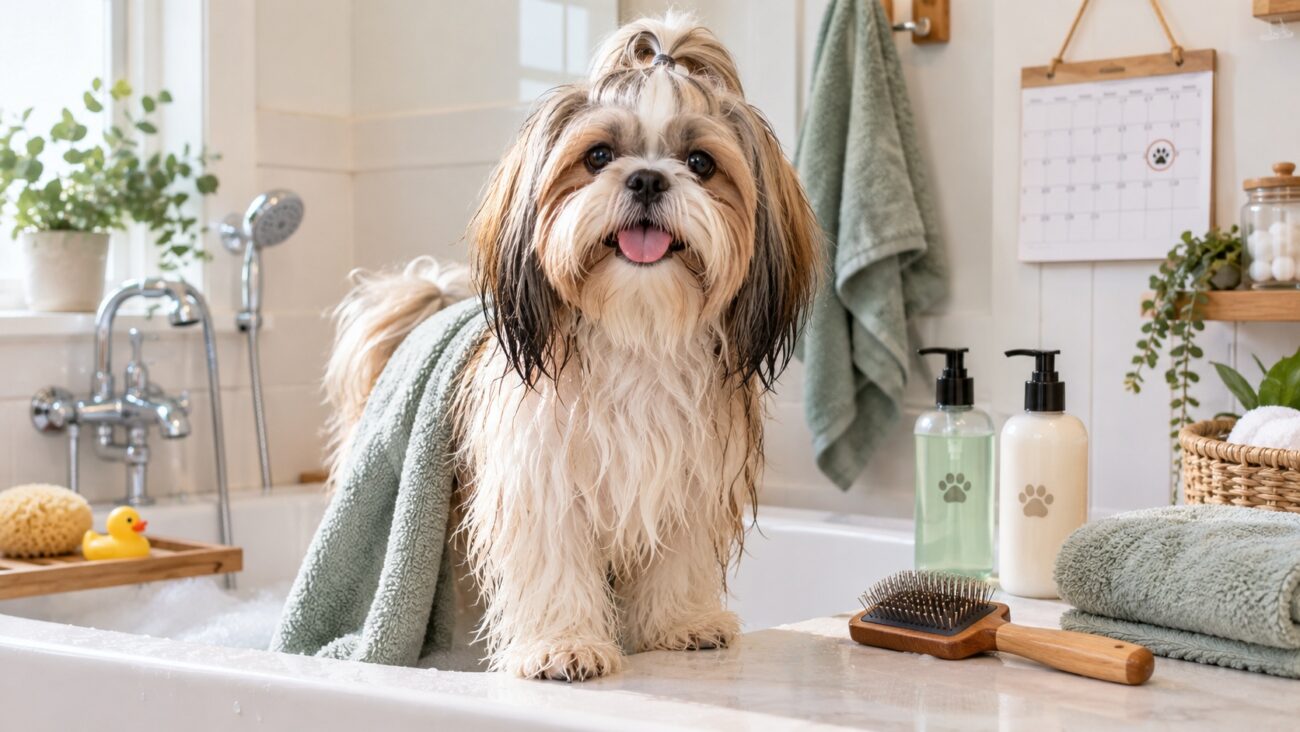
There isn’t one bath schedule for every long-haired dog. Coat type, activity, skin health, and grooming habits change the answer. Clean, well-brushed coats often need fewer urgent baths.
AKC notes that some medium-to-long coats need baths from weekly to four-to-six-week intervals. Proper coat care between baths remains important.
VCA also bases bath needs on coat type, lifestyle, age, and health. Dogs with skin disease can need a veterinarian-set schedule.
For many healthy long-coated dogs, four to six weeks gives a useful starting point. Adjust that plan when your dog’s coat or lifestyle demands it.
A muddy outdoor dog can need earlier washing. A clean indoor dog can often wait longer.
Don’t use odor alone when it keeps returning right after bathing. Persistent odor can signal trapped moisture or skin trouble.
You can also check how long a dog bath should take before planning a long-coat session.
Frequency matters, but bath technique still matters more than chasing a fixed calendar.
What Most People Get Wrong About Bathing a Long-Haired Dog
Three mistakes cause many long-coat bath problems. Owners often wet mats, scrub harder, or stop drying too soon. Each shortcut can leave the coat harder to manage afterward.
The better approach starts before the water runs. Remove manageable tangles first, wash with the coat, and finish the drying job.
📋 Common Myths, Corrected
- “A bath will loosen tight mats.” Water can make existing mats tighter.
- “More shampoo means cleaner hair.” Excess product makes full rinsing harder.
- “The coat feels dry, so it’s done.” Dense areas can stay damp underneath.
Another mistake is using human shampoo as a routine substitute. Dog-specific products better match canine skin and coat needs.
ASPCA recommends shampoo made for pets and warns that some human products irritate skin.
The final lesson is simple. Long coats need patient handling before, during, and after washing.
What Is the Best Long-Haired Dog Bath Routine?
Brush before water, wash with the coat, rinse fully, and dry every layer. That order prevents many avoidable tangles.
A calm routine also gets easier as your dog learns each step. Good coat care between baths makes the next wash faster.
Watch the skin as closely as the hair. Redness, sores, strong odor, or pain deserve veterinary advice.
One thing to do right now: check behind your dog’s ears for hidden tangles.
Frequently Asked Questions
How Often Should I Bathe My Long-Haired Dog?
Many healthy long-haired dogs can start around every four to six weeks. The right gap depends on coat type, activity, skin health, and brushing. Bathe sooner after heavy dirt or odor. Follow your veterinarian’s schedule when your dog uses medicated shampoo.
Should I Brush My Dog Before or After a Bath?
Brush a long-haired dog before the bath to remove loose fur and tangles. Water can tighten existing knots. You can brush again once the coat is almost or fully dry. Use gentle strokes and stop when a snag pulls hard against the skin.
Can You Bathe a Dog With Matted Fur?
Avoid soaking severe mats before they receive proper care. Water can tighten tangled fur and make removal harder. Work out light tangles before bathing. Tight mats near the skin need safer removal by an experienced groomer or veterinarian instead of household scissors.
What Shampoo Should I Use on a Long-Haired Dog?
Choose a shampoo made for dogs and suited to your dog’s skin. A conditioner can help some long coats stay easier to comb. Avoid routine use of human shampoo. Dogs with allergies, infections, or chronic skin trouble need product advice from their veterinarian.
How Do I Dry a Long-Haired Dog After a Bath?
Gently squeeze excess water before leaving the tub. Press towels into the coat instead of rubbing hard. Long and dense coats often need cool moving air afterward. Check behind the ears, under the legs, and near the skin before deciding the coat is dry.
Can I Use a Human Hair Dryer on My Dog?
You can use one with care if it has cool or low heat. Keep the dryer moving and never hold hot air against one spot. Avoid blowing into the face or ears. Stop when your dog shows strong fear, and finish with towels instead.
Why Does My Long-Haired Dog Smell After a Bath?
A long coat can smell after bathing when moisture remains near the skin. Shampoo residue or dirty bedding can also bring odor back fast. Persistent sour, musty, or foul odor deserves closer attention. See why dogs smell after a bath for more causes.


