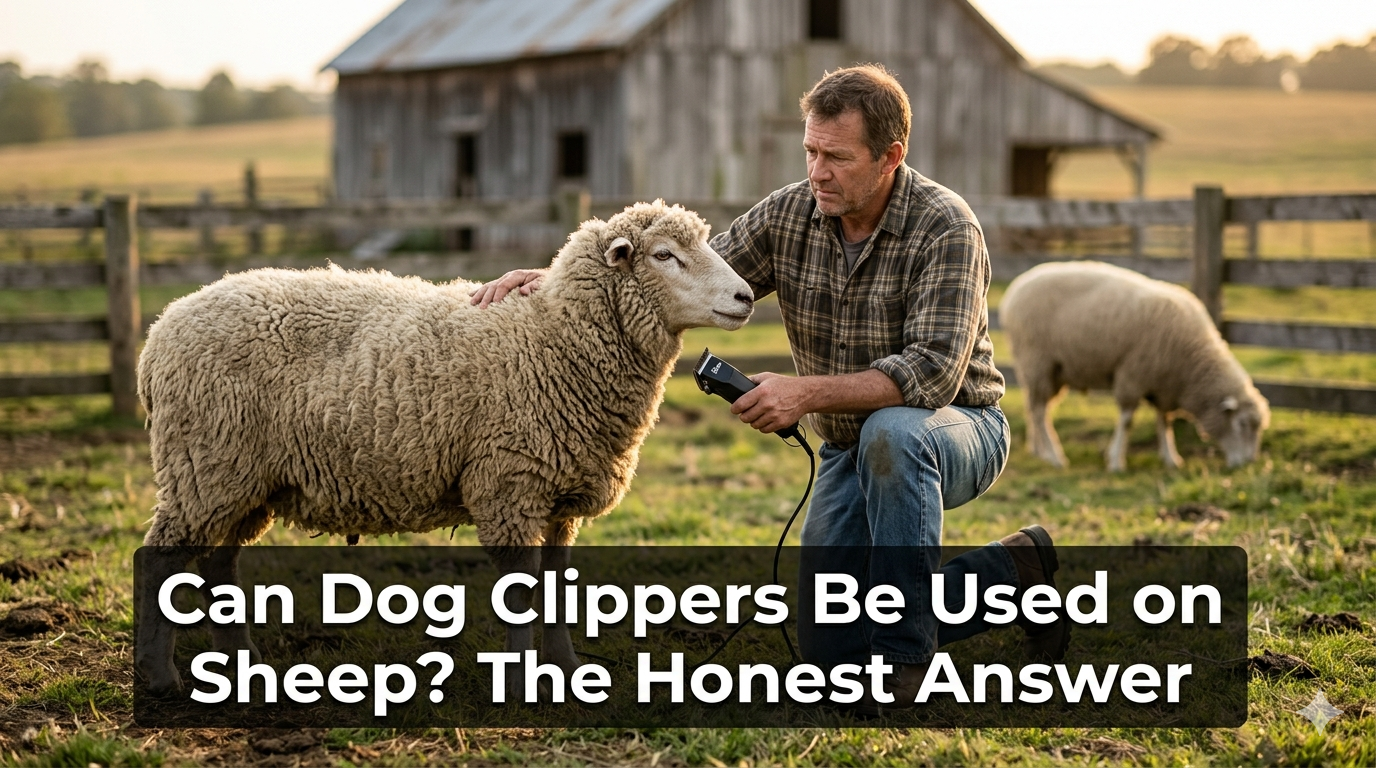
Can dog clippers be used on sheep? Yes — but only in limited situations. Dog clippers lack the motor power and blade design to shear a full fleece efficiently. They may work on small areas like the face and legs, or on short-wooled lambs. For full-body shearing, dedicated sheep shears are always the better choice.
You’ve got a sheep that needs shearing. And sitting right there on your shelf — a perfectly good set of dog clippers. It’s tempting, right?
I’m Ashraful, and I’ve spent years researching animal grooming tools for both pets and farm livestock. This question comes up more often than you’d think. And the answer isn’t a simple yes or no.
Here’s what you actually need to know — before you try it and burn out your clippers, or worse, stress your sheep.
- Dog clippers can work on sheep faces and legs — but not on full fleece bodies.
- Sheep wool is denser and greasier than dog fur. Most dog clippers can’t push through it.
- Using the wrong clippers can burn out the motor or leave the sheep with an uneven, painful clip.
- A skip-tooth blade (like the #7 skip-tooth) is the one upgrade that makes dog clippers more effective on sheep.
- Dedicated sheep shears are always the right tool for full-body shearing of wool breeds.
Why People Try Dog Clippers on Sheep in the First Place
Most small-flock owners don’t own a full set of sheep shears. Professional shearers aren’t always available. And dog clippers look pretty similar at first glance.
So you try it. And then you find out — pretty fast — that sheep wool is a totally different beast.
Dog fur is light, dry, and soft compared to sheep fleece. Even the thickest double-coated dog coat doesn’t come close to the density, grease, and length of raw wool. Dog clippers simply aren’t built for it.
What Actually Happens When You Use Dog Clippers on Sheep
Here’s the honest result. On a full-wool sheep body, standard dog clippers will struggle immediately. The motor strains. The blades clog with lanolin and fleece within minutes. You might get a quarter-inch off the surface — then nothing.
Forum users on BackYardHerds reported exactly this. One owner tried dog clippers on a ewe with a full fleece. The clippers barely made a dent — less than a quarter-inch of wool came off at a time. It took hand shears and scissors to finish the job.
The worst-case outcome is motor burnout. Dog clipper motors run at lower wattage than sheep shears. Pushing through dense, lanolin-coated wool can overheat and permanently damage the motor.
If your clipper blades feel too hot to hold in your hand, stop immediately. Overheated blades lose their temper — meaning the steel softens and dulls fast. Hot blades also burn your sheep’s skin. Always cool blades between passes by switching to a spare set or using blade cooling spray.
Where Dog Clippers CAN Work on Sheep
Here’s where it gets interesting. Dog clippers aren’t totally useless on sheep. They do work — in specific situations.
Faces and heads: The face of a wool sheep is often too sensitive for heavy sheep shears. The smaller size of a dog clipper actually helps here. You get more control around the eyes, ears, and nose.
Legs and feet: Same logic applies. Dog clippers are more precise. For trimming the lower legs of show lambs, they work fine.
Young lambs and light-wooled breeds: A lamb with a short, first-year coat is much easier to clip than a mature ewe with a full fleece. Dog clippers handle lighter wool more successfully.
Crutching and belly trimming: Light trimming around the rear end (called crutching) to keep the area clean is manageable with dog clippers if the wool isn’t too long.
If you’re going to use dog clippers on sheep, always use a skip-tooth blade. A #7 skip-tooth is the most recommended size. Skip-tooth blades feed coarse fiber into the cutting teeth more effectively. Standard finish-cut blades clog almost instantly on wool.
The Real Difference: Dog Clippers vs. Sheep Shears
Let’s compare the two directly. This table breaks down the key differences you need to know.
| Feature | Dog Clippers | Sheep Shears |
|---|---|---|
| Motor Power | Low – typically under 100W | High – 200W to 500W+ |
| Blade Design | Narrow, fine-tooth for dog fur | Wide, 4-point triangle cutter for wool |
| Comb Type | Plastic, multiple size options | Metal, 9–20+ tooth options |
| Blade Speed | Lower – suited for fine coats | Up to 2,500–4,400 strokes per minute |
| Best Use | Dog fur, faces, lamb legs | Full-body shearing of wool breeds |
| Price Range | $15 to $150+ | $100 to $400+ |
The motor is the biggest difference. Sheep shears use 200W to 500W motors built for continuous heavy use. Dog clippers run on much weaker motors — fine for soft fur, but no match for dense wool.
The blade shape matters just as much. Sheep shear cutters have four triangle-shaped points. They’re designed to grab and cut through thick, lanolin-coated fibers. Dog clipper blades use 10 to 15 small horizontal teeth — perfect for fine fur, but they clog fast on wool.
Dog clippers work for trimming sheep faces, legs, and light areas. They fail on full-body fleece shearing. The motor is too weak, and the blades clog with wool quickly. If you must use dog clippers, choose a skip-tooth blade and work in small sections. For anything more than spot trimming, invest in real sheep shears.
Which Dog Clippers Work Best If You Have No Choice?
If you’re in a pinch and dog clippers are all you have, some models handle sheep better than others. Heavy-duty professional-grade clippers — like the Andis AGC2 or Oster A5 — have stronger motors and detachable blade systems.
The Andis brand (an American company with decades in animal grooming) and Oster are the two most recommended names in professional grooming communities. Both brands make detachable blade clippers that accept skip-tooth blades — the key upgrade for working on wool.
Wahl is another trusted brand. Their KM-series clippers are popular for thick-coated breeds and come close to handling light sheep wool.
But here’s the truth. Even the best dog clippers are not purpose-built for sheep. They’ll slow you down, heat up faster, and still struggle on a mature ewe’s full coat.
Andis 23280 ProClip Super 2-Speed Detachable Blade Clipper, Professional Animal/Dog Grooming, Burgundy, AGC2
If you’re using dog clippers on sheep faces, legs, or lambs, the Andis ProClip AGC2 is the best option — its powerful rotary motor and detachable blade system accept skip-tooth blades that can handle light wool far better than standard dog clippers.
The Skip-Tooth Blade: The One Game-Changer
If there’s one upgrade that makes the biggest difference when using dog clippers on sheep, it’s the skip-tooth blade. This is the most repeated tip from real farmers and groomers who’ve tried it.
A skip-tooth blade has alternating long and short teeth. This design feeds coarse, dense, or matted fiber into the cutting path more effectively. Standard finish blades have teeth the same length — they grab fine fur well but choke on wool.
The #7 skip-tooth is the most commonly recommended size. One BackYardHerds member reported success using Andis clippers with a 7 skip-tooth blade on alpaca crias (young alpacas) — animals with fiber very similar to sheep wool in density.
Always oil your blades before and during use. Run the clipper for 30 seconds, apply two or three drops of clipper oil to the blade, then continue. This reduces heat, reduces friction, and keeps blades cutting cleanly. Hot, dry blades are the top reason dog clippers fail fast on sheep.
How to Use Dog Clippers on Sheep: Step-by-Step
If you’ve decided to try it, here’s how to do it properly and safely.
- Wash and dry the sheep first. Clean wool cuts much better. Dirty, lanolin-heavy fleece will clog blades instantly.
- Install a skip-tooth blade (#7 skip-tooth recommended). Do not use a standard finish blade on wool.
- Oil the blade before you start. Apply two to three drops of clipper oil to the blade.
- Work in small passes. Don’t try to take too much in one sweep. Short, overlapping passes work better on wool.
- Monitor blade temperature constantly. If you can’t hold the blade in your palm, it’s too hot. Switch to a spare blade or let it cool.
- Take breaks every 10 to 15 minutes. Give the motor and blades time to cool down. Dog clipper motors aren’t built for long continuous runs on dense material.
- Focus on the face, legs, and belly areas — leave the main body for proper sheep shears if possible.
What About Using Sheep Shears on Dogs?
The reverse question comes up too. The short answer: sheep shears are generally not safe for dogs.
Sheep shears are far more powerful and have wider blades designed to cut through inch-thick fleece. On a dog’s thin, sensitive skin, that power becomes a hazard. The blades can overheat quickly, and the wider cutting head leaves less room for precision.
If your dog has an unusually thick or woolly coat — like a Poodle, Labradoodle, or Komondor — a veterinarian or professional groomer should handle the trim. Learn more about coat care for unusual breeds from the American Kennel Club’s breed guide.
When Should You Just Hire a Professional Shearer?
Here’s the honest truth. If you have more than two or three sheep, a professional shearer is always worth the cost. In the US, shearing rates typically run between $5 and $20 per sheep as of 2024.
A skilled shearer with proper electric sheep shears can shear a mature ewe in under five minutes. With dog clippers? That same ewe could take an hour or more — with worse results.
The Purdue University Extension Service recommends shearing wool sheep at least once per year — and notes that proper shearing equipment is critical for both animal welfare and wool quality.
For hobby farmers with just one or two sheep, investing in a basic set of electric sheep shears is the smarter long-term move. Entry-level sheep shears from brands like Oster or Andis start around $150 and pay for themselves quickly.
The bottom line: dog clippers are a short-term workaround, not a solution. If sheep are part of your regular farm life, proper sheep shearing equipment will save you time, money, and stress every single year.
The Best Blades for Sheep Shearing: A Quick Comparison
If you’re choosing between blades for sheep work — whether on dog clippers or dedicated sheep shears — here’s what the teeth count means.
| Blade / Comb Type | Best For | Notes |
|---|---|---|
| #7 Skip-Tooth (dog clipper) | Sheep faces, legs, light wool | Best dog-clipper choice for sheep |
| 9-Tooth Curved Comb (sheep shear) | Alpacas, llamas, fine fiber | Gentler on sensitive skin |
| 13-Tooth Comb (sheep shear) | Standard annual shearing | Best all-purpose sheep comb |
| 20-Tooth Comb (sheep shear) | Show lambs, fine finish work | Slick, close cut for showing |
Conclusion
Dog clippers can work on sheep — but only in limited situations, with the right blade, and with realistic expectations. They’re a solid option for faces, legs, and spot trimming. They’re not a substitute for real sheep shears when it comes to full-body shearing.
If you own sheep regularly, the investment in dedicated sheep shearing equipment is worth every dollar. Your sheep will thank you. Your clippers will last longer too.
I’m Ashraful, and if this helped you make a smarter grooming decision today — that’s exactly what I’m here for. Check your blades, cool them often, and never rush a sheep that’s already nervous.
Frequently Asked Questions
Can you use regular dog clippers to shear a sheep?
You can try, but dog clippers lack the motor power and blade design to shear a full wool coat efficiently. They work best on sheep faces and legs, or on lambs with short fleece. For full-body shearing on wool breeds, dedicated sheep shears are the right tool.
What type of blade works best when using dog clippers on sheep?
A skip-tooth blade — specifically the #7 skip-tooth — works best. Skip-tooth blades have alternating tooth lengths that feed coarse, dense fiber into the cutting path more effectively than standard finish-cut blades, which clog quickly on wool.
Will dog clippers burn out if used on sheep?
Yes, this is a real risk. Dog clipper motors run at lower wattage than sheep shears. Pushing through dense, lanolin-coated wool can overheat the motor and cause permanent damage. Always take breaks, cool the blades, and don’t push through resistance.
Can you use Andis clippers on sheep?
Professional Andis clippers — like the AGC2 — have stronger motors and accept detachable skip-tooth blades that can handle light sheep wool on faces and legs. They’re among the best dog clippers for occasional sheep work, though they still aren’t a full replacement for dedicated sheep shears on body fleece.
How often do sheep need to be sheared?
Most wool breeds need shearing at least once per year, typically in spring before warm weather. Some breeds with fast-growing fleece may need shearing twice a year. Unsheared wool becomes matted, hot, and can trap moisture and parasites against the skin.
What’s the difference between sheep shears and dog clippers?
Sheep shears use a 200W to 500W motor, wide metal combs, and four-point triangle cutters designed for dense wool. Dog clippers use weaker motors, narrow plastic combs, and fine-tooth blades suited for soft fur. The blade design and motor power are the two biggest differences.
Can you use dog clippers on goats or alpacas?
Dog clippers perform better on goats and alpacas than on wool sheep, because goat hair and alpaca fiber are finer and less dense than sheep fleece. For alpacas, an Andis clipper with a #7 skip-tooth blade is commonly recommended by hobbyist farmers. Full shearing of large flocks still calls for dedicated livestock clippers.