
Quick Answer
Spring shedding in dogs is a normal seasonal coat change. Many dogs, especially double-coated breeds, shed their dense winter undercoat as daylight increases and warmer weather approaches. Gentle, frequent brushing helps manage loose hair, while bathing when needed and maintaining healthy skin support the process. Bald patches, inflamed skin, or persistent itching are not typical signs of ordinary seasonal shedding.
If your dog suddenly leaves fur across the sofa, carpets, and your clothes, spring shedding may be responsible. A dog that seemed manageable to groom during winter can start releasing handfuls of fluffy hair as the seasons change.
The good news is that seasonal shedding is usually natural. The challenge is knowing what to expect, which grooming methods actually help, and when hair loss deserves closer attention.
Why Do Dogs Shed More in Spring?
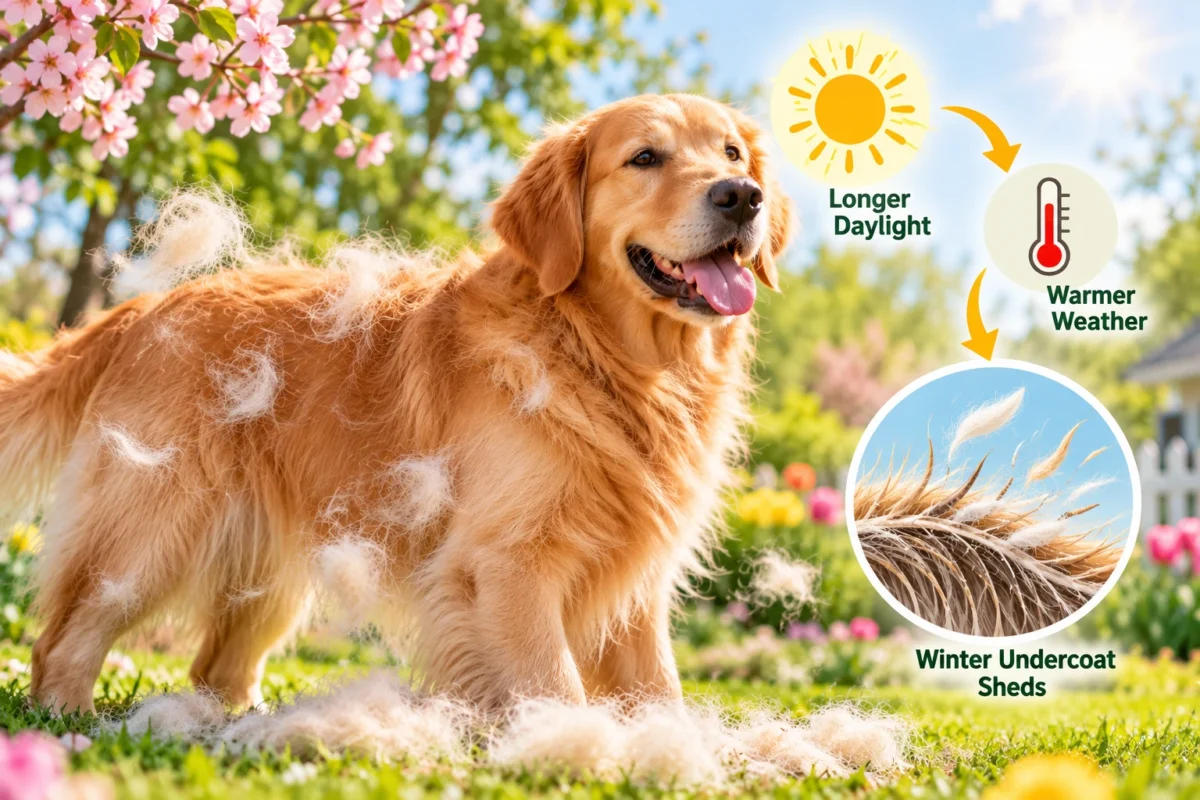
Dogs often shed more in spring because their hair growth cycles respond to seasonal changes, particularly changing daylight. Dogs with dense winter undercoats gradually release older hairs as their coats transition toward warmer-weather conditions.
Dog hair grows through active growth, transitional, and resting phases. Eventually, older hairs loosen and fall out while the coat continues renewing itself. During seasonal transitions, large amounts of undercoat may enter the shedding phase around the same time.
The American Animal Hospital Association’s explanation of seasonal shedding describes how many pets shed more heavily during spring and fall.
How Does Daylight Affect Shedding?
Changing day length helps regulate coat cycles in many breeds. As spring approaches and daylight increases, seasonal hair turnover may become more noticeable.
Temperature can influence coat changes, but it is not the only factor. That helps explain why a dog may start shedding before the first genuinely hot days arrive.
Dogs living indoors under artificial lighting and relatively stable temperatures may shed more consistently throughout the year instead of having one clearly defined spring peak.
What Does Blowing the Coat Mean?
Blowing the coat refers to a period when a dog releases a substantial amount of loose undercoat. It is especially noticeable in breeds with thick double coats.
You may see soft tufts protruding from the hindquarters, shoulders, or sides. Loose fur can come away easily during brushing or gentle handling.
The important distinction is that normal coat blowing should leave healthy-looking skin and a remaining coat without abnormal bald patches.
When Does Spring Shedding Start and How Long Does It Last?
Spring shedding commonly becomes noticeable during the transition from late winter into spring, but there is no universal starting date or exact duration.
In temperate Northern Hemisphere climates, increased shedding may appear around March, April, or May. In the Southern Hemisphere, the corresponding seasonal change occurs around September through November.
Actual timing depends on climate, daylight exposure, breed, and the dog’s individual coat cycle. Dogs living in tropical or consistently warm environments may not follow a dramatic spring shedding pattern.
For some dogs, the most obvious shedding happens over several weeks. Others lose undercoat gradually across a longer period.
Instead of relying on a calendar deadline, watch how much loose fur appears during grooming and whether the coat is gradually becoming easier to maintain.
Key Insight
Spring shedding is not a fixed-length event. A healthy dog can have a longer or less predictable shedding period, especially when indoor living, climate, or coat type changes the seasonal pattern.
Which Dogs Shed the Most During Spring?
Double-coated dogs often experience the most visible spring shedding because they carry a soft insulating undercoat beneath longer or coarser protective guard hairs.
Breeds commonly associated with noticeable seasonal shedding include:
- Siberian Huskies: Dense undercoats can release large amounts of soft fur during seasonal coat changes.
- German Shepherds: Often shed throughout the year, with more intense periods during coat transitions.
- Golden Retrievers: Their thick double coats require attention to loose undercoat and tangles.
- Labrador Retrievers: Short hair does not mean low shedding; their dense coats can release substantial amounts of fur.
- Alaskan Malamutes and Samoyeds: Heavy undercoats make seasonal coat management particularly important.
- Australian Shepherds: Medium-length double coats can shed heavily and collect loose hair beneath the outer coat.
Breeds with continuously growing hair, such as many Poodles, generally show less obvious seasonal shedding. However, they still need regular grooming to prevent tangles and mats.
For a detailed procedure suited to heavy undercoats, follow our guide on how to deshed a double-coated dog safely.
How Can You Manage Spring Shedding in Dogs?
The most effective approach is to remove loose hair safely before it becomes trapped in the coat or spreads around your home. Consistent brushing matters more than trying to remove every loose hair in one session.
Step 1: Check the Coat and Skin
Before grooming, separate the fur with your fingers and look for redness, sores, fleas, dandruff, or tightly packed mats.
Notice whether loose hair comes away from an otherwise healthy coat or whether the shedding leaves visibly thin or bare areas.
If the skin is irritated or painful, avoid intensive brushing until the problem has been evaluated.
Step 2: Choose the Right Grooming Tool
Use a brush appropriate for your dog’s coat rather than automatically choosing the strongest deshedding tool available.
- Short, smooth coat: A soft bristle brush or grooming mitt can collect loose surface hair.
- Short, dense double coat: A suitable slicker or gentle undercoat tool may help remove loosened fur.
- Long double coat: A pin or slicker brush, followed by an appropriately designed undercoat rake, can help work through the layers.
- Curly or mat-prone coat: A slicker brush and comb help detect tangles rather than simply removing shed hair.
Choose tools that glide without scratching the skin. Sharp, damaged, or unsuitable grooming equipment can cause unnecessary irritation.
Step 3: Brush in Small Sections
Start where your dog is comfortable being touched. Work through the coat in manageable sections, following the direction of natural hair growth.
Use gentle strokes and support longer fur with your free hand when needed. Avoid repeatedly scraping the same area or forcing a tool through stubborn tangles.
Check common undercoat collection areas, including the hindquarters, chest, shoulders, and behind the legs.
Stop if the skin becomes red, your dog shows discomfort, or the brush begins pulling instead of lifting loose fur.
Step 4: Increase Brushing Frequency Gradually
During heavy spring shedding, some dogs benefit from short daily brushing sessions. Others need only a few sessions each week.
Daily gentle maintenance does not mean daily intensive deshedding with a rake or blade-style tool. Aggressive, repeated tool use can irritate skin and damage healthy coat hairs.
Our guide on how often to deshed a dog explains how to adjust grooming intensity for different coats.
Step 5: Bathe Only When Needed
Bathing can help release loosened fur, particularly when combined with brushing before and after the coat is fully dry. However, frequent shampooing is not necessary simply because a dog is shedding.
For a bath, use comfortably lukewarm water and dog-specific shampoo. Rinse thoroughly, then dry the coat carefully, paying particular attention to dense undercoats where moisture can remain trapped.
If your dog needs a complete bathing procedure, follow our safe dog bathing guide.
Step 6: Keep the Routine Comfortable
Offer breaks, use a nonslip grooming surface, and reward calm behavior. Short, comfortable sessions are generally more practical than attempting a prolonged grooming session with a restless dog.
For severe matting or a very dense coat, an experienced professional groomer may be better equipped to help without damaging the skin.
Should You Shave a Dog to Stop Spring Shedding?
Generally, no. Shaving a double-coated dog is not recommended as a routine solution for spring shedding.
The outer coat and undercoat perform different protective functions. Removing them unnecessarily can interfere with coat protection and may affect normal regrowth.
The American Kennel Club’s double-coat grooming guidance explains why these coat layers need appropriate maintenance.
Shaving also does not stop hair follicles from completing their normal shedding cycles. It simply changes the length of the hairs being released.
Medical procedures or severe coat problems may require clipping under professional guidance, but ordinary seasonal shedding is better managed through brushing and appropriate grooming.
How Do You Know Whether Spring Shedding Is Normal?
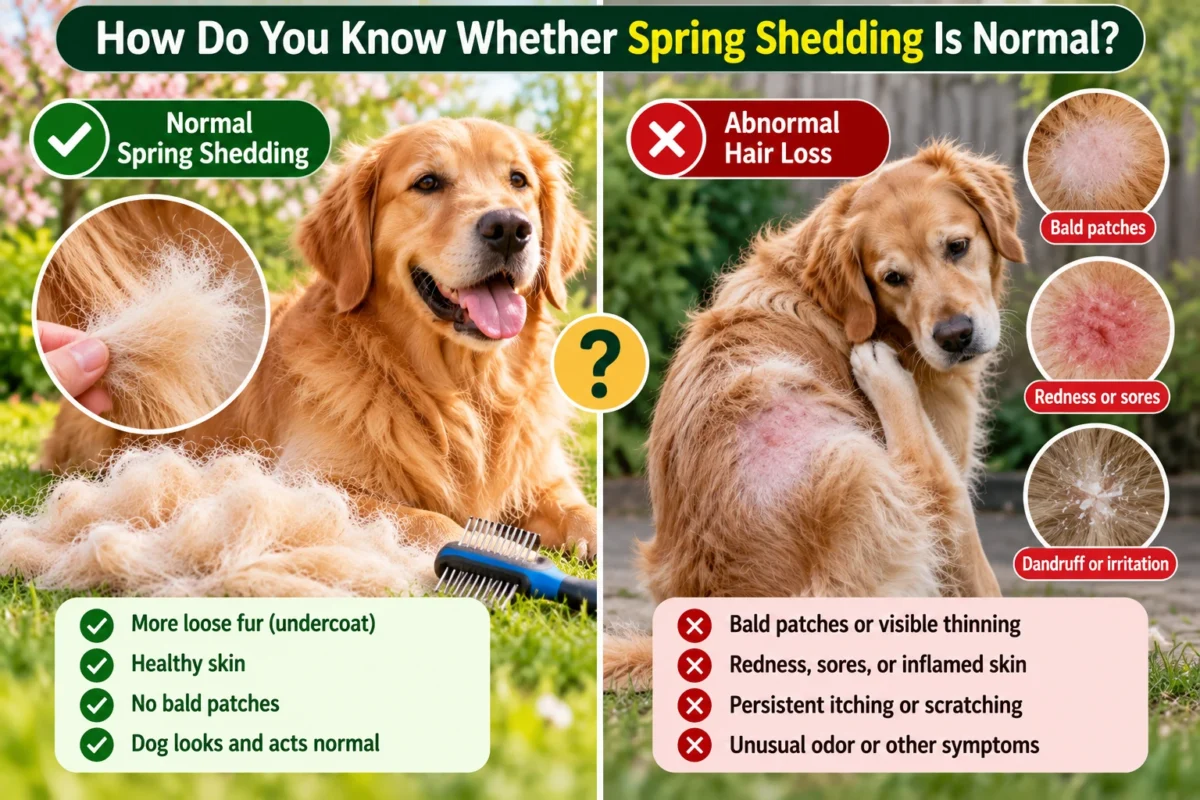
Normal spring shedding usually involves increased loose hair while the remaining coat and skin continue looking healthy. Abnormal hair loss may leave visibly thin areas or occur alongside inflammation and other symptoms.
Use the following comparison to decide what deserves attention.
| What You Notice | What It May Mean | Next Step |
|---|---|---|
| Loose undercoat with healthy skin | Typical seasonal shedding | Continue gentle grooming |
| Soft tufts pulling away easily | Possible coat blowing | Remove loose fur without pulling attached hair |
| Bald patches or marked thinning | Possible abnormal hair loss | Arrange a veterinary assessment |
| Redness, sores, strong odor, or persistent itching | Possible skin disease or irritation | Seek veterinary advice |
Seasonal timing alone cannot prove that hair loss is harmless. A dog can develop allergies, parasites, or another skin condition during spring while also experiencing ordinary shedding.
When Should You Contact a Veterinarian?
Contact your veterinarian when shedding is accompanied by persistent itching, bald patches, inflamed skin, sores, unusual odor, or a sudden unexplained change in coat condition.
Other concerning changes include lethargy, unexplained weight changes, or a coat becoming unusually brittle and dull.
According to VCA Animal Hospitals’ guidance on healthy skin and coats, parasites, allergies, nutritional problems, and some internal illnesses can affect coat condition and shedding.
A veterinarian can examine the skin and determine whether additional testing or treatment is appropriate. Avoid using harsh shampoos, medicated treatments, or supplements to address unexplained hair loss without understanding the cause.
Warning
Do not assume sudden bald spots, skin inflammation, or intense scratching are normal simply because the symptoms begin in spring. These changes warrant veterinary attention rather than more aggressive deshedding.
How Can You Reduce Dog Hair Around Your Home?
You cannot eliminate natural seasonal shedding, but you can reduce the amount of loose hair that accumulates indoors.
- Brush in an easy-to-clean area: A designated grooming spot makes fur easier to collect.
- Vacuum regularly: Focus on carpets, upholstered furniture, and places where your dog rests.
- Wash pet bedding: Clean bedding according to its care instructions to remove trapped fur and debris.
- Use washable furniture covers: These make frequent cleaning less demanding during heavy shedding.
- Maintain your dog’s diet: Feed a complete, balanced diet appropriate for your dog’s needs to support normal skin and hair growth.
Healthy nutrition supports coat condition, but no ordinary supplement or food can completely prevent a normal seasonal coat change.
Keeping a consistent grooming routine usually makes household maintenance easier than trying to manage all the loose fur after it has collected on furniture.
Practical Tip
During the heaviest shedding period, use brief grooming sessions to collect loose fur before it spreads indoors. Reduce the brushing pressure or frequency if your dog’s skin becomes sensitive.
Related Grooming Tool
Dog Undercoat Rake
A coat-appropriate undercoat rake can help lift loose undercoat during spring shedding. Select the correct tooth length and design for your dog’s coat, and use gentle pressure.
As an Amazon Associate, we may earn from qualifying purchases.
Frequently Asked Questions
Do Puppies Shed More During Their First Spring?
Some puppies experience noticeable coat changes as they replace their puppy fur with an adult coat. This may overlap with spring shedding, but the timing varies by breed and individual development.
Can Dogs Shed Heavily Even If They Live Indoors?
Yes. Indoor dogs still experience hair growth and shedding. Artificial lighting, indoor temperatures, and individual coat characteristics can make shedding more consistent throughout the year.
Is It Normal for Dog Fur to Come Out in Clumps During Spring?
Loose, fluffy undercoat can come away in tufts during a normal seasonal coat blow. However, clumps that leave bare skin, sores, or obvious thinning require veterinary evaluation.
Does Spring Shedding Happen in Warm Climates?
Yes, but patterns vary. Dogs living in consistently warm climates may shed throughout the year rather than experiencing a sharply defined spring coat change.
Can Spring Allergies Make a Dog Shed More?
Allergies may cause itching, inflammation, and hair loss, especially when dogs scratch or lick affected areas. This differs from ordinary coat turnover and may require veterinary treatment.
Will a Deshedding Shampoo Stop Spring Shedding?
No shampoo stops the natural shedding cycle. Appropriate bathing can help release loose fur, but regular coat maintenance and healthy skin care remain necessary.
Final Thoughts
Spring shedding in dogs is usually a natural part of seasonal coat renewal, especially for breeds with thick undercoats. Gentle brushing, appropriate tools, occasional bathing, and regular skin checks make this period easier to manage.
Focus on keeping your dog comfortable and maintaining a healthy coat rather than trying to stop shedding completely. If hair loss becomes patchy or is accompanied by skin problems, arrange a veterinary examination.


