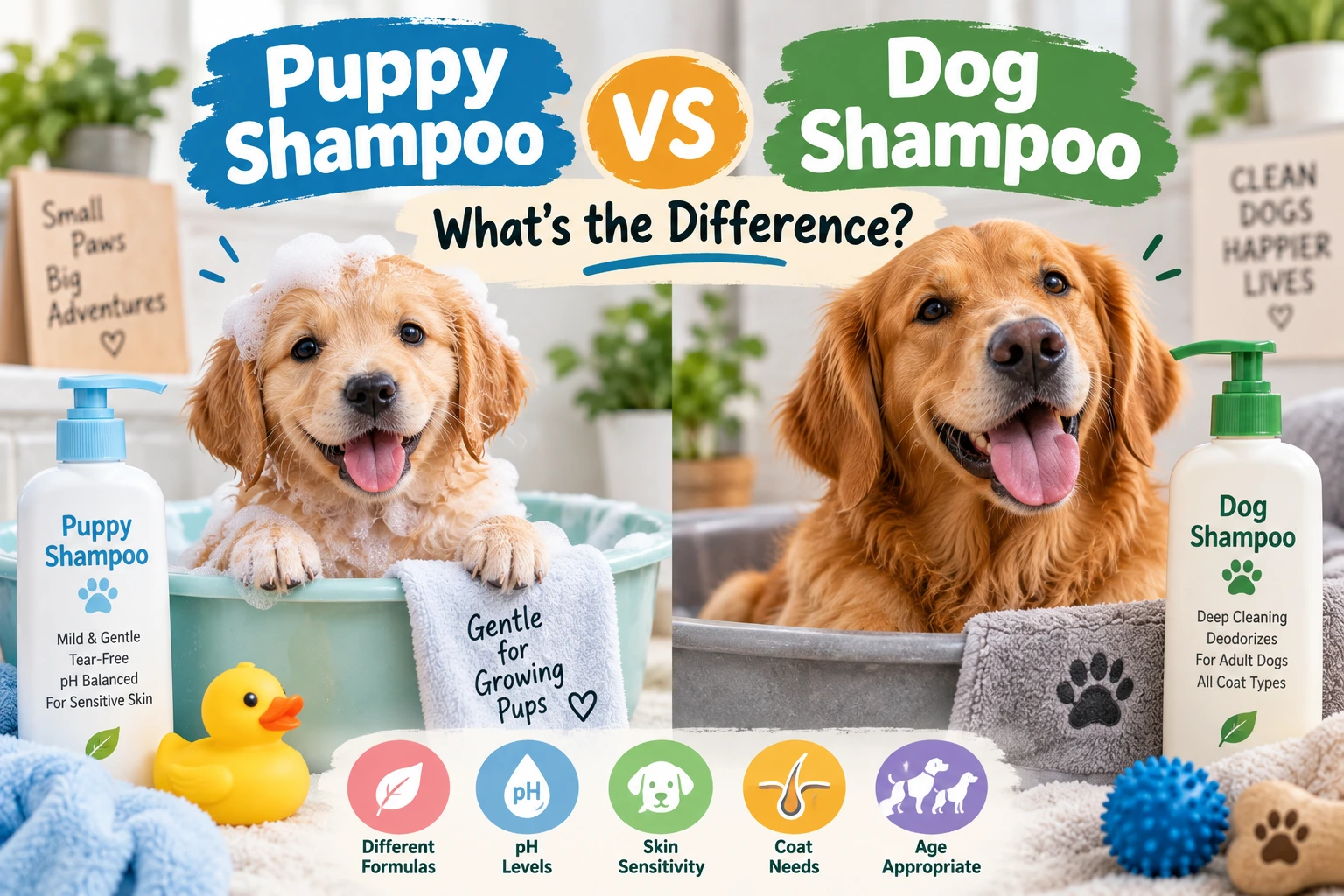
Quick Answer
Puppy shampoo is usually the safer default for young dogs because it focuses on gentle cleansing and sensitive skin. Regular dog shampoo can also work when its label says it is suitable for puppies or all life stages. For routine baths, age suitability and skin needs matter more than the word “puppy” on the bottle.
The real difference between puppy shampoo and dog shampoo:
- Puppy formulas usually prioritize mild cleansing and sensitive skin.
- Regular dog shampoos offer more coat-specific and medicated choices.
- Always check the product’s age directions before bathing a puppy.
⚡ Quick Verdict — Puppy Shampoo vs Dog Shampoo
PUPPY SHAMPOO
✅ Best for:
Young dogs needing a mild shampoo for routine baths and sensitive skin.
REGULAR DOG SHAMPOO
✅ Best for:
Adult dogs or puppies when the specific formula is labeled puppy-safe.
| Category | Puppy | Dog |
|---|---|---|
| Young Puppies | 🏆 | — |
| One Shampoo for Multiple Dogs | ❌ | ✅ |
| Sensitive Puppy Skin | ✅ | ❌ |
| Specialized Coat Care | ❌ | ✅ |
| Medicated Options | ❌ | ✅ |
Bottom line: Puppy shampoo is the simpler choice for routine puppy baths because gentleness comes first. Regular dog shampoo makes sense when its label confirms puppy suitability or your dog needs specialized care.
- Puppy shampoo is designed with young, sensitive skin in mind.
- Some regular dog shampoos are also labeled safe for puppies.
- Dog shampoo offers more formulas for specific coat and skin needs.
- Human shampoo should not replace dog shampoo for routine bathing.
- The label and your puppy’s skin needs matter most.
You already have dog shampoo beside the bathtub. Then your new puppy rolls through something dirty. Do you use the bottle you own or buy puppy shampoo?
That question sounds simple. Yet “dog shampoo” covers dozens of different formulas. Some are mild enough for young dogs. Others target adult coats, fleas, infections, or oily skin.
I’m Ashraful, and my goal is to make this choice simple. Puppy shampoo is usually the easiest starting point. However, the label matters more than the marketing name.
This guide explains where both types differ. You’ll also learn when regular dog shampoo can work for a puppy.
What Is Puppy Shampoo and Who Should Use It?
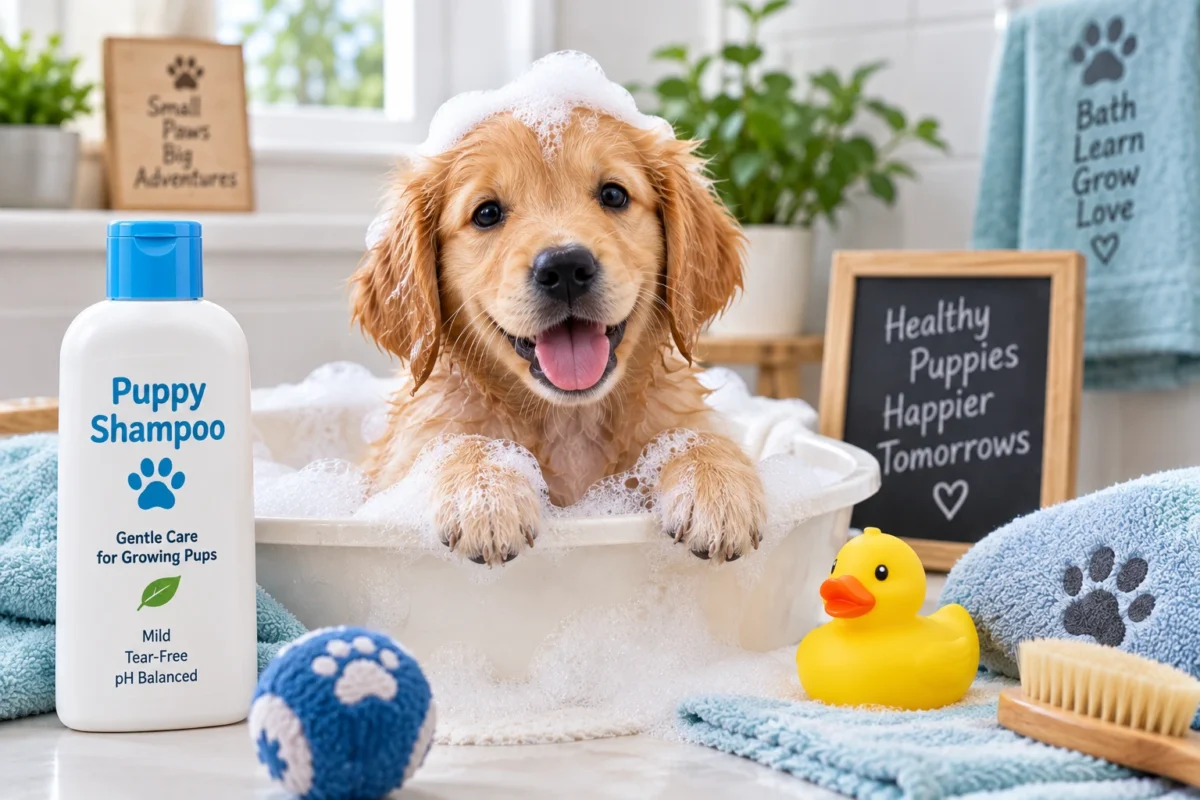
Primarily, puppy shampoo is a mild dog cleanser made with young dogs in mind. Puppy formulas often focus on gentle cleansing, hydration, and sensitive skin. Many products also use tearless or soap-free formulas.
Young dogs don’t need a powerful cleanser for most routine baths. They usually need enough cleaning to remove dirt without leaving their skin dry.
Veterinary guidance supports choosing pet-formulated, soap-free products for puppies. VCA recommends considering each puppy’s individual skin needs when choosing shampoo.
Puppy shampoo can therefore be a sensible choice for a healthy puppy’s regular bath. It removes one important question from the buying process: whether the product targets young dogs.
However, “puppy” on the label doesn’t make every formula identical. Read the ingredient list, directions, and minimum-age information before use.
What Are the Main Benefits of Puppy Shampoo?
Mainly, puppy shampoo makes gentle routine cleaning easier. Its biggest benefit is a formula designed around the needs of young dogs rather than specialized adult coat problems.
- Gentle cleansing: Mild formulas can clean without aggressive degreasing.
- Sensitive-skin focus: Many puppy products emphasize hydration and comfort.
- Tearless choices: Many brands offer formulas designed for careful puppy bathing.
- Simple selection: Age-specific labeling reduces confusion for new owners.
- Routine use: Puppy shampoo suits normal dirt and everyday puppy odors.
A puppy formula still needs careful use. Even tearless shampoo shouldn’t be poured around the eyes.
What Are the Downsides of Puppy Shampoo?
Essentially, puppy shampoo has fewer specialized options. Its mild approach works well for routine cleaning, but it may not solve an adult dog’s specific coat or skin problem.
A household with puppies and adults may also prefer one all-life-stage formula. Buying separate bottles isn’t always necessary when one suitable shampoo meets everyone’s needs.
Puppy shampoo also isn’t treatment for skin disease. Persistent redness, itching, hair loss, or sores need veterinary attention.
What Is Regular Dog Shampoo?
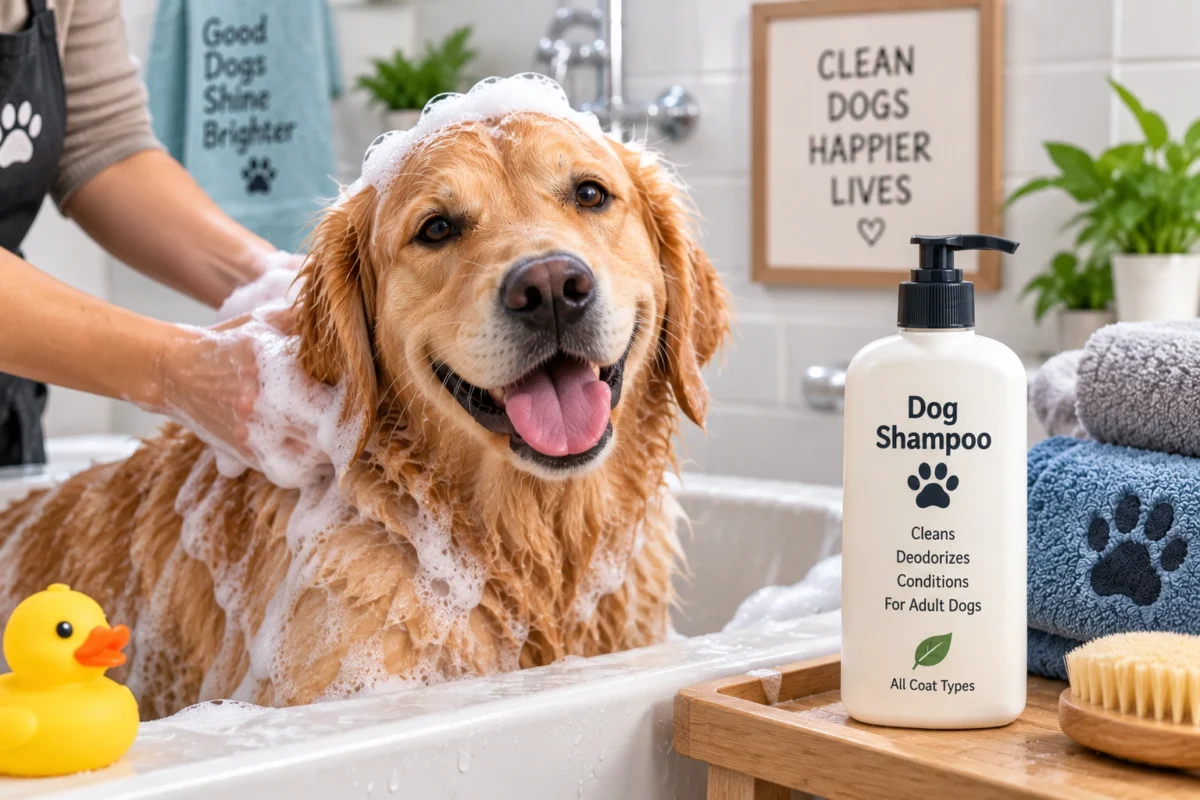
In short, regular dog shampoo is the broad category of cleansers made for canine skin and coats. It includes simple everyday shampoos, sensitive-skin products, deodorizing formulas, coat-specific shampoos, and medicated products.
This variety is its biggest advantage. An adult dog with a thick double coat has different grooming needs from a short-haired puppy.
Regular dog shampoo doesn’t automatically mean “unsafe for puppies.” Some products are formulated for all life stages. The individual label decides whether a specific product fits your puppy.
That’s an important distinction. Comparing only the words “puppy” and “dog” can make the choice seem more complicated than it is.
What Are the Benefits of Regular Dog Shampoo?
Mainly, regular dog shampoo offers more specialized choices. Adult dogs vary widely in coat type, activity, oil production, and skin needs.
- Everyday moisturizing shampoos
- Sensitive-skin formulas
- Long-coat and double-coat products
- Deodorizing shampoos
- Hypoallergenic formulas
- Medicated shampoos
- Antifungal and antibacterial products
- Flea-and-tick shampoos
That range makes regular dog shampoo more flexible. However, specialized products require more careful selection when the dog is young.
What Are the Downsides of Regular Dog Shampoo for Puppies?
Primarily, the problem is uncertainty. A bottle labeled simply “dog shampoo” may not tell you enough from the front label.
Some products contain stronger cleansing ingredients or active ingredients intended for specific problems. Flea-and-tick products can also carry minimum-age restrictions.
Never assume that a product is suitable because both puppies and adults are dogs. Check the manufacturer’s age directions before use.
Puppy Shampoo vs Dog Shampoo: What Are the Main Differences?
Essentially, puppy shampoo prioritizes mild routine care, while dog shampoo covers a wider range of grooming needs. The categories overlap because some regular dog shampoos are gentle and suitable for all life stages.
| Feature | Puppy Shampoo | Regular Dog Shampoo |
|---|---|---|
| Main User | Young dogs | Mostly adult dogs or all life stages |
| Main Goal | Gentle routine cleaning | Routine or specialized cleaning |
| Sensitive Skin | Often emphasized | Depends on formula |
| Tearless Options | Common | Available in some products |
| Coat-Specific Options | Fewer | Many |
| Medicated Options | Limited | Wide range |
| Age Check Needed | Yes | Especially important for puppies |
The most important point is simple. Judge the actual formula rather than the product category alone.
Which Is Gentler: Puppy Shampoo or Dog Shampoo?
Primarily, puppy shampoo is designed to make gentleness the priority. That makes it the straightforward option when you need a basic shampoo for a healthy young dog.
VCA recommends looking for dermatologist-formulated, soap-free pet shampoo for puppies. Soap can remove dirt but may also affect the puppy’s natural skin barrier.
Regular dog shampoo can be equally gentle when it uses a mild, moisturizing formula. Sensitive-skin and hypoallergenic dog shampoos often focus on similar needs.
This means the front label isn’t enough. Look for a formula suited to canine skin and your puppy’s age.
For more guidance on early bathing, read the puppy first bath guide.
Can Puppies Use Regular Dog Shampoo?
Yes, some puppies can use regular dog shampoo when the specific product is labeled for their age or all life stages. Don’t treat every regular dog shampoo as interchangeable.
Start with the product label. Look for the species, minimum age, directions, warnings, and intended purpose.
A simple moisturizing dog shampoo may be appropriate for many dogs. A flea shampoo or medicated formula needs much more care.
Important: Don’t use a specialized adult dog shampoo on a puppy simply because it is already in your bathroom. Confirm the age instructions first.
If your puppy has a rash or ongoing itch, don’t keep changing shampoos. Ask your veterinarian to identify the cause.
Is Puppy Shampoo Better for Sensitive Skin?
Often, puppy shampoo is a good starting choice for sensitive young skin. However, a dog’s individual skin condition matters more than age alone.
A puppy can develop allergies, infections, excessive dryness, or other dermatological problems. An ordinary puppy shampoo isn’t designed to diagnose or treat those conditions.
VCA identifies moisturizing, antiseborrheic, antimicrobial, and antipruritic shampoos as different categories. Some treatment shampoos should only be used with veterinary guidance.
Watch your puppy after bathing. Redness, persistent scratching, flakes, bumps, hair loss, or unusual odor deserve attention.
What Ingredients Should You Look for in Puppy Shampoo?
Mainly, look for a mild pet-specific formula that matches your puppy’s skin needs. Don’t choose shampoo only because the bottle uses words such as “natural” or “premium.”
Common moisturizing ingredients include oatmeal and aloe. VCA describes oatmeal shampoo as a non-prescription moisturizing option for routine canine use.
Look for clear directions and puppy-age information. Soap-free formulas can also be useful when skin gentleness is the priority.
Avoid assuming that a strong fragrance means better cleaning. Fragrance adds scent, but it doesn’t tell you whether the shampoo suits sensitive skin.
Does Dog Skin pH Make a Difference?
Yes, canine skin differs from human skin, which is why dog-specific shampoo matters. The practical lesson is more important than chasing one perfect pH number.
Products made for humans are formulated around human skin and hair. Dog shampoo is formulated for canine skin and coat needs.
For that reason, both VCA and AKC recommend dog-specific products for routine bathing.
This distinction matters more than the difference between two suitable canine shampoos. Both puppy and regular dog shampoos should first be appropriate for dogs.
Can You Use Human Shampoo on a Puppy?
No, human shampoo isn’t a good routine replacement for puppy shampoo. A product that feels gentle on your scalp isn’t automatically gentle on canine skin.
VCA advises using shampoos formulated for pets. Human and canine skin differ in thickness and acidity.
AKC similarly recommends dog-specific shampoo for routine bathing. Repeated use of inappropriate products can contribute to dry or irritated skin.
If you’re out of shampoo, spot-cleaning with water may solve a small mess. You don’t need shampoo for every muddy paw.
Can You Use Baby Shampoo on a Puppy?
Pet-formulated shampoo is the better routine choice. Advice about human baby shampoo varies, which makes a canine product the simpler option.
VCA advises against human baby shampoo because it isn’t formulated for canine skin. Some other grooming guidance describes mild baby shampoo as an occasional alternative.
That disagreement doesn’t change the practical choice. When buying a product for repeated use, choose one made for dogs.
Is Tearless Puppy Shampoo Safer Around the Eyes?
Tearless labeling doesn’t mean you should wash directly over your puppy’s eyes. You still need to keep shampoo, water, and foam away from the face openings.
Use a damp washcloth around the muzzle and face. Keep water away from the ear canals as well.
AKC’s puppy-bathing guidance notes that even tearless shampoo can irritate a dog’s eyes. Gentle technique remains necessary.
Which Shampoo Is Better for Different Coat Types?
Regular dog shampoo offers more coat-specific choices, but puppies still need an age-appropriate formula. Coat texture changes how water, dirt, and shampoo move through the fur.
A short coat has different needs from a thick double coat. Long coats can also need extra moisture and careful conditioning.
AKC recommends considering coat type when selecting shampoo. This becomes increasingly useful as the puppy matures.
For a young puppy, age suitability remains the first filter. After that, match the product to the coat.
Which Is Better for an Itchy Puppy?
Neither ordinary puppy nor regular dog shampoo should automatically treat unexplained itching. Itching can come from dryness, parasites, allergies, infection, or another cause.
A moisturizing pet shampoo may help mild dryness. Persistent itching needs more investigation.
Don’t jump straight to an antimicrobial or anti-itch formula. VCA notes that some medicated shampoo types shouldn’t be used without veterinary recommendations.
Look for redness, bumps, hair loss, odor, or flaky skin. Those signs can help your veterinarian identify the problem.
What About Flea and Tick Shampoo for Puppies?
Always follow the product’s minimum-age restriction before using flea-and-tick shampoo on a puppy. These products aren’t interchangeable with ordinary bath shampoo.
Active ingredients and age limits vary by product. Never assume a flea shampoo is safe because the package shows a dog.
Your veterinarian can help choose parasite control based on your puppy’s age, weight, health, and local parasite risks.
This is one situation where a gentle puppy shampoo can’t replace a treatment. It cleans the coat but doesn’t provide equivalent parasite control.
How Often Should You Bathe a Puppy?
There isn’t one perfect schedule for every puppy. Coat type, lifestyle, age, skin health, and how dirty the puppy gets all change bath frequency.
A useful routine for many healthy puppies is bathing when the coat becomes dirty or develops odor. Spot-clean small messes instead of shampooing the entire body.
Go Pet Zone’s puppy bathing schedule guide uses about once monthly as a practical starting point for many healthy puppies.
Skin should guide the schedule. If bathing leads to dryness or itching, reconsider the frequency and shampoo.
When Can a Puppy Have Its First Shampoo Bath?
Around eight weeks is a common starting point for a healthy puppy’s first normal bath. Younger puppies can lose body heat quickly, so minor messes are often better handled with a warm damp cloth.
Go Pet Zone’s puppy first bath guide explains age, warmth, drying, and vaccination considerations in more detail.
AKC also recommends introducing grooming gently. Early positive experiences can make future bathing easier.
Never leave a young puppy wet and cold. Dry the coat fully after bathing.
How Should You Bathe a Puppy Safely?
Prepare first, use lukewarm water, wash gently, rinse fully, and dry your puppy well. Good technique matters just as much as shampoo choice.
- Brush loose dirt and simple tangles before bathing.
- Put a non-slip surface in the sink or tub.
- Wet the body slowly with lukewarm water.
- Apply a small amount of puppy-safe shampoo.
- Massage gently in the direction of hair growth.
- Use a damp cloth around the face.
- Rinse until no shampoo remains.
- Towel dry the coat thoroughly.
- Keep your puppy warm until completely dry.
Don’t rush the rinse. Shampoo residue can remain deep in thick coats.
For the complete process, use this safe dog bathing guide.
Why Is Thorough Rinsing So Important?
Rinsing removes shampoo residue that can remain against the skin after bathing. This simple step is easy to underestimate.
AKC recommends rinsing thoroughly and continuing beyond the point where the coat first looks clean. Dense or long coats need extra attention.
Run your fingers through the fur while rinsing. Check the belly, legs, armpits, and other places where foam can hide.
More shampoo doesn’t mean a cleaner puppy. Using the right amount makes rinsing faster and easier.
Puppy Shampoo vs Dog Shampoo: Which Is Better for Multi-Dog Homes?
An all-life-stage dog shampoo can be more convenient when its label covers every dog in your home. That can remove the need for separate bottles.
However, convenience shouldn’t override individual skin needs. One dog may need sensitive-skin shampoo while another needs veterinary treatment.
If your adult dog’s shampoo isn’t approved for puppies, keep a separate puppy formula. This is especially important for specialized or medicated products.
The goal isn’t owning fewer bottles. The goal is using the correct product on each dog.
Is Puppy Shampoo Worth Buying?
Yes, puppy shampoo is worth considering when you want a straightforward cleanser for a young dog. It reduces the work of sorting through adult-focused formulas.
However, you don’t need to pay extra simply because a bottle says “puppy.” A gentle all-life-stage dog shampoo can serve the same household when its label supports puppy use.
Compare the formula, bottle size, age instructions, and cost per ounce. Those factors reveal more value than branding alone.
If you want product-specific options, Go Pet Zone’s best puppy shampoos guide covers several puppy-focused formulas.
Who Should Buy Puppy Shampoo?
Choose puppy shampoo when you want a simple, age-focused product for routine bathing. It makes particular sense for first-time puppy owners and dogs with no diagnosed skin problem.
✓ BUY PUPPY SHAMPOO IF:
- You have a young puppy.
- You want mild routine cleaning.
- Your puppy has generally sensitive skin.
- You prefer clear age-focused labeling.
✓ CONSIDER REGULAR DOG SHAMPOO IF:
- The label says puppy-safe.
- It covers all life stages.
- You have several dogs.
- Your dog needs coat-specific care.
When Should You Skip Both and Call a Veterinarian?
Contact your veterinarian when your puppy has persistent or significant skin changes. Shampoo experiments can delay proper treatment when the underlying problem isn’t ordinary dirt or dryness.
Watch for persistent redness, bumps, sores, hair loss, strong skin odor, heavy dandruff, or ongoing scratching.
VCA recommends veterinary assessment when these types of changes appear. Your veterinarian may recommend a therapeutic shampoo after identifying the cause.
Medicated shampoo is treatment, not simply a stronger version of normal shampoo.
What Are Common Puppy Shampoo Mistakes?
The biggest mistake is choosing shampoo from the front label alone. Age, ingredients, purpose, and directions deserve more attention than scent or packaging.
- Using human shampoo for routine puppy baths
- Ignoring minimum-age instructions
- Using too much shampoo
- Getting shampoo around the eyes
- Leaving product in thick fur
- Using medicated shampoo without a clear reason
- Bathing repeatedly to manage unexplained itching
- Leaving a young puppy damp and cold
Another mistake is assuming every puppy needs frequent shampooing. Small messes often need only water or a damp cloth.
What Are Real Buyers Looking for in Puppy Shampoo?
Most puppy owners want gentle cleaning, easy rinsing, a pleasant coat, and simple directions. These practical qualities matter more than complicated ingredient lists.
Buyers also commonly compare scent, bottle size, lather, tearless claims, moisturizing ingredients, and value.
Those preferences shouldn’t replace safety checks. A product can smell pleasant and still be wrong for a specific puppy’s age or skin.
Start with suitability. Then compare convenience, scent, bottle design, and price.
How Should You Store Puppy and Dog Shampoo?
Keep shampoo closed, dry, and stored according to its label. Put bottles somewhere pets and children can’t reach.
Don’t mix old diluted shampoo and store it indefinitely. AKC notes that diluted shampoo mixtures should be prepared fresh because stored mixtures can support bacterial growth.
Check the bottle before each bath. Stop using a product if its appearance, smell, or consistency changes unexpectedly.
For medicated products, follow the storage instructions exactly.
Puppy Shampoo vs Dog Shampoo: Final Verdict
Puppy shampoo is the easiest default for a young dog’s routine baths. It is usually designed around mild cleaning, hydration, and sensitive puppy skin.
Regular dog shampoo isn’t automatically wrong for puppies. A gentle formula can work when the manufacturer specifically labels it safe for your puppy’s age or all life stages.
The most important insight is simple: choose the formula, not just the name on the bottle.
Check age suitability first. Then consider skin condition, coat type, ingredients, and the shampoo’s intended purpose.
For ordinary dirt, use a gentle pet-specific cleanser. For persistent itching, sores, infection, or hair loss, talk with your veterinarian instead of trying stronger shampoos.
Frequently Asked Questions
Can I use normal dog shampoo on my puppy?
Yes, you can use some regular dog shampoos when the label specifically says the product is safe for puppies or all life stages. Don’t assume every dog shampoo qualifies. Check the minimum age, intended purpose, active ingredients, and warnings before using an adult-oriented formula on a puppy.
At what age can puppies use regular dog shampoo?
There isn’t one age that applies to every dog shampoo. Each product can have different age instructions. Check the manufacturer’s label before use. Around eight weeks is a common starting age for normal puppy baths, but specialized shampoos can have their own minimum-age restrictions.
Is puppy shampoo gentler than regular dog shampoo?
Puppy shampoo is generally formulated with gentle routine cleansing in mind, but that doesn’t make every puppy formula gentler than every dog shampoo. Sensitive-skin and all-life-stage dog shampoos can also be mild. Compare the actual formula, intended age, and your dog’s skin needs.
Can I use human baby shampoo on my puppy?
Pet-formulated shampoo is the better choice for routine puppy bathing. VCA recommends using shampoo made for pets because canine skin differs from human skin in thickness and acidity. If your puppy has sensitive or irritated skin, ask your veterinarian which canine formula is appropriate.
What should I look for in puppy shampoo?
Look for a pet-specific formula clearly suitable for your puppy’s age. Mild, soap-free, moisturizing products can work well for routine baths. Consider fragrance sensitivity and coat type too. When your puppy has persistent itching, redness, bumps, hair loss, or sores, ask your veterinarian before changing shampoos.