
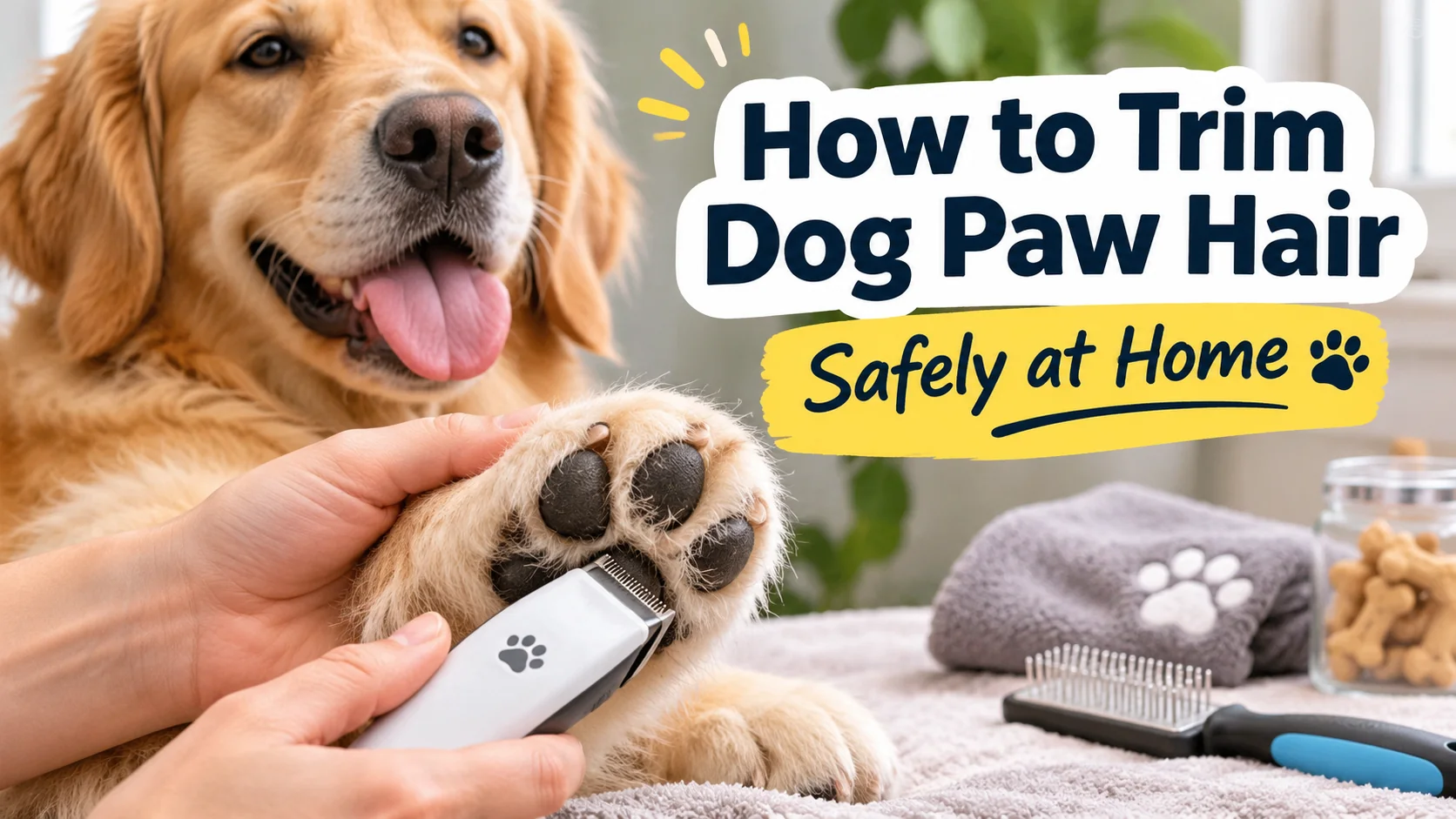
Quick Answer
To trim dog paw hair safely, clean and dry the paws, gently comb out loose tangles, and use a small pet grooming trimmer to shorten fur extending beyond the paw pads. Keep the trimmer flat, use light strokes, and avoid the delicate skin between the toes. If your dog has tight mats, sore paws, or difficulty remaining still, ask a professional groomer or veterinarian for help.
Long hair growing around your dog’s paws can trap dirt, collect debris, and develop uncomfortable tangles. On smooth floors, fur covering the paw pads may also reduce traction.
The good news is that routine paw maintenance does not have to involve shaving every hair between the toes. The goal is to keep the pads visible, remove excess surface fur, and protect sensitive skin.
This guide explains how to trim dog paw hair, prepare your dog, select suitable tools, and recognize when trimming should be left to a professional.
Why Should You Trim Your Dog’s Paw Hair?
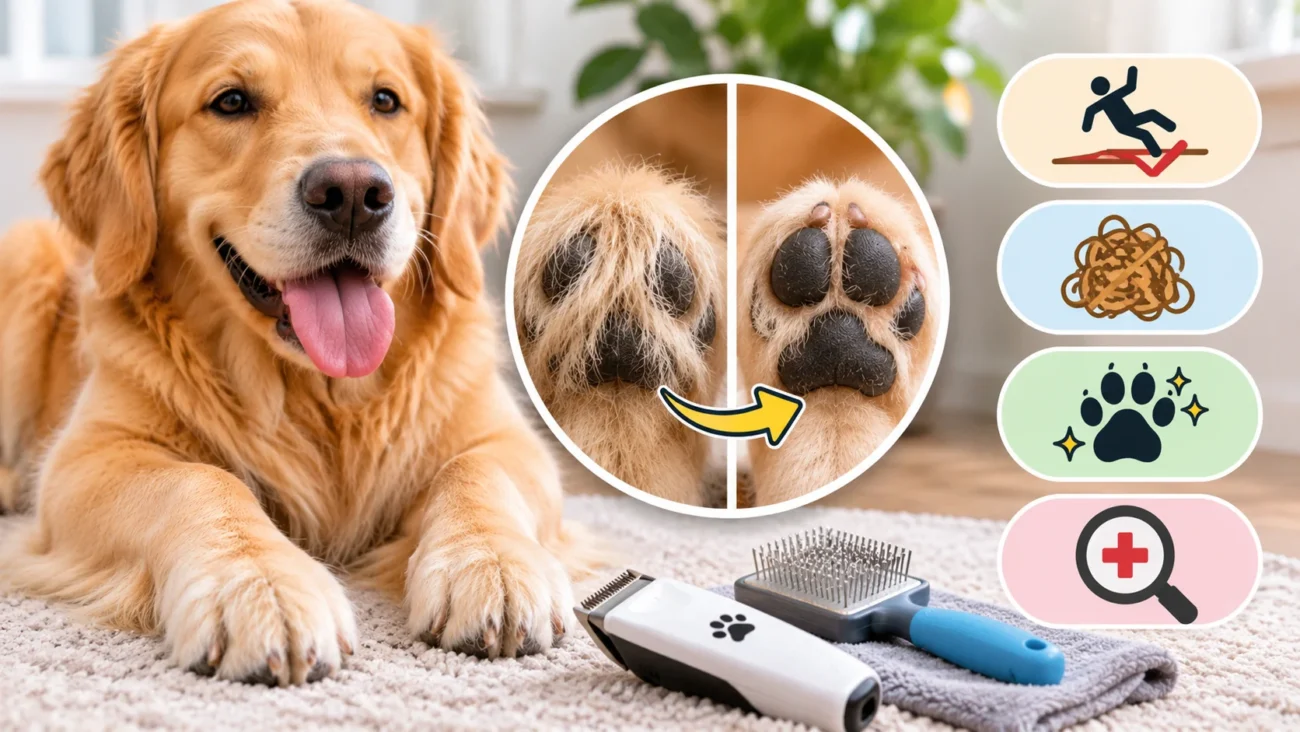
Trimming excess paw hair can improve cleanliness, reduce matting, and help your dog maintain contact with the ground.
The paw pads themselves provide cushioning, traction, and protection. When long fur extends over them, it may interfere with their normal function.
Reduce Slipping on Smooth Surfaces
Hair covering the pads can create a slippery layer between your dog’s feet and surfaces such as polished tile or hardwood.
Shortening this excess hair may improve contact between the pads and the floor. However, persistent slipping can also involve long nails, poor flooring traction, or mobility problems.
Prevent Painful Mats
Long fur between the toes can become tangled, especially in dogs with curly, silky, or dense coats.
As mats tighten, they may pull against sensitive skin and make walking or paw handling uncomfortable. Regular inspection helps identify tangles before they become difficult to manage.
Make Paw Cleaning Easier
Excess fur may collect mud, grass, snow, and other outdoor debris. Keeping it reasonably short makes it easier to wipe and inspect the paws after walks.
The ASPCA’s dog grooming guidance recommends checking paws regularly and trimming hair between the toes to approximately pad level to help prevent matting.
What Tools Do You Need to Trim Dog Paw Hair?
A small, appropriate trimmer and a gentle comb are usually sufficient for basic paw maintenance. Choose equipment that gives you control without requiring you to reach deeply between the pads.
- Small pet grooming trimmer: A narrow grooming head helps tidy excess hair without the bulk of full-size clippers.
- Fine-tooth grooming comb: Useful for separating loose tangles and identifying hair that needs attention.
- Non-slip mat: Provides stable footing while your dog stands or rests.
- Soft towel: Helps clean and dry the paws before trimming.
- Good lighting: Makes pad edges, skin folds, and debris easier to see.
- Small treats: Help reward relaxed paw handling and gradual cooperation.
A grooming professional may use specialized scissors in certain situations, but scissors around paw pads require training and precise control. For beginners, professional instruction is strongly preferable before using cutting tools near the skin.
According to the American Kennel Club’s home grooming advice, hair between paw pads should be handled carefully, with appropriate tools and instruction from a qualified groomer or veterinary professional.
How Do You Prepare Your Dog for Paw Hair Trimming?
Preparation starts with helping your dog feel comfortable having its feet handled. A calm dog and a clearly visible trimming area are more important than finishing every paw in one session.
Choose a quiet location with good lighting. Place a non-slip mat on the floor and allow your dog to stand or lie in a comfortable position.
Gently touch one leg, then a paw, rewarding relaxed behavior. Practice briefly holding the paw without using the trimmer.
For dogs unfamiliar with grooming tools, introduce the switched-off trimmer first. Reward calm investigation before gradually introducing its sound at a comfortable distance.
Clean muddy paws with a damp towel, then dry them thoroughly. Comb the surface hair gently and inspect for cuts, redness, lodged debris, or painful mats.
If your dog repeatedly pulls away, growls, or appears frightened, do not force the procedure. Short handling sessions or professional assistance are safer options.
How to Trim Dog Paw Hair Safely: 8 Steps
The following process is intended for minor surface trimming on healthy paws after you have learned safe tool handling. It is not a method for removing deep mats or shaving the spaces between toes.
- Examine the paw. Look at the pads and visible skin for redness, swelling, wounds, or foreign material. Delay trimming if the paw is painful or abnormal.
- Support the leg naturally. Gently hold the paw without twisting the wrist or pulling the leg into an uncomfortable position. Keep the dog stable.
- Identify excess hair. Find the fur extending below the level of the paw pads. This is the main area to tidy.
- Comb loose fur outward. Gently lift surface hair so you can distinguish loose strands from skin and tightly attached mats.
- Position the trimmer carefully. Keep the trimming head flat and directed across the excess surface fur rather than pointing its edge into the gaps between pads.
- Use short, light passes. Remove only the hair protruding beyond pad level. Avoid pressure and do not attempt to shave deeply between the toes.
- Check the trimmer temperature. Pause frequently to ensure the blade remains cool. Stop immediately if your dog moves unexpectedly or shows discomfort.
- Inspect and reward. Check for redness or accidental nicks, gently remove loose hairs, and reward your dog for cooperating.
Repeat the process on the remaining paws only while your dog stays comfortable. Completing one paw during a session is perfectly reasonable.
Safety Warning
Never push a blade into the gaps between paw pads or cut a tight mat with scissors. Delicate skin can become trapped in tangled hair, making accidental cuts more likely. Leave deep trimming and painful mat removal to a trained groomer or veterinarian.
How Short Should You Trim Hair Between Dog Paw Pads?
For routine grooming, aim to keep excess fur approximately level with the bottom of the paw pads, leaving the pads visible and able to contact the ground.
You do not need to remove every strand of hair growing between the toes. In fact, attempting to create completely bare spaces can increase the chance of contacting sensitive skin.
A useful visual check is to look at the underside of the paw while it is comfortably supported. The pads should be clearly distinguishable from the surrounding fur.
If reaching the remaining hair requires pressing the tool into folds of skin or spreading the toes forcefully, stop. That is no longer a simple surface trim.
Dogs with thick coats may still have visible fur between their toes after a safe trim. This is not automatically a grooming problem.
Should You Use Clippers or Scissors for Dog Paw Hair?
A suitable small pet trimmer is generally the more practical option for controlled surface maintenance, while scissors around the pads are best reserved for people trained to use them safely.
| Tool | Suitable Use | Main Limitation |
|---|---|---|
| Small pet trimmer | Shortening protruding surface hair | Can nick skin or cause irritation if misused |
| Rounded-tip grooming scissors | Selected detail work by trained handlers | Can cut skin when a paw moves |
| Full-size clippers | Larger coat areas when appropriately used | Bulky around small paw structures |
Neither tool is automatically safe. Blade condition, temperature, handling technique, and your dog’s cooperation matter more than whether a trimmer is marketed specifically for paws.
How Often Should You Trim Dog Paw Hair?
Check paw hair during routine grooming and trim it when excess growth starts covering the pads, collecting debris, or forming tangles.
There is no universal trimming interval. Dogs with continuously growing, curly, or long coats may need attention more frequently than dogs with naturally short paw hair.
Consider these signs that a trim or professional check may be useful:
- Fur extends noticeably beyond the paw pads.
- Loose tangles form around the toes.
- Dirt or snow repeatedly collects in the paw hair.
- The pads are difficult to inspect because of excess fur.
- Hair covering the pads appears to contribute to slipping.
Regular observation is more useful than following a rigid calendar. If the paws remain clean, comfortable, and free of mats, trimming may not be necessary yet.
What Common Dog Paw Hair Trimming Mistakes Should You Avoid?
The most consequential mistakes involve cutting too deeply, rushing an uncomfortable dog, and attempting to remove mats without seeing the skin.
- Trimming into the gaps: Focus on excess hair above pad level instead of chasing hidden strands between the toes.
- Using ordinary household scissors: Pointed scissors are especially risky when the dog moves unexpectedly.
- Pulling tangled hair: Tugging can hurt sensitive skin and increase resistance to future grooming.
- Using a hot blade: Check the temperature regularly and allow the equipment to cool as needed.
- Holding the paw too tightly: Excessive restraint can cause fear, discomfort, and sudden movements.
- Trimming irritated skin: Redness, swelling, and painful areas require evaluation rather than cosmetic grooming.
Another mistake is assuming that shorter hair will solve every paw-related problem. If a dog continues slipping, licking its feet excessively, or walking abnormally after the fur is tidied, look beyond grooming and seek veterinary advice.
What If Your Dog Will Not Let You Trim Its Paw Hair?
Stop the trimming attempt and return to basic paw-handling practice. Forcing a frightened dog to remain still increases the risk of injury.
Begin by rewarding your dog for allowing a brief touch near the shoulder or leg. Gradually progress toward the paw, using treats and short sessions.
Once paw handling becomes comfortable, introduce the grooming tool without trimming. Allow the dog to become familiar with its appearance and sound before attempting another session.
Some dogs need several separate practice sessions before accepting paw grooming. Others may remain uncomfortable because of previous experiences, pain, or sensitivity.
If resistance is persistent or accompanied by signs of pain, a veterinarian can help identify a possible medical cause. An experienced groomer can also advise whether the procedure can be performed safely.
When Should You Avoid Trimming and Contact a Professional?
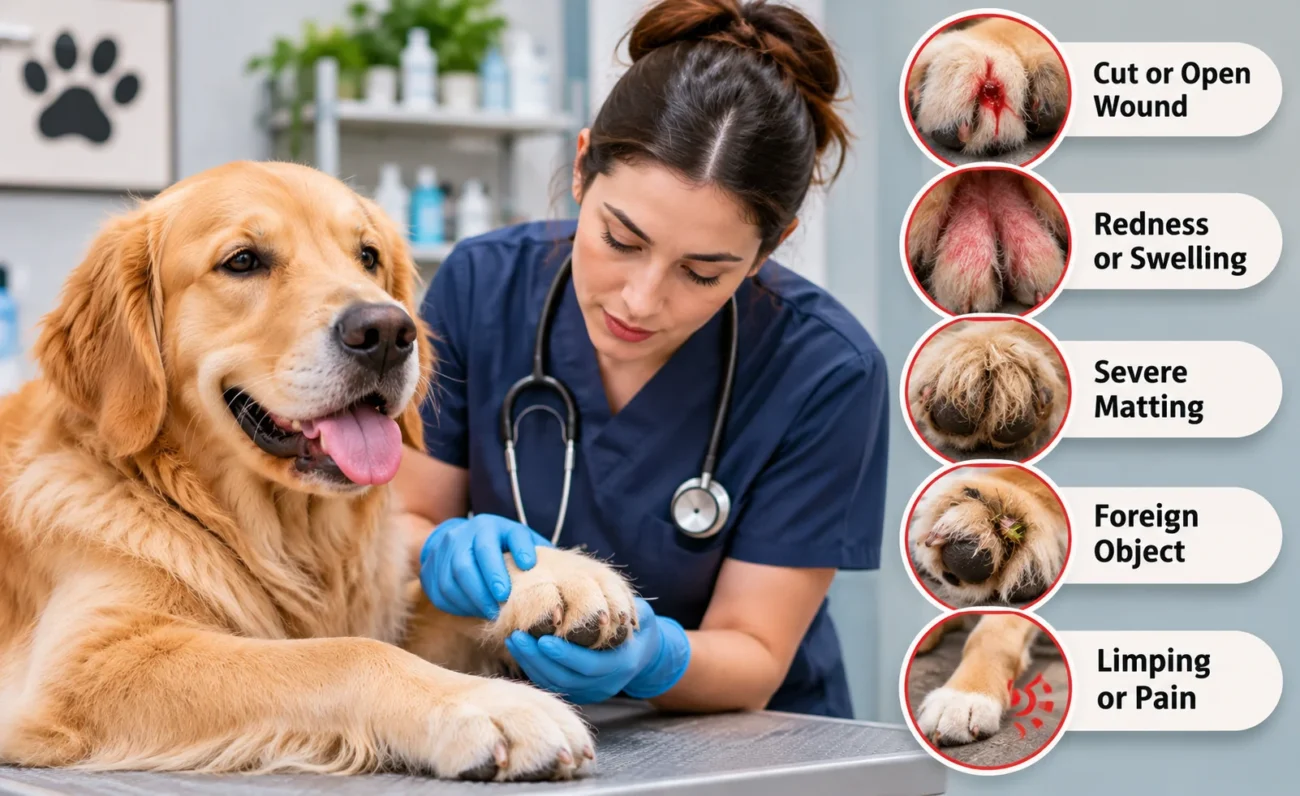
Professional help is appropriate when you cannot safely see the skin, your dog is in pain, or trimming would require restraint or deep cutting.
Arrange veterinary assessment if you notice:
- Swelling, bleeding, or an open wound
- Persistent redness or discharge between the toes
- Limping or obvious discomfort when the paw is touched
- Repeated licking associated with irritation
- A foreign object embedded in the paw
For tight mats without other warning signs, a trained groomer may be able to remove the hair safely. However, painful matting or underlying skin damage warrants veterinary assessment.
Routine grooming and medical treatment serve different purposes. Removing excess fur can improve access for inspection, but it cannot treat an infection, injury, or underlying mobility condition.
Practical Tip
Make paw inspection part of your normal post-walk routine. Checking for trapped debris, new tangles, and irritated skin can help you identify problems before the next grooming session.
Related Product
Small Dog Paw Hair Trimmer
A narrow pet grooming trimmer can help tidy excess surface fur around paw pads. Choose a model designed for pets and obtain proper handling guidance before use.
As an Amazon Associate, we earn from qualifying purchases.
Frequently Asked Questions
1. Is it necessary to trim hair on every dog’s paws?
No. Dogs with short paw hair that does not cover the pads or cause matting may need little or no trimming. Groom according to the dog’s coat and individual needs.
2. Can trimming paw hair hurt a dog?
Yes, if a blade catches skin, a hot clipper causes irritation, or tangled hair is pulled. Gentle surface trimming with proper instruction reduces these risks but does not eliminate them.
3. Should you trim paw hair before or after bathing?
Trim only after the paws are clean and thoroughly dry. Dry fur is generally easier to separate and inspect, while trapped moisture and mud may obscure the skin.
4. Can puppies have their paw hair trimmed?
Yes, when necessary, but handling tolerance should come first. Introduce paw touching and grooming tools gradually, and ask a professional to demonstrate safe trimming techniques.
5. What should you do if you accidentally cut a paw?
Stop grooming and apply gentle pressure with clean gauze or cloth. Contact a veterinarian promptly for a deep cut, persistent bleeding, significant pain, or a wound involving the pad.
6. Does paw hair trimming replace nail trimming?
No. Paw hair maintenance and nail care are separate grooming tasks. Excessively long nails can affect comfort and footing even when the paw hair is neatly trimmed.
Final Thoughts
Learning how to trim dog paw hair begins with understanding what actually needs trimming. Focus on excess fur covering the pads, work slowly with appropriate tools, and prioritize your dog’s comfort over achieving a perfectly groomed appearance.
Healthy paw maintenance combines occasional trimming, regular inspection, gentle cleaning, and professional help when needed. A careful, limited trim is always preferable to an aggressive one that risks damaging sensitive skin.


