
Quick Answer
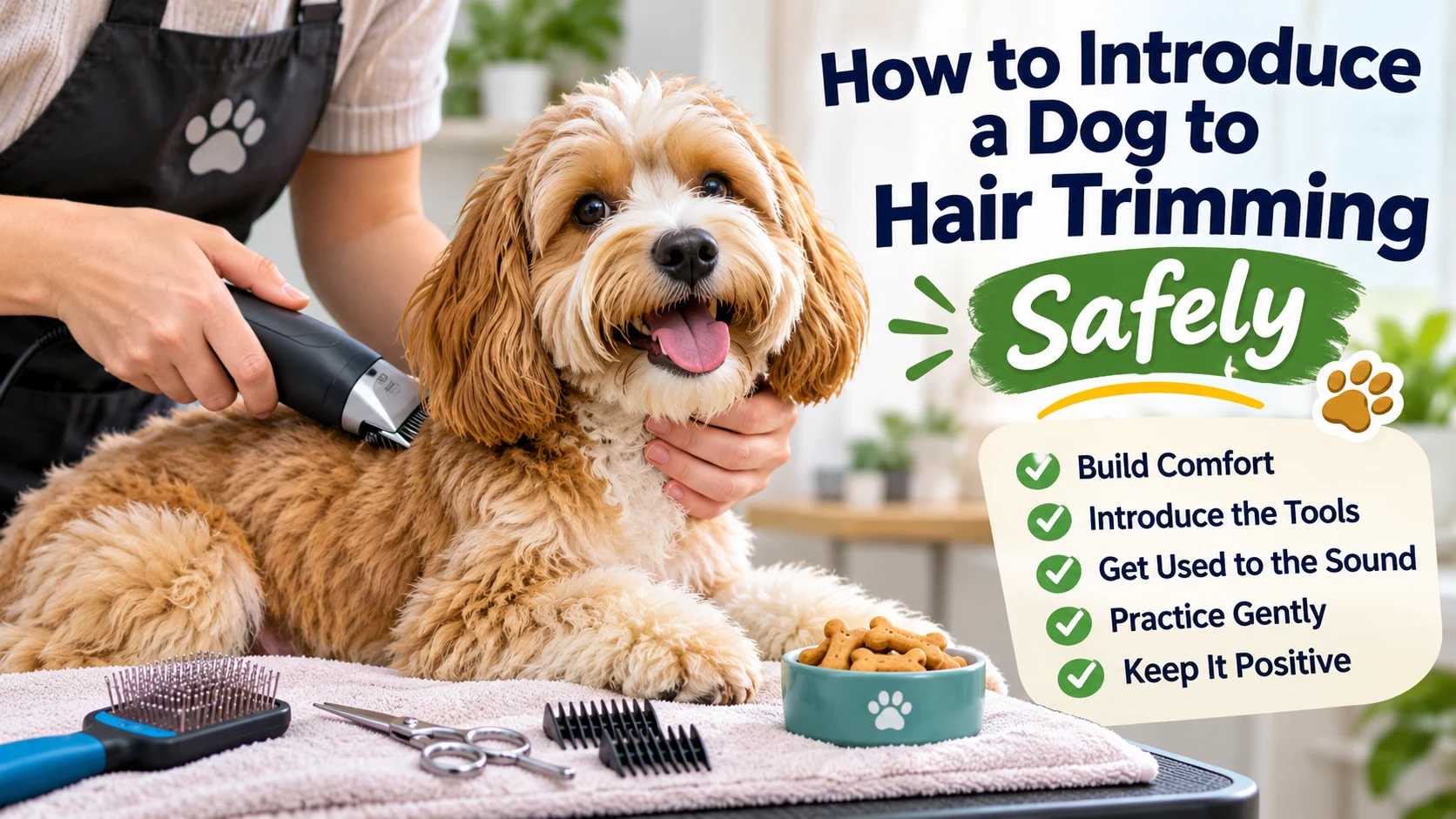
To introduce a dog to hair trimming, start with gentle body handling, let your dog investigate grooming tools, and reward relaxed behavior with treats. Gradually introduce clipper sounds and light contact before attempting a small trim. Keep sessions short, allow breaks, and never force a frightened dog to continue.
A dog’s first haircut should begin long before the scissors or clippers touch their coat. The unfamiliar sounds, vibrations, handling, and need to remain still can make trimming stressful, particularly for puppies and dogs with little grooming experience.
Fortunately, you can prepare your dog through simple exercises at home. The goal is to teach your dog that grooming equipment predicts pleasant experiences, rather than trying to complete an entire haircut immediately.
Why Is It Important to Introduce Dogs to Hair Trimming Gradually?
Gradual introductions help dogs become comfortable with grooming equipment and the handling involved in haircuts. They also give owners a chance to recognize discomfort before a dog becomes overwhelmed.
Hair trimming involves several unfamiliar experiences:
- The sight and movement of scissors or electric clippers.
- Buzzing noises and vibrations near the body.
- Handling around sensitive areas such as paws, ears, and legs.
- Standing or remaining in one position during grooming.
- Contact with equipment that may feel unfamiliar against the coat.
A dog may tolerate brushing but dislike clippers, or accept trimming along the back while becoming uncomfortable when someone handles a paw. Each experience can require separate training.
This approach is consistent with Cornell University’s guidance on cooperative grooming, which emphasizes gradual exposure, rewards, and allowing dogs to participate at their own pace.
What Should You Prepare Before Your Dog’s First Hair Trimming Session?
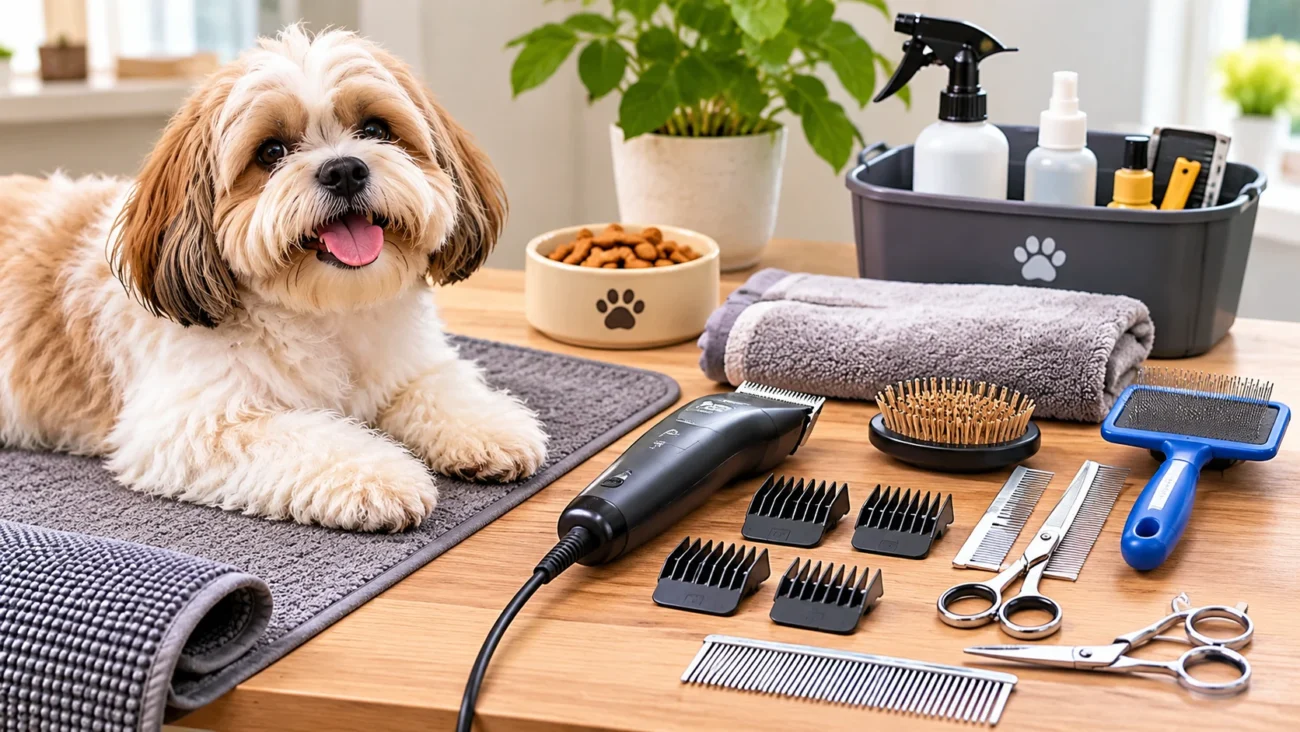
Prepare a quiet, comfortable space, appropriate grooming tools, and small rewards before introducing trimming. A calm environment makes it easier to observe your dog’s responses.
Useful supplies include:
- Dog grooming clippers: Appropriate for your dog’s coat, with suitable attachment combs.
- Grooming scissors: Pet-safe scissors for appropriate trimming tasks, used only when the dog can remain reliably still.
- Brush and comb: To practice coat handling and identify tangles.
- Small treats: Rewards your dog enjoys and can eat quickly.
- Non-slip surface: To provide secure footing.
- Familiar resting mat: To create a predictable grooming location.
Choose a time when your dog is relaxed, rather than immediately after exciting play. Keep sharp equipment switched off and safely out of reach during introductory exercises.
Do not attempt to cut through tight mats with scissors. Skin may be pulled into the mat, creating a serious risk of injury. A professional groomer can assess difficult matting.
How Do You Introduce a Dog to Hair Trimming Step by Step?
Begin with handling and tool familiarity, then progress toward sound, contact, and eventually a tiny amount of trimming. Move forward only when your dog remains comfortable at the current stage.
Step 1: Help Your Dog Feel Comfortable With Gentle Touch
Start by touching areas commonly handled during grooming, including the shoulders, legs, paws, and ears.
Briefly touch an area your dog already accepts, offer a treat, and release your hand. Gradually work toward more sensitive locations without grabbing or restraining your dog.
For example, a dog comfortable with shoulder touches might progress to a brief touch along the upper leg before practicing gentle paw handling.
Watch whether your dog voluntarily remains nearby. Pulling away, stiffening, or avoiding your hand suggests the exercise needs to become easier.
Step 2: Introduce Grooming Tools Without Using Them
Place an unplugged or switched-off grooming tool where your dog can observe it at a comfortable distance.
Reward calm investigation, such as looking toward the tool or approaching voluntarily. Never push scissors or clippers toward your dog’s face or insist that they sniff the equipment.
Repeat until seeing the tool no longer produces an obvious fearful response. Some dogs become comfortable quickly, while others require many brief sessions.
Step 3: Introduce Clipper Sounds From a Distance
Electric clippers can be intimidating because of their sound. Begin by switching them on well away from your dog, without attempting to trim.
- Position the switched-off clippers at a comfortable distance.
- Turn them on briefly while another person offers treats if helpful.
- Switch them off before your dog becomes distressed.
- Repeat the exercise when your dog is relaxed.
- Decrease the distance gradually over subsequent sessions.
If your dog startles, retreats, or refuses treats they usually enjoy, increase the distance or reduce the exposure. The objective is comfort with the sound, not simply tolerating it.
Step 4: Practice Light Contact With the Equipment
Once your dog accepts the sound, practice touching a less-sensitive body area with the switched-off clipper housing. Reward relaxed behavior immediately.
Later, you can introduce the sensation of a running clipper held safely near the body, without presenting the cutting blade against the skin.
Vibration is a separate sensation from noise. A dog that accepts buzzing from across the room may still need additional practice before accepting vibration nearby.
Step 5: Practice Standing Still Voluntarily
Teach your dog to stand on a non-slip mat for a brief moment, then reward the behavior. Increase the duration gradually.
A voluntary position, such as standing on a mat or resting the chin on your hand, can help communicate readiness for handling.
If your dog leaves the position, stop and reset the exercise rather than holding them in place.
The American Kennel Club’s husbandry training guidance describes how positive reinforcement and voluntary participation can make routine grooming less stressful.
Step 6: Attempt a Very Small Trim
Begin cutting only when your dog comfortably accepts handling, the relevant equipment, and remaining still. Choose a straightforward, accessible area of coat away from delicate skin.
Use suitable pet grooming clippers and a correctly fitted guard or attachment comb. Make one small, controlled pass, reward your dog, and stop while the experience remains positive.
Do not make the first session a complete haircut. Save complicated areas such as the face, paws, armpits, and sanitary region for someone with the appropriate grooming skills.
How Can You Tell Whether Your Dog Is Ready for Hair Trimming?
A dog is more likely to be ready when they voluntarily approach the grooming area, accept the equipment, and remain physically relaxed during practice.
Use these behavioral observations to guide your decision:
| Behavior | What to Do |
|---|---|
| Relaxed posture and voluntary approach | Continue at the current level. |
| Moving away or avoiding the tool | Pause and make the exercise easier. |
| Freezing, trembling, or repeated attempts to escape | Stop the session and reassess the training plan. |
| Growling, snapping, or attempting to bite | Stop and seek qualified help before further trimming. |
These signs are useful clues, not a complete assessment of your dog’s emotional state. Some frightened dogs become unusually still rather than trying to escape.
Warning
Never interpret a dog freezing or becoming motionless as automatic permission to continue. Fear can produce stillness, and cutting near a frightened animal increases the risk of sudden movement and injury.
How Often Should You Practice Hair Trimming Training?
Practice briefly and regularly, adjusting the frequency to your dog’s comfort. Many introductory exercises can last only a few seconds to a couple of minutes.
Instead of following a rigid timetable, use a progression based on successful, comfortable repetitions:
- Early practice: Gentle handling and calm interaction with switched-off tools.
- Next stage: Brief clipper sounds and rewards at a comfortable distance.
- Later practice: Light equipment contact and voluntary standing.
- Final preparation: Small, controlled trimming attempts once the dog is ready.
Your dog’s progress determines the schedule. A confident puppy might advance quickly, while a noise-sensitive adult dog may benefit from repeated practice at one stage.
Practical Tip
Finish a session after an easy, successful repetition instead of continuing until your dog becomes tired or restless. A single comfortable interaction is more useful than several stressful attempts.
What Should You Do if Your Dog Is Afraid of Hair Clippers?
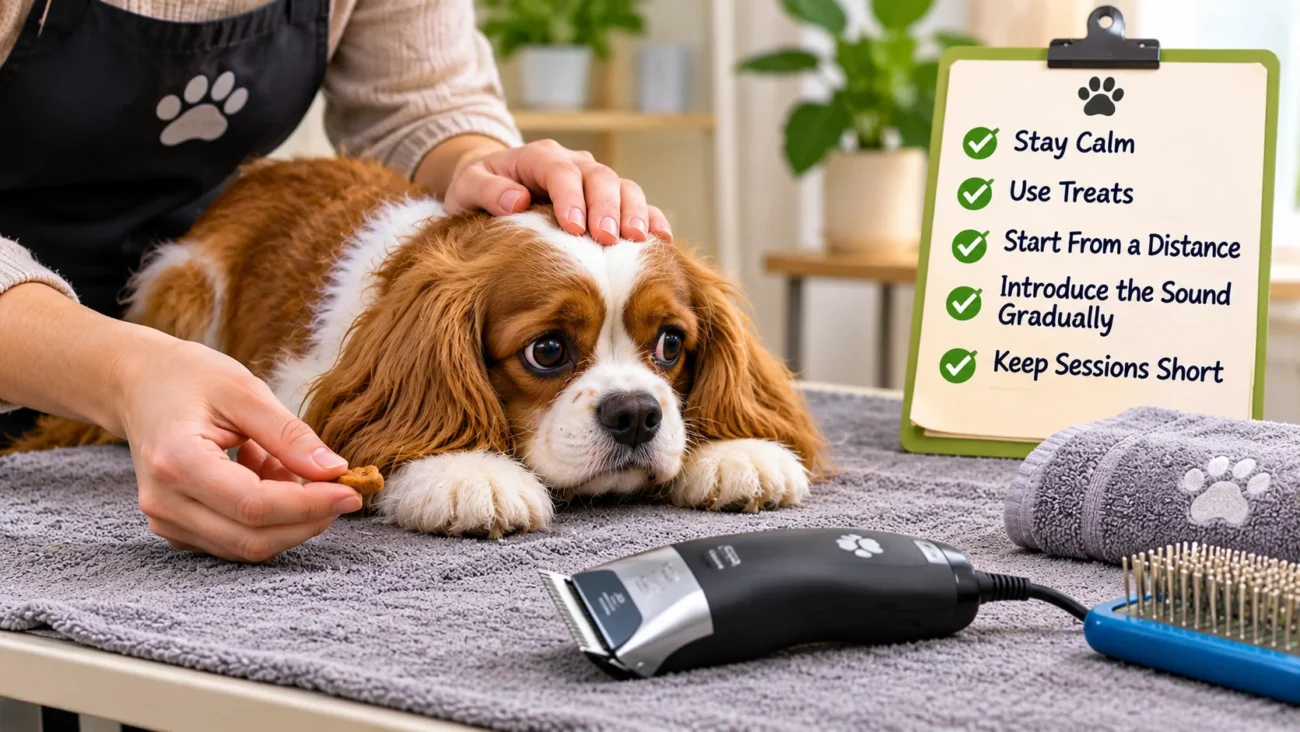
If your dog fears clippers, stop attempting haircuts and return to training at a distance where the tool does not trigger significant distress.
Begin with the clippers switched off. Reward your dog for calmly noticing them, then gradually reintroduce the sound in very short exposures.
Do not hold your dog beside running clippers until they stop reacting. This can overwhelm them and may worsen the association.
If fear remains intense, or your dog has previously snapped during grooming, ask a veterinarian to assess possible pain and discuss working with a qualified reward-based trainer or experienced low-stress groomer.
For dogs with substantial grooming anxiety, professional guidance may be safer than repeatedly attempting difficult home haircuts.
What Mistakes Should You Avoid During Your Dog’s First Haircut?
The biggest mistakes involve moving too quickly, ignoring discomfort, or trying to finish an entire haircut despite resistance.
- Starting with sensitive areas: Practice easy handling and accessible coat areas first.
- Restraining a frightened dog: Holding a dog still does not teach them to feel safe.
- Ignoring equipment heat: Clipper blades can become hot during use and may burn skin.
- Using unsuitable tools: Incorrect guards, poorly maintained blades, and household scissors can increase injury risks.
- Cutting close to skin folds: Thin or folded skin requires particular caution.
- Rushing through matting: Tight mats should be assessed and removed safely by an appropriately skilled groomer.
Remember that not every coat should be clipped short. Double-coated breeds, for example, have coat characteristics that require breed-appropriate grooming decisions.
The AKC professional grooming educational standards emphasize safe handling, careful clipper introduction, and awareness of clipper-related injuries.
When Should You Choose a Professional Groomer Instead?
Choose professional assistance when the haircut involves difficult coat conditions, delicate areas, significant fear, or handling beyond your experience.
Professional help is particularly appropriate when your dog has severe matting, repeatedly attempts to bite, or cannot remain safely positioned around cutting equipment.
Explain your dog’s previous grooming experiences before booking. Ask whether the groomer offers introductory visits, short appointments, or low-stress handling methods.
If grooming resistance develops suddenly, especially alongside sensitivity to touch, consult your veterinarian. Pain or an underlying medical problem may be contributing to the behavior.
Frequently Asked Questions About Introducing Dogs to Hair Trimming
At What Age Can You Introduce a Puppy to Hair Trimming?
You can begin gentle handling and grooming-tool familiarity during puppyhood. Actual cutting should depend on the puppy’s comfort, coat needs, and ability to remain safely still. Early preparation does not require an immediate haircut.
Can an Older Dog Learn to Accept Hair Trimming?
Yes. Adult and senior dogs can learn positive associations with grooming through gradual exposure and rewards. Dogs with longstanding fear may need a slower approach, especially if pain or mobility limitations are present.
Should You Use Scissors or Clippers for a Dog’s First Haircut?
The choice depends on the coat, trimming location, and handler’s skill. Clippers with appropriate guards may suit accessible body areas, while scissors require precise control and a dog that can remain still. Sensitive areas are best left to an experienced groomer.
What if Your Dog Will Not Take Treats During Grooming?
Stop and assess the situation. Refusing a normally desirable treat can indicate fear, distraction, or discomfort. Increase the distance from the equipment, simplify the exercise, and try again when your dog is relaxed.
Can You Introduce Hair Trimming Without Electric Clippers?
Yes. You can practice handling, brushing, standing on a mat, and calm responses to safe, switched-off grooming equipment. These exercises help prepare your dog even if a professional will eventually perform the actual haircut.
How Long Does It Take for a Dog to Become Comfortable With Hair Trimming?
There is no fixed timeline. Some dogs adapt after several positive sessions, while others need weeks or longer. Progress depends on previous experiences, sensitivity, health, and the pace of training. Comfort matters more than completing the process by a deadline.
Final Thoughts
Introducing a dog to hair trimming is a gradual training process, not a single grooming appointment. Begin with comfortable handling, introduce tools and sounds separately, and reward voluntary participation.
Keep sessions brief, respect signs of discomfort, and seek professional assistance when cutting would be unsafe. Building trust before attempting a haircut creates a better foundation for future grooming routines.


