
Quick Answer
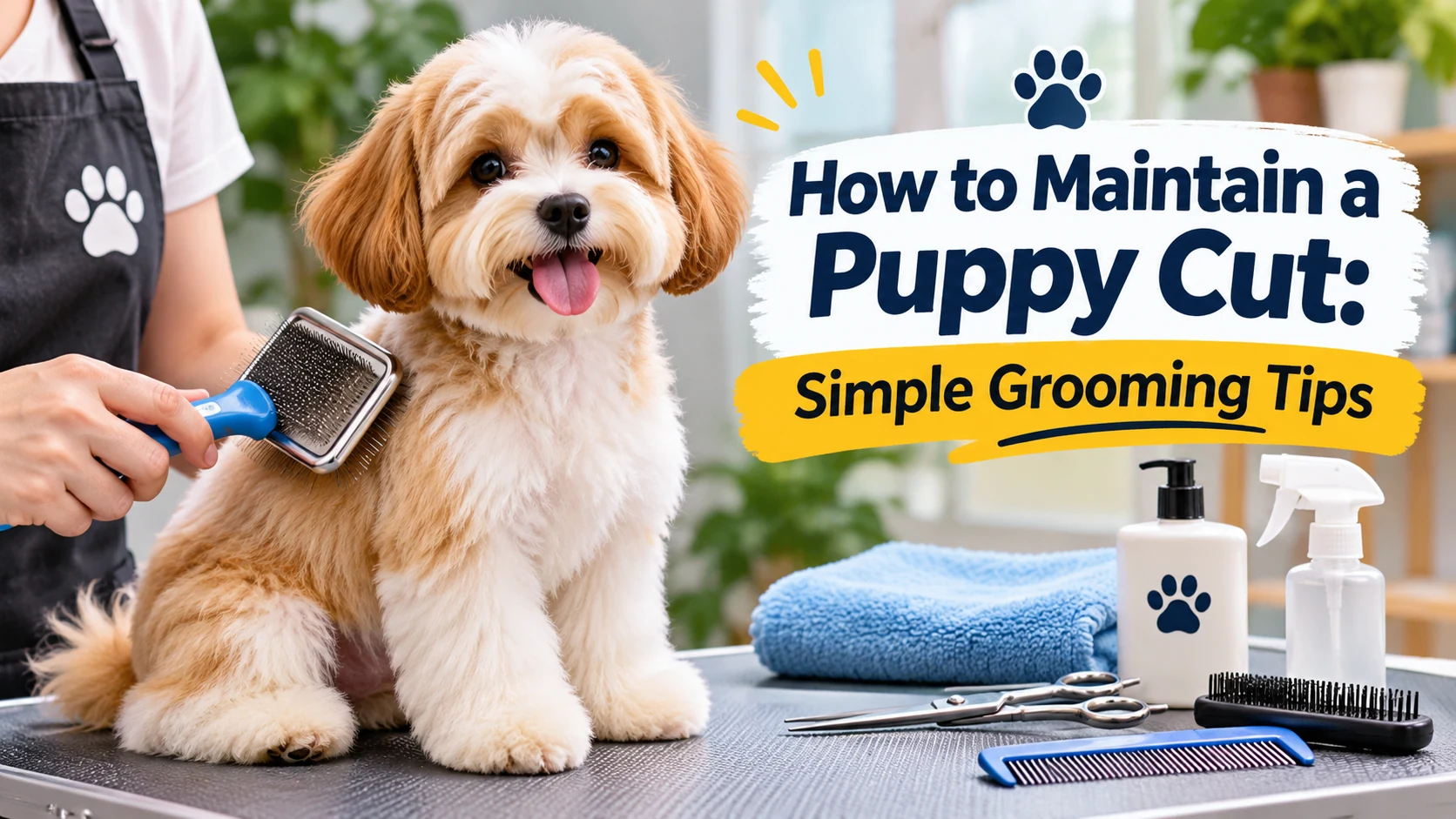
To maintain a puppy cut, brush and comb your dog’s coat regularly, check friction-prone areas for tangles, wipe away everyday dirt, bathe only as needed, and schedule trims before the shape grows out. The exact routine depends on coat texture and the length your groomer left—not on the haircut’s name.
A fresh puppy cut looks soft and tidy, but it does not stay that way without maintenance. Loose hair catches in the remaining coat, paws collect dirt, and the face can become shaggy before the body does. The good news is that most between-appointment care involves gentle brushing, a comb check, and a few quick hygiene checks—not recreating the entire haircut at home.
What Does It Mean to Maintain a Puppy Cut?
Maintaining a puppy cut means keeping the coat clean, comfortable, reasonably tangle-free, and close to its intended shape between professional grooming appointments. A puppy cut is usually a practical, relatively even trim, but the length varies by groomer and salon. It is not a single universal haircut.
Ask your groomer what length was used on the body and whether the head, legs, ears, and tail were intentionally left longer. Take a photo immediately after the appointment. That gives you a reliable reference as the hair grows.
How Do You Maintain a Puppy Cut Between Grooming Visits?
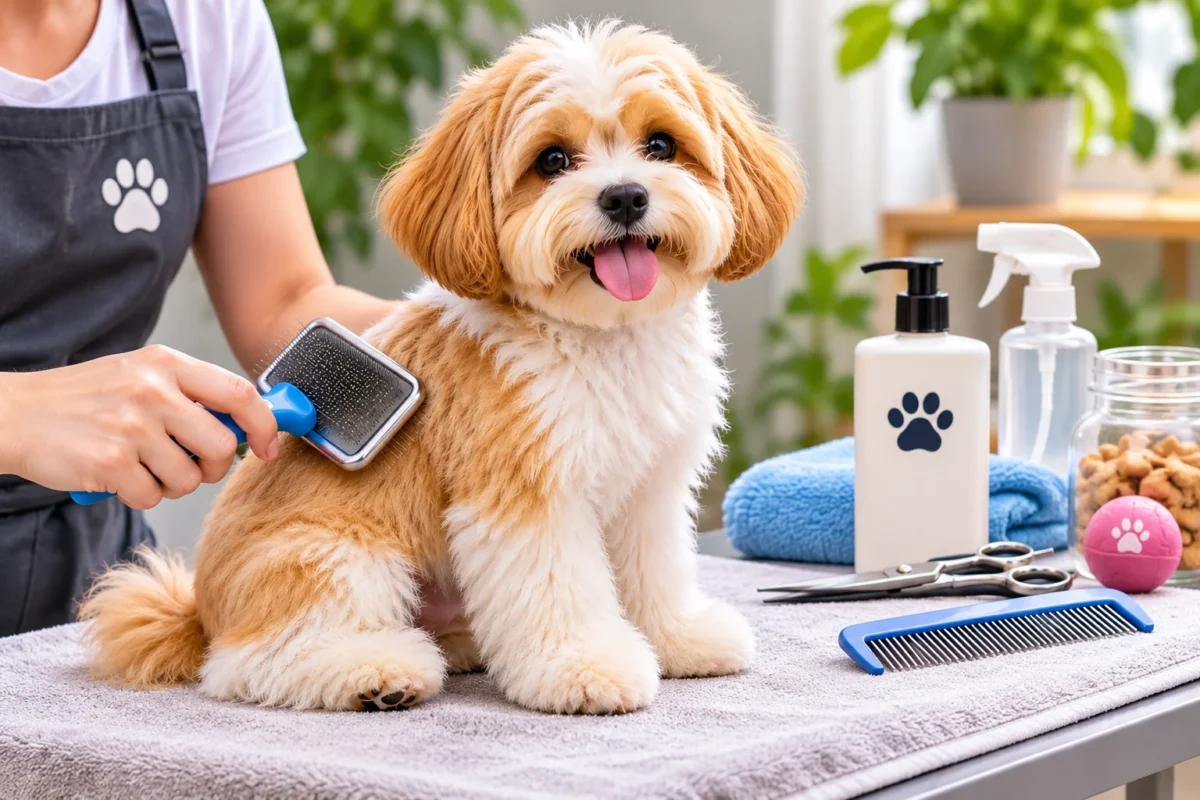
Use this simple process to manage coat condition without making home grooming stressful.
- Inspect the coat before brushing. Run your fingers over the collar area, behind the ears, armpits, chest, belly, inner legs, and tail base. These are places where friction and movement can create tangles.
- Brush in small sections. Use a tool suitable for the coat, applying light pressure. Work gently through hair in layers instead of skimming only the surface.
- Follow with a comb. On curly, wavy, or longer coats, a metal grooming comb helps reveal knots that a brush may have missed. Stop if it catches or your dog shows discomfort.
- Clean small messes promptly. Wipe dirty paws and the beard with a soft, damp cloth, then dry the hair rather than leaving it wet.
- Look at eyes, ears, feet, and sanitary areas. Note hair obstructing vision, dirt that will not wipe away, and changes in odor or skin condition. Have delicate trimming done by a trained groomer.
- Reward cooperation. Start with short sessions, offer breaks, and end before your dog becomes distressed.
For very young or grooming-sensitive dogs, a calm two-minute session can be more useful than an ambitious session they learn to fear. The American Kennel Club’s guide to brush types explains why the tool should match the coat.
How Often Should You Brush a Dog With a Puppy Cut?
Brush as often as needed to keep the coat comfortably free of tangles. A short, straight coat may require only a few sessions each week, while a longer, curly, cottony, or easily tangled coat may need daily attention. A shorter haircut makes maintenance easier, but it does not eliminate matting risk.
| Coat after the cut | Starting routine | What to monitor |
|---|---|---|
| Short, smooth or straight | A few times weekly | Loose hair, dirt, skin condition |
| Medium, silky or wavy | Every day or two, adjusting to tangles | Behind ears, chest, leg furnishings |
| Dense curly or easily matted | Daily brush-and-comb checks may be needed | Knots close to the skin, missed underlayers |
These are practical starting points, not fixed medical rules. Increase attention if your dog swims, wears clothing, has a longer cut, or develops tangles quickly. VCA Animal Hospitals similarly advises frequent brushing for long, silky coats.
Which Tools Help Keep a Puppy Cut Neat?
You do not need a salon’s collection of equipment. A small, coat-appropriate kit is usually more useful than multiple aggressive shedding tools.
- Soft slicker or pin brush: Depending on the coat, gently separates hair and lifts loose strands.
- Rounded-tip metal grooming comb: Helps check whether curly or longer hair is truly detangled near the roots.
- Soft cloth and absorbent towel: Quickly cleans and dries paws, muzzle, and other lightly soiled areas.
- Dog-formulated shampoo: For baths when needed; select an appropriate product for the dog’s skin and follow its instructions.
- Non-slip mat and treats: Help establish a stable, positive grooming routine.
A comb is especially valuable because a coat can look smooth on top while hiding knots underneath. Never pull hard enough to hurt your dog or scrape the skin with brush pins.
How Do You Prevent Mats Without Damaging the Coat?
Prevent mats by catching small tangles early, before they tighten against the skin. Separate the hair into manageable sections and brush gently from the ends toward the roots where appropriate, supporting the hair near the skin to reduce pulling. Check progress with a comb.
Pay special attention after harness use, outdoor play, or bathing. Remove manageable loose tangles carefully, but do not force apart dense mats. VCA’s coat-care advice warns that bathing tangled hair can make the problem harder to resolve.
Warning
Do not cut tight mats out with ordinary scissors. Skin may be pulled into the mat and can be accidentally cut. A groomer can assess safe removal; see a veterinarian if the skin is sore, inflamed, or injured.
How Should You Bathe and Dry a Puppy Cut?
Bathe when your dog is dirty or needs a wash for coat or skin care, rather than following a rigid calendar. Brush out manageable tangles beforehand. Use lukewarm water, a dog-appropriate shampoo, and a thorough rinse, protecting the eyes and ears from product and excess water.
Dry thoroughly with a towel and, only if tolerated, a pet-safe dryer on a gentle setting while keeping airflow and heat comfortable. Do not leave thick hair damp underneath, especially where it folds or rubs. If a veterinarian has prescribed a bathing schedule or medicated product, follow those directions instead.
The ASPCA’s grooming tips cover routine brushing, washing, and drying basics.
How Do You Keep the Face, Paws, and Sanitary Areas Tidy?
Clean small areas regularly but leave detailed cutting close to eyes, skin folds, paw pads, and genitals to someone experienced with safe handling.
- Face and beard: Wipe food and dirt away after meals, gently dry the hair, and notice whether hair has started to obstruct vision.
- Paws: Remove surface dirt, dry between toes after wet walks, and check for trapped debris or tangles.
- Ears: Inspect visible outer areas for redness, odor, discharge, or discomfort; avoid inserting swabs into the ear canal.
- Sanitary areas: Keep residue from accumulating with gentle cleaning and request a professional hygiene trim if hair becomes difficult to keep clean.
Persistent tear discharge, ear odor, redness, repeated licking, or painful skin deserves veterinary attention rather than a cosmetic trim alone.
When Does a Puppy Cut Need Another Trim?
Book a trim when the coat becomes hard to comb, hair interferes with the eyes or feet, or the tidy outline no longer suits your dog’s comfort and activity. For many continuously growing coats, owners use a roughly four-to-eight-week salon interval as a planning starting point, but the best interval depends on the dog’s hair growth, cut length, matting tendency, and the groomer’s advice.
Ask for a shorter length if daily upkeep is becoming difficult. You can retain a soft, rounded look without keeping every area long. Double-coated breeds may need a different approach, so discuss clipping with a coat-knowledgeable groomer before requesting an all-over short trim.
Tip
Ask your groomer to record the body length and how the head, ears, legs, and tail were finished. A photo plus these notes is a much clearer request than simply saying “the same puppy cut.”
What Common Mistakes Make a Puppy Cut Harder to Maintain?
- Only brushing the surface: Hidden tangles can tighten underneath an apparently fluffy coat.
- Waiting until mats are obvious: Early, gentle detangling is easier than addressing tight mats.
- Bathing before checking tangles: Wetting existing knots can complicate removal.
- Using the wrong brush aggressively: Too much pressure can irritate skin and make grooming unpleasant.
- Cutting around moving facial features: Scissors and clippers near eyes or delicate skin carry injury risks.
- Assuming a puppy cut suits every coat: Styling and brushing should follow the coat’s actual needs.
A Simple Weekly Puppy-Cut Maintenance Routine
Use this flexible schedule as a reminder, not a rule. Dogs with high-maintenance coats will need more frequent full brush-and-comb sessions.
- Every day: Quick eye, paw, and coat check; wipe away visible dirt; inspect tangle-prone spots.
- Several times per week or daily as needed: Brush and comb thoroughly enough to find hidden knots.
- Once a week: Review nail length, ear appearance, paw-pad hair, and whether the current cut is still easy to maintain.
- As needed: Bathe, dry completely, and arrange a hygiene or full trim before overgrowth becomes uncomfortable.
Relevant Product
Dog Grooming Comb
A comfortable metal comb can help detect tangles that brushing alone misses on longer, wavy, or curly puppy cuts. Choose one suited to your dog’s size and coat.
As an Amazon Associate, we earn from qualifying purchases.
Frequently Asked Questions About Maintaining a Puppy Cut
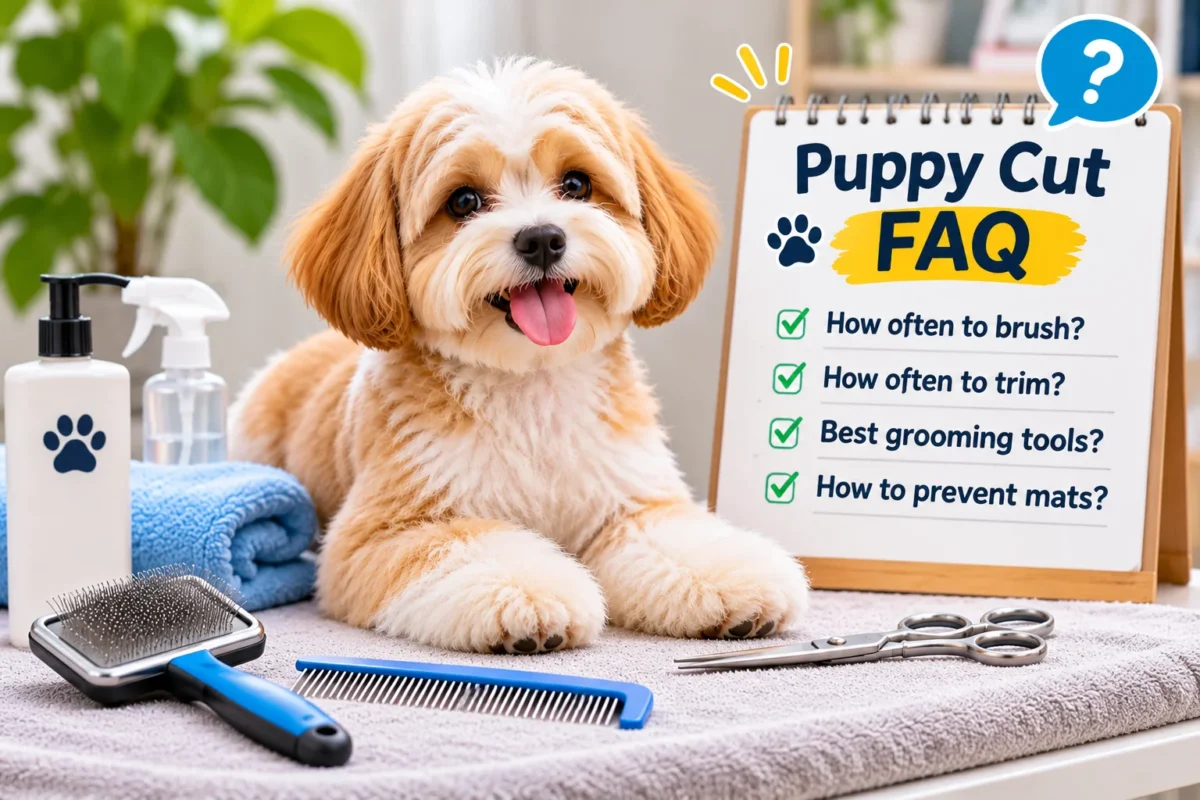
Can you maintain a puppy cut without professional grooming?
You can handle much of the brushing and cleaning at home, but dogs with continuously growing hair generally still need periodic trims. A groomer can safely maintain the overall shape and delicate areas.
Does a shorter puppy cut mean no brushing?
No. Shorter hair may tangle less, but regular coat checks and appropriate brushing still matter, especially on curly or dense coats.
How can I tell if I’m brushing all the way through?
On longer or curly coats, gently pass a suitable comb through small sections after brushing. If the comb repeatedly catches, the coat is not fully detangled.
Should I trim around my dog’s eyes myself?
It is safer to ask a trained groomer, especially if your dog moves suddenly. Hair obstructing vision should be addressed promptly without risking an eye injury.
What if my dog dislikes brushing?
Use very short sessions, a gentle tool, treats, and breaks. If brushing appears painful, check for mats or skin irritation and ask a groomer or veterinarian for help.
Is a puppy cut only for young puppies?
No. The term often describes a practical haircut that adult dogs can wear too. The appropriate style depends on the dog’s coat and grooming needs.
Final Thoughts
The easiest way to maintain a puppy cut is to protect the condition of the hair you already have: brush consistently, find hidden tangles with a comb, clean and dry small messes, and schedule grooming before the coat becomes unmanageable. Match the routine to your dog’s actual coat rather than a haircut label, and adjust the length if upkeep is becoming a struggle.


