
Quick Answer
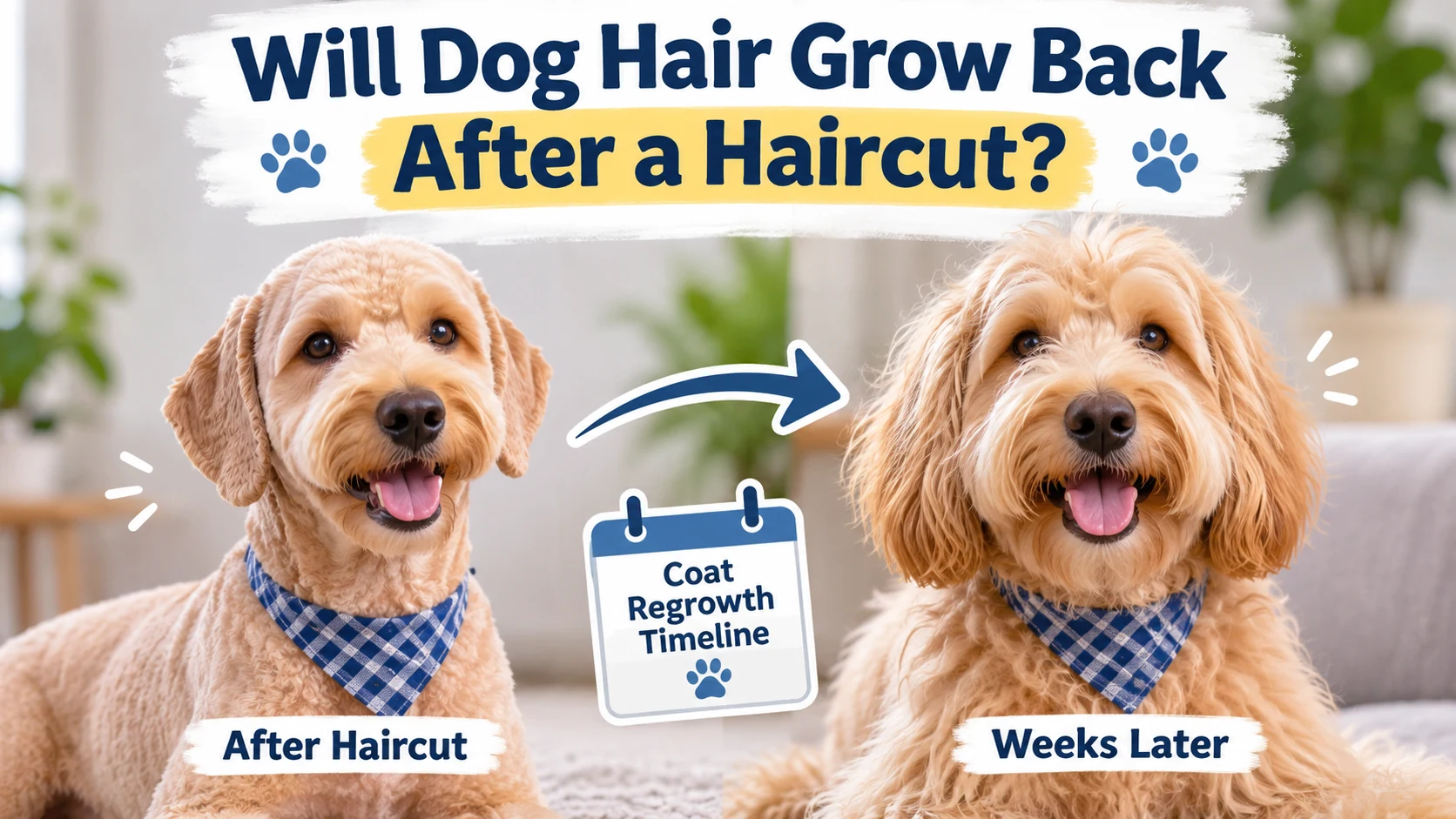
Yes, dog hair usually grows back after a haircut if the skin and hair follicles are healthy. Many coats recover over several months, although the exact timing depends on breed, coat type, haircut length, and health. Some double-coated dogs experience much slower or uneven regrowth. If your dog’s coat shows little progress after three to four months, ask your veterinarian to assess it.
A haircut can make your dog look surprisingly different, especially when the groomer removes more hair than expected. Seeing exposed skin or a much shorter coat naturally raises one question: will the hair grow back?
In most healthy dogs, the answer is yes. However, new hair appearing and the original coat returning are two different milestones.
Understanding that difference can help you recognize normal regrowth, care for your dog’s skin, and identify when a veterinary examination is appropriate.
How Long Does Dog Hair Take to Grow Back After a Haircut?
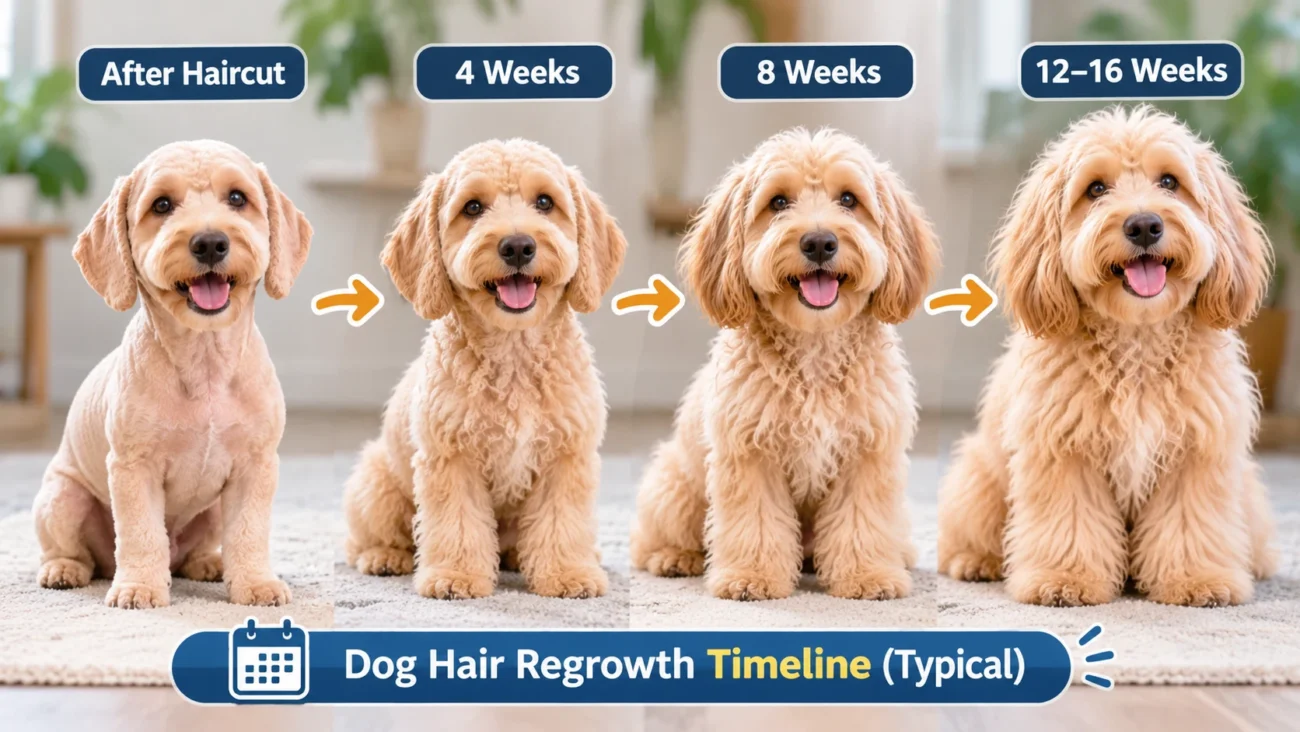
Dog hair often takes several months to return to its previous length after close clipping. Some dogs show noticeable new growth earlier, while dogs with long, dense, or double coats may take considerably longer to regain their original appearance.
A veterinary study published in Veterinary Dermatology examined hair regrowth after surgical clipping in Labrador Retrievers.
Researchers found that the dogs’ hair returned to its original length in approximately 13.6 to 15.4 weeks on average, depending on the season. The differences between seasons were not statistically significant.
These findings provide a useful reference, but they do not establish a universal timeline for every dog breed.
| Time After Haircut | What You May Notice |
|---|---|
| First few weeks | Short new growth may become visible, depending on the hair cycle. |
| One to two months | Some coats become noticeably fuller, although longer hair may remain far from its original length. |
| Three to four months | Many normally cycling coats show substantial recovery. Persistent lack of growth deserves attention. |
| Six months or longer | Some long or plush coats may still be recovering. Delayed or patchy growth should be evaluated. |
This is a general observation guide, not a guaranteed schedule. A small trim requires less recovery than shaving a coat close to the skin.
What Determines How Fast Dog Hair Grows Back?
Regrowth speed depends mainly on the dog’s hair-growth cycle, coat structure, general health, and how much hair was removed.
1. Hair-Growth Cycle
Dog hair follicles cycle through periods of active growth, transition, and rest. These phases are commonly called anagen, catagen, and telogen.
Hair in an active growth phase can lengthen. Hair in a resting phase may show little visible change until the follicle returns to growth.
This helps explain why a clipped area does not always grow evenly or immediately.
2. Breed and Coat Type
Different coat types have different growth patterns.
- Continuously growing coats: Poodles and similar breeds often require regular trimming because their hair continues to lengthen.
- Short coats: Breeds such as Beagles and Labrador Retrievers typically maintain relatively short coat lengths through their natural hair cycles.
- Double coats: Huskies, Pomeranians, and similar breeds have an undercoat and protective outer guard hairs that may regrow at different rates.
- Long coats: Long-haired dogs may need additional time for their full coat length and appearance to return.
Breed examples are generalizations. Individual dogs can recover differently.
3. Haircut Length
A light trim removes only a small portion of the visible hair shaft, so the coat needs relatively little additional growth to regain its appearance.
A very close clip exposes more of the underlying coat structure and may make slow-growing areas more obvious.
4. Nutrition and Health
Healthy hair production requires adequate protein, essential fatty acids, vitamins, and minerals.
Skin disease, hormonal disorders, or nutritional deficiencies can affect coat condition and hair regrowth. Adding supplements without identifying a deficiency is not a reliable way to speed up growth.
Will Double-Coated Dog Hair Grow Back Normally After Shaving?
Double-coated dog hair often grows back, but its original texture, length, and appearance may not return at the same rate.
Dogs with double coats have two important hair layers:
- Undercoat: A softer, dense layer that provides insulation.
- Guard hairs: Longer outer hairs that help protect the skin and support the coat’s natural function.
After shaving, the undercoat may become visible or grow in more quickly than the outer guard hairs. This can make the coat look fuzzy, uneven, or temporarily different in color.
The American Kennel Club’s guidance on double-coated dogs explains why shaving is generally discouraged when it is not medically or practically necessary.
However, shaving does not automatically mean permanent coat damage. Some dogs recover normally, while others experience prolonged or incomplete regrowth.
Important Warning
Avoid repeatedly shaving a healthy double coat simply to reduce shedding. Brushing, removing loose undercoat, and appropriate professional grooming are generally better options. Medical procedures and severe matting may require clipping.
Why Is My Dog’s Hair Not Growing Back After a Haircut?
Delayed hair regrowth can occur because of the normal hair cycle, post-clipping alopecia, or an underlying health problem. The most important distinction is whether the skin appears healthy and whether hair growth is gradually progressing.
Post-Clipping Alopecia
Post-clipping alopecia is a condition in which hair fails to return within the expected period after clipping.
It is especially associated with thick, plush-coated breeds, including Pomeranians and certain northern breeds.
According to the University of Minnesota’s veterinary dermatology educational material, normal coat regrowth generally occurs within three to four months, while post-clipping alopecia can cause more prolonged delays.
Some affected dogs eventually regrow their coats without specific treatment. Others need veterinary investigation, particularly when an underlying condition is suspected.
Hormonal or Medical Problems
Hypothyroidism, hyperadrenocorticism (Cushing’s syndrome), and certain other conditions can interfere with normal hair growth.
These conditions cannot be diagnosed merely because a dog’s coat is growing slowly.
A veterinarian may consider testing if delayed regrowth occurs alongside changes in body weight, energy, thirst, skin condition, or hair loss elsewhere.
Skin Irritation or Infection
Redness, itching, scabs, unpleasant odor, or inflamed patches suggest more than a simple cosmetic growth delay.
Such changes can accompany allergies, infection, parasites, or other skin disorders. Veterinary assessment is more useful than trying to stimulate hair growth with unproven home remedies.
How Can You Help Your Dog’s Hair Grow Back Healthy?
You cannot reliably force a healthy hair follicle to grow faster, but you can maintain conditions that support normal coat recovery.
- Feed a complete, balanced diet. Use food appropriate for your dog’s age and nutritional needs. Avoid unnecessary supplements unless recommended by a veterinarian.
- Brush gently. Select a brush suited to the remaining coat. Remove loose hair without scraping or irritating exposed skin.
- Keep the skin clean. Bathe when necessary using a dog-safe shampoo. Excessive washing can aggravate dry or sensitive skin.
- Protect closely clipped areas. Avoid prolonged direct sunlight on exposed skin and provide appropriate protection from cold weather.
- Avoid repeated close clipping. Allow the coat time to recover unless another grooming or medical need requires trimming.
- Monitor regrowth. Take photographs under similar lighting every few weeks to compare coverage and texture.
For bathing techniques that minimize irritation, follow our step-by-step dog bathing guide.
Practical Tip
Photograph the same clipped area every two to four weeks. Comparing photos is often more useful than checking the hair daily because gradual changes are difficult to notice.
How Can You Tell Whether Hair Regrowth Is Normal?
Normal regrowth usually involves gradual improvement without worsening skin symptoms. A healthy-looking clipped area can remain short for some time, particularly in thick-coated dogs.
The following comparison can help you decide when to seek advice.
| Observation | Practical Response |
|---|---|
| Short but gradually thickening hair | Continue gentle care and monitor. |
| Uneven texture after double-coat clipping | Monitor progress and discuss persistent changes with a veterinarian. |
| Little or no regrowth after three to four months | Arrange a non-urgent veterinary assessment. |
| Redness, pain, sores, intense itching, or spreading hair loss | Contact your veterinarian promptly. |
The appearance of a dog’s skin matters as much as the amount of hair present. A smooth, comfortable clipped patch is different from an inflamed or spreading bald area.
When Should You Take Your Dog to the Vet for Slow Hair Growth?
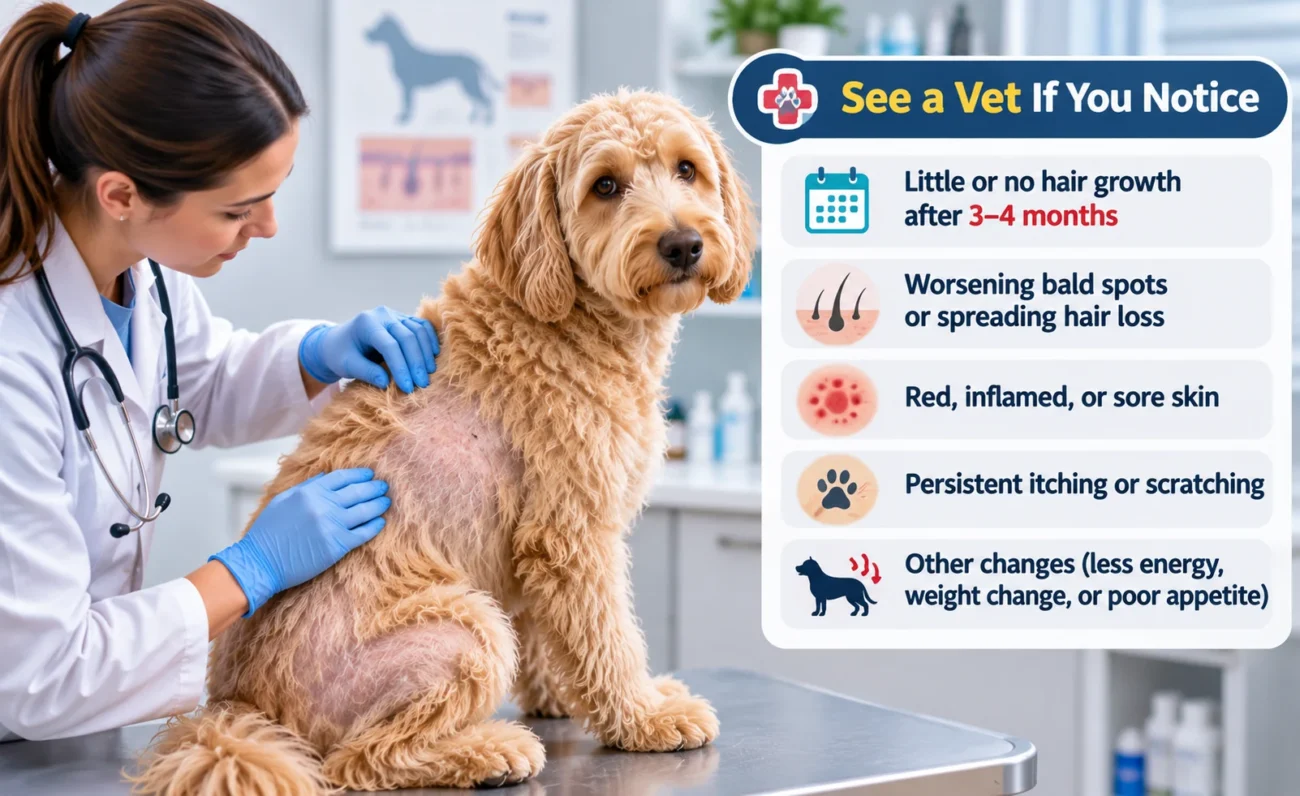
Contact your veterinarian if hair growth remains minimal after approximately three to four months or if the coat develops worsening bald patches.
You should seek an earlier examination if your dog develops:
- Persistent itching or scratching
- Red, swollen, painful, or damaged skin
- Scabs, discharge, or an unusual odor
- Hair loss beyond the originally clipped area
- Changes in energy, thirst, appetite, or body weight
During an examination, your veterinarian may review grooming history, examine the skin, and recommend appropriate testing if an underlying disorder is suspected.
Do not start hormone treatments, melatonin, or other hair-growth medications without veterinary guidance. Their usefulness depends on the diagnosis, and some products can be inappropriate for individual dogs.
What Should You Avoid While Waiting for Your Dog’s Coat to Recover?
The most useful approach is to protect the skin while allowing the hair cycle to continue normally.
Avoid these common mistakes:
- Repeated shaving: Cutting the coat again does not reset its growth cycle or guarantee faster regrowth.
- Harsh brushing: Aggressive tools can irritate skin that has less hair protection.
- Unproven growth products: Oils, supplements, and home treatments are not established solutions for routine post-haircut regrowth.
- Excessive bathing: Frequent shampooing can dry or irritate the skin.
- Ignoring persistent baldness: Continued lack of growth may deserve veterinary investigation even when the skin initially looks normal.
Give the coat time, but use the dog’s progress and overall health to decide whether waiting remains appropriate.
Frequently Asked Questions
Will dog hair grow back after being shaved to the skin?
Usually, yes. Healthy follicles can produce new hair after close shaving. However, very short clipping may expose differences in growth cycles, and some dogs develop delayed regrowth. Thick, plush-coated breeds can be especially susceptible.
Can a dog’s hair grow back a different color after shaving?
Yes. New growth may temporarily appear lighter, darker, or uneven because different hairs return at different times. Persistent color changes accompanied by baldness or abnormal skin should be examined by a veterinarian.
Does brushing make dog hair grow faster?
Brushing supports coat maintenance by removing loose hair and preventing tangles, but it has not been established as a reliable way to accelerate follicle growth. Gentle technique is more important than frequent or forceful brushing.
Will my puppy’s coat grow back after its first haircut?
Generally, yes. However, puppies may naturally transition from a soft puppy coat to a different adult coat. Changes in thickness, color, or texture after a first haircut may partly reflect normal coat development.
Can dog hair grow back after surgical shaving?
Yes. Surgical clipping usually allows normal regrowth when the skin and follicles are healthy. A published study of Labrador Retrievers found average recovery to the original length in approximately 14 to 15 weeks, although other dogs may take longer.
Can stress stop dog hair from growing back?
Significant illness or physiological stress can affect hair cycling, but slow growth after grooming does not prove stress is responsible. Persistent or widespread hair loss should be assessed for medical and dermatological causes.
Final Thoughts: Will Your Dog’s Hair Grow Back?
Most dogs regrow their hair after a haircut, but returning to the original coat length or texture may take several months. The timeline depends on the dog’s coat type, hair cycle, and overall health.
Protect exposed skin, maintain gentle grooming habits, and monitor gradual progress. If regrowth is absent for several months or the skin develops concerning changes, a veterinarian can help identify the reason.
The key is to support healthy skin and coat care rather than trying to force faster growth.


