
Quick Answer
Dog haircut maintenance means keeping your dog’s coat clean, comfortable, and free of tangles between haircuts. Brush and comb regularly, pay extra attention to areas prone to matting, clean dirty fur gently, and check the skin. Long and curly coats may need daily attention, while many short coats need less frequent brushing. Adjust the routine to your dog’s coat type and individual needs.
A fresh haircut makes your dog look neat, but the coat needs attention as it grows. Hair can tangle behind the ears, collect dirt around the paws, or develop hidden mats beneath the surface.
The solution is a manageable grooming routine. Consistent brushing, occasional cleaning, and regular coat checks can help preserve the haircut without unnecessary trimming.
What Does Dog Haircut Maintenance Involve?
Dog haircut maintenance is the care you provide between full grooming appointments. Its purpose is to prevent tangles, remove loose hair and debris, maintain hygiene, and identify coat or skin problems early.
It is different from giving your dog another haircut. Most between-appointment care involves brushing, combing, cleaning, and checking the coat rather than removing hair with scissors or clippers.
Regular grooming also gives you an opportunity to notice changes such as redness, irritation, unusual lumps, or sensitive areas.
The VCA Animal Hospitals coat-care guide explains that coat maintenance supports cleanliness and helps prevent tangles and matting.
The most useful routine is one your dog tolerates comfortably and that you can maintain consistently.
How Often Should You Maintain Your Dog’s Haircut?
The frequency depends primarily on coat length, texture, density, and the dog’s activities. Long, curly, and easily tangled coats generally need more frequent attention than smooth, short coats.
Use the following schedule as a starting point, not a fixed rule for every breed.
| Coat Type | Starting Routine | Main Maintenance Concern |
|---|---|---|
| Short, smooth | About once weekly, with additional brushing during shedding | Loose hair, dirt, and skin checks |
| Long, silky | Daily gentle brushing and combing | Knots behind ears and around legs |
| Curly or woolly | Daily or very frequent thorough coat checks and combing | Hidden mats close to the skin |
| Double coat | Several times weekly, increasing during heavy shedding | Loose undercoat and trapped debris |
| Wire or specialty coat | Follow a groomer’s breed-specific maintenance plan | Coat texture and specialized grooming needs |
The goal is not to brush as frequently as possible. It is to brush often enough that the coat stays comfortable and manageable without irritating the skin.
Dogs with longer haircuts may need additional care as their coats grow. A shorter professional trim can sometimes make home maintenance easier, although it does not eliminate the need for grooming.
How Do You Maintain a Dog’s Haircut Between Grooming Appointments?
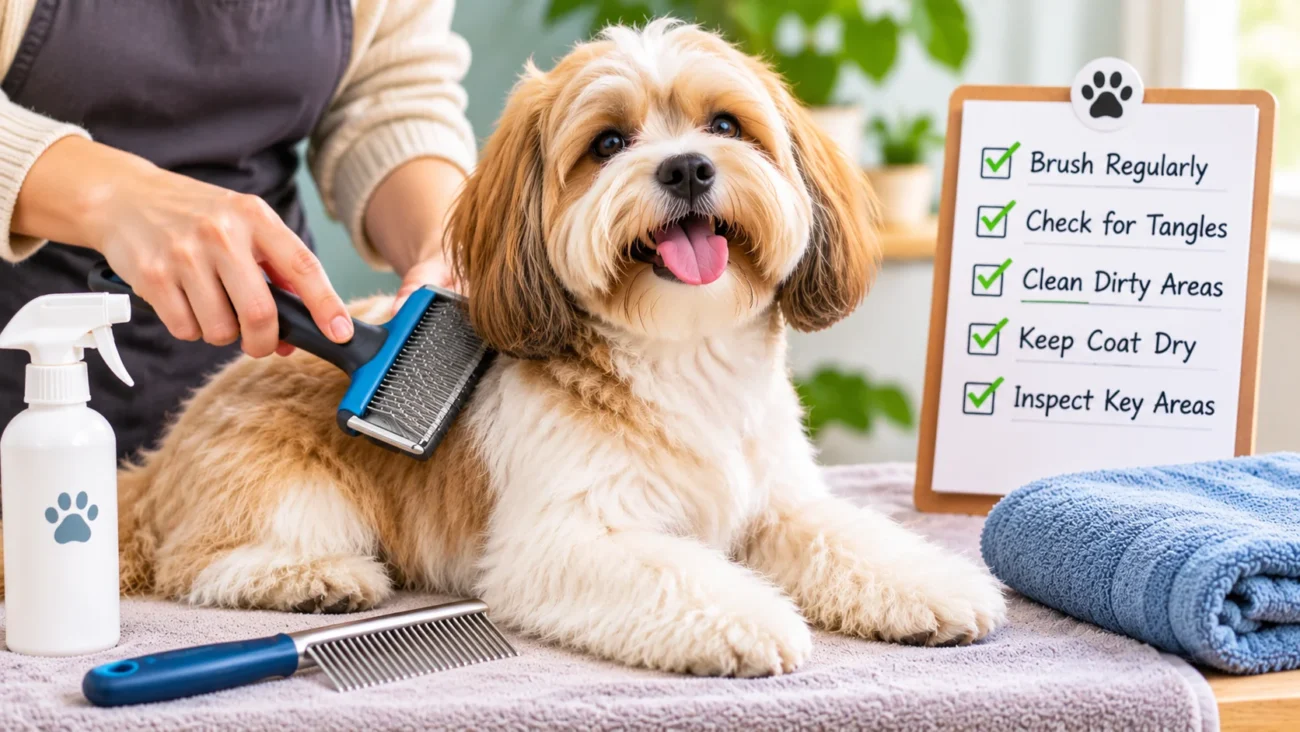
Begin with a calm dog, the correct brush or comb, and a well-lit, non-slip grooming area. Keep the sessions gentle and work systematically so that easily missed areas receive attention.
1. Check the Coat Before Brushing
Run your hands lightly over your dog’s body to find loose tangles, dirt, burrs, or sensitive areas.
Pay attention to the neck, armpits, behind the ears, and inner legs. Friction from collars, harnesses, and movement can contribute to tangles in these areas.
If you find a tight mat attached close to the skin, avoid pulling or trying to cut it out yourself.
2. Brush in Small, Manageable Sections
Start with an easy area, such as the shoulder or back, and gently brush in the direction the hair naturally grows.
For long or curly coats, lift small layers of hair and work through them carefully rather than brushing only the visible surface.
Use light pressure. A slicker brush can cause discomfort if its pins repeatedly scrape the skin.
Reward calm behavior and pause when your dog becomes uncomfortable. Several short sessions are better than one stressful session.
3. Check Your Work With a Comb
A brush can make the outside of a coat look smooth while leaving tangles underneath.
For coats that need combing, carefully pass a suitable metal grooming comb through small sections after brushing. It should move through the hair without catching or pulling.
If the comb stops at a knot, do not force it through. Work on a small, loose tangle gently or ask a groomer to handle a tighter mat.
Grooming Tip
For a long or curly coat, use a gentle brush-and-comb routine. The comb helps reveal hidden tangles that a surface-only brushing session may miss.
4. Clean Dirty Areas Without Overwashing
Paws, lower legs, the belly, and the rear can become dirty before the rest of the coat needs a bath.
Remove light dirt with an appropriate damp cloth or gentle spot cleaning. Dry the hair afterward, especially in dense coats or skin folds.
For a complete wash, use a shampoo intended for dogs and follow a bathing routine suited to the coat and skin.
Our dog bathing guide explains how to prepare, shampoo, rinse, and dry a dog safely at home.
5. Dry the Coat Thoroughly
Leaving dense or long hair damp can lead to new tangles and may contribute to skin discomfort.
Press a towel gently against the coat instead of rubbing long hair vigorously. If using a pet-safe dryer, choose a comfortable, low-temperature setting and keep the airflow moving.
Do not direct hot air at the skin or force a frightened dog to tolerate a dryer. Check beneath the outer coat to confirm that thick sections are dry.
6. Inspect Sensitive and High-Friction Areas
Finish by checking behind the ears, under the collar, around the armpits, between the toes, and around the tail.
Look for early tangles, trapped debris, redness, or soreness. Addressing a small problem early is usually easier than dealing with a heavily matted coat later.
Do not attempt to trim hair inside the ear canal, around the eyes, or close to delicate skin if you lack the appropriate grooming skills and equipment.
Which Grooming Tools Help Maintain a Dog’s Haircut?
The right tools depend on your dog’s coat. A complete set of professional clippers is unnecessary for routine brushing and coat maintenance.
| Tool | Useful For | Important Consideration |
|---|---|---|
| Slicker brush | Loose hair and gentle brushing of suitable long or curly coats | Avoid scraping the skin or forcing the pins through knots. |
| Metal grooming comb | Checking for remaining tangles in suitable coats | Never pull a comb forcefully through a mat. |
| Soft bristle or rubber brush | Routine care for many short, smooth coats | Choose a gentle tool suited to the dog’s skin. |
| Undercoat rake | Removing loose undercoat from suitable double coats | Use the correct type and avoid aggressive repeated passes. |
| Dog shampoo and absorbent towels | Occasional bathing and careful drying | Match products to skin needs and rinse thoroughly. |
The American Kennel Club guide to dog brushes provides additional information about choosing tools for different coats.
Ask your groomer to demonstrate which tools work best for your dog, especially if the coat is unusually dense, delicate, corded, or prone to matting.
How Can You Prevent Matted Hair After a Dog Haircut?
The best way to prevent mats is to remove tangles before they tighten. This usually means regular brushing and combing, combined with extra attention to high-friction areas.
Mats form when loose or growing hairs become tangled and compacted together. As they tighten, they can pull on the skin and become uncomfortable.
- Check under collars and harnesses: These areas experience frequent rubbing.
- Inspect behind the ears: Fine hair can tangle in areas that are easy to overlook.
- Keep the coat dry: Brush out manageable tangles before bathing and dry the coat properly afterward.
- Comb beneath the surface: This is especially useful for longer and curly coats.
- Adjust the haircut length: Ask a groomer about a manageable trim if the coat mats faster than you can comfortably maintain it.
Warning
Never cut a tight mat away with household scissors. Dog skin can be pulled into or concealed beneath the mat, creating a serious risk of injury. Painful, extensive, or skin-level matting should be assessed by an experienced groomer or veterinarian.
The ASPCA grooming guidance also emphasizes regular coat care to help prevent tangling and maintain skin cleanliness.
Should You Trim Your Dog’s Hair Between Grooming Visits?
Most dogs do not need an additional haircut between scheduled grooming visits if their coat is staying clean, manageable, and comfortable.
However, hair around the paws, eyes, or sanitary areas may sometimes need attention before the next full appointment.
These areas are delicate. If hair obstructs vision, traps waste, or makes walking uncomfortable, arrange a suitable maintenance trim with a qualified groomer rather than attempting a risky cut.
Be particularly careful with double-coated breeds. Their coat maintenance needs differ from those of dogs with continuously growing hair. Routine brushing and removing loose undercoat are often more appropriate than cutting the coat shorter.
For practical safety guidance, see the AKC recommendations for grooming dogs at home.
What Does an Easy Weekly Dog Haircut Maintenance Routine Look Like?
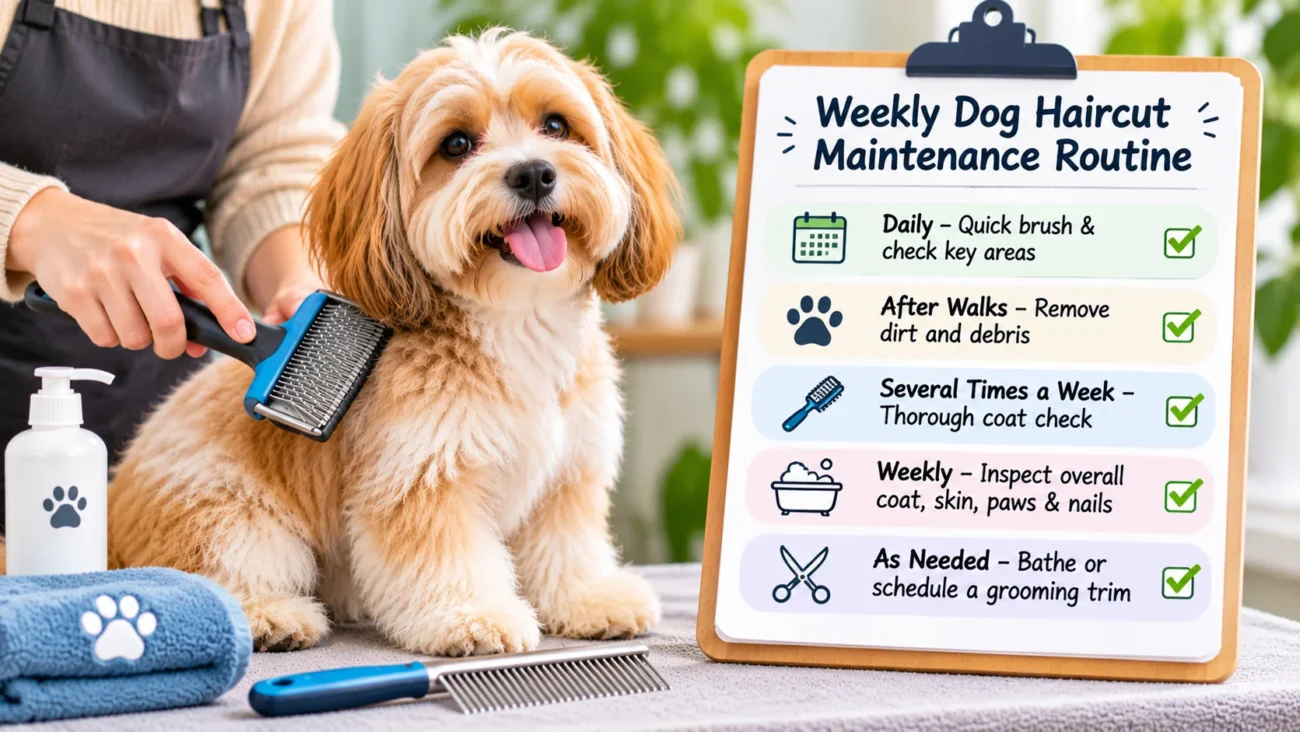
A simple routine makes maintenance easier to remember. The following example suits a dog with a coat that needs frequent brushing, but the frequency should be adjusted to the individual dog.
- Every day: Check high-friction areas and gently brush or comb hair that tends to tangle.
- After outdoor activities: Inspect the paws, belly, and legs for mud, burrs, and debris.
- Several times each week: Perform a more thorough coat check, including behind the ears and under the collar.
- Once each week: Inspect the overall coat condition, skin, paws, and nails. Check whether grooming appointments need adjusting.
- When necessary: Bathe the dog using suitable products, or arrange a professional brush-out or hygiene trim.
For short-coated dogs, this schedule can be simplified. Some may only need a thorough weekly brushing plus occasional extra attention during shedding.
The important measure of success is the condition of the coat, not whether every session takes the same number of minutes.
What Common Dog Haircut Maintenance Mistakes Should You Avoid?
Most maintenance problems come from missed tangles, unsuitable tools, or grooming techniques that make a dog uncomfortable.
- Brushing only the top layer: Hidden tangles may remain underneath long or curly hair.
- Using too much pressure: Repeated scraping or pulling can irritate the skin.
- Bathing a heavily tangled coat: Existing mats can become harder to manage after washing.
- Leaving dense hair damp: Moisture trapped close to the skin can create problems.
- Cutting mats with scissors: Skin may be concealed inside tightly tangled hair.
- Ignoring signs of distress: A dog that repeatedly pulls away, cries, freezes, or reacts defensively may be frightened or in pain.
- Waiting too long for professional care: Home brushing cannot always solve severe matting or an unsuitable haircut schedule.
A useful distinction is that a clean-looking coat is not necessarily a tangle-free coat. Checking close to the skin, without pulling or causing discomfort, provides a more reliable picture of its condition.
When Should You Contact a Groomer or Veterinarian?
Contact a groomer when the hair becomes too tangled to manage safely, when a hygiene trim is needed, or when your home routine no longer keeps the coat comfortable.
Seek veterinary advice when you notice:
- Persistent redness, swelling, or irritated skin
- Unusual hair loss or bald patches
- Open sores, discharge, or a strong abnormal odor
- Severe itching or repeated licking and scratching
- Pain when a particular area is touched
- Skin problems hidden beneath extensive matting
These problems may need medical evaluation rather than additional brushing, bathing, or trimming.
For example, VCA Animal Hospitals explains that matted hair can contribute to moisture being trapped near the skin, which may increase the risk of certain skin problems.
Grooming is useful preventive care, but it is not a substitute for diagnosing or treating a skin condition.
Frequently Asked Questions About Dog Haircut Maintenance
Can I maintain my dog’s haircut without using clippers?
Yes. Most between-appointment maintenance involves brushing, combing, cleaning, and coat inspections. Clippers are not necessary unless a trim is genuinely needed and can be performed safely.
Does a puppy need the same haircut maintenance routine as an adult dog?
Not always. A puppy may have a different coat texture and a lower tolerance for handling. Begin with brief, positive brushing sessions and adjust the routine as the coat develops.
Can I use human conditioner to keep my dog’s hair soft?
Choose a conditioner made for dogs unless your veterinarian recommends otherwise. Human hair products are not necessarily suitable for canine skin and may cause irritation.
What should I do if my dog hates being brushed?
Start with very short sessions in an easy-to-reach area and reward calm behavior. Use gentle tools and stop if your dog shows pain or significant distress. Ask a groomer or veterinarian for help if the reaction continues.
Does a shorter haircut completely prevent matting?
No. Shorter hair may be easier to maintain, but tangles can still develop as the coat grows. Regular checks are especially useful behind the ears, under collars, and around the legs.
What if my dog’s hair becomes tangled soon after grooming?
Check whether your brushing technique reaches beneath the outer coat and whether the tool suits the hair texture. If tangles return quickly despite regular care, ask your groomer about a shorter maintenance interval or a more manageable haircut.
Final Thoughts on Dog Haircut Maintenance
Keeping a dog’s haircut in good condition does not require complicated equipment or repeated trimming. Regular brushing, gentle cleaning, careful drying, and frequent coat checks handle much of the work.
Match the routine to your dog’s coat type, watch for developing mats, and use professional help when grooming becomes painful or difficult. The result is a cleaner, more comfortable coat between appointments.


