
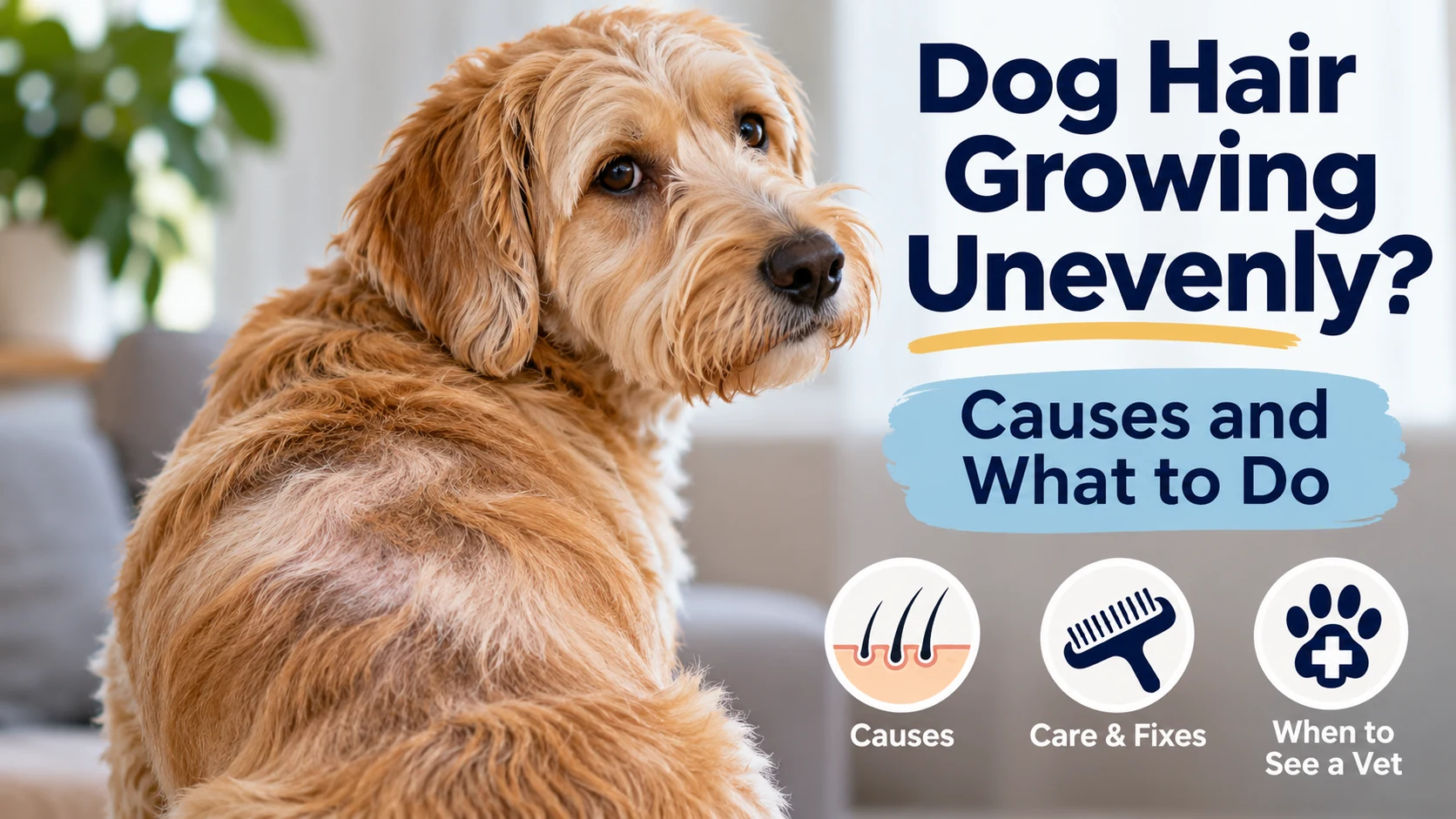
Quick Answer
Dog hair growing unevenly can result from normal differences in hair-growth cycles, a recent haircut, coat type, or seasonal changes. However, patchy hair loss, itching, redness, or unusually slow regrowth can indicate skin disease, parasites, or an underlying health condition. Check the skin beneath the fur first. If there are bald patches, irritation, or persistent changes, arrange a veterinary examination.
One side of your dog’s coat looks fluffy, while another seems thin or stubbornly short. Perhaps this happened after a haircut, or you recently noticed that the fur on your dog’s back is not growing like the rest.
The most useful first step is to distinguish hair that is growing at different rates from hair that is actually falling out.
These situations can look similar, but their causes and solutions may be quite different. Here’s how to recognize the difference and decide what to do.
Why Is Your Dog’s Hair Growing Unevenly?
Uneven dog hair growth can happen because individual hair follicles are at different stages of their growth cycle. Differences in breed, coat structure, and recent clipping can make those changes especially noticeable.
Some dogs also develop uneven fur because of inflammation, scratching, parasites, or medical conditions that interfere with normal hair production.
The most relevant possibilities include:
- Natural hair-growth cycles: Different follicles may be growing, resting, or shedding at different times.
- Recent grooming: Short clipping can reveal differences in hair density and regrowth.
- Double-coated breeds: Guard hairs and undercoat can return at different rates.
- Skin irritation or allergies: Scratching, licking, and chewing may break or remove hair.
- Parasites and infections: Mites, fungal infections, and bacterial skin disease can cause patchy hair loss.
- Hormonal disorders: Conditions such as hypothyroidism or Cushing’s disease may interfere with normal coat growth.
The Merck Veterinary Manual’s guide to hair loss in dogs explains how disease can damage hair shafts, affect follicles, or disrupt normal hair growth.
The important distinction is whether the fur is simply uneven in length or whether the skin is losing normal hair coverage.
How Can You Tell Normal Uneven Growth From Hair Loss?
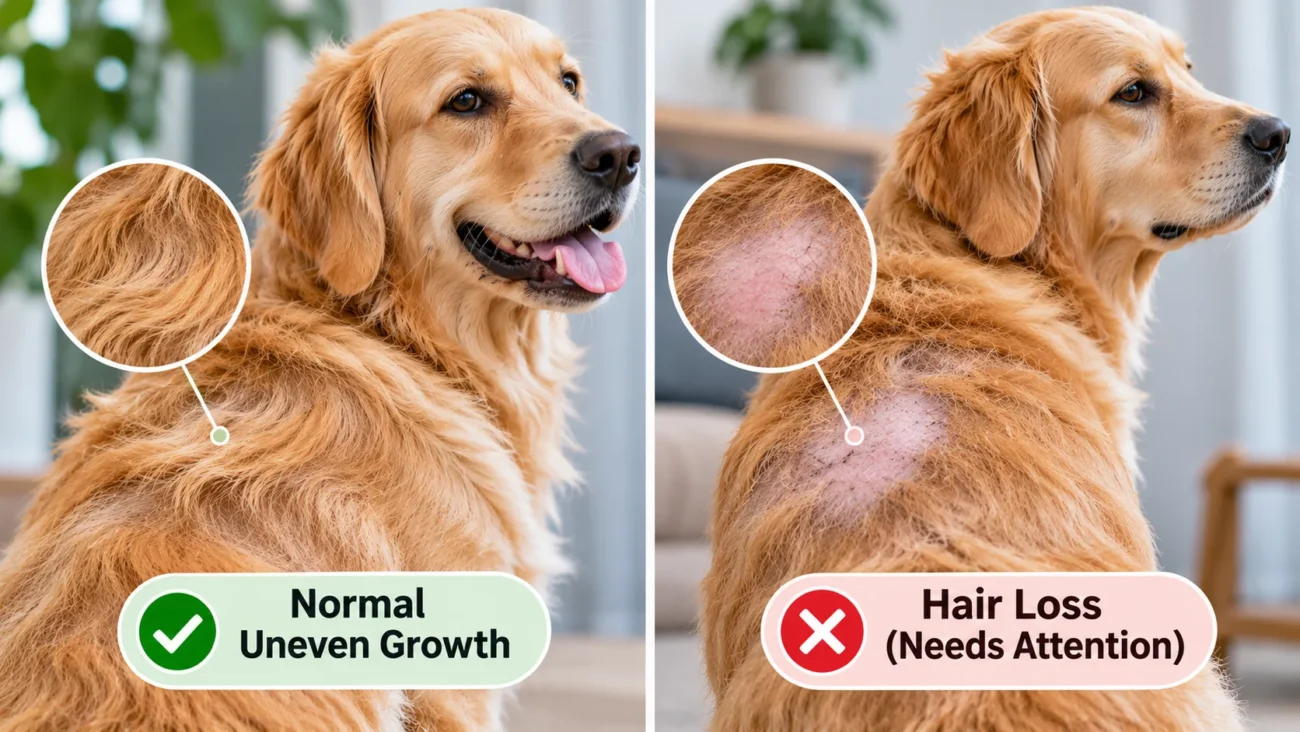
Normal-looking uneven regrowth usually leaves the skin covered with hair, even if the coat appears different in length, color, or texture. True hair loss creates noticeably thin or bald areas.
Skin condition and your dog’s behavior provide additional clues.
| What You Notice | Possible Explanation | Next Step |
|---|---|---|
| Different fur lengths after grooming | Uneven clipping or regrowth | Monitor if skin is healthy |
| Short, fuzzy patches without irritation | Hair-cycle variation or delayed regrowth | Photograph and track changes |
| Bald spots with redness or itching | Allergy, parasites, or infection | Arrange veterinary evaluation |
| Symmetrical thinning on both sides | Possible hormonal or hair-cycle condition | Discuss diagnostic testing with a vet |
| Scaly, crusty, painful, or smelly skin | Possible inflammatory skin disease | Seek prompt veterinary care |
No single visual sign confirms the cause. For example, a dog may have hair-cycle abnormalities without itching, while some infections produce both hair loss and irritation.
Why Does Dog Hair Sometimes Grow Back Unevenly After a Haircut?
Hair can grow back unevenly after a haircut because clipping cuts the visible hair shafts without synchronizing the growth cycles of the follicles underneath.
Some follicles may already be actively producing hair. Others may be resting and will not immediately produce noticeable new growth.
Different Hair Types Can Regrow at Different Rates
Dogs with double coats have soft undercoat hairs and longer protective guard hairs. These layers have different functions and may become visible at different stages after trimming.
As a result, a recently clipped coat can appear woolly, irregular, or different in texture while it returns.
This is particularly relevant in thick-coated dogs such as Huskies, Samoyeds, Chow Chows, and Pomeranians.
What Is Post-Clipping Alopecia?
Post-clipping alopecia describes delayed or absent hair regrowth in an area that was previously clipped. It has been reported particularly in dogs with thick, plush coats.
The underlying mechanism is not fully understood. Prolonged resting phases in the hair-growth cycle may contribute.
The University of Minnesota’s veterinary dermatology resource describes the condition and illustrates how regrowth can be prolonged.
Importantly, delayed hair return after clipping does not automatically prove post-clipping alopecia. A veterinarian may need to rule out other disorders that also slow hair growth.
Key Insight
A dog developing uneven fur after grooming does not necessarily mean the groomer damaged the coat. Clipping may make an existing hair-growth problem more noticeable, and the dog’s natural hair cycle may also contribute.
What Medical Problems Can Cause Patchy or Uneven Dog Hair Growth?
Several health conditions can interrupt normal hair production or cause existing hair to fall out. The pattern of hair loss and presence of other symptoms help a veterinarian narrow the possibilities.
Allergies and Excessive Scratching
Dogs with allergies may repeatedly scratch, lick, or chew affected areas. This can break hairs or create localized thinning.
Some dogs develop redness, irritated paws, recurrent ear problems, or skin infections alongside coat changes.
An uneven coat caused by continuous scratching is unlikely to improve completely until the underlying irritation is controlled.
Parasites and Skin Infections
Fleas and mites can cause hair loss through skin irritation or inflammation. Ringworm, a fungal infection, may produce patches of missing hair, sometimes with scaling or crusting.
Bacterial skin infections can also affect follicles and create irregular thinning.
These conditions require different treatments, so identifying the cause matters more than simply trying to stimulate regrowth.
The PDSA guide to alopecia in dogs explains why new or unexplained hair loss warrants veterinary assessment.
Hormonal Disorders
Hypothyroidism and Cushing’s disease can interfere with normal coat growth. Affected dogs may develop thinning hair, slow regrowth, or hair loss on both sides of the body.
Additional changes can provide clues. Hypothyroidism may be associated with reduced activity and weight gain, while Cushing’s disease can cause increased drinking, urination, appetite, or abdominal enlargement.
These symptoms do not establish a diagnosis on their own. A veterinarian may recommend examination and targeted laboratory testing.
Nutrition and Overall Health
A complete, balanced diet provides nutrients necessary for healthy skin and hair production. Inadequate nutrition or certain nutritional deficiencies can contribute to poor coat quality.
However, an uneven coat does not automatically indicate a vitamin deficiency.
VCA Animal Hospitals explains the relationship between nutrition, skin health, and hair-coat quality in its guide to nutrition and canine skin health.
If your dog already eats a complete diet, adding supplements without veterinary guidance is not a reliable solution for patchy hair loss.
What Should You Check When Your Dog’s Hair Is Growing Unevenly?
Start by examining the skin and identifying whether the unusual area represents shorter hair, thinning hair, or complete hair loss.
Use the following process without pulling the coat or irritating the skin.
- Look at the skin. Gently separate the fur and inspect for redness, scales, sores, crusts, swelling, or discoloration.
- Compare different areas. Check whether the irregularity affects one spot, several scattered spots, or matching areas on both sides.
- Watch your dog’s behavior. Notice repeated scratching, licking, chewing, rubbing, or sensitivity to touch.
- Review recent grooming. Record when the last haircut occurred, whether the coat was clipped very short, and whether irritation followed.
- Check for wider health changes. Watch for unusual thirst, appetite changes, reduced energy, or changes in body weight.
- Take clear photographs. Photograph the same affected areas in similar lighting to identify whether hair coverage is improving or worsening.
When speaking with a veterinarian, these observations can help establish when the problem started and how it has progressed.
Practical Tip
Take one photo immediately after grooming and another from the same angle every few weeks. Comparing photographs is usually more useful than trying to judge small day-to-day changes from memory.
How Can You Help Your Dog’s Coat Grow Back Healthily?
You can support healthy coat recovery through appropriate grooming, balanced nutrition, and early attention to skin problems. There is no universal home treatment that makes all types of uneven hair growth resolve faster.
1. Brush Gently for Your Dog’s Coat Type
Choose a brush appropriate for your dog’s coat and use gentle pressure. Regular brushing can remove loose hair and prevent tangles that make the coat appear uneven.
Do not repeatedly scrape sensitive skin or pull forcefully through tight mats.
Brushing helps maintain the coat, but it cannot correct hormonal disease, follicle damage, or other medical causes of inadequate hair growth.
2. Keep the Skin Clean Without Overbathing
Use a shampoo formulated for dogs and follow an appropriate bathing schedule. Avoid harsh products and excessive washing, especially when the skin is dry or irritated.
For a gentle washing routine, see our dog bathing guide for safe home grooming.
If the skin appears inflamed or infected, ask a veterinarian whether bathing or medicated shampoo is appropriate before applying additional products.
3. Feed a Complete and Balanced Diet
Provide food appropriate for your dog’s age, size, and health needs. Adequate protein, essential fatty acids, vitamins, and minerals support normal skin and coat maintenance.
A dog with a diagnosed nutritional deficiency may require a specific dietary adjustment. Unnecessary supplementation is not a substitute for identifying the cause of hair loss.
4. Avoid Repeated Close Shaving
If your dog has a thick double coat and is experiencing delayed regrowth, discuss future haircut length with a qualified groomer and veterinarian.
Repeated close clipping is not an established treatment for delayed hair growth.
If clipping is medically necessary, appropriate veterinary care takes priority over cosmetic coat concerns.
5. Treat the Underlying Cause
When hair loss results from parasites, infection, allergies, or systemic disease, treatment must address that specific condition.
Coat recovery often depends on successful treatment and the time required for affected follicles to resume normal growth.
How Long Does Uneven Dog Hair Take to Grow Back?
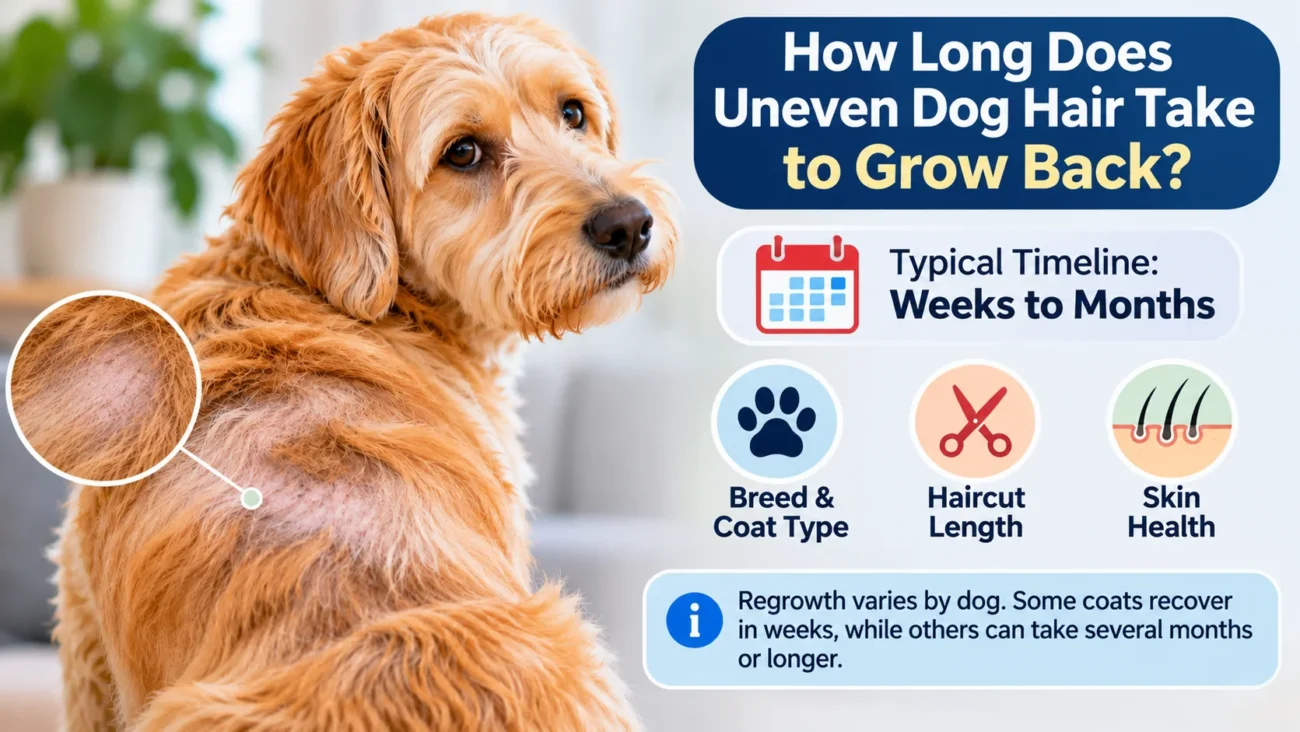
Dog hair regrowth can take weeks to months, and in some dogs it takes considerably longer. The timing depends on breed, coat type, follicle growth phase, clipping length, and skin health.
There is no dependable number of weeks that applies to every dog.
In dogs with delayed post-clipping regrowth, veterinary dermatology references describe recovery extending over many months. Some cases take a year or longer.
Normal-looking skin and gradual improvement are more reassuring than expanding bald patches or worsening irritation, but they do not guarantee that an underlying condition is absent.
Rather than relying on a fixed deadline, assess whether the coat is improving and whether any other symptoms are developing.
If there is no obvious progress after several months, or the appearance is concerning at any point, discuss it with your veterinarian.
When Should You Take Your Dog to the Vet for Uneven Hair Growth?
Schedule a veterinary examination when uneven hair growth includes unexplained bald spots, persistent thinning, skin irritation, or other changes in your dog’s health.
Seek prompt veterinary attention if you notice:
- Sudden or rapidly spreading hair loss.
- Severe itching, licking, or chewing.
- Red, swollen, painful, bleeding, or oozing skin.
- Crusting, unusual odor, or signs of infection.
- Hair loss accompanied by reduced energy, excessive thirst, or other systemic symptoms.
- New hair loss in more than one pet or skin lesions developing in household members.
Warning
Do not apply human hair-growth medication, essential oils, or unprescribed skin treatments to your dog. Some human products can be harmful to pets. Avoid treating unexplained bald patches as a purely cosmetic problem.
A veterinarian may examine skin samples, check for mites or infections, review the dog’s medical history, and recommend blood tests when a hormonal disorder is suspected.
Testing depends on the pattern of hair loss and findings from the physical examination.
What Mistakes Should You Avoid When Trying to Fix Uneven Dog Fur?
The most common mistake is assuming that every uneven patch needs another haircut.
A few additional grooming mistakes can make an existing problem harder to recognize or manage:
- Shaving repeatedly to even out the coat: This may conceal whether regrowth is occurring and is not a treatment for follicle disorders.
- Brushing irritated skin aggressively: Excessive friction can worsen discomfort.
- Using unverified growth products: Oils, supplements, and human hair treatments may offer no benefit and can introduce risks.
- Ignoring persistent scratching: Broken hair caused by self-trauma will continue unless the itch is addressed.
- Waiting indefinitely: Progressive thinning or new bald patches deserve examination even if the dog otherwise seems comfortable.
A useful approach is to protect the skin, keep grooming gentle, document changes, and seek an appropriate diagnosis when the pattern suggests more than ordinary regrowth.
Frequently Asked Questions About Dog Hair Growing Unevenly
Can dog hair grow back a different texture after shaving?
Yes. A dog’s coat may temporarily appear softer, fuzzier, or different in texture after clipping. This can happen because the undercoat and longer guard hairs become visible at different stages of regrowth. Persistent changes should be assessed if the skin or hair coverage is abnormal.
Why is my dog’s hair growing back in patches but not evenly?
Patchy regrowth may reflect different hair-growth cycles, particularly after close clipping. However, skin infections, parasites, inflammation, and hormonal disorders can cause similar changes. A veterinary examination is appropriate if patches remain bald or other symptoms appear.
Can stress cause uneven hair growth in dogs?
Stress can be associated with excessive licking or chewing that damages the coat. However, uneven hair growth should not automatically be attributed to stress. Skin disease, itching, and other medical explanations may need to be ruled out.
Will brushing make my dog’s hair grow faster?
Brushing helps remove loose fur and prevents tangles, but it has not been established as a treatment that speeds hair production in dogs with delayed regrowth. Gentle grooming supports coat maintenance rather than correcting the underlying growth cycle.
Can a dog’s hair grow back a different color?
Yes. Some dogs develop temporary differences in coat color after clipping or hair loss. Changes can relate to new hair growth and coat characteristics. If the color change occurs with baldness, inflammation, or darkening of exposed skin, veterinary evaluation may be helpful.
Can uneven dog hair growth become permanent?
Some hair-growth problems are temporary, while permanent follicle damage or scarring may prevent complete regrowth. Certain inherited or chronic conditions can also cause lasting coat changes. The outcome depends on the underlying cause rather than the appearance of the hair alone.
Final Thoughts: What Should You Do About Uneven Dog Hair Growth?
Uneven coat growth is not always a sign of disease. Differences in hair cycles, recent grooming, and coat structure can explain many changes, especially when the skin remains healthy.
However, unexplained bald patches, itching, inflammation, or continuing hair loss should not be dismissed as normal grooming effects.
Start by examining your dog’s skin, documenting the affected areas, and keeping grooming gentle. If the coat is not recovering or other symptoms appear, a veterinarian can help identify the cause and recommend appropriate treatment.


