Quick Answer
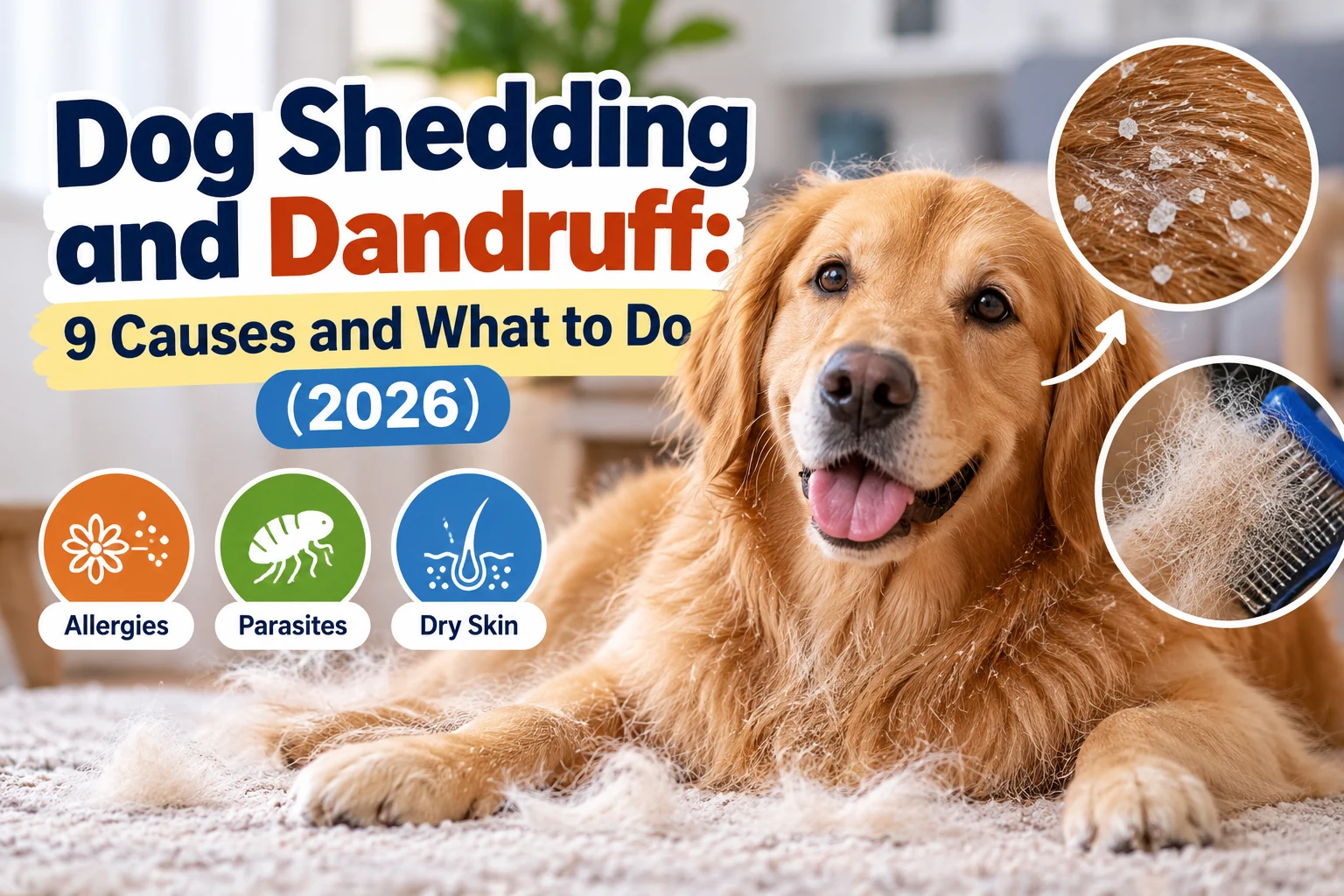
Dog shedding and dandruff together can result from dry skin, seasonal coat changes, allergies, parasites, infections, grooming mistakes, or underlying health problems. Mild flakes without irritation may improve with gentle grooming and dog-safe moisturizing shampoo. However, persistent dandruff, excessive hair loss, itching, redness, or bald patches deserve veterinary attention. Learn about how deshedding shampoo works before choosing a product.
Common Signs to Watch For
- White skin flakes: Small flakes appear along the back, shoulders, or bedding.
- Excessive shedding: More loose fur appears than your dog’s normal amount.
- Dry or greasy skin: The coat feels rough, flaky, unusually oily, or sticky.
- Frequent scratching: Your dog repeatedly scratches, licks, rubs, or bites its skin.
- Hair thinning: Thin areas, broken hairs, or bald patches develop.
- Redness or odor: Inflamed skin, scabs, or unpleasant smells suggest a medical problem.
One Important Check
- Part the coat: Inspect several skin areas under bright light, especially the back, belly, neck, and tail base.
- Watch for changes: Contact your veterinarian if flakes persist, shedding becomes abnormal, or irritation appears.
Finding white flakes in your dog’s fur while loose hair covers the couch can be worrying. The challenge is knowing whether you’re seeing ordinary coat changes or an uncomfortable skin problem.
I find it more useful to look at the skin before reaching for another grooming tool. This guide explains nine possible causes, practical care steps, and warning signs that shouldn’t be ignored.
What Does Dog Shedding and Dandruff Mean?
Dog shedding and dandruff describes two processes happening together: hair falling out and visible dead skin cells flaking from the surface. Shedding can be normal, but ongoing dandruff may indicate an irritated or unhealthy skin barrier.
Dogs naturally replace old hair throughout their lives. Dandruff becomes noticeable when skin scales accumulate or the normal skin-renewal process changes.
Veterinarians sometimes use the term seborrhea for conditions involving excessive scaling, oiliness, or both. Seborrhea can occur alone, but it more commonly develops because of another condition.
What Does Dog Dandruff Look Like?
Dog dandruff usually appears as white, gray, or slightly yellow flakes scattered through the coat. You may notice them most clearly when brushing dark-colored fur.
- Fine white flakes: Often associated with dry or mildly irritated skin.
- Greasy yellowish scales: May occur with seborrhea or excess skin oils.
- Crusty patches: Can accompany inflammation, infection, or parasites.
- Flakes around thinning fur: May suggest a condition affecting both skin and hair follicles.
Appearance alone cannot identify the cause. Similar-looking flakes can develop from several different skin diseases.
What Are the 9 Most Common Causes of Dog Shedding and Dandruff?
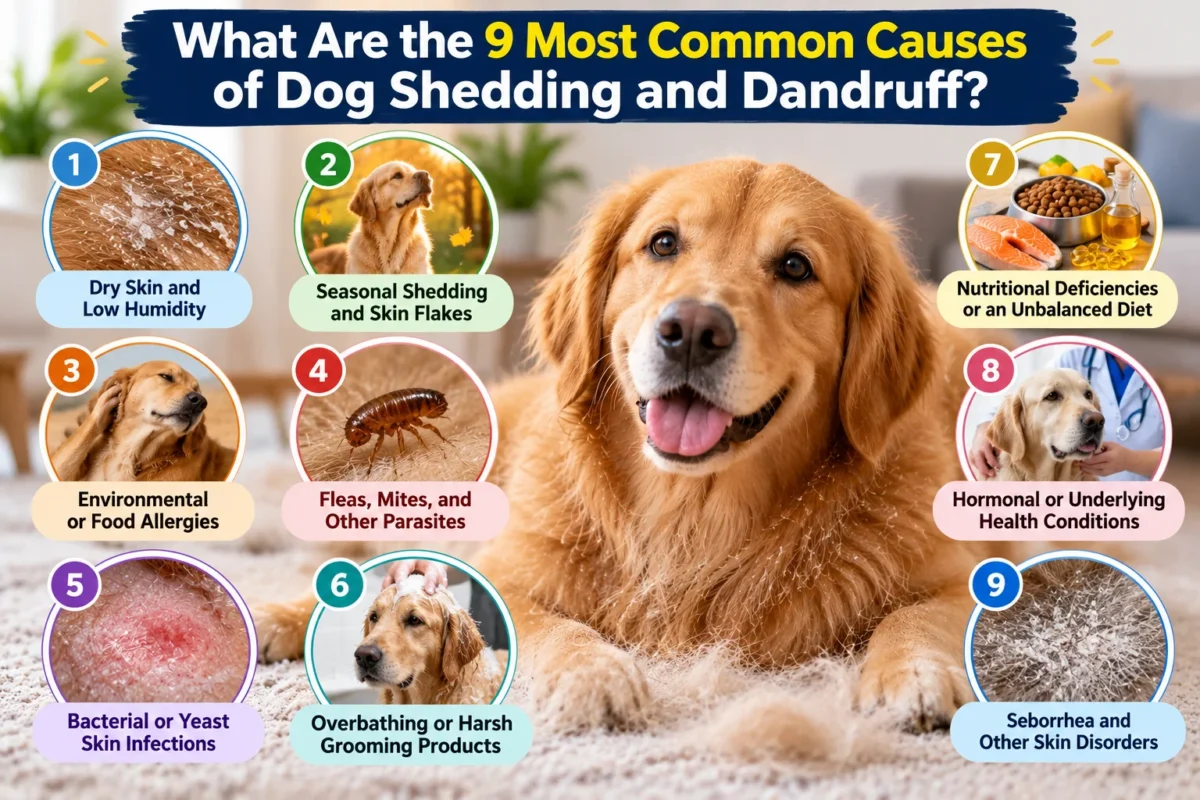
The combination of shedding and flakes has several possible explanations. Some are related to everyday care, while others require testing and medical treatment.
1. Dry Skin and Low Humidity
Dry indoor air and environmental changes can leave a dog’s skin feeling rough or flaky. Excessive bathing may worsen the problem by removing protective oils.
Dogs with mild dryness may have fine white flakes without significant redness. Their coats can also look dull or feel less smooth.
- Use a gentle shampoo formulated for dogs.
- Avoid bathing more often than necessary.
- Rinse shampoo completely from the coat.
- Ask your veterinarian about moisturizing conditioners if dryness continues.
A humidifier may help when indoor air is unusually dry. It won’t treat allergies, parasites, or infection.
2. Seasonal Shedding and Skin Flakes
Many double-coated dogs shed more heavily when their coats respond to seasonal changes. Loose undercoat can carry visible dead skin scales into the brush.
Breeds such as Golden Retrievers, German Shepherds, and Siberian Huskies often have noticeable seasonal coat changes. However, heavy shedding shouldn’t automatically explain persistent dandruff.
- Brush with a tool designed for the coat type.
- Remove loose hair without scraping the skin.
- Check beneath the undercoat for redness.
- Monitor whether skin flakes persist after the shedding period.
Seasonal shedding should not normally create sores or significant discomfort. Those signs need a closer examination.
3. Environmental or Food Allergies
Allergies can cause itchy, inflamed skin and changes in the coat. Repeated scratching and licking may then contribute to broken hair and increased shedding.
Environmental triggers can include pollen, dust mites, and other allergens. Food allergies are another possibility, although not every itchy dog has a food allergy.
- Persistent scratching or paw licking
- Recurring ear irritation
- Red skin around the belly or armpits
- Repeated skin infections
- Hair thinning in frequently scratched areas
Don’t repeatedly change your dog’s food without a plan. Veterinarians can recommend an appropriate allergy investigation or controlled elimination diet.
4. Fleas, Mites, and Other Parasites
External parasites can cause itching, scales, irritation, and hair loss. Flea allergy dermatitis can produce significant skin reactions even when fleas are difficult to find.
Some mites cause mange, which may involve intense itching, crusting, or patchy hair loss. Certain mite-related conditions can spread between animals, and some can affect people.
- Inspect the tail base and lower back.
- Look for flea dirt using a flea comb.
- Check for crusts around ears and elbows.
- Ask your veterinarian about appropriate parasite prevention.
Small black particles that turn reddish-brown on damp white tissue may be flea dirt. However, a negative home check doesn’t rule out parasites.
5. Bacterial or Yeast Skin Infections
Bacterial and yeast infections can disrupt the skin and cause scaling, inflammation, odor, and hair loss. They sometimes develop after allergies or other conditions weaken the skin barrier.
Yeast-related skin problems may appear greasy or have a strong smell. Bacterial infections may cause bumps, pustules, crusts, or circular areas of scaling.
- Unpleasant or unusual skin odor
- Greasy flakes and sticky fur
- Red bumps or crusted patches
- Persistent licking and scratching
A veterinarian can examine skin samples to identify yeast or bacteria. Medicated products should match the diagnosis rather than simply the appearance of the flakes.
6. Overbathing or Harsh Grooming Products
Frequent shampooing or unsuitable products may dry or irritate a dog’s skin. Aggressive brushing can also damage the skin and pull healthy hair.
Human shampoos aren’t a good routine substitute for dog shampoo because canine skin has different characteristics. Strong fragrances and poorly rinsed products may also irritate sensitive dogs.
- Choose dog-specific shampoo.
- Avoid vigorous scrubbing.
- Use lukewarm rather than hot water.
- Follow label instructions carefully.
- Stop grooming inflamed or painful skin.
For a safer washing routine, follow this step-by-step guide to using deshedding shampoo on dogs.
7. Nutritional Deficiencies or an Unbalanced Diet
Proper nutrition helps maintain healthy skin and normal hair growth. An unbalanced diet may contribute to a dry, dull coat and abnormal shedding.
Fatty acids, protein, and other nutrients support the skin barrier. However, visible dandruff doesn’t automatically mean your dog needs supplements.
- Feed a complete and balanced diet suited to your dog’s life stage.
- Review recent food changes.
- Discuss dietary restrictions with your veterinarian.
- Ask before adding fish oil or other supplements.
Extra supplements can be unnecessary or harmful when given incorrectly. Address the actual cause before assuming nutrition is responsible.
8. Hormonal or Underlying Health Conditions
Certain hormonal conditions can affect hair growth and skin health. Hypothyroidism and Cushing’s disease are two examples veterinarians consider when evaluating abnormal coat changes.
Some affected dogs develop symmetrical thinning, recurrent infections, or persistent scaling. Additional symptoms can help the veterinarian decide which tests are appropriate.
- Gradual hair thinning or recurring bald areas
- Changes in body weight
- Reduced energy
- Increased drinking or urination
- Recurring skin infections
These signs aren’t enough to diagnose a hormonal problem. Blood tests and a complete examination may be necessary.
9. Seborrhea and Other Skin Disorders
Seborrhea involves abnormal skin scaling and sometimes excessive oiliness. Most cases are secondary, meaning another condition contributes to the problem.
Inherited primary seborrhea is less common and may begin when a dog is young. Some skin diseases affecting the hair follicles can also cause both scales and coat thinning.
- Persistent dry or greasy scales
- Recurring skin odor
- Flakes around hair follicles
- Skin thickening or crusting
- Recurrent inflammation
Managing seborrhea often requires more than ordinary grooming. Treatment depends on identifying infections or other underlying causes.
How Can You Tell Normal Shedding From a Skin Problem?
Normal shedding usually involves loose hair without noticeable skin inflammation or discomfort. Shedding accompanied by persistent flakes, irritation, bald patches, or unusual odor suggests a possible skin problem.
The following comparison helps identify changes worth discussing with your veterinarian.
| Feature | More Consistent With Normal Shedding | Possible Skin Problem |
|---|---|---|
| Hair loss | Loose fur with an intact coat | Bald patches or unusual thinning |
| Skin flakes | Absent or occasional tiny flakes | Persistent or heavy scaling |
| Itching | No significant discomfort | Frequent scratching or biting |
| Skin appearance | Intact, noninflamed skin | Redness, sores, or crusting |
| Coat odor | No unusual odor | Strong or unpleasant smell |
| Next step | Routine gentle grooming | Veterinary evaluation |
A dog may shed normally and still have an unrelated skin condition. That’s why coat appearance and behavior matter as much as the amount of loose hair.
What Should You Do When Your Dog Has Shedding and Dandruff?
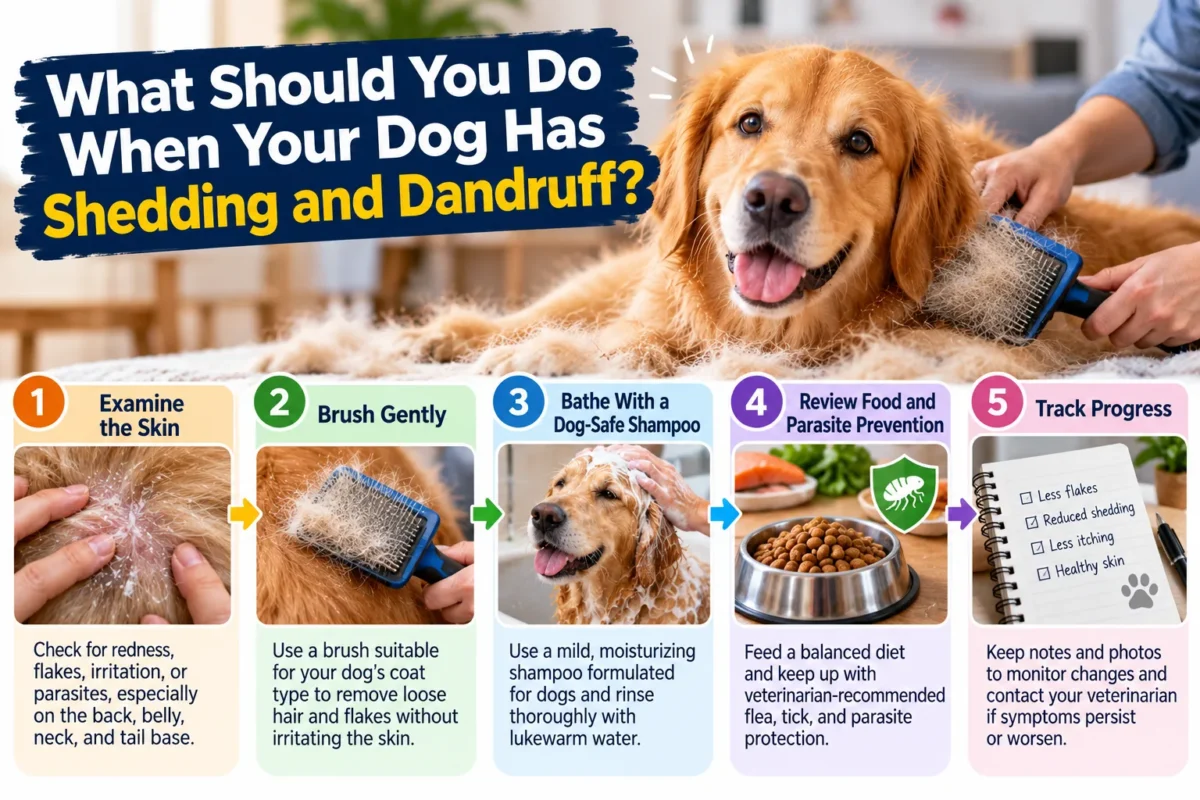
Start by examining your dog’s skin and reviewing recent changes in grooming, diet, and behavior. Mild flakes may respond to gentle care, but treatment should address the cause rather than hide the symptoms.
Step 1: Examine the Skin Carefully
Part the fur in several locations under bright light. Look for redness, scratches, flea dirt, crusts, and thinning areas.
- Check the shoulders and back.
- Inspect the belly and armpits.
- Look around the ears and neck.
- Examine the tail base.
- Photograph any abnormal areas for comparison.
A useful practical habit is checking the skin before each grooming session. This makes new changes easier to notice.
Step 2: Brush Gently With a Suitable Tool
Brushing removes loose hair and helps reveal the skin beneath the coat. Choose a brush that matches your dog’s coat length and texture.
- Short smooth coats: Consider a soft rubber grooming brush.
- Long coats: Use a suitable slicker brush and comb carefully.
- Double coats: Use a gentle undercoat tool where appropriate.
- Inflamed skin: Avoid brushing painful areas until assessed.
More pressure doesn’t mean better grooming. Excessive brushing can make irritated skin worse.
Step 3: Bathe With a Dog-Safe Shampoo
A mild moisturizing shampoo may help when flakes result from simple dryness or product buildup. It cannot cure an infection, allergy, or parasite infestation.
- Gently remove loose fur before bathing.
- Wet the coat with lukewarm water.
- Apply dog-safe shampoo according to the label.
- Massage gently without scratching the skin.
- Rinse thoroughly.
- Dry carefully and check for irritation.
Avoid using human anti-dandruff shampoo without veterinary approval. Medicated shampoos require the correct active ingredients and application schedule.
Step 4: Review Food and Parasite Prevention
Check that your dog’s main food is complete and balanced for its life stage. Also review whether parasite prevention is appropriate and current.
These checks matter because both nutritional problems and parasites can affect the coat. Your veterinarian can advise when testing or dietary changes are necessary.
Step 5: Track Whether the Skin Improves
Keep brief notes about the amount of dandruff, scratching, and shedding. Photos taken under similar lighting can help document changes.
- Record when flakes first appeared.
- Note recent shampoo or food changes.
- Watch for spreading patches.
- Check for new redness or odor.
- Arrange veterinary care if symptoms persist or worsen.
After a bath, follow a gentle post-bath deshedding routine instead of repeatedly brushing the same area.
When Should You Worry About Dog Shedding and Dandruff?
Seek veterinary advice when shedding and dandruff are persistent, unexplained, or accompanied by skin changes. Sudden hair loss, significant itching, or painful skin should not be managed with grooming alone.
Warning Signs That Need Veterinary Attention
- Bald patches: Especially when they spread or appear suddenly.
- Intense itching: Repeated scratching that interrupts normal activity.
- Open sores: Bleeding, discharge, swelling, or painful skin.
- Strong odor: Particularly with greasy scales or redness.
- Other symptoms: Appetite, energy, weight, or drinking changes.
- Persistent dandruff: Flakes that return despite appropriate gentle care.
Severe pain, widespread skin damage, or a dog that appears generally unwell warrants prompt veterinary assessment. Don’t delay treatment while trying multiple shampoos.
How Will a Veterinarian Find the Cause?
Your veterinarian may begin with a skin examination and questions about scratching, diet, grooming, and parasite exposure. The next tests depend on the appearance and distribution of the skin changes.
- Skin cytology: Looks for yeast, bacteria, and inflammatory cells.
- Skin scraping: Helps investigate certain mites.
- Fungal testing: May help identify ringworm.
- Blood tests: Can help assess possible internal or hormonal disease.
- Skin biopsy: May be recommended for difficult or unusual cases.
The Merck Veterinary Manual’s guide to seborrhea explains why finding the underlying cause matters.
Can You Prevent Dog Shedding and Dandruff?
You cannot prevent all normal dog shedding. You can, however, support healthy skin and reduce avoidable grooming-related irritation.
A consistent routine works better than frequent product changes. Adjust grooming to your dog’s coat and skin condition.
Simple Skin and Coat Care Checklist
- Use a brush appropriate for your dog’s coat.
- Inspect the skin during grooming.
- Choose mild dog-specific bathing products.
- Avoid unnecessary frequent bathing.
- Feed a complete and balanced diet.
- Maintain veterinarian-recommended parasite prevention.
- Keep bedding clean and dry.
- Seek veterinary care for recurring flakes or hair loss.
The VCA guide to healthy canine skin and coats offers further information about nutrition and grooming.
How Often Should You Brush a Dog With Dandruff?
Brushing frequency depends on coat type and skin condition. Many dogs benefit from regular short sessions, while irritated skin may require a temporary break.
Start gently and watch your dog’s response. Stop if the skin becomes red or brushing seems uncomfortable.
- Short-haired dogs: Often need less frequent brushing.
- Long-haired dogs: May need frequent detangling.
- Double-coated dogs: Often need extra attention during seasonal shedding.
- Dogs with skin irritation: Need a modified routine guided by their veterinarian.
Deshedding blades can be useful for certain coat types, but technique matters. Read the safe shedding blade guide before using one.
What Products Help With Dog Shedding and Dandruff?
Grooming products can help remove loose fur and support mild dry-skin care, but they aren’t substitutes for veterinary treatment. I prioritize gentle formulas and skin-friendly tools over aggressive deshedding claims.
The following are product options to consider for dogs without open sores or significant skin inflammation. The suitability scores reflect intended uses, not verified customer ratings or hands-on testing.
Affiliate disclosure: As an Amazon Associate, this site may earn from qualifying purchases at no additional cost to you.
🏆 Best for Mild Dry Skin
earthbath Oatmeal & Aloe Dog Shampoo
★★★★☆ 4/5 editorial suitability
An oatmeal-and-aloe shampoo designed for gentle coat cleaning and dry-skin comfort. I would consider this type of moisturizing formula for mild flakes without signs of infection, while checking the current ingredient label and my dog’s sensitivities.
🌿 Gentle Grooming Option
Burt’s Bees Oatmeal Shampoo for Dogs
★★★★☆ 4/5 editorial suitability
An oatmeal-based dog shampoo for routine coat cleaning. I would compare its current formula with other gentle shampoos when choosing a basic washing product, rather than expecting it to treat persistent dandruff.
🐕 Best for Gentle Loose-Fur Removal
Safari Soft Slicker Brush for Dogs
★★★★☆ 4/5 editorial suitability
A soft slicker-style grooming brush intended to remove loose fur and light tangles from suitable coats. I prefer light, controlled brushing over forceful passes, particularly when checking for flakes.
Choose shampoo based on skin condition and a brush based on coat type. If your dog has recurring dandruff, consult your veterinarian before buying medicated treatments.
Frequently Asked Questions About Dog Shedding and Dandruff
Why Is My Dog Shedding So Much and Getting Dandruff?
Excessive shedding with dandruff may result from dry skin, allergies, parasites, infection, grooming irritation, nutritional problems, or hormonal disease. Seasonal shedding may increase loose fur, but persistent flakes deserve attention. Check for itching, redness, odor, and hair thinning, and contact your veterinarian if symptoms continue.
Can Dog Dandruff Cause Hair Loss?
Dandruff itself is a sign of skin scaling rather than a direct cause of hair loss. However, conditions that produce dandruff can also affect hair follicles or cause scratching that damages fur. Bald patches, recurring scaling, or inflamed skin should be examined by a veterinarian.
Is Coconut Oil Good for Dog Dandruff?
Coconut oil may soften some dry skin, but it does not treat the underlying causes of persistent dandruff. Applying oils can also leave the coat greasy or interfere with skin assessment. Ask your veterinarian before using coconut oil, especially when your dog has redness, infection, or sensitive skin.
How Long Does It Take for Dog Dandruff to Go Away?
The time needed depends on the cause. Mild dryness may improve after adjusting bathing and grooming, while allergies, infections, or hormonal conditions can require ongoing treatment. There is no reliable universal timeline. Seek veterinary advice if flakes persist, spread, or accompany other skin symptoms.
Should I Brush My Dog if It Has Dandruff?
Gentle brushing may help remove loose hair and surface flakes when the skin is comfortable and intact. Use a tool suited to your dog’s coat and avoid repeated pressure on the same area. Stop if the skin is painful, red, crusted, or bleeding.
Final Thoughts: How Should You Handle Dog Shedding and Dandruff?
Dog shedding and dandruff aren’t always signs of serious disease, but they shouldn’t automatically be dismissed as seasonal coat changes. The most useful first step is checking the skin and noticing any changes in your dog’s comfort.
Use gentle grooming, suitable dog-safe products, balanced nutrition, and appropriate parasite prevention. Seek veterinary care when symptoms are persistent, severe, or accompanied by inflammation or hair loss.
For further guidance on skin scaling and treatment options, see VCA Animal Hospitals’ explanation of seborrhea and the Merck Veterinary Manual’s veterinary overview.
Start with your dog’s skin, not the amount of fur on the floor. Understanding what causes the flakes is the best way to choose the right next step.