
Quick Answer
To use a shedding blade on a dog, start with a clean, dry, tangle-free coat. Hold the blade gently against the fur and move it in the direction of hair growth using light, controlled strokes. Work across the back, shoulders, and sides, clearing collected fur regularly. Avoid sensitive skin, bony areas, and mats. Stop immediately if your dog shows discomfort or the skin becomes red.
A shedding blade can remove surprising amounts of loose dog hair, but using it incorrectly may cause irritation or pull at healthy fur. The important details are choosing the right blade, controlling pressure, and knowing which areas to avoid.
This guide explains how to use a shedding blade on a dog safely, when it is useful, and how to tell whether another grooming tool would be better for your dog’s coat.
What Is a Dog Shedding Blade and How Does It Work?

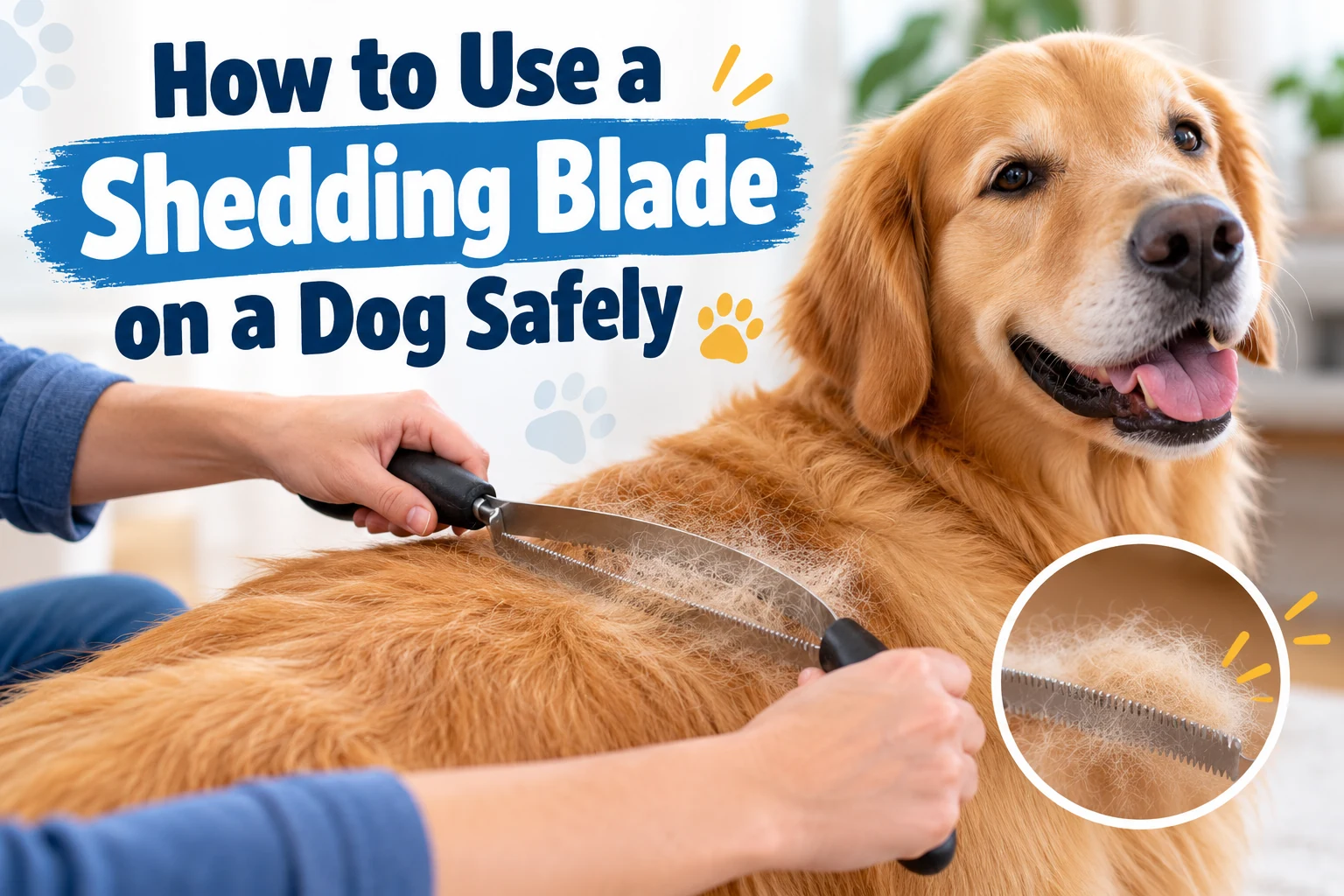
A shedding blade is a handheld grooming tool designed to collect loose hair from a dog’s coat. Traditional versions have a flexible metal strip with small teeth or ridges and handles at both ends. Many can form a loop or open into a longer strip.
As the teeth glide over the coat, they catch hair that is already loose and ready to shed. Unlike clippers, a conventional shedding blade is not intended to give your dog a haircut.
However, not every product marketed as a shedding blade has the same design. Some have more aggressive cutting or stripping edges. Always inspect the tool and follow its manufacturer’s instructions before use.
A shedding blade is just one option within a wider grooming routine. For an explanation of the overall process, see our guide to what deshedding means for dogs.
How to Use a Shedding Blade on a Dog in 7 Steps
The best technique uses minimal pressure, steady movements, and frequent checks of your dog’s comfort.
Step 1: Choose a Suitable Shedding Blade
Select a blade intended for dogs and appropriate for your pet’s coat and body size. A large blade may be difficult to control on a small dog, while a smaller tool may offer better precision.
Inspect the teeth for bent metal, corrosion, damage, or unexpectedly sharp edges. Do not use damaged grooming equipment.
If your dog has a delicate, curly, tightly matted, or unusual coat, ask a groomer which type of tool is appropriate before introducing a shedding blade.
Step 2: Prepare Your Dog’s Coat
Begin with a dry coat that is free of major tangles. Remove surface debris and inspect for mats, bumps, cuts, redness, or tender areas.
Use a suitable brush or comb to gently address minor tangles first. Do not attempt to pull a shedding blade through a knot or dense mat.
For dogs with serious matting, professional grooming may be safer than attempting to remove the mat at home.
Choose a quiet location with secure footing. Allow your dog to sniff the tool and reward calm behavior before starting.
Step 3: Hold the Blade Correctly
For a traditional two-handled blade, bring the handles together to create a smaller loop or spread them apart for a wider grooming surface, as the product design permits.
Keep a comfortable grip without tightening your hands excessively. Position the blade so the teeth glide along the fur rather than digging into the skin.
Start with the least aggressive working edge if the manufacturer offers more than one tooth pattern.
Test the tool with one short, gentle stroke. Your dog should not flinch, yelp, or pull away in pain.
Step 4: Brush in the Direction of Hair Growth
Begin along a broad, relatively flat area such as the upper back or shoulder. Pull the blade gently in the direction the hair naturally lies, usually from the shoulders toward the tail.
Use short or moderate-length strokes, keeping the movement smooth. Allow the tool’s teeth to collect loose fur without applying extra downward force.
Do not repeatedly scrape the same spot or move aggressively against the direction of hair growth.
If the blade catches or pulls, stop and examine the fur before continuing.
Step 5: Work Through the Coat in Small Sections
Once your dog is comfortable, gradually groom the shoulders, back, and broad sides of the body.
Lift the blade between strokes rather than dragging it continuously over the skin. Follow the body’s natural contours and reduce pressure near areas where bones are close to the surface.
Avoid using a traditional metal shedding blade on the face, ears, paws, groin, genitals, or other sensitive areas. Do not scrape over skin folds, sores, or raised bumps.
For the chest, belly, legs, and tail, a softer grooming mitt or appropriate brush may provide better control.
Step 6: Clear Loose Hair and Monitor the Skin
Remove accumulated fur from the blade frequently. A tool clogged with hair may be less effective and harder to control.
Pause to inspect the groomed area. Healthy-looking skin should not develop new redness, scratches, or irritation from the process.
Watch your dog’s behavior as carefully as the coat. Repeated turning away, stiffness, growling, flinching, or attempts to escape can indicate discomfort or stress.
Stop the session rather than trying to remove every remaining loose hair.
Step 7: Finish With a Soft Brush and Reward
Use a soft bristle brush or a suitable grooming mitt to collect remaining surface hairs and smooth the coat.
Check the skin once more and give your dog praise or a small treat. Clean loose hair from your grooming area and maintain the blade according to its care instructions.
A successful session ends with your dog comfortable and the coat looking tidy, not necessarily with every shedding hair removed.
Practical Tip
For your first session, groom only a small area and see how your dog responds. A few comfortable strokes are more useful than a long session that makes your dog afraid of grooming.
Which Dogs Can Benefit From a Shedding Blade?
Traditional shedding blades can be useful for some dogs with shedding coats, particularly when loose hair collects across broad body areas. Their suitability depends on hair length, coat density, skin sensitivity, and the blade’s construction.
| Coat Type | Practical Guidance |
|---|---|
| Short, dense shedding coat | A gentle shedding blade may help, although a rubber curry brush is often a useful alternative. |
| Medium double coat | May benefit from a suitable blade on broad areas, but an undercoat rake or slicker may better address trapped undercoat. |
| Long, thick coat | Use caution. Long fur may snag; a coat-specific comb or rake is often more suitable. |
| Curly or continuously growing coat | Generally choose a suitable slicker brush and comb instead of a conventional shedding blade. |
| Very fine coat or sensitive skin | Prefer a gentle rubber mitt or soft brush unless a professional recommends otherwise. |
Breed labels alone do not determine whether a blade is suitable. Individual dogs vary in coat thickness and skin sensitivity.
The American Kennel Club’s guide to dog brushes explains why tool selection should depend on coat type.
How Much Pressure Should You Apply?
Use very light pressure. The blade should move through the fur with little resistance, collecting loose hair without scratching or dragging across the skin.
Think of the motion as gently sweeping over the coat rather than scraping something off its surface.
If you need to press harder to collect hair, the tool may not be suitable for the coat or the loose fur may already have been removed from that area.
Do not assume that collecting more hair always means better grooming. Excessive pressure and repeated passes can irritate skin or remove hair unnecessarily.
The American Kennel Club’s advice on managing shedding specifically cautions against pressing too hard with bladed shedding tools.
How Often Should You Use a Shedding Blade?

Use a shedding blade according to your dog’s coat condition, shedding level, skin response, and the manufacturer’s instructions. There is no universally safe schedule for every dog or blade design.
For some dogs, occasional use during periods of heavier shedding may be sufficient. Others may do better with routine brushing using a softer tool and only limited blade use.
Frequent grooming does not have to mean frequent scraping with a metal blade.
If your dog sheds heavily, increase gentle coat maintenance as needed rather than repeatedly using an aggressive tool on the same areas.
For help planning an appropriate routine, see how often to deshed a dog safely.
Common Shedding Blade Mistakes to Avoid
Most preventable problems involve excessive pressure, unsuitable tools, or continuing when the coat or skin is no longer tolerating the process.
- Pressing too hard: May cause discomfort, scratches, or irritation.
- Working against hair growth: Can increase pulling and resistance.
- Passing repeatedly over one area: May irritate skin even when each individual stroke feels gentle.
- Using a blade on mats: May painfully tug tangled hair or catch the skin.
- Grooming sensitive areas: A large metal blade offers poor control around delicate body parts.
- Ignoring warning signs: A dog that flinches or repeatedly moves away needs a break.
- Using the wrong blade: Aggressive teeth or a damaged edge can make grooming unsafe.
Warning
Never use a shedding blade over broken skin, a rash, an infected-looking area, or a painful lump. If grooming reveals persistent redness, sores, unusual hair loss, or significant tenderness, stop and arrange veterinary evaluation rather than attempting more deshedding.
Shedding Blade vs. Undercoat Rake: Which Should You Use?
A shedding blade and an undercoat rake are not interchangeable. Their different shapes make them better suited to different coat-care tasks.
A traditional shedding blade sweeps across the coat and gathers loose fur, particularly on broad body surfaces. An undercoat rake uses longer teeth designed to reach through an outer coat and collect loose undercoat in appropriate double-coated breeds.
For example, a short-coated dog releasing loose surface hair may respond well to a rubber brush or suitable shedding blade. A heavily shedding, thick-coated dog may need careful section-by-section grooming with an appropriately sized undercoat rake.
Neither tool should be forced through mats. Both require a light touch and proper matching to coat length.
For a more complete grooming process, our dog deshedding guide explains how brushes, rakes, and combs fit into a regular routine.
How Can You Tell When to Stop Using the Blade?
Stop when loose hair collection slows, your dog becomes uncomfortable, or the coat has received enough attention for one gentle session.
Look for signs such as:
- Less loose hair appearing after each stroke.
- New redness or visible skin irritation.
- The blade starting to snag or drag.
- Your dog repeatedly pulling away or becoming tense.
- Uneven-looking areas where too much hair may have been removed.
Do not continue simply because hair still appears on the blade. Normal shedding can continue even after effective grooming.
A shedding blade collects hair that is already releasing; it does not permanently stop the natural shedding cycle.
Frequently Asked Questions
1. Can a shedding blade hurt a dog?
Yes, if it is used incorrectly. Too much pressure, repeated scraping, damaged teeth, or use over sensitive skin can cause discomfort and irritation. Gentle technique and appropriate tool selection reduce these risks.
2. Should you use a shedding blade on wet or dry fur?
For most traditional metal shedding blades, begin with a clean, dry coat unless the manufacturer specifically approves wet use. Dry fur makes tangles and skin condition easier to assess.
3. Can you use a shedding blade on a puppy?
A soft brush or grooming mitt is generally a better starting choice for a puppy. Puppy skin and coats can be delicate, and early grooming should focus on comfortable, positive handling.
4. Does a shedding blade cut a dog’s hair?
A conventional blunt-toothed shedding blade is intended mainly to collect loose hair, not trim healthy fur. However, some similarly named tools have cutting edges, so check the product design before using it.
5. Can a shedding blade damage a double coat?
Improper or excessive use may damage hair or irritate skin. A double-coated dog needs a tool that matches its coat density and length. For heavy undercoat removal, a suitable rake or slicker brush may be more appropriate.
6. What should you do if your dog dislikes the shedding blade?
Stop using it and switch to a gentler brush or grooming mitt. Introduce grooming gradually with praise and rewards. If your dog reacts as though touching the coat is painful, have a veterinarian assess the possible cause.
Final Thoughts
Learning how to use a shedding blade on a dog comes down to three priorities: choose an appropriate tool, follow the direction of hair growth, and apply minimal pressure.
Work gently over suitable areas, avoid sensitive skin, and stop before grooming becomes uncomfortable. A shedding blade can be helpful for managing loose fur, but it is not the right tool for every dog or every coat.
Comfortable, consistent coat care will usually produce better long-term results than aggressive deshedding sessions.


