
Quick Answer
For mild dog clipper burn treatment, stop grooming, gently clean irritated skin with saline or cool water, and prevent licking. Avoid human creams and harsh disinfectants. If the skin is blistered, broken, very painful, or worsening, contact a veterinarian. A genuine heat burn requires different first aid, including cooling the affected area with running water and prompt veterinary assessment. See the AKC’s veterinary burn first-aid guidance.
Immediate Treatment Steps
- Stop clipping: Remove the grooming tool from the irritated area immediately.
- Check the skin: Look for redness, scrapes, swelling, blisters, or open wounds.
- Clean gently: Use sterile saline or clean, cool water on superficial irritation.
- Prevent licking: Use a properly fitted recovery collar when necessary.
- Monitor closely: Contact your veterinarian if discomfort persists or the skin worsens.
Important Warning
- Never apply: Rubbing alcohol, hydrogen peroxide, essential oils, or human pain-relief creams without veterinary approval.
- Seek urgent care: Blisters, severe pain, discoloration, or large affected areas may indicate more serious injury.
Seeing red, irritated skin after grooming can be alarming, especially when your dog keeps licking or scratching the area. The good news is that mild clipper irritation can often improve with gentle care.
However, not every red patch is harmless. This guide explains how to recognize clipper burn, provide appropriate first aid, and prevent another painful grooming experience.
What Is Clipper Burn in Dogs?
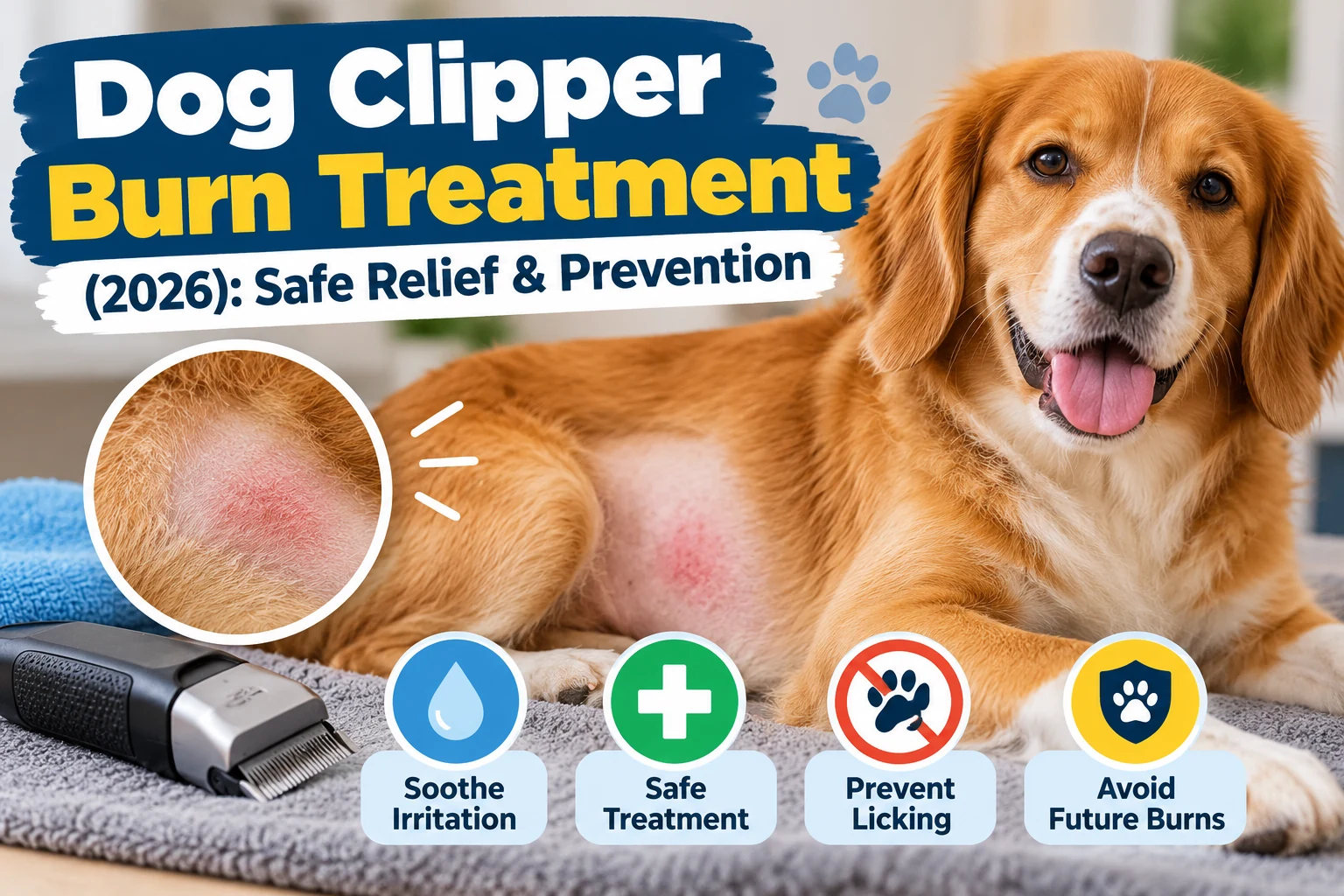
Dog clipper burn is a common grooming term for skin irritation that develops after clipping or shaving. It may involve friction, pressure, an excessively close shave, or contact with a hot clipper blade.
Despite its name, most clipper irritation isn’t a true thermal burn. The term can describe several different skin problems that require different levels of care.
What Does Dog Clipper Burn Look Like?
Typical signs of mild clipper irritation include:
- Pink or red patches after grooming
- Small bumps around hair follicles
- Sensitivity when the area is touched
- Frequent licking or scratching
- Minor surface abrasions
- Discomfort around recently shaved skin
These signs may appear immediately or become noticeable later. Your dog might also seem restless or avoid having the area handled.
Blistering, raw skin, significant swelling, or marked pain suggests a more serious problem. Those signs warrant veterinary assessment rather than routine home treatment.
Where Does Clipper Burn Usually Occur?
Areas with thin skin, folds, or frequent clipper contact can be particularly vulnerable.
- Belly: Thin skin may become irritated during close clipping.
- Groin: Skin folds and friction increase sensitivity.
- Armpits: Loose skin can catch or become scraped.
- Neck: Repeated passes or pressure may irritate the surface.
- Paws: Close trimming between pads can cause discomfort.
- Sanitary area: Delicate skin around the genitals and anus is especially sensitive.
The groin and sanitary areas deserve particular attention. Excessive licking or scooting after grooming may indicate irritation that needs assessment.
How Do You Treat Dog Clipper Burn at Home?

For a small area of mild, intact-skin irritation, gentle cleaning and protection may be sufficient while you monitor your dog. First, make sure the injury isn’t an actual heat burn or an open wound.
Step 1: Stop Grooming Immediately
Turn off the clippers when you notice unusual redness or discomfort. Continuing can worsen existing irritation.
Allow your dog to settle somewhere quiet. Avoid restraining the dog unnecessarily or repeatedly examining painful skin.
Step 2: Examine the Affected Skin
Look at the irritated area without rubbing or stretching it. Note whether the skin is intact or visibly damaged.
- Light pinkness: May indicate minor shaving irritation.
- Small red bumps: Could reflect follicular irritation or another skin problem.
- Scrapes or broken skin: Increase the need for veterinary advice.
- Blisters or severe swelling: Require prompt veterinary attention.
- White, black, or leathery skin: May indicate a serious thermal injury.
Take a clear photograph to document the initial appearance. Another photo later can help you identify changes without repeatedly touching the area.
Step 3: Gently Clean Minor Surface Irritation
Use sterile saline or clean, cool water to rinse mildly irritated, unbroken skin. Pat the area dry with clean gauze or a soft cloth.
Don’t scrub, exfoliate, or wash repeatedly. Friction can make freshly shaved skin more uncomfortable.
If the skin is visibly wounded, ask your veterinarian how to clean and protect it. A treatment suitable for intact skin may not be appropriate for damaged tissue.
Step 4: Soothe the Area Carefully
A clean, cool, damp cloth may provide temporary comfort for mild shaving irritation. Hold it gently against the area without rubbing.
Do not apply ice directly. Avoid scented sprays, alcohol-based products, and unapproved topical medications.
Important: If a hot blade has caused a genuine thermal burn, cool the affected area under cool, running water for approximately 20 minutes when safe to do so. Contact a veterinarian promptly, even if the surface initially appears mild.
Step 5: Prevent Licking and Scratching
Repeated licking can damage the skin and introduce bacteria. Preventing self-trauma is an important part of recovery.
A properly fitted Elizabethan collar can help when your dog won’t leave the area alone. A recovery suit may work for some body locations, provided it doesn’t rub the injury or trap moisture.
Check the skin regularly. Remove or adjust protective equipment if it creates pressure or additional irritation.
Step 6: Monitor Progress
Look for decreasing redness, improved comfort, and reduced licking. Mild surface irritation should show a trend toward improvement rather than spreading or becoming more painful.
If redness worsens, new bumps appear, or your dog remains uncomfortable, arrange veterinary care. Don’t continue home treatment indefinitely while symptoms persist.
How Can You Tell Mild Clipper Irritation From a Serious Burn?
The most important distinction is whether the problem involves superficial shaving irritation, an open skin injury, or heat-related tissue damage. Appearance alone doesn’t always reveal the full extent of an injury.
| Feature | Mild Clipper Irritation | Concerning Injury |
|---|---|---|
| Skin appearance | Light redness, intact skin | Blisters, open wounds, dark discoloration |
| Discomfort | Mild sensitivity | Severe pain or unusual lack of sensation |
| Affected area | Small, localized patch | Large, spreading, or deeply damaged area |
| First response | Gentle cleaning, protection, monitoring | Prompt veterinary care; cooling if thermal |
| Follow-up | Monitor for improvement | Veterinary examination and treatment |
These categories are practical warning signs, not a substitute for diagnosis. Thermal burns can become more visibly damaged over time.
What Causes Clipper Burn During Dog Grooming?
Clipper irritation usually develops when equipment or technique puts unnecessary stress on the skin. Several factors can contribute during the same grooming session.
1. Clippers Becoming Too Hot
Clipper blades can heat up during prolonged use. A hot metal blade may cause a genuine thermal injury if it contacts the skin.
Check blade temperature frequently and follow the manufacturer’s instructions for cooling and maintenance. Never spray cooling chemicals onto your dog.
2. Shaving Too Close
Very short blades leave less hair between the metal and the skin. This can increase irritation in sensitive areas.
A veterinary study involving 67 dogs found more redness after clipping with a No. 40 blade than with a No. 10 blade. This supports choosing blade length carefully rather than automatically using the closest shave.
3. Applying Excessive Pressure
Pressing the clipper firmly against the skin increases friction. Repeated strokes over the same patch can compound that irritation.
Use controlled, gentle passes and keep the skin appropriately supported. Stop when your dog shows discomfort.
4. Using Dull or Dirty Blades
Dull blades may pull hair instead of cutting cleanly. Hair buildup can also affect cutting performance and increase friction.
Clean and maintain blades according to the manufacturer’s directions. Replace worn cutting components when necessary.
5. Grooming Matted or Sensitive Skin
Matted hair can pull the skin into tight folds. Removing it without the right technique increases the risk of nicks and irritation.
Dogs with existing allergies, dermatitis, or wounds may react more strongly. Severely matted coats are best handled by a qualified groomer or veterinary professional.
What Should You Never Put on Dog Clipper Burn?
Some familiar household products may sting, irritate tissue, delay healing, or cause problems if your dog licks them. Avoid experimenting with topical remedies.
- Rubbing alcohol: Can irritate already damaged skin.
- Hydrogen peroxide: May damage cells involved in wound healing.
- Essential oils: Some are toxic or irritating to dogs.
- Human anesthetic creams: Products containing lidocaine or benzocaine need veterinary approval.
- Human steroid creams: Do not apply hydrocortisone without veterinary guidance.
- Human antibiotic ointments: Ingredients and licking risks vary.
- Butter or heavy oils: Not appropriate as thermal-burn first aid.
- Ice: Direct application can worsen tissue damage.
Even products labeled natural or soothing can cause adverse reactions. Choose treatments based on the injury rather than advertising claims.
Can You Use Aloe Vera on Dog Clipper Burn?
Don’t apply aloe vera directly without veterinary approval. Some preparations contain additives, and ingestion can create additional concerns.
If your veterinarian recommends a pet-safe topical product, follow the instructions carefully. Prevent licking for the recommended period.
Is Chlorhexidine Safe for Clipper Burn?
Chlorhexidine is an antiseptic used in veterinary skin care, but it isn’t automatically suitable for every clipper injury. Concentration, formulation, and skin condition matter.
The VCA guidance on topical chlorhexidine explains its uses and potential irritation risks. Ask your veterinarian before applying it to a burn or damaged skin.
How Long Does Dog Clipper Burn Take to Heal?
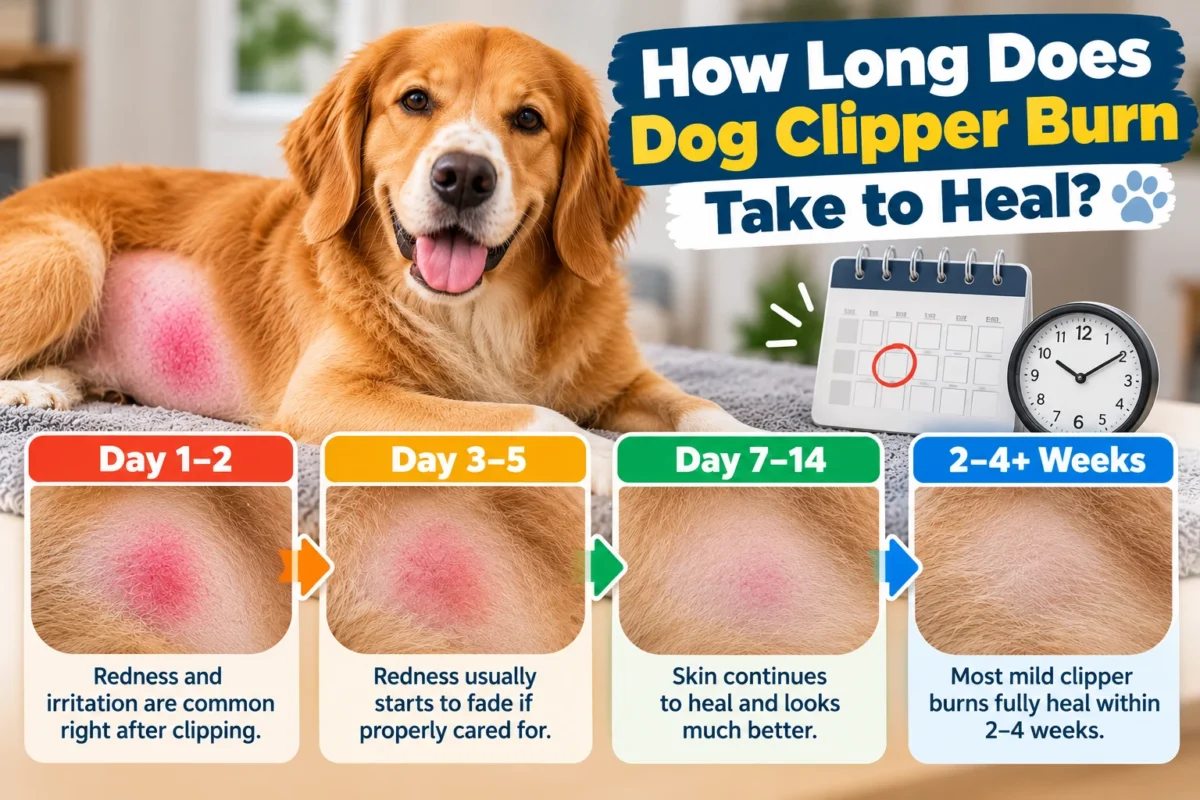
Mild shaving irritation may begin settling within 24–48 hours, although recovery varies. More substantial abrasions, inflammation, infections, or thermal burns can take considerably longer.
Don’t use a fixed healing deadline to decide whether an injury is safe. Progressive improvement matters more than the calendar.
What Should Healing Look Like?
- Redness gradually becomes less noticeable.
- Your dog scratches or licks less frequently.
- The skin remains dry and intact.
- There is no increasing swelling or discharge.
- Your dog becomes more comfortable during normal movement.
Documenting the appearance once daily can help you judge progress. Take photos in similar lighting for a more useful comparison.
When Should You Contact a Veterinarian?
Contact a veterinarian promptly if the injury is painful, worsening, or involves damaged skin. Serious thermal burns require urgent attention.
- Blistering, peeling, or open wounds
- Severe swelling or increasing redness
- Pus, discharge, or an unpleasant odor
- Persistent crying, restlessness, or significant discomfort
- Dark, white, or leathery skin
- A large affected area
- Suspected burns involving the face, eyes, or genitals
- No clear improvement in mild irritation after 24–48 hours
Deep burns can be more serious than they initially appear. Seek emergency help for extensive burns or a dog showing weakness, collapse, or other signs of systemic illness.
How Can You Prevent Clipper Burn on Dogs?
Prevention starts with clipper maintenance, appropriate blade selection, and gentle handling. The goal is to remove hair without traumatizing the skin.
Check Blade Temperature Regularly
Pause frequently to assess whether the blade is becoming warm. Switch to a properly maintained spare blade when needed.
Follow your clipper manufacturer’s cooling instructions. A warm blade should never be pressed repeatedly against sensitive skin.
Choose the Correct Blade Length
Use the longest practical cut that meets the grooming need. Avoid unnecessarily close clipping around delicate areas.
The following lengths are common reference points, although equipment and manufacturer specifications may vary:
| Blade Size | Approx. Hair Length Left | Consideration |
|---|---|---|
| No. 7F | 3.2 mm | Leaves more protective coat length |
| No. 10 | 1.5 mm | Common short grooming length |
| No. 30 | 0.5 mm | Very close cut; use carefully |
| No. 40 | 0.25 mm | Extremely close; higher irritation concern |
These are blade-only cutting lengths, not guard-comb settings. Some applications require closer clipping under professional supervision.
Keep Clippers Clean and Sharp
Remove accumulated hair and disinfect equipment as directed. Allow blades to dry and lubricate them according to the manufacturer.
Don’t continue using a blade that snags, pulls, or cuts unevenly. Replace damaged or worn parts before the next session.
Prepare the Coat Before Grooming
Brush out loose hair and address tangles appropriately. A clean, fully dry coat is generally easier to clip evenly.
Never force clippers through severe mats. Professional help is safer when mats sit tightly against the skin.
Use Gentle Grooming Technique
- Work with controlled, smooth clipper strokes.
- Avoid pressing the blade firmly against the body.
- Support loose skin carefully.
- Limit repeated passes over sensitive areas.
- Give your dog regular breaks.
- Stop when the dog appears painful or distressed.
For a nervous dog, shorter grooming sessions may be more productive than rushing through a full haircut. Calm handling also makes it easier to notice discomfort early.
Can a Dog Develop an Infection After Clipper Burn?
Yes. Damaged skin and repeated licking can create conditions that allow infection to develop, although mild redness alone doesn’t prove infection.
Watch for worsening inflammation, pustules, discharge, odor, or increasing tenderness. A veterinarian may need to distinguish simple irritation from bacterial folliculitis or a hot spot.
The Merck Veterinary Manual’s topical skin-treatment guidance emphasizes matching treatment to the underlying condition. Antibiotics and medicated shampoos shouldn’t be used automatically for uncomplicated irritation.
What If Your Dog Keeps Licking the Burned Area?
Persistent licking can make a minor problem worse. The combination of moisture, friction, and repeated contact may contribute to skin breakdown.
Use a well-fitted protective collar and check whether it reliably prevents access. Distract your dog with calm activities while the area settles.
If licking remains intense despite protection, contact your veterinarian. Your dog may be experiencing more pain or itch than the surface appearance suggests.
Helpful Products for Clipper-Burn Prevention and Recovery
No grooming accessory replaces proper diagnosis or veterinary care. However, a few practical tools may help prevent further irritation or support a safer grooming routine.
Affiliate disclosure: As an Amazon Associate, this website may earn from qualifying purchases. Product links below open Amazon search results, not verified individual listings.
🛡️ Recovery Protection
All Four Paws Comfy Cone
★★★★☆
A soft, adjustable protective collar designed to help limit licking and chewing. It’s worth considering for a small irritated patch, provided the fitted collar actually prevents your dog from reaching it.
✂️ Grooming Control
Wahl Bravura Lithium Ion Clipper
★★★★☆
This cordless grooming clipper uses an adjustable five-position blade. Its flexibility can be useful for routine trimming, but careful technique and temperature checks remain essential.
🧰 Blade Maintenance
Andis Cool Care Plus
★★★★☆
A clipper-blade maintenance spray designed for cooling and cleaning compatible equipment. Use it only according to its label, away from your dog, and allow the blade to become safe before resuming grooming.
Product ratings above are editorial suitability assessments, not verified customer-review averages or clinical effectiveness scores.
Frequently Asked Questions About Dog Clipper Burn Treatment
Can dog clipper burn heal on its own?
Mild clipper irritation affecting only the skin’s surface may improve with gentle care and protection against licking. However, worsening redness, painful wounds, swelling, or persistent discomfort require veterinary assessment. A genuine thermal burn should be evaluated promptly, even when the area initially appears small.
Can I put coconut oil on my dog’s clipper burn?
Coconut oil isn’t a recommended first-line treatment for clipper irritation or thermal burns. It may encourage licking, and an oily coating can interfere with examination or wound care. Use gentle cleaning for minor irritation and ask your veterinarian before applying any topical substance.
Why is my dog licking its private area after grooming?
Close shaving, friction, small abrasions, or sensitivity to grooming products may cause discomfort around the sanitary area. However, urinary problems, anal gland disease, allergies, and infections can cause similar behavior. Persistent licking, swelling, discharge, painful urination, or scooting warrants a veterinary examination.
Can dog clipper burn cause hair loss?
Clipping naturally leaves the coat shorter, but significant skin inflammation or injury can sometimes affect normal hair regrowth. Mild irritation doesn’t necessarily cause lasting hair loss. If you notice expanding bald patches, crusting, scarring, or delayed regrowth, ask your veterinarian to investigate.
Should I use antibiotic ointment on clipper burn?
Don’t automatically apply human antibiotic ointment to a dog’s clipper burn. Minor irritation may not need antibiotics, while open wounds or infection may require a different treatment plan. Some ingredients can be unsuitable if swallowed. Ask your veterinarian which product, if any, is appropriate.
Final Takeaway: Treat the Skin Gently and Prevent Another Burn
The safest dog clipper burn treatment begins with identifying the injury. Mild shaving irritation often needs gentle cleaning, protection from licking, and close observation.
Blisters, significant pain, damaged skin, or suspected heat burns deserve prompt veterinary attention. Don’t rely on home remedies when the injury appears serious.
For future grooming sessions, keep blades clean, monitor their temperature, choose appropriate cutting lengths, and avoid excessive pressure. Protecting your dog’s skin matters more than achieving the closest possible trim.
Next step: Check your dog’s skin today, document any redness, and contact your veterinarian if you’re unsure whether the injury is superficial. A little caution now can prevent a more painful problem later.


