
Quick Answer
For most shedding dogs, deshed lightly before the bath to remove loose hair and manageable tangles, then wash, rinse, and dry thoroughly before a gentle finishing deshed. You do not need to bathe your dog every time you remove loose fur. Never wash over painful, tight mats or use a dry-coat deshedding blade on wet fur.
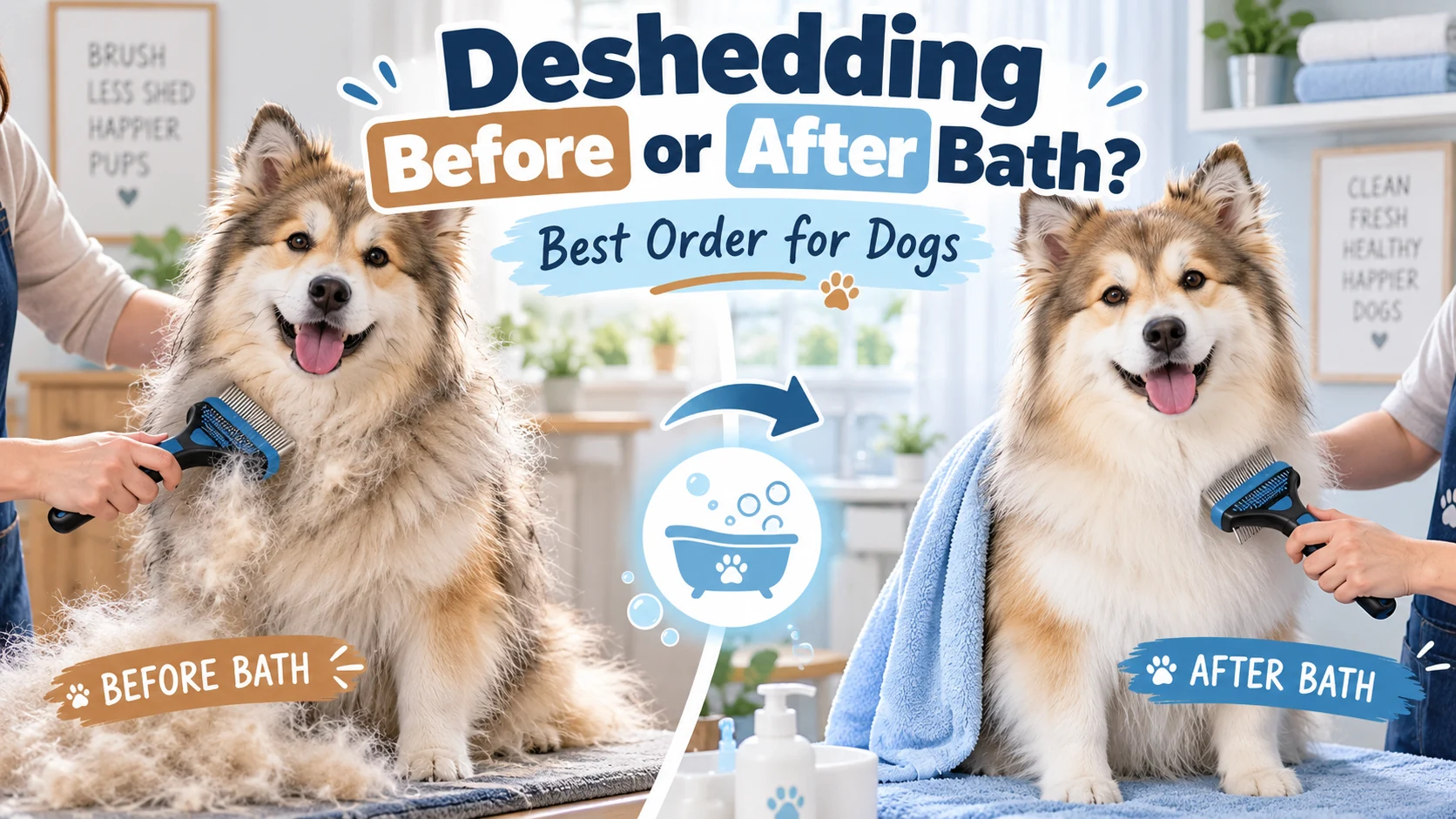
A bath can leave a dog looking fluffier—and your bathroom covered in hair. That happens partly because washing and drying dislodge fur that was already ready to shed. The useful question is not whether every deshedding stroke belongs before or after the bath. It is which work should happen at each stage.
The right sequence also depends on your dog’s coat. A Labrador with a shedding undercoat needs a different approach from a curly-coated dog with tangles or a short-coated dog that only needs a quick rubber-brush pass.
Is It Better to Deshed Before or After a Bath?
Both stages can help, but they do different jobs. Pre-bath brushing clears the coat so water and shampoo can move through it more easily. Post-bath deshedding collects loose hair released by washing and drying. Most owners can get good results with a moderate pass before washing and another gentle pass once the dog is fully dry.
| Stage | Main goal | Best approach |
|---|---|---|
| Before bathing | Remove loose hair; find tangles and skin concerns | Gentle brushing on a dry coat |
| During bathing | Clean and loosen trapped shed hair | Fingertip massage or wet-safe grooming tool |
| After full drying | Collect hair freed by the bath | Light finishing brush or appropriate deshedding tool |
The distinction matters because heavy brushing at every stage can irritate skin. More removed hair is not automatically a better grooming result.
Why Should You Deshed Before Bathing?
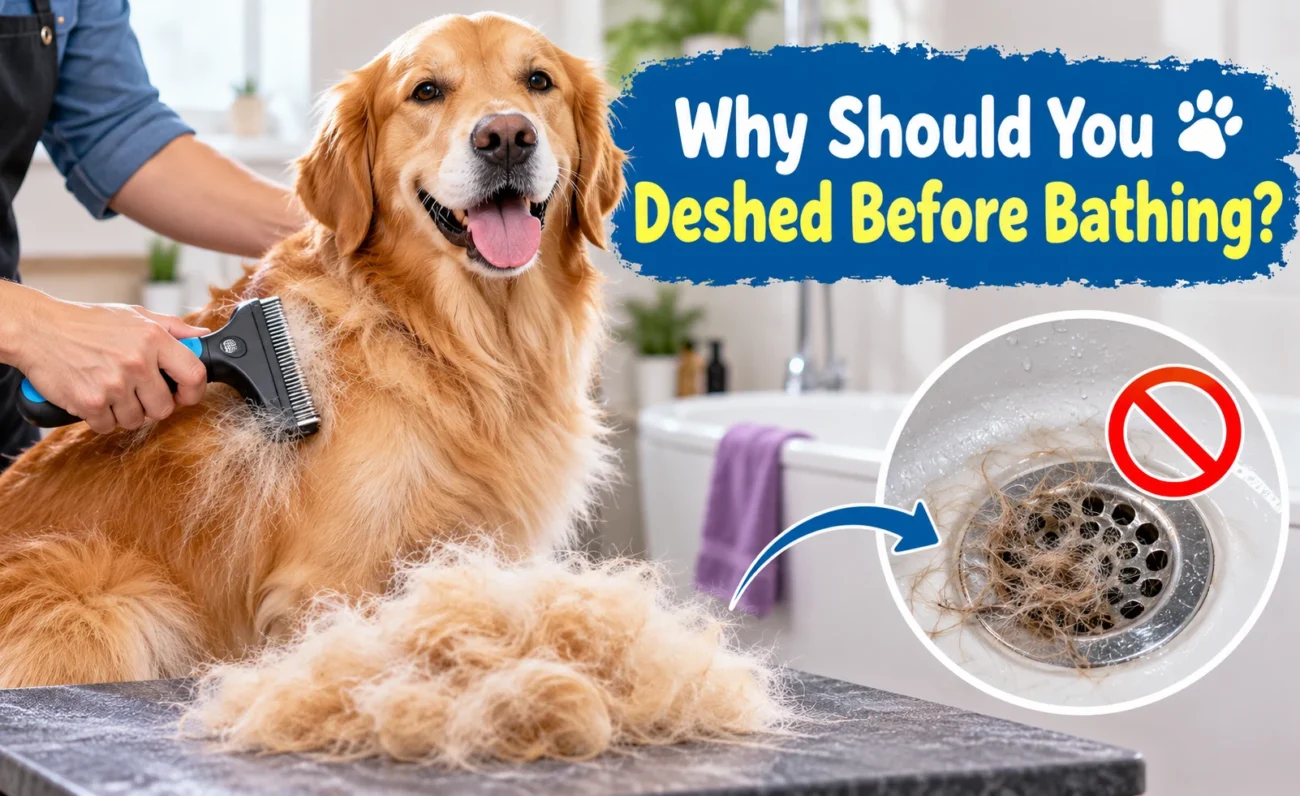
Pre-bath grooming is especially valuable when a dog has a dense undercoat, visible loose tufts, or tangles. Brushing removes shed hair that would otherwise collect in the tub and helps you discover knots before they are soaked. The American Kennel Club’s bathing guidance recommends removing dead hair and mats before bathing.
Start by parting the fur and checking behind the ears, under the collar, around the armpits, and along the rear legs. These areas can hide small tangles. Use gentle strokes with a brush suited to the coat rather than digging into the skin with a metal edge.
There is an important limit: loose undercoat and tight matting are not the same problem. Loose hair releases with modest brushing. A tight mat can tug painfully and may conceal irritated skin. Do not pull hard, cut close to the skin with scissors, or assume shampoo will dissolve it. A professional groomer is the safer choice for extensive matting.
For the broader distinction between loose fur and coat damage, see our explanation of what deshedding actually does.
Why Does More Fur Come Out After a Bath?
Washing and drying can free dead hairs that were caught among healthy hairs. Shampoo massage moves the coat, rinsing carries away some loose strands, and drying separates the remaining fur. That can make shedding look temporarily more dramatic even though the bath did not suddenly create all that loose hair.
In a double-coated dog, the outer guard hairs can appear dry while the soft undercoat still holds moisture. Waiting until that deeper layer is dry makes it easier to tell which hair is loose and helps avoid dragging a dry-use tool through damp fur.
For that reason, treat the post-bath pass as a finishing step, not a competition to remove as much hair as possible. If the brush begins collecting less fur, the coat looks separated, and your dog is comfortable, you can stop.
What Is the Safest Deshedding and Bathing Order?
This routine works as a starting point for a healthy dog with a naturally shedding coat. Modify it for skin problems, significant tangles, or tools with special instructions.
- Check the coat and skin. Look for sores, redness, parasites, tender areas, and tight mats. Do not scrape irritated skin or force a tool through a knot.
- Remove loose hair while dry. Work in small sections, following the direction of hair growth. Use a brush or rake intended for your dog’s coat, with light pressure.
- Prepare a calm bath. Put a non-slip mat in place and use comfortably lukewarm water. Keep towels and dog shampoo nearby.
- Wash gently. Wet the coat to the skin, massage shampoo according to its label, and avoid the eyes and ear canals. Do not aggressively twist or rub long fur into knots.
- Rinse completely. Work through dense regions until shampoo is removed near the roots, not just from the outer surface.
- Dry all coat layers. Blot with towels and use appropriate gentle airflow if needed. Avoid concentrating hot air on the skin. Check the undercoat with your fingers.
- Finish with light deshedding. Once the coat is properly dry, collect remaining loose fur. Stop if the skin turns pink, the tool snags, or your dog becomes uncomfortable.
Owners of dense-coated breeds can follow our step-by-step double-coat bathing guide for rinsing and drying details.
Practical Tip
For a dog that dislikes grooming, split the work into short, rewarding sessions. A calm five-minute brush before bathing is better than an exhausting full-coat session that makes the dog fearful of the next bath.
Does the Best Timing Change With Coat Type?
Yes. A coat’s length, texture, and undercoat density affect both the tool and the amount of brushing needed after a bath.
Double-coated dogs
Huskies, German Shepherds, and many retrievers can hold substantial loose undercoat. Remove easy-to-release fur before bathing, dry the undercoat completely, and then do a measured finishing pass. During seasonal coat blowing, several shorter sessions may be more comfortable than one intense session. Our double-coat deshedding guide explains how to handle packed loose fur without attacking the protective topcoat.
Short, smooth coats
Dogs with short, low-tangle coats may only need a grooming mitt or soft rubber brush before bathing and a brief pass once dry. Forceful metal deshedding tools are not necessary for every short coat. Choose a tool suited to hair length and skin sensitivity.
Long, curly, or tangle-prone coats
Detangling matters more than removing a large volume of shed hair. Carefully address small knots before the bath, wash without rubbing the hair into circles, and dry and comb as appropriate for the breed. Some low-shedding curly coats require regular combing and clipping rather than an undercoat blade.
If the comb cannot pass through the coat without pulling, stop and assess whether professional detangling or clipping is needed. Wetting severe mats can make the problem harder to resolve.
Should You Deshed a Dog While the Coat Is Wet?
Do not assume a deshedding tool is safe for wet use. Some soft rubber bathing brushes are designed for shampooing, but many undercoat rakes and bladed shedding tools are intended for dry coats. Follow the tool maker’s directions and avoid working forcefully through wet tangles.
Professional groomers sometimes use wet-coat techniques or specialized drying equipment for heavy shedders. Those methods do not mean every home tool should be used the same way. The PetMD bathing-mistakes guide discusses how brushing advice differs between double-coated and other breeds.
For typical home grooming, the simplest low-risk rule is to use wet-safe tools only during washing and reserve dry-use deshedding tools until the coat has dried.
Do You Need to Bathe Your Dog Every Time You Deshed?
No. Routine brushing can remove loose fur without shampoo or a full bath. Wash when your dog needs cleaning, not merely because you have noticed shedding. The appropriate bathing schedule varies with coat type, activity, skin condition, and veterinary advice.
Extra baths are not a substitute for consistent grooming. Frequent washing with unsuitable products or poor rinsing may contribute to dryness or irritation. If your dog has a prescribed medicated shampoo or a diagnosed skin problem, follow the veterinarian’s bathing schedule instead of a general deshedding routine.
Between baths, briefly check the coat for new tangles and remove loose hair without repeatedly scraping the same area. A sustainable maintenance routine usually works better than occasional aggressive deshedding.
What Mistakes Can Make Deshedding Less Effective or Unsafe?
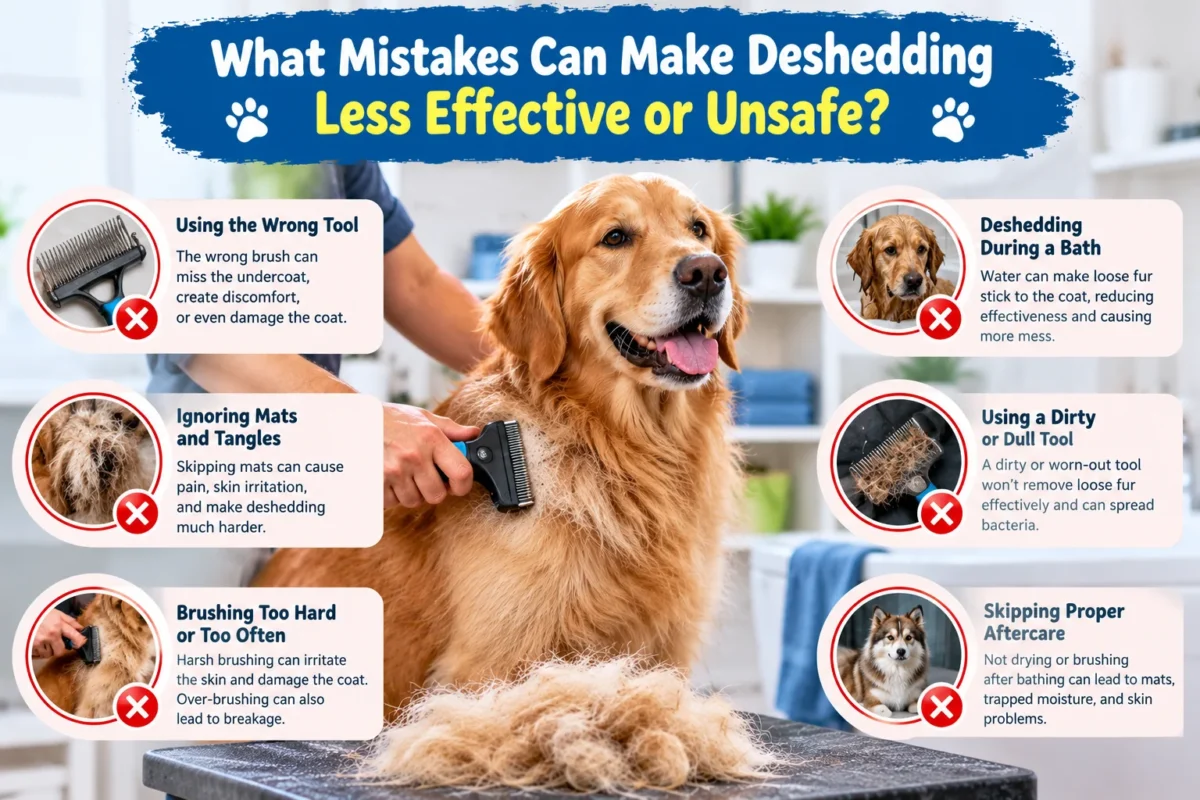
- Skipping the pre-bath inspection: Hidden mats or inflamed patches can become more troublesome once wet.
- Brushing too forcefully: Repeated hard strokes can scratch skin or pull hair that is not ready to shed.
- Leaving the undercoat damp: The top layer may feel dry while moisture remains near the skin.
- Using the wrong tool: A blade designed for one coat can snag or damage another.
- Bathing to stop natural shedding: Washing removes some loose fur but cannot stop the normal hair-growth cycle.
- Continuing through discomfort: Flinching, pulling away, yelping, or new redness are reasons to stop.
Unusual shedding deserves a different response. Sudden bald patches, inflamed skin, intense itching, scabs, or marked changes in the coat are not simply seasonal shedding. Arrange veterinary assessment rather than trying to remove more fur with a brush.
Important
Do not shave a double coat simply to reduce shedding, and never cut tight mats close to the skin with household scissors. Ask a qualified groomer or veterinarian for help when matting is painful or extensive.
How Can You Tell When the Deshedding Session Is Finished?
Stop when the coat feels manageable, the brush collects substantially less loose fur, and your dog remains relaxed. You do not need a completely hair-free brush. Dogs continue their normal shedding cycle after a bath, so some fur will still appear on bedding and clothing.
Run your fingers lightly through the coat and inspect the skin. A smooth, comfortably separated coat without fresh redness is a more useful result than a huge pile of hair. For heavy seasonal shedding, plan another gentle maintenance session later rather than exhausting the dog immediately.
Related Grooming Tool: Undercoat Rake
For suitable double-coated breeds, a properly sized grooming rake can help release loose undercoat before bathing. Check compatibility with your dog’s coat and avoid using it over irritated skin or tight mats.
Browse dog undercoat rakes on Amazon
Affiliate disclosure: We may earn a commission from qualifying purchases at no extra cost to you.
Frequently Asked Questions
1. Should I brush my dog immediately after a bath?
For most routine home deshedding, wait until the coat is appropriately dry before using dry-coat brushes or undercoat tools. A wet-safe grooming brush is different and may be used according to its instructions.
2. Can I use deshedding shampoo without a special brush?
Yes. Use the shampoo according to its label, rinse completely, and follow with a gentle brush suited to the coat. Shampoo can help loosen hair, but it does not eliminate the need for ordinary coat care.
3. Is deshedding before a bath enough for a Husky?
It may remove a considerable amount of loose undercoat, but washing and drying can release additional hair. Once fully dry, a light finishing pass may help if the dog tolerates it.
4. Can I deshed my puppy before bathing?
Use very gentle, age-appropriate brushing to build a positive grooming habit. Avoid aggressive blades and check with your veterinarian or groomer when the puppy’s coat or skin is particularly delicate.
5. Why is my dog still shedding after a deshedding bath?
Because bathing removes existing loose fur rather than stopping the normal shedding cycle. Continued moderate shedding can be expected; bald areas, intense itching, or abnormal skin changes warrant veterinary attention.
6. How long should I deshed after a bath?
There is no universal minute count. Work gently in small sections after proper drying, pause regularly, and finish when little additional loose hair comes away or your dog shows signs of fatigue.
Final Thoughts
For most dogs, the best answer to deshedding before or after a bath is a combination of both: remove loose fur and easy tangles first, bathe only when needed, dry the coat carefully, and finish gently afterward. The goal is a comfortable dog with a healthy, manageable coat—not the biggest possible pile of hair.


