

Quick Answer
To use dog trimmers safely, start with clean, dry, brushed fur and a calm dog. Choose a pet-specific trimmer, inspect its blade, and introduce the sound gradually. Trim slowly in the direction of hair growth, avoid sensitive skin folds, and check blade temperature frequently. The AKC’s home grooming guidance also recommends professional instruction before clipping delicate areas.
7 Quick Safety Steps
- Prepare the coat: Brush out manageable tangles and dry the fur completely.
- Inspect the blade: Check for damaged teeth, dirt, excessive heat, and poor cutting performance.
- Introduce the sound: Reward your dog for staying relaxed near the switched-on trimmer.
- Start conservatively: Use a suitable longer cutting length and test a small, uncomplicated area.
- Trim with control: Keep the blade flat, move gently, and never force it through resistance.
- Monitor comfort: Check for hot blades, redness, pulling, and stress.
- Stop when uncertain: Leave severe mats, delicate areas, and skin problems to a qualified professional.
Most Important Rule
- Never trade safety for a closer haircut: A longer, uneven trim is better than an irritated or injured dog.
Learning how to use dog trimmers safely begins long before the first cut. The right preparation, gentle handling, and proper blade maintenance can make home grooming much less stressful.
This guide explains practical trimming techniques, common mistakes, and the situations where professional help is safer.
What Are Dog Trimmers, and How Do They Work?
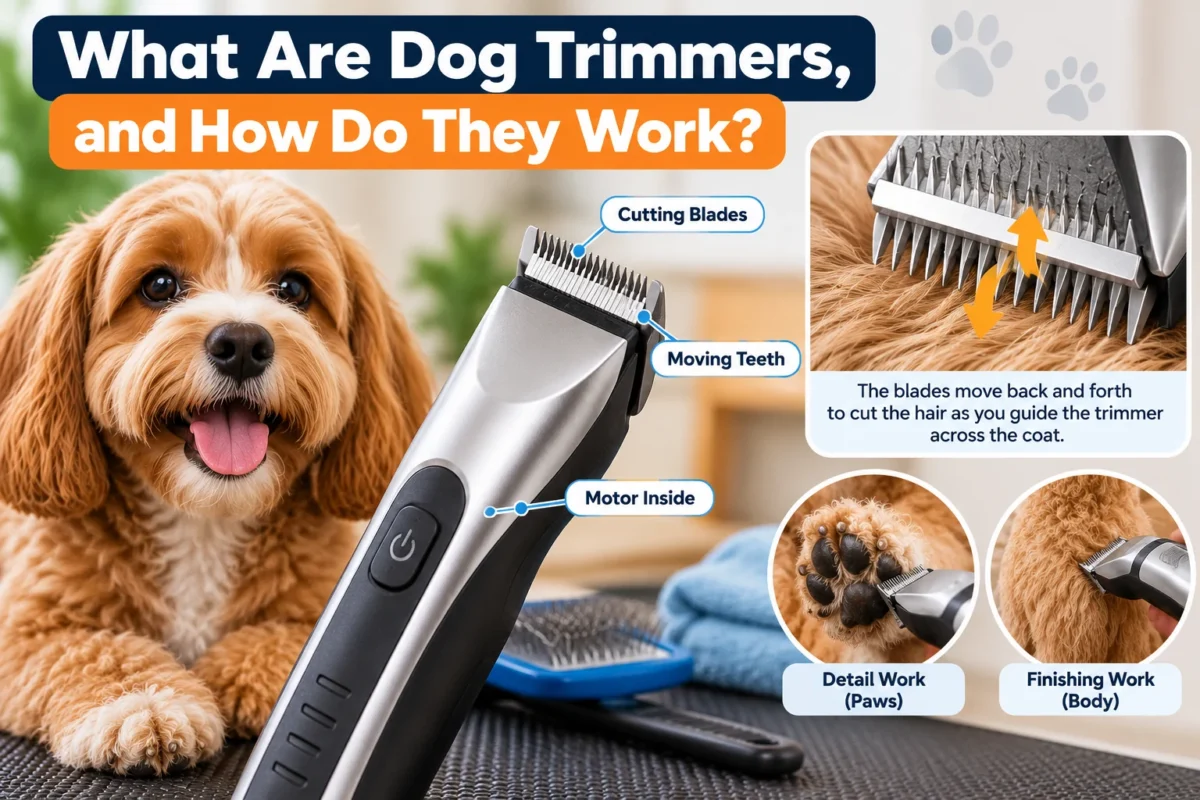
Dog trimmers are compact electric grooming tools designed to shorten hair in small or detailed areas. Their moving cutting blades remove hair as you guide the tool across the coat.
Unlike many full-size clippers, trimmers emphasize maneuverability and precision. They are often used for light finishing work around paws and other small areas.
Dog Trimmers vs. Dog Clippers: What’s the Difference?
The main difference is their intended workload. Dog trimmers handle detail work, while full-size clippers are generally better suited to larger coat sections.
| Feature | Dog Trimmer | Full-Size Dog Clipper |
|---|---|---|
| Main purpose | Precision trimming | Larger coat areas |
| Cutting head | Usually narrower | Usually wider |
| Common tasks | Paws and detail finishing | Body and coat-length maintenance |
| Cutting lengths | Often limited | More blade and comb options |
| Best beginner application | Small, accessible patches | Simple body trims after instruction |
Some adjustable cordless clippers can perform both jobs. Tool size alone doesn’t determine whether a particular blade is safe for a particular area.
How Should You Prepare Your Dog Before Using Trimmers?
Prepare the coat, workspace, and dog before switching on the trimmer. Good preparation reduces pulling, accidental movements, and unnecessary passes over the skin.
1. Brush and Inspect the Coat
Brush the fur gently and check for tangles, hidden mats, burrs, and skin abnormalities. Pay attention to places where hair gathers beneath the legs or behind the ears.
- Remove loose dirt and manageable tangles with suitable brushes.
- Inspect the skin for bumps, sores, redness, and irritation.
- Identify tight mats before attempting any clipping.
- Ask a groomer to handle severe matting or mats close to the skin.
Do not slide a trimmer underneath a tightly attached mat. The skin can become trapped or pulled into the cutting teeth.
2. Bathe and Dry When Necessary
Dirty hair can affect cutting performance and increase blade wear. Bathe your dog with an appropriate dog shampoo when the coat needs cleaning.
Dry the fur thoroughly before using a trimmer intended for dry coats. Never operate a plugged-in grooming tool near bathwater or a wet grooming area.
3. Choose a Safe Grooming Area
Use a quiet, well-lit space with a stable, nonslip surface. Keep treats, a brush, a towel, and the trimmer’s cleaning supplies nearby.
- Work at floor level if your dog might jump or struggle.
- Keep electrical cords away from your dog’s feet and mouth.
- Make sure you can clearly see the blade and skin.
- Have another calm adult assist when appropriate.
- Never leave your dog unattended on an elevated surface.
How Do You Get a Dog Comfortable With a Trimmer?
Introduce dog trimmers through short, positive training sessions rather than immediately cutting hair. Reward calm behavior and let your dog control the pace.
Step 1: Let Your Dog Investigate
Place the switched-off trimmer nearby and let your dog sniff it voluntarily. Offer a treat when the dog approaches comfortably.
Step 2: Introduce the Sound
Switch the trimmer on at a comfortable distance. Reward your dog for remaining relaxed without forcing interaction.
Gradually bring the tool closer across separate sessions. Back away if your dog becomes uncomfortable.
Step 3: Practice Gentle Handling
Touch your dog’s shoulder or leg gently while rewarding calm behavior. Practice briefly handling a paw without restraining it forcefully.
When your dog is comfortable, introduce the vibration of the trimmer body without contacting the skin with moving teeth.
Step 4: Start With a Small Trim
Begin with a small, easy-to-reach patch after confirming the blade and cutting length are appropriate. Stop after a successful short attempt.
The goal is a dog that remains calm, not a complete haircut in one session.
How to Use Dog Trimmers Safely: 8 Step-by-Step Instructions
Safe trimming depends on controlled blade movement, careful observation, and frequent breaks. These steps apply to simple maintenance on suitable coats, not complicated full-body clipping.
Step 1: Check the Trimmer Before Switching It On
Inspect the cutting teeth, blade attachment, housing, and electrical components. Never use damaged equipment.
- Make sure the blade attaches securely.
- Remove trapped hair with the manufacturer’s cleaning brush.
- Lubricate the blade as the manufacturer directs.
- Check that the tool runs smoothly without unusual noise.
- Choose a compatible guide comb if additional coat length is needed.
Step 2: Choose a Longer Cutting Length First
Use a conservative cutting length when learning. A suitable guide comb can help maintain distance between the blade and skin on a properly prepared coat.
However, guide combs do not eliminate injury risk. They may also snag when hair is tangled.
Step 3: Position Your Dog Comfortably
Allow your dog to stand or rest naturally on a nonslip surface. Support the body gently without forcing uncomfortable positions.
Avoid twisting joints, pulling paws outward, or holding the head rigidly. Stop when your dog resists handling.
Step 4: Identify Hair Growth Direction
Look at how the coat naturally lies. Begin by moving the trimmer in that direction on a simple, flat area.
Trimming against hair growth can create a closer cut and may increase irritation risk. It is better left to experienced groomers where appropriate.
Step 5: Keep the Blade Flat and Moving
Place the supported cutting surface against the coat at the angle recommended for your tool. Use light pressure and smooth, controlled strokes.
- Move gently without digging the blade into the skin.
- Never jab or point cutting teeth into folds.
- Keep strokes short enough to maintain visibility.
- Stop if the blade catches or pulls hair.
- Avoid repeatedly trimming the same irritated area.
Step 6: Check Blade Temperature Frequently
Clipper and trimmer blades can heat up during operation. Hot metal may irritate or burn sensitive skin.
Switch off the tool and carefully check blade temperature using the manufacturer’s recommended method. If it feels too warm, allow it to cool before continuing.
Do not rely on a fixed number of minutes between checks. Blade temperature varies with the equipment, coat, and workload.
Step 7: Take Breaks and Watch Your Dog
Pause regularly to evaluate your dog’s behavior and skin. Short sessions usually offer better control than pushing through a stressful trim.
- Stop when your dog repeatedly pulls away.
- Watch for trembling, freezing, growling, or frantic movement.
- Inspect for redness or newly exposed irritation.
- Offer water and rest when appropriate.
- End the session before your dog becomes overwhelmed.
Step 8: Inspect the Skin and Clean the Tool
After trimming, brush away loose hair and examine the trimmed areas. Look for small cuts, irritation, or anything unusual beneath the coat.
Clean, disinfect when indicated, lubricate, and store the trimmer according to its manual. Dry the components fully before storage.
Which Parts of a Dog Are Safest to Trim at Home?
Accessible areas with flat skin and clearly visible hair are generally easier to manage. Delicate body parts require greater skill and may be unsafe for beginners.
| Body Area | Risk Level | Recommended Approach |
|---|---|---|
| Flat shoulder or body patch | Lower, with proper preparation | Start with a suitable longer setting. |
| Hair around paws | Moderate | Learn positioning from a professional before detailed work. |
| Between paw pads | High | Professional instruction recommended. |
| Face and around eyes | High | Use a trained groomer for close trimming. |
| Ears and skin folds | High | Avoid cutting close to thin or folded skin. |
| Groin and sanitary area | High | Leave close trimming to a qualified professional. |
These risk levels are practical guidance, not a formal veterinary classification. Individual anatomy, skin conditions, and behavior can make any area unsafe.
Can You Trim Hair Around a Dog’s Paws?
Yes, limited paw maintenance may be appropriate after hands-on instruction. The difficulty is avoiding the thin skin between pads and toes.
If hair grows beyond the paw-pad surface, ask a groomer to demonstrate the correct technique. Do not dig into gaps or force the toes apart.
Should You Trim Around the Face and Ears?
Close trimming near eyes and ears is best handled by an experienced professional. Dogs can move their heads suddenly, and the skin is delicate.
A small blade is not automatically safe. Avoid taking risks simply because the trimmer is advertised for detail grooming.
What Are the Most Common Dog Trimmer Safety Mistakes?
The most common problems involve poor coat preparation, excess pressure, overheating, and trying to control an uncomfortable dog. Avoiding these mistakes is more important than producing an even haircut.
- Trimming over mats: Tight mats can hide skin folds and make cutting dangerous.
- Ignoring blade heat: A hot blade can irritate or burn the skin.
- Using a damaged blade: Broken teeth may scratch or cut your dog.
- Pressing too hard: Excessive pressure increases skin contact and irritation.
- Moving too quickly: Sudden blade movements increase the likelihood of accidental nicks.
- Using inappropriate tools: Human hair equipment may not suit your dog’s coat or intended trimming task.
- Forcing a nervous dog: Restraint struggles make precise grooming unsafe.
- Cutting sensitive areas without training: Thin skin requires specialist handling.
- Ignoring coat type: Some double-coated dogs should not receive routine body shaving.
- Skipping maintenance: Dirty, poorly lubricated blades may snag and perform inconsistently.
One useful beginner habit is to inspect the coat before making every pass into a new area. This simple check is more valuable than trying to finish quickly.
How Can You Prevent Clipper Burn, Cuts, and Skin Irritation?
Prevent trimming injuries by using clean, undamaged equipment, monitoring blade heat, and avoiding repeated close passes. Stop immediately if your dog reacts in pain or the skin becomes irritated.
What Is Clipper Burn?
Clipper burn is a common term for skin irritation associated with clipping. It may result from friction, overly close cutting, repeated passes, or excessive blade heat.
The skin may appear pink, red, or uncomfortable after grooming. Similar signs can also result from allergies, infections, and other skin problems.
How Do You Reduce the Risk?
- Inspect and maintain the blade before every session.
- Use a cutting length appropriate for the coat.
- Check blade temperature repeatedly.
- Keep the blade moving without excessive pressure.
- Avoid irritated, infected, or wounded skin.
- Stop immediately if pulling, scratching, or discomfort occurs.
The RSPCA’s grooming guidance identifies dirty or improperly used clipper blades as potential sources of cuts and irritation.
What Should You Do if You Accidentally Cut Your Dog?
Stop grooming immediately and switch off the trimmer. Keep your dog calm while assessing the wound.
For a minor superficial cut, apply gentle pressure using clean gauze. Contact your veterinarian for advice on appropriate care.
Seek urgent veterinary help for persistent bleeding, deep wounds, injuries near sensitive structures, severe pain, or a dog showing signs of distress.
Do not apply alcohol, human pain-relief creams, or other medications without veterinary guidance.
How Often Should You Use Dog Trimmers?
There is no single trimming schedule that suits every dog. Coat growth, breed, activity, and the specific area being maintained determine how often trimming is needed.
Inspect the coat routinely instead of trimming on an automatic schedule. Trim only when the hair affects cleanliness, comfort, or the dog’s appropriate grooming plan.
Does Coat Type Affect Trimming Frequency?
- Continuously growing coats: May require regular scheduled professional grooming.
- Double coats: Often benefit more from brushing and undercoat maintenance than body clipping.
- Short, smooth coats: Typically need little electric trimming.
- Long paw hair: May need occasional attention when it becomes tangled or interferes with traction.
Coat type matters more than a universal number of weeks. The AKC’s grooming overview explains how grooming needs differ between breeds and coats.
How Should You Clean and Maintain Dog Trimmers?

Regular maintenance helps preserve cutting performance and reduces buildup around the blade. Always follow the manufacturer’s instructions for your exact model.
After Each Trimming Session
- Switch off and unplug the trimmer, if applicable.
- Allow the blade and motor to cool.
- Remove loose hair with the supplied cleaning brush.
- Detach removable components only as the manual permits.
- Use a compatible blade cleaner or disinfectant when instructed.
- Dry the blade and apply the recommended clipper oil.
- Store the tool in a clean, dry location.
Not all trimmers are waterproof or washable. Never immerse the motor housing unless the manufacturer explicitly allows it.
When Should You Replace a Blade?
Replace or professionally service a blade when its cutting teeth are damaged, it repeatedly pulls hair, or it no longer cuts properly after cleaning and lubrication.
Unusual vibration or noise can also indicate a problem. Stop using the tool until the cause is resolved.
Which Dog Trimmers Are Worth Considering in 2026?
For home grooming, prioritize blade quality, manageable handling, manufacturer support, and a tool suited to the intended area. No trimmer can replace correct technique.
These three models illustrate different equipment choices. Their suitability depends on coat type, grooming experience, and the specific task.
Affiliate disclosure: The following Amazon search links may earn a commission from qualifying purchases.
🏆 Versatile Clipper
Wahl Bravura Lithium Ion
Editorial fit: ★★★★☆
A cordless/corded clipper with an adjustable five-in-one blade and up to 90 minutes of cordless runtime. It is a strong option to consider when you need both finish work and appropriate small-dog coat clipping, provided you understand blade selection.
🐾 Paw Detail Work
oneisall FC13 Dog Paw Trimmer
Editorial fit: ★★★★☆
A compact paw trimmer featuring a 19 mm cutting head, two speed settings, and an LED light. Its smaller head may be easier to position for detail work, but trimming between paw pads still requires proper instruction.
✂️ Precision Finishing
Wahl Arco Cordless Clipper
Editorial fit: ★★★★☆
A lightweight cordless clipper with a five-in-one adjustable blade and two interchangeable batteries. Its design suits controlled finishing work, although very close blade settings require extra experience and care.
Editorial fit stars reflect a general feature-based assessment, not customer review averages or hands-on performance testing. Check model compatibility, current availability, and package contents before purchasing.
Frequently Asked Questions About Dog Trimmer Safety
Can dog trimmers cut a dog’s skin?
Yes. Dog trimmers can cut or scrape skin, especially around wrinkles, thin skin, and moving body parts. Damaged blades, incorrect angles, or forceful pressure increase the risk. Use properly maintained equipment and leave difficult areas to a professional.
Can I use human hair trimmers on my dog?
Dog-specific trimmers are generally a more suitable choice because their cutting systems are designed for pet grooming tasks. Human trimmers may struggle with dense or fine animal coats. Choose equipment that the manufacturer explicitly recommends for your dog’s coat and intended use.
Should you trim dog hair when it is wet?
For ordinary home trimming, work on clean, completely dry fur unless the equipment manufacturer and a trained professional specify otherwise. Wet hair can affect cutting performance and visibility. Never use electrical grooming equipment in an unsafe wet environment.
How do I know if my dog is uncomfortable during trimming?
Warning signs include repeated attempts to escape, trembling, freezing, growling, sudden head turns, and frantic movement. Stop immediately and allow your dog to recover. If distress continues, consider gradual cooperative-care training or help from an experienced groomer.
Is a cordless dog trimmer safer than a corded one?
Cordless trimmers eliminate the cord during use, which can make positioning easier. However, both cordless and corded models can cause cuts or irritation when handled incorrectly. Blade condition, suitable cutting length, temperature checks, and your dog’s behavior matter more than the power source.
Final Takeaway: Safe Trimming Comes Before a Perfect Haircut
Using dog trimmers safely means choosing appropriate equipment, preparing the coat, and working slowly. A calm dog and a cool, properly maintained blade should always take priority over speed.
Begin with simple maintenance tasks and build your skills gradually. For severe mats, sensitive areas, skin problems, or an anxious dog, a qualified groomer or veterinarian is the safer choice.
Before your next trimming session: Inspect the coat, check the blade, prepare treats, and decide which areas you can handle confidently.


