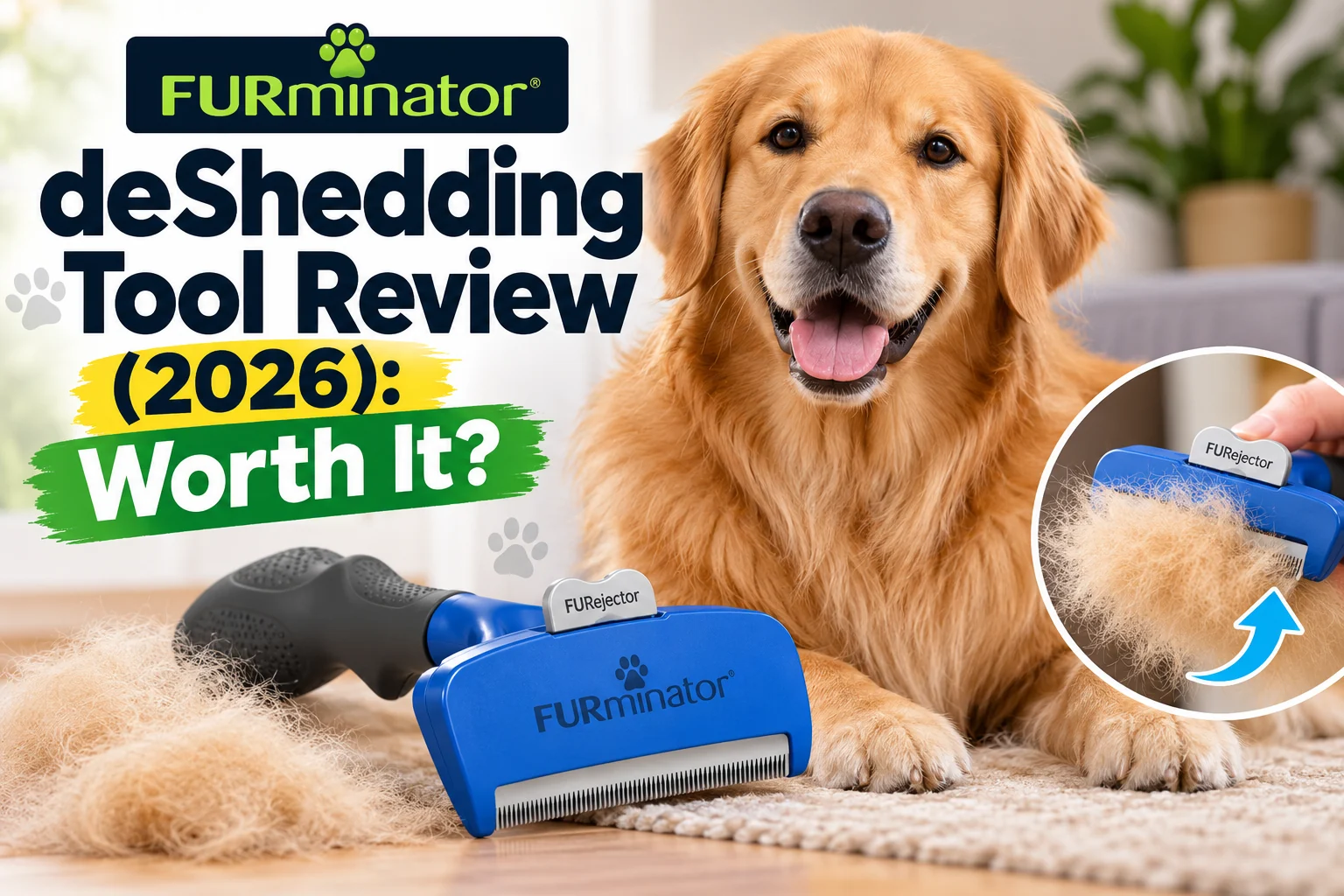
The FURminator Undercoat deShedding Tool for Large Long Hair Dogs is a handheld grooming tool designed to lift loose undercoat from large, shedding dogs. It targets the dead hair that ordinary surface brushing may leave behind, making it relevant to owners battling fur on furniture and floors.
This FURminator deShedding Tool review examines the blue, large-dog, long-hair version linked in the product listing. The central question is whether its specialized edge, grooming controls, and coat restrictions make sense for your dog.
Quick Verdict
Reviewed Product
FURminator Undercoat deShedding Tool — Large, Long Hair
Specialized loose-undercoat removal for large dogs with longer shedding coats.
Rating: ★★★★☆ 4.0/5
Best For: Owners of large, long-haired dogs that shed a substantial undercoat.
Key Specs: Large long-hair configuration • stainless-steel edge • FURejector button • curved Skin Guard
Key Advantage: Purpose-built undercoat removal with easy hair release.
Main Trade-off: Unsuitable for some coats and sensitive skin.
Bottom Line: A strong targeted tool when the size and coat type match. It requires gentle technique and cannot replace detangling or ordinary brushing.

At a Glance
- Designed for large dogs with long, shedding coats, not every breed.
- Stainless-steel edge reaches loose hair beneath the topcoat.
- Manufacturer advertises up to 90% less loose shedding hair with regular use.
- FURejector button pushes collected fur from the grooming edge.
- Recommended routine is typically one or two sessions weekly.
- Dry coat, light pressure, and mat removal beforehand are essential.
Verified Specifications & Buyer Implications
These are the decision-relevant attributes established by the product listing and FURminator documentation. They describe design and intended use, not independently measured effectiveness.
| Attribute | Verified Detail | Why It Matters |
|---|---|---|
| Variant | Large dog, long hair | This is not the short-hair model. Match the tool to the dog’s coat and size before ordering, because the teeth and intended coverage differ across versions. |
| Dog size | Marketed for dogs above 50 lb | The larger head is intended for a bigger body area. Owners of smaller dogs should choose a more appropriately sized version rather than assuming one tool fits all. |
| Working edge | Stainless-steel deShedding edge | Targets loose undercoat beneath longer outer hair. It is not a clipper or an ordinary detangling comb, and it must be used without force. |
| Contact design | Curved edge and Skin Guard | Designed to follow body contours and reduce digging at the corners. These safeguards do not eliminate irritation risk when a person brushes too hard. |
| Controls | FURejector and Edge Guard | The button clears accumulated fur; the storage guard covers the edge. These conveniences help with cleanup and protection without changing coat compatibility. |
Design, Build Quality & Ease of Use
The tool combines a metal grooming edge, curved head, and ergonomic handle intended to support controlled strokes. The blue large/long-hair design is physically specialized rather than a universal multipurpose brush.
Its FURejector control is useful because heavy-shedding coats can load the edge quickly. However, a comfortable grip or protective corner shape cannot establish long-term durability or guarantee safe handling under excessive pressure.
There is no charging or powered setup; the important preparation concerns the dog, not the tool. Follow this manufacturer-aligned sequence before the first session:
- Confirm that the dog has a shedding undercoat and suitable coat length.
- Inspect the skin for sores, bruises, redness, or other problems.
- Remove mats and tangles with an appropriate brush or rake first.
- Work on a completely dry coat, following the direction of hair growth.
- Use gentle strokes, lift hair from the teeth, and stop if irritation develops.
How This Review Was Researched
This research-based review compares the supplied listing with FURminator’s large long-hair product guidance, manufacturer care instructions, and documented alternatives. No hands-on testing is claimed, and marketing statements are not presented as independently measured results.
Category-Specific Performance
Loose-Undercoat Removal
Undercoat removal is the purpose of this tool, and its steel edge is designed to reach beneath the topcoat. FURminator claims up to 90% less loose hair from shedding with regular use; that figure is a manufacturer claim, not a result reproduced for this review.
Owners of long-coated, heavy-shedding dogs have a credible reason to choose a targeted deShedding edge over a surface brush. Actual hair removal will vary with season, coat condition, grooming technique, and individual dog.
Coat and Skin Compatibility
Correct coat type matters more than the product’s popularity. FURminator says its undercoat tool should not be used on non-shedding breeds or pets with particularly sensitive skin, and it cautions that overuse can cause irritation.
This limitation rules out treating the product as an everyday brush for every large dog. Check your breed and coat structure first, especially with clipped, curly, unusually fine, or medically sensitive coats.
Control Around Body Contours
The curved head and Skin Guard are designed to help the edge follow a dog’s shape without digging at its corners. They support controlled movement, but the user must still avoid repeated strokes over one area.
Take particular care around the stomach, legs, genitals, and other delicate spots. If the dog resists or the skin reddens, stop rather than pressing harder to extract additional hair.
Grooming Frequency
The manufacturer generally recommends one or two sessions per week, around 10–20 minutes depending on the dog. It is not a license to continue until no more hair comes out.
A short, calm session that removes loose undercoat without discomfort is preferable to maximizing fur collected. Heavy seasonal shedding may change the schedule, but the coat and skin should determine when to stop.
Expert Insight
The crucial distinction is between removing loose undercoat and untangling hair. A grooming rake can prepare a dense coat; the deShedding edge then serves a different, more specialized purpose.
Key Features Explained
Stainless-Steel deShedding Edge
This edge separates the FURminator from a regular pin or bristle brush. Its intended job is extracting loose, dead undercoat without cutting the topcoat when used according to the instructions.
FURejector Hair-Release Button
The button mechanically pushes trapped hair out of the teeth. This can reduce interruptions caused by clearing collected fur by hand, although the tool still needs cleaning after a session.
Skin Guard and Edge Guard
Skin Guard concerns contact during grooming; Edge Guard concerns protecting the teeth in storage. Neither feature makes the tool suitable for irritated skin, heavily matted coats, or inappropriate breeds.
Real-World Usability & Maintenance
Routine ownership means keeping the edge free of collected fur, dirt, and dander. FURminator advises washing the edge with warm water and mild soap when needed, then drying it thoroughly before storage.
Keep the tool where its teeth cannot be damaged by drops, and engage the storage guard. A clean edge can work more smoothly, but maintenance cannot correct the wrong choice of tool for your dog’s coat.
Choose a grooming location with easy cleanup, such as a washable floor, because removed undercoat can accumulate quickly. For more technique guidance, see common dog deShedding mistakes to avoid.
Pros & Cons
Pros
- Purpose-built for loose undercoat
- Curved head helps follow body contours
- Push-button fur removal
- Protective storage guard
Cons
- Not suitable for every coat
- Excess pressure risks skin irritation
- Does not replace a detangling brush
Common Issues & Fixes
Skin Redness or Discomfort
Cause: Excess pressure or too many strokes over the same area can irritate skin, even with Skin Guard.
Fix: Stop grooming, inspect the skin, and seek veterinary advice if irritation persists; resume only when appropriate.
Tool Snags in Tangled Hair
Cause: Mats or knots obstruct the teeth, making passes uncomfortable and potentially damaging the edge.
Fix: Remove tangles first using a suitable rake, brush, or professional grooming help; never force the tool through mats.
Teeth Feel Less Smooth
Cause: Manufacturer guidance notes that dander buildup can make the edge feel dull.
Fix: Clean with mild soap and warm water, dry completely, and inspect for bent or damaged teeth before reuse.
What to Know Before You Buy
First, match both size and hair length: the linked large version is marketed for dogs over 50 pounds with long coats. Long hair alone does not confirm that a dog has the shedding undercoat required for this tool.
Second, understand the role: this is for loose undercoat, not shaving, trimming, or removing severe mats. If your dog’s coat needs frequent detangling, budget for a complementary grooming brush or rake.
Finally, check the current listing’s variant selection, returns, and warranty terms before ordering, since merchant options can change. To assess when grooming equipment should be retired, read signs that a deShedding tool needs replacing.
Who Should Consider It / Who Should Look Elsewhere
Who Should Consider It
- Owners of large double-coated shedders
- Households managing recurring loose fur
- People comfortable with gentle grooming technique
Who Should Look Elsewhere
- Owners of non-shedding coats
- Dogs with particularly sensitive skin
- Owners primarily seeking mat removal
Alternatives to Consider
Reviewed Product
FURminator Large Long Hair deShedding Tool
Best For: Large shedding dogs with long coats.
Key Specs: Steel edge; FURejector; Skin Guard.
Advantage: Targeted loose-undercoat removal.
Trade-off: Narrower coat suitability.
Alternative A
FURminator Grooming Rake
Best For: Detangling dense, thick coats.
Key Specs: Rotating metal teeth; nonslip handle; daily brushing design.
Advantage: Helps prevent tangles and mats.
Trade-off: Not the same targeted deShedding edge.
Alternative B
SleekEZ Original Medium (5-inch)
Best For: Owners seeking a versatile shedding-hair remover.
Key Specs: 5-inch tool; wave-pattern teeth; poplar handle.
Advantage: Also clears hair from upholstery.
Trade-off: Not designed for detangling.
Is It Worth It?
For an owner with a properly matched large, long-haired shedder, the specialized edge and fur-release button are relevant benefits. The evidence supports the tool’s purpose and design, but not a guaranteed amount of fur reduction for every household.
Value weakens sharply if you need a daily detangler, have an unsuitable coat, or expect one tool to handle all grooming. Compare current pricing against a rake or versatile shedding tool based on the task your dog actually needs.
Final Verdict
The FURminator Large Long Hair deShedding Tool is a sensible, specialized choice for removing loose undercoat from appropriately sized, heavy-shedding dogs. Its practical strengths are targeted edge design, manageable handling, and simple fur release.
Its central limitation is compatibility: it cannot safely be treated as a universal brush, and technique matters. Choose it for the right coat and purpose; consider a rake or different brush for tangles, non-shedding coats, or sensitive skin.
Frequently Asked Questions
Can I use this FURminator on a Golden Retriever?
It may be suitable for a large Golden Retriever with the appropriate shedding undercoat. Confirm the dog’s weight, hair length, skin condition, and the manufacturer’s breed guidance first.
Can I use the long-hair model on a short-haired dog?
Choose the matching short-hair version instead. FURminator sells distinct versions because coat length and dog size affect the intended fit.
How often should I use this deShedding tool?
The manufacturer generally advises one to two times weekly for around 10–20 minutes. Adjust to coat condition and stop if the dog becomes uncomfortable or irritated.
Should I use it before or after bathing?
Use it on a completely dry coat. The manufacturer suggests grooming after bathing and thoroughly drying, once tangles and mats have been removed.
Does it cut hair or remove mats?
Its intended action is removing loose undercoat, not cutting hair or dematting. Use a suitable brush or rake to address tangles beforehand.
How do I clean and store it?
Clear trapped fur and, if necessary, wash the edge with warm water and mild soap. Dry it completely, inspect the teeth, and engage the Edge Guard for storage.
Affiliate disclosure: Go Pet Zone earns a small commission when you purchase through links on this page — at no extra cost to you. Our editorial process is independent: affiliate relationships never influence which products we recommend or how we rate them.