Quick Answer
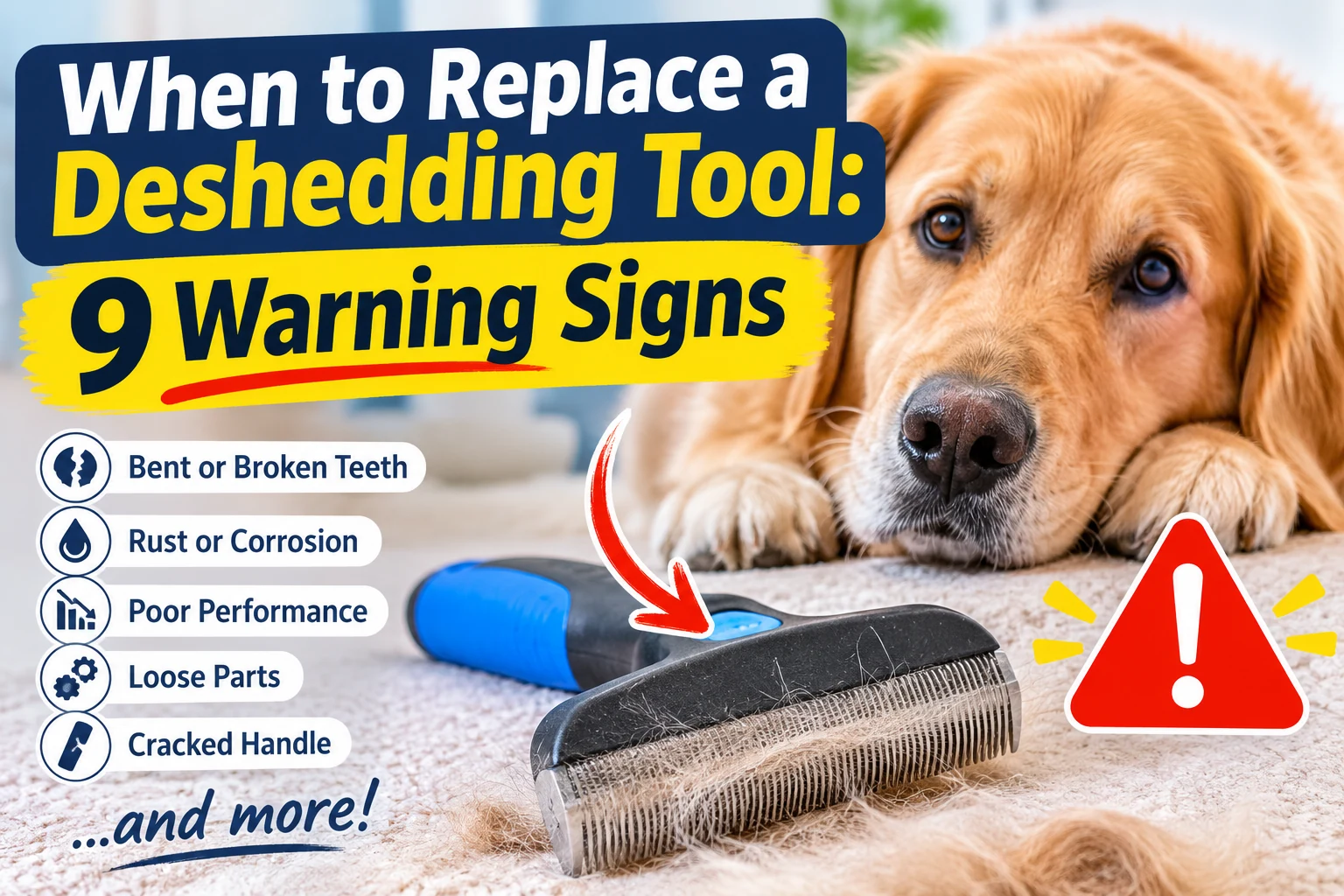
Replace a dog deshedding tool when its teeth are bent, broken, or noticeably damaged; its grooming head becomes loose; or its performance remains poor after proper cleaning. Deep corrosion, cracked handles, and defective hair-release mechanisms are additional warning signs. There is no universal replacement schedule. Inspect the tool regularly and replace it according to its condition, not simply its age.
A deshedding tool can look usable even when its grooming edge is no longer in good condition. You might notice more pulling, less loose fur being collected, or an uncomfortable reaction from your dog.
However, poor results do not always mean the tool is worn out. Trapped hair, skin oils, incorrect technique, and an unsuitable grooming tool can create similar problems.
Knowing the difference helps you avoid unnecessary replacements while protecting your dog’s skin and coat.
What Are the 9 Signs You Should Replace a Deshedding Tool?
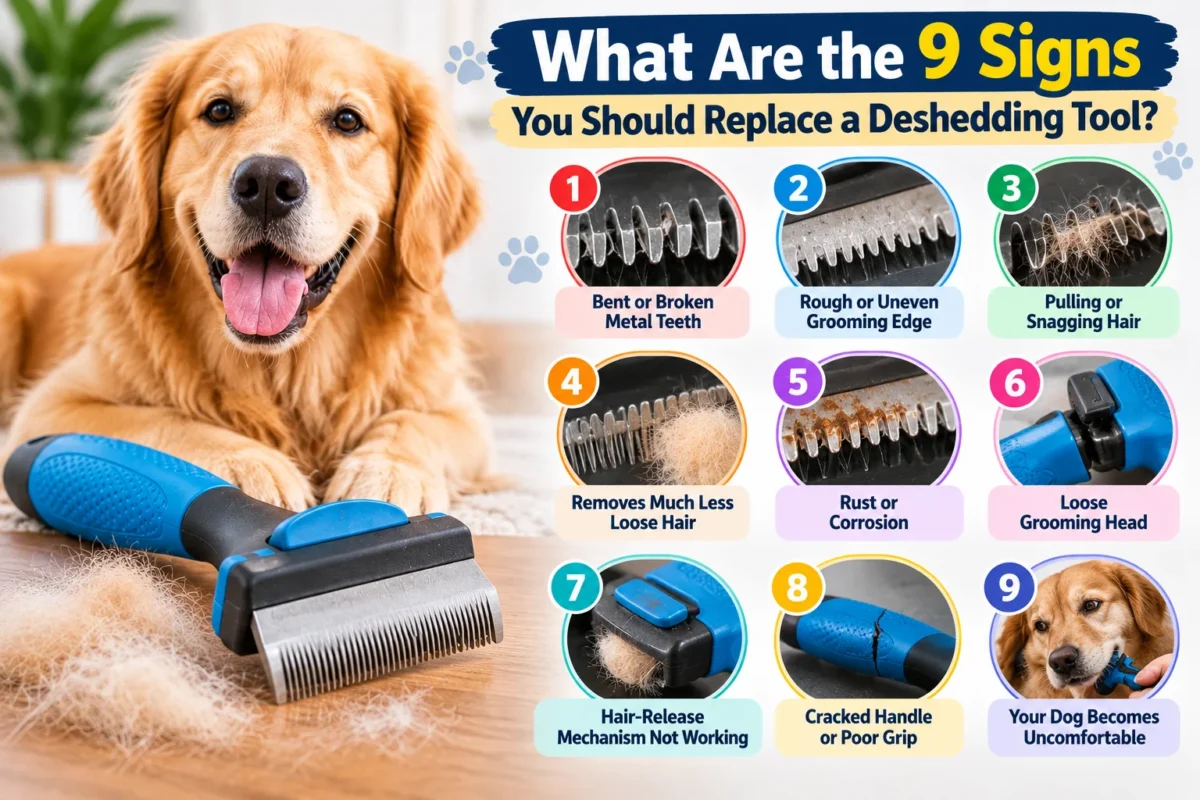
The clearest replacement signs involve physical damage, unreliable operation, or persistent performance problems that cleaning cannot resolve.
1. Bent or Broken Metal Teeth
Bent or broken teeth are among the strongest reasons to retire a deshedding tool.
Damaged teeth may catch hair unevenly, creating unnecessary pulling or scratching. The risk is particularly concerning when a metal tip protrudes beyond the surrounding grooming edge.
Inspect the teeth under bright lighting. Look for missing sections, irregular spacing, and tips that no longer follow the original shape.
Do not attempt to bend damaged teeth back into position and immediately resume grooming. Even when they appear straight, their surfaces or alignment may remain compromised.
FURminator’s official tool-care guidance confirms that using a deshedding tool on matted fur or dropping it can damage the teeth.
2. The Grooming Edge Has Become Rough or Uneven
A properly maintained grooming edge should have a consistent shape without obvious chips, burrs, or sharp protrusions.
Check whether the metal edge appears uneven or visibly damaged. If there is a rough spot that could catch hair or contact your dog’s skin, stop using the tool.
Surface discoloration alone does not establish that the edge is unsafe. Physical damage and persistent roughness matter more.
3. The Tool Keeps Pulling or Snagging Hair
A deshedding tool should help collect loose undercoat without repeatedly tugging at firmly attached hair.
Snagging can result from damaged teeth, but tangles, excessive pressure, and using the wrong tool may cause similar symptoms.
Stop grooming, inspect the edge, and remove any tangles from the coat with a suitable grooming implement.
If the tool continues pulling despite appropriate technique and a clean, undamaged coat, retire it until you can determine whether its edge is defective.
4. It Removes Much Less Loose Hair Than Before
A noticeable decline in hair removal may indicate a maintenance or performance problem, but it does not automatically mean replacement is necessary.
Hair and dander can accumulate around the teeth and interfere with their normal operation. Seasonal shedding changes can also affect how much loose hair is available.
Clean and completely dry the tool before judging its performance.
If it remains ineffective under comparable grooming conditions, check the edge for wear and confirm that the tool still matches your dog’s coat type.
5. Rust or Corrosion Has Damaged the Metal
Persistent corrosion is a reason to inspect a metal deshedding edge carefully.
A small removable surface stain may differ from deep pitting, flaking, or rough corrosion. The latter can compromise the smooth finish needed for comfortable grooming.
If the metal remains rough or pitted after appropriate cleaning, replacing the tool is more sensible than trying to restore it through aggressive abrasion.
Never use a corroded grooming edge that may scratch or snag your dog’s coat.
6. The Grooming Head Is Loose
The grooming head should remain stable during normal use.
If it rocks, shifts, or separates from the handle, the edge may contact the coat at an unintended angle.
Check for loosened joints, damaged attachment points, and movement that was not present when the tool was new.
Unless the manufacturer provides an approved repair procedure, replace a tool with an insecure grooming head.
7. The Hair-Release Mechanism No Longer Works
Some deshedding tools have a button that pushes collected hair away from the grooming edge.
When this mechanism sticks, accumulated fur or debris may be responsible.
Remove visible buildup and clean the mechanism according to the manufacturer’s instructions. Do not force the button or dismantle a mechanism that is not designed for user servicing.
If the mechanism remains defective, replacement may be appropriate, especially if it prevents safe cleaning or normal operation.
8. The Handle Is Cracked or Difficult to Grip
A damaged handle can reduce control over the pressure and direction of grooming strokes.
Check for cracks, separation between handle components, and deteriorating grip material.
If the handle shifts unexpectedly or feels insecure, stop using the tool. A secure grip is especially important when grooming around curved or sensitive areas.
9. Your Dog Becomes Uncomfortable With a Previously Comfortable Tool
A change in your dog’s reaction deserves attention, particularly if it occurs alongside reduced performance or visible tool damage.
Watch for flinching, repeated attempts to move away, sudden resistance, or signs of discomfort during brushing.
These reactions do not prove that the tool is defective. Sensitive skin, tangles, existing pain, or an unpleasant previous experience may also explain them.
Stop the session and inspect both the tool and your dog’s skin. If the skin is red, painful, broken, or persistently irritated, seek veterinary advice before restarting deshedding.
Safety Warning
Do not use a deshedding tool with broken teeth, sharp protrusions, an unstable head, or an unsafe handle. Stop immediately if grooming causes discomfort or visible skin irritation.
How Can You Tell Whether a Deshedding Tool Needs Cleaning or Replacing?
Start with cleaning when the tool is structurally sound but performs poorly. Choose replacement when damage compromises the edge, handle, or operating mechanism.
The following comparison makes the decision easier.
| Condition | Recommended Action |
|---|---|
| Hair trapped between intact teeth | Clean thoroughly |
| Oily residue or dander buildup | Wash and dry as directed |
| Bent, missing, or broken teeth | Replace immediately |
| Deeply pitted metal edge | Replace |
| Sticky release button | Clean first; assess again |
| Loose head or cracked handle | Stop use and replace unless approved repair is available |
A tool that looks old may remain functional. A relatively new tool can become unsafe after a drop or other accidental damage.
Age alone is therefore a poor replacement indicator.
How Do You Inspect a Deshedding Tool Before Replacing It?
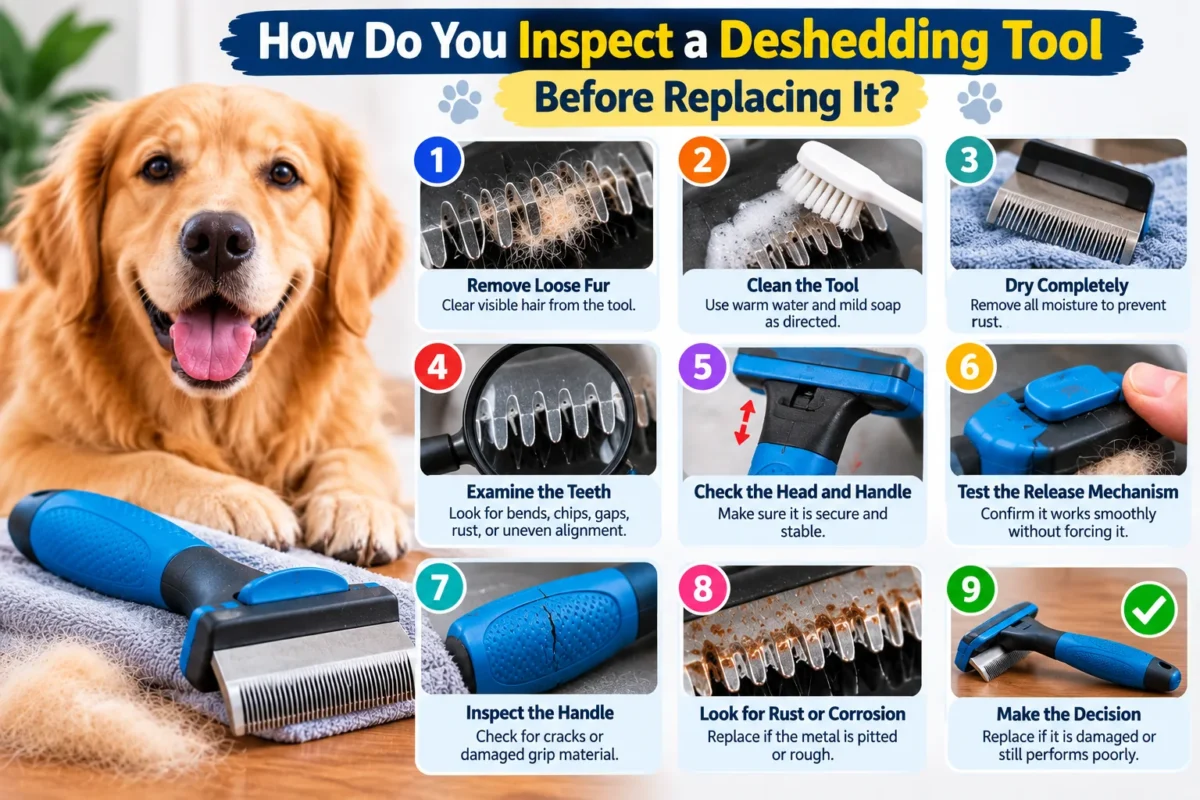
A simple inspection can help distinguish ordinary dirt from physical damage.
- Remove loose fur. Clear visible hair from the edge and release mechanism without using sharp objects.
- Clean the tool. Follow the manufacturer’s care instructions, using warm water and mild soap when permitted.
- Dry it completely. Moisture remaining around metal components can contribute to corrosion.
- Examine the teeth. Check for bends, chips, gaps, rust, and uneven alignment under good lighting.
- Check the handle and head. Make sure the components feel secure and the grip is stable.
- Operate the release mechanism. Confirm that it moves normally without forcing it.
- Make the replacement decision. Retire the tool if it has potentially unsafe damage or remains defective after proper maintenance.
Do not test a questionable metal edge on your dog’s skin to determine whether it still works.
Maintenance Tip
Inspect the grooming edge after accidental drops and before each session. Regular cleaning and complete drying can prevent avoidable performance problems and help you notice damage earlier.
How Long Should a Dog Deshedding Tool Last?
There is no reliable universal lifespan that applies to every dog deshedding tool.
Durability depends on construction quality, frequency of use, cleaning practices, storage conditions, and accidental damage.
A tool used occasionally on a suitable coat and stored carefully may remain usable longer than one exposed to frequent drops, moisture, or heavy mechanical stress.
Manufacturers may provide product-specific care guidance or warranty terms, but those should not be confused with a guaranteed replacement interval.
Instead of replacing your tool automatically every six months or every year, check its condition and grooming performance.
Can a Dull Deshedding Tool Be Sharpened or Repaired?
Home sharpening is generally not a suitable solution for a precision-toothed deshedding edge unless the manufacturer explicitly provides a supported procedure.
Filing or grinding the teeth may change their shape, spacing, or surface finish.
First determine whether the edge only feels dull because of accumulated dander and hair. Cleaning can sometimes restore normal operation without any repair.
If the edge is permanently damaged, use a manufacturer-approved replacement component where available. Otherwise, replace the complete tool.
Do not assume that every brand offers removable or replaceable grooming blades.
What If the Tool Looks Fine but Your Dog’s Coat Still Has Problems?
A damaged tool is only one possible explanation for poor grooming results.
Consider whether the coat contains tangles, the grooming technique is too forceful, or the tool is unsuitable for the dog’s coat type.
Deshedding tools are not appropriate for every breed or coat. Some dogs benefit more from slicker brushes, soft bristle brushes, or other grooming implements.
The American Kennel Club’s guide to dog brushes explains how grooming-tool selection varies with coat type.
If a properly functioning tool repeatedly causes discomfort, switching to a more suitable grooming method may be better than buying an identical replacement.
How Can You Make a Deshedding Tool Last Longer?
Routine care helps preserve the tool’s condition and makes damage easier to identify.
- Remove loose hair after grooming. Do not allow thick fur buildup to remain around the teeth.
- Clean according to the manufacturer’s instructions. Avoid harsh cleaning products or abrasive tools unless approved.
- Dry metal components thoroughly. Store the tool only after moisture has been removed.
- Protect the grooming edge. Use an integrated guard or supplied cover where applicable.
- Avoid accidental drops. Keep the tool away from unstable shelf edges and other fall hazards.
- Remove mats before deshedding. Do not force the metal teeth through heavily tangled fur.
- Use gentle pressure. Let the tool collect loose hair without scraping repeatedly over the same area.
Good maintenance does not make a tool permanent, but it can reduce avoidable damage and unnecessary replacement.
Related Product
Dog Undercoat Deshedding Tool
If your existing tool is damaged beyond safe use, compare replacement deshedding tools with secure handles and grooming edges suited to your dog’s coat.
As an Amazon Associate, we earn from qualifying purchases.
Frequently Asked Questions
Can a deshedding tool last for several years?
Yes. A well-maintained tool may remain functional for several years, depending on its construction and use. Its physical condition matters more than its age.
Should you replace a deshedding tool every year?
Not automatically. There is no universal annual replacement rule. Replace the tool when damage, unsafe wear, or unresolved mechanical problems justify it.
Can using an old deshedding tool hurt a dog?
An older tool is not necessarily harmful. However, broken teeth, rough edges, or loose components may cause discomfort or injury. Inspect its condition before use.
Can you replace only the blade of a deshedding tool?
It depends on the model. Some grooming products have serviceable components, while others have fixed edges. Check the manufacturer’s documentation before attempting replacement.
Does frequent deshedding wear out a tool faster?
Frequent use may increase normal wear, but handling, cleaning, construction quality, and accidental damage also matter. There is no reliable universal usage count for replacement.
What should you do with an old deshedding tool?
Check local recycling rules and whether metal components can be separated safely. Cover or protect damaged teeth before disposal to reduce the risk of injury.
Final Takeaway
Replace a deshedding tool when its condition compromises safety or when a persistent mechanical problem makes normal grooming impractical.
Bent teeth, damaged edges, corrosion, loose components, and broken handles deserve particular attention. Poor hair removal alone is not enough to prove the tool needs replacing.
Before purchasing another tool, clean the existing one, inspect it carefully, and confirm that it suits your dog’s coat. A safe, properly maintained grooming tool is more important than following an arbitrary replacement schedule.