
Quick Answer
To deshed a dog safely, inspect the skin, choose a brush appropriate for the coat, remove loose tangles, and brush gently in small sections following hair growth. Use light pressure, avoid irritated areas, and stop when the coat releases less loose fur. Never force a deshedding tool through mats or scrape the skin.
Loose dog hair can quickly cover furniture, clothing, and floors, especially when a double-coated dog starts shedding its seasonal undercoat. Fortunately, regular grooming can collect much of that loose hair before it spreads through your home.
Learning how to deshed a dog safely is about technique rather than removing the largest possible pile of fur. The goal is to release hair that is already loose while protecting healthy coat fibers and sensitive skin.
The process below explains which tools work for different coats, how to groom without pulling, and when to stop.
What Does Deshedding a Dog Actually Mean?
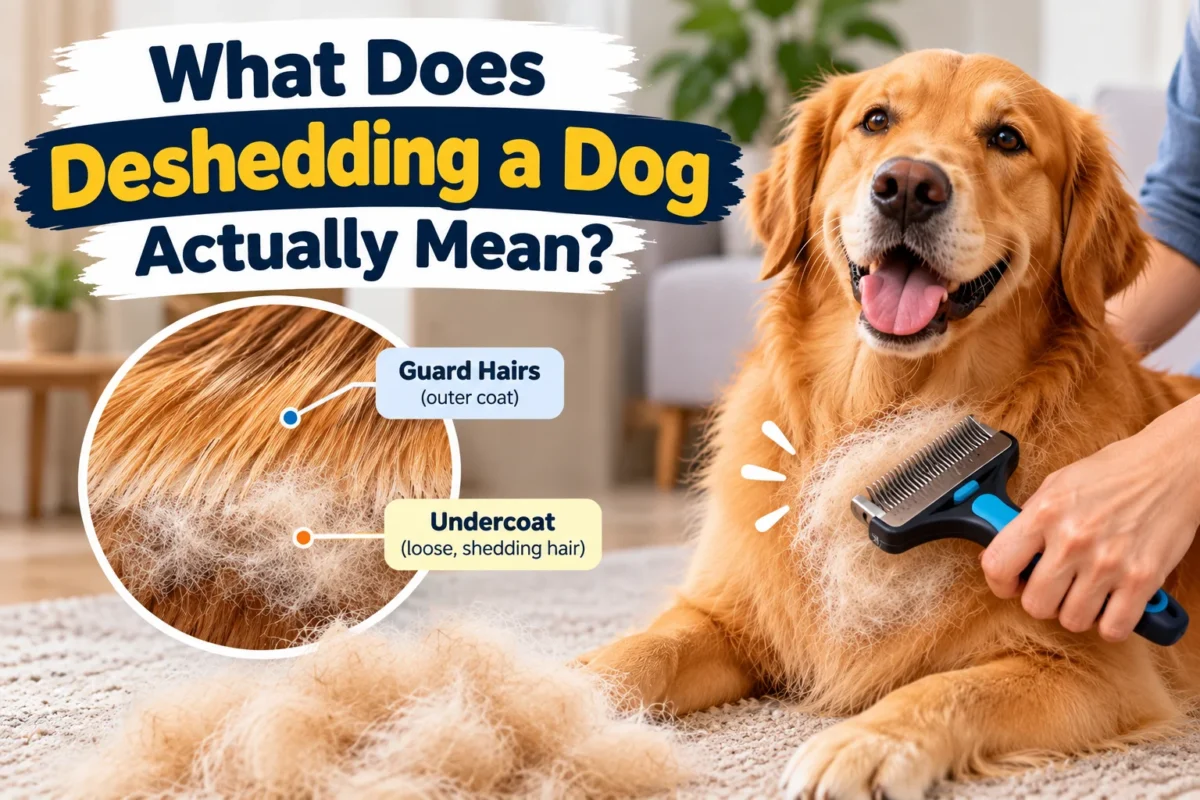
Deshedding is the process of removing loose, dead, or naturally shedding hair from a dog’s coat through brushing, combing, and other appropriate grooming methods.
Many breeds have a double coat consisting of longer protective guard hairs and a softer undercoat. Loose undercoat may remain trapped beneath the outer layer until it is released during grooming or natural shedding.
Deshedding helps collect this loose fur and can reduce tangling. However, it does not permanently stop normal hair growth and shedding.
Three grooming activities are worth distinguishing:
- Regular brushing: Removes surface hair, dirt, and minor tangles while maintaining the coat.
- Deshedding: Focuses on releasing loose fur, particularly from a dense undercoat.
- Dematting: Addresses tangled or compacted hair and may require special handling or professional grooming.
Not every dog needs a specialized deshedding tool. Some short-coated breeds respond well to a rubber grooming mitt, while curly or continuously growing coats typically need regular combing and detangling instead.
How to Deshed a Dog Safely in 7 Steps
Begin with a calm dog, a suitable grooming tool, and a coat that can be brushed without painful resistance. For most dry-use deshedding tools, the coat should be dry and reasonably clean, unless the manufacturer specifies another method.
Step 1: Prepare a Comfortable Grooming Space
Choose a quiet, well-lit location where your dog can stand or lie comfortably without slipping. A nonslip mat is helpful on smooth flooring.
Gather a suitable brush, a comb if needed, treats, and a container for loose hair. Allow your dog to sniff the grooming equipment before beginning.
Start with gentle petting and a few easy brush strokes. Reward relaxed behavior so that grooming becomes a predictable, comfortable activity rather than a struggle.
If your dog is nervous, begin with a short session and increase the amount of grooming gradually. Avoid holding a frightened dog in place just to finish.
Step 2: Inspect the Skin and Coat
Before using a deshedding tool, check the dog’s skin for redness, sores, scratches, swelling, and tender areas.
Run your fingers through the coat to identify tangles, compacted undercoat, or debris. Pay particular attention to the areas behind the ears, under the legs, and around the collar.
If you notice broken skin, painful areas, or significant hair loss, postpone deshedding until the problem has been assessed.
A deshedding brush should never be used to scrape irritated skin or pull through tightly matted fur.
Step 3: Choose the Right Brush for Your Dog’s Coat
Select your tool according to coat length, texture, and density rather than the amount of hair already on the floor.
Common options include:
- Rubber curry brush: Useful for removing loose hair from many short, smooth coats.
- Slicker brush: Helps manage loose hair and minor tangles in suitable medium, long, and dense coats.
- Undercoat rake: Reaches loose undercoat in many double-coated breeds when its teeth match the coat length.
- Metal comb: Checks longer coats for remaining tangles and helps maintain manageable sections.
According to the American Kennel Club’s dog brush guide, matching the tool to coat type is essential, and slicker brushes should be used with a light touch.
Be particularly cautious with sharp-edged or bladed tools. A product marketed for deshedding is not automatically suitable for every coat.
Step 4: Gently Remove Loose Tangles First
Before deep brushing, identify small tangles that could catch the deshedding tool.
For a manageable knot, carefully separate the outer strands with your fingers and use an appropriate comb without pulling against the skin. Support the fur close to the body to reduce tugging.
If a knot resists gentle handling, leave it alone rather than repeatedly dragging a brush through it.
Dense mats attached close to the skin are better evaluated by a qualified groomer. Do not use household scissors to cut them out because folded skin can be hidden within the mat.
Step 5: Brush in Small Sections With Light Pressure
Begin on an area your dog tolerates well, such as the shoulders or upper back. Move gradually across the body while keeping the strokes gentle.
Follow the natural direction of hair growth. On a thick double coat, carefully lift sections of the outer fur so the brush can reach loose undercoat without digging into the skin.
- Position the brush lightly against the coat.
- Make short, smooth strokes in the direction of hair growth.
- Lift the brush away instead of dragging it against resistance.
- Remove collected fur from the tool frequently.
- Move to another section when less loose hair comes away.
Avoid repeatedly brushing the same patch simply because additional hair continues collecting. Too many passes can irritate the skin and unnecessarily damage healthy hair.
Grooming Tip
Let the brush move through the fur rather than pushing it into the skin. If the tool repeatedly catches, reassess the coat, remove manageable tangles gently, or switch to a less aggressive brush.
Step 6: Handle Sensitive Areas Carefully
The belly, armpits, groin, lower legs, and areas behind the ears often have thinner or more sensitive skin.
Use a softer brush or an appropriate comb where necessary. Avoid sharp deshedding edges around skin folds and sensitive body parts.
Watch your dog’s behavior closely. Flinching, moving away repeatedly, growling, or suddenly turning toward the brush may indicate discomfort.
If your dog becomes distressed, stop and offer a break. A shorter, positive session is more useful than forcing complete coverage in one attempt.
Step 7: Finish With a Coat and Skin Check
Once the loose hair has been removed, gently inspect the groomed areas. The skin should not appear newly scratched, inflamed, or unusually sensitive.
For appropriate long or dense coats, a gentle final pass with a comb can reveal remaining tangles. Do not force the comb through resistant sections.
Reward your dog and remove collected hair from the grooming space.
The session is successful when loose fur has been collected comfortably. Removing every remaining hair is neither necessary nor realistic.
Which Deshedding Method Works Best for Different Coat Types?
The safest grooming method changes with coat structure. This quick reference helps identify a reasonable starting point.
| Coat Type | Suitable Tools | Important Precaution |
|---|---|---|
| Short, smooth coat | Rubber curry brush or grooming mitt | Avoid scraping exposed skin |
| Short double coat | Suitable short-coat brush or undercoat tool | Use minimal pressure |
| Long double coat | Slicker brush and appropriate undercoat rake | Work in layers without pulling |
| Silky, long coat | Pin brush and comb | Prioritize gentle detangling |
| Curly coat | Appropriate slicker brush and comb | Prevent mats rather than aggressively strip hair |
Breed examples are only starting points. Individual dogs can have different coat thicknesses, lengths, and grooming needs, even within the same breed.
How Often Should You Deshed Your Dog?

Deshedding frequency depends on coat type, seasonal shedding, skin condition, and the specific tool being used. There is no universal schedule for intensive undercoat removal.
Many dogs benefit from regular gentle brushing. Double-coated breeds may need more attention during seasonal shedding, while smooth-coated dogs often require less intensive maintenance.
Daily brushing with a suitable soft tool is not the same as daily use of an aggressive deshedding blade or rake.
Use the coat’s condition to guide your routine. If loose undercoat collects easily and your dog remains comfortable, an appropriate brushing session may help. If the coat is already tidy or the skin becomes sensitive, stop rather than increasing the number of passes.
For heavily coated dogs, several comfortable grooming sessions may be preferable to attempting to remove all seasonal shedding in one day.
Should You Deshed a Dog Before or After Bathing?
Both can be useful, but the safest sequence depends on the condition of the coat and the equipment.
Before bathing, gently brush out loose fur and manageable tangles. This makes it easier to wash the coat thoroughly and reduces the chance of existing knots becoming difficult to manage.
If bathing is needed, use a dog-appropriate shampoo, rinse thoroughly, and dry the coat properly. Most dry-use deshedding tools should be used after the fur is dry unless their instructions specifically permit wet use.
For thick coats, check beneath the outer layer because the surface may feel dry while the undercoat remains damp.
Bathing is not required every time you deshed. Frequent unnecessary bathing can dry the skin and coat. The American Kennel Club’s home grooming guidance recommends matching bathing and brushing routines to the individual dog.
What Common Deshedding Mistakes Should You Avoid?
Many grooming problems arise from excessive pressure, inappropriate tools, or attempting to complete a session after the dog has become uncomfortable.
- Pressing too hard: Rigid teeth or sharp edges can irritate skin when used aggressively.
- Brushing repeatedly over one area: Excessive passes increase friction without necessarily improving grooming.
- Pulling through mats: Tight tangles can make brushing painful and damage the coat.
- Using one tool for every dog: A tool designed for dense undercoat may be unsuitable for a fine, silky, or curly coat.
- Ignoring discomfort: Persistent resistance, flinching, or distress indicates the technique needs to change.
- Shaving to reduce shedding: Routine shaving is generally discouraged for double-coated dogs because it can disrupt coat protection and regrowth.
Warning
Stop deshedding if your dog develops redness, scratches, pain, or unusual skin sensitivity. Do not continue grooming over inflamed skin or try to remove severe mats with scissors at home.
When Is Shedding a Reason to Contact a Veterinarian?
Normal shedding usually involves loose hair distributed through the coat, sometimes increasing during seasonal changes. Sudden hair loss or visible skin changes deserve closer attention.
Arrange a veterinary assessment if you notice bald patches, significant thinning, inflamed skin, repeated scratching, unusual odor, sores, or an abrupt change in the coat.
These findings can have several possible causes, including parasites, allergies, skin disorders, and other medical conditions. Brushing alone cannot identify or resolve the underlying cause.
If the coat has become severely compacted or matted but the skin otherwise appears healthy, a qualified professional groomer may be the appropriate next step.
Do not assume every large pile of shed fur represents a medical problem. Consider the dog’s usual shedding pattern, coat condition, behavior, and skin appearance together.
How Can You Keep Your Dog Comfortable Between Deshedding Sessions?
Consistent, gentle coat maintenance reduces the need for intensive grooming.
Choose a realistic brushing routine, keep the coat free of debris, check friction-prone areas for knots, and reward your dog for calm handling.
Give your dog appropriate nutrition and maintain routine veterinary care. Changes in coat quality sometimes reflect issues that grooming products cannot correct.
During heavy shedding, concentrate on keeping the coat manageable rather than trying to prevent all loose fur from reaching the floor.
Comfortable, regular grooming is usually more sustainable than occasional sessions that involve excessive brushing and stress.
Related Product
Dog Undercoat Rake
An appropriately sized undercoat rake can help release loose fur from many double-coated dogs. Choose teeth suited to your dog’s coat length and density.
As an Amazon Associate, we earn from qualifying purchases.
Frequently Asked Questions
1. Can deshedding hurt a dog?
Yes. Excessive pressure, unsuitable tools, and repeated brushing over the same area can cause discomfort or skin irritation. Proper deshedding should remove loose hair without painful pulling or scraping.
2. Can you deshed a puppy?
Puppies can be introduced to gentle brushing with soft, age-appropriate tools. Avoid aggressive undercoat removal, especially on delicate puppy coats, and keep sessions short and positive.
3. Is a deshedding tool suitable for every breed?
No. Dense double coats, smooth coats, curly coats, and continuously growing coats require different grooming approaches. Some breeds benefit more from simple brushing and combing than from specialized deshedding blades.
4. Can you deshed a dog without a special brush?
Yes. A suitable rubber grooming mitt, bristle brush, slicker brush, or comb may remove loose hair effectively, depending on the coat. A specialized tool is not always necessary.
5. Should you use a deshedding tool on wet fur?
Only when the specific tool is designed for wet use. Many undercoat rakes and blade-style tools are intended for dry grooming. Follow the manufacturer’s directions and avoid dragging a tool through tangled wet fur.
6. Does deshedding permanently reduce hair loss?
No. Deshedding collects hair that is already loose, helping manage fur around the home. It does not stop the natural hair-growth cycle or permanently prevent future shedding.
Final Thoughts
Safe deshedding starts with the right brush, a careful skin inspection, gentle strokes, and respect for your dog’s comfort. Focus on releasing loose hair instead of removing as much fur as possible.
Match the grooming method to your dog’s coat, avoid forcing tools through tangles, and stop when irritation or distress appears. A consistent, gentle routine can keep shedding more manageable while protecting the skin and coat.


