
Quick Answer
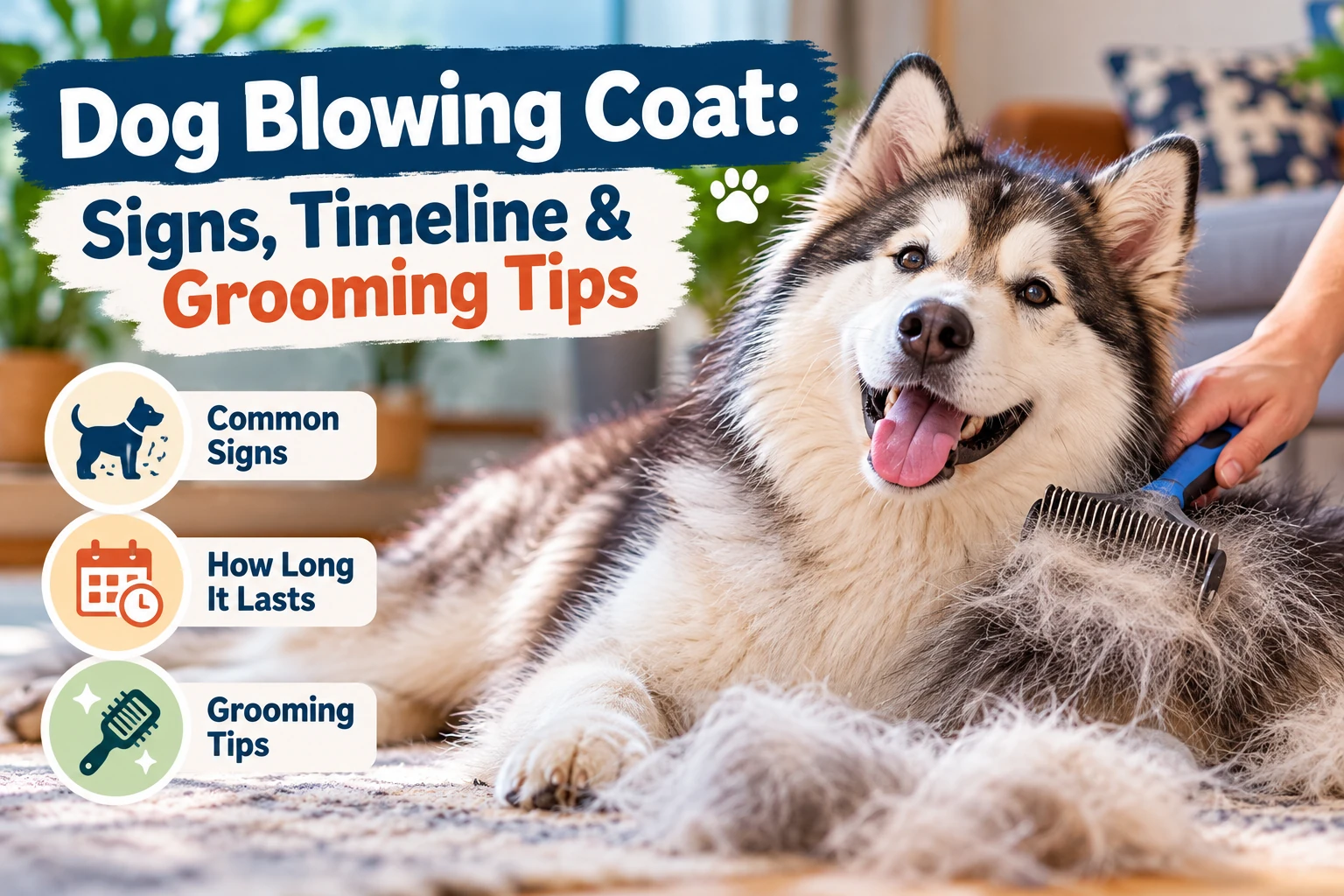
Dog blowing coat is a period of heavy seasonal shedding when a double-coated dog releases large amounts of loose undercoat. It commonly happens during seasonal changes and may last several weeks, although timing varies. Gentle brushing, careful bathing, and appropriate undercoat tools can help manage the loose fur. Follow a double coat deshedding guide to protect the skin and outer coat.
Common Signs of Blowing Coat
- Heavy shedding: More loose fur collects on furniture, floors, and clothing.
- Undercoat clumps: Soft, fluffy tufts lift away during gentle brushing.
- Uneven fluffiness: Some areas appear thicker until the loose coat comes out.
- Seasonal pattern: Shedding often increases around spring or fall.
- Healthy skin: Normal shedding should not cause sores, significant itching, or bald patches.
What Should You Do?
- Brush gently: Work through small sections and stop if the skin becomes irritated.
- Check the skin: Consult your veterinarian about bald patches, sores, or unusual discomfort.
If your dog is leaving fluffy piles of fur around the house, you may be watching a seasonal coat blow. The amount of hair can look alarming, especially when you’re caring for a Husky, German Shepherd, or Samoyed.
I’m Ashraful, and in this guide I’ll explain what’s happening beneath your dog’s coat. You’ll also learn how to remove loose undercoat safely without damaging healthy fur.
What Does Dog Blowing Coat Mean?
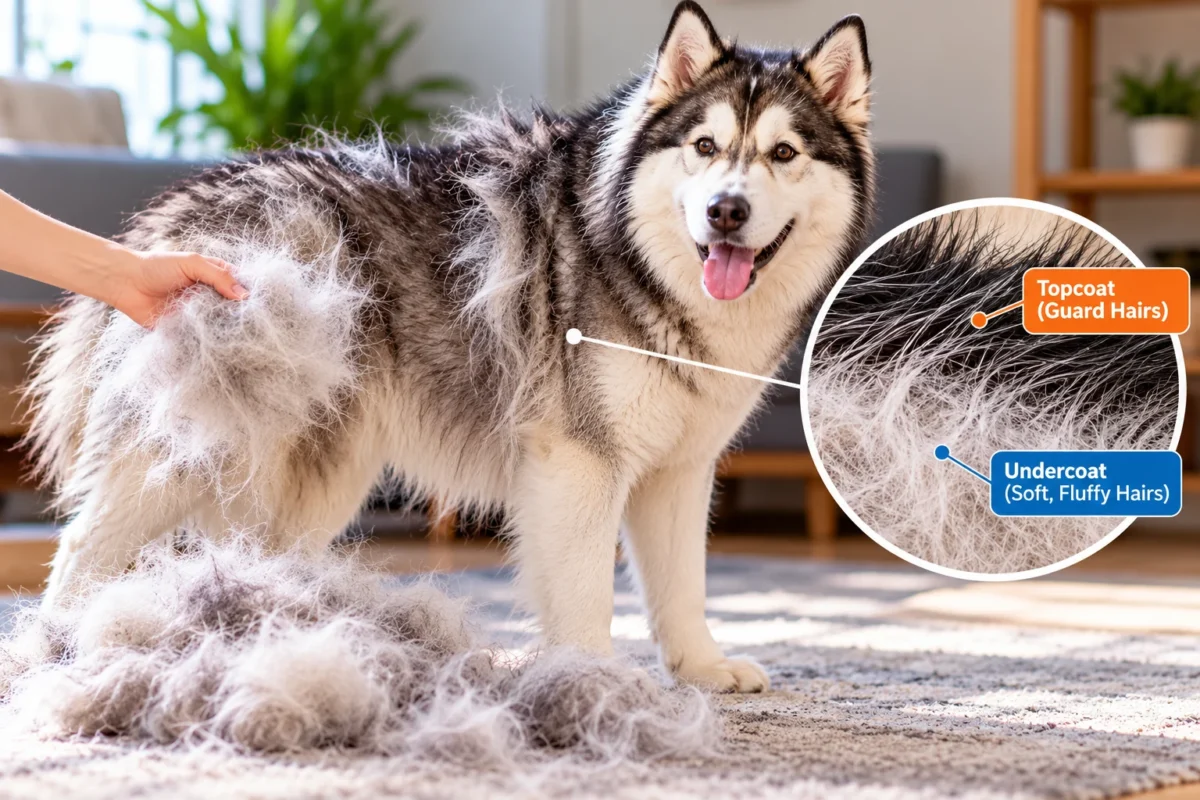
Dog blowing coat means a dog is releasing a substantial amount of its soft undercoat during a seasonal shedding cycle. This process is especially noticeable in breeds with dense double coats.
A double coat contains two different hair layers, each serving an important purpose.
- Undercoat: Soft, shorter hair that provides insulation and frequently sheds during seasonal changes.
- Topcoat: Longer protective guard hairs that help shield the skin from weather, sunlight, and dirt.
During a coat blow, large amounts of old undercoat loosen and fall out. You might discover fluffy clumps along your dog’s sides, hindquarters, shoulders, or neck.
The outer guard hairs usually remain in place. That’s one reason heavy shedding doesn’t necessarily mean your dog is losing its protective coat.
The American Kennel Club explains these protective layers in its double-coated dog care guidance.
Why Do Dogs Blow Their Coat?
Dogs blow their coats as part of their natural hair-growth and seasonal shedding cycles. Changes in daylight, along with climate and individual coat characteristics, influence these patterns.
Seasonal Changes and Daylight
Daylight changes help regulate seasonal coat growth. Many double-coated breeds shed more undercoat as seasons transition, particularly around spring and fall.
- Spring: Dogs may shed a substantial portion of their dense winter undercoat.
- Fall: Another coat transition may occur as seasonal growth patterns change.
- Other seasons: Some dogs continue shedding noticeable amounts throughout the year.
Indoor Living and Climate
Dogs living indoors experience artificial lighting and relatively stable temperatures. Their shedding may therefore be less distinctly seasonal than that of outdoor dogs.
Dogs in warm climates may also release loose undercoat throughout the year. A dramatic spring or fall coat blow isn’t guaranteed for every dog.
Breed and Coat Genetics
Breed influences undercoat thickness, shedding patterns, and grooming requirements. A heavily coated Samoyed may release far more visible fluff than a short-coated Labrador.
Individual dogs within the same breed can still shed differently. Age, coat condition, nutrition, and health also matter.
What Are the Signs Your Dog Is Blowing Coat?
The clearest sign is an unusually large amount of loose, fluffy undercoat without obvious skin damage. The fur often comes away easily during gentle brushing.
1. Large Clumps of Loose Fur
You may notice soft tufts of hair sticking out around the hindquarters or shoulders. These clumps can sometimes be lifted away without pulling.
Never tug firmly on attached hair. Resistance suggests the fur isn’t ready to come out or may be tangled.
2. More Hair Around Your Home
Furniture, carpets, bedding, and clothing may collect fur faster than usual. Vacuuming might become a daily task during particularly heavy shedding.
3. A Patchy-Looking Undercoat
Some areas may look temporarily uneven as loose undercoat separates. However, the skin should not develop distinct bald patches or obvious inflammation.
4. Increased Fur During Brushing
Your brush may collect much more hair than it does during ordinary maintenance. This is particularly noticeable around the neck, chest, thighs, and tail.
5. Otherwise Normal Behavior
Dogs experiencing normal seasonal shedding generally continue eating, playing, and behaving normally. Persistent scratching, pain, or unusual fatigue deserves closer attention.
How Long Does Dog Blowing Coat Last?
A seasonal coat blow often lasts a few weeks, but there is no fixed duration for every dog. Breed, undercoat density, climate, and grooming frequency can change the timeline.
Some dogs release most of their loose undercoat relatively quickly. Others shed gradually or have overlapping periods of heavier shedding.
Typical Coat-Blowing Patterns by Breed
| Dog Breed | Coat Type | Shedding Pattern |
|---|---|---|
| Siberian Husky | Dense double coat | Often prominent seasonal undercoat shedding |
| German Shepherd | Medium or long double coat | Year-round shedding with seasonal increases |
| Golden Retriever | Medium-to-long double coat | Regular shedding with heavier seasonal periods |
| Samoyed | Very dense arctic coat | Potentially substantial seasonal coat blows |
| Labrador Retriever | Short double coat | Regular shedding with seasonal increases |
These are general breed patterns, not guaranteed timelines. A coat blow lasting longer than expected isn’t automatically abnormal if the skin remains healthy.
Which Dog Breeds Blow Their Coat the Most?
Breeds with thick, insulating undercoats often produce the most noticeable seasonal coat blows. Northern, herding, working, and some sporting breeds commonly have this coat structure.
- Siberian Husky: Famous for heavy seasonal undercoat shedding.
- Alaskan Malamute: Has a thick coat that requires careful undercoat maintenance.
- Samoyed: Releases substantial quantities of soft, white undercoat.
- German Shepherd: Sheds regularly, with seasonal increases.
- Golden Retriever: Has a dense undercoat and longer feathering that can tangle.
- Akita: Has a dense protective coat with pronounced seasonal shedding.
- Pembroke Welsh Corgi: Carries more insulating undercoat than its short appearance might suggest.
A dog’s coat density matters more than body size alone. Even a relatively small double-coated dog can shed a surprising amount of fur.
How Do You Groom a Dog That Is Blowing Coat?
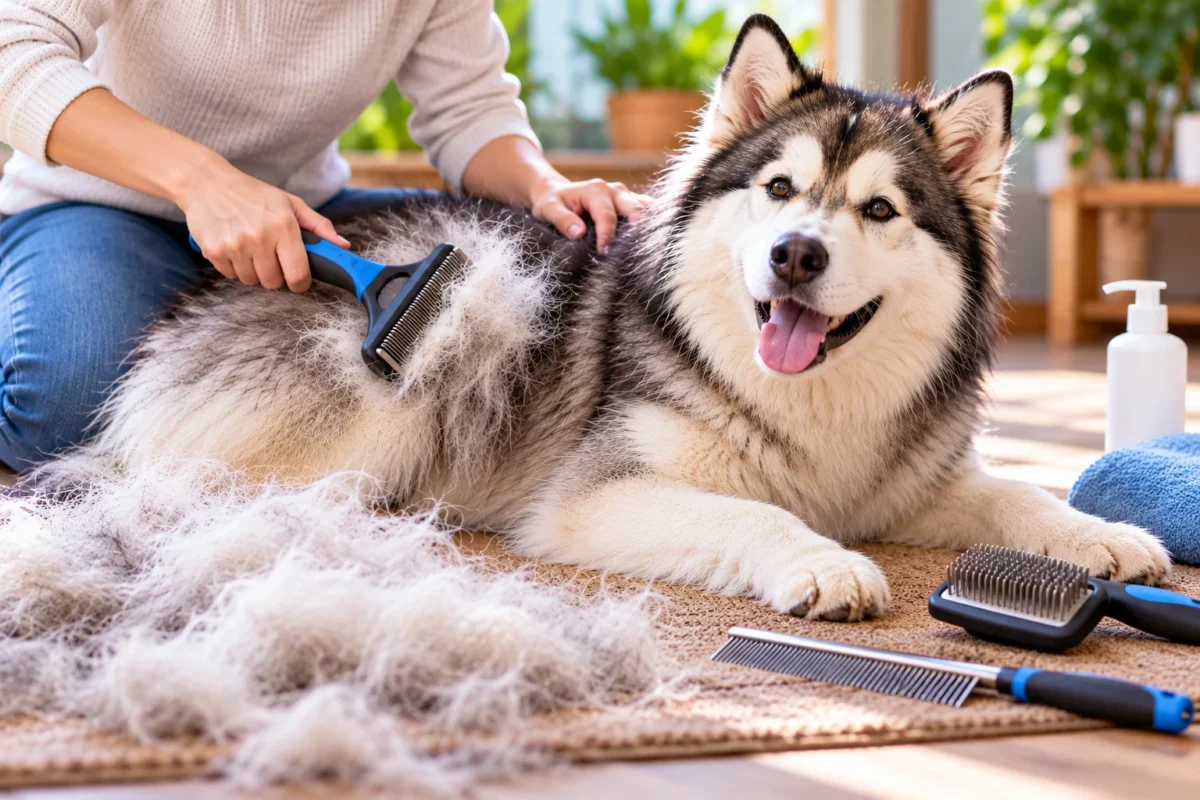
The safest approach combines gentle brushing, appropriate undercoat removal, and skin checks. You want to remove loose hair, not force healthy hair out.
Step 1: Examine the Skin and Coat
Before brushing, inspect your dog for irritation, wounds, tangles, or painful areas. Look carefully beneath dense hair around the shoulders, belly, and hindquarters.
Stop if you notice redness, sores, or significant tenderness. Skin problems may need veterinary care before grooming continues.
Step 2: Choose the Right Tools
Select grooming tools based on hair length and density. An undercoat rake, slicker brush, and metal comb serve different purposes.
- Undercoat rake: Helps lift loose hair from beneath the outer coat.
- Slicker brush: Removes loose surface fur and helps work through minor tangles.
- Metal comb: Checks for remaining snags and hidden knots.
- High-velocity dryer: Can help move loose undercoat during professional-style drying when used correctly.
Step 3: Divide the Coat Into Small Sections
Work systematically instead of brushing randomly across the entire body. Lift the outer hair gently to expose manageable sections of undercoat.
I recommend checking the comb after each section rather than chasing every remaining loose hair. This makes it easier to notice tangles without repeatedly brushing sensitive skin.
Step 4: Remove Loose Undercoat Gently
Brush in the direction of hair growth using light pressure. Pay attention to the thighs, chest, shoulders, and other dense areas.
Don’t scrape the skin or repeatedly rake the same spot. If hair stops coming away easily, move to another section or finish the session.
Step 5: Check for Hidden Mats
Use a metal comb to check for remaining tangles. Common problem areas include behind the ears, under the collar, and around the legs.
Never pull a comb through a painful mat. Ask a professional groomer for help with tight tangles close to the skin.
Step 6: Bathe When Necessary
A bath can loosen trapped undercoat and wash away dirt. However, your dog doesn’t need daily bathing simply because shedding increases.
Use an appropriate dog shampoo and rinse thoroughly. The American Kennel Club’s dog shampoo guidance explains why shampoo selection should match coat and skin needs.
Step 7: Dry the Coat Carefully
Dense undercoats can trap moisture, particularly near the skin. Dry your dog carefully after bathing to reduce discomfort and potential skin problems.
A high-velocity pet dryer can help separate loose hair, but it requires careful handling. Keep airflow away from sensitive areas and avoid frightening your dog.
For extremely dense or compacted coats, consider a professional groomer. Proper drying and undercoat removal may be safer with experienced assistance.
How Often Should You Brush a Dog Blowing Coat?
During heavy shedding, many double-coated dogs benefit from short, gentle brushing sessions every day or every other day. The ideal frequency depends on coat density and skin tolerance.
Outside seasonal shedding periods, a consistent weekly routine may be sufficient for some breeds. Long or easily tangled coats often need more frequent attention.
Practical Brushing Schedule
- Heavy seasonal shedding: Begin with brief daily or alternate-day sessions when comfortable.
- Moderate shedding: Brush several times weekly as needed.
- Normal coat maintenance: Brush at least weekly for many double-coated breeds.
- Sensitive skin: Use shorter sessions with softer tools and ask your veterinarian about persistent irritation.
These frequencies are starting points rather than strict rules. More brushing isn’t always better, especially when using aggressive deshedding tools.
The detailed guide to deshedding double-coated dogs explains how grooming intensity should change with coat condition.
Dog Blowing Coat vs. Normal Shedding: What’s the Difference?
Normal shedding happens as individual hairs complete their growth cycles. Blowing coat describes a more concentrated release of undercoat, often during seasonal transitions.
| Feature | Normal Shedding | Blowing Coat |
|---|---|---|
| Hair volume | Usually moderate | Often much heavier |
| Pattern | May continue year-round | Often concentrated during seasonal transitions |
| Loose fur | Individual hairs and smaller amounts | Visible fluffy undercoat clumps |
| Grooming needs | Regular maintenance | More frequent gentle grooming |
Both processes can be normal. What matters most is whether your dog’s skin remains healthy and the shedding follows a familiar pattern.
When Is Heavy Dog Shedding a Warning Sign?
Heavy shedding isn’t always seasonal. Hair loss accompanied by irritated skin or other symptoms can indicate allergies, parasites, infections, or medical conditions.
Watch for These Warning Signs
- Bald patches: Distinct areas where hair has disappeared and skin becomes exposed.
- Persistent itching: Repeated scratching, licking, biting, or rubbing.
- Red or inflamed skin: Irritation, sores, crusts, or discomfort.
- Unusual odor: A persistent unpleasant smell from the skin or coat.
- Excessive dandruff: Heavy scaling or flaking accompanied by coat changes.
- General illness: Hair loss accompanied by lethargy, changes in appetite, or other concerning symptoms.
According to VCA Animal Hospitals’ coat and skin health guidance, excessive shedding can sometimes accompany nutritional problems, parasites, allergies, and hormonal disorders.
New bald patches or inflamed skin deserve veterinary assessment. Don’t assume these symptoms are part of a normal seasonal coat blow.
Should You Shave a Dog That Is Blowing Coat?
No, you generally shouldn’t shave a healthy double-coated dog simply to stop shedding. Shaving removes protective guard hairs and can interfere with normal coat function.
The undercoat and outer coat work together to protect the skin. Removing both layers may increase exposure to sunlight and create coat-regrowth problems.
The American Kennel Club’s dog shaving guidance explains why shaving is usually unsuitable for double-coated breeds.
Better Alternatives to Shaving
- Regular brushing: Gently remove hair that’s already loose.
- Targeted undercoat removal: Use tools suited to the specific coat.
- Appropriate bathing: Wash when needed and rinse thoroughly.
- Professional grooming: Get help with compacted undercoat or difficult mats.
Medical treatment or severe matting may sometimes require clipping. Those decisions should involve a veterinarian or qualified professional groomer.
How Can You Keep Your Home Clean During Coat-Blowing Season?
You probably can’t prevent loose hair from entering your home completely. However, consistent grooming and a practical cleaning routine can make it much easier to manage.
Simple Fur-Control Checklist
- Brush outdoors: Use a secure, comfortable area when weather permits.
- Vacuum frequently: Focus on carpets, corners, furniture, and pet bedding.
- Wash bedding: Follow fabric care instructions and remove loose hair beforehand.
- Use washable covers: Protect frequently used sofas and chairs.
- Keep a lint roller nearby: Remove fur from clothing quickly.
- Maintain grooming tools: Clear trapped fur after each session.
One useful habit is cleaning the grooming area immediately after brushing. Loose undercoat is easier to collect before it spreads around the house.
What Are the Biggest Mistakes When Grooming a Blowing Coat?
The biggest mistakes involve excessive force, inappropriate tools, and ignoring skin discomfort. Seasonal shedding is natural, so you don’t need to remove every loose hair in one session.
- Brushing too aggressively: Can irritate skin and damage healthy hair.
- Using sharp tools incorrectly: May cut or break protective coat hairs.
- Shaving unnecessarily: Can disrupt normal double-coat function.
- Forcing out attached clumps: May cause pain and hair damage.
- Leaving the undercoat damp: Can contribute to skin discomfort.
- Ignoring serious mats: Tight mats may require professional removal.
- Missing medical symptoms: Abnormal hair loss shouldn’t be dismissed as shedding.
Gentle, consistent grooming is more useful than a single aggressive session. Let your dog’s comfort and skin condition guide your routine.
Recommended Grooming Tools for Dogs Blowing Coat
The right tool depends on your dog’s hair length, undercoat density, and skin sensitivity. These three established grooming products cover different practical needs.
Affiliate disclosure: Some links below are Amazon affiliate search links. As an Amazon Associate, we may earn from qualifying purchases at no additional cost to you.
🏆 For Loose Undercoat
Safari Double Row Undercoat Rake
★★★★☆ 4/5 — Editorial Fit
The double-row metal-tooth design is intended to help remove loose undercoat. I’d consider this style for manageable, unmatted double coats, using gentle pressure and checking the skin often.
✨ For Dense, Long Coats
Chris Christensen Big G Slicker Brush
★★★★☆ 4/5 — Editorial Fit
This slicker brush has long, dense pins designed for demanding coat maintenance. I’d prioritize careful section-by-section use on suitable thick coats rather than repeated brushing over one area.
🔍 For Final Coat Checks
Andis Steel Pet Comb
★★★★☆ 4/5 — Editorial Fit
A metal grooming comb helps identify small tangles and undercoat that brushing missed. I prefer using a comb as a gentle finishing check rather than forcing it through stubborn mats.
Editorial fit scores are subjective suitability assessments, not customer review averages or laboratory test results. Always confirm product size, availability, and specifications before purchasing.
Frequently Asked Questions About Dog Blowing Coat
Do dogs blow their coat twice a year?
Many double-coated dogs experience heavier seasonal shedding around spring and fall. However, some shed steadily throughout the year, especially in warmer climates or indoor environments. Breed, daylight exposure, and individual coat cycles affect how noticeable each seasonal coat blow becomes.
Can you stop a dog from blowing its coat?
No, you cannot completely stop a healthy dog’s natural seasonal shedding cycle. Regular brushing and appropriate grooming can help remove loose undercoat before it spreads around your home. Avoid products or treatments promising to eliminate normal shedding permanently.
Does bathing help when a dog is blowing coat?
Yes, appropriate bathing can help loosen trapped undercoat and remove dirt. Use a dog-safe shampoo, rinse thoroughly, and dry the dense coat carefully. Excessive bathing may dry or irritate the skin, so follow your dog’s individual grooming needs.
Is blowing coat painful for dogs?
Normal coat blowing should not be painful. Loose undercoat typically separates without significant discomfort. However, aggressive brushing, tight mats, or inflamed skin can make grooming painful. Stop grooming if your dog reacts with pain, and seek appropriate professional advice.
Can dogs blow their coat in winter?
Yes, some dogs experience noticeable shedding outside the usual spring and fall transitions. Indoor lighting, climate, and individual hair-growth cycles can influence the timing. If winter shedding includes bald patches, persistent itching, or skin changes, consult your veterinarian.
Final Thoughts: Managing Dog Blowing Coat Safely
Dog blowing coat is usually a natural part of seasonal coat maintenance. Although the amount of loose fur can feel overwhelming, proper brushing and sensible grooming can make it much easier to handle.
Focus on removing loose undercoat without damaging the protective outer coat. Use gentle tools, keep grooming sessions comfortable, and seek veterinary help when shedding comes with skin problems.
Start with one short grooming session today. Check your dog’s coat and skin, remove hair that comes away easily, and build a routine that keeps your dog comfortable throughout shedding season.


