
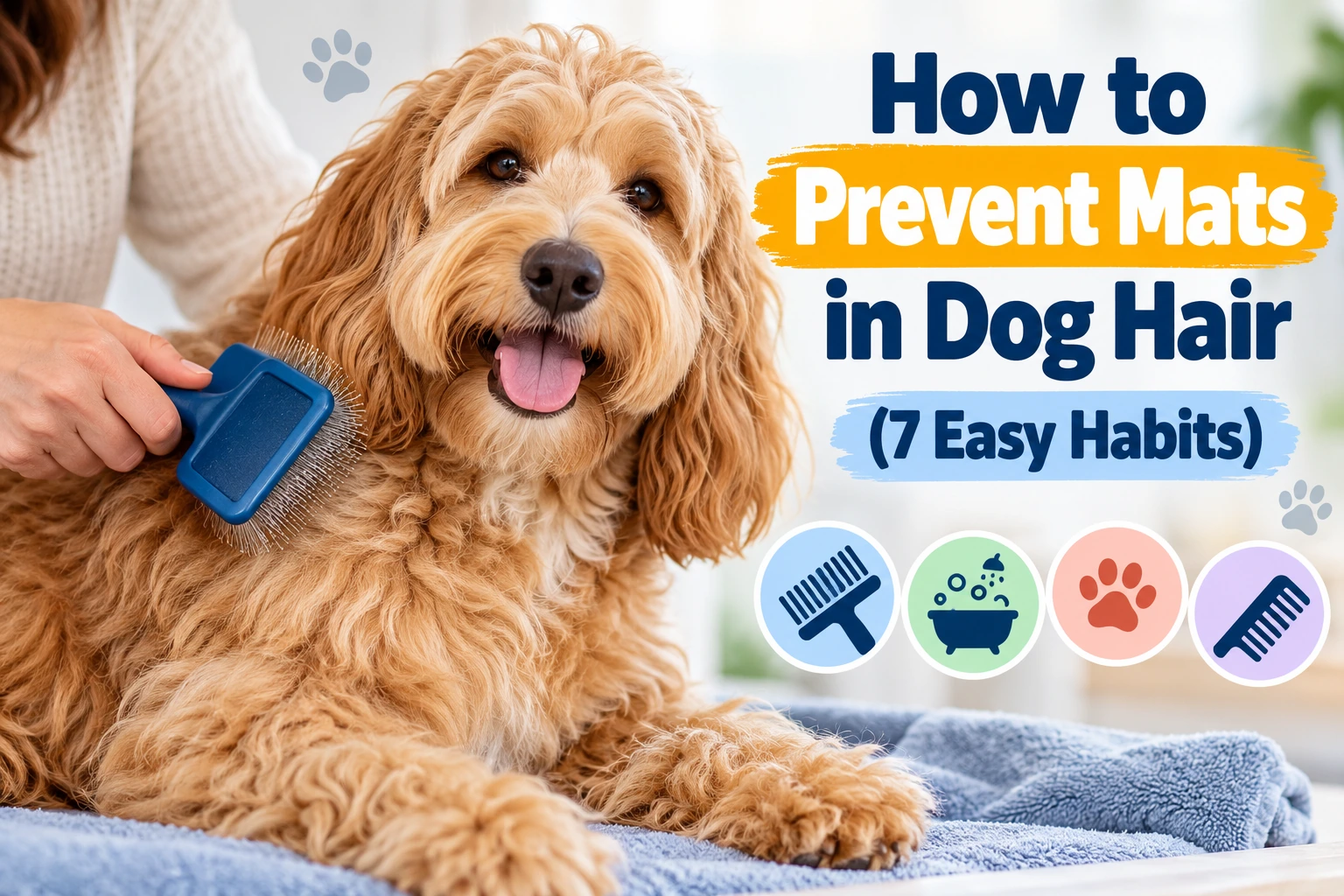
Quick Answer
To prevent mats in dog hair, brush and comb regularly using tools suited to your dog’s coat, reach the hair beneath the surface, and check areas where collars, harnesses, and legs create friction. Remove loose debris before bathing and dry the coat thoroughly afterward. Never pull through a tight, painful mat or cut it with household scissors.
A dog can look freshly brushed while small knots are forming underneath the outer coat. This is especially common with long, curly, silky, and dense fur. Prevention is less about brushing harder and more about finding the places where hair starts to clump before the knots tighten.
The routine below focuses on everyday maintenance. If your dog already has large mats close to the skin, skip home detangling and seek professional help instead.
Why Does Dog Hair Become Matted?

Mats form when strands of hair twist around each other, collecting loose fur, dirt, and debris. As the knot grows, ordinary movement and moisture can compress it into a dense clump that pulls on the skin.
Four common contributors are missed brushing sessions, shed hair trapped in the coat, dampness, and repeated rubbing. A harness that moves across the chest can create tangles even on a dog that receives regular brushing. Dogs that lick or scratch one area may also develop local knots.
A mat is more than a cosmetic inconvenience. The ASPCA’s guidance on coat matting explains that severe tangles can hide skin irritation and become painful. Preventing those knots helps protect comfort as well as coat appearance.
How Do You Prevent Mats in Dog Hair Step by Step?
Use these seven habits as one flexible routine. The entire coat needs regular attention, but the highest-risk spots deserve checking between full grooming sessions.
1. Check the Coat Before Picking Up a Brush
Run your fingers gently over the neck, chest, legs, belly, tail, and behind the ears. Feel for small knots, burrs, tender patches, or places where the coat seems unusually dense. Part the hair to inspect the skin whenever something feels different.
Do not brush directly over wounds, inflamed skin, or a knot that causes obvious pain. An early check tells you whether you are doing ordinary maintenance or dealing with a problem that needs professional assessment.
2. Use a Brush and Comb Matched to the Coat
A pin brush can help with many longer coats, while a suitable slicker brush works through loose hair and light tangles on many curly or medium-length coats. Double coats may need a coat-appropriate undercoat tool during shedding. Short, smooth coats often need only a rubber or soft bristle brush.
For long or curly coats, keep a metal comb nearby. A brush can glide across the surface while the comb catches hair still tangled underneath. For more help with technique, follow this step-by-step guide to brushing a dog.
3. Brush in Small Layers, Not Just Across the Top
Part longer hair into narrow sections so you can see the deeper coat. Gently brush each layer outward, using light strokes that separate the hair without scraping the skin. This section-by-section approach is often called line brushing.
Start in a comfortable area, such as the shoulder, and move steadily around the body. If you meet resistance, stop to inspect it rather than forcing the brush through. Once a section feels smooth, check it with a comb before moving on.
Practical Tip
A smooth-looking surface does not prove the coat is tangle-free. On a long or curly coat, a gentle comb check through each finished section helps reveal hidden knots.
4. Check the Friction Spots Every Day
The areas that rub against other surfaces often mat first. Check behind the ears, beneath the collar, under the front legs, across the harness line, around the hind legs, and near the tail. Also look between the toes if your dog has long foot hair.
After a walk, remove the harness when appropriate and inspect the fur underneath it. Look for trapped grass, burrs, or small tangles. A short check is particularly useful after outdoor play, rainy walks, or wearing a coat or sweater.
5. Loosen Only Small, Comfortable Tangles
When you find a loose knot, support the hair near its base to reduce pulling on the skin. Separate the outer strands with your fingers, then use a suitable comb or brush from the hair ends toward the base. Work slowly and stop if your dog flinches or resists.
Never treat a solid, skin-tight mat like an ordinary tangle. The goal of prevention is to catch knots while they are still small, not to force apart painful felted hair.
6. Brush Before Baths and Dry Thoroughly Afterward
Before bathing, remove loose fur and manageable tangles from the dry coat. Water and washing can make an existing knot harder to work out, so don’t soak a badly matted area and assume shampoo will loosen it.
Use dog-appropriate shampoo, rinse completely, and blot the coat rather than rubbing long hair vigorously with a towel. Dry thick and curly coats all the way through using a safe method your dog tolerates. Our guide to bathing a long-haired dog without tangles explains the full washing and drying sequence.
7. Finish With a Comb Check and a Positive Ending
For tangle-prone coats, gently comb the sections you brushed. The comb should pass through without being forced. If it catches, inspect that spot again rather than tugging. Do not insist on combing through a painful area to finish the session.
End with praise, a small reward, or a break while your dog is still comfortable. Consistent, manageable sessions are easier to sustain than an occasional exhausting grooming marathon.
How Often Should You Brush to Keep Mats Away?
There is no universal number. A coat that tangles quickly needs closer attention than a smooth coat, and outdoor activity or seasonal shedding may change the schedule. Use the following as starting points, not rigid rules.
| Coat type | Starting routine | Priority |
|---|---|---|
| Short, smooth | About weekly | Remove loose surface hair |
| Medium or feathered | Several times weekly | Check ears, legs, and chest |
| Long or silky | Several times weekly to daily | Comb beneath outer hair |
| Curly or woolly | Frequent, often daily | Check hidden root-level knots |
| Dense double coat | Weekly or more during shedding | Clear loose undercoat gently |
Adjust the interval when the evidence changes. If you discover new knots at every session, shorten the time between checks. If the coat stays clear, your present routine may be enough. For a deeper schedule, see how often you should brush your dog.
Which Everyday Habits Make Matting Worse?
Even frequent grooming can miss the cause of recurring mats. Watch for these common mistakes:
- Brushing only the surface: Hidden tangles remain in the dense or curly layers underneath.
- Waiting until bath day: Long gaps allow tiny knots to gather more hair and tighten.
- Rubbing wet fur aggressively: Vigorous towel friction can tangle longer coats.
- Ignoring clothing contact points: Collars, harnesses, and sweaters can rub the same coat areas repeatedly.
- Using too much force: Pulling hurts and may make your dog resist future grooming.
- Overworking a double coat: Repeated aggressive undercoat-tool passes may irritate skin without improving mat prevention.
A routine that causes fear or skin irritation is difficult to maintain. Match pressure and tool choice to the coat, and ask a groomer to demonstrate safe technique if you are unsure.
What Should You Do If Your Dog Already Has Mats?
First decide whether the hair is lightly tangled or tightly matted. A small, loose knot that separates comfortably may be manageable with fingers and a suitable comb. A hard, dense patch that pulls the skin needs a different plan.
Do not cut the mat with household scissors. Skin can be caught inside the tangle, and a sudden movement can cause injury. The VCA Animal Hospitals coat-care guidance recommends professional assistance for extensive or severe matting and advises against scissors.
When to Stop
Stop home brushing if the mat is close to the skin, large, painful, or near the eyes, ears, anus, or genitals. See a veterinarian for redness, wounds, swelling, discharge, or unusual pain; a professional groomer can assess uncomplicated difficult mats.
How Can You Make Mat Prevention Easier to Maintain?
Pair coat checks with ordinary activities instead of depending on one long weekly session. After removing a harness, feel along the chest and armpits. After a damp walk, dry the fur and inspect the paws. Before a bath, check whether the coat is tangle-free enough to wash comfortably.
Keep grooming tools in one place and reward your dog for allowing gentle handling. For a dog that dislikes brushing, start with a few calm strokes and build tolerance gradually. Avoid pinning down a frightened animal to finish a session.
Regular professional grooming can also help keep a long or curly coat at a manageable length. Ask the groomer which places mat first on your particular dog, how to maintain them at home, and what appointment interval fits the coat. For a heavy double coat, use an appropriate undercoat-care technique rather than treating shaving as a routine mat-prevention shortcut.
Related Product
Stainless Steel Dog Grooming Comb
A smooth, coat-appropriate metal comb helps you check long or curly hair for small tangles a brush may leave behind.
As an Amazon Associate, we earn from qualifying purchases.
Frequently Asked Questions
Can puppies get matted hair?
Yes. Puppies with longer or curly fur can develop knots, especially around the ears and legs. Introduce a soft, appropriate brush gradually, keep sessions short, and reward calm handling.
Can a dog sweater or harness cause mats?
Yes. Repeated rubbing can tangle longer hair where clothing or straps touch it. Check those areas after wear and remove the garment when it is no longer needed.
Do you need a detangling spray to prevent mats?
No. Consistent brushing and comb checking matter more than a spray. A dog-formulated detangling product may help some coats, but avoid irritating fragrances and follow the label.
Can mats return after a professional haircut?
Yes. New hair can knot as it grows, especially in friction areas. Ask your groomer when to restart brushing and what coat length and maintenance schedule are realistic at home.
What if your dog refuses to be brushed?
Begin with brief, gentle handling and rewards rather than forcing a complete session. If the resistance is sudden or focused on one painful area, arrange a veterinary assessment.
Why does one side of my dog’s coat mat more than the other?
One side may experience more rubbing against bedding, clothing, or the ground. Repeated licking or scratching can also cause local tangles. Check for irritation if matting repeatedly returns in one spot.
Conclusion
Preventing mats in dog hair comes down to finding small tangles before they tighten. Choose tools that suit the coat, brush through manageable layers, check friction areas, and use a gentle comb to confirm long or curly hair is clear beneath the surface.
Fit the routine to your dog’s coat and comfort rather than following a rigid calendar. Pay extra attention after wet walks and before baths, and make grooming a positive experience. If you discover a tight, painful, or skin-level mat, stop and ask a groomer or veterinarian for help rather than risking injury at home.


