Quick Answer
To wash a dog’s paws, rinse them with comfortably lukewarm water, gently clean around the pads and between the toes, rinse away all dirt or cleanser, and dry each paw completely. For muddy or salty paws, a thorough rinse works better than simply wiping the surface. The American Kennel Club’s paw-cleaning guidance also recommends checking between the toes for trapped debris and irritation.
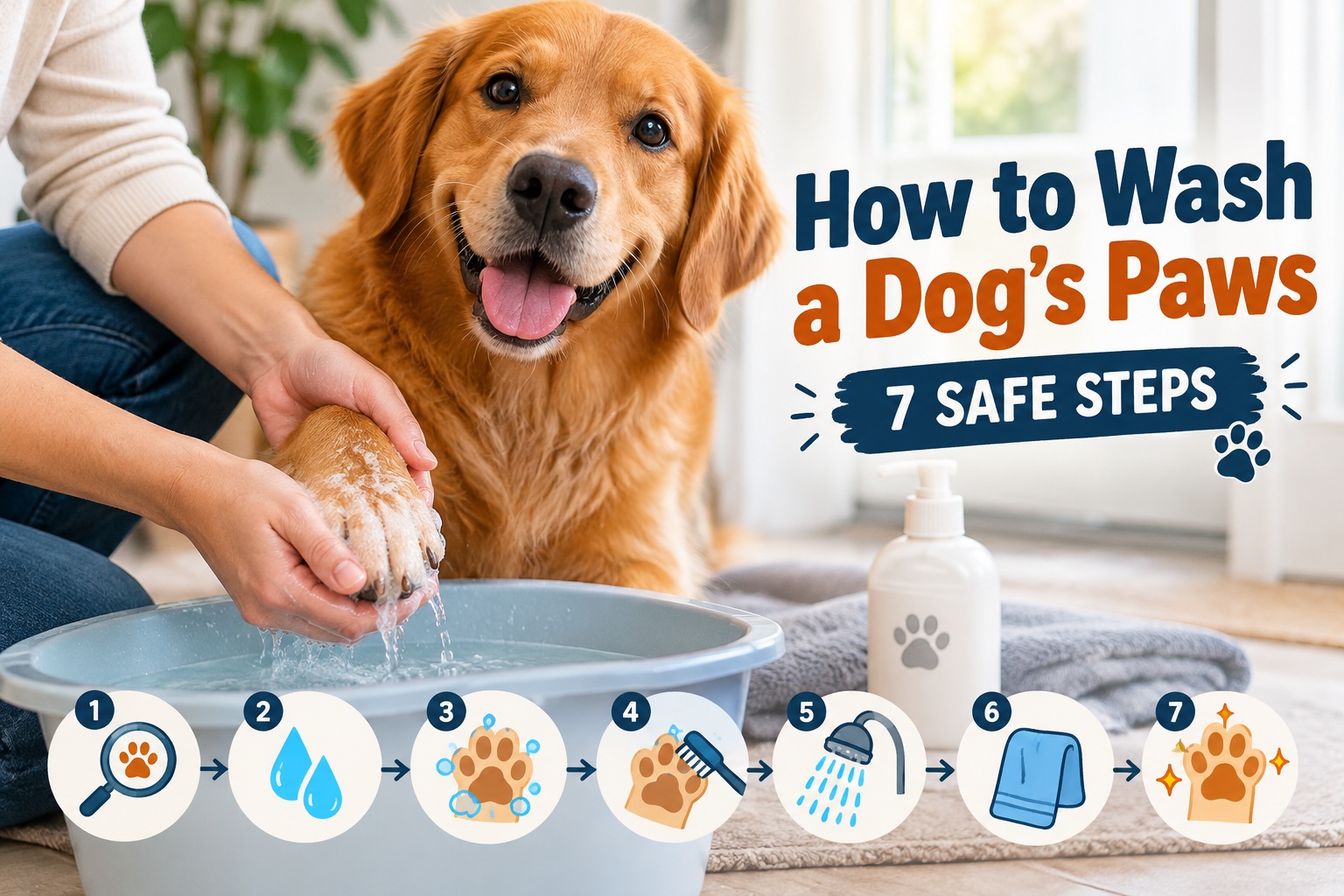
Quick Paw-Washing Steps
- Inspect first: Look for cuts, thorns, stones, redness, or anything stuck between the toes.
- Use lukewarm water: Wet each paw gently without using hot water.
- Clean the pads: Massage away dirt using your fingers, a soft cloth, or dog-safe cleanser when needed.
- Separate the toes: Check and clean the spaces where mud, sand, and salt often hide.
- Rinse completely: Remove dirt and every trace of cleaning product.
- Dry thoroughly: Blot the pads, toes, and surrounding fur with a clean towel.
When to Be Extra Careful
- Road salt or chemicals: Wash the paws promptly so your dog cannot lick residue off later.
- Damaged pads: Stop scrubbing if you find bleeding, swelling, burns, or a painful wound.
Muddy paw prints across the floor are annoying, but keeping paws clean is about more than protecting your carpet. Dirt, road salt, small stones, and other debris can hide around a dog’s pads and between the toes.
I’ve found that paw cleaning becomes much easier when you follow the same short routine after messy walks. Here’s how to wash your dog’s paws without turning every cleanup into a full bath.
Why Should You Wash Your Dog’s Paws?
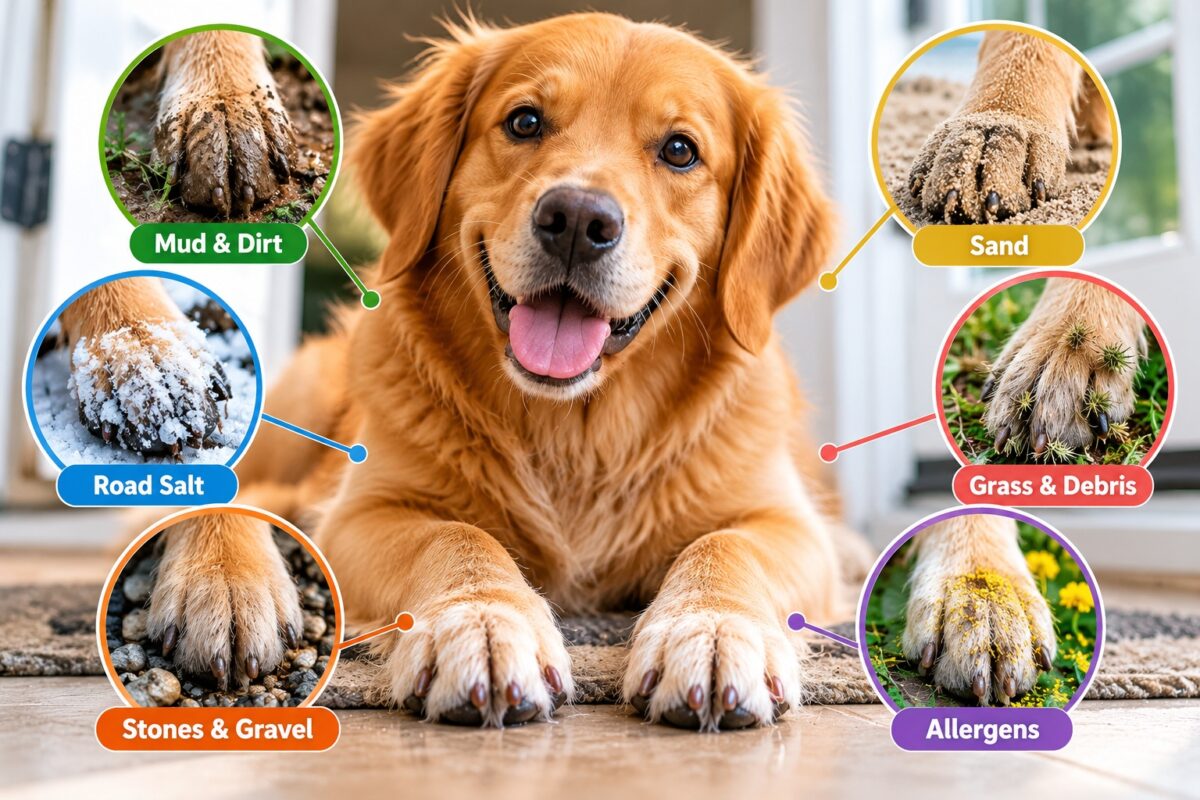
Washing your dog’s paws removes substances picked up during walks before they irritate the skin or get licked off. It also gives you a regular chance to inspect the pads, nails, and spaces between the toes.
- Mud and soil: Wet dirt can collect between paw pads and inside longer paw hair.
- Sand: Fine grains can stay between the toes and create uncomfortable friction.
- Road salt: Winter salt and de-icing products can irritate paws and should be removed after exposure.
- Grass and plant debris: Seeds, burrs, and small plant pieces can become trapped in fur.
- Small stones: Gravel can lodge between pads and make walking uncomfortable.
- Everyday allergens: Washing may remove pollen and other material carried indoors on the paws.
A paw wash doesn’t always require shampoo. For ordinary dust or light mud, plain lukewarm water may be all you need.
If your dog needs more than paw cleaning, follow my complete dog bathing guide for the full body-washing routine.
What Do You Need to Wash a Dog’s Paws?
You don’t need an elaborate grooming station. I prefer keeping a small paw-cleaning kit near the entrance used after walks.
- A bowl, sink, tub, or paw-cleaning cup
- Comfortably lukewarm water
- A soft washcloth
- One or two absorbent towels
- Dog-safe shampoo or cleanser when necessary
- High-value treats for nervous dogs
- A non-slip mat when using a sink or bathtub
Keep everything within reach before bringing in a muddy dog. Leaving a wet dog unattended while searching for a towel usually creates a bigger mess.
Water comfort matters too. My dog bath temperature guide explains why comfortably lukewarm water is the practical choice for home grooming.
How Do You Wash a Dog’s Paws Step by Step?
Start with the least complicated method that will remove the mess. Light dust may need only a damp cloth, while heavy mud or road salt deserves a thorough rinse.
1. Inspect Each Paw Before Adding Water
Hold the paw gently and look over the top, pad surface, nails, and spaces between the toes. This takes only a few seconds.
Watch for cuts, swelling, broken nails, burrs, thorns, stones, or anything unusual. Don’t scrub directly over an obvious wound.
2. Prepare Comfortably Lukewarm Water
Use mild, lukewarm water rather than a hot shower setting. Test the stream before putting your dog’s paw underneath it.
Dogs that dislike baths often tolerate paw washing better because only one foot gets wet at a time. Keep the water pressure gentle.
3. Wet the Paw Thoroughly
Rinse from just above the paw downward. Let the water loosen mud before trying to rub it away.
For dried mud, give the water a moment to soften it. Pulling hardened dirt from fur can tug uncomfortably on the skin.
4. Clean the Pads and Between the Toes
Use your fingers or a soft washcloth to massage the paw pads gently. Separate the toes enough to reach trapped dirt without forcing them apart.
- Clean around each paw pad.
- Check between every toe.
- Wipe around the nail bases.
- Remove loose dirt from surrounding fur.
- Inspect longer hair for tangled debris.
This is the step I avoid rushing. A paw may look clean from above while mud remains packed underneath.
5. Use Dog-Safe Cleanser Only When Needed
Plain water works for many routine cleanups. For greasy dirt or heavier messes, use a small amount of cleanser made specifically for dogs.
Avoid automatically reaching for human hand soap, dish soap, or human shampoo. Products formulated for people may not suit routine canine skin care.
If your dog has easily irritated skin, my guide on bathing dogs with sensitive skin covers gentler washing choices.
6. Rinse Every Trace of Cleanser Away
Run clean water around the pads and between the toes until no cleanser remains. Residue hidden in paw fur can sit against the skin after your dog walks away.
Dense paw hair deserves extra attention. Separate the fur with your fingers while rinsing instead of assuming clear-looking runoff means you’re finished.
7. Dry the Paw Completely
Blot the paw with a clean absorbent towel. Pay special attention to the spaces between the toes and longer fur around the feet.
I prefer pressing the towel against wet fur rather than rubbing aggressively. Once the paw is dry, give your dog a treat and repeat the routine on the next foot.
Dog Paw Wipes vs Water vs Paw Cleaner: Which Is Better?
The best cleaning method depends on what your dog stepped in. There’s no reason to fill a bathtub when you’re dealing with a little dust.
| Method | Best For | Water Needed | Main Limitation |
|---|---|---|---|
| Damp cloth | Dust and light surface dirt | Small amount | May miss dirt between pads |
| Dog grooming wipes | Quick cleanup while traveling | No | Less effective for thick mud |
| Water rinse | Mud, sand, salt, and general dirt | Yes | Requires drying afterward |
| Paw-cleaning cup | Muddy paws after regular outdoor walks | Yes | Some dogs need time to accept it |
For ordinary household use, I rely most on water and a towel. Wipes are convenient, but a proper rinse reaches spaces that surface wiping can miss.
Should You Wash a Dog’s Paws After Every Walk?
You don’t automatically need a complete paw wash after every normal walk. Match the cleanup to what is actually on your dog’s feet.
- Clean, dry sidewalk: A quick inspection may be enough.
- Dusty path: Use a damp cloth or quick rinse.
- Muddy ground: Rinse the paw pads and toe spaces thoroughly.
- Beach or sandy area: Rinse away sand, including between the toes.
- Road salt or de-icer: Wash the paws when you return indoors.
- Unknown substance: Prevent licking and determine whether veterinary advice is needed.
As of 2026, current ASPCA guidance still warns that common de-icing salts can irritate paws and can cause problems if dogs ingest enough while licking residue. That makes prompt cleanup especially useful after winter walks.
How Do You Wash Muddy Dog Paws Without a Full Bath?
You can wash only the legs and feet. For most dogs, there’s no need to soak the whole body because four paws are muddy.
- Place an absorbent towel beside the door.
- Guide your dog onto a non-slip surface.
- Rinse one paw with lukewarm water.
- Massage away mud from the pads and toe spaces.
- Rinse again with clean water.
- Towel-dry the paw.
- Move to the next paw.
This one-paw-at-a-time method gives you more control. It also works well for dogs that become restless during full baths.
If your dog struggles with water or tries to escape, see my guide for a dog scared of bath time before using restraint or forcing the process.
What Should You Avoid When Cleaning Dog Paws?
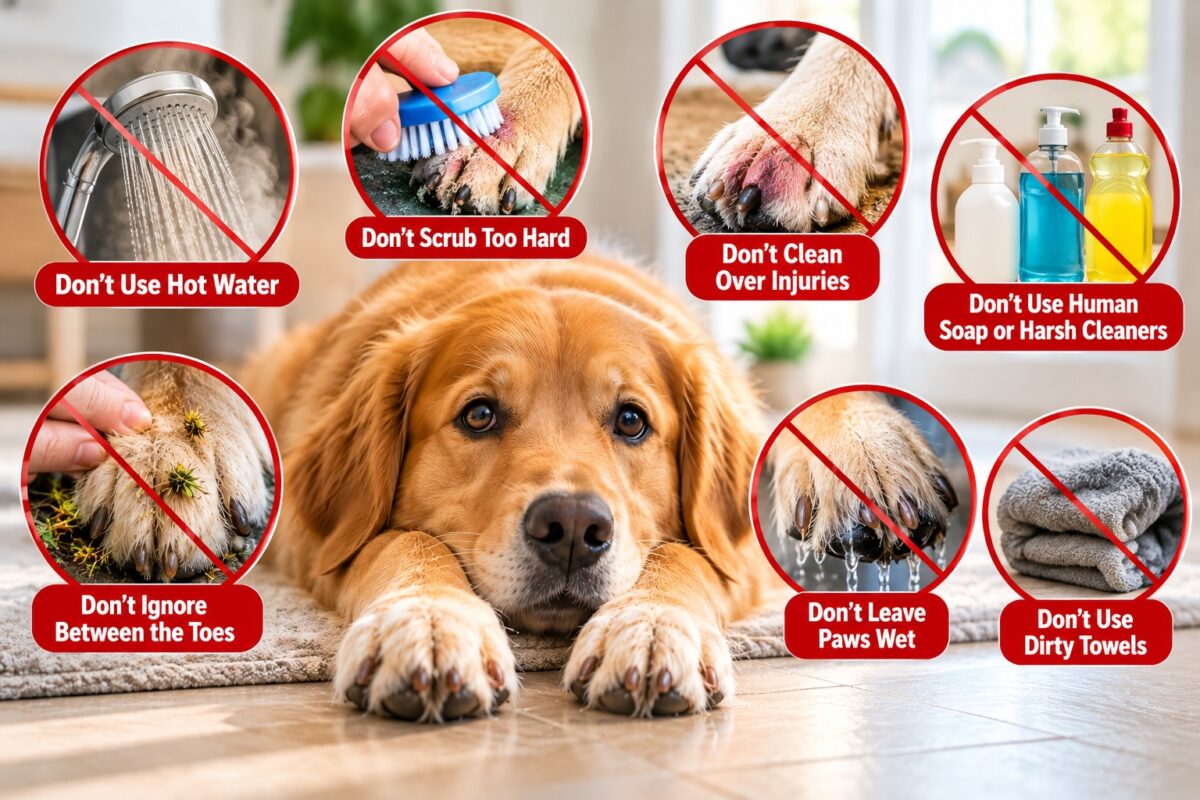
The safest paw routine is gentle. More scrubbing doesn’t automatically mean cleaner paws.
- Don’t use hot water. Comfortably lukewarm water is enough.
- Don’t scrub damaged skin. Cuts and irritated pads require gentler handling.
- Don’t ignore the toe spaces. Debris often hides there.
- Don’t leave cleanser behind. Rinse thoroughly.
- Don’t leave wet paws damp. Dry the fur and skin between the toes.
- Don’t force a painful paw. Sudden sensitivity can indicate an injury or foreign object.
VCA Animal Hospitals advises veterinary attention when paw-pad tissue is exposed or when serious burns or injuries occur. Chemical exposures may also need more than ordinary grooming.
When Does a Dirty Paw Need Veterinary Attention?
Paw washing is routine grooming, not treatment for an injury. Stop and assess the situation when the paw looks painful or abnormal.
Contact your veterinarian when you notice concerning signs such as:
- Persistent limping
- Active bleeding
- A deep cut or puncture
- Marked swelling
- Raw or exposed paw-pad tissue
- A broken or badly damaged nail
- Severe redness or obvious burns
- A deeply embedded object you cannot safely remove
- Ongoing licking or chewing of one paw
- Worsening irritation after cleaning
If your dog stepped in a chemical, don’t assume an ordinary wipe is enough. Prevent licking and contact a veterinarian or animal poison resource when the substance could be harmful.
Useful Products for Easier Paw Cleaning
If you clean muddy paws often, a couple of simple products can make the routine faster. These are the options I’d consider before buying a large collection of grooming tools.
🏆 Best for Muddy Paws
Dexas MudBuster Paw Cleaner
★★★★★
The MudBuster uses soft silicone bristles inside a water-filled cup to loosen dirt around the paw. I like this style for dogs that come home with wet mud packed around their pads after regular outdoor walks.
🚗 Best for Quick Cleanups
Earth Rated Unscented Dog Grooming Wipes
★★★★☆
These dog-specific grooming wipes are made for quick cleaning of paws and other exterior areas. I’d keep them in the car or walking bag for light dirt, while still choosing a water rinse for heavy mud or salt.
Frequently Asked Questions
Can I wash my dog’s paws with just water?
Yes. Lukewarm water is often enough for ordinary mud, dust, sand, and everyday dirt. Massage around the pads and between the toes while rinsing, then dry the paws completely. A dog-safe cleanser is more useful when water alone cannot remove the mess.
Can I use human soap to wash my dog’s paws?
Human soaps and shampoos aren’t my first choice for routine dog paw cleaning. Use plain water for simple dirt or a product specifically formulated for dogs when cleanser is necessary. If your veterinarian prescribed a medicated wash, follow those directions instead.
Should I wash my dog’s paws after walking on road salt?
Yes. Wash or thoroughly wipe away road salt and de-icing residue after your dog returns indoors. Pay attention between the toes and around the pads, then dry the paws. Prevent your dog from licking the feet until they’re clean.
How do I clean paws between baths?
Use a damp cloth, dog grooming wipe, paw-cleaning cup, or quick water rinse depending on the mess. You don’t need to give your dog a complete bath whenever the feet get dirty. Drying remains important after any wet cleaning method.
Why does my dog keep licking its paws after I clean them?
Occasional licking may simply follow a wet or unfamiliar cleaning routine. Repeated licking can also accompany irritation, trapped debris, discomfort, or other paw problems. Recheck the pads and toes, and contact your veterinarian if licking persists or the paw looks sore.
Final Takeaway
Learning how to wash a dog’s paws is mostly about being thorough without being rough. Use lukewarm water, clean between the toes, rinse completely, and finish with careful drying.
Keep the routine short and predictable. Once your dog learns that paw cleaning ends with dry feet and a reward, muddy walks become much easier to manage.