Quick Answer
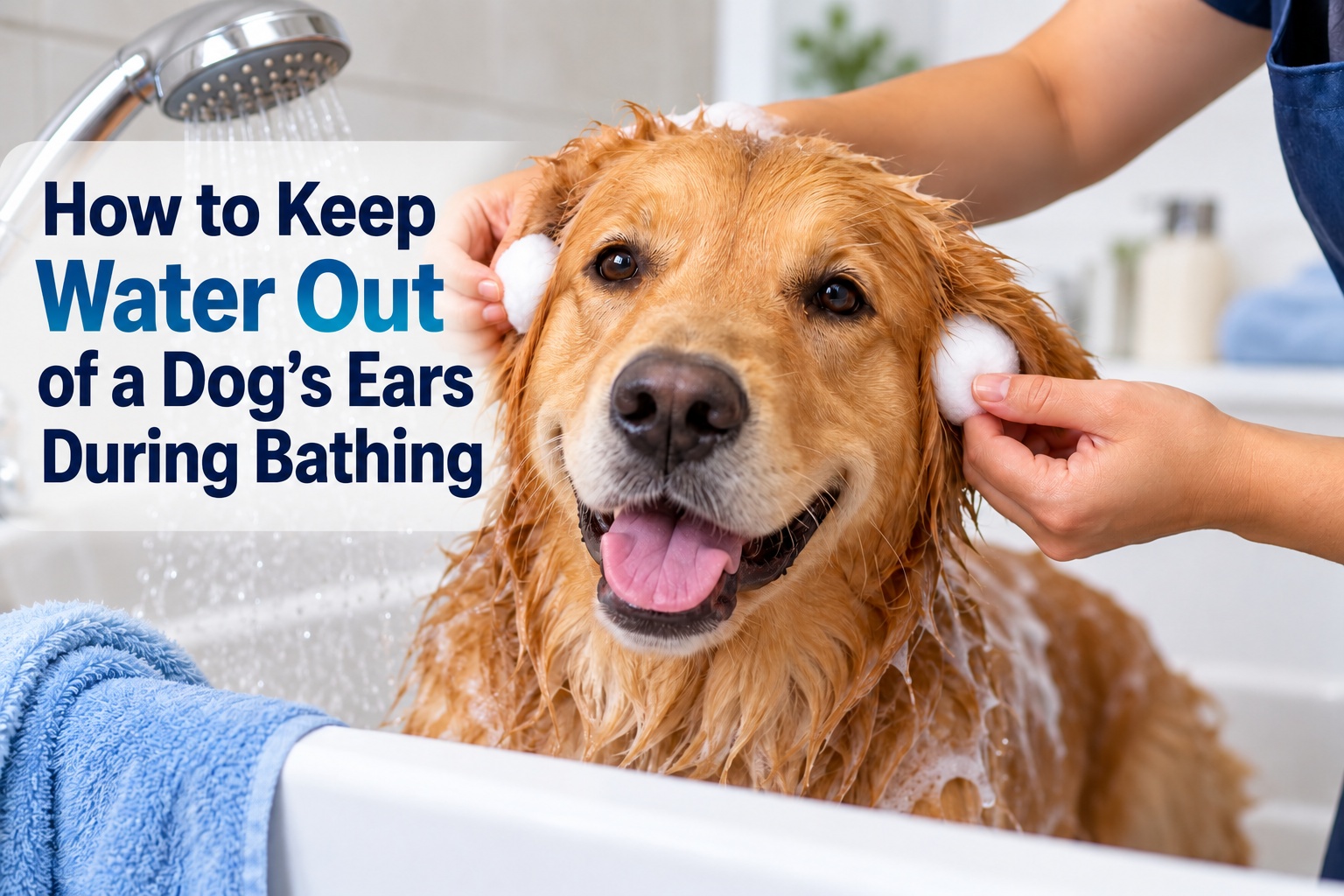
To keep water out of your dog’s ears during bathing, place a loose, dry cotton ball at the entrance of each ear canal and keep the shower spray below the neck. Wash the face separately with a damp cloth, remove the cotton immediately after the bath, and gently dry the outer ears. These precautions fit naturally into a safe dog bathing routine.
Quick Ear-Protection Steps
- Check first: Look for redness, odor, discharge, swelling, or obvious ear pain before bathing.
- Add cotton: Place a large dry cotton ball loosely at the opening of each ear without pushing it into the canal.
- Control the spray: Keep water pointed downward and away from the head and ear openings.
- Clean the face: Use a damp washcloth instead of spraying water over the dog’s head.
- Replace wet cotton: A saturated cotton ball stops being an effective barrier.
- Dry afterward: Remove the cotton and gently dry the pinna and visible outer-ear area.
When to Stop
- If an ear looks painful, inflamed, strongly odorous, or has discharge, skip home ear cleaning and contact your veterinarian.
Water running toward a dog’s ears can turn an ordinary bath into a stressful experience. The good news is that you don’t need complicated equipment to keep the ear canals protected.
My practical rule is simple: control where the water goes before worrying about removing it later. A cotton barrier, careful spray direction, and thorough drying solve most bath-time moisture problems.
Why Should You Keep Water Out of a Dog’s Ears?
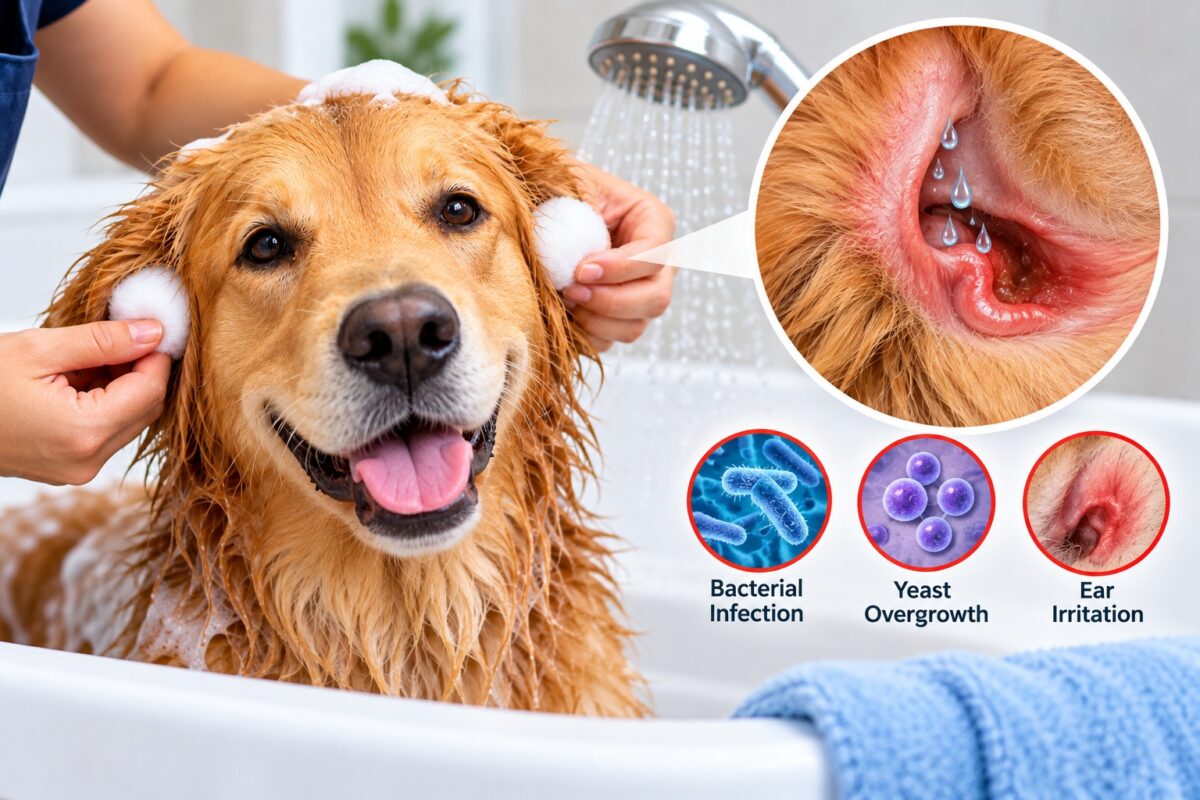
Keeping excess water out of the ear canal helps prevent the warm, damp conditions that can contribute to ear irritation and infection. This matters most for dogs whose ears already trap moisture easily.
The Merck Veterinary Manual lists excessive ear moisture as a predisposing factor for otitis externa and recommends preventing water from entering ear canals during bathing.
Some dogs deserve extra attention because their ear shape or history makes moisture harder to manage.
- Floppy-eared dogs: Breeds such as Cocker Spaniels and Basset Hounds have less airflow around the canal opening.
- Dogs with hairy ears: Dense hair around the opening can hold humidity.
- Frequent swimmers: Their ears receive repeated moisture exposure.
- Dogs with past ear infections: They may need a veterinarian-directed prevention routine.
- Dogs with allergies: Allergic skin disease can contribute to recurring ear inflammation.
Water alone does not mean an ear infection will automatically develop. However, preventing unnecessary moisture removes one factor that can contribute to trouble.
How Do You Keep Water Out of a Dog’s Ears During a Bath?
The easiest method combines a dry cotton barrier with careful water control. Never push material deep into the ear canal.
- Inspect both ears. Check for redness, swelling, discharge, unusual odor, or obvious pain before starting.
- Prepare large dry cotton balls. Use pieces large enough that they cannot disappear inside the canal.
- Place one loosely in each ear. Rest it at the entrance rather than packing it downward.
- Wet from the neck downward. Keep direct spray away from the head.
- Wash the face separately. Use a soft damp cloth around the cheeks, muzzle, and forehead.
- Watch the cotton. Replace it if it becomes wet during a long bath.
- Remove it after rinsing. Never leave cotton inside the ears after bath time.
- Dry the visible ear. Gently blot the ear flap and surrounding fur with a clean towel.
The American Kennel Club also recommends cotton balls as one way to help protect dogs’ ears during bathing. Its dog bathing guidance emphasizes keeping water away from the ears.
Should You Put Cotton Balls in a Dog’s Ears During Bathing?
Yes, a large dry cotton ball can act as a simple splash barrier when it sits loosely at the entrance of the ear. It should never be pushed deep enough that you cannot easily remove it.
Think of cotton as a backup barrier, not permission to spray the head. Direct water control remains the most important step.
- Use a large piece: Small pieces can be harder to see and retrieve.
- Keep it loose: Do not pack cotton into the ear canal.
- Keep it dry: Replace cotton that becomes saturated.
- Count before and after: If you insert two cotton balls, make sure you remove two.
A wet cotton ball can allow moisture to pass through. The AKC’s bathing guidance specifically notes that replacing soaked cotton during a bath may be necessary.
What Is the Best Way to Wash Around a Dog’s Head and Ears?
Skip the shower spray when cleaning the face. A soft cloth gives you much more control around the eyes, nose, and ears.
Wet the cloth with comfortably lukewarm water and squeeze out excess moisture. Then wipe the face in small sections without letting water run toward the ear openings.
If you’re unsure about the water itself, follow this guide to safe dog bath temperature. Lukewarm water is a better routine choice than noticeably hot or cold water.
| Method | Best Use | Water Control | Main Precaution |
|---|---|---|---|
| Dry cotton ball | Protecting the canal entrance | Good splash barrier | Never push it deep into the canal |
| Damp washcloth | Cleaning the face and ear flap | Excellent control | Keep excess water squeezed out |
| Handheld sprayer | Wetting and rinsing the body | Good when pressure is gentle | Never aim into the ears or face |
| Cup or pitcher | Controlled body rinsing | Moderate control | Pour downward, away from the head |
What Should You Do If Water Gets in Your Dog’s Ear?
Don’t panic if a small splash reaches the outer ear. Let your dog shake naturally, then gently blot the visible ear flap and surrounding fur.
Do not insert cotton swabs deep into the canal to chase water. The AKC’s dog ear-cleaning guidance warns against putting cotton swabs down the ear canal because they can push debris deeper.
- Let your dog shake: Head shaking can naturally move loose surface moisture outward.
- Blot the pinna: Use a clean, absorbent towel on the ear flap.
- Dry surrounding fur: Pay attention to long hair below floppy ears.
- Watch afterward: Repeated head shaking, scratching, odor, pain, or discharge deserves attention.
For the rest of the coat, follow a controlled post-bath dog drying routine. Getting the head and neck fur dry also reduces moisture sitting around the ear opening.
Should You Use an Ear-Cleaning Solution After Every Bath?
No universal rule says every healthy dog needs ear cleaner after every bath. Ear-cleaning frequency depends on the individual dog, ear condition, swimming habits, and veterinary advice.
Some dogs rarely need cleaning, while dogs with recurrent moisture problems may need a specific routine. Over-cleaning can irritate the canal too.
Use only a product your veterinarian considers appropriate for your dog’s ears. Never pour random household liquids, alcohol mixtures, hydrogen peroxide, oils, or vinegar remedies into an irritated ear.
The Merck Veterinary Manual’s ear-care guidance recommends following veterinary instructions for cleaning and avoiding irritating home remedies.
Which Dogs Need Extra Ear Protection During Baths?
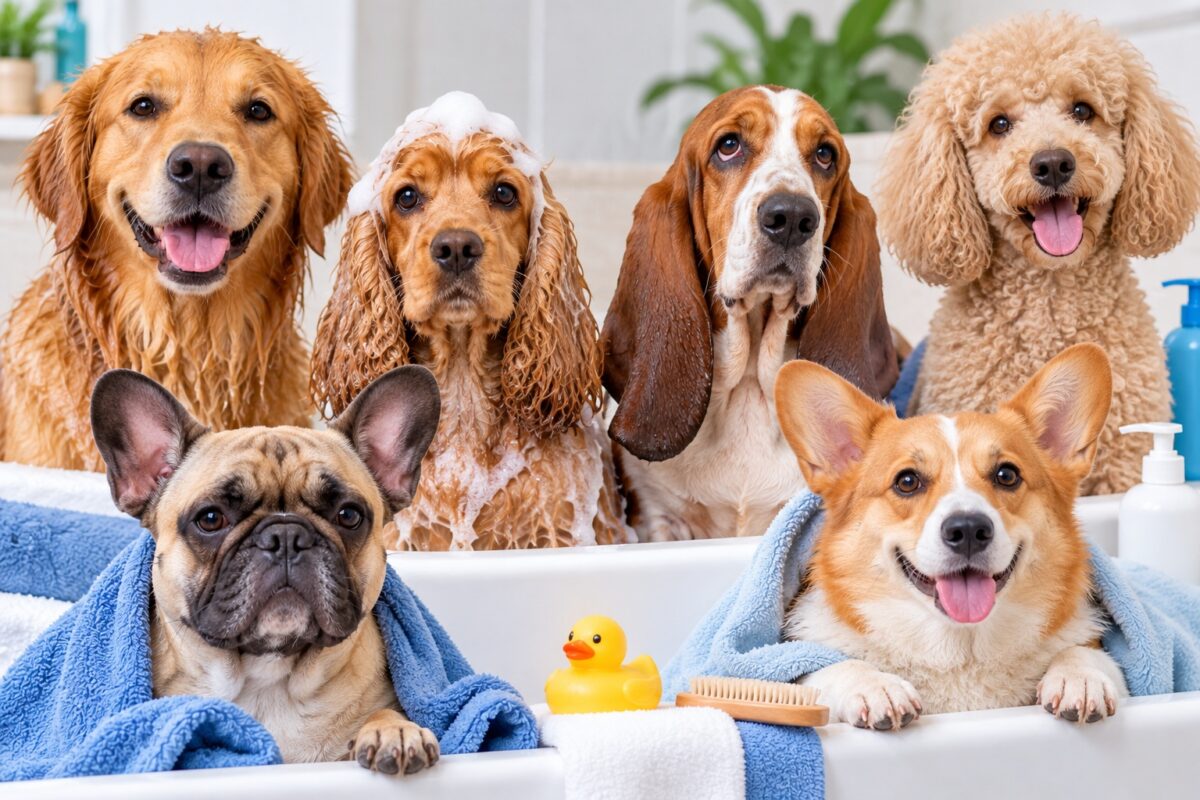
Any dog can get water in its ears, but some dogs trap humidity more easily. Their bath routine deserves stricter water control.
- Cocker Spaniels: Their long ear flaps can reduce airflow around the opening.
- Basset Hounds: Long, pendulous ears can hold warmth and moisture.
- Poodles and mixes: Hair around the canal may complicate moisture control in some individuals.
- Retrievers: Frequent swimming can create repeated moisture exposure.
- Dogs with allergies: Inflamed skin can make ears more vulnerable to recurring problems.
- Dogs with previous otitis: Follow the prevention plan your veterinarian recommends.
Don’t routinely pluck ear hair simply because your dog has a hairy canal. Merck notes that unnecessary hair removal may trigger inflammation, so discuss problematic ear hair with a veterinarian or experienced groomer first.
What Bathing Mistakes Let Water Enter a Dog’s Ears?
Most problems come from water direction rather than the bath itself. A powerful sprayer near the head makes accurate control difficult.
- Spraying over the head: Water can run directly toward both ear openings.
- Using high pressure: Strong spray can force water where you don’t want it.
- Forgetting the cotton: Protective cotton that becomes soaked should be replaced.
- Pouring rinse water from above: Gravity can send water down the ear flap toward the canal.
- Leaving floppy ears wet: Moist hair around the opening holds humidity.
- Using cotton swabs deeply: This can push moisture and debris farther into the canal.
For dogs with easily irritated skin as well as sensitive ears, use the gentler techniques in this sensitive-skin dog bathing guide.
How Do You Dry a Dog’s Ears Safely After a Bath?
Remove both cotton balls first. Then blot the ear flap and fur around the opening with a clean, dry towel.
Don’t push a towel corner, tissue, cotton swab, or other object deep into the canal. You only need to dry areas you can safely see and reach.
- Remove the cotton barrier. Check both ears before the dog leaves the bathing area.
- Allow one natural shake. Give your dog room so loose droplets can move outward.
- Blot each ear flap. Press gently instead of rubbing aggressively.
- Dry long ear hair. Pay special attention underneath floppy pinnae.
- Check again later. The ears should remain comfortable, clean-looking, and free from unusual odor.
A dog repeatedly shaking its head after a bath may simply feel moisture, but persistent behavior deserves attention. Pain, redness, discharge, swelling, or strong odor warrants veterinary evaluation.
When Should You Call a Veterinarian About Your Dog’s Ears?
Contact your veterinarian when ear symptoms continue after bathing or look more serious than temporary dampness. Ear infections need proper diagnosis because bacteria, yeast, allergies, parasites, foreign material, and other problems can produce similar signs.
- Persistent or forceful head shaking
- Repeated scratching at one or both ears
- Strong or unusual odor
- Brown, yellow, bloody, or pus-like discharge
- Marked redness or swelling
- Pain when the ear is touched
- Head tilt or problems with balance
Don’t keep cleaning an ear that looks infected in hopes of fixing it yourself. Veterinary examination can identify the cause and determine whether medication or professional cleaning is needed.
Bath Tools That Make Ear Protection Easier
If you’re improving your home bathing setup, these simple products can make water direction and drying easier. I prefer tools that improve control rather than products that promise to seal the ear canal completely.
🏆 Best Simple Barrier
Swisspers Jumbo Cotton Balls
★★★★☆
Large cotton balls are easier to position loosely at the ear entrance than tiny pieces. I prefer a size that remains clearly visible and easy to remove after rinsing.
🚿 Best for Water Control
Aquapaw Dog Bathing Tool
★★★★☆
This wearable bathing tool combines water flow with hand control. The practical advantage is keeping your working hand close to the coat instead of spraying broadly around the neck and ears.
💧 Best for Drying
The Absorber Dog Lover’s Towel
★★★★☆
An absorbent towel helps remove moisture from ear flaps, the neck, and surrounding coat without aggressive rubbing. I find controlled blotting especially useful around long or floppy ears.
Frequently Asked Questions
Can I bathe my dog without putting cotton in the ears?
Yes. Cotton is optional if you can reliably keep water away from the head and ear canals. Use a damp cloth for the face, direct rinse water downward from the neck, and gently dry the ear flaps afterward.
How far should cotton balls go into a dog’s ears?
They should sit loosely at the entrance of the ear canal and remain easy to see and remove. Never pack cotton deep into the canal or use a piece small enough to become difficult to retrieve.
Is water in a dog’s ear automatically dangerous?
A small accidental splash does not automatically cause an ear infection. However, persistent moisture can contribute to conditions that favor irritation and microbial overgrowth, especially in dogs with floppy ears, allergies, or a history of recurring ear problems.
Can I use a hair dryer to dry my dog’s ears?
Avoid directing hot or forceful air into the ear canal. Towel-dry the ear flap and surrounding coat first, and use gentle cool airflow on nearby fur only when your dog tolerates it comfortably.
Why does my dog shake its head after a bath?
A dog may shake its head because moisture or an unusual sensation remains around the ear. If shaking continues or comes with scratching, odor, discharge, redness, swelling, or pain, arrange a veterinary examination.
Final Takeaway
Keeping water out of your dog’s ears is mostly about controlling the bath, not sealing the ears completely. Use a loose dry cotton barrier, wash the face with a damp cloth, keep direct spray below the head, and dry the outer ears afterward.
As of 2026, that simple approach remains consistent with major veterinary and canine-care guidance. If your dog has recurring infections, painful ears, discharge, or strong odor, let your veterinarian guide the cleaning and moisture-control routine.