⚡ Quick Answer
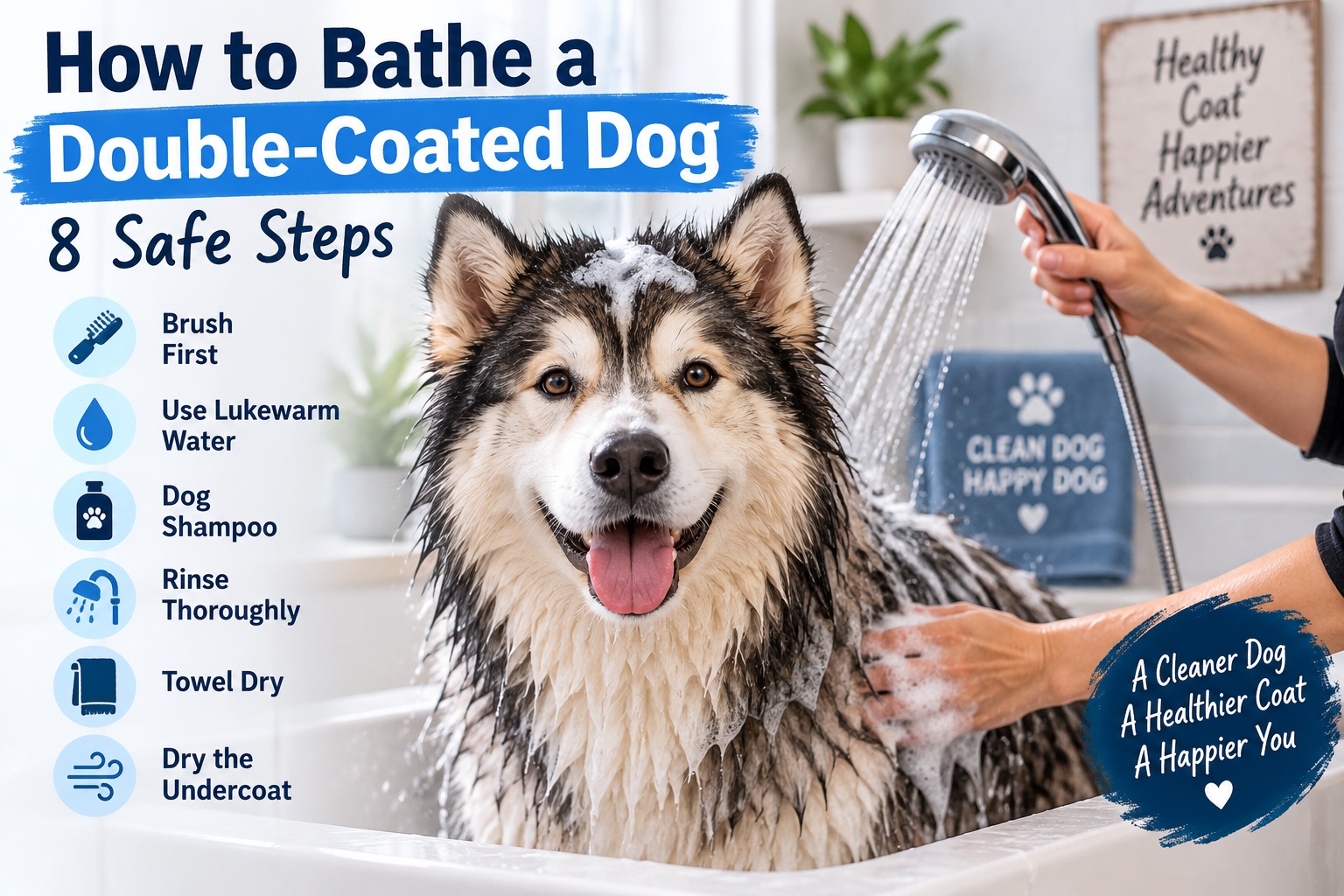
To bathe a double-coated dog safely, brush out loose undercoat before wetting the coat. Use lukewarm water and dog shampoo, then work through both coat layers. Rinse until the water runs clear. Finish with towel blotting and cool airflow, because undercoat can stay damp near the skin.
Safe double-coat bath order
- 1Brush out loose undercoat and easy tangles.
- 2Wet both coat layers with lukewarm water.
- 3Massage dog shampoo through the coat gently.
- 4Rinse until no shampoo remains near the skin.
- 5Blot the coat with absorbent towels.
- 6Dry the undercoat fully with safe airflow.
Double-coat bath mistakes to avoid
- ✓Don’t start with packed loose undercoat.
- ✓Don’t leave shampoo hidden near the skin.
- ✓Don’t stop drying when only guard hairs feel dry.
Water hits a thick coat and seems to vanish beneath the surface. Your dog suddenly feels twice as heavy, and rinsing takes longer than expected.
I’m Ashraful, and double coats need a coat-first bathing routine. The goal is clean skin without trapped soap, wet undercoat, or rough handling.
A double coat has a tougher outer layer and softer undercoat beneath it. That structure changes how you brush, wet, rinse, and dry your dog.
📌 Key Takeaways
- →Brush first. Loose undercoat is easier to remove before water reaches the coat.
- →Rinse deeply. Thick fur can hide shampoo close to the skin.
- →Dry the roots. Surface fur can feel dry while undercoat stays wet.
- →Skip shaving. Routine coat care should preserve the protective double-coat structure.
What Makes Bathing a Double-Coated Dog Different?
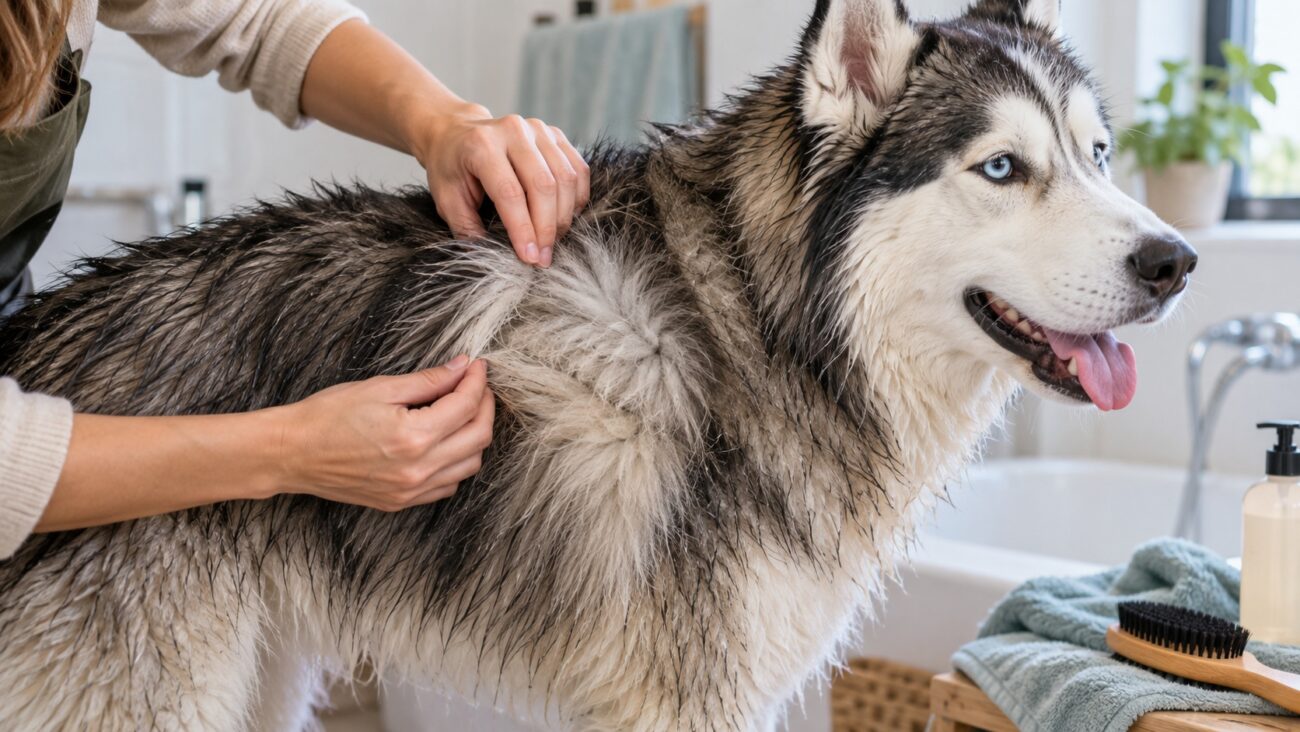
A double-coated dog has two fur layers with different jobs and textures. The outer guard hairs protect the skin from dirt, moisture, and outdoor wear. The softer undercoat sits closer to the skin and provides insulation. Water, shampoo, loose fur, and moisture can become trapped between those layers.
That means a quick surface wash is not enough for many double coats. You need water to reach the deeper coat without rough scrubbing. You also need a complete rinse and careful drying near the roots. The AKC double-coat grooming guidance also stresses brushing, undercoat care, and proper drying.
You might think thicker fur simply needs more shampoo. Here’s why that approach fails. Extra product can make complete rinsing harder.
A good bath cleans both layers without stripping or packing the coat. Before water starts, preparation makes that job much easier.
What Should You Do Before Bathing a Double-Coated Dog?
Brush your dog before the bath and remove loose undercoat first. Start with a coat-safe brush, comb, or undercoat tool that fits your dog. Work gently in sections instead of dragging through the entire coat. Remove easy tangles before they become tighter when wet.
Next, gather dog shampoo, towels, a non-slip mat, and a controlled water source. Keep everything within reach before your dog enters the tub. A calm setup reduces slipping, rushing, and unnecessary stress. For a wider preparation routine, use this dog bathing guide.
Check the skin while you brush. Look for redness, sores, wet patches, painful mats, or unusual odor.
You might be thinking that water will loosen every knot. Tight mats can become harder to manage when soaked.
- Brush: Remove loose undercoat and surface debris.
- Check: Look for mats, sores, redness, and skin changes.
- Prepare: Set out shampoo, towels, treats, and a non-slip mat.
- Plan: Keep your dog indoors until the coat dries fully.
Once the coat feels open and manageable, the bath can begin safely.
How Do You Bathe a Double-Coated Dog Step by Step?
Start by securing your dog on a non-slip surface. Wet the coat slowly with comfortably lukewarm water. Work from the shoulders toward the tail and legs. Use your free hand to separate thick fur so water reaches the undercoat.
Apply shampoo made for dogs, then massage it through both coat layers. Avoid aggressive scrubbing or twisting the fur. Clean the face with a damp cloth instead of direct spray. Most importantly, rinse longer than you think necessary because dense coats can hide soap. AKC bathing guidance recommends warm water, dog shampoo, and complete rinsing.
🔢 Step-by-Step: 8 Safe Double-Coat Bath Steps
- 1. Brush the coat. Remove loose undercoat and simple tangles before adding water.
- 2. Secure the tub. Use a non-slip mat and keep supplies nearby.
- 3. Check the water. Use comfortably lukewarm water, never hot water.
- 4. Wet to the undercoat. Separate dense fur so water reaches deeper layers.
- 5. Apply dog shampoo. Massage gently from neck toward the back and legs.
- 6. Clean the face gently. Use a damp cloth around sensitive areas.
- 7. Rinse completely. Keep rinsing until water and coat feel free of soap.
- 8. Start drying fast. Squeeze excess water, then move directly to towels.
Water temperature matters more than strong heat. This dog bath temperature guide explains the safest water approach.
The bath itself is only half the job. Drying the undercoat is where many mistakes happen.
How Should You Rinse and Dry a Double-Coated Dog?
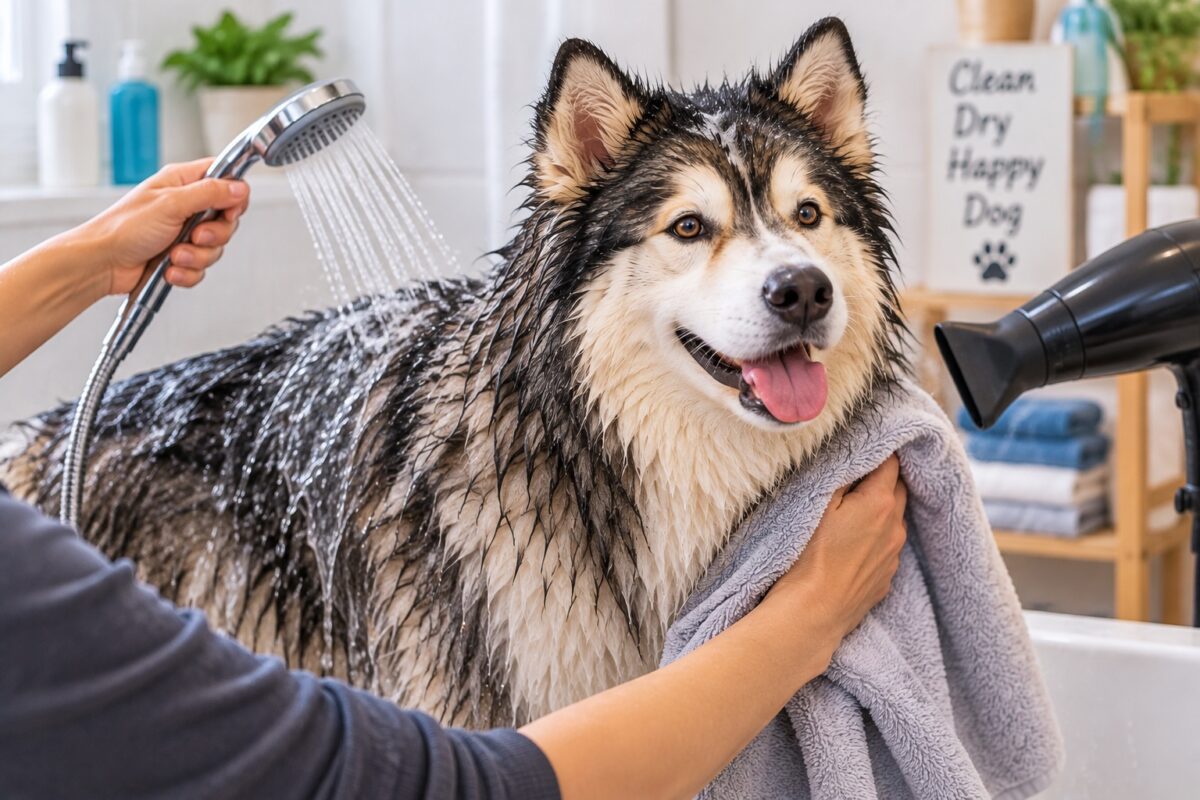
Rinse until you cannot feel slippery shampoo anywhere in the coat. Use your fingers to separate thick areas around the neck, chest, hips, and tail. Clean water must reach the skin, then carry shampoo back out through both layers.
After rinsing, gently squeeze excess water from the coat. Press absorbent towels into the fur instead of rubbing hard. Then use cool moving airflow when the undercoat remains damp. Thick coats can stay wet near the skin after guard hairs feel dry. Cornell notes that long or double coats can need brushing and blow-drying after water exposure.
Check the roots with your fingers before stopping. Feel behind the ears, chest, hips, belly, and tail base.
⚠️ Warning
Do not rely on high heat to speed drying. Use safe airflow and keep it moving.
For a full post-bath routine, follow this guide on how to dry a dog after a bath.
Complete drying prevents one bath problem. Bath frequency prevents another.
How Often Should You Bathe a Double-Coated Dog?
There is no single bath schedule for every healthy double-coated dog. Coat type, dirt, odor, activity, shedding, and skin health all change the answer. Many double-coated dogs need regular brushing more often than they need shampooing.
Bathe when your dog becomes dirty, smelly, or needs coat cleanup. Avoid automatic weekly bathing unless a veterinarian gives that plan. AKC guidance warns that bathing too often can reduce natural coat oils. Dogs with medical skin problems can need frequent medicated baths instead.
Use your dog’s coat condition instead of one rigid calendar.
Skin treatment schedules can differ sharply from normal grooming baths.
So what does that mean? Watch the coat and skin instead of counting days alone.
What Most People Get Wrong About Bathing a Double-Coated Dog
The biggest mistake is treating a double coat like a short, single-layer coat. Surface washing, quick rinsing, and short towel drying can leave problems hidden underneath. The deeper layer deserves equal attention during every bath.
Another mistake is assuming more shampoo creates a cleaner dog. Thick coats can hold residue close to the skin. The Merck Veterinary Manual notes that shampoo residue can contribute to irritation. Complete rinsing matters more than heavy lather.
- Myth: More shampoo cleans thick coats better. Fact: Extra product makes rinsing harder.
- Myth: Dry guard hairs mean the dog is dry. Fact: Check the undercoat.
- Myth: Shaving stops double-coat problems. Fact: Routine grooming experts advise against it.
Shaving does not replace brushing and undercoat care. AKC grooming guidance advises preserving double coats except for special needs.
Post-bath scratching is another useful warning sign. This guide explains why dogs itch after a bath.
Most problems become easier when you notice them early. Some signs need expert help instead.
When Should You Call a Vet or Professional Groomer?
Stop home bathing when you find painful skin, severe matting, open sores, or strong inflammation. Do not force brushing through mats that pull tightly against the skin. A professional groomer can handle packed coat more safely and choose suitable tools.
Call your veterinarian for lasting redness, repeated itching, strong skin odor, discharge, sores, or hair loss. These signs can involve more than routine dirt. Medicated shampoos also need the correct product, contact time, and schedule. The Merck Veterinary Manual shampoo guidance separates medical treatment from normal grooming.
Moist, sore patches also deserve attention. Thick coats can hold moisture against affected skin.
The Cornell hot spot guidance notes added risk when thick coats stay wet.
Asking for help protects your dog. The next bath should never come before painful skin care.
What Is the Safest Double-Coat Bathing Routine to Remember?
Brush first, wet both layers, use dog shampoo, rinse deeply, and dry the undercoat. That simple order protects coat structure while reducing residue and trapped moisture.
Never judge dryness from the outer coat alone. Your fingers should check the roots before the bath routine ends.
Good double-coat care depends more on technique than speed. Right now, place a brush and two clean towels beside your dog’s bath area.
Frequently Asked Questions
How do I know if my dog has a double coat?
Part the fur and look for a firm outer coat over soft, dense undercoat beneath. Common double-coated breeds include Huskies, Shepherds, Golden Retrievers, Corgis, and Pomeranians. If the layers seem unclear, a professional groomer can confirm your dog’s coat type quickly.
Do double-coated dogs shed more than other dogs?
Many double-coated dogs shed heavily because their soft undercoat changes with the seasons each year. Spring and fall coat changes can release large amounts of loose undercoat around your home. Regular brushing reduces packed fur, though shedding still varies by breed, climate, and health.
Why shouldn’t you shave a double-coated dog?
Shaving removes the guard coat and insulating undercoat at the same time from the body. Those layers grow differently, so regrowth can change the coat’s normal protective structure over time. Surgery or severe matting can require clipping, but involve a veterinarian or skilled groomer.
How often should a double-coated dog be brushed?
Most double-coated dogs need brushing at least weekly to remove loose undercoat and surface debris. Heavy shedding seasons can require brushing several times each week for better coat control. Use coat-safe tools, and stop when tight mats or sore skin cause painful pulling.
How often should you bathe a double-coated dog?
Bathe a healthy double-coated dog when dirt, odor, or coat buildup justifies a full cleaning. There is no single bath schedule that fits every breed, climate, and active lifestyle. Dogs with skin disease need their veterinarian’s shampoo choice and bathing schedule instead.
How do you dry a double-coated dog after a bath?
Blot with absorbent towels first, then use cool moving air for any damp undercoat remaining. Work in sections and keep airflow moving while checking coat roots with your fingers. Thick coats can feel dry outside while hidden moisture remains trapped near the skin.
Should you brush a double-coated dog before or after bathing?
Brush before bathing to remove loose undercoat, surface dirt, and simple tangles from dry fur. After drying, brush gently again to remove loosened fur and finish the coat evenly. Never pull through tight wet mats, because wet hair can tighten and tug painfully.