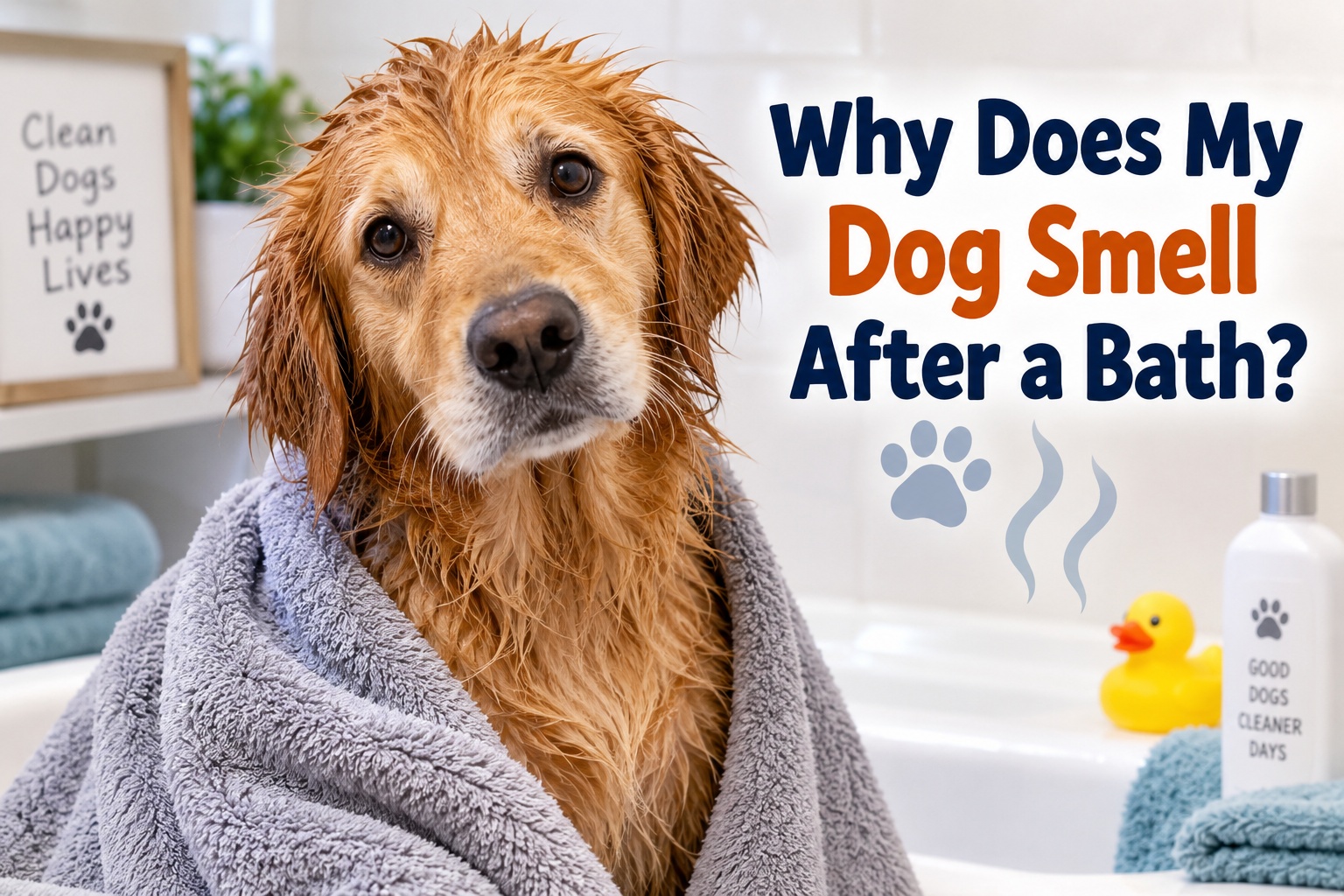
Quick Answer
Your dog may smell after a bath because the coat is still damp, odor-causing compounds become more noticeable when wet, shampoo wasn’t rinsed completely, or moisture is trapped in thick fur or skin folds. A persistent sour, musty, yeasty, or foul smell can also point to a skin or ear problem. Following a proper post-bath drying routine often solves normal wet-dog odor.
Common reasons your dog still smells
- Damp coat: Moisture makes normal odor-producing compounds easier to smell.
- Thick undercoat: Dense fur can stay wet near the skin long after the surface feels dry.
- Incomplete rinsing: Shampoo residue can leave the coat unpleasant and irritate sensitive skin.
- Dirty bedding: A freshly washed dog can quickly pick up odor from a smelly bed, collar, or blanket.
- Skin or ear trouble: Persistent musty or foul odor deserves closer attention, especially with itching or redness.
What should you do first?
- Dry completely: Check the undercoat, paws, armpits, ears, and skin folds before assuming another bath is needed.
You finish the bath expecting a clean-smelling dog. Twenty minutes later, that familiar doggy odor seems stronger than before.
I’ve found that another bath usually isn’t the first answer. The smell itself gives useful clues about whether you’re dealing with trapped moisture, grooming technique, dirty gear, or a possible skin problem.
Why Does My Dog Still Smell After a Bath?
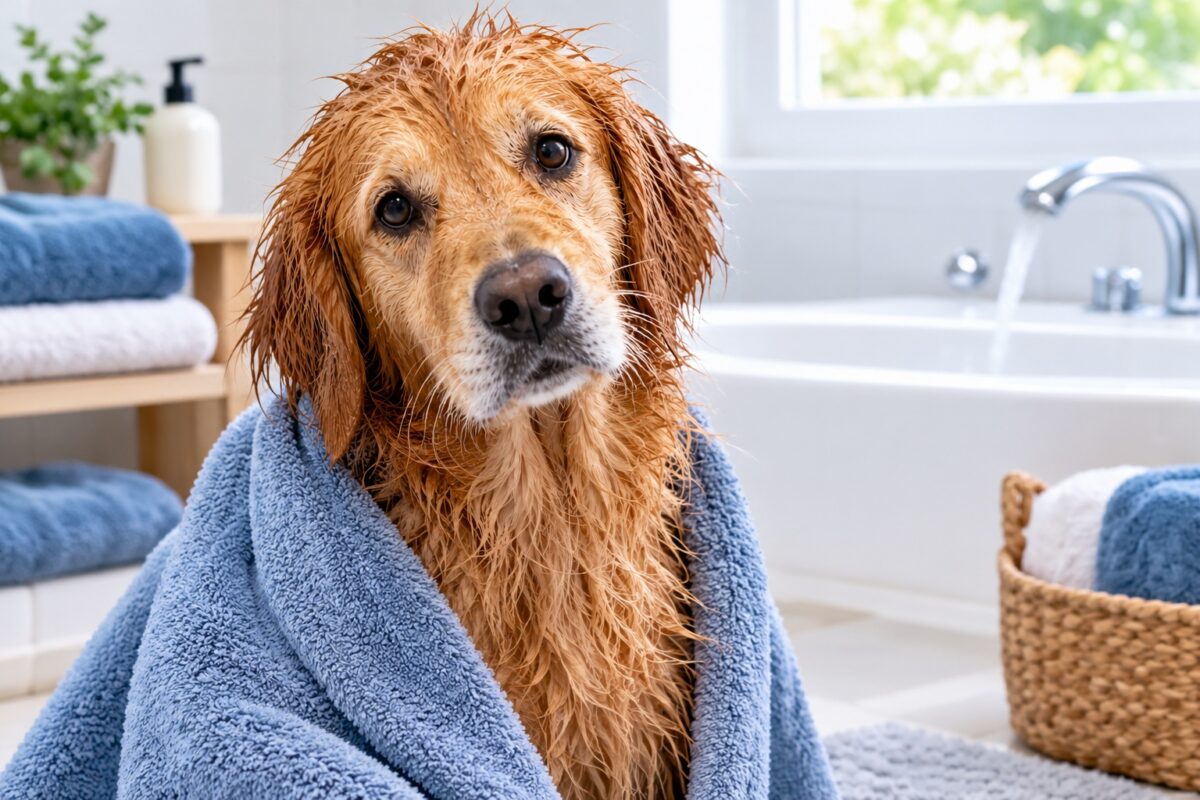
A dog can still smell after bathing when water activates normal odor compounds on the coat or moisture remains trapped close to the skin. A bath also won’t cure odor caused by an underlying skin or ear condition.
The classic wet-dog smell comes partly from microorganisms naturally living on the coat and skin. Moisture helps release volatile compounds associated with their activity into the air.
That explains why a dog can smell stronger immediately after getting wet. The bath hasn’t necessarily made your dog dirtier.
Several other problems can produce a similar result:
- Incomplete drying: Dense or long fur stays damp near the roots.
- Poor rinsing: Shampoo remains hidden in the coat.
- Wrong shampoo: Human or harsh cleaning products can irritate canine skin.
- Dirty accessories: Collars, harnesses, towels, and beds transfer odor back onto clean fur.
- Skin folds: Wrinkles can hold moisture longer than exposed areas.
- Ear problems: Ear odor can make the entire dog seem smelly.
- Skin disease: Yeast, bacteria, allergies, or inflammation can create persistent odor.
The timing matters. An ordinary wet smell that disappears once the coat dries is different from a strong odor that returns within hours.
What Is Wet-Dog Smell?
Wet-dog smell is the noticeable odor released when moisture interacts with compounds produced by microorganisms living naturally on a dog’s skin and coat.
When water evaporates, some of those volatile compounds travel into the surrounding air. Your nose notices them more easily.
This is why even a healthy, clean dog can have a temporary smell while wet. It should improve substantially after thorough drying.
Dogs with wrinkles, oily coats, heavy undercoats, or moisture-holding fur may produce a more noticeable post-bath odor.
Could Your Dog Still Be Damp Under the Coat?
Yes. Hidden moisture is one of the first things I check when a dog smells clean on the surface but musty underneath.
A towel can make the outer coat feel dry while the roots remain damp. Double-coated and long-haired dogs make this especially easy to miss.
Check these moisture-trapping areas carefully:
- Behind and beneath the ears
- Armpits
- Groin
- Belly
- Between the toes
- Under the collar area
- Facial and body folds
- Dense undercoat near the skin
Press your fingers gently through the coat until you reach the roots. If they feel cool or damp, keep drying.
For a complete routine, follow this dog bathing guide rather than focusing only on shampoo.
How should you dry your dog properly?
Start before your dog leaves the tub. Gently squeeze excess water from the coat without twisting the hair.
Then use absorbent towels to press and blot. Rough rubbing can create tangles in longer coats.
- Squeeze excess water from the coat gently.
- Blot with one absorbent towel.
- Switch towels when the first becomes saturated.
- Check folds, paws, belly, and the outer ears.
- Use cool or low-warmth moving air if the coat remains damp.
- Feel the roots before declaring the coat dry.
I pay more attention to the roots than the tips. That’s where hidden moisture tends to fool you.
Can Shampoo Make a Dog Smell Worse After Bathing?
It can. The wrong product or incomplete rinsing may leave residue, irritation, or a strange mixture of fragrance and natural dog odor.
Use a shampoo formulated specifically for dogs. Human shampoo and routine household soaps aren’t designed around canine skin.
The VCA guidance on dog grooming and coat care recommends using shampoo formulated for dogs rather than human shampoo.
More shampoo doesn’t mean a cleaner dog. It often means a longer rinse.
How do you know if shampoo is completely rinsed out?
Keep rinsing until the water runs clear and the coat no longer feels slippery from product. Thick coats require extra attention around the belly, legs, chest, and armpits.
Run your fingers through several areas before finishing. I usually spend more time rinsing than lathering on dense coats.
If you’re still learning the process, this step-by-step home dog bathing guide covers the washing sequence in more detail.
Normal Wet-Dog Smell vs. a Possible Skin Problem
A temporary damp smell usually fades after drying. Strong odor that persists or quickly returns deserves more attention.
Use the smell together with visible symptoms rather than trying to diagnose a problem from odor alone.
| What You Notice | Possible Explanation | What to Do |
|---|---|---|
| Wet-dog odor only while damp | Normal moisture-related odor | Dry the coat completely |
| Musty odor plus itching | Possible yeast or skin inflammation | Contact your veterinarian |
| Foul ear smell with head shaking | Possible ear inflammation or infection | Arrange a veterinary examination |
| Odor with greasy or red skin | Possible skin disease | Seek veterinary advice |
| Clean dog smells after lying down | Dirty bedding, collar, or fabric | Wash the dog’s belongings |
Can a Yeast or Bacterial Infection Make a Dog Smell After a Bath?
Yes. Yeast and bacterial skin infections can cause persistent odor, and shampooing won’t necessarily remove the underlying problem.
According to the American Kennel Club’s guidance on dog odor, secondary yeast and bacterial infections are common medical causes of unpleasant smells.
Watch for other changes alongside the odor:
- Frequent scratching
- Repeated licking or chewing
- Red or darkened skin
- Greasy patches
- Flaking or crusting
- Hair loss
- Sores or discharge
- A worsening musty or foul smell
Don’t keep bathing repeatedly to cover those symptoms. Washing may temporarily change the smell without addressing its cause.
The Merck Veterinary Manual’s dermatitis guidance notes that abnormal odor can occur with inflammatory skin disease.
Could the Smell Be Coming From Your Dog’s Ears?
Yes. Sometimes the coat is clean and the strongest odor is coming from one or both ears.
Ear inflammation can cause foul odor, redness, discharge, scratching, pain, and repeated head shaking. Those signs shouldn’t be treated as a simple grooming problem.
Don’t pour vinegar, peroxide, or homemade mixtures into an irritated ear. A veterinarian needs to determine what’s causing the problem.
The Merck Veterinary Manual’s ear infection overview explains that bacteria, yeast, allergies, parasites, and other problems can contribute to otitis externa.
Can Your Dog’s Bed Make Them Smell Again?
Absolutely. I’ve seen freshly bathed dogs head straight for an old bed and undo the clean smell surprisingly fast.
Fabric absorbs skin oils, saliva, dirt, moisture, and normal dog odor. Collars and harnesses can do the same thing.
On bath day, check these items:
- Dog bed and removable cover
- Blankets
- Crate bedding
- Collar
- Harness
- Fabric toys
- Bath towels
Wash washable items according to their care labels. Let everything dry fully before your dog uses it again.
This simple habit often fixes the mystery of a dog that smells clean for only an hour.
How Do You Stop Your Dog From Smelling After a Bath?
Focus on the entire bathing process rather than adding stronger fragrances. Good preparation, rinsing, drying, and clean bedding solve many ordinary post-bath odor problems.
- Brush before bathing. Remove loose fur, surface debris, and manageable tangles.
- Use lukewarm water. Avoid unnecessarily hot water.
- Choose dog-specific shampoo. Match it to your dog’s coat and skin needs.
- Work shampoo through the coat. Follow the product label instead of using excessive amounts.
- Rinse thoroughly. Pay special attention to dense and hidden areas.
- Dry to the roots. Don’t judge dryness by the topcoat alone.
- Clean the collar and bedding. Don’t put old odors straight back onto clean fur.
- Watch for recurring odor. Contact your veterinarian when smell accompanies skin or ear symptoms.
Don’t rush the process. This guide to how long a dog bath should take can help you plan enough time for washing, rinsing, and drying.
Should You Bathe a Smelly Dog Again?
Not automatically. If your dog was just washed, first determine whether the coat is damp, shampoo remains, or dirty bedding transferred odor back onto the fur.
Repeated bathing can become counterproductive, especially when you’re trying to wash away a medical odor.
If your dog develops recurring smell despite good grooming, talk with your veterinarian. The right bathing frequency depends on coat, lifestyle, skin health, and any prescribed treatment.
Medicated shampoo is different from ordinary shampoo. When your veterinarian prescribes one, follow the recommended contact time and bathing schedule exactly.
What Should a Clean Dog Smell Like?
A healthy dog doesn’t need to smell strongly perfumed after bathing. A mild natural scent is normal.
I prefer judging the result by a clean-feeling coat, comfortable skin, and lack of persistent foul odor. Heavy fragrance can hide smells without fixing their source.
Be cautious with perfumes and heavily scented products if your dog has sensitive skin. A fragrance-free dog shampoo may be a better routine choice.
When Should You Call Your Veterinarian About Dog Odor?
Call your veterinarian when the smell is persistent, worsening, unusually foul, or accompanied by other symptoms. Bathing alone shouldn’t be your treatment plan for suspected skin disease.
Arrange veterinary advice if you notice:
- Persistent musty, yeasty, or foul odor
- Red or inflamed skin
- Constant scratching or licking
- Greasy or unusually flaky skin
- Hair loss
- Crusts, sores, pus, or discharge
- Strong ear odor
- Repeated head shaking
- Pain when touching the skin or ears
- Odor that returns soon after every bath
As of 2026, veterinary guidance continues to emphasize identifying the underlying cause of recurring skin odor instead of simply masking it.
That’s an important distinction. A clean dog with a temporary wet smell needs drying, while a dog with inflamed, painful, or infected skin needs veterinary care.
Dog Bath Products I Recommend for Better Odor Control
If the smell comes from ordinary dirt or incomplete grooming rather than disease, a gentle dog shampoo and good drying tools can make bath day easier.
🏆 Best for Sensitive Skin
Earthbath Oatmeal & Aloe Fragrance-Free Shampoo
★★★★☆
This soap-free, fragrance-free formula contains colloidal oatmeal and aloe and is made for dry or sensitive skin. I like fragrance-free shampoo when the goal is cleaning without simply covering odor with perfume.
🌿 Best for Routine Odor
Earthbath Deodorizing Dog Shampoo
★★★★☆
Earthbath’s deodorizing formula uses dog-safe cleansers and aloe and is intended to neutralize ordinary pet odors. I’d consider it for normal coat odor, not for a foul smell linked with redness, sores, or itching.
💨 Best Bath-Day Helper
Microfiber Dog Drying Towel
★★★★☆
A large absorbent microfiber towel removes more water before air drying begins. I keep two towels ready for thick coats because the first one can become saturated surprisingly quickly.
Frequently Asked Questions
Why does my dog smell worse immediately after a bath?
Water can make odor-producing compounds on your dog’s coat more noticeable as moisture evaporates. This creates the familiar wet-dog smell. If the odor fades after complete drying and your dog’s skin looks healthy, it usually isn’t a reason for another immediate bath.
Why does my dog smell musty after a bath?
A musty smell can come from moisture trapped in dense fur, skin folds, paws, or around the ears. If the musty odor persists after complete drying or occurs with itching, redness, greasy skin, or hair loss, contact your veterinarian.
Why does my dog smell like yeast after bathing?
A persistent yeasty or musty odor can occur with yeast overgrowth on the skin or in the ears. Odor alone can’t confirm an infection. Look for itching, licking, redness, greasy skin, ear discharge, or head shaking and arrange a veterinary examination when these signs occur.
How do I make my dog smell good after a bath?
Use dog-specific shampoo, rinse thoroughly, dry the coat to the roots, and wash your dog’s bedding and collar. Don’t rely on perfume to hide persistent odor. A recurring foul smell can indicate a skin or ear problem that needs veterinary attention.
Why does my dog smell again one day after a bath?
Check for damp undercoat, dirty bedding, a smelly collar, greasy skin, itching, or ear odor. A healthy dog’s coat shouldn’t repeatedly develop a strong foul smell immediately after proper bathing. Persistent or worsening odor is a good reason to speak with your veterinarian.
Final Takeaway
If your dog smells after a bath, don’t automatically wash them again. Start by checking whether the coat is completely dry and properly rinsed.
Then clean the bedding, collar, and other items touching the coat. Those simple steps solve many ordinary post-bath odor problems.
Pay closer attention when the smell is persistent, musty, yeasty, or foul. Redness, itching, greasy skin, discharge, hair loss, or ear problems mean it’s time to involve your veterinarian.
A good bath should clean your dog, not hide a health problem. Dry thoroughly, watch the skin, and let the cause of the odor guide your next step.