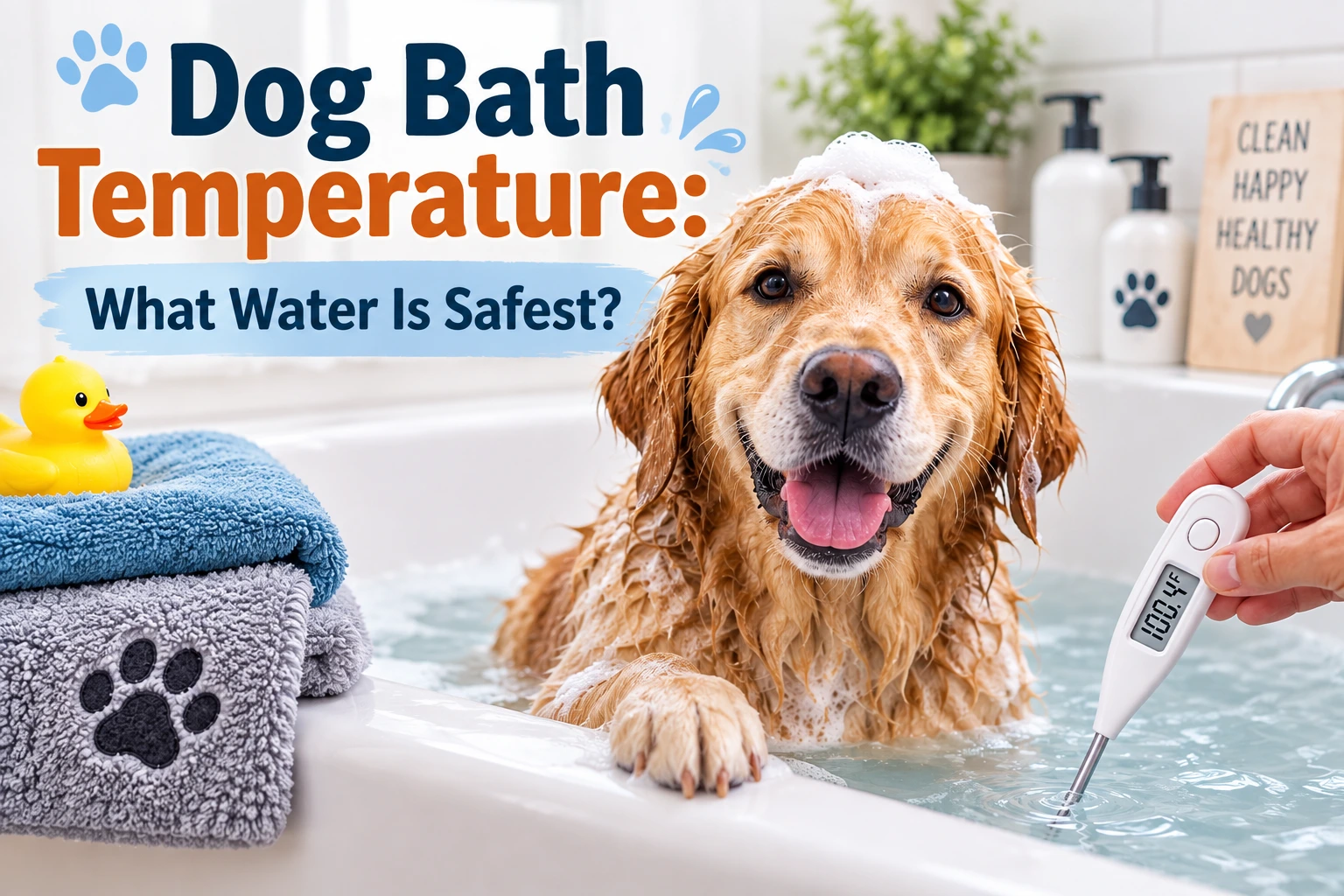
⚡ Quick Answer
A dog bath should use comfortably lukewarm water, not hot or noticeably cold water. Major dog-care guidance describes lukewarm water as the safest choice rather than setting one universal Fahrenheit or Celsius number. Test the running water on your inner forearm before it touches your dog and recheck it whenever you adjust the faucet.
Dog bath temperature checks that matter
- Best feel: Mildly warm and comfortable, never hot.
- Best test: Check the stream on your inner forearm.
- Watch your dog: Shivering or distress means something needs changing.
Avoid these temperature mistakes
- ✓Do not copy your preferred hot shower setting.
- ✓Do not deliberately make routine baths cold.
- ✓Recheck temperature after every faucet adjustment.
Warm water runs over your hand, the bathroom fills with the sound of the shower, and your dog immediately starts deciding whether bath time is acceptable. The temperature that feels relaxing to you can feel very different to a dog, so choosing the right water matters before shampoo ever touches the coat.
I’m Ashraful, and the practical rule I use is simple: aim for gentle, lukewarm water and judge comfort at the stream that actually reaches the dog. Major guidance from the American Kennel Club, Blue Cross, VCA Animal Hospitals, and PetMD supports this approach, giving owners a much safer target than chasing an overly precise number.
📌 Key Takeaways
- →Lukewarm water is consistently recommended for routine dog bathing.
- →Forearm testing gives a more sensitive temperature check than your hands.
- →Young puppies need extra protection because they can become chilled.
- →Skin conditions can require veterinarian-directed bathing instructions and medicated products.
What Temperature Should a Dog Bath Be?

A dog bath should be comfortably lukewarm: warm enough that the water does not feel chilly but mild enough that you would never describe it as hot. The American Kennel Club’s puppy bathing guidance specifically recommends lukewarm water, while Blue Cross also instructs owners to check for a lukewarm temperature before showering a dog. VCA Animal Hospitals similarly recommends warm or lukewarm water for routine and medicated bathing. These major sources describe the safe target by feel rather than prescribing one universal degree setting for every dog. That matters because faucet output, bathing method, age, coat, health, and individual comfort vary. For a normal home bath, therefore, treat “comfortably lukewarm” as the primary standard and your dog’s reaction as an additional safety check.
You might be thinking that a thermometer should provide one perfect number. A thermometer can improve consistency, but it should not tempt you to ignore water that feels uncomfortably hot or cold.
The easiest comparison is straightforward:
The middle row is your target. The next challenge is checking that temperature reliably without overthinking it.
How Can You Test Dog Bath Water Without a Thermometer?
Test the running water against the inside of your forearm for several seconds before directing it onto your dog. PetMD’s bath-safety guidance recommends the forearm because it is more sensitive to temperature than the hands, making it easier to notice water that has become too warm. Let the faucet stabilize first, then test the water coming from the actual sprayer or nozzle rather than assuming the temperature at the tap is identical. Repeat the test whenever you change the faucet controls because household water temperatures can shift during a bath. The goal is a stream that feels gently warm and unremarkable—not the richer heat many people enjoy in a shower. Then introduce the water gradually around the body instead of spraying the face first. This combines a reliable human comfort test with your dog’s immediate body-language feedback.
- Run the water until its temperature stabilizes.
- Place your inner forearm under the actual bathing stream.
- Keep it there long enough to judge sustained warmth.
- Cool the water if it feels distinctly hot.
- Recheck after every faucet adjustment.
A non-slip bathing surface also helps prevent fear from being mistaken for temperature discomfort. A dog grooming glove can make washing and coat handling easier once your dog is comfortable with the water.
Temperature is only half the comfort equation, though. Age and skin health can change how carefully you need to manage the bath.
Do Puppies or Dogs With Sensitive Skin Need Different Bath Water?
Puppies and dogs with sensitive or medically treated skin still generally need lukewarm water, but they deserve closer supervision and faster drying. Young puppies can become chilled more easily, so Blue Cross advises caution when bathing them, while AKC guidance emphasizes gentle handling and lukewarm water during early bathing experiences. Dogs receiving medicated baths should follow their veterinarian’s instructions because shampoo type, contact time, bathing frequency, and skin condition can change the routine. VCA’s medicated-shampoo guidance recommends thoroughly wetting the coat with lukewarm water and keeping the dog warm until completely dry afterward. The key distinction is not making the water hotter for vulnerable dogs. Instead, keep the water comfortably mild, prevent drafts, work efficiently, and dry the coat thoroughly.
If you are bathing a puppy, product choice is also important. Go Pet Zone’s guide to the best puppy shampoos covers dog-specific options, while the Earthbath shampoo review discusses an option aimed at sensitive pets.
A dog with inflamed, painful, infected, or worsening skin should receive veterinary guidance rather than experiments with hotter or colder bath water. That distinction prevents one of the biggest bath-time misconceptions.
What Most People Get Wrong About Dog Bath Temperature
The most common mistake is assuming dogs should enjoy the same water temperature their owners prefer in a shower. Human comfort is not a reliable target because people often choose distinctly warm or hot showers, while major dog-bathing guidance repeatedly recommends lukewarm water. Another mistake is assuming a summer bath should automatically be cold. For normal cleaning, deliberately cold water can make bathing unpleasant, while AKC guidance says cool or lukewarm water is preferable to hot water during warm-weather grooming. A third mistake is trying to match bath water to a dog’s internal body temperature. Bath comfort concerns skin exposure, coat saturation, ambient temperature, and the dog’s reaction—not recreating internal body temperature in the tub. The safest routine stays simple: use mild water, watch the dog, and avoid extremes.
⚠️ Temperature Warning
Never respond to bath anxiety by turning the water hotter. Trembling can come from fear, insecure footing, noise, cold, or stress, so identify the cause before changing temperature.
You might be thinking that thick-coated dogs can tolerate hotter water because their fur protects the skin. Their coat does not make unnecessarily hot bathing water a good choice, and dense coats also require careful rinsing and drying.
The dog’s behavior during and immediately after the bath gives you another useful clue about whether your setup is working.
What Should You Do If Your Dog Shivers, Pants, or Tries to Escape?
If your dog shivers, pants unusually, repeatedly pulls away, or becomes increasingly distressed, stop directing water onto the body and reassess the entire bathing setup. First test the water again on your forearm, because temperature can drift after the faucet has been adjusted. Then consider whether the dog is cold, frightened by the sprayer, slipping in the tub, uncomfortable with handling, or reacting to another problem. Blue Cross recommends a non-slip mat and gradual positive introduction to bathing, both of which can reduce stress that has nothing to do with water temperature. Once the bath is finished, towel the dog promptly and keep them comfortable while drying. Blue Cross dog-bathing guidance also recommends low heat and low speed when a hair dryer is used.
If grooming continues after the bath, the coat should be completely dry before standard clippers are used. Go Pet Zone explains why in its guide to using dog clippers on wet hair.
Persistent weakness, severe shivering, collapse, breathing difficulty, painful skin, or other signs of illness deserve veterinary attention rather than another temperature adjustment. Once comfort and health are separated clearly, the everyday rule becomes much easier to remember.
What Is the Bottom Line on Dog Bath Temperature?
The safest everyday answer is lukewarm water that feels comfortably mild on your inner forearm. Do not chase a hotter temperature because your dog has a thick coat, and do not assume cold water is automatically better during summer. Trusted dog-care organizations use terms such as warm and lukewarm because comfort and avoidance of temperature extremes matter more than one universal thermostat setting. Test the stream before it reaches your dog, check it again whenever the faucet changes, use secure footing, and watch your dog’s body language throughout the bath. Puppies deserve extra protection from chilling, while dogs with skin disease or medicated-shampoo instructions should follow their veterinarian’s specific plan. Finish by rinsing thoroughly and drying the dog comfortably. Follow those steps and bath temperature becomes one of the easiest parts of safe home grooming.
For most healthy dogs, remember one sentence: if the water feels distinctly hot or distinctly cold, adjust it until it feels gently lukewarm.
Frequently Asked Questions
Can I Bathe My Dog in Cold Water?
For a routine bath, lukewarm water is usually a better choice than deliberately cold water. Cold water can be uncomfortable, especially for puppies, small dogs, older dogs, or dogs bathing in a cool environment. If your veterinarian recommends cool water for a particular skin problem, follow that specific advice.
Can I Use Hot Water to Bathe My Dog?
Hot water is not recommended for routine dog bathing. Water that feels pleasantly hot in your own shower can be excessive for a dog and can make the experience uncomfortable. Start with lukewarm water and test the stream against your inner forearm before wetting the dog’s coat.
What Temperature Should a Puppy Bath Be?
A puppy bath should use comfortably lukewarm water and gentle handling. Puppies can become chilled more easily, so prepare dry towels before starting and keep the bathing area comfortably warm. Introduce water gradually and avoid prolonged bathing, particularly when the puppy is very young or nervous.
Can I Use My Normal Shower Temperature for My Dog?
Do not assume your normal shower setting is appropriate for your dog. Many people prefer showers warmer than the lukewarm water recommended for dogs. Test the actual spray on your forearm and lower the temperature whenever it feels distinctly hot rather than gently warm.
Should I Use a Thermometer for Dog Bath Water?
A thermometer is optional for an ordinary dog bath. It can help you reproduce a comfortable setting, but major dog-care guidance focuses on lukewarm water rather than one universal numerical target. Your forearm test and your dog’s behavior remain important even when you measure the water.
Should Dog Bath Water Be Colder in Summer?
A normal cleaning bath does not need to become cold simply because the weather is warm. Cool or lukewarm water is preferable to hot water, but comfort still matters. Avoid abrupt temperature extremes and monitor your dog for stress throughout the bath.
What Water Temperature Should I Use for a Dog With a Skin Condition?
Use the bathing instructions provided by your veterinarian when your dog has a diagnosed skin condition. Medicated shampoos can require specific application, contact, rinsing, and bathing schedules. VCA guidance generally uses lukewarm water for medicated baths, but your dog’s individual treatment plan should take priority.