
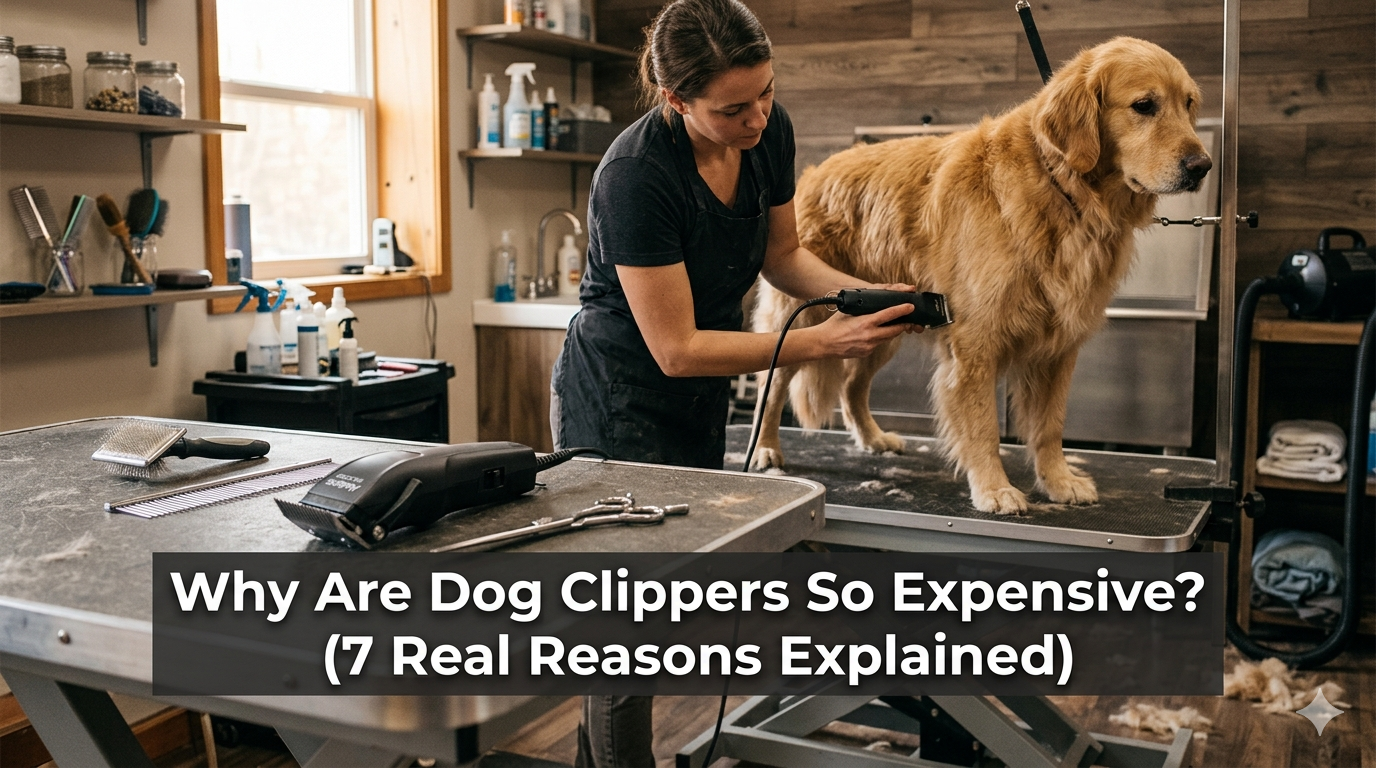
Why Are Dog Clippers So Expensive? 7 Real Reasons Explained

⚡ Quick Answer
Dog clippers are expensive because they require specialized motors, premium blade materials, and engineering built for thick animal fur — not human hair. Professional-grade clippers run at up to 12,000 strokes per minute, use ceramic or titanium blades, and must stay cool during 2+ hour grooming sessions. That engineering costs money.
The main reasons dog clippers cost so much:
- Specialized motors: Must run quietly at high speed without overheating for hours.
- Premium blade materials: Ceramic and titanium blades stay cool and sharp far longer.
- Niche market: Low production volume means higher cost per unit to develop and manufacture.
- Dog safety engineering: Noise baffles, vibration dampers, and heat guards are standard — not optional.
How to get the most value from dog clippers:
-
✓
Buy mid-range ($60–$120) for home grooming of most breeds -
✓
Oil blades before every session to extend blade life -
✓
Avoid $25 budget clippers — they burn out fast and pull fur
Why Are Dog Clippers So Expensive? (7 Real Reasons Explained)
You pick up a set of dog clippers, flip the price tag, and your jaw drops. A hundred dollars. Two hundred. Sometimes more. I’m Ashraful, and after researching dog grooming tools extensively, I understand exactly why that sticker shock hits so hard.
Dog clippers aren’t overpriced gadgets. They’re precision tools built for a job human hair clippers simply can’t do. Dog fur is thicker, coarser, and layered — and it takes serious engineering to cut it safely without hurting your pet.
In this guide, you’ll learn every real reason behind the cost — so you can spend your money wisely.
📌 Key Takeaways
-
→
Dog clipper motors run at up to 12,000 strokes per minute — nearly twice the speed of human hair clippers. -
→
Ceramic blades cost more but stay up to 75% cooler than standard steel, protecting your dog’s skin. -
→
The pet grooming market is worth $19.5 billion globally in 2026, driving demand for better tools. -
→
Cheap $25 clippers typically last under 12 months; quality $80–$150 clippers can last 3–5 years.
Why Do Dog Clippers Cost More Than Human Clippers?
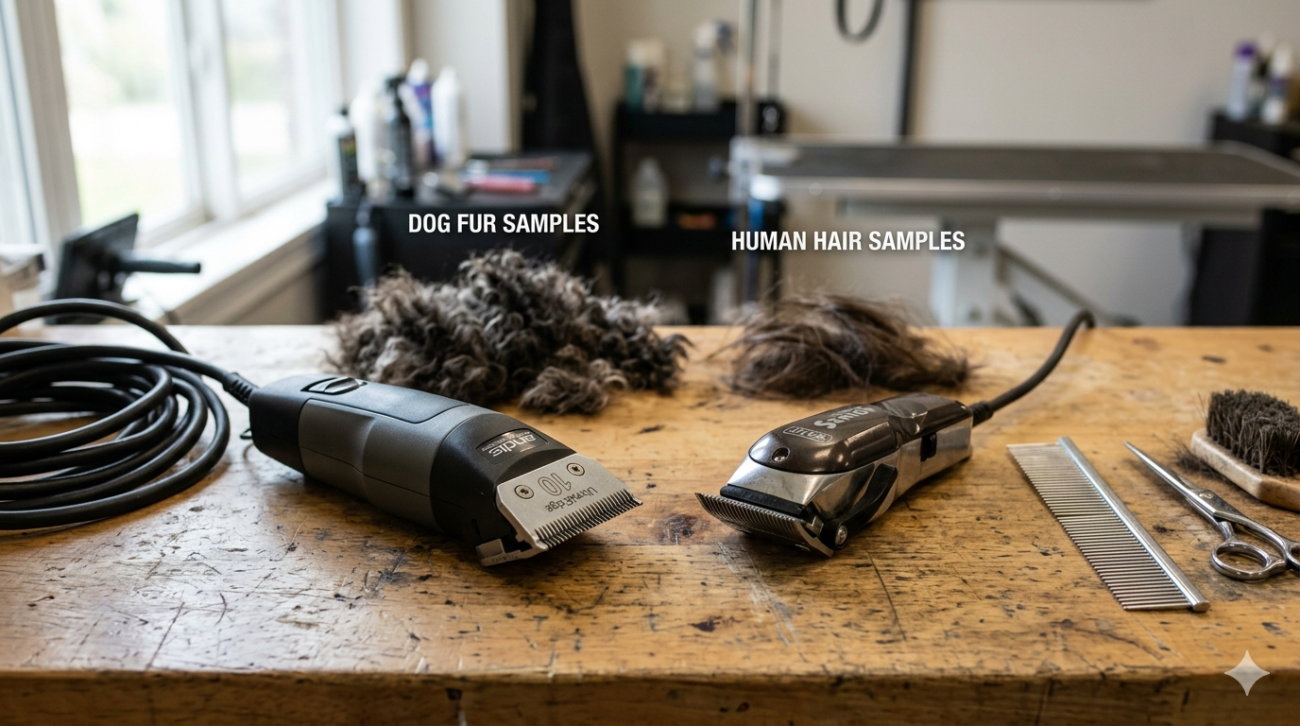
Dog clippers cost up to 1.5 times more than human hair clippers for one core reason: dog fur is a completely different challenge. Human hair is thin, grows from a single layer, and takes just a few minutes to cut. Dog coats are thick, layered, and must be trimmed across an entire body — sometimes for 2 hours straight.
That difference demands totally different tools. Human clippers use fine-toothed blades spaced 0.2 mm apart — perfect for scalp hair. Dog clippers use wider, skip-tooth blades that glide through dense undercoats without snagging. The blade spacing alone requires separate manufacturing tooling and precision engineering.
Dog clippers also need quiet, low-vibration motors to keep anxious animals calm. Human clippers don’t carry this requirement. Adding noise baffles, vibration dampers, and heat guards to a motor raises the production cost — and that cost gets passed to you.
📋 Key design differences that add cost
-
Skip-tooth blade design: Wider gaps between teeth prevent fur from jamming and pulling — requires precision machining. -
Noise baffles: Dog clippers run at 50–65 decibels to avoid stressing animals — engineering that human clippers skip. -
Extended runtime design: Built to run for 60–120 minutes without overheating — human clippers overheat in 15 minutes. -
Detachable blade system: Allows quick swaps between blade sizes mid-session — a system that requires precise tolerances to work safely.
You might wonder: “Can’t I just use my hair clippers on my dog?” The fine teeth on human clippers get caught in a dog’s undercoat within seconds. The motor lacks the torque to push through thick fur. And the vibration can bruise a dog’s sensitive skin. It’s the wrong tool for the job — and using it can hurt your pet. If you’re curious about the technical differences, you can read about dog clippers vs human clippers in detail.
The bottom line: dog clippers aren’t more expensive just because of branding. They’re more expensive because they do a harder job, more safely, for a longer time.
The Motor Technology That Drives the Price Up
The motor is the single biggest cost driver in any dog clipper. A quality dog clipper motor runs at 8,000 to 12,000 strokes per minute (SPM) — nearly double the 6,000–7,000 SPM of a human hair clipper. That raw speed is what lets the blades slice cleanly through dense double coats without pulling or jamming.
Building a motor that fast, that quiet, and that heat-resistant takes serious engineering. Three different motor types exist in dog clippers — and each one sits at a different price point.
Rotary vs Brushless Motors: What’s the Difference?
Rotary motors are the standard in most mid-range dog clippers. They’re powerful, durable, and run well in corded models used by professional groomers. Brushless motors — found in premium cordless clippers — are engineered to run cooler, quieter, and longer than rotary motors, with less maintenance over time.
Brushless motor technology is expensive. The internal components use rare-earth magnets and require tighter manufacturing tolerances. But they last longer and perform more consistently — which is why professional groomers pay a premium for them.
12,000
Max SPM in professional dog clippers
6,000
Max SPM in human hair clippers
50–65
Target decibels for dog-safe clippers
Older clipper motors ran at about 2,000 SPM. Today’s motors hit 4,000 to 12,000 SPM. That speed increase creates more heat — which is why modern clippers also include cooling fins, heat guards, and smart chip technology to detect blade resistance and slow down automatically. Each of those features adds engineering cost.
⚠️ Warning
A hot blade can burn a dog’s skin in seconds. Clippers running above 118°F are unsafe. Quality clippers with ceramic blades stay at or below 107°F during extended sessions. Budget clippers without heat management regularly exceed this threshold.
So when you pay more for a clipper, a large part of that cost is the motor and its thermal management system — not the brand name on the side.
Blade Materials: Why Ceramic and Titanium Cost More
The blade is the second-biggest cost factor in dog clippers — and the difference between materials is enormous. Standard stainless steel blades are the most affordable. Titanium blades are harder and stay sharp longer but heat up faster. Ceramic blades are the most expensive but dissipate heat far better, making them the go-to choice for long grooming sessions.
Professional groomers often keep 3 to 4 blades rotating during a session — swapping to a cooler blade every few minutes. Serious at-home groomers do the same. The cost of the clipper reflects this system — higher-end models include better blades from the start, or make swapping blades easy and fast.
This table shows how blade material affects price, heat, and lifespan — helping you understand exactly what you pay for at each tier.
Ceramic blades are more costly to produce but protect your dog from heat burns — making them worth the investment for regular grooming.
Beyond the base material, blade geometry matters too. ShowEdge blades — used in show dog grooming — are the most expensive and leave zero track lines. UltraEdge blades are carbon-infused for bulk trimming. CeramicEdge blades balance cost and cooling for everyday use. Each type requires different manufacturing processes. That variety adds production cost across the whole product line.
And here’s something most people don’t know: blades wear out. Even quality dog clipper blades need sharpening every 6 to 12 months. Good clippers are designed to accept replacement blades easily — but the replacement blades themselves cost $20–$60 each. The initial price of the clipper reflects this ongoing system. To understand how often your blades need attention, see our guide on how often dog clipper blades need sharpening.
The Small Market Factor: Why Dog Clippers Are a Niche Product
Here’s a cost driver most people overlook: dog clippers are a niche product. Human hair clippers sell in massive volumes worldwide. Dog clippers serve a much smaller market — and smaller production runs mean higher cost per unit.
The global pet grooming products market was valued at $14.69 billion in 2024 and is growing, but dog clippers specifically target a narrow segment — pet owners who groom at home, plus professional groomers. Compared to the billions of human hair clippers produced annually, dog clipper volumes are tiny. Engineering, R&D, and tooling costs get spread across fewer units — which pushes the per-unit price up.
💡 Key Insight
A dog clipper motor that runs quietly at 10,000 SPM for 2 hours without overheating is harder to engineer than a fast human clipper. The R&D cost for that motor is split among fewer buyers — so each buyer pays more of that cost.
Brand reputation also plays a role. Brands like Wahl, Andis, and Oster have decades of professional grooming heritage. They invest in ongoing R&D, quality testing, and customer support. That investment is baked into the price. A $150 Andis clipper isn’t just a physical object — it’s years of engineering iteration behind it.
The good news: that same niche market means quality brands fight hard for repeat customers. They build clippers designed to last 3 to 5 years with proper maintenance — so the higher upfront cost spreads over many grooming sessions.
Dog Clipper Price Tiers Explained: What You Actually Get
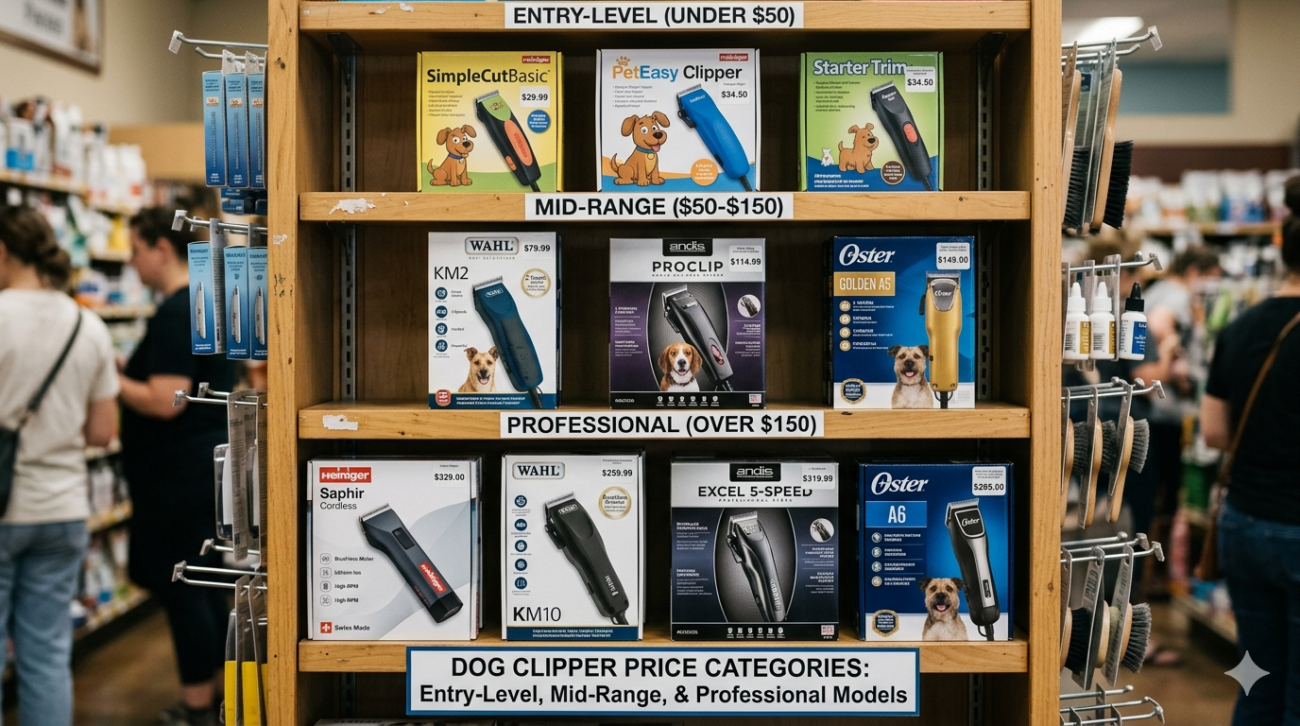
Dog clippers range from about $10 to over $350. But those numbers mean very different things. Knowing what each price tier actually delivers helps you spend smarter — and avoid buying something that will fail on your first thick-coated Labradoodle.
Here’s what each price tier realistically delivers — so you can match your budget to your actual grooming needs.
The $60–$150 sweet spot gives home groomers professional-level results without paying for features only daily-use pros actually need.
The $25 budget clipper trap is real. These clippers overheat within 5 minutes on a medium coat. The handle gets hot in your hand. The blades pull fur instead of cutting it. Most last under 12 months before the motor dies. That’s not a savings — it’s a waste.
✅ Tip
If you groom your dog every 6–8 weeks and pay $50–$70 per salon visit, a $100 quality clipper pays for itself in just 2 grooming sessions. Over 3 years, you save $1,000+ compared to professional grooming costs.
If you want to see the best affordable options available right now, check out our full roundup of best affordable dog clippers — tested across different coat types and price points.
Are Expensive Dog Clippers Worth It?
For most home groomers, the answer is yes — with one condition: you don’t need the most expensive option. The sweet spot is the $80–$150 mid-range. These clippers have the motor power, blade quality, and heat management to handle most home dogs. You pay for genuine engineering — not for a brand logo.
Professional groomers absolutely need premium $200–$350 clippers. They groom 8–15 dogs per day. Their tools take enormous punishment. A cheaper clipper would break down in weeks. The ROI on a $350 professional clipper — spread over thousands of cuts — is actually excellent.
🎯 Which Price Range Is Right For You?
If you are…
A home groomer with 1–2 dogs, grooming every 6–8 weeks
→ Choose $60–$120 mid-range
If you are…
A breeder or multi-dog household grooming monthly
→ Choose $120–$200 semi-pro
If you are…
A professional groomer handling dogs full-time daily
→ Choose $200–$350 professional
Recommended Product
Wahl USA Lithium Ion Pro Series Cordless Animal Clippers – Model 9766
★★★★☆ Highly rated on Amazon
A top mid-range pick from a trusted professional brand — cordless with 2-hour runtime, self-sharpening blades, and enough power for thick double coats without the professional-grade price tag.
As an Amazon Associate, we earn from qualifying purchases.
What Most People Get Wrong About Dog Clippers
Most buyers walk into this purchase with at least one wrong belief. These 3 misconceptions cost people money every year.
Misconception 1: “More expensive always means better.” Not true. A $300 professional clipper built for daily salon use is overkill for someone who grooms one Cocker Spaniel every 8 weeks. It won’t perform better for your needs. It’s over-engineered for your use case. Match the clipper to your actual grooming frequency and coat type — not the price tag.
Misconception 2: “Cheap clippers do the same job.” They don’t — especially on thick or double coats. Budget clippers lack the torque to push through dense fur without jamming. When a blade jams, it pulls the fur. That causes pain, and it makes your dog fear grooming sessions permanently. A frustrated, traumatized dog is far harder to groom than a calm one.
Misconception 3: “Cordless clippers are weaker.” Older cordless models were weaker. Modern lithium-ion battery technology has changed this completely. High-end cordless clippers now match corded models in power — and deliver up to 6 hours of runtime. The freedom of movement they provide is a real advantage, especially for nervous dogs who react badly to a dangling cord near their body.
📋 Quick Summary
Dog clippers cost more because of specialized motors, premium blade materials, small market production volumes, and safety engineering for animals. The sweet spot for home groomers is $60–$150. Keep blades oiled and sharpened, and a good set will last 3–5 years.
Conclusion
Dog clippers are expensive because they do something genuinely hard: cutting thick, layered animal fur safely, quietly, and without hurting your pet. Every dollar you spend above a $25 budget clipper is paying for real engineering — better motors, safer blades, smarter heat management, and longer life.
The right price range for most home groomers is $60–$150. That’s enough to get a tool that works well, lasts for years, and saves you hundreds in grooming costs over time. Don’t go too cheap — your dog will feel it.
One thing to do right now: check how often your dog’s breed needs grooming. If it’s every 4–6 weeks, buying quality clippers this month pays for itself by month 3.
Frequently Asked Questions
Why are professional dog clippers so much more expensive than home ones?
Professional clippers have 5-speed brushless motors, premium detachable blade systems, and are built for 8–15 hours of daily use. Home clippers are engineered for occasional use only. The build durability and motor lifespan required for professional use drives up manufacturing costs significantly.
How long do dog clippers last?
Budget clippers ($10–$30) typically last 6–12 months. Mid-range clippers ($60–$150) last 2–4 years with proper maintenance. Professional clippers from brands like Andis or Wahl can last 5–10 years when blades are oiled regularly and motors are serviced annually.
Can I use cheap dog clippers on a thick-coated dog?
You can try, but the result is usually painful for your dog. Budget clippers lack the motor torque to push through double coats. The blades jam and pull fur instead of cutting cleanly. For any dog with a thick or double coat, you need at least a mid-range clipper with 2+ speeds and titanium or ceramic blades.
Do dog clipper blades need to be replaced?
Yes. Even quality blades dull over time. Most dog clipper blades need professional sharpening every 6–12 months, depending on use frequency. Replacement blades cost $20–$60 each. Oiling blades before every session significantly extends their sharpness and lifespan.
What is the difference between cheap and expensive dog clippers?
The key differences are motor power, blade material, heat management, and build durability. Expensive clippers run at higher SPM, use ceramic or titanium blades that stay cooler, include vibration dampening for nervous dogs, and are built to last years. Cheap clippers cut corners on all of these — often literally, by missing features that protect your dog.
Are cordless dog clippers as good as corded ones?
Modern cordless clippers with lithium-ion batteries are now very close to corded models in power and performance. Top models offer 2–6 hours of runtime and 3,000–4,000 SPM — enough for most home grooming. For professional all-day use, corded models still have a slight edge in sustained motor power. For home use, cordless is often the better choice because nervous dogs react better without a dangling cord.
How often should I oil my dog clippers?
Oil your dog clipper blades before every single grooming session. A few drops of blade oil between the cutter and the heel plate reduces friction, prevents heat buildup, and extends blade life dramatically. Skipping this step is the number one reason blades dull prematurely and motors wear out faster than they should.