

Quick Answer
Your dog may be shedding so much because of seasonal coat changes, breed genetics, indoor living conditions, stress, or grooming needs. However, allergies, parasites, infections, poor nutrition, and hormonal disorders can also cause excessive hair loss. If your dog’s skin looks healthy and the coat remains evenly covered, heavy shedding may be normal. Bald patches, persistent itching, redness, or sudden unexplained hair loss deserve veterinary attention.
Finding dog hair all over your clothes, furniture, and floors can make you wonder whether something is wrong. The amount of fur can seem especially surprising when your dog suddenly starts shedding more than usual.
The key is to look beyond the loose hair. Your dog’s coat type, the time of year, skin condition, and general health provide better clues about what’s happening.
Is It Normal for Dogs to Shed a Lot?
Yes, heavy shedding can be completely normal for some dogs. Shedding is part of the natural hair-growth cycle, which allows older hairs to fall out as new hairs develop.
There is no universal amount of shedding that applies to every dog. A Labrador Retriever may leave substantial amounts of hair around the house while a Poodle may release much less visible fur.
Breed, coat density, age, season, and living conditions influence how much hair you notice.
A healthy dog that sheds heavily usually retains fairly even coat coverage. The skin should not show unexplained inflammation, sores, or bald spots.
That distinction matters because normal shedding and disease-related hair loss are not the same thing.
What Are the 9 Most Common Reasons Dogs Shed So Much?

Excessive shedding has several possible explanations. Start with seasonal and coat-related causes, then consider whether other symptoms suggest a skin or health problem.
1. Seasonal Coat Changes
Seasonal shedding is one of the most common reasons dogs suddenly release large amounts of fur.
Many double-coated dogs shed more heavily in spring as they lose insulating undercoat. Another coat transition can happen during autumn.
During these periods, loose hair may collect in visible clumps, especially after brushing or bathing.
If the remaining coat looks healthy and the shedding gradually settles, seasonal coat replacement is a likely explanation.
2. Breed and Coat Genetics
Some dogs naturally shed more than others because of their inherited coat characteristics.
Breeds commonly associated with substantial shedding include:
- Labrador Retrievers
- German Shepherds
- Siberian Huskies
- Golden Retrievers
- Alaskan Malamutes
- Akitas
Many of these dogs have a dense undercoat that releases significant loose fur during coat transitions.
Hair length alone does not predict shedding. A short-coated dog may shed frequently, while a long-coated breed with continuously growing hair may release less visible fur.
3. Indoor Temperature and Lighting
Dogs living indoors may shed throughout the year rather than following a dramatic seasonal pattern.
Artificial lighting and relatively stable indoor temperatures can affect the environmental signals involved in the hair-growth cycle.
Consequently, an indoor dog may leave hair around the home even outside the typical spring and autumn shedding periods.
Consistent year-round shedding is not automatically abnormal if the dog’s coat and skin remain healthy.
4. Stress and Changes in Routine
Stress can temporarily increase the amount of loose hair a dog releases.
Common stressful situations include moving to a new home, traveling, veterinary visits, loud noises, or major household changes.
Some dogs visibly release more hair during frightening or exciting experiences.
If stress appears to be involved, restore predictable routines and reduce unnecessary triggers. Persistent shedding or accompanying symptoms should not automatically be attributed to anxiety.
5. Allergies and Skin Irritation
Allergies can contribute to hair loss by making a dog itch, scratch, lick, or chew its skin excessively.
Possible triggers include environmental allergens, flea bites, and certain food ingredients.
Look for repeated scratching, red skin, paw licking, ear irritation, or thinning hair in areas your dog frequently chews.
Allergy-related hair loss requires identifying the underlying cause. Switching foods randomly may not help, especially when environmental allergies or parasites are responsible.
6. Fleas, Mites, and Other Parasites
External parasites can cause significant itching, inflammation, and hair loss.
Fleas may trigger intense irritation in sensitive dogs, while certain mites can cause localized or widespread skin problems.
Signs worth checking include:
- Persistent scratching or biting
- Hair thinning around the back or tail base
- Scabs, redness, or irritated skin
- Visible fleas or flea dirt
- Patchy areas of missing hair
Not seeing fleas does not rule out a parasite problem. Ask your veterinarian about suitable parasite prevention and diagnostic testing.
7. Inadequate Nutrition
Skin and hair require adequate protein, essential fatty acids, and other nutrients to remain healthy.
An unbalanced diet or nutritional deficiency can contribute to a dull coat, fragile hair, and increased shedding.
Choose a complete and balanced diet appropriate for your dog’s life stage. If your dog eats a homemade or restricted diet, veterinary nutritional guidance is particularly useful.
Extra supplements are not automatically beneficial. Avoid adding high-dose vitamins or oils without knowing whether a deficiency exists.
8. Skin Infections
Bacterial and fungal skin infections can damage hair or cause inflammation that leads to hair loss.
Possible signs include unpleasant skin odor, pustules, crusting, scaling, redness, and localized thinning.
Ringworm, despite its name, is a fungal infection rather than a worm infestation. It can cause patchy hair loss and may spread to people or other animals.
Because different infections require different treatments, avoid applying human antifungal or antibiotic products without veterinary direction.
9. Hormonal or Other Medical Conditions
Some internal medical conditions affect the normal hair-growth cycle.
Hypothyroidism and Cushing’s disease are examples of hormonal disorders that can cause coat thinning or hair loss.
Depending on the condition, additional signs may include weight changes, reduced activity, increased thirst, increased urination, or changes in skin texture.
These signs do not confirm a diagnosis. Your veterinarian may recommend an examination, blood testing, or skin tests to identify the cause.
How Can You Tell Normal Shedding From Excessive Hair Loss?
The condition of the remaining coat matters more than the amount of fur collected in your vacuum cleaner.
| What You Notice | Possible Meaning | Next Step |
|---|---|---|
| Loose fur with even coat coverage | Often normal shedding | Maintain gentle grooming |
| Heavy shedding during seasonal changes | Possible seasonal coat transition | Monitor skin and regrowth |
| Bald spots or noticeably thinning areas | Possible abnormal hair loss | Arrange veterinary assessment |
| Itching, redness, scabs, or odor | Possible skin disease | Contact your veterinarian |
| Shedding with weight or thirst changes | Possible systemic condition | Seek medical evaluation |
These patterns are clues rather than a diagnosis. The Merck Veterinary Manual’s guide to canine hair loss explains why skin changes, itching, and hair-loss patterns help veterinarians investigate underlying causes.
What Should You Check When Your Dog Suddenly Starts Shedding?
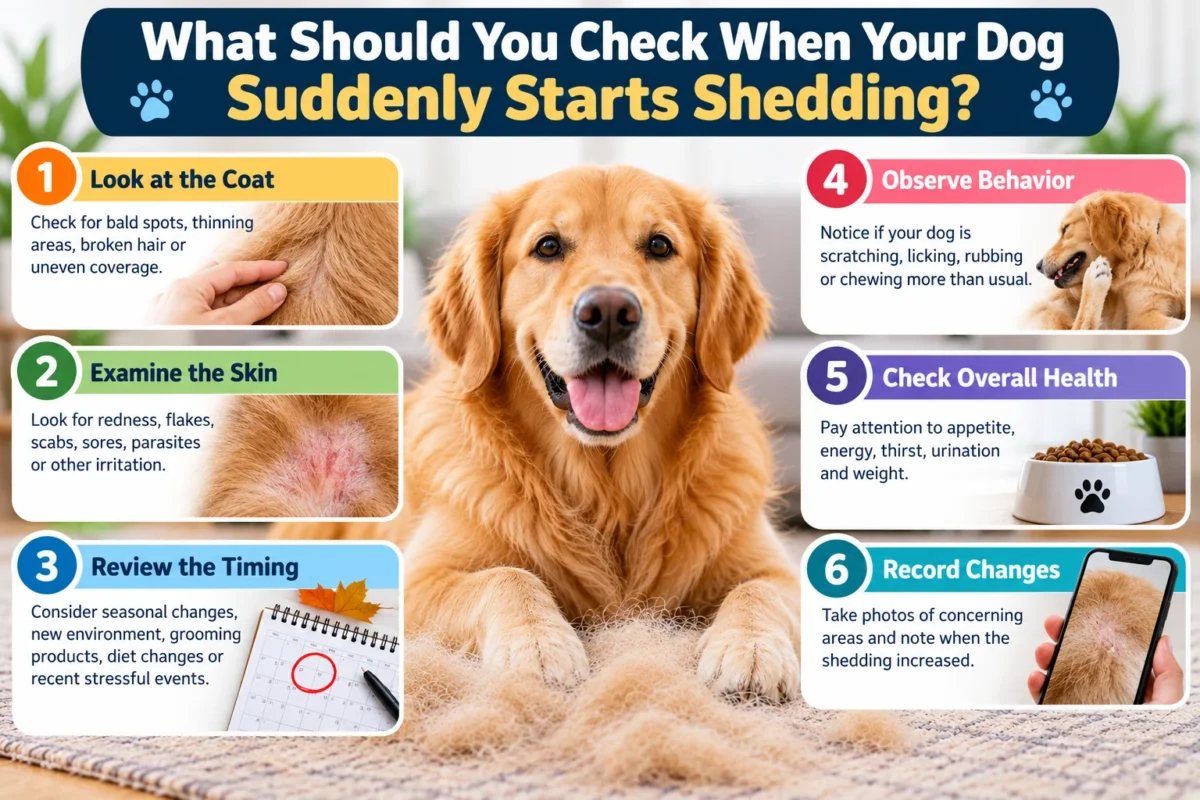
Start by checking whether the shedding follows a familiar pattern or represents a genuine change.
- Look at the coat. Check for bald spots, unusual thinning, broken hair, or uneven coverage.
- Examine the skin. Part the fur gently and look for redness, flakes, scabs, parasites, or sores.
- Review the timing. Consider recent seasonal changes, stressful events, new grooming products, or diet changes.
- Observe behavior. Notice whether your dog is scratching, licking, rubbing, or chewing more frequently.
- Check overall health. Pay attention to appetite, energy, thirst, urination, and weight.
- Record changes. Take photographs of concerning areas and note when the shedding increased.
This information can help your veterinarian distinguish normal coat changes from a possible health problem.
How Can You Safely Reduce Your Dog’s Shedding at Home?
You cannot eliminate healthy natural shedding, but you can manage loose hair more effectively and support good coat condition.
Brush According to Coat Type
Regular gentle brushing removes loose hairs before they collect around your house.
Use a rubber grooming mitt or suitable soft brush for many short coats. Longer coats may benefit from a slicker brush and comb, while dense double coats may require an appropriate undercoat tool.
Avoid repeatedly scraping the same area or pulling hard through tangles. Excessive brushing can irritate the skin and damage healthy hair.
Bathe Only When Needed
Bathing with an appropriate dog shampoo can remove dirt and loose fur, but excessive bathing may dry or irritate sensitive skin.
For a practical washing routine, follow our dog bathing guide for safe at-home grooming. It covers preparation, shampooing, rinsing, and drying.
Never use repeated baths to cover up persistent itching, odor, or skin inflammation. Those symptoms may require treatment.
Support Skin and Coat Health
Feed a complete, balanced diet, provide fresh water, maintain appropriate parasite prevention, and give your dog a predictable daily routine.
Keep grooming tools clean and stop brushing if the skin becomes red or your dog shows discomfort.
Practical Tip
Compare your dog’s shedding with its usual pattern rather than another breed’s. Consistent photos and grooming observations can make unexpected changes easier to identify.
When Should You Take a Shedding Dog to the Vet?
Arrange veterinary care when shedding causes visible hair loss, comes with abnormal skin changes, or increases significantly without an obvious explanation.
Pay particular attention to bald patches, ongoing scratching, raw skin, crusting, unusual odor, or poor hair regrowth.
Changes in appetite, weight, thirst, energy, or urination alongside coat problems also warrant examination.
Seek prompt veterinary care if your dog has painful, rapidly worsening skin lesions or appears generally unwell.
Important Warning
Do not assume that bald patches, severe itching, or inflamed skin are ordinary seasonal shedding. Avoid treating unexplained hair loss with human medicines, essential oils, or repeated aggressive deshedding.
The American Animal Hospital Association’s shedding guidance also recommends veterinary evaluation when unusual shedding occurs with changes in skin condition or general health.
What Mistakes Can Make Shedding Problems Worse?
The most common mistake is treating every shedding problem as something that needs stronger brushing or more bathing.
Using unsuitable deshedding blades, brushing aggressively, or shaving a double-coated dog without a sound reason can damage the coat or irritate the skin.
Another mistake is assuming that new food, fish oil, or supplements will cure unexplained hair loss. Nutritional changes should address a genuine dietary need rather than replace medical assessment.
Finally, avoid overlooking scratching or licking simply because your dog still has plenty of fur. Skin disease can develop before obvious bald patches appear.
Related Product
Gentle Dog Grooming Brushes
A brush matched to your dog’s coat type can help collect loose fur during regular grooming without aggressive pulling.
As an Amazon Associate, we earn from qualifying purchases.
Frequently Asked Questions
Why is my dog shedding so much all of a sudden?
A sudden increase may reflect seasonal coat changes, stress, or a change in your dog’s environment. If the increase is unexplained, especially with bald patches, itching, or other symptoms, arrange a veterinary examination.
What months do dogs usually shed the most?
Many double-coated dogs shed heavily in spring and autumn. However, shedding patterns vary with climate, daylight, coat type, and indoor living conditions.
Can dogs shed more because of stress?
Yes. Some dogs release extra hair during stressful experiences or changes in routine. Persistent hair loss should still be investigated rather than attributed to stress alone.
Does a dog shedding in clumps mean something is wrong?
Not necessarily. Double-coated dogs can release clumps of loose undercoat during seasonal shedding. Visible bald areas, irritated skin, or uneven hair loss are more concerning.
Can changing dog food reduce shedding?
Improving an inadequate diet may support coat health, but switching food will not necessarily reduce normal shedding. Ask your veterinarian about diet changes if you suspect a nutritional problem.
Will brushing every day stop my dog from shedding?
No. Brushing removes loose hair but cannot stop the natural hair-growth cycle. Some dogs benefit from daily gentle brushing, while others need less frequent grooming depending on coat type and skin sensitivity.
Final Thoughts
If you’re wondering why your dog is shedding so much, first consider the season, coat type, and whether the remaining fur and skin look healthy.
Normal shedding is manageable with appropriate grooming. Unexplained hair loss, irritated skin, or changes in general health deserve closer attention and may require veterinary care.
The best next step is simple: inspect your dog’s coat gently, watch for unusual symptoms, and choose care based on what you find rather than how much fur is on the floor.


