

Quick Answer
You can start gently brushing your puppy as soon as they settle into your home, often around 8 weeks old. However, specialized deshedding tools usually aren’t necessary until the adult coat begins developing, commonly around 4–6 months. The safest starting point depends on breed, coat type, skin condition, and whether your puppy is shedding. Learn more about what deshedding means for dogs.
When to Start Puppy Grooming
- 8–12 weeks: Introduce gentle brushing with a soft puppy brush.
- 3–4 months: Maintain short brushing sessions and watch for coat changes.
- 4–6 months: Look for increased shedding as adult fur begins replacing puppy fur.
- 6–12 months: Consider suitable undercoat tools if the coat has developed enough.
- Any age: Stop grooming if your puppy shows pain, redness, or unusual discomfort.
Important Safety Tip
- Start with soft brushing: Never use an aggressive deshedding blade on a delicate puppy coat just to remove more hair.
Wondering when to start deshedding a puppy? It’s a common question when soft puppy fur begins appearing on your clothes, furniture, and floors.
I recommend focusing on comfortable brushing before worrying about specialized deshedding equipment. This guide explains appropriate ages, coat changes, safe tools, and the signs that your puppy needs a gentler approach.
What Is Puppy Deshedding?
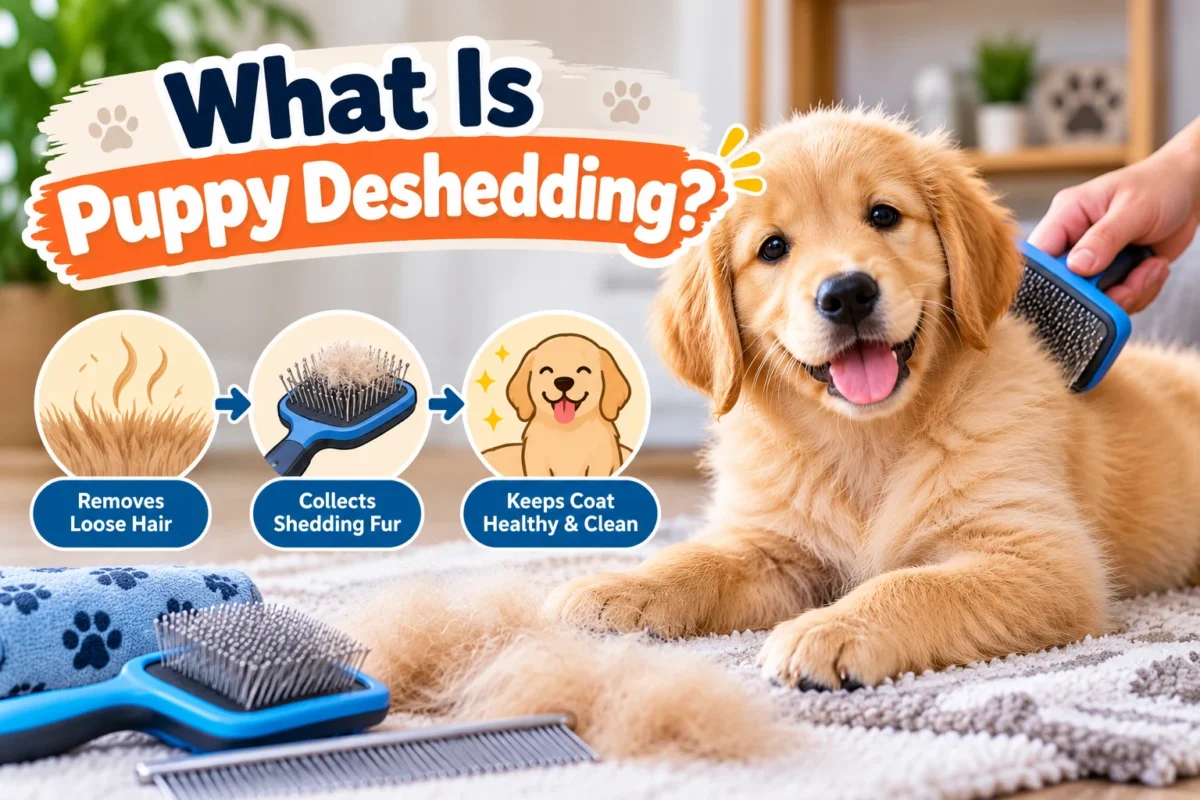
Puppy deshedding means gently removing loose, naturally shedding hair from a puppy’s coat. It helps manage detached fur without intentionally pulling healthy hair or damaging developing coat layers.
Deshedding isn’t the same as shaving, trimming, or aggressively thinning the coat. The purpose is to collect hair that’s already ready to come away.
- Regular brushing: Removes surface debris, loose fur, and minor tangles.
- Gentle deshedding: Targets naturally releasing hair with a suitable brush or comb.
- Undercoat removal: Uses specialized tools to collect loose fur beneath the outer coat.
- Coat maintenance: Supports comfort and helps you notice changes in the skin.
Not every puppy needs a dedicated deshedding tool. Many benefit more from ordinary brushing throughout their first several months.
At What Age Can You Start Deshedding a Puppy?
You can introduce gentle brushing at approximately 8 weeks or whenever your puppy comfortably tolerates handling. More intensive undercoat deshedding should wait until the coat structure and shedding pattern make it appropriate.
According to the American Kennel Club’s puppy coat guidance, many puppies begin losing their puppy coats between 4 and 6 months. However, the timing varies widely among breeds.
8–12 Weeks: Introduce Gentle Brushing
Young puppies have delicate skin and soft coats. At this stage, teaching them to enjoy grooming matters more than removing large amounts of hair.
- Choose a soft-bristle brush or gentle grooming mitt.
- Begin with approximately 30–60 seconds of brushing.
- Brush areas your puppy comfortably allows you to touch.
- Offer praise and small treats afterward.
- Avoid metal deshedding blades and firm pressure.
These short sessions are introductory training, not full deshedding treatments. A successful session may remove hardly any fur.
3–4 Months: Build a Brushing Routine
At 3–4 months, many puppies become more comfortable with familiar grooming routines. Continue using tools suited to their coat texture and sensitivity.
Some puppies begin noticeable coat changes during this period. Others retain most of their original fluffy fur.
4–6 Months: Watch for Adult Coat Development
Many puppies start replacing their soft puppy fur with adult hair around this age. You might notice increased shedding, changes in coat texture, or different fur colors.
For double-coated puppies, an adult undercoat may begin becoming more apparent. However, visible shedding alone doesn’t mean a metal deshedding tool is needed.
- Continue regular gentle brushing.
- Check whether loose fur comes away without pulling.
- Watch for changes in the density of the undercoat.
- Ask a groomer which tools suit the developing coat.
6–12 Months: Consider Coat-Specific Deshedding
Some puppies have developed enough adult coat for carefully selected undercoat tools during this period. Others continue changing well beyond their first birthday.
A Golden Retriever puppy may need different grooming equipment from a Beagle or Poodle. Breed-specific advice is more useful than a universal starting age.
Puppy Deshedding Age Chart: What Should You Use?
The following table provides practical starting points rather than strict age requirements. Your puppy’s coat development and comfort should always guide the final decision.
| Puppy Age | Coat Stage | Suitable Grooming | Deshedding Advice |
|---|---|---|---|
| 8–12 weeks | Soft puppy fur | Soft bristle or mitt | Avoid intensive tools |
| 3–4 months | Early coat changes possible | Gentle brush or comb | Remove loose fur gently |
| 4–6 months | Adult coat transition often begins | Coat-specific brush | Assess actual shedding |
| 6–12 months | Adult coat developing | Brush, comb, or suitable rake | Consider targeted deshedding |
| 12+ months | Adult coat in many breeds | Breed-appropriate tools | Adjust to shedding and skin health |
Remember: Some breeds take considerably longer to develop their complete adult coats. The calendar should never override what you observe on your puppy.
How Do You Know Your Puppy Is Ready for Deshedding?
Your puppy may be ready for more targeted loose-fur removal when the coat starts shedding noticeably and a suitable brush removes hair comfortably. Age alone isn’t enough to determine readiness.
Signs Your Puppy’s Coat Is Changing
- More loose hair: Fur begins collecting on bedding and furniture.
- Changing texture: Adult hairs feel different from soft puppy fur.
- Developing undercoat: Some double-coated puppies develop denser inner fur.
- Loose tufts: Naturally detached hair may appear around the shoulders or hindquarters.
- Comfortable brushing: Your puppy accepts gentle grooming without obvious distress.
These signs suggest changing grooming needs, not automatic permission to use an undercoat blade. The tool must still match the actual coat.
When Should You Wait Longer?
Delay specialized deshedding if your puppy still has a fine coat, sensitive skin, or little loose undercoat. Waiting is also sensible when brushing causes discomfort.
The safest method is the least aggressive one that maintains the coat. For a fuller explanation, see this dog deshedding guide.
Does Puppy Breed Affect When to Start Deshedding?
Yes. Breed and coat type strongly influence when specialized deshedding becomes useful.
Double-coated puppies may eventually shed considerable undercoat. Single-coated, curly-coated, and smooth-coated puppies often need different methods.
Double-Coated Puppies
Golden Retrievers, German Shepherds, Siberian Huskies, and similar breeds commonly develop dense undercoats. Their adult coat transitions may create noticeable amounts of loose fur.
- Begin with gentle brushing during early puppyhood.
- Use suitable combs when the coat becomes thicker.
- Introduce undercoat tools only when appropriate.
- Protect the outer guard hairs from unnecessary removal.
Short-Haired Puppies
Beagles, Boxers, and many smooth-coated dogs can shed despite having relatively short hair. Their coats often respond well to soft rubber or bristle brushes.
A heavy undercoat rake may offer little benefit. Learn more about deshedding short-haired dogs safely.
Curly-Coated and Low-Shedding Puppies
Poodles and other curly-coated breeds may retain loose hair within their coats instead of dropping much of it around the home. Their priority is often detangling and mat prevention.
Use appropriate combs and brushes rather than assuming a deshedding blade is necessary. A professional groomer can explain your puppy’s specific coat requirements.
How Do You Deshed a Puppy Safely for the First Time?

Start with a soft brush, inspect the coat, and use brief strokes in the direction of hair growth. The first session should build comfort rather than remove as much hair as possible.
The following seven-step routine works as an introduction to gentle loose-fur removal.
Step 1: Choose a Calm Time
Pick a quiet moment when your puppy is relaxed but awake. Avoid brushing during energetic play or when your puppy is exhausted and irritable.
Step 2: Inspect the Skin and Coat
Look for redness, sores, tangles, parasites, and sensitive spots. Don’t brush directly over irritated or injured skin.
Step 3: Choose a Puppy-Safe Brush
Start with soft bristles, a gentle grooming mitt, or another coat-appropriate tool. Check that the brush doesn’t scratch when lightly tested against your own skin.
Step 4: Introduce the Brush Slowly
Allow your puppy to sniff the brush before grooming begins. Reward calm behavior and briefly touch the coat with the tool.
Step 5: Brush With Light Pressure
Follow the natural direction of hair growth. Use short, gentle strokes along comfortable areas such as the shoulders and back.
Avoid repeated pressure over the same spot. Be particularly careful around the belly, face, legs, and tail.
Step 6: Stop Before Your Puppy Becomes Uncomfortable
Early sessions may last only 30–60 seconds. Gradually extend grooming time as your puppy becomes comfortable with handling.
Stop immediately if your puppy repeatedly flinches, yelps, struggles, or develops redness. Never hold a frightened puppy down just to finish brushing.
Step 7: Reward and Check the Results
Finish with praise, a favorite toy, or a small treat. Examine the coat to ensure grooming hasn’t created irritation.
My practical rule is simple: judge a session by your puppy’s comfort, not the amount of fur collected. A calm puppy with a healthy coat is a better result than a large pile of hair.
What Is the Best Deshedding Tool for a Puppy?
The best grooming tool depends on coat texture, age, and skin sensitivity. For most young puppies, a soft brush or flexible rubber grooming tool is a better starting point than a metal deshedding blade.
The AKC guide to dog brushes explains how different brush designs suit different coat types.
| Tool | Best Use | Puppy Considerations |
|---|---|---|
| Soft-bristle brush | Early grooming practice | Gentle starting option |
| Rubber grooming brush | Loose hair on short coats | Choose soft, flexible teeth |
| Soft slicker brush | Suitable longer coats | Use extremely light pressure |
| Wide-tooth comb | Checking manageable tangles | Never pull through tight mats |
| Undercoat deshedding tool | Loose adult undercoat | Wait until coat is suitable |
How Often Should You Brush or Deshed a Puppy?
Many puppies benefit from several brief brushing sessions each week. Some longer coats need more frequent gentle care, while intensive deshedding may not be necessary at all.
The right schedule depends on coat type, matting risk, and how well your puppy tolerates grooming.
- Short smooth coats: Try gentle brushing once or twice weekly.
- Medium coats: Begin with a few sessions each week.
- Long or curly coats: Check frequently for tangles; some need daily attention.
- Developing double coats: Increase gentle brushing when loose hair accumulates.
- Specialized deshedding: Use only when the coat requires it and the tool is appropriate.
These are flexible starting points, not medical rules. Read more about how often to deshed a dog as your puppy matures.
What Grooming Mistakes Should You Avoid With Puppies?
The biggest mistakes involve starting aggressive deshedding too early, using the wrong tool, and brushing beyond your puppy’s comfort level. These can damage hair, irritate skin, or make future grooming harder.
- Using adult tools too soon: Strong metal blades may be unsuitable for soft puppy fur.
- Applying heavy pressure: Pressing against the skin increases irritation risk.
- Brushing one area repeatedly: Excessive friction can cause redness and discomfort.
- Pulling through mats: Tight tangles can hurt and may require professional removal.
- Ignoring fear signals: Forced grooming can make puppies reluctant to accept brushing.
- Overgrooming: Removing more fur isn’t always healthier.
- Using unsuitable tools: Coat type matters more than marketing claims.
Don’t try to collect every loose hair in one session. Hair shedding is a continuing biological process, not a problem that brushing permanently eliminates.
What Are the Warning Signs That Deshedding Is Hurting Your Puppy?
Redness, pain, bald patches, and persistent discomfort can indicate that grooming is too harsh or an underlying skin problem exists. Stop immediately if these symptoms appear.
- Red or inflamed skin after brushing.
- Repeated yelping, flinching, or pulling away.
- Sudden thinning or broken-looking hair.
- Bare patches or unusual clumps of hair loss.
- Excessive scratching or licking.
- Scabs, sores, swelling, or skin sensitivity.
Some hair loss has nothing to do with brushing. Fleas, mites, infections, and other health conditions may also cause coat changes.
If symptoms persist or you notice bald patches, contact your veterinarian. The VCA puppy hygiene guidance also emphasizes gradual, comfortable grooming.
How Can You Help Your Puppy Enjoy Grooming?
Positive, short sessions help puppies build confidence around brushes and grooming tools. Make handling predictable and rewarding instead of forcing your puppy to remain still.
- Let the puppy investigate the grooming tool.
- Begin with gentle touches before brushing.
- Reward calm behavior with appropriate treats.
- Keep early sessions brief.
- Use a nonslip, comfortable grooming surface.
- End while your puppy is still relaxed.
Introduce grooming in small stages rather than attempting everything during one session. According to the AKC’s puppy bathing and grooming advice, early positive experiences can support better grooming habits later.
Recommended Puppy Grooming Tools for Beginners
If you’re shopping for your first puppy brush, prioritize comfort and coat compatibility. These options serve different grooming needs rather than offering the same type of deshedding.
Affiliate disclosure: As an Amazon Associate, we may earn from qualifying purchases made through eligible links, at no additional cost to you.
🐶 Gentle Starter Pick
KONG Puppy ZoomGroom Brush
★★★★☆
A flexible rubber grooming brush designed to collect loose hair while offering a gentle massaging action. I favor this style for early grooming practice on suitable short or smooth coats, using very light pressure.
✨ For Longer Coats
Safari Soft Slicker Brush for Dogs
★★★★☆
A soft slicker-style brush intended for gentle coat maintenance and loose-hair removal. This is a more suitable tool category to consider for certain longer-coated puppies than an aggressive undercoat blade, provided the size and pins fit.
🪮 For Coat Checks
Andis Steel Pet Comb
★★★★☆
A metal grooming comb useful for checking tangles and working through suitable coats. I recommend considering an appropriately sized comb once your puppy accepts brushing, while avoiding any attempt to pull through tight mats.
Note: Star symbols represent editorial suitability impressions, not verified customer-review averages. Always confirm the current model, dimensions, and age or coat guidance before purchasing.
Frequently Asked Questions About Puppy Deshedding
Can You Deshed an 8-Week-Old Puppy?
You can gently brush an 8-week-old puppy if they’re comfortable and healthy. However, intensive deshedding tools aren’t generally appropriate for such a young, delicate coat. Use a soft brush, keep sessions short, and prioritize positive experiences rather than removing large amounts of hair.
Can You Use a FURminator on a Puppy?
A FURminator-style undercoat tool isn’t usually the best first brush for a young puppy. Specialized tools require an appropriate coat type and sufficient undercoat development. Check the manufacturer’s instructions and ask a groomer or veterinarian whether your puppy’s coat is ready before using one.
When Do Puppies Start Shedding Their Puppy Coat?
Many puppies begin shedding their puppy coats between 4 and 6 months of age. However, the transition can begin around 12 weeks or much later, depending on breed and development. Some dogs take considerably longer to grow their complete adult coats.
Should You Brush a Puppy Every Day?
Some puppies with long or curly coats benefit from gentle daily brushing, especially when tangles form easily. Short-coated puppies may need less frequent grooming. Daily brushing doesn’t mean daily intensive deshedding, and you should reduce sessions if irritation or discomfort develops.
Can Deshedding Damage a Puppy’s Coat?
Yes. Aggressive tools, excessive pressure, and repeated brushing can irritate skin or damage healthy hair. Puppies may be especially sensitive while their coats develop. Choose a suitable brush, follow hair growth, stop when your puppy becomes uncomfortable, and consult a veterinarian about unusual hair loss.
Final Takeaway: When Should You Start Deshedding Your Puppy?
Start gentle puppy brushing early, often around 8 weeks, but wait before introducing specialized undercoat deshedding tools. Many puppies begin changing coats around 4–6 months, although breed and individual development matter more than an exact age.
Choose the softest effective tool, use short positive sessions, and monitor skin comfort. Your goal is a healthy coat and a puppy who feels safe during grooming.
If your puppy is shedding more than expected, consult your veterinarian or a qualified groomer before increasing grooming intensity. A gentle, consistent routine is the best place to begin.


