
Quick Answer
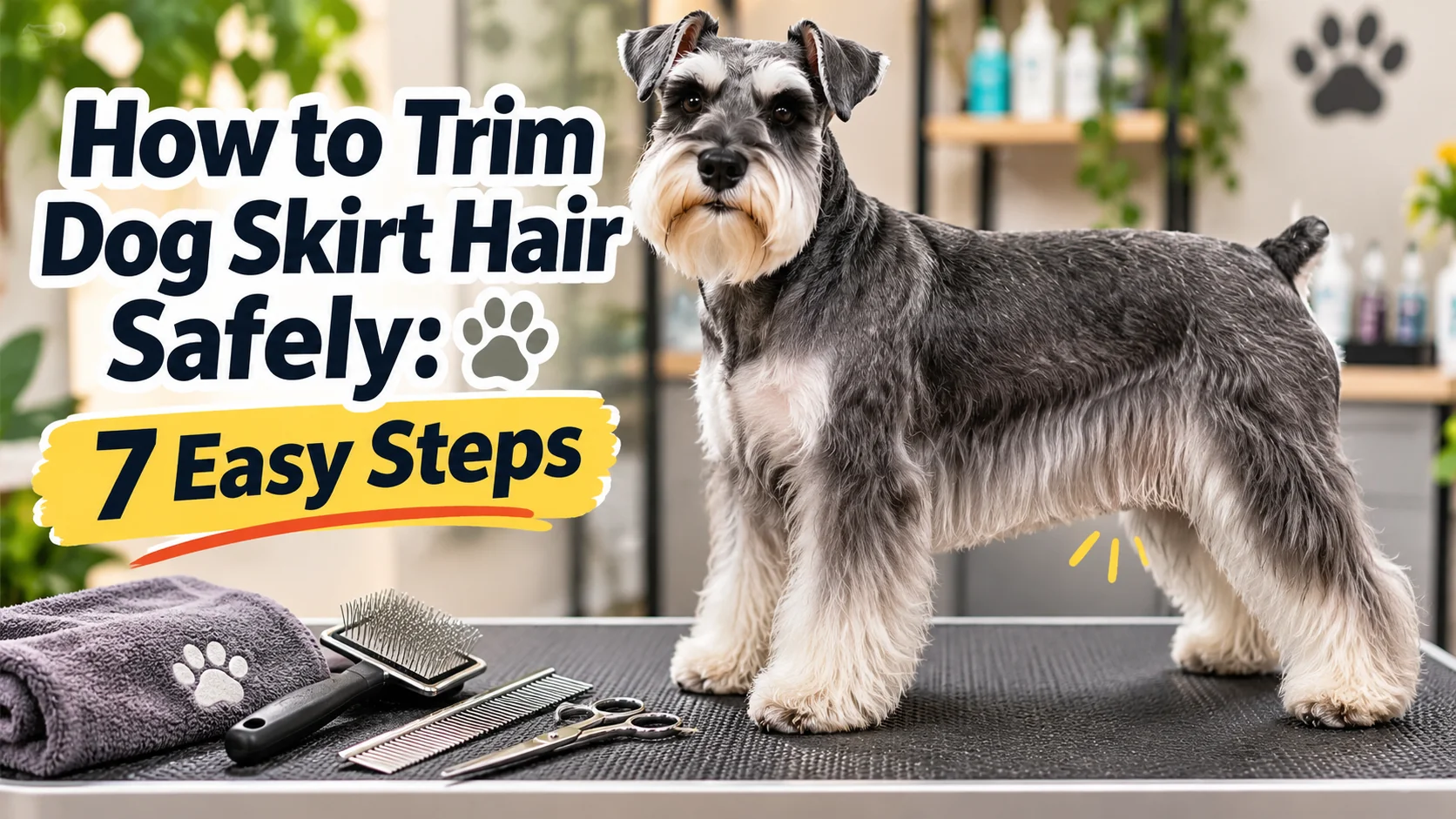
To trim dog skirt hair, brush and comb the coat thoroughly, let your dog stand naturally, and carefully shorten the loose hair hanging beneath the sides of the body. Remove small amounts at a time, follow the natural body outline, and check both sides for balance. Never cut through matted fur or trim close to the skin, nipples, armpits, or groin.
A long, flowing skirt can give your dog a distinctive appearance, but it can also collect dirt, develop tangles, and become difficult to maintain between grooming appointments.
You don’t necessarily need a full haircut to fix these problems. A light maintenance trim can make the coat more manageable while preserving your dog’s existing style.
What Is Dog Skirt Hair?
Dog skirt hair is the longer coat that hangs along the lower sides of a dog’s body, generally between the front and hind legs. Groomers sometimes describe this hair as part of the dog’s furnishings, which are longer sections of coat deliberately retained during grooming.
Skirts or similar body furnishings are commonly seen on breeds such as:
- Miniature Schnauzers
- Scottish Terriers
- American Cocker Spaniels
- West Highland White Terriers
- Some long-haired mixed breeds
The shape and length vary considerably between breeds. A Cocker Spaniel may have flowing body hair, while a traditional Schnauzer trim generally has a shorter, more defined underline.
Skirt trimming is also different from a sanitary trim. The former shapes the visible coat along the sides, whereas the latter addresses hair around areas that easily become soiled, including the groin and rear end.
Should You Trim Your Dog’s Skirt Hair?
Yes, you can shorten an existing skirt when it becomes difficult to maintain, provided the coat is suitable for trimming and your dog tolerates the process.
A maintenance trim is particularly useful when:
- Long hair drags through wet grass or mud.
- The bottom edge looks uneven.
- The hair repeatedly develops small tangles.
- Brushing has become increasingly time-consuming.
- You want to preserve the current haircut between grooming visits.
However, visible length alone isn’t a reason to remove the entire skirt. If your dog’s coat is healthy, clean, and manageable, keeping the existing length is perfectly reasonable.
Dogs with double coats that have not traditionally been clipped require additional consideration. Shortening loose furnishings is different from shaving the protective body coat.
Tools You Need Before Trimming
Choose tools that allow you to prepare the coat properly and control exactly how much hair you remove.
| Grooming Tool | Purpose |
|---|---|
| Slicker or pin brush | Separates loose hair and manageable tangles. |
| Metal grooming comb | Checks for hidden knots and uneven length. |
| Dog grooming scissors | Shortens accessible, freely hanging hair. |
| Thinning shears | Softens harsh edges when used correctly. |
| Non-slip mat | Provides stable footing during grooming. |
| Dog treats | Rewards calm, cooperative behavior. |
For a small skirt touch-up, a suitable brush, metal comb, and grooming scissors may be sufficient. Clippers are not necessary unless you intend to change the existing haircut substantially.
The American Kennel Club’s home grooming guidance emphasizes learning proper equipment handling before attempting more sensitive trimming tasks.
How to Trim Dog Skirt Hair in 7 Easy Steps
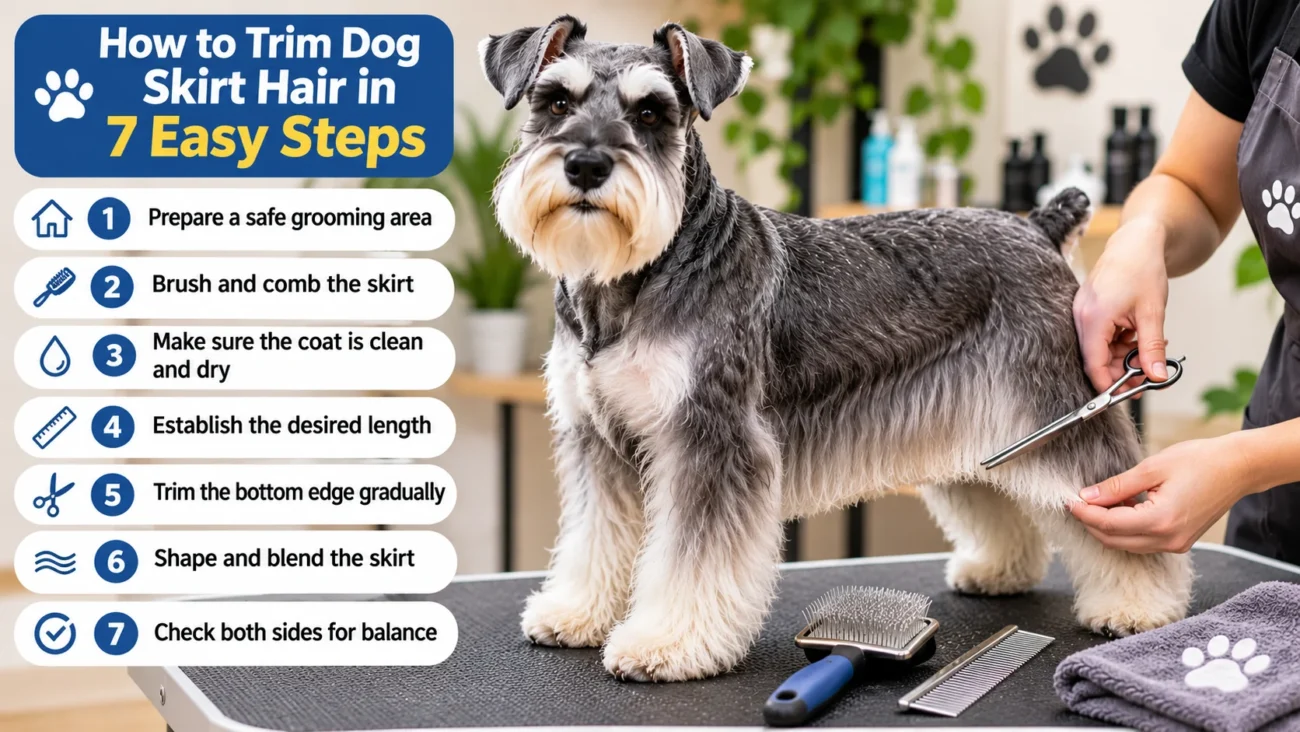
The following method is intended for maintaining an established skirt on a calm dog with a clean, untangled coat. First-time groomers should have a professional demonstrate safe scissor handling.
Step 1: Prepare a Safe Grooming Area
Choose a quiet, well-lit location with stable, non-slip footing. Keep your grooming tools within reach so you don’t need to leave your dog unattended.
Allow your dog to investigate the brush and comb before starting. If your dog repeatedly moves away or refuses to stand comfortably, postpone the haircut rather than forcing the session.
Step 2: Brush and Comb the Entire Skirt
Brush the skirt in manageable sections, gently working through loose tangles without pulling the skin. Pay particular attention to the hair near the front legs, chest, and lower body.
After brushing, pass a metal comb through the coat. A brush can make the surface look smooth while leaving knots underneath.
If the comb catches on a dense mat, stop. The coat must be manageable before you begin trimming.
Step 3: Make Sure the Coat Is Clean and Dry
A clean, dry skirt makes it easier to judge its natural length and shape. Dirty hair may clump together, concealing uneven sections.
If bathing is necessary, address tangles first, use dog-appropriate shampoo, and dry the coat completely before trimming. Comb it again after drying.
Curly and wavy coats can appear longer when wet, making it easy to remove more hair than intended.
Step 4: Establish Your Desired Skirt Length
Let your dog stand naturally on all four feet and examine the skirt from the side.
Decide whether your goal is to remove stray ends, create a shorter maintenance skirt, or preserve a particular breed-specific outline.
For a routine touch-up, begin by removing only the longest ends. You can shorten additional hair later, but you cannot immediately restore hair that has been cut too short.
Keep the existing transition between the shorter body coat and longer skirt intact.
Step 5: Trim the Bottom Edge Gradually
Comb the skirt downward and identify the loose ends that extend safely away from the body.
Using appropriate grooming scissors, make small, controlled cuts along the visible edge. Keep the blades away from the dog’s skin and stop cutting whenever the dog moves.
Work across manageable sections instead of trying to remove the entire length with one cut. Comb the hair back into its natural position between adjustments.
Leave the armpits, groin, skin folds, and hair surrounding the nipples to an experienced groomer.
Step 6: Shape and Blend the Skirt
Once the bottom edge is tidy, examine how the longer hair connects with the chest and leg furnishings.
A small amount of blending can soften an abrupt edge. Experienced groomers often use thinning shears for this purpose, but beginners should avoid thinning close to the skin or changing the established body pattern.
Do not repeatedly cut the same section simply because it appears slightly different when your dog changes position.
Step 7: Check Both Sides for Balance
Comb both sides of the skirt and examine your dog while it stands naturally. Look from the front, back, and each side.
Check that the bottom edges appear reasonably balanced and that the longer furnishings still connect naturally with the rest of the haircut.
Remove only obvious stray ends, brush away loose clippings, and reward your dog for cooperating.
Safety Warning
Never use scissors to remove mats. Matted hair can pull the skin upward and conceal it inside the tangled coat. Cutting through the mat can cause a serious skin injury. Arrange professional removal if the mat cannot be gently brushed out.
How Short Should You Trim Dog Skirt Hair?
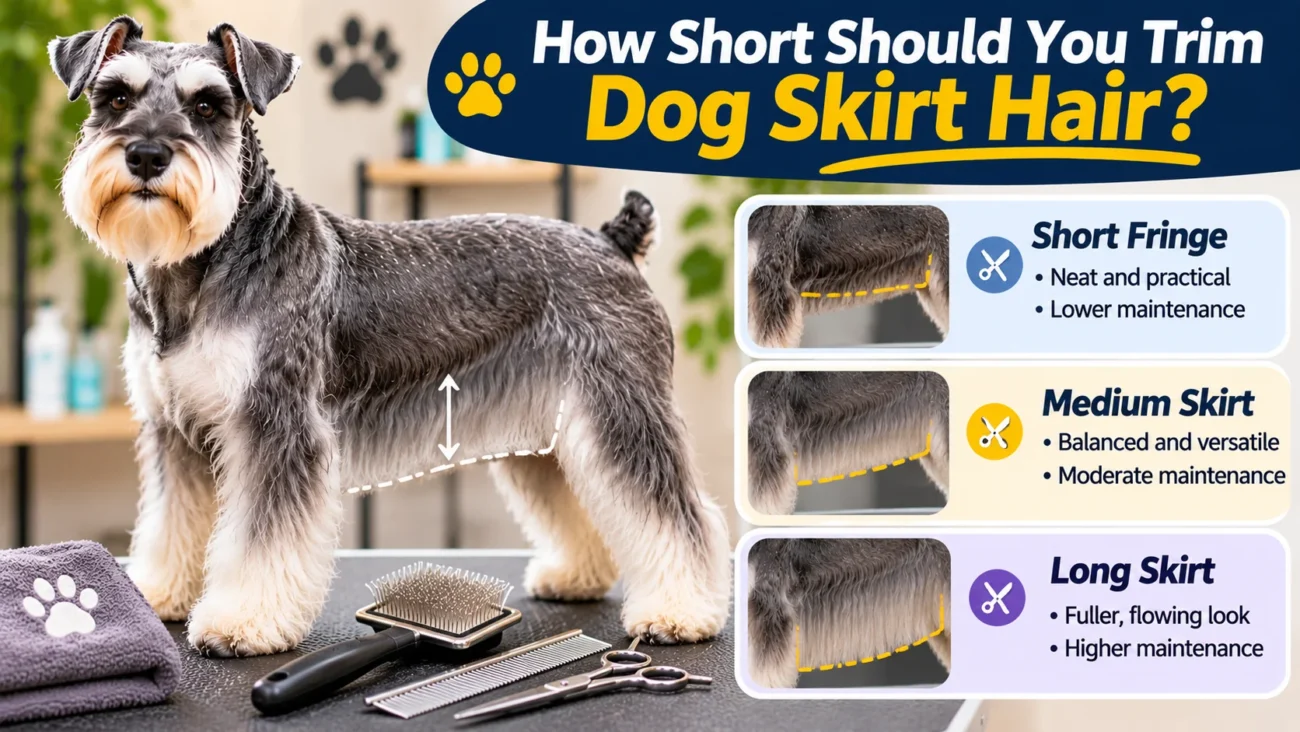
There is no universal skirt length that works for every dog. The best length depends on breed, coat texture, lifestyle, existing haircut, and how frequently you can brush the coat.
| Skirt Style | Best Suited For | Maintenance |
|---|---|---|
| Short fringe | Active dogs and practical pet trims | Lower |
| Medium skirt | Owners wanting a defined but manageable look | Moderate |
| Long skirt | Suitable flowing furnishings | Higher |
A shorter skirt may reduce maintenance demands, while a longer one preserves more of the flowing appearance. Neither choice eliminates the need for regular brushing.
Schnauzer Skirt Hair
A traditional Schnauzer underline generally follows the dog’s body shape rather than forming a heavy curtain of hair.
The Standard Schnauzers Victoria grooming guide distinguishes the breed’s relatively short underbody fringe from the fuller skirt associated with Cocker Spaniels.
For a pet Schnauzer, you can retain a slightly longer skirt if you prefer the appearance and can keep it free from tangles.
Cocker Spaniel Skirt Hair
Cocker Spaniel grooming styles often retain fuller furnishings along the body and legs. A light trim can tidy the lower edge without removing this characteristic appearance.
For dogs that regularly encounter mud, vegetation, or wet weather, a shorter professional pet trim may be more practical.
Common Mistakes When Trimming Dog Skirt Hair
Most avoidable problems arise from removing too much hair, working on an unprepared coat, or attempting to trim difficult areas without sufficient experience.
- Trimming before combing: Hidden knots interfere with judging the true length.
- Cutting large sections at once: This increases the risk of uneven edges.
- Moving the skirt line upward: Removing hair from the upper transition can substantially change the haircut.
- Using scissors underneath mats: The dog’s skin may be trapped inside the tangled hair.
- Chasing perfect symmetry: Repeated adjustments can gradually make the entire skirt too short.
- Continuing when the dog becomes restless: Unexpected movement increases the chance of injury.
If a small area looks uneven but the dog is comfortable and the coat remains manageable, it is often better to leave it until the next grooming session.
How to Maintain a Dog’s Skirt Between Haircuts
Regular brushing and combing are more important for maintaining a healthy skirt than frequent cutting.
According to VCA Animal Hospitals’ coat care guidance, dogs with long, silky, or curly hair benefit from daily brushing to help prevent tangles and mats.
Check the skirt after outdoor activities, remove loose debris, dry damp furnishings, and inspect areas where the legs rub against the body.
Trim again when the ends become difficult to manage or lose their intended shape. The appropriate interval depends on coat growth and your dog’s activities rather than a fixed calendar.
When Should You Visit a Professional Groomer?
Professional grooming is preferable when your dog has extensive matting, a complicated breed-specific coat, or difficulty remaining comfortable during trimming.
Seek veterinary advice instead when the skin underneath the skirt is injured, inflamed, painful, or has unusual discharge or persistent sores.
If you want to maintain the haircut yourself, ask your groomer to establish a manageable skirt length and demonstrate which areas can be safely touched up at home.
Related Grooming Tool
Stainless Steel Dog Grooming Comb
A grooming comb with both wide and closely spaced teeth is useful for checking long skirt hair after brushing. It helps locate hidden tangles and identify uneven ends before trimming.
As an Amazon Associate, I earn from qualifying purchases.
Frequently Asked Questions
1. Can I trim my dog’s skirt with regular household scissors?
Dog grooming scissors are preferable because they are designed for coat trimming. Household scissors may provide less control or pull the hair. Learn safe handling before using any scissors around your dog.
2. Can I completely remove my Schnauzer’s skirt?
Yes, a professional groomer can create a shorter pet trim without a prominent skirt. Consider coat type and breed-specific grooming requirements before changing the entire haircut.
3. Will my dog’s skirt grow back after trimming?
Skirt hair generally grows back, but the time required varies with breed, coat type, health, and the amount removed. Some coat types may regrow unevenly following close clipping.
4. Can I use electric clippers to trim dog skirt hair?
Clippers can be used for suitable coat types and shorter grooming styles. However, scissors offer more selective control for trimming loose ends on an established skirt when used by someone with appropriate training.
5. What should I do if I accidentally trim one side too short?
Avoid repeatedly shortening the opposite side to match. Make only minor adjustments if necessary, allow the hair to grow, or ask a professional groomer to rebalance the haircut.
6. Why does my dog’s skirt keep getting tangled?
Long furnishings collect debris and experience friction around the legs and body. Regular combing, drying the coat after outdoor activities, and maintaining a manageable skirt length can help reduce recurring tangles.
Final Thoughts
The safest way to trim dog skirt hair is to work with a clean, untangled coat and remove small amounts from the existing outline. Choose a length that suits your dog’s coat and everyday activities rather than focusing exclusively on appearance.
Regular brushing, careful maintenance, and professional help for difficult areas will keep the skirt looking neat without compromising your dog’s comfort.


