
Quick Answer
To trim dog hock hair, brush the clean, dry hair on the back of the lower hind leg outward, position your dog securely, and carefully neaten only the protruding ends while following the natural leg outline. Keep scissors away from skin and joints, make small cuts, and stop if your dog moves or seems uncomfortable. Never cut tight mats with scissors; ask a qualified groomer or veterinarian for help.
Long hair behind a dog’s back legs can look untidy, trap dirt, or form tangles. Trimming the hock can make the outline neater without changing the entire coat. The challenge is knowing exactly where to trim: the hock is a joint area with contours that are not always obvious beneath thick fur.
This guide focuses on a light, cosmetic tidy-up of loose, unmatted hair. It does not teach close shaving, removing painful mats, or clipping directly over sensitive skin. Those jobs need a different level of skill and equipment.
What Is a Dog’s Hock and Where Is the Hair?
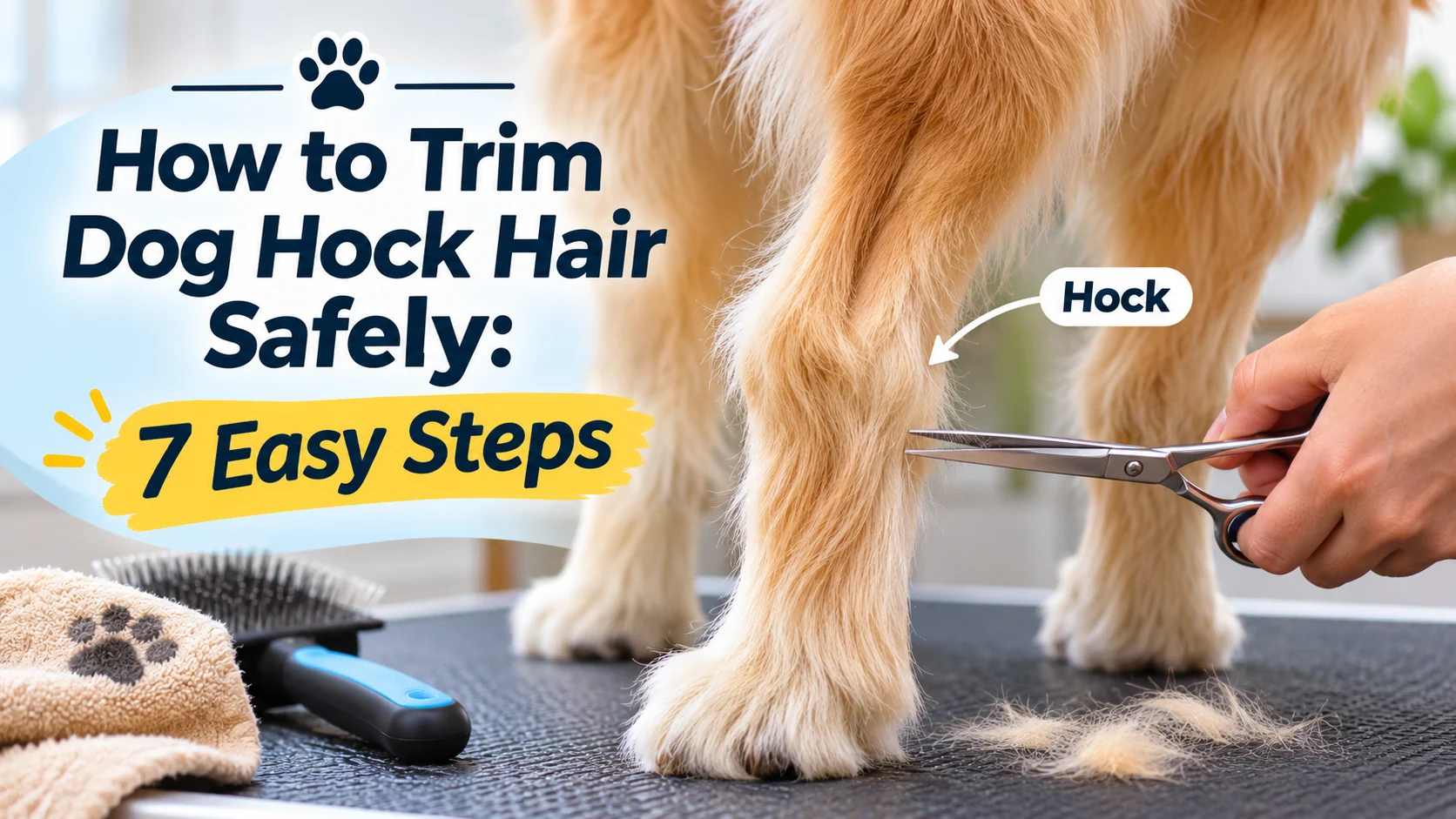
The hock is the prominent joint on the dog’s rear leg between the lower leg and the foot, somewhat comparable in position to a human ankle. When viewed from the side, it creates the backward angle in the lower hind leg. Hair at the back and sides of this region may project beyond the leg’s natural outline.
On a Golden Retriever, Samoyed, Newfoundland, or another heavily coated dog, the area may look fluffy. On a short-haired dog, there may be little or nothing to trim. Breed standards and coat characteristics can affect the finished shape, so a neat hock does not necessarily mean a closely clipped one.
When Should You Trim Hock Hair—and When Should You Leave It?
Consider a light trim when the fur projects unevenly, catches debris, or makes routine cleaning difficult. If your dog’s coat is tidy, comfortable, and easy to comb, trimming may be unnecessary.
Before picking up scissors, run a comb gently through the hair. It should travel through without pulling the skin. Look for redness, sores, swelling, wet patches, unusual tenderness, or dense clumps. If you find any of these, do not trim over the area until the problem is assessed.
What Tools Do You Need?
For a simple tidy-up, use a few clean, appropriate grooming tools rather than improvising with household scissors.
- Dog grooming comb: Separates the hair and reveals tangles before cutting.
- Suitable brush: Smooths the coat according to its texture and thickness.
- Dog grooming shears: Intended for controlled trimming of free hair, ideally used only after a professional has demonstrated safe handling.
- Thinning shears: Optional for gently blending bulky ends; they are not a safe solution for mats against the skin.
- Non-slip floor or grooming surface: Helps your dog maintain comfortable footing.
- Good lighting and treats: Make inspection easier and support calm cooperation.
How to Trim Dog Hock Hair in 7 Steps
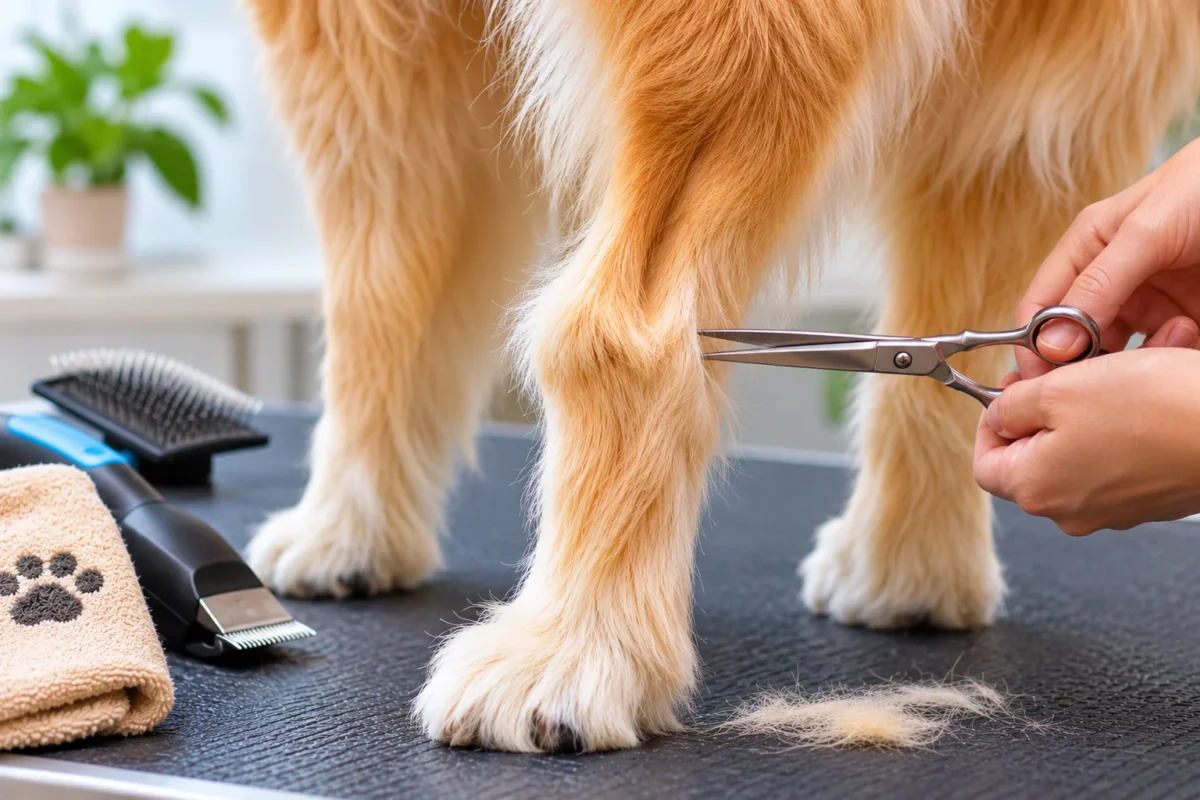
Step 1: Set Up a Calm, Non-Slip Work Area
Choose a quiet, well-lit place where your dog can stand naturally. A non-slip mat on the floor is often easier for an owner than an elevated grooming table. Keep other pets and distractions away, and place the tools within reach before beginning.
Let your dog sniff the comb and reward calm standing. If the dog repeatedly sits, twists, pulls away, or becomes frightened, stop rather than holding the leg in an uncomfortable position. You can try again after acclimation or arrange professional grooming.
Step 2: Brush and Comb the Hair Completely
Start with a clean, fully dry coat. Gently brush the rear lower leg in the direction of hair growth, then comb the hock hair outward so you can see its natural length. Take care not to scrape the skin or pull strongly on tangles.
If the comb catches, investigate before continuing. A few loose tangles may separate with patient, gentle grooming. A tight mat that pulls the skin or hides the skin beneath it is a reason to stop—not an invitation to cut underneath it.
Step 3: Find the Natural Leg Outline
Look at the hock from the side and rear while your dog stands in a normal, balanced position. Identify the foot below and the joint above. You are shaping the free ends of hair that extend beyond the desired outline, not cutting toward the bone or skin.
Keep your trimming plan conservative. For example, the Golden Retriever Club of America’s grooming guidance describes brushing the hock outward and shaping the back while retaining substantial hair rather than clipping close. That breed-specific guidance is not a universal measurement for every dog.
Step 4: Make Small Cuts to Loose Hair Only
If you have been shown safe scissor technique, hold the shears away from the dog’s body and remove only clearly visible, freely hanging hair tips. Work in short increments, with the blades following the outline rather than pointing into the leg. Never slide scissor tips into dense fur where you cannot clearly distinguish skin.
Step 5: Blend the Sides Without Exposing Skin
Re-comb the sides and inspect for uneven tufts. If the back looks neatly outlined but the sides protrude, remove only the obvious stray tips. Trimming should transition naturally toward the rear foot, without a visible notch at the joint.
Step 6: Re-Comb and Check From Several Angles
Brush or comb the hair down, then outward again. Inspect the hock from behind and from both sides. Look for an even contour, adequate coverage around the joint, and any long tips you may have missed.
Step 7: Check Comfort and Finish Gently
Put the shears away and inspect the skin and coat without tugging. Make sure no irritated spot was overlooked and that your dog is standing and walking comfortably. Remove loose hair with a gentle brush and praise your dog.
If your dog starts licking the area repeatedly, favors a leg, or appears sore after grooming, arrange veterinary advice. A cosmetic trim should not make movement uncomfortable.
Important Safety Warning
Do not cut through mats with scissors. Skin can be pulled up into the tangle, making it impossible to see what you are cutting. The ASPCA’s guidance on matted coats recommends professional help for mats that cannot be gently brushed out.
How Short Should Hock Hair Be?
There is no single correct length for every dog. The goal for an ordinary home trim is an orderly outline that preserves coverage and respects the coat type, rather than a specific number on a ruler.
The Golden Retriever Club of America’s grooming guide describes leaving approximately three-quarters to one inch of hair at the back of a Golden Retriever’s hock. That is an example of a breed-specific cosmetic finish, not a universal instruction for Poodles, Samoyeds, mixed breeds, or dogs with very different coats.
Should You Use Scissors or Clippers on the Hock?
For a light tidy-up of unmatted feathering, trained groomers may use grooming shears or thinning shears. Clippers can be appropriate for certain coat styles and professional techniques, but trimming directly over the hock requires care because skin folds and joint contours can be caught or irritated.
Using clippers is not automatically safer for a beginner. Blades may heat up, catch skin, or leave a much shorter finish than intended. An overview of home grooming safety from PetMD specifically identifies the hocks among areas requiring caution during clipping.
Choose a tool based on the dog’s coat and your actual training, not on which method looks faster in a short video. If the area is matted or the dog cannot stand calmly, arrange a professional appointment rather than experimenting.
Common Hock-Trimming Mistakes to Avoid
- Confusing the hock with the whole hind leg: Cutting upper-leg feathering can radically change the silhouette when only the lower portion needed tidying.
- Trimming before combing: Hidden knots can pull skin closer to the tool.
- Cutting close to the joint: This increases risk and can leave the lower leg looking unnaturally bare.
- Using ordinary household scissors: They are not designed for safe, controlled grooming around moving animals.
- Trying to remove a tight mat: Never assume that visible fur at the surface means the skin is safely out of the way.
- Continuing when the dog resists: Movement increases the risk of accidental injury, even with appropriate equipment.
- Over-correcting unevenness: Repeated small cuts can gradually create a much shorter trim than planned.
How Do You Prevent Hock Hair From Matting Again?
Regular brushing and checking the lower hind legs are usually more useful than repeatedly cutting them short. Examine the hocks after muddy walks or activities that leave seeds and debris in the coat. Allow wet hair to dry appropriately, then gently separate it with a suitable comb.
How often to brush depends on coat density, length, activity, and whether tangles are forming. A long-coated dog may need frequent attention, while a short-coated dog may need little more than inspection. The goal is to detect small knots before they become painful mats, not to follow an arbitrary trimming calendar.
The ASPCA advises matching grooming frequency to coat type and seeking a groomer or veterinarian when knots cannot be managed comfortably. A professional can also demonstrate which brush is appropriate for your dog’s individual coat.
When Should a Groomer or Veterinarian Handle the Area?

Choose a professional groomer when the hock hair is densely matted, when your dog refuses safe handling, or when you are unsure where the skin lies beneath the coat. A groomer can advise on appropriate length and show you a maintenance routine for future sessions.
Seek veterinary advice when you notice swelling, heat, a wound, discharge, strong odor, limping, or marked pain. What looks like a grooming problem may involve skin irritation or a medical issue unrelated to hair length. Do not clip over injured skin to inspect it yourself.
Frequently Asked Questions
Does every dog need its hock hair trimmed?
No. Some dogs have very little hair in this area. Others have a fuller coat that is normal for the breed. Trim only when a tidy-up serves a practical or cosmetic purpose without compromising comfort.
Can you trim dog hock hair while it is wet?
Clean, dry hair is easier to assess because you can see how it naturally falls. Wet hair may lie differently, making it easier to remove more than intended. Dry the coat before a routine tidy-up.
Is hock hair the same as paw-pad hair?
No. Hock hair covers the lower rear leg around the hock and rear pastern. Paw-pad hair grows on the underside of the foot between and around the pads; it requires a separate, careful technique.
Should you trim both rear legs in one session?
Only if your dog remains calm and you can work safely. It is fine to complete one side and return to the other later. Keeping the dog comfortable matters more than finishing both legs immediately.
Can you cut a small mat out of the hock hair?
Do not use scissors to cut a mat. Even a small mat can contain skin pulled upward into the tangle. If it will not separate gently, have it assessed and removed by a professional.
How often should you trim hock hair?
There is no fixed schedule. Reassess after brushing whenever the outline becomes untidy or the fur begins collecting debris. Some dogs will need periodic tidying; others will not need it at all.
Final Thoughts
Trim dog hock hair conservatively: comb first, identify the natural outline, remove only free ends using an appropriately learned technique, and check the finish after each small adjustment. A comfortable dog with a healthy, manageable coat matters more than a perfectly sculpted leg. Leave tight mats, painful areas, and uncertain clipper work to trained professionals.


